The war is delaying the payment of Iraqi salaries.

that has directly impacted the regular payment of state employee salaries, following significant delays in disbursing monthly entitlements due to a shortage of government funds. As of two days ago, only about 20% of total employee salaries had been paid, despite the established payment schedule stipulating that salaries should be disbursed between the 24th and 25th of the month at the latest.
The video for this My FX Buddies Blogpost is below here:
This unprecedented delay has sparked widespread concern among the public and in the economic sphere, especially given that millions of Iraqi families rely almost entirely on government salaries as their primary source of income, due to limited job opportunities in the private sector and the high cost of living. This comes at a time of regional instability that has cast a shadow over the national economy, most notably the halt in Iraqi oil exports through the Strait of Hormuz as a result of the war in the region, leading to a decline in foreign currency inflows and a decrease in revenues that form the backbone of the national budget.
The number of employees in the government sector reached approximately 4.55 million, in addition to about 2.9 million retirees, as well as more than half a million beneficiaries of social welfare programs.
Economic estimates indicate that the continued disruption of oil exports could present the government with a genuine financial challenge over the next two months, with growing concerns about its inability to fully secure salaries or resorting to emergency solutions such as domestic borrowing or rescheduling public spending. Meanwhile, the government has yet to issue detailed explanations regarding its plan to address the liquidity crisis or a clear timetable for disbursing the remaining salaries, further increasing the anxiety among employees and retirees.
An official source in the Iraqi Ministry of Finance told Al-Araby Al-Jadeed that "the reasons for the delay in paying the salaries of state employees are directly related to the lack of financial liquidity resulting from the decline in oil revenues during the last few weeks, in light of the security and military developments taking place in the region, and their impact on the movement of Iraqi exports."
The source, who requested anonymity, explained that "the government has so far managed to disburse approximately 20% of the total salaries of state employees, while the Ministry of Finance and the Central Bank are continuing to take urgent measures to secure the remaining funds and disburse them gradually over the next two days. The current delay is an exceptional circumstance and not a permanent change in the salary disbursement policy."
He added that "the halt in Iraqi oil exports through the Strait of Hormuz due to the ongoing war in the region has led to a significant decrease in dollar cash flows, which has directly impacted the government's ability to provide the necessary liquidity to cover operational obligations, primarily salaries, which constitute the largest portion of public spending."
According to the source, "The government is currently working on several tracks to address the crisis, including reprioritizing spending, activating short-term domestic financing tools, and coordinating with relevant financial authorities to ensure the stability of the money market and prevent any impact on the dinar's exchange rate. Salaries are, in principle, secured within the general budget; however, the current challenge lies in the timing of providing liquidity, not in the lack of financial allocations." The source revealed that "the relevant government agencies have held a series of emergency meetings to monitor the situation daily, and there is a precautionary financial plan aimed at ensuring the continued payment of salaries for the next two months, even if the disruption to oil exports continues."
The government is working on several approaches to address the crisis, including reprioritizing spending, activating short-term financing tools, and coordinating with financial authorities to ensure the stability of the money market and prevent any impact on the dinar's exchange rate.
For his part, economic affairs expert Nasser Al-Kinani told Al-Araby Al-Jadeed that “serious repercussions may result from the continued delay in paying the salaries of state employees in Iraq, as the current crisis does not represent only a temporary financial problem, but rather reflects the fragility of the economic structure and its almost complete dependence on oil revenues.”
Al-Kinani explained that "the continued delay in the full disbursement of salaries is a worrying indicator of a real strain on cash flow, especially since salaries represent the backbone of consumer spending in the Iraqi market. Any further delay could lead to a widespread economic slowdown and direct impacts on the activity of local markets and the commercial sector." He added that "the halt in Iraqi oil exports through the Strait of Hormuz as a result of the ongoing war in the region has placed public finances under a difficult test."
He warned that "the most serious repercussions of the crisis are not limited to the financial aspect alone, but extend to social stability, as millions of Iraqi families depend entirely on government salaries. This means that continued delays could lead to a decrease in purchasing power, an increase in individual debt levels, and a decline in economic activity in local markets." Al-Kinani concluded by saying that "the current crisis represents a real wake-up call for the Iraqi economy and an opportunity to reconsider the rentier economic model and gradually move towards a more diversified and sustainable economy, capable of withstanding regional and international shocks without directly impacting citizens' incomes."
According to previous government figures, the number of employees in the public sector is approximately 4.55 million, in addition to about 2.9 million retirees, as well as more than half a million beneficiaries of social welfare programs. The financial advisor to the Iraqi government, Mazhar Muhammad Salih, had previously confirmed that the total monthly salaries borne by the state exceed 8 trillion Iraqi dinars, equivalent to about $6.25 billion.
Miles Caggins to Kurdistan 24: Washington must provide the Kurdistan Region with anti-drone and anti-missile systems.
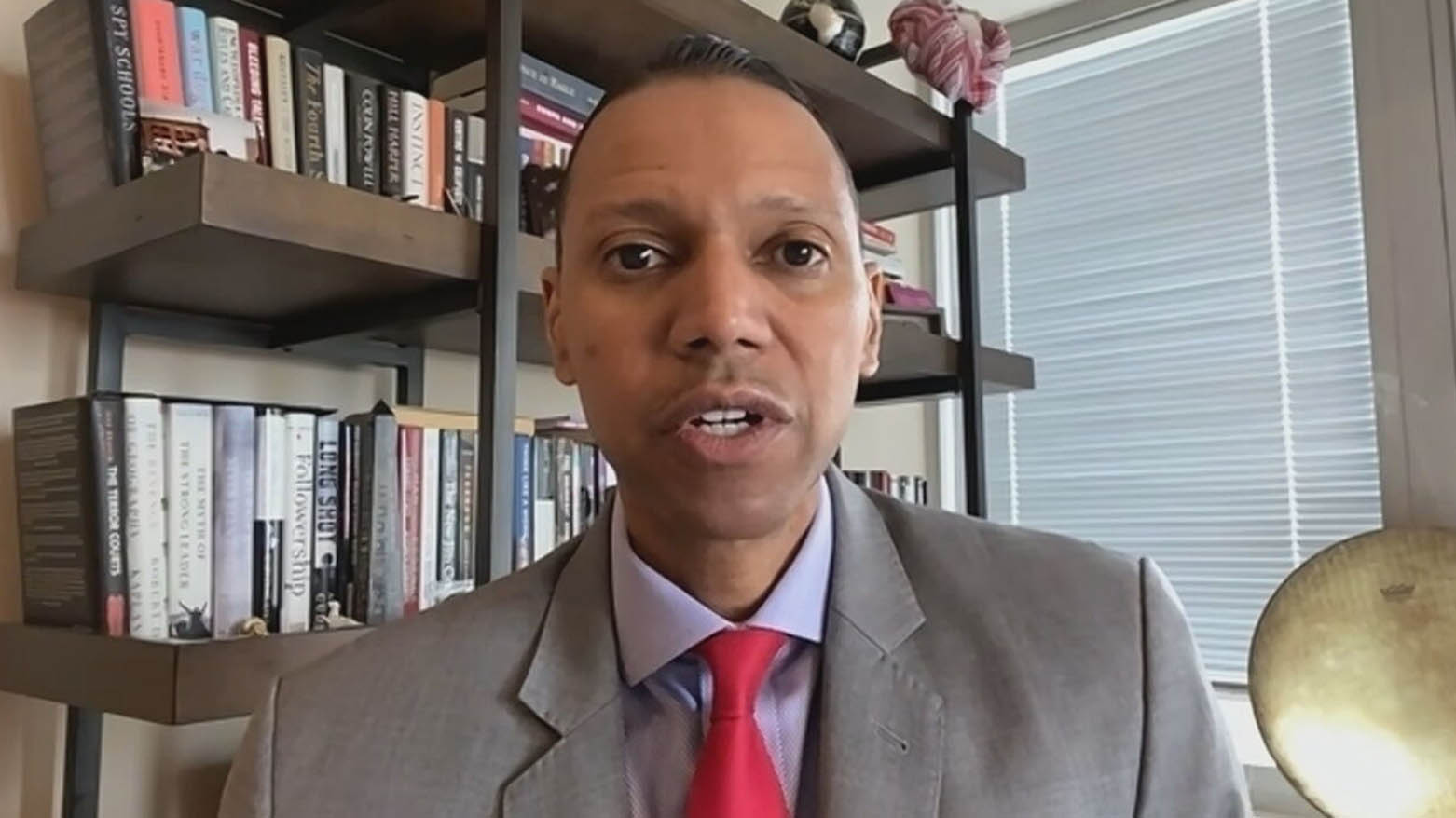
The spokesperson for the Kurdistan Oil Industry Association (APICOR), Miles Caggins, announced that the Kurdistan Region has been subjected to more than 500 missile and drone attacks since the start of the current conflict, stressing that armed groups are seeking to undermine progress in the region, which necessitates the United States providing the Peshmerga forces with air defense systems directly and practically.
In a statement to Kurdistan 24 on Wednesday, April 1, 2026, Caggins, who previously served as spokesman for the international coalition against ISIS, said: “The region has been targeted more than 500 times, and these attacks have not been limited to military bases, but have also affected civilians, economic infrastructure, and citizens’ homes, which is clearly documented by the images and scenes that Kurdistan 24 presents of the destruction resulting from those attacks.”
Kagenz explained that the main motive for these attacks is "the inability of outlaw armed groups to see the development and stability that the Kurdistan Region enjoys," adding: "Just as the Kurdish people and the Peshmerga forces protected the Americans in the past and were a loyal partner, it is now time for America to do the same and support the Peshmerga to enable them to defend themselves and protect their country's skies."
Regarding the required military support, the spokesperson for Apicor called on Washington to directly supply the region with anti-drone and anti-missile systems, noting that legislation passed in 2024 mandated the Pentagon to study providing air defense systems to Iraq and the Kurdistan Region. He stated, "Although I haven't seen the final report and I don't know how things turned out during the transition between the Biden and Trump administrations, the time has come for America to take serious steps and provide the Peshmerga with the necessary weapons and technology to counter these drones."
Kagenz's remarks come at a time when the Kurdistan Region is facing an intense wave of drone attacks, which have caused material damage to civilian areas and raised widespread concern in the international community.
The Iranian President: We thank Iraq and its people for standing with Iran in this unjust war.

Iranian President Masoud Pezeshkian expressed his gratitude to Iraq and its people on Tuesday for standing with Iran during this unjust war.
In a post on the X platform, which was monitored by the Iraqi News Agency (WAA), Pezeshkian stated, "The Muslim people of Iraq stood courageously alongside Iran in this unjust war; a stance not dictated by geography, but rather forged by the unity of history, identity, and religious values."
He added, "I warmly shake the hands of the Iraqi people, officials, and fighters in the land of Mesopotamia. We appreciate your steadfastness and cherish our shared commitment."
Government advisor: 13% of the economy is used to subsidize goods and stabilize fuel prices.

Saleh told Al-Furat News Agency that: “The situation in the country is very different, as government support for goods and services consumes the equivalent of 13% of the gross domestic product,” noting that “the stability of fuel prices in Iraq, despite the rise in global oil prices due to the geopolitical conditions in the world and the Middle East in particular, represents the highest case of price support and is reflected in the stability of living costs.”
He explained that "the stability of fuel prices is reflected in the costs of services, especially transportation, electricity generation and domestic use of fuel, in addition to the consumption of fuel and energy for industrial and agricultural purposes and various professional activities."
Saleh added that "supporting the food and medicine basket and the necessities of life will undoubtedly reduce what is called imported inflation of goods entering the country resulting from the effects of rising global energy prices, in which the price of a barrel of oil has exceeded $107."
He explained that "the common rule among economic circles indicates that a 10% increase in oil prices leads to an increase in global inflation of about 0.2% to 0.4%, and this increase is usually included in the imported inflation equation for products."
Saleh noted that "the economic authorities in the country renew their commitment to continue supporting the living stability of citizens, enhancing economic and social security, and taking measures to confront any external challenges in a way that ensures the sustainability of growth and protects economic gains."
Three sources of payroll funding: A new strategy to counter global financial shocks

Amid a turbulent international scene, Baghdad is sending reassuring messages to millions of employees and those covered by the welfare network, stressing that the compass of living stability will not be affected by the tremors of energy markets or the winds of regional crises.
Relying on a combination of digital transformation of tax collection, capitalizing on the oil price boom, and a solid cash reserve, represents a financial "buffer zone" through which Iraq seeks to secure the livelihood of its citizens, away from the repercussions of the surrounding political and military conflicts.
Countering global financial shocks
In this regard, the Prime Minister’s financial advisor, Mazhar Muhammad Salih, confirmed on Tuesday that the current policy guarantees the continuation of salaries and social welfare grants. While he identified three main sources to ensure the sustainability of salaries and social spending, he indicated that Iraq is capable of facing global financial and economic shocks efficiently and effectively.
Saleh said: “Ensuring the sustainability of monthly expenditures for salaries, wages, pensions, and social welfare allowances, in light of the current economic challenges and global fluctuations due to geopolitical risks , is a top priority, and depends on three main sources of revenue that guarantee the protection of the living and social stability of citizens on a regular monthly basis.”
Maximize revenues
He explained that “the first source is maximizing non-oil revenues, as ensuring the liquidity of collecting these revenues is achieved by intensifying approved electronic payment methods, which enhances the state’s own financial resources and reduces total dependence on oil revenues.”
Expanding the oil export base
Saleh added that “the second source is expanding the base of crude oil and petroleum product exports. This policy includes using traditional export channels whenever possible, including land and sea transport through neighboring countries, according to current global oil prices, which have seen an increase of nearly 70% compared to their levels before the outbreak of tensions in the Gulf and Middle East region.”
He pointed out that “this export expansion, in light of high crude oil prices, contributes to boosting the revenues needed to cover social spending and ensure the stability of the local market.”
quantitative easing policies
He explained that “the third source of revenue is to follow a pattern of targeted quantitative easing policies, with monetary and fiscal coordination, where coordination between monetary and fiscal policy is intensified, and this coordination is supported by efficient foreign exchange reserves, to ensure the stability of the national economy and the sustainability of public social spending, including the payment of salaries, pensions and social welfare allowances without any interruption.”
Saleh concluded by saying, “The continuation of these integrated policies guarantees the protection of monthly job income, enhances economic and social stability in the country, and enables Iraq to face global financial and economic shocks efficiently and effectively.”
MP: The session to elect the president is not yet decided, and postponement is possible.
Former MP, Arif Al-Hamami, confirmed on Tuesday that the session scheduled for April 11 to elect the President of the Republic has not yet been decided, noting that setting the date came as a result of initial understandings that have not reached the stage of final confirmation.
Al-Hamami told Al-Maalouma that “the Iraqi parliament’s setting of a session on April 11 to elect the president is still not decided among the political forces, and it cannot be confirmed that it will be held at this time,” indicating that “postponing the date remains very possible in light of the lack of mature agreements.”
He added that “Iraq is going through a difficult phase and multifaceted challenges, which requires a clear political decision to complete the formation of the government, starting with the election of the President of the Republic, up to the assignment of the candidate of the largest bloc, in order to proceed with managing the current crises, especially the financial and economic files.”
Al-Hamami indicated that “next week will witness a series of important meetings in Baghdad between various political forces,” noting that “these meetings may lead to outcomes that push towards greater consensus regarding the April 11th session, including the forces of the Coordination Framework, in preparation for electing the President of the Republic and tasking the candidate of the largest bloc.”
Want to Support My FX Buddies?
.png)
Support My FX Buddies Big or Small I appreciate it all
BuyMeACoffee CashApp:$tishwash
https://paypal.me/tishwash

.jpeg)
4 leaders received the message
Al-Maliki three times: America changed its mind about Al-Sudani and the embassy informed the framework of the refusal to renew
State of Law Coalition member Diaa al-Nasiri said that the US Chargé d'Affaires Joshua Harris visited leaders in the coordination framework and informed them of the United States' rejection of renewing the government of Mohammed al-Sudani. He commented on al-Maliki's absence from the framework sessions that took place two weeks ago, saying that al-Maliki was attending the funeral of Ayatollah Khamenei, and that the timing of the parliamentary session was inappropriate, as was responding to the invitation in light of the events in the region, according to his expression, which he repeated 3 times during an interview with journalist Samer Jawad, which was followed by
Q: Why was Maliki absent and then attended the last meeting of the framework?
If you mean the meeting two weeks ago when Abu Mujtaba was martyred, Mr. Maliki was at the funeral, and the political situation could not bear it. We have a great religious authority of Mr. Maliki’s stature being martyred, and then they call for a meeting the next day? Frankly, the invitation was not appropriate, nor was the response to it appropriate.
Regarding the framework session, there was a surge on social media, and a call for demonstrations. Anyone who did not want this session to be held was considered a traitor to the nation. There were 299 MPs who called for this session, and the issue of the prime minister candidate was decided 10 days before the deadline. When it was decided, “when I took up the matter, one group broke their promise and another group rebelled.” They are waiting for signals and praying to God for a second tweet to come down. The envoys came, and then the threats began to rain down on us.
The new position: A new recommendation arrived from the American chargé d'affaires who visited some leaders in the coordination framework and said, “If you intend to withdraw al-Maliki’s nomination and bring in al-Sudani, we will not be satisfied and we do not want to renew the prime minister’s term.”
(And what was the response of the parties?)
Some of the parties, who were the same ones reading the terms, are saying, “We don’t know.”
Al-Maliki discusses constitutional entitlements and the election of the president with the Kurdistan Democratic Party delegation.

On Tuesday evening (March 31, 2026), Nouri al-Maliki, head of the State of Law Coalition, received a delegation from the Kurdistan Democratic Party headed by Fadhil Mirani, in the presence of a number of political leaders, including Hadi al-Amiri, Mohsen al-Mandalawi and Amer al-Fayez.
According to a statement from al-Maliki’s media office received by “Baghdad Today”, the meeting included a comprehensive review of the security situation in Iraq, in light of the current challenges and the rapid military developments in the region, and the repercussions they may have on the Iraqi interior.
During the meeting, both sides emphasized the importance of strengthening internal stability, protecting state institutions, and working to fortify the national front to confront any external repercussions that may affect the country’s security and sovereignty.
The two sides also discussed a number of priority political issues, most notably constitutional entitlements, particularly the issue of electing the President of the Republic, in light of ongoing efforts to reach understandings that would lead to resolving this issue.
This meeting comes as part of a series of ongoing political dialogues between Iraqi forces, with the aim of bringing viewpoints closer and overcoming the deadlock, in preparation for completing the formation of the government during the next stage.
Iran threatens to bomb 18 US companies, including Google and Meta.

Iran’s Revolutionary Guard announced on Tuesday that it has included 18 major American companies in the fields of technology, communications and artificial intelligence, including Google and Meta, among its targets starting tomorrow, April 1.
The Revolutionary Guard said in a statement, "You have ignored our repeated warnings about the need to stop terrorist operations, and today, your terrorist attacks with your Israeli allies have resulted in the martyrdom of a number of Iranian citizens. Since the main element in designing and tracking assassination targets is American Information and Communications Technology (ICT) and Artificial Intelligence (AI) companies, in response to these terrorist operations, we declare that the main institutions influencing these operations will henceforth become legitimate targets for us."
The statement added, "We recommend that the employees of these institutions, in order to protect their lives, leave their workplaces immediately. We also recommend that residents of the areas surrounding these companies in all countries of the region leave their places within a one-kilometer radius and head to safe places."
He continued, "Companies that actively participate in designing terrorist operations will face a corresponding response for each assassination. These companies are announced as follows:
Cisco,
HP, Intel,
Oracle
,
Microsoft,
Apple
, Google,
Meta ,
IBM ,
Dell , Palantir,
Nvidia
,
JP Morgan
, Tesla,
General Electric
, Spire Solutions
, G42,
Boeing."
The statement added, "As of 20:00 on Wednesday, April 1 (Tehran time), these companies will be waiting for their units to be targeted in retaliation for every assassination inside Iran."
A delegation from the Kurdistan Democratic Party arrives in Baghdad

An informed source reported today, Tuesday (March 31, 2026), that a delegation from the Kurdistan Democratic Party has arrived in Baghdad.
The source told Baghdad Today that "a delegation from the Kurdistan Democratic Party arrived in the capital, Baghdad, to discuss the missile and drone attacks targeting the Kurdistan Region, in addition to a number of political issues related to the internal Iraqi situation."
The source indicated that "the delegation includes Fadel Mirani, head of the working body in the political office, Fawzi Hariri, head of the office of the presidency of the region, Nawzad Hadi, member of the central committee, and Omid Sabah, member of the central committee."
He added, "The delegation is scheduled to hold a series of meetings with Iraqi political forces to discuss the issue of missile and drone attacks that targeted areas in the region during the past weeks, in addition to the issue of forming the new Iraqi government, and the dialogues related to electing a new president for the Republic of Iraq during the next stage."
The delegation's visit comes amid continued regional tensions resulting from the war between Iran on one side, and the United States and Israel on the other, and the accompanying repeated targeting in Kurdistan. The visit also coincides with broad internal political activity to resolve the requirements for forming the government and agreeing on a candidate for the position of President of the Republic.
Trump: We will leave Iran within weeks and a new regime is now in power in Tehran.

US President Donald Trump confirmed on Wednesday (April 1, 2026) that US forces will leave Iranian territory within a period of two to three weeks, stressing that Washington is now dealing – as he put it – with “more moderate and rational Iranian leaders.”
In an interview with ABC News, Trump said that "a complete regime change has taken place in Iran, and the current US administration is negotiating with a new, more rational group," noting that "Iran's departure will directly impact lower energy prices."
Trump added: "All I have to do to reduce the high energy prices is leave Iran, and that's what we'll do soon. There's no reason for us to stay there," stressing that "American forces will leave Iranian territory within a period of two to three weeks."
These statements come amid the rapid developments in the region, with the ongoing war between the United States and Israel on one side, and Iran on the other, and the extension of the mutual shelling to several countries, including Iraq and Syria. The statements coincided with American and Israeli reports talking about internal and external pressures to reformulate the relationship with Tehran, at a time when Iran is witnessing internal unrest and large-scale military operations against the backdrop of the escalating regional confrontation.
The oil speculation market and the Iraq crisis
The equation for determining the equilibrium price of crude oil globally is burdened with variables. Economic growth and its role in stimulating demand on one hand, and production levels and their role in the size of supply on the other hand, lead to determining the equilibrium price. These are data that represent (internal) variables in the function. In addition, there is another set of variables that affect the determination of that price level, including wars, political events, supply chains, in addition to expectations related to major economies, alternative energy sources, weather seasons, and others, all of which are considered (external) variables in the function.
What concerns us here is that variable that operates silently and in the shadows, which is the oil speculation market. What is this market? How does it work? What is its size? And the important question is, can Iraq invest in it during its current crisis?
It is a financial market where securities, such as oil futures contracts, are traded. These contracts are speculated upon to generate financial returns by investing in fluctuations in global oil prices. This market includes various types of investors, such as hedge funds, banks, and other financial institutions. The New York, London, and Shanghai stock exchanges are among the most important of these markets.
What is striking about this market is the volume of trades taking place in it. In contrast to the actual daily oil production, which is estimated at about (100) million barrels, the value of contracts traded in the market is between (10 - 30) times, i.e., from one billion to three billion barrels.
This reflects the high levels of financial returns achieved by this trading and the extent of its impact on the course of the oil market in general, and thus its role in determining the equilibrium price of crude oil globally.
Like other variables that make up the oil structure in Iraq, and given the absence of a specialized oil financial center in Iraq and the nature of the oil policy of SOMO and behind it the Iraqi Ministry of Oil, which focuses on selling only real oil without a financial trading aspect, this means that Iraq does not achieve a presence in this market.
Iraq’s oil does not enter those markets in the form of contracts with different maturities that are subject to speculation, but rather it is sold through direct contracts, and this is a deficiency in the general structure of Iraqi oil policy.
The events taking place in the region, especially the decision to close the Strait of Hormuz, which is considered the oil lifeline for Iraq since we export the majority of our oil through it, have put Iraq in a very critical phase that may lead to a financial crisis in light of the disruption of oil exports. Therefore, it is necessary to pay attention to the characteristics of this financial market and to urge those concerned in the Iraqi Ministry of Oil to find ways to communicate with these markets and offer futures contracts at competitive prices as much as possible to find a financial resource that addresses the current problem of the cessation of most oil exports. There should be a lesson learned from what is happening now, and we should adopt future policies that work to create an active role for Iraq in the oil financial speculation market.
White House: Trump will deliver an important speech on Iran today, Wednesday
The White House confirmed that US President Donald Trump will deliver an important address today, Wednesday, regarding Iran.
The White House stated in a press release that "President Trump will address the nation on Wednesday to provide an important update on Iran."
The war is delaying the payment of Iraqi salaries.
that has directly impacted the regular payment of state employee salaries, following significant delays in disbursing monthly entitlements due to a shortage of government funds. As of two days ago, only about 20% of total employee salaries had been paid, despite the established payment schedule stipulating that salaries should be disbursed between the 24th and 25th of the month at the latest.
This unprecedented delay has sparked widespread concern among the public and in the economic sphere, especially given that millions of Iraqi families rely almost entirely on government salaries as their primary source of income, due to limited job opportunities in the private sector and the high cost of living. This comes at a time of regional instability that has cast a shadow over the national economy, most notably the halt in Iraqi oil exports through the Strait of Hormuz as a result of the war in the region, leading to a decline in foreign currency inflows and a decrease in revenues that form the backbone of the national budget.
The number of employees in the government sector reached approximately 4.55 million, in addition to about 2.9 million retirees, as well as more than half a million beneficiaries of social welfare programs.
Economic estimates indicate that the continued disruption of oil exports could present the government with a genuine financial challenge over the next two months, with growing concerns about its inability to fully secure salaries or resorting to emergency solutions such as domestic borrowing or rescheduling public spending. Meanwhile, the government has yet to issue detailed explanations regarding its plan to address the liquidity crisis or a clear timetable for disbursing the remaining salaries, further increasing the anxiety among employees and retirees.
An official source in the Iraqi Ministry of Finance told Al-Araby Al-Jadeed that "the reasons for the delay in paying the salaries of state employees are directly related to the lack of financial liquidity resulting from the decline in oil revenues during the last few weeks, in light of the security and military developments taking place in the region, and their impact on the movement of Iraqi exports."
The source, who requested anonymity, explained that "the government has so far managed to disburse approximately 20% of the total salaries of state employees, while the Ministry of Finance and the Central Bank are continuing to take urgent measures to secure the remaining funds and disburse them gradually over the next two days. The current delay is an exceptional circumstance and not a permanent change in the salary disbursement policy."
He added that "the halt in Iraqi oil exports through the Strait of Hormuz due to the ongoing war in the region has led to a significant decrease in dollar cash flows, which has directly impacted the government's ability to provide the necessary liquidity to cover operational obligations, primarily salaries, which constitute the largest portion of public spending."
According to the source, "The government is currently working on several tracks to address the crisis, including reprioritizing spending, activating short-term domestic financing tools, and coordinating with relevant financial authorities to ensure the stability of the money market and prevent any impact on the dinar's exchange rate. Salaries are, in principle, secured within the general budget; however, the current challenge lies in the timing of providing liquidity, not in the lack of financial allocations." The source revealed that "the relevant government agencies have held a series of emergency meetings to monitor the situation daily, and there is a precautionary financial plan aimed at ensuring the continued payment of salaries for the next two months, even if the disruption to oil exports continues."
The government is working on several approaches to address the crisis, including reprioritizing spending, activating short-term financing tools, and coordinating with financial authorities to ensure the stability of the money market and prevent any impact on the dinar's exchange rate.
For his part, economic affairs expert Nasser Al-Kinani told Al-Araby Al-Jadeed that “serious repercussions may result from the continued delay in paying the salaries of state employees in Iraq, as the current crisis does not represent only a temporary financial problem, but rather reflects the fragility of the economic structure and its almost complete dependence on oil revenues.”
Al-Kinani explained that "the continued delay in the full disbursement of salaries is a worrying indicator of a real strain on cash flow, especially since salaries represent the backbone of consumer spending in the Iraqi market. Any further delay could lead to a widespread economic slowdown and direct impacts on the activity of local markets and the commercial sector." He added that "the halt in Iraqi oil exports through the Strait of Hormuz as a result of the ongoing war in the region has placed public finances under a difficult test."
He warned that "the most serious repercussions of the crisis are not limited to the financial aspect alone, but extend to social stability, as millions of Iraqi families depend entirely on government salaries. This means that continued delays could lead to a decrease in purchasing power, an increase in individual debt levels, and a decline in economic activity in local markets." Al-Kinani concluded by saying that "the current crisis represents a real wake-up call for the Iraqi economy and an opportunity to reconsider the rentier economic model and gradually move towards a more diversified and sustainable economy, capable of withstanding regional and international shocks without directly impacting citizens' incomes."
According to previous government figures, the number of employees in the public sector is approximately 4.55 million, in addition to about 2.9 million retirees, as well as more than half a million beneficiaries of social welfare programs. The financial advisor to the Iraqi government, Mazhar Muhammad Salih, had previously confirmed that the total monthly salaries borne by the state exceed 8 trillion Iraqi dinars, equivalent to about $6.25 billion.
Araghchi: What is happening now is not negotiations, but an exchange of messages.

Iranian Foreign Minister Abbas Araqchi stated that he receives messages directly from US envoy Steve Wittkopf, as before, but this does not mean negotiations are underway.
He added in a press statement: "The messages include warnings or exchanged perspectives, delivered through friendly channels, and our conditions for ending the war are clear."
Araqchi emphasized that there is no truth to the claims of negotiations with any specific party in Iran, and that messages are received through the Foreign Ministry, with ongoing communication between security agencies.
He affirmed: "We have not sent any response to the 15 US proposals, nor have we submitted any proposals or conditions."
A Chinese-Pakistani initiative to de-escalate tensions in the Middle East: an immediate ceasefire, securing the Strait of Hormuz, and a comprehensive peace process.

China and Pakistan announced a joint initiative aimed at restoring peace and stability in the Gulf region and the Middle East, following official talks held Tuesday in Beijing between Chinese Foreign Minister Wang Yi and his Pakistani counterpart, Muhammad Ishaq Dar.
The two sides exchanged views on the rapidly evolving situation in the region, amid escalating regional tensions. They agreed to propose a five-point initiative based on a set of practical steps to contain the crisis and prevent its further escalation.
The initiative includes a call for an immediate cessation of hostilities, emphasizing the need for a comprehensive ceasefire and urgent action to prevent the conflict from spreading. It also calls for facilitating the unimpeded delivery of humanitarian aid to affected areas.
Furthermore, the initiative stresses the importance of launching peace negotiations as soon as possible, emphasizing respect for the sovereignty and territorial integrity of states, particularly Iran and the Gulf states, and affirming that dialogue and diplomacy are the only viable means of resolving disputes.
The initiative urges all parties to commit to resolving their differences peacefully and to refrain from the use of force or the threat of force during the negotiation process.
On another front, China and Pakistan emphasized the need to protect civilians and non-military targets, stressing adherence to international humanitarian law and the cessation of attacks on vital infrastructure, including energy, water, and electricity facilities, as well as peaceful nuclear facilities.
The initiative also focused on the importance of securing waterways, particularly the Strait of Hormuz, a vital artery for global trade and energy supplies, calling for ensuring the safety of ships and their crews and restoring the smooth flow of maritime navigation as quickly as possible.
The initiative reaffirmed the primacy of the UN Charter and the necessity of strengthening multilateralism and supporting the UN's role in reaching a comprehensive peace framework that guarantees lasting stability in the region, in accordance with the principles of international law.
