To curb currency manipulation: Security campaign and measures against dollar speculators
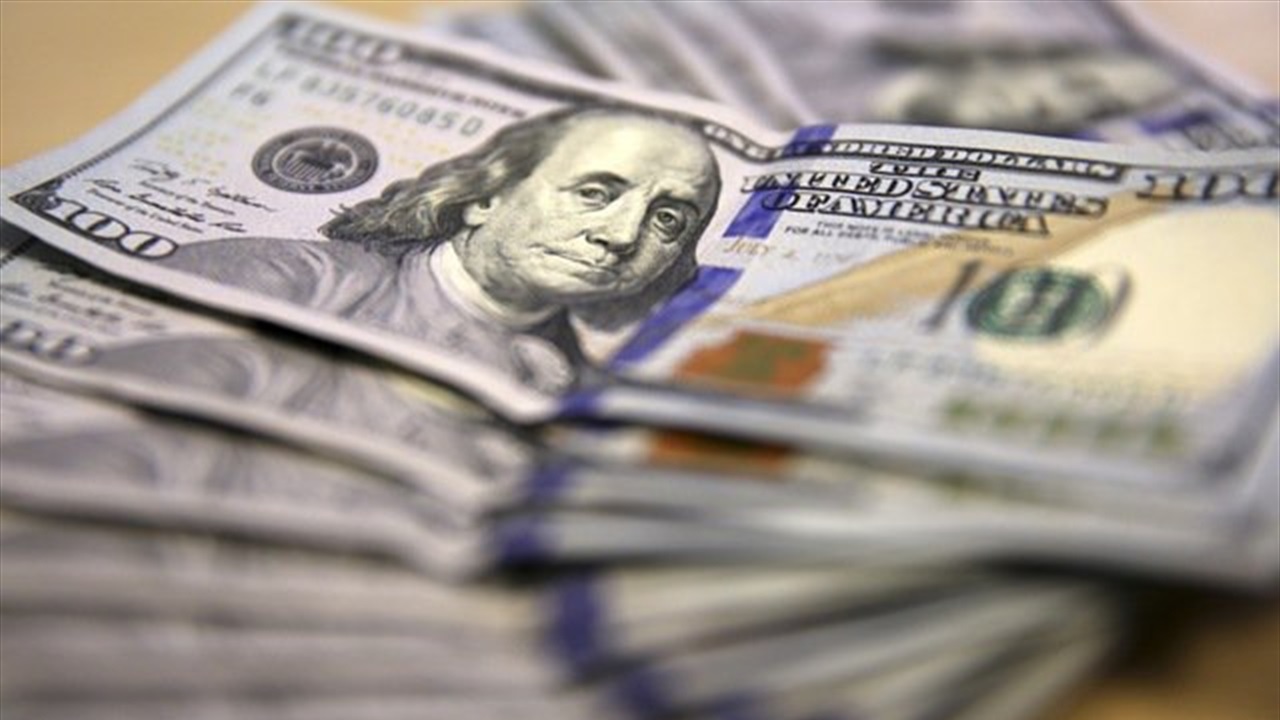
A security source confirmed on Tuesday that the security campaign to pursue those speculating on dollar exchange rates is still ongoing in the capital.Baghdad A number of governorates, as part of measures aimed at controlling the parallel market and reducing manipulation of the foreign exchange rate.
specific areas inBaghdad This includes a number of governorates.
This comes amidst fluctuating dollar exchange rates in the parallel market recently, which has directly impacted the prices of food and basic commodities, causing widespread concern among citizens and prompting government authorities to take strict security and economic measures
.Ministry of Interior It was previously announced that 91 people had been arrested on charges of manipulating the dollar exchange rate, noting that these practices harm the national economy and contribute to financial instability.
Security officials confirmed that the campaign is being carried out in coordination with the Central Bank and relevant regulatory bodies, with
the aim of regulating the buying and selling of foreign currency and ensuring that markets adhere to the official exchange rate.
The authorities stressed that any attempt to exploit citizens' needs or influence the market through illegal speculation will be met with strict legal measures, and called on citizens to cooperate and report any suspicious practices that contribute to destabilizing the economy.
Private banks in Iraq: Numerous banks and a lack of trust hinder genuine investment of funds.

Despite the significant increase in the number of private banks operating in Iraq and the expansion of their capital in recent years, their contribution to credit activity remains limited in relation to the size of the local economy and its financing needs, as well as being much less than what is offered by banks in neighboring countries and even government banks.
At a time when bank credit is supposed to be a key tool for driving the economy, through financing productive projects, supporting the private sector and creating job opportunities, local banks are still concentrated on low-risk activities and quick returns, which limits their ability to perform their developmental role.
This reality reflects an imbalance in the structure of financial intermediation and a weakness in directing savings towards real investment, which raises economic questions about the efficiency of credit policy, the level of risk, and the role of regulatory bodies in promoting a more effective and sustainable banking environment.
Government control over deposits
Financial expert Mahmoud Dagher told Shafaq News Agency that "government banks hold 85% of total deposits, and the remaining 15% is for the 60 private banks, and therefore these banks are not playing their role in the banking process correctly."
Dagher, who was a general manager at the Central Bank, pointed out that “Iraqi society, Iraqi money, and even salaries are mostly governmental, because Iraqi society and Iraqi money are mostly governmental, and this is a problem in the banking system in Iraq,” adding that “private banks granted more credit than governmental banks in 2025.”
There are 83 banks operating in Iraq, including 8 government banks, 24 commercial banks, and 31 Islamic banks, in addition to 17 branches of foreign commercial and Islamic banks and three representative offices of foreign banks.
Lack of capital
For his part, economist Hilal Al-Taan told Shafaq News Agency that "the most important reasons for the inability of private banks to play their role in the development process are the weakness of the economic and investment environment in Iraq due to the complete instability of the political and security situation in Iraq, which has weakened the ability of private banks to enter into long-term investments due to increased financial risks."
He explained that “the lack of capital in private banks and their inability to contribute to the development process as required has weakened their credit work, as well as the government banks’ acquisition of the banking sector, especially Al-Rafidain and Al-Rasheed banks.”
He pointed out that "the weakness of the banking legal environment in Iraq is due to weak financial governance, in addition to another factor in the weakness of private banks."
Currency exchange banks
For his part, economist Dirgham Muhammad Ali told Shafaq News Agency that “many private banks in Iraq were established for the purpose of participating in the currency window and obtaining a portion of it without engaging in other banking activities, which has confused customers and weakened their confidence in most of the banking system.”
Mohammed added that “the Central Bank’s directives on two banks and the freezing of people’s deposits have reinforced fears of dealing with private banks, but the increase in financial inclusion, linking the purchase of housing units to banks, and the cooperation of bank owners with real estate investors have boosted the effectiveness of some private banks and made them contributors to the credit market.”
Financial expert Adnan Hatem told Shafaq News Agency that "in most countries of the world, private banks are a fundamental pillar in the fields of reconstruction and investment in several sectors, but in Iraq we find that banks are far removed from these priorities."
He added that "Iraq has a very high percentage of private banks compared to other countries in the Middle East, but most of these banks are ineffective and their activities are concentrated on the currency sales window and low-risk activities with quick returns."
Bank restructuring
On the other hand, the Deputy Governor of the Central Bank, Ammar Al-Ithawi, pointed out that “there is a restructuring of private banks operating in Iraq that included 3 paths: remaining in the market through compliance with standards, or merging, or exiting the market.”
Al-Aithawi explained to Shafaq News Agency that “most private banks in Iraq adhered to the first and second paths, either continuing alone while adhering to these standards, or merging, but a small number of them chose to leave automatically, and they are a small minority that does not exceed 5 banks.”
Al-Ithawi acknowledged that "financial inclusion is relatively low in Iraq compared to neighboring countries, and the use of cash is still widespread."
In April 2025, the Central Bank of Iraq launched a private banking reform plan in cooperation with the American company Oliver Wyman. The plan focuses on enhancing and deepening financial inclusion, raising the efficiency and productivity of the private banking sector, and creating a fair and healthy competitive environment in the market while improving the sector’s resilience and ability to withstand risks.
Every three months, the Sudanese government directs a review of government decisions that have affected the Iraqi market.

n Tuesday, caretaker Prime Minister Mohammed Shia al-Sudani directed the cabinet to follow up on government decisions related to maximizing state revenues, including those related to the new customs tariff every three months, in order to preserve market stability in the country.
This came during his chairmanship of a meeting of the Ministerial Council for the Economy, where the government’s approach to implementing measures to maximize revenues and reduce expenditures was finalized, according to a statement issued by the Iraqi government.
The statement said that the council discussed the study submitted by the Ministry of Foreign Affairs, which is an integrated plan of procedures and figures that clarifies the localization and financial policy of the ministry for the current year 2026.
The statement added that the council hosted the head of the advisors’ body in the office of the Prime Minister, who in turn presented a detailed study on the value of trade and imports from abroad, part of which was discussed by the relevant ministries and observations and suggestions were put forward to develop it.
The statement indicated that the meeting witnessed a detailed discussion of the decisions to implement the customs tariff and its impact on maximizing revenues, in addition to examining the reality of the market and the requirements of domestic trade, and the effects that occurred on it after the implementation of the measures taken, as well as discussing the recommendation of the Ministerial Council for the Economy (25511) regarding addressing the financial situation by reviewing the subsidy ratios for petroleum products.
Al-Sudani stressed the need to maintain market stability and the general income of citizens, to avoid harming the private sector, professions and small projects, and to implement decisions correctly, with careful monitoring of the impact of decisions every three months.
Prime Minister Mohammed Shia al-Sudani chaired a meeting of the Ministerial Council for the Economy on Tuesday, where the government’s approach to implementing measures to maximize revenues and reduce expenditures was finalized.
The council discussed the study submitted by the Ministry of Foreign Affairs, which is an integrated plan of procedures and figures that clarifies the Ministry’s localization and financial policy for the current year 2026.
The Council hosted the head of the advisory board in the Prime Minister’s office, who in turn presented a detailed study on the value of trade and imports from abroad, part of which was discussed by the relevant ministries, and observations and suggestions were put forward for its development.
The meeting witnessed a detailed discussion of the decisions to implement the customs tariff and its impact on maximizing revenues, in addition to examining the reality of the market and the requirements of domestic trade, and the effects that have occurred on it after the implementation of the measures taken, as well as discussing the recommendation of the Ministerial Council for the Economy (25511) regarding addressing the financial situation by reviewing the subsidy ratios for petroleum products.
Prime Minister Mohammed Shia al-Sudani chaired a meeting of the Ministerial Council for the Economy on Tuesday, where the government’s approach to implementing measures to maximize revenues and reduce expenditures was finalized.
The council discussed the study submitted by the Ministry of Foreign Affairs, which is an integrated plan of procedures and figures that clarifies the Ministry’s localization and financial policy for the current year 2026.
The Council hosted the head of the advisory board in the Prime Minister’s office, who in turn presented a detailed study on the value of trade and imports from abroad, part of which was discussed by the relevant ministries, and observations and suggestions were put forward for its development.
The meeting witnessed a detailed discussion of the decisions to implement the customs tariff and its impact on maximizing revenues, in addition to examining the reality of the market and the requirements of domestic trade, and the effects that have occurred on it after the implementation of the measures taken, as well as discussing the recommendation of the Ministerial Council for the Economy (25511) regarding addressing the financial situation by reviewing the subsidy ratios for petroleum products.

Iraqi retirees are angry about the delay in their pensions and are demanding that banking officials be held accountable.

On Tuesday, a number of retirees called on members of parliament to host those responsible for the delay in salary payments, particularly the directors of government banks, specifically Al-Rafidain and Al-Rasheed banks.
The retirees told Shafaq News Agency that the lack of financial liquidity, along with weak banking development, the failure to introduce modern technologies and keep pace with technology, have greatly contributed to the exacerbation of the crises, in addition to the absence of strategic plans and poor performance in banking work.
He pointed out that modernizing banking systems and adopting modern electronic means would increase revenues, strengthen the state treasury, and improve the level of services provided to citizens.
The retirees also called on the relevant authorities to take urgent measures to address the crisis and ensure the regular disbursement of salaries, given its direct impact on the living conditions of a large segment of citizens.
The Ministry of Finance had previously called on government banks to work on Friday and Saturday in order to boost funding and expedite salary payments, but this step did not achieve tangible results due to the continued shortage of liquidity and financial balance.
Crisis profiteers
The full story of the looting of savings... gold and the dollar: Who is pulling the strings of anxiety in Baghdad?
Despite talk of a "significant drop" in gold prices, and despite the decline in the dollar exchange rate in the parallel market from around 155,000 to about 149,000 dinars per 100 dollars, the reality for the citizen is still completely different. Gold, which a few days ago touched the mark of 1,100,000 dinars per mithqal of 21 carats, has only dropped to around 925,000 dinars, a level that is still very high compared to the ability of most families, while the difference between the dollar and the official price remains around 17,000 dinars, so that the "drop" in the end seems closer to the movement of speculators than to a real improvement in people's living standards.
What do experts say about the "fall" in local gold prices?
Economic expert Dirgham Muhammad places what is happening in the category of "correction after a wave of speculation," explaining in his interview with "Baghdad Today" that the previous increases in gold prices were not in line with the natural data of the market, but rather came as a result of sharp speculation and exceptional withdrawals of the yellow metal by a number of central banks, especially in China, India and other countries.
According to Mohammed, the situation can be summarized as follows:
-Major investors and institutions bought gold at the peak of the upward wave, taking advantage of the appetite of global central banks to buy, then began selling it at high levels to make quick profits in what is known as the "profit-taking" phase.
Small investors who entered the market motivated by day trading and the search for quick profits got stuck at the peak of prices; they paid exorbitant amounts, and they are now the group most affected by the accelerating decline.
-The big players manage their operations based on a more accurate reading of market movements, while small speculators have fallen into the trap of unstable rises.
Mohammed confirms that the current decline was expected, and that "any rapid and unjustified rise must be followed by a rapid decline," indicating that the future of gold prices in the coming days will depend on the nature of the trading, the volume of speculation, and the parties that enter the market.
Global background: record demand followed by a painful correction
The rapid decline in local gold prices is not separate from a broader global context that has witnessed record demand for gold in recent years, especially from central banks that have raised their reserves of the yellow metal to unprecedented levels, amid geopolitical tensions and uncertainty about global interest rates.
This high demand drove prices to historic highs, before a reverse phase of sharp correction began, with major financial institutions and investment funds resorting to selling part of their holdings to make profits, in parallel with tightening trading conditions and raising margin requirements in futures markets.
The result was a combination of:
-A long-term rise driven by strategic factors (geopolitical risks, inflation, central banks' search for safe assets).
-A short-term, sharp decline driven by speculative factors (heavy selling, liquidation of positions, correction of inflated prices).
This mix is what is reflected today in the gold shops in Iraq, where the local market quickly absorbs shocks to global prices, but without the correction being reflected on the citizen at the same pace when prices rise.
Gold in Iraq: A decrease in appearance, not in price history.
Locally, the decline is evident in the goldsmiths' shop signs, but the overall picture is more complex; a mithqal of 21-karat gold – the most traded among families – is still hovering around 951,000 dinars after previously approaching the one million dinar mark per mithqal at the peak of the rise.
This means that:
Prices have fallen from recent peaks, but are still significantly higher than the averages the market has become accustomed to in recent years.
Gold remains out of reach for large segments of families who are thinking about saving or preparing for the requirements of marriage, despite media talk of a "significant drop".
In other words, the citizen sees lower numbers than in previous days, but does not actually feel that gold has returned to a "normal level" that can be easily dealt with.
Gold and the dollar: two sides of the same coin of speculation.
The behavior of the gold market in Iraq clearly mirrors that of the dollar market. A few days ago, the dollar exchange rate in the parallel market jumped to around 155,000 dinars per 100 dollars, before falling back to around 149,000, which was marketed as a "decrease" in the exchange rate, despite the difference from the official rate remaining around 17,000 dinars per 100 dollars.
This fluctuation reflects three common elements between the two markets:
-Active speculative trading ring
There is a class of traders who move quickly between gold and the dollar, taking advantage of breaking news, rumors, and waves of public anxiety, so that any global signal turns into a sharp local jump in prices.
-Weak confidence in stability
-The absence of a firm sense of financial and monetary stability drives a segment of the public to seek quick havens; sometimes in the dollar, and sometimes in gold, which amplifies the impact of any upward or downward wave.
The gap between the official and parallel systems continues.
Even when prices decline slightly in the parallel market, the significant gap with the official rate remains, a gap that negates any sense of tangible improvement for citizens, as the prices of goods and services do not decrease as quickly.
In this sense, what is happening with both gold and the dollar can be described more as "profit-taking and blatant speculation" than as a sustainable improvement in purchasing power.
What does all this mean for the average citizen and the small investor?
From a practical standpoint, the scene yields several key conclusions:
Gold is not an arena for day speculation.
-The rapid entry and exit in the gold market based on "trends" and social media discussions puts small investors in direct confrontation with large players who have the ability to withstand temporary losses and wait for opportunities, while the owner of small savings is forced to sell at the worst possible time.
The current decline is a correction, not a collapse.
What's happening is more of a correction after an oversold rally, not a collapse in gold's status as a strategic asset. Demand from central banks and major institutions remains, but speculative activity is adding a layer of noise and volatility on top of this fundamental basis.
The exchange rate gap swallows up the interest
Even if gold falls slightly, and the dollar drops a few thousand dinars in the parallel market, the continued wide gap from the official price, coupled with rising prices for goods and services, limits the impact of these drops on people's daily lives.
In conclusion, the rapid decline in gold prices in Iraq is part of a global correction following a wave of speculation and profit-taking, but it is occurring within a local environment already burdened by a crisis of confidence in the exchange market and a gap between the official and parallel market rates. While speculators argue about the "peak" and "bottom," the most important question for the average citizen remains: when will these movements transition from a numbers game on screens to genuine stability in prices, income, and purchasing power?
Bloomberg: Washington threatens Baghdad with reduced oil revenues if Maliki returns to the premiership

Bloomberg reported on Tuesday that Washington had informed Iraqi officials in recent days that it might reduce Iraq's access to oil export revenues if Nouri al-Maliki were appointed prime minister, given the United States' view of him as being close to Iran.
The agency, in a report citing sources who requested anonymity due to the sensitivity of the talks, indicated that the United States issued a new warning during a meeting held last week in Turkey between the governor of the Central Bank of Iraq, Ali Al-Alaq, and senior American officials.
Türkiye’s meeting came almost simultaneously with a social media post by US President Donald Trump, in which he stressed that Iraqi politicians could not choose Maliki.
The sources pointed out that American frustration increased due to al-Maliki’s insistence, who served as prime minister between 2006 and 2014, on not backing down.
In contrast, sources familiar with Tehran’s strategy reported that Iran informed Iraqi political leaders close to it of the need to resist Trump and his threats.
Sources told the agency that Iranian Supreme Leader Ali Khamenei sent Ismail Qaani, commander of the Revolutionary Guard, to Baghdad last month carrying a congratulatory message to Iraqi leaders on the nomination of Maliki, a move that angered American officials.
Iraqi oil export revenues are currently deposited in an account in the name of the Iraqi Ministry of Finance at the Federal Reserve Bank of New York, and are managed by the Central Bank of Iraq.
The Iraqi government uses these funds to cover its expenses, including public sector salaries and pensions, amounting to approximately $7 billion per month. It also receives roughly $500 million in cash monthly, flown from New York to Baghdad.
Iraq is one of the world's most oil-dependent countries, with oil revenues accounting for about 90% of its budget.
Al-Maliki: Trump was misled about me and I am ready to withdraw the nomination with a majority vote.
On Tuesday evening, Nouri al-Maliki, head of the State of Law Coalition and the Coordination Framework’s candidate for the position of next Prime Minister, revealed new details regarding the American rejection and what followed President Donald Trump’s tweet about his candidacy for the position, confirming his readiness to concede on certain conditions.
Al-Maliki said in an interview on Al-Sharqiya channel, which was monitored by Shafaq News Agency, that he is an Iraqi citizen and his nomination for the position of Prime Minister of Iraq was made by an Iraqi institution, namely the “Coordination Framework”, and therefore it is not possible for him to withdraw at the request of a foreign country.
He added that Trump was misled against his candidacy for a third term by three countries and domestic parties, adding: "I heard that the tweet was written here, but I haven't confirmed this yet."
Al-Maliki pointed out that his candidacy would not expose Iraq to economic sanctions by the United States, noting that this matter is being promoted in order to push for abandoning this candidacy.
According to the head of the State of Law Coalition, he would be prepared to give up his candidacy for prime minister, if this were done at the request of the majority of the coordinating framework.
Regarding the new Syria, Maliki stated that "Iraq will be ready to cooperate with President Ahmed al-Sharaa, and that the Syrian and Iraqi peoples are brothers," adding: "If al-Sharaa keeps Damascus free from terrorism and pushes the terrorists towards Baghdad, then we will have a close relationship in the coming days."
On Saturday, Nouri al-Maliki, leader of the State of Law Coalition, reiterated his commitment to running for the position of Prime Minister in the next government, despite American opposition to this, stressing that the selection of the Prime Minister is a national matter subject to the will of the people and constitutional institutions.
On Saturday evening, the Coordination Framework reiterated its support for its candidate, Nouri al-Maliki, for the premiership, stressing that the selection of the Prime Minister is a purely Iraqi constitutional matter, conducted without external dictates.
The framework seeks to unify its position on the issue of the prime ministership in light of the American objection to the nomination of Nouri al-Maliki, and to explore political options to overcome these complications and ensure the continuation of the political process.
It is worth noting that US President Donald Trump said last Tuesday, via a post on the “Truth Social” platform, that the return of former Iraqi Prime Minister Nouri al-Maliki to the premiership is “something that should not be allowed,” considering that Iraq “slid into poverty and chaos” during his previous term.
Al-Maliki: I will not withdraw at the request of an external party and I am ready to concede under certain conditions.
Nouri al-Maliki, the head of the State of Law Coalition and the Coordination Framework’s candidate for the position of Prime Minister, spoke this evening about new details regarding the American rejection and what followed President Donald Trump’s tweet about his candidacy for the position, stressing his readiness to concede on certain conditions.
Al-Maliki said in an interview on a local channel, which was monitored by the “Roj News” agency, that he is an Iraqi citizen, and that his nomination for the position of Prime Minister of Iraq was done by an Iraqi institution, which is the “Coordination Framework”, and therefore it is not possible for him to withdraw based on a request from a foreign country.
He added that Trump was misled against his candidacy for a third term by three countries and domestic parties, adding: “I heard that the tweet was written here, but I haven’t confirmed this yet.”
Al-Maliki pointed out that his candidacy would not expose Iraq to economic sanctions by the United States, noting that this matter is being promoted with the aim of pushing towards abandoning this candidacy.
According to the head of the State of Law Coalition, he would be prepared to give up his candidacy for prime minister if this came at the request of the majority of the coordinating framework.
Regarding the new Syria, Maliki stated that “Iraq will be ready to cooperate with President Ahmed al-Sharaa, and that the Syrian and Iraqi peoples are brothers.”
Al-Maliki praises Al-Sudani: His supportive stance towards my nomination is unforgettable.

The head of the State of Law Coalition, Nouri al-Maliki, praised on Tuesday the position of Prime Minister Mohammed Shia al-Sudani in support of his nomination for the position of Prime Minister, while stressing that his supportive position will not be forgotten.
Al-Maliki said in a televised statement followed by "Mail" that "Al-Sudani's position supporting my nomination for the position of Prime Minister is unforgettable," stressing that "Al-Sudani did not demand any guarantees in return for his support for my nomination for the position of Prime Minister."
He added that "we searched extensively for a way out of the dilemma of choosing between the candidates for prime minister," indicating that "I did not speak with Al-Sudani about his withdrawal from the nomination for prime minister."
Al-Maliki continued, “We respect the differences of opinion within the coordination framework and we will return to it in the event of any changes,” noting that “the issue of whether or not I will concede to Al-Sudani is up to the coordination framework.”
He explained that "if the coordinating framework decides by a two-thirds majority to change its candidate for prime minister, I will comply with its decision."
US Rachets Up Pressure on Iraq Over Post of Prime Minister

A standoff between the White House and Iraqi politicians over who should be the Middle Eastern country’s next prime minister is worsening, according to several people, with the rift threatening to destabilize the OPEC member.
In recent days, Washington told Iraqi officials it would reduce the country’s access to oil-export revenues if it appointed Nouri Al-Maliki, seen by the US as too close to Iran, as premier, said the people, who asked not to be identified discussing private talks.
The US gave a new warning during a meeting between Ali Al-Alaq, the central bank governor of Iraq, and senior American officials in Turkey last week, said the people.
The Turkey meeting came around the same time that US President Donald Trump, posting on social media, insisted that Iraqi politicians cannot choose Al-Maliki. US frustration has grown because Al-Maliki, who was prime minister between 2006 and 2014, has refused to back down, said the people.
The tensions highlight Trump’s attempts to sever Iran’s influence over its neighbor. In the wake of mass protests in Iran last month, the US has threatened to strike the Islamic Republic if it refuses a deal to curb its nuclear ambitions and missile program as well as end its support for proxy militias across the region including in Iraq.
Iraq held parliamentary elections in November. Under its power-sharing arrangements, the most important post of prime minister should be given to a Shiite, with Sunnis and Kurds getting other positions. It’s unclear how much longer it will take for Iraq’s politicians to make a final choice and form a governing coalition.
A White House official confirmed the meeting had taken place between the Iraqi central bank governor Al-Alaq and US Treasury and Federal Reserve officials but called it a routine technical one that was unconnected to the president’s announcement. The official gave no further details.
In a message to Bloomberg, Al-Alaq denied US officials told him Al-Maliki’s return to power would impact Iraq’s access to its accounts.
He said talks dealt with “purely technical issues” and “did not get into matters with another dimension.”
Al-Maliki is “still the candidate,” Hisham Al-Rikabi, a spokesman for the politician, said to Bloomberg on Tuesday. There’s “no change on that.”
Following its invasion and occupation of Iraq in 2003, the US set up the Development Fund for Iraq at the Federal Reserve Bank of New York. It was designed to collect proceeds from oil sales and use them to rebuild the war-ravaged country. While the fund itself was wound down in 2011, shortly before former President Barack Obama announced the withdrawal of US troops from Iraq, the arrangements have persisted in a different form. The US says it shields Iraq’s oil income from lawsuits related to the ousted regime of Saddam Hussein.
Money from Iraqi oil exports currently goes to an account in the name of Iraq’s ministry of finance at the New York Fed, which is managed by Iraq’s central bank. The government uses this to pay for its expenditures, including public sector salaries and pensions, amounting to around $7 billion a month. It also receives around $500 million in cash each month from the account that’s sent by plane from New York to Baghdad.
Iraq is one of the world’s most oil-dependent nations, with such revenue accounting for roughly 90% of its budget.
In his post, Trump said America would “no longer help Iraq” if it went ahead with the nomination of Al-Maliki. Trump lambasted the 75-year-old, who at one point was supported by both the Obama and George W. Bush administrations, for “insane policies and ideologies.”
“If we are not there to help, Iraq has ZERO chance of Success, Prosperity, or Freedom,” Trump said. “MAKE IRAQ GREAT AGAIN!”
Iran Says Resist
Iran has told Iraqi political leaders close to it to resist what it has described as Trump’s bullying and threats, according to people familiar with Tehran’s strategy. Last month, Iran’s Supreme Leader Ali Khamenei dispatched Esmail Qaani, commander of the Islamic Revolutionary Guard Corps, to Baghdad bearing a letter from him in which he congratulated Iraqi leaders for nominating Al-Maliki. This has angered US officials, said these people.
Iran shares an almost 1000-mile border with Iraq and sees it as an extension of its own national security. The two fought a war in the 1980s — while Saddam, a Sunni, still ruled Iraq — in which hundreds of thousands of people were killed.
Iran, a predominantly Shiite country, has built significant sway over Iraq since Saddam’s downfall. That event gave Iraq’s Shiites — also the majority in their country — more power, helped by ideological and political support from Tehran, and a network of Iranian-backed militias.
The outgoing prime minister, Mohammed Shia Al-Sudani, has been in power since 2022 and has balanced ties between Iran and the US. He has good relations with the latter and has recently pushed for US oil companies, including Exxon Mobil Corp. and Chevron Corp., to invest more in Iraq. Al-Sudani believes he can still get a second term because Al-Maliki will be forced to step aside or fail to win enough support, Bloomberg has previously reported.
.png)
Support My FX Buddies Big or Small I appreciate it all
BuyMeACoffee CashApp:$tishwash
https://paypal.me/tishwash

.jpeg)
Tehran Times: Iraq's real battle with America has now begun
The Tehran Times, an agency close to the Iranian government, stated on Tuesday (February 3, 2026) that the “real battle” between Iraq and the United States has now begun, warning that Iraq is entering what it described as the “most dangerous” phase in its political and sovereign struggle.
The agency said, according to what was translated by “Baghdad Today”, that the greatest danger to Iraq does not lie in the conflict on the borders or front lines, but rather in the transfer of the confrontation to within the political process itself, through American and Israeli attempts – as it put it – to manipulate the highest executive position and turn it into an open arena of conflict.
She added that the recent statements of US President Donald Trump cannot be considered mere passing comments, but rather represent “direct signals” of a return to US interference in Iraqi affairs, especially after Nouri al-Maliki’s insistence on running for the position of Prime Minister despite US rejection.
The agency noted that Maliki “is not just a political figure,” but is seen as a symbol of sovereignty, considering that his previous government embodied a model of strong central authority that confronted foreign influence and interference, stressing that preventing his return to power has been a continuous goal of the United States and the “Zionist entity” for years.
The Tehran Times also stressed that Iraq is not a secondary arena in the American strategy to rearrange the region, but rather represents the heart of the project due to its human, economic and military weight, considering that weakening it and preventing the arrival of political leaders “capable of managing it” is a clear American goal.
The agency went on to say that the US-Israeli military buildup against Iran is not just a show of force, but paves the way for a multi-front war in which Iraq will be one of the main theaters, whether it accepts it or rejects it.
The agency concluded its report by emphasizing that targeting al-Maliki is not about him personally, but rather represents “a message that affects Iraqi sovereignty,” warning that the targeting may later extend to any other political figure.
The Tehran Times report comes in conjunction with American reports expressing their rejection of Maliki assuming the position of Prime Minister again, in an indication of the escalating American-Iranian conflict over the future of political leadership in Iraq.
Cihan Bank collaborates with CTM360 to strengthen its brand and digital risk protection in Iraq

This partnership marks an important step in strengthening the Bank’s cybersecurity capabilities and ensuring a safer digital banking experience for its customers and partners
Erbil, Iraq, Cihan Bank for Islamic Investment and Finance, a leading Sharia-compliant financial institution in Iraq, is pleased to announce its strategic collaboration with CTM360, a pioneer in preemptive security, which is an external CTEM technology platform focused on External Attack Surface Management (EASM), Digital Risk Protection (DRP), and Cyber Threat Intelligence (CTI). This partnership marks an important step in strengthening the Bank’s cybersecurity capabilities and ensuring a safer digital banking experience for its customers and partners.
Through this joint initiative, CTM360 will support Cihan Bank in strengthening its brand protection efforts by detecting brand abuse, impersonation, unauthorized digital activity, fraud, phishing, data leaks, and other external threats across the surface, deep, and dark web. This enhanced visibility enables the Bank to take rapid, informed action against malicious activity, with the CTM360 fully managed takedown platform.
Mirza Asrar Baig, CEO & Founder of CTM360, stated, “We are honored to partner with Cihan Bank and support their efforts to deliver secure and reliable digital banking services. Our alliance will provide them with advanced digital risk protection and response capabilities to safeguard their stakeholders, assets, and reputation in today’s digital environment.”
Mr. Ahmad Abdulkhaliq, CEO of Cihan Bank, expressed, ‘As we grow our presence across Iraq, ensuring the online security of our stakeholders and the reliability of our digital assets remains our top priority. This strategic partnership with CTM360 reinforces our commitment to offering not only Sharia-compliant financial services, but also a secure banking experience for everyone.”
This shared goal reflects a commitment to delivering secure, trusted digital banking experiences to customers across Iraq.
About CTM360
CTM360 is a unified external security platform that integrates External Attack Surface Management, Digital Risk Protection, Cyber Threat Intelligence, Brand Protection & Anti-phishing, Surface, Deep & Dark Web Monitoring, Security Ratings, Third Party Risk Management and Unlimited Takedowns. Seamless and turn-key, CTM360 requires no configurations, installations or inputs from the end-user, with all data pre-populated and specific to your organization. All aspects are managed by CTM360.
About Cihan Bank
Cihan Bank, established in 2008, offers an extensive range of Sharia-compliant banking products and services to individuals, companies, and government institutions across Iraq and the Kurdistan Region. Its comprehensive suite of Islamic banking solutions includes retail and corporate accounts, Murabaha financing, Ijarah-based leasing, digital banking, SME finance, and a range of deposit and credit products.
Reuters: Cryptocurrency activity in Iran attracts US attention

Reuters reported on Tuesday that cryptocurrency activity in Iran is on the rise, attracting the attention of US authorities who are investigating whether specific digital platforms have facilitated evasion of sanctions imposed on the Islamic Republic.
The agency quoted blockchain technology researchers as saying that “cryptocurrency transaction volumes in Iran reached between $8 billion and $10 billion last year, as state-linked groups and individual investors resorted to using digital assets,” noting that “the US Treasury Department is considering the possibility of using these platforms to transfer funds abroad or purchase goods outside the traditional financial system.”
According to estimates by TRM Labs, cryptocurrency activity in Iran reached approximately $10 billion in 2025, while Chainalysis indicated that Iranian wallets received $7.8 billion last year, an increase over previous years.
Nobitex, the largest cryptocurrency trading platform in Iran, reported that “around 15 million people in the country use digital assets, and the majority of the activity comes from individual investors,” stressing that “cryptocurrencies have become a means of preserving value in light of the continuous decline in the value of the rial.”
Economic experts pointed out that “Iran’s expansion in the use of cryptocurrencies comes amid economic pressures and isolation from the dollar-based global financial system,” noting that “the rial has seen a rapid decline, while oil revenues remain the largest source of foreign currency.”
Arab and international companies express their desire to enter the Iraqi market.

The third day of the Baghdad International Fair witnessed the organization of numerous economic events and international forums, which saw broad participation from experts in the economic, industrial, and agricultural sectors. The day's activities focused on the importance of resource management, building effective partnerships, and exchanging expertise to support development and improve the business environment. Yesterday, a seminar on water conservation was held with the participation of representatives from the Ministries of Water Resources, Trade, and Agriculture. The seminar focused on the current state of water resources in Iraq and the challenges they face, as well as discussing mechanisms for rationalizing consumption and increasing efficiency in water use across the agricultural, industrial, and commercial sectors.
The participants emphasized the importance of raising community awareness and adopting modern technologies that contribute to preserving water and ensuring its sustainability for future generations.
International conferences
With the aim of strengthening international economic cooperation, yesterday’s events included the organization of the Iraqi-French Business Forum, which focused on exploring partnership opportunities in multiple fields, particularly the productive and investment sectors, and exchanging experiences between the two sides in a way that contributes to supporting economic development.
The exhibition also witnessed yesterday the convening of the Iraqi-Swedish Business Forum with the participation of company representatives and businessmen, where they discussed joint cooperation, the transfer of expertise and successful experiences, and opening new channels of communication that contribute to developing the business environment, supporting the national economy, and meeting the requirements for attracting investments. Global markets into the Iraqi market.
Saudi wing
For his part, Nizar Al-Suhaibani, representative of the Saudi Arabian pavilion at the Baghdad International Fair, confirmed that Saudi participation in the 49th edition of the fair was distinguished and extensive, with the presence of 32 companies specializing in various fields including industries, modern technological services, and the sector.
Food industries.
Al-Suhaibani explained that this diversity of companies reflects the scale of development the Kingdom is witnessing in its productive and service sectors. It also reflects the keenness of Saudi companies to establish a presence in the Iraqi market and build long-term economic and commercial partnerships. He pointed out that the Baghdad International Fair is an important platform for direct communication with Iraqi businesspeople and investors and for showcasing Saudi products. And Saudi services.
Technology fields
The spokesperson explained that the participating companies are seeking to create opportunities for cooperation and joint investment, and to exchange expertise, particularly in the fields of technology and modern industries, which are experiencing increasing demand in the Iraqi market. He also noted that the food industry sector receives special attention due to its importance in meeting consumer needs and enhancing food security.
Strengthening cooperation
Al-Suhaibani added that the Saudi participation confirms the strength of the economic relations between the two countries and reflects the common desire to enhance trade cooperation in a way that serves the interests of both sides, expecting that this participation will result in new partnerships and job opportunities during the next stage.
Banking sector
The banking sector was present at the exhibition, as the Executive Director of the Association of Iraqi Banks, Ali Tariq, confirmed that the participation of the financial sector in the 49th session of the Baghdad International Fair was active and extensive, and reflects the banking system’s keenness to be directly present with the public and to highlight its role in supporting the economic and developmental movement in the country.
segments of society
Tariq noted that the participating banks' booths witnessed a significant turnout of visitors, particularly due to the diverse range of banking services offered, designed to serve various segments of society, from individuals and owners of small and medium-sized enterprises to corporations and merchants. He added that the exhibition represents an important opportunity to strengthen trust between citizens and banking institutions through direct communication and explanations of modern banking mechanisms.
Free accounts
Tariq pointed out that the participating banks focused on introducing the basic services that contribute to facilitating daily financial transactions, most notably opening free bank accounts, and explaining the advantages of financial inclusion and its importance in regulating monetary movement and supporting the national economy, and that this step aims to encourage citizens to engage in the formal banking system and benefit from services that keep pace with financial and technological developments.
Financial systems
Tariq explained that the financial sector's participation in the Baghdad International Fair aligns with the directives of the Iraqi government and the Central Bank of Iraq aimed at developing the banking sector, promoting a culture of banking transactions, and supporting the transition to modern financial systems. He noted that continued participation in such events contributes to raising banking awareness and opens new avenues for cooperation between banks and various economic sectors. He added that the Baghdad International Fair serves as an important platform for showcasing capabilities and opportunities, and reflects a positive image of the financial sector's development and its ability to meet evolving needs.
The next stage.
Jordanian wing
For his part, the official in charge of the Jordanian pavilion at the Baghdad International Fair confirmed
International expert Khaled Al-Saoub stated that Jordan's participation in the 49th edition of the exhibition came through 30 companies specializing in industrial products, in a step that reflects the Jordanian companies' keenness to strengthen their presence in the Iraqi market and expand areas of cooperation. Trade between the two countries.
Diverse industrial sectors
Al-Saoub pointed out that the participating companies represent diverse industrial sectors and are seeking to showcase their products and manufacturing capabilities, as well as explore partnership opportunities with both the public and private sectors in Iraq. He explained that the Baghdad International Fair provides a suitable environment for direct communication with businesspeople and investors, and contributes to opening new channels of cooperation that serve the interests of both parties.
economic integration
He added that the Jordanian pavilion witnessed remarkable interest from visitors, especially those specializing in industrial affairs, stressing that this participation comes within the framework of strengthening economic and industrial relations between Jordan and Iraq, in order to achieve economic integration and support trade exchange during the next stage.
Egyptian participation
For his part, the representative of the Arab Republic of Egypt's pavilion at the Baghdad International Fair stated that Egypt's participation in the 49th session of the fair included more than 60 exhibits, occupying a large area of the exhibition space, in a clear indication of the extent of Egyptian interest in being present at this economic event. the important.
Opportunities for collaboration
He explained that the participating Egyptian companies represent multiple sectors, including various industries, building materials, engineering products and other service and commercial fields, reflecting the diversity of the Egyptian production base and its ability to meet the needs of regional markets. He noted that the turnout at the Egyptian pavilion was remarkable from visitors and businessmen, who showed interest in learning about the products and available cooperation opportunities.
New Horizons
He added that this participation reflects the depth of economic relations between Iraq and Egypt, and contributes to opening new horizons for trade and investment cooperation, stressing that the Baghdad International Fair constitutes an important platform for strengthening partnerships and building sustainable economic relations during the next stage.
The end of the "long struggle"... Maliki is close to announcing his withdrawal
Expectations are that a new session to elect the "president" will be held early next week.

Speculation is mounting in political circles that Nouri al-Maliki, leader of the State of Law Coalition, may announce his withdrawal from the prime ministerial race within the next few hours or days, a scenario reminiscent of 2014.
These expectations come at a time of continued political deadlock, with Parliament failing for the second time in two weeks to convene a session to elect a president—a constitutional step that should pave the way for the nomination of the candidate from the largest bloc to form the new government.
According to multiple sources, the reason for the stalled sessions is not so much procedural disagreements, as officially stated, but rather al-Maliki's own nomination. He faces objections primarily from Shia political forces, in addition to a warning from the United States that it will halt aid to Iraq if his nomination is approved. This has placed the political process in a complex internal and external predicament.
Meanwhile, the pro-government camp, which visited the Kurdistan Region last Monday, does not appear to have emerged with clear support for al-Maliki's candidacy. It seems they have thus gathered a range of internal and external opinions regarding their nominee.
The five key players in the government crisis,
according to a Shiite politician close to the negotiations, who spoke to Al-Mada, are likely to see Maliki's room for maneuver shrinking, leaving him with no option but to withdraw quietly. The politician, who requested anonymity, indicated that Maliki and his pro-government camp had listened to the positions of all parties, both internal and external, regarding a candidate who "does not seem acceptable."
He added that the "Coordination Framework" team supporting Maliki received no positive signals from his recent visit to Kurdistan, and had previously failed to gauge the opinion of the Najaf religious establishment, which refused to intervene.
Meanwhile, Iranian Supreme Leader Ali Khamenei's stance on Maliki was interpreted in various ways. The Shiite opposition saw his position as lacking any explicit endorsement or support.
Furthermore, the pro-government camp received signals of rejection from approximately half of the Sunni political forces, while US President Donald Trump's position was the most explicit, describing Maliki as a "bad" choice who would reignite sectarian tensions in Iraq.
The "withdrawal scenario"
is expected by politicians, who anticipate a repeat of the 2014 scenario, with Maliki appearing to announce his resignation after prolonged attempts to remain in power. He leveraged his well-known "patience" and pushed his supporters toward escalation before decisive messages arrived from the religious establishment rejecting his continued rule.
A group of Shiite forces believes that the religious establishment's stance against Maliki remains unchanged "unless something contradicts it," which encourages Ammar al-Hakim, leader of the "Hikma Movement," and Qais al-Khazali, leader of "Asa'ib Ahl al-Haq," to continue rejecting his candidacy.
In this context, Hussam al-Hassani, spokesman for the "Hikma Movement," endorsed the predictions regarding Maliki's withdrawal, stating in a television interview: "I expect Maliki to withdraw, and this stance is not unusual for him," adding that "the coordinating framework has no decision to confront the United States."
Hakim and Khazali had previously posted a photo of themselves together during the "pro-government" camp's trip to Kurdistan, a scene interpreted as a declaration of alignment within the "opposition" camp.
A statement issued by al-Khazali's office indicated that "the meeting addressed the importance of respecting constitutional timelines in the government formation process, expediting the selection of the president, and discussing the political situation and the positions of national forces to ensure consensus and stability in the national landscape."
Amidst this, two options, described as "difficult," began circulating in political circles: resorting to a "blocking third" or holding early elections, should al-Maliki and his "pro-government" camp persist in their insistence on nominating him for the premiership.
According to political sources, the "pro-government" camp granted a short deadline to those they label "objectors" to al-Maliki's candidacy, a move that placed the blame solely on the Kurds for obstructing the government formation, while ignoring other Shiite and Sunni forces that also oppose this nomination. However, Kifah Mahmoud, advisor to Masoud Barzani, leader of the Kurdistan Democratic Party, denied that any date had been set and suggested that the crucial meetings would be held next week.
What transpired in the Kurdistan meetings,
as explained by an advisor to the leader of the Kurdistan Democratic Party (KDP) to Al-Mada, was that “the meeting held between the Coordination Framework delegation and the KDP focused on two main issues.” He added that “the first issue concerns the position of Prime Minister, which is currently the biggest dilemma, having taken on an international dimension, particularly following the tweet by US President Donald Trump.”
He pointed out that “the position of the KDP, as well as the Patriotic Union of Kurdistan (PUK), stems from the principle of respecting the Coordination Framework’s choices, regardless of opinions or disagreements within the Framework itself.” He noted that “this approach is a political custom practiced since 2005, based on each component respecting the choices of the others and not interfering in matters related to leadership positions.”
Mahmoud acknowledged that “this principle has been marred in the past by some interference from various components or parties, without mentioning names,” but he emphasized that “the general rule remains in place and can be described as a gentleman’s agreement among the three components, based on respecting each component’s nominations.”
He explained that “President Masoud Barzani was the first to send a congratulatory message to the Coordination Framework regarding its candidate, Nouri al-Maliki,” emphasizing that “if the Framework insists on this candidate, the Kurdistan Democratic Party (KDP) and the rest of the Kurdish political forces will welcome him, out of respect for the choices of the various components.”
Regarding the second issue, Mahmoud clarified that “the appointment of a prime minister cannot take place until a president is elected,” stressing that “there is ample time constitutionally, and there is no specific timeframe or deadline granted by one component to another; rather, there are constitutional deadlines that must be respected by everyone.”
He added, “I cannot specify a particular day, neither Thursday nor any other, but it is likely that the Council of Representatives will convene at the beginning of next week.”
Concerning the circulating reports about an imminent agreement between the KDP and the Patriotic Union of Kurdistan (PUK), Mahmoud stated that “there are many leaks and viewpoints, but nothing official has been issued by either side so far.”
Barzani’s advisor revealed that “the Coordination Framework delegation spent several hours in the Kurdistan Region, during which they met with President Masoud Barzani and the leadership of the Democratic Party in Erbil, then headed to Sulaymaniyah where they held meetings with Bafel Talabani and the leaders of the Patriotic Union of Kurdistan, and the discussion revolved around the same issues.”
Mahmoud concluded by saying, “We will see in the next two or three days what these meetings will yield. There is optimism among the three parties—the two Kurdish parties and the Coordination Framework—that this optimism will translate into practical steps that respect constitutional timelines and expedite the formation of the government, thus preventing the country from entering a state of paralysis that could last for many months.”
The Coordination Framework delegation returned to Baghdad yesterday after a brief visit to Erbil and Sulaimaniyah. The delegation included caretaker Prime Minister Mohammed Shia al-Sudani, Hadi al-Amiri, leader of the Badr Organization, and Mohsen al-Mandalawi, the former Deputy Speaker of Parliament, in a move considered a direct move by the pro-government camp.
Following their return, Masoud Barzani, during his meeting with the British Ambassador to Iraq, Irfan Siddiq, commented on the prime ministership crisis, saying, “This position is the prerogative of the Shia bloc, and it must be decided internally among them.
Reuters: US military shot down Iranian drone in the Arabian Sea
Reuters news agency reported on Tuesday evening that the US military shot down an Iranian drone that approached a US Navy aircraft carrier in the Arabian Sea, citing a US official.
The United States had sent aircraft carriers to the Middle East following the Iranian authorities' violent response to anti-government protests that peaked last month.
Despite this, US President Donald Trump said he still hopes Washington can reach a negotiated solution with Iran, but warned of "bad things" if no agreement is reached.
This reflects ongoing complaints in Basra (and other areas) about liquidity shortages at state-owned banks like Rasheed Bank (مصرف الرشيد), especially branches like "Al-Saif" (السيف, a known branch in Basra). Issues include:
- Delays or halts in withdrawing savings/deposits (not just salaries/pensions).
- Banks claiming the Central Bank of Iraq (CBI) isn't providing enough cash notes/liquidity.
- Similar stoppages happened around early 2026 (e.g., annual inventory closures in Jan 2026 halted withdrawals/deposits nationwide for Rasheed Bank until ~Jan 5).
- Recent videos/posts show frustration with pension/salary payouts pausing unexpectedly, even after announcements.
- Al-Mirbad often features these "voice of the people" clips from Basra locals highlighting daily hardships (power outages, fuel shortages, banking woes).

No comments:
Post a Comment