Tuesday, April 29, 2025

Iraq is in a prosperous and prosperous era

Government advisor: Iraq is in a prosperous and prosperous era despite the difficulties of the international economy.

link

Government advisor: Iraq is in a prosperous and prosperous era despite the difficulties of the international economy.

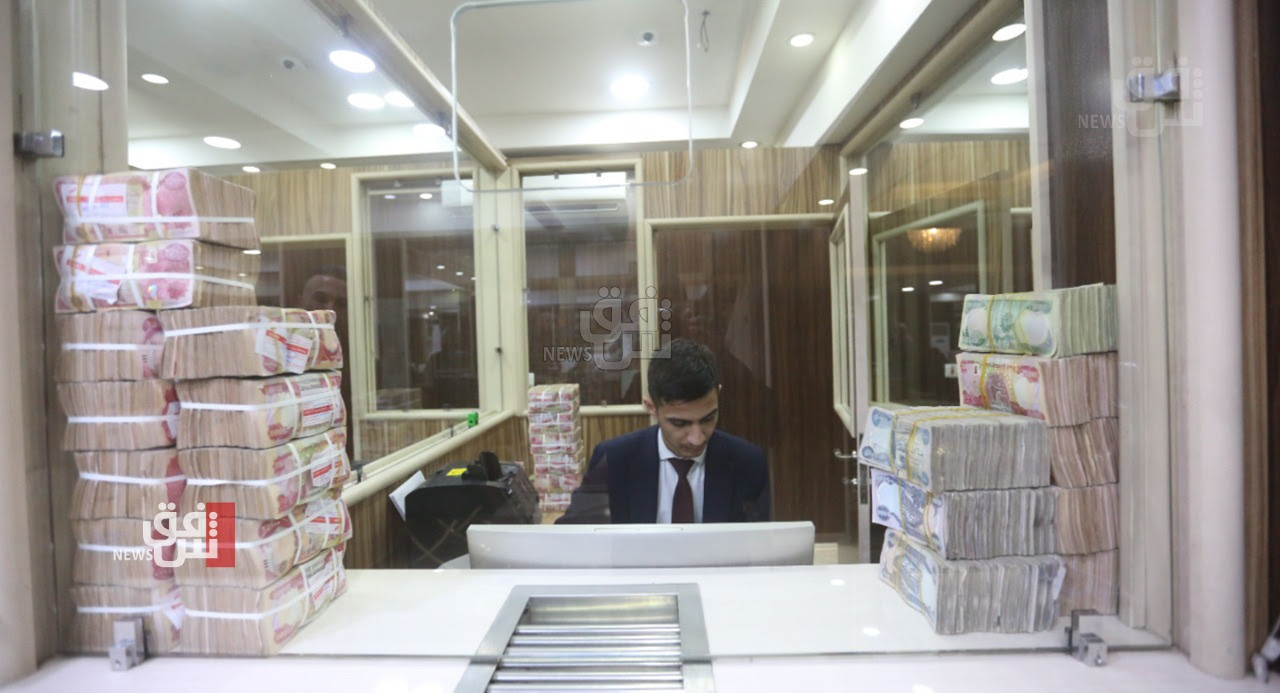
The Prime Minister's financial advisor, Mazhar Mohammed Salih, confirmed that operating expenses, which include salaries and other expenses, constitute approximately 57% of total annual spending in Iraq, and are fully covered as construction projects proceed at an accelerated pace.

Saleh explained in a statement to Al Furat News Agency, "This confirms the success of fiscal space management in supporting the country's financial, economic, and developmental sustainability, even in light of the relative decline in the oil asset cycle."

He pointed out that this has had a positive impact on citizens' living conditions, as annual growth in the general price level, or the inflation index, has remained below 4% per year, a key indicator in the country's stability roadmap and maintaining its standard of living.

Saleh described the current situation as a "prosperous and prosperous era" despite the difficulties facing the regional and global economies.

He noted that Iraq ranks third in the West Asia region in terms of GDP composition, after Saudi Arabia and the United Arab Emirates, among the group of Arab countries with high annual national incomes, according to the latest international indicators and estimates.


Finance: Work is underway to implement the ASYCUDA system in customs.

link

61704.jpeg

The Ministry of Finance confirmed on Tuesday that it is proceeding with automation programs across the ministry's sectors, while noting that work is underway to implement the ASYCUDA system in the customs sector.

Ahmed Al-Dahlaki, Director General of the Ministry's Financial and Accounting Training Center, said, "The Ministry of Finance is proceeding with the automation and comprehensive system across the ministry's sectors, including the banking sector." He explained that, "Work is underway to implement the ASYCUDA system in the customs sector, with UN experts training employees to implement it."
 

He added that "other departments within the ministry are working on digital transformation and automation," noting that "part of the Financial and Accounting Training Center's work is capacity building, and the center offers intensive courses for this purpose."


Baghdad seeks alternatives to Iranian gas due to US sanctions

link

IMG_7109-780x470.jpeg

Foreign Minister Fuad Hussein confirmed that US sanctions on Iran have prompted Baghdad to seek alternatives to importing Iranian gas.

In a press interview followed by the Iraq Observer, Hussein said, "US sanctions imposed on Iran have prompted Baghdad to seek alternative sources to import Iranian gas, which supplies approximately 33% of Iraq's electricity."

He pointed out that negotiations are underway with several countries, including Türkiye, Jordan, and Gulf states, to secure electricity needs.0


Do you have a card? Electronic payment has been expanded.

link

%D8%AD%D8%AD%D8%AD%D8%AD%D8%AD%D8%AD%D8%AD%D8%AD%D8%AD%D8%AD%D8%AD%D8%AD%D8%AD%D8%AD%D8%AD%D8%AD.jpg

The Iraqi Private Banks Association confirmed that the government has played a major role in achieving partnerships between the public and private sectors.

In his speech at the Union of Arab Banks conference currently being held in Cairo, under the title "Partnerships between the Public and Private Sectors," Wadih Al-Handhal, head of the Iraqi Private Banks Association, said that the private banking sector has begun to expand significantly following the partnership with the government, represented by the expansion of electronic payments, and government institutions contracting with companies and banks to develop the infrastructure for government electronic payments.
He added, "Electronic payments via bank cards in 2024 reached more than 21.1 trillion dinars, through more than 58 million transactions, compared to more than 7,000 transactions in 2017. This is a very significant development."


To support small and medium-sized enterprises, a financing partnership was signed with the German Development Bank.

link

kalimaiq-1745929525.jpeg

he Ministry of Planning announced today, Tuesday, the signing of a strategic financing partnership between the International Labor Organization and Iraqi financial institutions, within the framework of the Small and Medium Enterprises Development and Enhancement Project, funded by the German Development Bank (KfW).

Sabah Jundi Mansour, Director General of Economic and Financial Policies at the Ministry of Planning, explained in a statement received by Kalima News that "the importance of this partnership lies in supporting economic policies that focus on creating sustainable job opportunities and enhancing social protection, especially for vulnerable groups," noting that "the project represents a practical step toward activating responsible investment and linking financing tools to fair and comprehensive development policies." 

He pointed to "the role of Iraqi financial institutions in embracing qualitative cooperation with the International Labour Organization, which will enhance financial inclusion and open new horizons for entrepreneurship and local development." 

It is worth noting that "this partnership is part of joint efforts to support Iraq in achieving the Sustainable Development Goals, particularly Goal 8 on decent work and economic growth, and Goal 1 on eradicating poverty." 


Iraq strongly supports Washington-Tehran negotiation

link

Fuad Hussein:

Iraq strongly supports Washington-Tehran negotiation

Any potential agreement between the US and Iran would not come at the expense of other regional actors,  Fuad Hussein said an interview with Asharq News.

Hussein also highlighted the impact of US sanctions on Iran, which have forced Iraq to seek alternative sources for gas imports. Iranian gas supplies feed about 33% of Iraq’s electricity needs. He noted that Baghdad is in talks with several countries, including Turkiye, Jordan, and Gulf states, to secure alternative energy supplies.

The Iraqi foreign minister said his discussions in Washington also covered the situation in Syria, revealing that the US administration has presented eight conditions to the new Syrian leadership. Among the conditions, Hussein described the issue of foreign armed groups as particularly sensitive, calling it a major source of concern for neighboring countries and the broader international community.

During his meetings with US and European officials, Hussein said he emphasized the need to push for a comprehensive political settlement in Syria and called for the lifting of sanctions on Damascus, citing the humanitarian suffering of the Syrian people.

Stability in Syria is critical for Iraq, Hussein added. "We care deeply about the situation in Syria because developments there affect us both negatively and positively," he said.

Hussein ruled out the possibility of an Arab summit being held during US President Donald Trump’s upcoming regional visit.

The White House announced that President Trump would visit Saudi Arabia, Qatar, and the United Arab Emirates between May 13 and May 16.

Foreign Minister Hussein arrived in Washington on April 24 for an official visit during which he held a series of bilateral meetings with senior US officials. His visit aimed to strengthen bilateral ties between Iraq and the United States and explore ways to expand cooperation in political, security, and economic fields, alongside discussions on regional and international issues of mutual concern.

 Buy Me a Coffee


Iraq invites Mike Waltz to visit Baghdad and see the positive developments on the ground.

link

Iraq invites Mike Waltz to visit Baghdad and see the positive developments on the ground.

US National Security Advisor


Foreign Minister Fuad Hussein invited US National Security Advisor Mike Waltz on Tuesday to visit Iraq and observe the "developments" taking place in the country on the security, political, and economic levels.

The Foreign Minister meets with the US National Security Advisor at the White House to discuss regional issues and bilateral relations.

On Tuesday, April 29, 2025, at the White House in Washington, D.C., U.S. National Security Advisor Mike Waltz received Deputy Prime Minister and Minister of Foreign Affairs Fuad Hussein. The meeting was attended by Eric Trager, Middle East and North Africa Policy Officer, and Matt Vilansky, Director of the Iraq and Syria Office.

At the beginning of the meeting, Mr. Waltz welcomed the Minister's visit, stressing the importance of continuing dialogue and coordination between the two countries.

For his part, Minister Fuad Hussein gave a detailed presentation on his visit to Washington, outlining its objectives and the outcomes of the bilateral meetings he held with senior US officials.

The two sides discussed the security situation in the region and current challenges. They also discussed the progress of the ongoing negotiations between the Islamic Republic of Iran and the United States of America, emphasizing the importance of reaching agreed-upon outcomes consistent with President Donald Trump's policy of resolving regional issues through peaceful means.

On another topic, the meeting addressed the issue of oil exports from the Kurdistan Region of Iraq and the outstanding issues between oil companies on the one hand, and the regional and federal governments on the other.

The two sides also reviewed developments in Syria and ways to support regional stability.

At the conclusion of the meeting, Minister Fuad Hussein affirmed that the security situation in Iraq is stable and secure, noting that Baghdad is preparing to receive Arab leaders on May 17th during the Arab Summit.

He also invited the US National Security Advisor and his team to visit Iraq and observe the positive developments the country is witnessing on the security, political, and economic levels.


The Iraqi economy is under threat. An expert warns of the repercussions of relying on oil

link


Economic expert Faleh Al-Zaidi warned on Tuesday of the repercussions of Iraq's continued reliance on oil revenues without taking actual steps to diversify the national economy, stressing that this approach makes the country vulnerable to fluctuations in global markets.

Al-Zaidi explained in a statement to the Al-Maalouma Agency that “oil revenues are by nature subject to fluctuations in the international market and are beyond the direct control of the Iraqi government,” noting that “global political factors often affect oil prices.” 

He pointed out that "the trade policies pursued by former US President Donald Trump, including the imposition of tariffs, contributed to an economic recession that affected several countries, including Iraq."

Al-Zaidi added that "the success of the ongoing negotiations between the US and Iran will have a positive impact on the region, but it has two contrasting effects on Iraq. On the one hand, lifting sanctions on Iran may contribute to increasing oil production and improving gas supplies, which would address some of the electricity shortage problems in Iraq. On the other hand, the increase in oil supply may lead to lower prices."
He stressed the need to "diversify the Iraqi economy and develop alternative sources of income," warning that "continued reliance on oil will force the country to resort to borrowing if global prices decline."

It's worth noting that Iraqi oil prices fell today in conjunction with a decline in global oil prices as investors lowered their expectations for demand growth due to the ongoing trade war. Iraq has witnessed significant volatility in oil prices since Trump imposed tariffs on most countries around the world, causing a global economic recession. 


What does cash flow have to do with it? Parliamentary Finance Committee: The government is not serious about submitting the 2025 budget.

link

iqdribboned.jpg

Member of the Parliamentary Finance Committee, Jamal Kocher, confirmed today, Tuesday (April 29, 2025), the lack of seriousness of the Iraqi government in sending the 2025 budget tables, explaining the reasons for that.

"The Iraqi government is not serious about sending the 2025 budget tables, even though the House of Representatives is fully prepared to receive those tables and vote on them urgently if they arrive," Kocher told Baghdad Today.

He explained that "the government is reluctant to send the schedules due to its lack of sufficient cash flow," noting that "funds from previous budgets have not yet been disbursed due to the ongoing liquidity crisis, which means the government does not see the need to send the schedules at this time."

The Iraqi government has been facing a severe liquidity crisis for months due to declining oil revenues, increased public spending, and the failure to implement the 2023 and 2024 budgets.
This has led to the postponement of numerous government projects and plans, amid warnings of negative repercussions for the economy and basic services. Meanwhile, the House of Representatives awaits approval of the 2025 budget before the end of the current parliamentary session.


BP CEO Auchincloss bullish about ‘pretty profitable’ Iraq deal

Chief executive Murray Auchincloss says production would be 'quickly' cashflow poistive

link
Published 29 April 2025, 07:23

BP chief executive Murray Auchincloss is bullish about the UK supermajor's recently signed deal with the Iraqi government to redevelop the Kirkuk oil and gas fields, calling it "pretty profitable" and quick to generate cash.

A 25-year production sharing agreement (PSA) was signed in February to redevelop more than 3 billion barrels of oil equivalent of resources in the Baba and Avanah domes of the Kirkuk oilfield and three adjacent fields — Bai Hassan, Jambur and Khabbaz — all currently operated by state-owned North Oil Company.

At the time the contract was signed, Auhcincloss said the deal offered “a better margin” than at its Rumaila field investment in southern Iraq, pointing out that it has access to Iraqi gas for the first time and offers exploration upside via a tentative deal that could allow it to tap estimated resources of up to 20 billion boe.

You need a subscription to read this story

Zain Iraq Inks Gaming, eSports Deal with 


s part of its commitment to empowering Iraqi youth, Zain Iraq has announced a landmark memorandum of understanding with KRAFTON Europe, the global powerhouse behind hit titles such as PUBG: Battlegrounds. This partnership underscores Zain Iraq's dedication to meeting evolving consumer needs while embracing cutting-edge gaming and electronic sports technologies.

The strategic MoU will launch collaborative initiatives and projects under the Zain esports brand to enhance player experiences and develop Iraq's growing gaming and esports sectors. Both companies will explore delivering Krafton's premium gaming portfolio to Iraqi subscribers, alongside organizing specialized activities and events tailored to the aspirations of the local esports community.

Krafton, established in 2007 as a South Korean video game holding company, oversees multiple game development studios focused on creating immersive and engaging gaming experiences for global audiences. Beyond PUBG, Krafton develops and publishes diverse gaming titles across PC, mobile, and console platforms.


What do the 2025 budget tables include?

Regarding the budget, it has two parts. The first part
0:03
is related to amending the texts. There was one paragraph that was
0:07
amended and approved, which is the costs of transporting
0:10
crude oil production in the Kurdistan Region.
0:13
It became 16
0:15
dollars, and with the formation of committees between the region
0:19
and the central government, that is, to study
0:22
the issue, and then it will become
0:24
meaning the final amount, but currently, as a stage
0:28
the first 16 dollars
0:30
The second part, which relates to the budget, which
0:32
is the issue of budget tables, and this part, which
0:37
is related to the work of ministries and government institutions,
0:40
has not yet been submitted to the Council of Representatives
0:43
to take legal form. This part is supposed to
0:46
be included in the texts, but it has not been included, that is,
0:51
subject Contracts are in the texts, but the expected part
0:55
is the budget tables related to
0:59
revenues and expenditures, each ministry and its allocations
1:03
and related financial matters.

in case you missed the last episode  here you go!

Monday, April 28, 2025

Iraq Launches Major Financial Push for 2025! 💰

The Central Bank announces the launch of the Arab Financial Inclusion Week 2025.

link

The Central Bank announces the launch of the Arab Financial Inclusion Week 2025.

Under the slogan "Promoting the Integration of People of Determination and Vulnerable Groups into the Formal Financial System," Financial Inclusion Week activities in Iraq kicked off this morning, Sunday, April 27, and will continue until May 5 of this year.
The video for this My FX Buddies blogpost is below here:
These activities are in line with the Central Bank of Iraq's efforts to promote financial inclusion in society and raise financial and banking awareness among various segments of society, especially those least benefiting from formal financial services. This will contribute to supporting economic and social development and achieving sustainability.

The week's activities include organizing workshops, exhibitions, direct awareness campaigns, and field trips aimed at spreading financial literacy across bank branches and financial institutions spread across all governorates. Activities will also be organized outside the branches in coordination with the Association of Islamic Banks, the Association of Private Commercial Banks, and the "We Will Reach You" and "Spare You" campaigns approved by the Central Bank.
 
Central Bank of Iraq
Media Office
April 27, 2025


Qubad Talabani: Our doors are open to all foreign companies for investment.

link

%D9%82%D9%88%D8%A8%D8%A7%D8%AF-768x642.jpeg

 joint contract signing ceremony took place in Sulaymaniyah between local and American companies to develop the Bazian power plant.
During the ceremony, Deputy Prime Minister of the Kurdistan Region, Qubad Talabani, delivered a speech welcoming the attendees, company representatives, businessmen, and guests. He emphasized the importance of signing this contract, which will contribute to the development of the electricity sector.
He added, "This contract will strengthen the Kurdistan Region's infrastructure and send an important message to the world that the Kurdistan Region's doors are open to all foreign companies working towards a more developed Kurdistan."
He explained, "We in the Kurdistan Regional Government have open doors to all foreign companies to invest in the Kurdistan Region. It is important to make clear to all investors that our priority is to work on diversifying resources in the Kurdistan Region. I thank all the companies that have been operating in Sulaymaniyah for a long time and have implemented many important and necessary projects, making Sulaymaniyah a model of development and prosperity."
Talabani said, "Through this contract and the cooperation between the companies, we can provide a significant portion of the electricity supply to the Kurdistan Region and work to develop the electricity sector in general. Under this contract, many cadres and engineers will be trained according to international standards."

He continued, "This contract will provide opportunities for young people, as well as job and training opportunities for a large number of citizens, and will build a sophisticated electricity sector. We in the Kurdistan Regional Government provide all necessary facilities to foreign companies, and we must rely on clean energy and develop the gas sector as well."

The Central Bank of Iraq indicates a decline in public government spending.

link

The Central Bank of Iraq indicates a decline in public government spending.

The Central Bank of Iraq announced on Monday that public government spending will decline by the end of 2024, stressing that this indicates a decline in the currency issued to 100 trillion dinars.

The bank stated in a report on monetary and financial indicators, which Shafaq News Agency reviewed, that "public government spending recorded a decline at the end of last December by 5.54%, reaching 12.95 trillion dinars, compared to November, which reached 13.71 trillion dinars."

He added, "The decline in public spending indicates a decline in the currency issued by 0.34 trillion dinars, reaching 100.54 trillion dinars in December, compared to 101.34 trillion dinars in November."

Last February, the German website Statista, which specializes in market and consumer data, predicted a decline in government spending relative to Iraq's gross domestic product (GDP) this year.

According to a report published by the website and reviewed by Shafaq News Agency, "the ratio of government spending to GDP for 2024 reached 48.43%, the highest government spending in the past five years."

He added that this percentage is expected to "decline in 2025 to 47.94% and to fall to 45.1% in 2029."


Al-Sudani receives an invitation to visit Italy to conclude strategic agreements and resolve outstanding issues dating back to the 1980s.

link

Al-Sudani receives an invitation to visit Italy to conclude strategic agreements and resolve outstanding issues dating back to the 1980s.

Prime Minister Mohammed Shia al-Sudani received an invitation from Italy.

Al-Sudani's media office said in a statement received by {Euphrates News} that "the latter received the Italian Ambassador to Iraq, Nicolo Fontana, where they discussed strengthening bilateral relations and developing joint cooperation for the benefit of the two friendly countries." 

Al-Sudani affirmed "the government's determination to complete what was agreed upon between him and Italian Prime Minister Giorgia Meloni during her official visit to Iraq at the end of 2022, in addition to Iraq's ongoing efforts to deepen relations with the Italian side, highlighting the importance of Italian companies' contribution to the comprehensive renaissance Iraq is witnessing today, as well as the preparations for his upcoming visit to Rome." 

For his part, the Italian ambassador conveyed an invitation to the Prime Minister to visit Italy to conclude bilateral strategic agreements in the economic, security, military, and cultural fields, and to resolve outstanding issues between the two countries since the 1980s. He stated that cooperation between Iraq and Italy is essential and pivotal to consolidating stability in the region and the world.


Al-Sudani: The importance of Italian companies' contribution to the comprehensive renaissance taking place in Iraq.

link

61670.jpeg


Prime Minister Mohammed Shia al-Sudani stressed on Monday the importance of Italian companies' contribution to the comprehensive renaissance Iraq is witnessing today.

The Prime Minister's Media Office said in a statement received by Al-Eqtisad News that Al-Sudani received the Italian Ambassador to Iraq, Nicolo Fontana, where they discussed strengthening bilateral relations and developing joint cooperation for the benefit of the two friendly countries.

Al-Sudani affirmed the government's determination to complete the agreements reached between him and Italian Prime Minister Giorgia Meloni during her official visit to Iraq in late 2022. He also emphasized Iraq's ongoing efforts to deepen relations with Italy, highlighting the importance of Italian companies' contribution to the comprehensive renaissance Iraq is witnessing today, as well as the preparations for his upcoming visit to Rome.

For his part, the Italian ambassador conveyed an invitation to the Prime Minister to visit Italy to conclude strategic bilateral agreements in the economic, security, military, and cultural fields, and to resolve outstanding issues between the two countries since the 1980s. He stated that cooperation between Iraq and Italy is essential and pivotal to consolidating stability in the region and the world.


MP: Parliament will resume its sessions normally within the next two days - Urgent

link


Member of Parliament Jawad Al-Yasari confirmed, on Monday (April 28, 2025), that the Iraqi Parliament will resume its sessions normally within the next two days.

The leftist told Baghdad Today, "The House of Representatives will resume its sessions within the next two days, and there is a determination and will to do so from the House Presidency, and there is an understanding with the parliamentary blocs, with the aim of exploiting the last months of the House's term to pass important laws."

He added that "any controversial law will not be put on the agenda without prior agreement between the parliament's presidency and the leaders of the parliamentary blocs to ensure that sessions are not disrupted, as has happened in the past period." He indicated that "in the coming hours, a date will be set for the resumption of weekly sessions as normal."

Last Saturday, the Parliamentary Legal Committee confirmed that the term of the Iraqi Parliament's legislative and oversight body had "expired."

Committee member Mohammed Anouz told Baghdad Today, "The Iraqi parliament's legislative and oversight role has come to an end due to a political will to obstruct the council's work until the next parliamentary elections. This session has been deliberately obstructed by political disputes since the beginning of the session and continues to this day."

He explained that "there is a deliberate attempt to keep the House of Representatives inactive so as to prevent requests for interpellation and accountability for some officials who enjoy political and partisan protection, as well as to obstruct the passage of some laws so that they remain a bargaining chip and blackmail tool in the hands of some political parties during the coming period. That is why we say that the life of the legislative and oversight council has ended because of these influential political parties."

The scene of a parliament in limbo or in session has become a part of political life in Iraq. Citizens may have grown accustomed to this recurring pattern, or may consider themselves unconcerned with what transpires within the parliament, which could translate into a reluctance to participate in or a boycott of the upcoming parliamentary elections. 


Head of the Iraqi Private Banks Association: Arab and foreign investments in Iraq reached $63 billion in two years.

link

61676.jpeg


The head of the Iraqi Private Banks Association, Wadih Al-Handhal, announced that the Union of Arab Banks will hold its next conference in the capital, Baghdad, under the patronage of Iraqi Prime Minister Mohammed Shia Al-Sudani, in cooperation with the Central Bank of Iraq and the Iraqi Private Banks Association. 
 
In his speech at the Union of Arab Banks conference currently being held in Cairo, under the title of Public-Private Partnership, Al-Handhal said, "The current Iraqi government has taken a major role in achieving public-private partnerships, starting with the establishment of the Private Sector Council." He noted that the private banking sector has begun to expand significantly following the partnership with the government, represented by the expansion of electronic payments and government institutions contracting with companies and banks to develop the infrastructure for government electronic payments.
 
He added that electronic payments via bank cards in 2024 reached more than 21.1 trillion dinars, through more than 58.4 million transactions, compared to just over 7,000 transactions in 2017. This represents a significant development. 
 
He stressed that the volume of Arab and foreign investments in Iraq over the past two years reached $63 billion, and this came as a result of the partnership between the government and the private sector. 
 
He explained that the development path represents a major gateway to public-private partnerships, and that everyone can participate in this project, which contributes to the development of Iraq's gross domestic product.


Al-Sudani: Iraq and its people are on the right path.

link


Prime Minister Mohammed Shia al-Sudani affirmed today, Monday, April 28, 2025, that Iraq and its people are on the right path.

A statement from the Prime Minister's Office, received by Baghdad Today, stated that Al-Sudani "participated, on Monday, in a luncheon hosted in his honor by Sheikh Hussein Al-Hassan Al-Hasnawi, in the presence of a number of dignitaries from the Al-Hassan clan."

The Prime Minister expressed his keenness to meet directly and engage in dialogue with all segments of society, stressing that "the clan is an important social component that represents a history of giving, supporting the state, and defending it."

Al-Sudani stressed that "Iraq possesses all the elements of progress and strength, including history, resources, and the brotherhood among its people in coexistence."


Government advisor: "Marginal spending" protects Iraq from global economic shocks

link

Government advisor: "Marginal spending" protects Iraq from global economic shocks

The Prime Minister's financial advisor, Mazhar Mohammed Saleh, emphasized that the "marginal spending" policy, along with the preparation of the domestic money market for bridge loans when needed, represents a significant support for government spending and is one of the most important features of a flexible, independent, and effective fiscal space in managing the country's financial life.

Saleh explained to Al Furat News Agency that this policy represented a "firewall" in the face of external shocks resulting from the current trade war, the conditions of energy markets, and shifts in global political and economic geography.

He pointed out that the state's general economic policy, both fiscal and monetary, offers significant opportunities for consultation, coordination, and implementation in protecting the national economy, managing its sustainability at the financial and developmental levels, and protecting stability.

The financial advisor explained that the country has now entered the second quarter of 2025, managing the economic process "with high professionalism" without compromising the government program, pointing to the high stability in the implementation of infrastructure, services, and construction projects, in addition to the stability of payments related to salaries, wages, pensions, and social care, which he described as "an important figure in annual spending when implementing a financial spending scenario at the minimum efficient level."


EBRD Enables Expansion into Iraq

link


European-Bank-for-Reconstruction-and-Development-EBRD.png.pagespeed.ce.Y-lzzMIR44.png 

The European Bank for Reconstruction and Development (EBRD) has amended its statutes, enabling it to expand operations into sub-Saharan Africa and Iraq.

According to a statement from the bank, this pivotal change redefines the Bank's geographic remit and follows approval by its Board of Governors in 2023. The amendment will formally take effect in three months.

The move sets the stage for Iraq to become a full country of operation, alongside several sub-Saharan nations. Iraq, along with Benin, Côte d'Ivoire, and Nigeria, has already joined as a shareholder, while Senegal, Kenya, and Ghana are currently undergoing the membership process.

Full statement from the EBRD:

The shareholders of the European Bank for Reconstruction and Development (EBRD) have accepted an amendment to Article 1 of the Bank's statutes, enabling the expansion of its operations to selected countries in sub-Saharan Africa and Iraq. Article 1 of the EBRD's statutes defines the Bank's purpose and its geographic remit for countries of operations.

The Board of Governors approved this expansion in 2023 and the threshold of shareholder approval required for the amendment to Article 1 has now been met. The amendment will enter into force in three months' time.

The announcement comes as the EBRD gears up for its 34th Annual Meeting, which will take place at the Bank's headquarters in Canary Wharf on 13-15 May 2025.

The event - centred on the theme Expanding Horizons, Enduring Strengths - will mark the Annual Meeting's return to London for the first time since 2016. It will provide an opportunity for the Bank to emphasise its commitment to international cooperation and innovation as it enters a new phase in its history, advancing its unique business model to sub-Saharan Africa and Iraq and finalising its new Strategic and Capital Framework for the next five years.

The EBRD has already welcomed Benin, Côte d'Ivoire, Nigeria and Iraq as new shareholders, with Senegal, Kenya and Ghana currently undergoing the membership process.

Once the countries become members, they must receive approval from the Board of Governors to become EBRD countries of operation.

EBRD President Odile Renaud-Basso said: "The modification of our Article 1 statute is a pivotal step towards the Bank's geographical expansion. It paves the way for our governors to grant recipient status to countries in sub-Saharan Africa and Iraq, which will enable us to start operations in our first countries in the region."

The EBRD currently has 75 national shareholders, in addition to the European Union and the European Investment Bank.

The Bank supports countries in transition by using a combination of investment, advisory work and policy reform, with a focus on developing the private sector and bringing about sustainable change.


Buy me a Coffee


The Parliamentary Finance Committee opens the revenue file and warns against delaying the budget schedules.

link

The Parliamentary Finance Committee announced today, Monday, that it will hold an important workshop at the Government Palace, stressing that the workshop is dedicated to discussing mechanisms for controlling government revenues, and is not related to the general budget schedules for the current year.
Committee member, MP Moeen Al-Kadhimi, told Al-Maalouma Agency, “The committee will hold an expanded workshop today at the Government Palace, focusing on discussing how to control and develop government revenues,” noting that “the workshop does not include any discussion of the current year’s budget schedules.”


Al-Kadhimi added that “the Council of Ministers has not yet sent the budget schedules to the House of Representatives,” explaining that “the delay in sending the schedules has obstructed the implementation of the operating budget and delayed employee dues.”
He pointed out that "the Ministry of Finance has initiated suspensions related to bonuses, promotions, transfers, and the calculation of employee certificates, as part of its efforts to organize administrative files related to human resources."


Member of the Parliamentary Finance Committee, MP Mustafa Al-Karawi, confirmed in a previous statement to Al-Maalouma Agency that the government's delay in sending the schedules led to the suspension of operational spending and the delay of employee dues.


The Central Bank indicates a decline in public spending.

link

...


The Central Bank of Iraq announced a significant decline in government spending at the end of 2024, indicating a decline in the volume of currency issued. The currency reached 100 trillion dinars at the end of the year, a decline compared to the previous month.

In its latest report on monetary and financial indicators, the Central Bank explained that public government spending in Iraq witnessed a 5.54 percent decrease at the end of December, reaching 12.95 trillion dinars, compared to November, which 

Recorded 13.71 trillion dinars. 

This decline in public spending reflects, according to the Central Bank, a decline in the currency issued by 0.34 trillion dinars, bringing the total currency issued to 100.54 trillion dinars in December, compared to 101.34 trillion dinars in the previous month.

These changes in public spending and the currency issued were considered an indicator of economic volatility in Iraq, as they affect purchasing power and various economic sectors. This decline in public spending is in line with expectations reported by the German website "Statista," which specializes in market and consumer data, in February, which showed a decline in government spending relative to Iraq's GDP this year.


The Finance Committee discusses oil price fluctuations and the regulatory law with international partners.

link

The Finance Committee discusses oil price fluctuations and the regulatory law with international partners.

On Monday, April 28, 2025, the Parliamentary Finance Committee discussed the fluctuations in oil prices and their impact on the budget, with the International Partners Foundation, and with the participation of experts, consultants, university professors and official bodies, in an important workshop to discuss the proposed law for the first amendment to the Federal Revenue Control and Allocation Authority Law No. (55) of 2017.


The House of Representatives' media office said in a statement received by Al-Jabal that it "held an expanded two-day workshop to discuss ways to maximize revenues, in cooperation with the International Partners Foundation, with the participation of experts, consultants, university professors, and relevant official bodies." 


Committee Chairman Atwan Al-Atwani noted that "over time and the increasing complexity of the economic landscape have demonstrated the need to review, update, and amend the Authority's legal framework." He explained that "the Finance Committee in the House of Representatives is currently leading a significant legislative effort aimed at introducing the first amendment to Law No. 55 of 2017, a move that reflects an awareness that the law in its current form may not be sufficient to address emerging challenges or fully achieve the ambitious goals set for the Authority."


The International Partners Foundation presented a presentation by Mr. Ken McIntosh and Lord Jeremy Purves, highlighting the most prominent problems and challenges facing the Iraqi economy. They presented the Foundation's vision for overcoming these obstacles, emphasizing the Commission's pivotal role in monitoring and overseeing the allocation of revenues to achieve financial stability and enhance transparency.


According to the statement, "The proposed first amendment, which the House of Representatives completed its first reading, aims to address challenges and enhance the Authority's role through several axes addressed in the interventions and discussions during the workshop, most notably the Authority's role in verifying the fair distribution of revenues when preparing the draft federal general budget, and the accuracy of calculating allocations according to principles and standards determined by a special and precise system. Approaching the relevant authorities to provide the Authority with the necessary information and documents to enable it to perform its duties effectively. Investigating and investigating to accurately determine the sources and components of federal revenues."


The workshop also included hosting representatives of ministries to exchange advice and opinions, with a focus on the importance of expanding the authority's mandate to include evaluating the performance and financial effectiveness of government institutions, in addition to the need to clearly define the authority's powers to avoid overlapping tasks with other institutions, according to the statement.


The workshop's primary objective, according to the statement, was to "consult and gather input from key stakeholders, including representatives of federal ministries, the regional and local governments, financial and legal experts, and representatives of the International Partners Foundation, on the proposed draft amendment. The workshop also sought to develop the draft amendment based on the comments and suggestions submitted, with the aim of finalizing it before presenting it for a second reading in the House of Representatives. Additionally, it explored how to enable the Commission to carry out its expanded mandate efficiently and effectively."


Foreign Minister: Intelligence cooperation with the US is essential to deter terrorism, and Iraq has made significant democratic strides.

link

Foreign Minister: Intelligence cooperation with the US is essential to deter terrorism, and Iraq has made significant democratic strides.

Deputy Prime Minister and Minister of Foreign Affairs Fuad Hussein stressed on Monday the importance of intelligence and security cooperation to support Iraq's efforts to confront terrorist threats and prevent the return of ISIS. He noted that the country has made "significant strides" in consolidating the democratic process despite challenges, and stressed the importance of pushing towards a comprehensive political settlement that guarantees Syria's unity and stability.

A statement from the Ministry of Foreign Affairs, received by Shafaq News Agency, stated that Hussein participated in a roundtable organized by the Washington Institute for Near East Policy, which was attended by a group of researchers and experts specializing in Middle Eastern affairs .

During the meeting, Hussein reviewed the Iraqi government's vision regarding regional and international developments, stressing the importance of continuing strategic cooperation between Iraq and the United States in various fields, particularly in the field of combating terrorism and enhancing regional security and stability .

He highlighted the importance of intelligence and security cooperation to support Iraq's efforts to confront terrorist threats and prevent the return of the terrorist organization ISIS. He also addressed the development of the democratic process in Iraq, noting that Iraq has made significant strides in consolidating the democratic process despite the challenges. He emphasized the importance of ongoing preparations for the upcoming parliamentary elections, which will consolidate the principle of the peaceful transfer of power .

Addressing regional challenges, the Minister addressed the Syrian crisis, stressing the importance of advancing a comprehensive political settlement that guarantees Syria's unity and stability and preserves the rights of all its components. He also emphasized the need to alleviate the suffering of the Syrian people and reject policies and measures that exacerbate the humanitarian crisis .

He also noted that Iraq, by virtue of its geographical location and balanced relations with all parties, adopts a policy of dialogue and openness to ease regional tensions and works to strengthen frameworks for cooperation with neighboring countries and the region to achieve collective security and sustainable stability .

In the context of bilateral relations with the United States, the Deputy Prime Minister and Minister of Foreign Affairs affirmed Iraq's keenness to strengthen the strategic partnership with Washington, pointing to preparations for a new round of strategic dialogue between the two countries during the current year, with the aim of developing joint cooperation in the economic, investment, educational, and health sectors, and expanding the horizons of scientific and cultural exchange in a way that enhances the interests of the two friendly peoples .

Minister Hussein explained that Iraq views its relationship with the United States as a fundamental pillar for supporting internal stability and achieving comprehensive economic development, noting the importance of leveraging American expertise in capacity building and supporting investment in vital sectors such as energy, education, and healthcare .

He stressed the importance of continuing the strategic dialogue between Iraq and the United States, which contributes to strengthening common interests, supporting the path to regional security and stability, and establishing the foundations of peace and development in the Middle East .

He also touched on the importance of following up on the ongoing negotiations between the United States and Iran, stressing that Iraq supports any diplomatic efforts aimed at easing tensions and enhancing regional security, based on its firm belief that dialogue is the best way to resolve disputes and safeguard the interests of all peoples in the region.


Government Directive Regarding Iraqis Residing in the United States

link

Government Directive Regarding Iraqis Residing in the United States

Issued by the Minister of Foreign AffairsFouad HusseinToday, Monday, a directive regarding IraqisResidentsinUS.

She saidMinistry of Foreign AffairsIn a statement received byAlsumaria News"The Vice PresidentCabinet and Minister of Foreign Affairs Fouad HusseinHe paid a visit toEmbassy of the Republic of IraqinWashingtonOn Monday, April 28, 2025, he met with the AmbassadorIraqI haveUSANizar Al-Khairallah, and members of the embassy staff.
 
She added that "the visit came within the framework of following up on the progress of diplomatic work and strengthening bilateral relations between Iraq and the United States, coinciding with the discussions that the minister is holding with American officials during his current visit to Washington," noting that "during the meeting, the minister discussed with the embassy staff ways to developStrategic Partnershipbetween the two countries, especially in the political, security and economic fields, in line with the agreements signed between the two sides, foremost among which is the Strategic Framework Agreement."
She stated that "the meeting addressed the ongoing preparations for holding a meetingJoint High Committee"The upcoming meeting between Iraq and the United States will discuss cooperation in several areas, emphasizing the importance of good preparation for these meetings.
" The Minister praised "the great efforts made by the Ambassador and the embassy staff in this regard," noting "the importance of strengthening coordination between the two countries in light of current regional developments.
" He stressed "the need to simplify consular services provided to the Iraqi community inUS", stressing "the importance of improving its quality."
For his part, the ambassador expressedNizar Al-Khair AllahHe expressed his appreciation for the visit, describing it as "a step in support of diplomatic work, coming amidst the major circumstances and challenges facing the region."

Iraq's International Smart Card and Mena Fintech Association forge finance pact

The MENA Fintech Association (MFTA) proudly welcomes International Smart Card (ISC), Iraq’s foremost provider of digital payments, fintech solutions, and digital identity services, as its newest corporate member.


This strategic alliance is set to catalyse innovation, accelerate digital payment adoption, and drive inclusive financial transformation across the MENA region.

Through this partnership, MFTA and ISC will co-host a curated series of high-impact events across key regional hubs. These events will bring together fintech visionaries, regulatory leaders, and technology pioneers to engage in dialogue and shape the regional fintech agenda. The initiatives will provide a platform to address regulatory evolution, foster collaboration, and highlight the next wave of digital finance.

ISC’s entry into the fintech community marks a pivotal moment in deepening collaboration across borders and reinforcing this spirit to drive sustainable innovation and inclusive growth within the financial sector. Joint initiatives will be developed in close coordination with central banks, authorities, and fintech ecosystem stakeholders.

Major initiatives and regional programmes are set to be unveiled in the coming weeks, promising exciting opportunities for both fintech pioneers and the wider digital


In case you missed the last episode it is below here:


Thanks for stopping by!