Banking Reform Restores Momentum to the Iraq Stock Exchange
Reporter a year after launching the banking reform plan the landscape of Iraq Banks has begun to clarify between upgrading merging under new conditions or liquidation and exiting the sector as nearly six banks have so far preferred merging and sinking new partners for development
Guy: we chose the second path which is the path of merger to emerge or work towards the emergence of a strong entity that can through it the bank together with other Banks can develop the banking size significant significantly in terms of Technology and operations and attract Investments through this new entity that will appear soon God willing
it is expected that with the completion of the banking reform plan and the lifting of international sanctions money market activity will be supported by 10% to 30% in terms of trading volume and market value with increased interest from foreign investors in banking sector stocks
despite the slow pace the development of the financial position in compliance with clear governance are factors that have begun to help the Iraqi banking sector open up further and Foster fruitfull external Partnerships which will reflect positively on the banking stability index and it's linked to the value of sector stocks in the Capital Market. End
The disappearance of small change from Iraqi markets: Who controls the flow of money?
Complaints are increasing in Iraqi markets from citizens and shop owners about the difficulty of obtaining small denominations of currency, especially the 250 and 500 dinar notes, in a phenomenon that disrupts daily sales operations and raises questions about the efficiency of distributing the local currency between the Central Bank, banks and markets.
Shop owners and customers told Al-Mustaqila that returning the remaining amounts to customers has become more difficult, prompting some stores to round up prices or replace the remaining amount with a small item, which represents an additional cost to the consumer when repeated in a large number of transactions.
There are no official indications that the two denominations will be withdrawn from circulation, as they remain legal tender. However, their continued legal tender status does not explain their limited availability in the market, particularly in sectors such as transportation, convenience stores, and services that rely on small amounts of cash.
The shortage may be related to weak demand from banks for small denominations, or their unbalanced distribution among branches and governorates, or some commercial activities keeping them to cover their needs, as well as quantities leaving circulation due to damage and overuse.
The currency moves from the central bank to banks, then to companies, traders and citizens, which means that the problem may occur in one of the distribution links and not necessarily in the size of the currency issue itself.
The central bank had previously instructed banks to promote the circulation of small denominations and open windows for replacing damaged banknotes, but the continued complaints indicate that the implementation of these measures has not ended the problem in the markets.
There is no publicly available periodic data showing the quantities of each category being pumped out, the number of banknotes withdrawn due to damage, or the share of each governorate and bank, which makes it difficult to determine the actual reasons for the shortage and the extent of the responsibility placed on each party.
There is no publicly available evidence that an entity is deliberately collecting the small denominations or that there is an organized market for selling them for commissions, but their continued scarcity may open the door to informal practices for providing them.
Despite the expansion of electronic payments, large sectors in Iraq still rely on cash, making the availability of small denominations a necessity for stabilizing sales and protecting consumer rights.
The crisis puts the central bank and banks to a test of transparency and efficiency in managing cash, as it requires publishing detailed data on the denominations in circulation and ensuring that banks and markets are supplied with the required quantities.
The question remains: if the 250 and 500 dinar denominations are still within the money supply, why don't they reach citizens and markets regularly?
Why have small denominations disappeared from the markets? Al-Zaydi's advisor reveals the reasons.
link these are the ones they use now not the ones we are waiting for
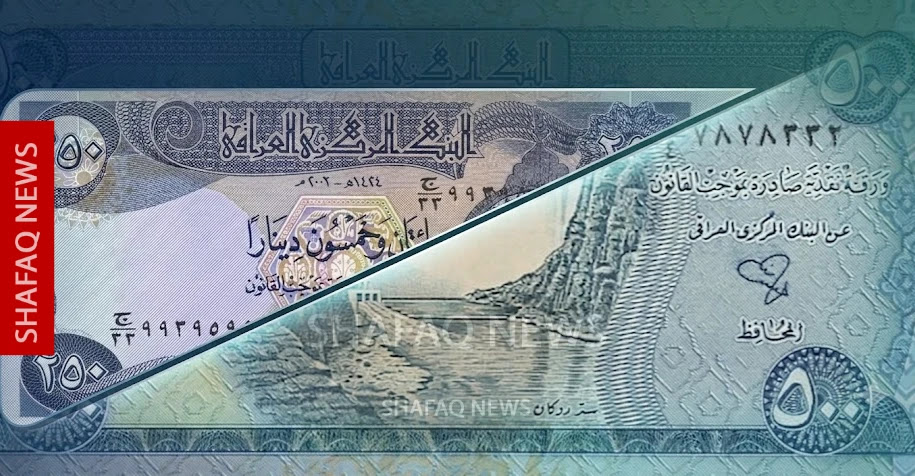
The Prime Minister's financial advisor, Mazhar Muhammad Salih, revealed on Wednesday the reasons for the scarcity of small denominations of currency in Iraqi markets, stressing that this is mainly related to their paper nature and the high speed of their circulation, which leads to their deterioration within a short period of time.
Saleh told Shafaq News Agency that issuing currency in its various denominations is one of the core tasks of the Central Bank of Iraq, which is responsible for managing the currency and providing the necessary liquidity to meet the needs of economic activity and ensure the smooth flow of payments and the stability of cash transactions.
He explained that small denominations of currency represent the primary tool for conducting low-value daily transactions, which makes them the most commonly traded among citizens and markets, and therefore the most susceptible to wear and tear.
Saleh added that Iraq, unlike many countries that rely on coins for small denominations, still uses paper denominations, noting that the lifespan of these denominations does not exceed about one year according to international standards, due to the intensity of their use and their continuous transfer between hands, at a time when reliance on paper money remains high while electronic payment methods continue to grow.
He pointed out that the Central Bank has accurate indicators and statistics to measure the demand for different denominations of currency, and it is the first entity to sense the market’s need to issue or reprint any denomination, especially the small denominations, which are characterized by their rapid circulation compared to the large denominations, which tend to be more towards saving or hoarding.
The government advisor concluded his remarks by saying that "providing small denominations is not just about issuing currency, but also represents one of the indicators of efficient cash management, and contributes to ensuring the smooth flow of economic activity and the stability of the payments system," stressing that "these denominations are continuously monitored by the Central Bank of Iraq."
Iraqi markets are experiencing ongoing suffering due to the scarcity of small denominations of currency, such as 250 and 500 dinars, which puts citizens and shop owners in front of frequent difficulties in completing daily buying and selling transactions.
Sellers often resort to compensating for the shortage by giving alternative goods such as gum, tissues, or sweets instead of returning the change as in the markets, while others are forced to round up or down prices, which provokes consumer dissatisfaction.
Jamal Kojer told Rudaw: The entities that announced their readiness to provide loans stipulated that they be allocated to projects, not salaries.
reports that the Iraqi government is facing a severe cash shortage , having yet to
, and even so , the entities w
"Problems are occurring ."
In the same vein , Ala Talabani, advisor to the Iraqi Prime Minister , told Rudaw Media Network : "
Iraq Launches Starlink Satellite Internet Services Nationwide

At a Glance
- Iraq officially activates Starlink satellite internet services.
- The project utilizes low Earth orbit technology to connect rural areas, bypassing damaged ground-based infrastructure.
Iraq’s Communications and Media Commission announced the official launch of Starlink internet services across the country.
Key Statements and Focus Area
- CMC Executive Authority Head confirmed the launch, enabling citizens to utilize the service under new regulatory guidelines.
- The initiative is part of a broader technology initiative backed by the Prime Minister.
Baligh Abu Kalal, Head of the CMC's Executive Authority, stated on Wednesday that “the Starlink service has now been officially launched in Iraq.”
This announcement follows the completion of technical and legal procedures that spanned several months. Moving forward, citizens can utilize the service in accordance with established regulatory guidelines.
The official launch follows a landmark licensing agreement signed by Abu Kalal in Washington on July 17, under a broader technology initiative backed by Prime Minister Ali Faleh al-Zaidi.
The deployment aims to overcome Iraq’s historical broadband deficits by utilizing low Earth orbit (LEO) satellite technology to instantly connect remote and rural regions without relying on fragile ground infrastructure.
Technical negotiations took several months because Baghdad mandated strict data sovereignty, implementing dedicated API monitoring systems for the Iraqi National Security and Intelligence services.
FYI:
Starlink is a global satellite internet service developed by Elon Musk’s SpaceX. The primary objective of the project is to deliver high-speed internet to every corner of the world, particularly to remote areas that lack access to standard internet lines or suffer from weak communications infrastructure.
According to technical data, standard download speeds on the Starlink service range between 25 and 220 Mbps, while upload speeds consistently average between 15 and 35 Mbps.
Regarding the financial cost, the monthly subscription fee for users inside Iraq is expected to be above $50, which is considered a reasonable price relative to its performance capability.
To date, SpaceX has deployed a massive constellation featuring over 10,800 active Starlink satellites in orbit, moving steadily toward its ultimate long-term target of 42,000 satellites.
Operating in LEO, Starlink delivers an ultra-responsive latency of 25 to 60 milliseconds. While local, regional fiber-optic networks can offer slightly lower latency and higher top-tier consistency in heavily urbanized zones, Starlink bridges the digital divide seamlessly by providing instant, high-speed connectivity to rural and infrastructure-depleted areas without any reliance on ground-based cabling.
Want to Support My FX Buddies?
 Thanks
Support My FX Buddies
BuyMeACoffee CashApp:$tishwash
https://paypal.me/tishwash

.jpeg)

Maalouf: Iran is betting on time and the US elections to improve its negotiating position.
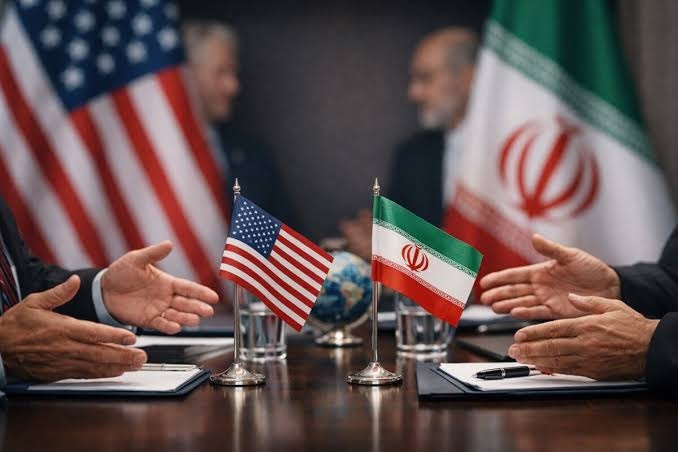
Former Lebanese Ambassador to Canada, Massoud Maalouf, confirmed on Tuesday (July 28, 2026) that “since US President Donald Trump, in coordination with Israeli Prime Minister Benjamin Netanyahu, declared this war on February 28 of this year, and the military operations were able to destroy a large number of Iranian nuclear and military facilities, Tehran found itself unable to respond militarily at the same level, so it resorted to using a more influential card, which is the economic war, by closing the Strait of Hormuz.”
He added in his interview with Baghdad Today that "this development has placed Trump in a double bind: one concerning the course of the war itself, and another domestically related to the American political situation." Before the start of the American-Israeli military operations against Iran, the Strait of Hormuz was open to international shipping, with oil tankers and commercial vessels passing through it freely, without obstacles, fees, or restrictions. Today, however, the strait is under Iranian control and closed, and Tehran appears unwilling to relinquish this strategic advantage.
He pointed out that "Trump is trying to find a way out of this predicament, but he cannot withdraw American forces and fleets from the region and return to the American interior while the Strait of Hormuz remains closed," because "that would be interpreted as a major political and military defeat."
Maalouf explained that "Trump is seeking to exert maximum pressure on Iran." He first tried through negotiations, but they "stalled," and now he is using various political, economic, and diplomatic pressure tools, hoping that "Tehran will capitulate and return to the negotiating table, allowing for concessions, however limited, that would lead to a new agreement that is better, at least relatively, than the nuclear agreement concluded by President Barack Obama in 2015, from which Trump withdrew in 2018," describing it as "one of the worst agreements the United States has signed."
He added that "on the other hand, Trump faces an equally serious domestic challenge." According to this view, there is a growing number of Americans who oppose the policy of involving the United States in a war that has had repercussions domestically, with energy and consumer goods prices rising steadily.
Maalouf pointed out that "Trump's position is becoming increasingly difficult as the midterm congressional elections approach, scheduled for early November," which will take place in the middle of the presidential term. The Republican Party currently holds a majority in the House of Representatives and the Senate, but "there are expectations that this majority could be lost," which would make passing any legislation or resolutions through Congress more difficult for President Trump, which explains his efforts to end the crisis with Iran or achieve a political gain before the election date.
But Iran is well aware of the extent of the political and electoral pressures that Trump is facing, and therefore it is adopting a policy of procrastination, taking advantage of the time factor.
The question remains: Could Trump resort to a large-scale war with the aim of destroying Iran and imposing control over the Strait of Hormuz?
Maalouf believes that "such an option seems unlikely," because "any operation of this kind will not be limited to air strikes, but will require control of the land and coasts overlooking the strait," which means a ground engagement that could cost the US military significant human losses, which will lead to an escalation of internal opposition to the war, and increase the likelihood of the Republicans losing in the upcoming elections.
He noted that "if the Democratic Party manages to regain strong control of Congress after the elections," it is likely that "Trump will face political impeachment proceedings, as happened to him twice during his previous term, which would set an unprecedented precedent for an American president to be subjected to this type of political trial more than once."
The former Lebanese ambassador concluded by saying that "the possibility of a full-scale war remains low, while the most likely scenario is the success of mediators in bringing Washington and Tehran back to the negotiating table." Conversely, Iran will continue its policy of stalling, delaying an agreement without withdrawing from negotiations, waiting for the US elections to approach, hoping that "political changes within the United States will improve its negotiating position and allow it to achieve greater gains than are currently possible."
Ascott Accelerates Vietnam Expansion With Nine Signings in 1H 2026, Growing Portfolio by Over 30%
link this is a really long report that goes into other parts of that area so if you want to read the rest just click the link it will take you there
- Signs four new projects with longstanding partner Sun Group and five with owners new to Ascott, adding over 3,200 units
- Deepens presence in Hanoi, Ho Chi Minh City and Hai Phong, expands along the coast in Da Nang and Phu Quoc, and enters Quy Nhon for the first time
- Debuts The Crest Collection in Vietnam, with signings spanning seven brands
- Expects signing momentum to continue in 2H 2026

Set on the Quang An Peninsula with direct frontage to West Lake in Hanoi, Diamond Crown Westlake by The Crest Collection will offer one- to four-bedroom residences, suites and duplex units in one of Hanoi’s most sought-after lakeside addresses. The property marks the brand debut of The Crest Collection in the northern part of Vietnam.
Military Stuff
Trump Meets Saudi Defense Minister at White House with a Message from Crown Prince MBS
Saudi minister delivers personal message from Mohammed bin Salman on the Iran war and regional escalation, a day after the two countries conducted joint strikes on Iranian proxy targets in Iraq

WASHINGTON, D.C. (Kurdistan 24) - President Donald Trump met with Saudi Defense Minister Prince Khalid bin Salman at the White House on Wednesday, receiving a personal message from Saudi Crown Prince Mohammed bin Salman about the war with Iran and the escalating regional situation, a US official confirmed.
The meeting elevated the Saudi-American consultations on the Iran conflict to the presidential level, coming just one day after Khalid had met Vice President JD Vance in Washington, where the two discussed the joint US-Saudi strikes carried out on Tuesday against Iran-linked logistics and weapons sites across eastern Iraq and Riyadh's broader assessment of the war. CNN reported on Wednesday, citing sources familiar with the matter, that during the Vance meeting Khalid had conveyed Saudi Arabia's assessment that Iran would continue seeking leverage through escalation, using Iran-aligned militias in Iraq and Yemen's Houthi movement as instruments of persistent pressure against both American forces and Saudi civilian infrastructure.
The Crown Prince's message to Trump, delivered through his brother, the defense minister, places the highest level of Saudi leadership in direct communication with Washington at one of the most critical junctures of the conflict. Saudi Arabia's participation in Tuesday's joint strikes on Iranian proxy targets in eastern Iraq had already signaled Riyadh's readiness to take direct military action in defense of its interests. The personal message from MBS suggests the kingdom is now coordinating its strategic posture with the White House at the leadership level as both governments assess their next moves.
Wednesday's White House meeting between Trump and Khalid came on an extraordinarily dense day of regional developments. Axios confirmed on Wednesday that the US launched fresh airstrikes on Iran, the Wall Street Journal reported that CENTCOM is preparing options for a 10 to 14-day intensive air campaign targeting Tehran's missile capabilities, and Trump told Axios he is weighing whether to launch a "massive attack" on Iran bigger than anything Washington has yet attempted in the conflict. Oil briefly surged past $100 a barrel for the first time since May as the escalation deepened.
Iran rejected an Omani proposal on Wednesday to evenly divide control of the Strait of Hormuz, with Iranian Deputy Foreign Minister Kazem Gharibabadi announcing the rejection publicly and eliminating one of the last remaining diplomatic proposals on the table for resolving the waterway dispute that has been at the center of the conflict since Feb. 28, 2026.
Saudi Arabia's strategic calculus throughout the conflict has been shaped by a direct exposure to Iranian aggression that goes beyond the political and military dimensions affecting other American allies in the region. Riyadh paused shipments from its Gulf export terminals of Ras Tanura and Juaymah on March 9, 2026, after Iranian attacks disrupted tanker traffic through the Strait of Hormuz, rerouting a substantial portion of its oil exports through the East-West pipeline to the Red Sea terminal of Yanbu, and has assessed throughout the conflict that Iran will continue using proxies and direct strikes to impose costs on the kingdom regardless of diplomatic openings.
The back-to-back meetings between the Saudi defense minister and Vice President Vance on Tuesday and President Trump on Wednesday represent the most intensive Saudi-American leadership consultations since the conflict began, and signal that Riyadh and Washington are aligning closely on both the immediate military response to Iranian escalation and the broader strategic framework for the conflict's next phase.
| BRIEF: President Trump met Saudi Defense Minister Prince Khalid bin Salman at the White House on Wednesday, receiving a personal message from Crown Prince MBS on the Iran war and regional escalation, a day after the two countries conducted joint strikes on Iranian proxy targets in Iraq. |
In the presence of Fayyad and Abu Fadak
Al-Zaydi visits the Popular Mobilization Forces headquarters after the Saudi bombing and directs that the martyrs be honored and the wounded be cared for.

Prime Minister and Commander-in-Chief of the Armed Forces, Ali Faleh al-Zaidi, visited the headquarters of the Popular Mobilization Forces on Wednesday (July 29, 2026), where he met with the head of the organization and a number of security leaders and officials.
According to a statement received by 964 Network , Al-Zaydi was briefed during the visit on the details of the attacks that Iraq was subjected to at dawn today, which resulted in the martyrdom and injury of a number of members of the Popular Mobilization Forces in a number of governorates.
The Commander-in-Chief of the Armed Forces directed that the families of the martyrs be honored, that the necessary health care be provided to the wounded, and that all measures be taken to ensure their treatment, including transferring them outside of Iraq if their health conditions require it.
Al-Zaydi stressed the need to monitor the conditions of the injured and provide for their needs, while the concerned authorities continue their procedures regarding the repercussions of the attacks and the losses resulting from them.
Trump to Fox News: The strikes in Iraq were carried out in coordination with the Iraqi government.
Iran condemns US-Saudi attacks on Popular Mobilization Forces bases in Iraq and affirms its support for Baghdad.
The ministry said in a statement that these attacks constitute a clear attack on Iraqi national sovereignty, a violation of paragraph four of Article 2 of the United Nations Charter, as well as a violation of the basic rules of international law.
She added that the attacks, as she described them, come within the framework of the United States and Israel's efforts to expand the scope of war and conflict in the West Asia region.
The Iranian Foreign Ministry affirmed its full solidarity with the Iraqi government and people, expressing its condolences for the casualties resulting from the attacks, which it described as "aggressive".
The ministry also held the United States and its allies in the region responsible for the repercussions that may result from these operations, considering them to be "criminal, inhumane and provocative" acts, according to the statement.
Five IRGC Members Killed in U.S.-Saudi Strikes in Iraq
The Iranian personnel were killed at a military camp in Iraq's Diyala province, near the Iranian border.
Five advisers from Iran’s Islamic Revolutionary Guard Corps (IRGC) were killed in U.S.-Saudi airstrikes targeting Iran-backed armed groups in Iraq, sources familiar with the matter told MBN.
The advisers were killed at the Abu Muntadhar al-Muhammadawi camp in Iraq’s Diyala province, near the Iranian border, the sources said.
U.S. Central Command and Saudi Arabia’s Ministry of Defense said early Wednesday that they had carried out strikes against Iran-aligned groups in Iraq that had been directed by the Islamic Revolutionary Guard Corps to target American forces and Saudi energy facilities.
U.S. President Donald Trump told Fox News that the joint U.S.-Saudi strikes against Iran-backed armed groups in Iraq had been carried out “in coordination” with the Iraqi government.
Iraq’s Popular Mobilization Forces (PMF) said several of its official headquarters in different parts of the country had come under U.S. and Saudi attack. The PMF said preliminary reports indicated that several people had been killed and others wounded, in addition to damage to a number of its buildings and facilities.
Following the strikes, Iraqi sources told MBN that Iraqi Prime Minister Ali al-Zaidi had postponed a planned visit to Saudi Arabia that had been scheduled for Thursday.
According to one source, the Iraqi government decided to delay the trip after the overnight U.S.-Saudi strikes on PMF facilities.
A source familiar with the preparations for the visit also said the Iraqi delegation had already been scaled back the previous night, before the strikes took place, but did not provide a reason.
Another source said the reduction was likely due to delays in issuing visas for some members of the delegation.
Coordination framework: Iraq's security and sovereignty cannot be violated or compromised under any circumstances.

The Coordination Framework affirmed that "Iraq's security and sovereignty are inviolable and cannot be compromised under any circumstances, and it rejects turning Iraq into an arena for regional and international conflicts."
A statement from the Coordination Framework's media office indicated that "the Framework held an emergency meeting Wednesday evening at the Government Palace to discuss the American-Saudi attacks on Iraq's sovereignty."
According to the statement, the Coordination Framework condemned the aggression targeting Iraqi territory, which resulted in the martyrdom of several members of the Popular Mobilization Forces and the injury of others, in a blatant violation of Iraq's sovereignty and territorial integrity, and in contravention of the principles of international law and the UN Charter.
The Framework expressed its astonishment at this attack, especially given the government's adoption of a balanced foreign policy based on building cooperative and partnership relations with its regional neighbors and the international community.
He offered his sincere condolences to the families of the martyrs and wished a speedy recovery to the wounded. He affirmed that Iraq's security and sovereignty are inviolable and cannot be compromised under any circumstances, and he rejected turning Iraq into an arena for regional and international conflicts.
He emphasized that "the attacks targeting Iraq and violating its sovereignty do not serve regional and international efforts aimed at containing the crisis and de-escalating tensions, but rather contribute to complicating the situation and threaten security and stability in the entire region."
Amidi and Maliki stress the need for dialogue between national leaders

President Nizar Amidi and the head of the State of Law Coalition, Nouri al-Maliki, stressed the need to adopt an approach of dialogue and continuous consultation among national leaders, and to continue coordination among political forces to strengthen unity.
A statement from the media office of the Presidency of the Republic, received by Al-Sabah, stated that “the President of the Republic received yesterday, Wednesday, at the Peace Palace in Baghdad, the head of the State of Law Coalition, Nouri al-Maliki, and during the meeting, the general situation in the country and the region was reviewed, where the importance of adopting an approach of dialogue and continuous consultation between national leaders to find realistic solutions to the various challenges was emphasized, based on the shared responsibility to preserve the interests of the country and consolidate political stability.”
During the meeting, it was also noted that efforts must be unified and coordination between political forces must continue in order to strengthen unity and fulfill the aspirations of citizens.
Joe Wilson calls for an end to support
Congress comments on the bombing of the Popular Mobilization Forces: We fund the Iraqi government and it pays salaries to the militias.

US Congressman Senator Joe Wilson commented on Wednesday (July 29, 2026) on the US-Saudi bombing of Popular Mobilization Forces (PMF) headquarters inside Iraq, saying that the support provided by the United States to the Iraqi government, which pays salaries to the PMF, must stop, especially after US forces were subjected to attacks by Iraqi militias supported by Iran, in an indication of the PMF's involvement. He also praised the inclusion of a clause in the National Defense Authorization Act in the US Congress to cut off funding to Iraq unless the government "disarms all Iranian-backed militias."
The National Defense Authorization Act, passed by Congress on June 22, is awaiting approval from the US Senate. Then, the House of Representatives and the Senate must reach a unified and consolidated version of the law, and finally, it must be signed by US President Donald Trump for implementation.
Wilson stated in a blog post, which was followed by 964 Network , that “the United States provides funding to the Iraqi government, which pays the salaries of the Popular Mobilization Forces, while Iranian-backed militias launch attacks on American forces, and this must stop.”
He continued: “I am grateful that the National Defense Authorization Act (NDAA) in the House of Representatives included the provision I proposed to cut off funding to Iraq unless the government disarms, demobilizes, and reintegrates all Iranian-backed militias.”
This comes after the US Central Command announced, at dawn on Wednesday (July 29, 2026), that it had carried out joint airstrikes with the Saudi armed forces against sites of “Iranian-backed militias” across various areas in eastern Iraq, saying that this was in response to more than 30 drone attacks that struck Saudi Arabia during the past 72 hours. Riyadh then confirmed the US military statement shortly afterward, announcing its participation in the attacks inside Iraq, stressing that it “does not want escalation.” Amid this, media outlets circulated images of bombings of camps said to belong to the factions on the borders of Iran and Basra, as well as several cities in Wasit, Karbala and Nineveh.
This is the first admission of Saudi participation in striking Iraq since the Second Gulf War in 1991, when it participated in the international coalition to expel Saddam Hussein from Kuwait. Riyadh has been known for its high level of restraint, and it is believed that its announcement of participation in the attack will have significant repercussions, especially with the expectation of a visit by Prime Minister Ali al-Zaidi to Saudi Arabia very soon.
The Saudi Ministry of Defense announced that its forces, in coordination with the US Central Command, carried out targeted strikes against “militia” targets linked to attacks on oil facilities in the Eastern Province and Riyadh.
Saudi Arabia has confirmed that it is not seeking escalation, but will respond to any aggression it faces.
Eyewitnesses told Network 964 that the strikes targeted sites in four Iraqi provinces: Karbala, Basra, Nineveh, and Wasit, in the first direct Saudi strike inside Iraq since the Iraq War under Saddam Hussein.
