The US Treasury is tracking $300 billion outside the Iraqi banking system.

Informed sources revealed to Al-Mustaqilla information described as serious, indicating that the US Treasury informed the government of Ali al-Zaidi of the existence of sums of money estimated at about $300,000,000,000 believed to have left the official banking system.
The video for this My FX Buddies Video is below here:
According to the source, these funds are suspected to still be outside banking channels, specifically with certain political figures, away from direct financial oversight.
The source also pointed to what he described as “precise sequences of dollar movement allocated to Iraq,” where the path of funds is tracked and transfer and distribution operations are analyzed, in an attempt to uncover the whereabouts of large sums believed to be inside the country or outside the official financial system.
The information added that ongoing tracking operations reveal – according to the source – a complex financial network linked to dollar flows inside and outside Iraq, which raises questions about the size of undeclared funds and their true paths.
The New York Times: The United States resumes dollar transfers to Iraq after suspending them for months.

The New York Times: The United States has resumed dollar transfers to Iraq after suspending them for months.
The administration of US President Donald Trump had suspended dollar shipments to Iraq and frozen funding for security cooperation programs with the government to pressure Baghdad to dismantle armed factions, according to The Wall Street Journal.
According to officials cited by the newspaper, the US Treasury Department recently blocked the transfer of an air shipment of approximately $500 million in cash—revenue from Iraqi oil sales—from accounts at the Federal Reserve Bank of New York to Iraq, due to US concerns about Iraqi factions. The US State Department
told the newspaper that the Iraqi government's "failure" to prevent attacks by these factions "negatively impacts" Washington's relationship with Baghdad, noting that the Trump administration expects the authorities to take immediate action to dismantle these factions.
State Department spokesman Tommy Pigott emphasized that the US will not tolerate attacks on US interests, adding that "entities linked to the Baghdad government continue to provide political, financial, and operational cover for the factions."
US and Iraqi officials revealed to the newspaper that the suspension of dollar shipments to Iraq is a temporary measure, and that Washington informed Baghdad of its intention to suspend funding for some counterterrorism programs and armed forces training until attacks by armed factions cease.
The central bank governor is in parliament to discuss "major reforms" in the banking sector.
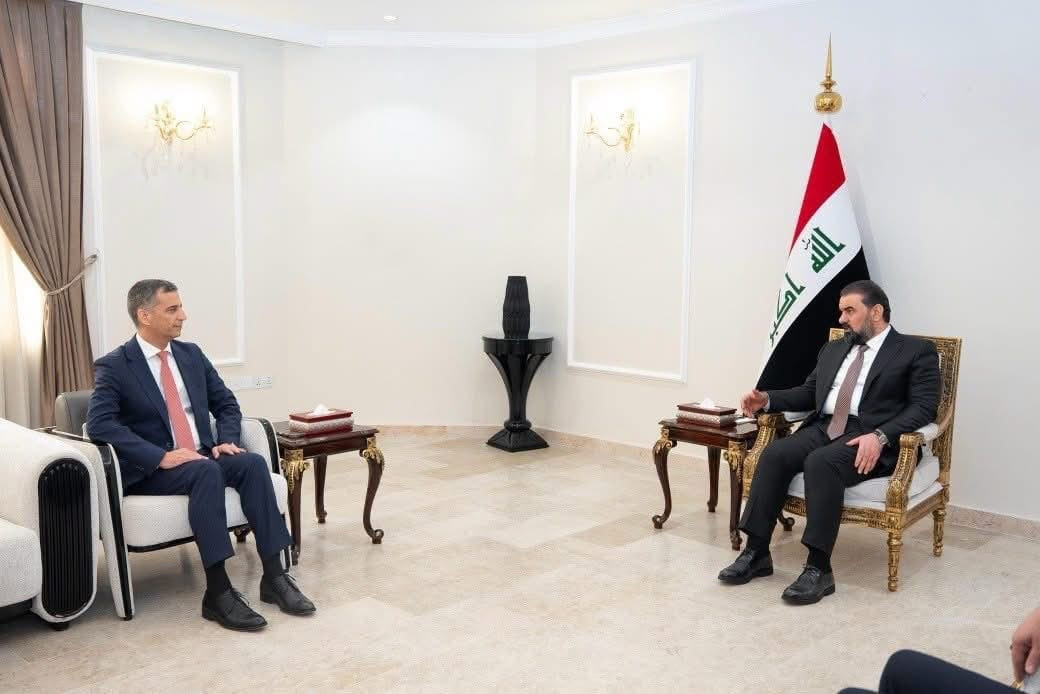
Al-Mustaqilla - In his first prominent political and economic move since assuming his duties, the Governor of the Central Bank of Iraq, Nizar Nasser Hussein, held a meeting with the Speaker of Parliament, Hebat al-Halbousi, to discuss the future of the Iraqi banking sector and financial reform plans, amid escalating economic challenges facing the country.
According to an official statement, the meeting witnessed extensive discussions on the reality of the Iraqi banking system and mechanisms for modernizing it, as well as the development of strategic programs and plans to restructure the financial sector and enhance the efficiency of Iraqi banks.
The Central Bank Governor stressed that the next phase requires proceeding with a comprehensive banking reform plan, which includes developing the infrastructure of the banking sector and raising the level of institutional performance, while strengthening coordination between monetary policy and the legislative authority to ensure financial stability.
For his part, the Speaker of Parliament announced the parliament’s support for measures and policies aimed at protecting the national currency and enhancing banking stability, stressing the importance of providing a more stable economic and investment environment in Iraq.
This meeting comes at a time when the Iraqi banking sector is facing increasing challenges and pressures related to financial and regulatory reforms, which puts the Central Bank’s new plans under political and economic scrutiny in the coming period.
At the conclusion of the meeting, both sides affirmed their commitment to continuing coordination and joint work to overcome legislative and executive obstacles, in order to contribute to building a stronger and more effective financial and banking system.
Mass Arrests of Lawmakers Delay Iraqi Parliament's Return from Recess
Parliament's month-long legislative recess ended on July 1, but sweeping corruption-related arrests of lawmakers have cast uncertainty over the resumption of parliamentary work.

Iraq's month-long legislative recess officially ended on Wednesday, but parliament is unlikely to resume its sessions this week as a sweeping anti-corruption campaign targeting lawmakers and senior officials has created significant political and security challenges.
The operation has so far resulted in the arrest of 47 senior officials and political figures, including 12 members of parliament from the Reconstruction and Development Bloc, on corruption and forgery charges. The number of arrests is expected to rise in the coming days.
Reports indicate the campaign was launched following confessions made by Adnan al-Jumaili, triggering anxiety and uncertainty across Iraq's political establishment.
In a statement to Kurdistan24, MP Sarwa Mohammed confirmed that the legislative recess had officially concluded but said ongoing anti-corruption operations and the current security tensions make it unlikely that parliament will hold a session this week.
She said the arrest of 12 lawmakers had generated widespread concern among members of parliament, who believe that while the legal measures may be necessary, they have damaged the reputation and standing of the legislature.
"Because of these individuals, the image of all 329 members of parliament has been tarnished in the eyes of the public," she said.
According to Kurdistan24's observations, the Green Zone and residential areas housing lawmakers remain under heightened security, with an atmosphere of uncertainty prevailing.
A significant number of lawmakers have reportedly left the Green Zone out of concern they could also face arrest, making it difficult to secure the legal quorum required to convene parliamentary sessions.
The Iraqi parliament operates two legislative terms each year, separated by a one-month recess. Although the new legislative term was scheduled to begin on July 1, it has effectively been delayed as the country's largest anti-corruption campaign continues.
Parliamentary activity is now expected to remain on hold until developments become clearer, with next week expected to include the first readings of several draft laws if sessions resume.
The House of Representatives will resume its sessions next week to discuss "important" laws and complete the cabinet formation.
A parliamentary source reported on Wednesday evening that the Speaker of Parliament held a meeting with the heads and representatives of the political blocs to discuss the second legislative session of the Council.
The source told Shafaq News Agency that the meeting was held this evening and addressed a number of "important" laws and ways to include them on the agenda of upcoming sessions.
He indicated that the attendees agreed to hold the first session of the new legislative term on Sunday or Monday of next week, and to give the Prime Minister time to send the names of candidates for ministerial portfolios in order to set a date at another time to hold a session to complete the vote on the cabinet.
Iraqi-Turkish talks in Ankara cover oil, gas and electricity files
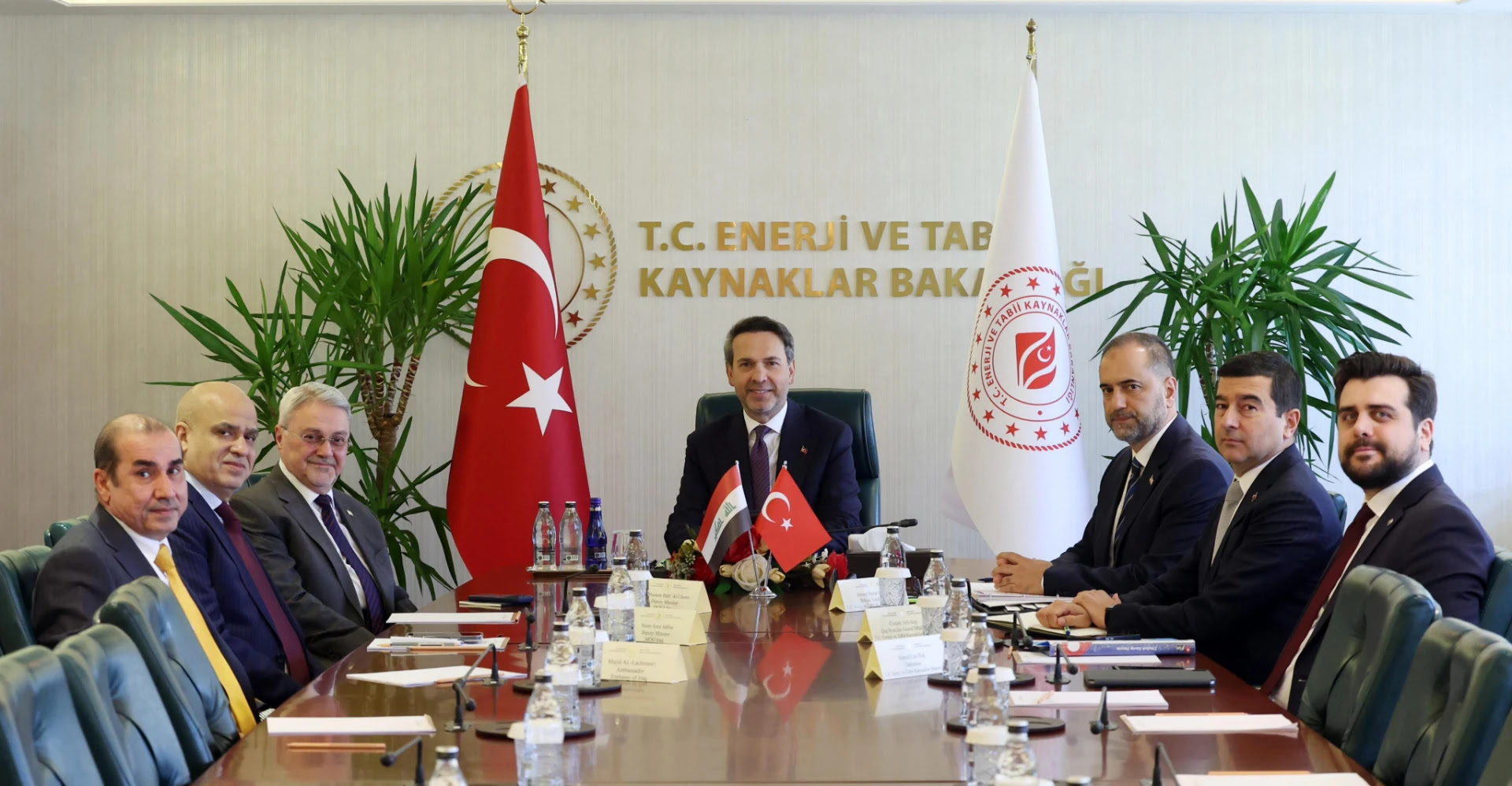
A high-level Iraqi delegation met in Ankara on Wednesday with Turkish Minister of Energy and Natural Resources Alparslan Bayraktar to discuss strengthening cooperation between the two countries in the fields of oil, gas and electricity.
In a post on the “X” platform, which was followed by Shafaq News Agency, Bayraktar stated, following his meeting with the Iraqi Deputy Foreign Minister, Mohammed Hussein Bahr Al-Uloom, the Iraqi Deputy Oil Minister, Nasir Aziz Jabbar, and Baghdad’s Ambassador to Ankara, Majid Al-Lajmawi, that cooperation in the field of energy between his country and Iraq is gaining strategic importance in terms of regional energy security.
Bayraktar added that the meeting explored new opportunities to develop cooperation in the energy sector between the two countries, noting that the discussions covered the oil, gas and electricity sectors.
He explained that the talks focused on the potential for developing new and comprehensive cooperation in the fields of oil, gas and electricity, particularly regarding the Iraqi-Turkish crude oil pipeline.
He stressed that cooperation in the field of energy between Türkiye and Iraq is of strategic importance in terms of regional energy security.
In addition, Bayraktar pointed out that Türkiye views the "Development Road" project not only as a transport corridor, but also as a strategic energy corridor that enhances supply security and contributes to energy trade in the region.
The minister stressed that Ankara seeks, within this framework, to work closely with the new Iraqi government in order to make more efficient use of the existinginfrastructure and enhance it with new connections.
The Prime Minister receives the Turkish Ambassador and representatives of a number of Turkish companies and businessmen

Turkish businessmen expressed their readiness on Wednesday to launch investment projects in Iraq.
The Prime Minister's Media Office stated in a press release received by Mawazin News that "Prime Minister Ali Faleh al-Zaidi received, on Wednesday, the Turkish Ambassador to Iraq, Anil Bora Inan, and representatives of several Turkish companies and businessmen within the framework of the Iraqi-Turkish Business Council." Al-Zaidi emphasized "the importance of economic and investment relations between Iraq and Turkey, noting the numerous investment opportunities available to Turkish companies." He pointed to "the Development Road project, the Faw Port project, the management and operation of hospitals and airports, and other investment projects, in addition to energy and water management projects." He directed that "procedures related to entry visas for Turkish businessmen be facilitated, along with other measures that would sustain the momentum of investment activity in Iraq."
For his part, the Turkish ambassador affirmed his government's interest in developing bilateral relations between the two friendly countries in various fields, while Turkish businessmen expressed their readiness to launch investment projects in Iraq.
Axios: Doha talks reach understanding to keep the situation calm during the coming week

A US official revealed on Wednesday that a new understanding had been reached on the sidelines of the talks taking place in the Qatari capital, Doha, which calls for maintaining calm and restraint during the coming week, with the aim of providing a suitable atmosphere for finalizing the proposed agreements.
The Axios website quoted the American official as saying that “the parties reached an understanding to maintain calm during the coming week, allowing progress to be made on all aspects of the memorandum of understanding within a constructive environment, without launching missiles.”
The official added that “the US president was clear in his position, as he stressed that every time shots are fired, the response will be stronger, and against targets that will weaken the other side’s position in the strait.”
In this context, Axios, citing two regional sources, reported that the meetings held in Doha were positive and paved the way for the launch of technical talks, noting that it remains unclear whether the two American envoys, Steve Wittkopf and Jared Kushner, met directly with Iranian officials.
The report explained that the talks focused on several issues, most notably the situation in the Strait of Hormuz, frozen Iranian assets, and the ceasefire in Lebanon. Meanwhile, a US official confirmed that the Gulf states are currently holding consultations on mechanisms for managing navigation in the strait after the expiration of the memorandum of understanding, and that these consultations are now intersecting with the US-Iranian negotiation process.
The official noted that Wittkopf and Kushner are trying to convince the Iranian side that insisting on imposing transit fees in the Strait could undermine the chances of reaching an agreement with the United States.
On Wednesday, indirect technical talks began in the Qatari capital, Doha, between the United States and Iran, with Qatar and Pakistan participating as mediators, as part of diplomatic efforts to resolve outstanding disputes between Washington and Tehran.
Iran: Our talks with the Qatari and Pakistani sides in Doha have concluded.

Iran announced on Wednesday (July 1, 2026) the conclusion of talks it held with the Qatari and Pakistani sides in the Qatari capital, Doha, confirming the holding of the first meeting of the monitoring team for the implementation of the memorandum of understanding between the three parties.
The Iranian news agency IRNA quoted the Iranian Deputy Foreign Minister as saying that "the first meeting of the monitoring team for the implementation of the memorandum of understanding was held in Doha with the participation of delegations from Iran, Qatar and Pakistan."
He added that "the Iranian delegation raised what it described as violations by the United States of its commitments under the first clause of the memorandum of understanding related to ending the war in Lebanon," indicating that "the talks also addressed reports regarding the strengthening of US forces in the region and the threats issued by Washington."
The Iranian Deputy Foreign Minister stressed that "the commitments of the Memorandum of Understanding constitute an integrated set and cannot be viewed separately," noting that "it was decided to establish an urgent communication channel for the team monitoring the implementation of the Memorandum of Understanding by tomorrow."
He explained that "the meetings also discussed with Qatari officials the mechanisms for spending part of the frozen Iranian assets amounting to six billion dollars," within the framework of the files included on the agenda of the talks.
These talks come as a follow-up to the implementation of the memorandum of understanding reached between Iran and the United States through Qatari and Pakistani mediation, following the military escalation witnessed in the region during the past weeks.
The European Union hands over to the Ministry of Finance the assets of a project to develop public financial management in Iraq.

: The European Union handed over, on Wednesday (July 1, 2026), the assets resulting from the "Strengthening Public Finances and Financial Markets" project to the Iraqi Ministry of Finance, in a move aimed at supporting public financial management and enhancing joint cooperation in the fields of macroeconomics and investment.
The EU said in a statement received by Baghdad Today that “today, EU-funded assets were officially handed over to the Iraqi Ministry of Finance, in an important step that reflects our shared commitment to strengthening public financial management.”
He added, “During the handover ceremony, both the Director General of the Administration Department at the Ministry of Finance, Sadiq Huwaidi Abbas, and the Head of the New Cooperation Section at the European Union Mission, Wim Rippma, spoke about the depth of the partnership and its outstanding results between the European Union and Iraq in the fields of economy and investment.”
The statement indicated that “the transfer of assets resulting from the ‘Strengthening Public Finances and Financial Markets’ project, funded by Germany and implemented by GIZ, reflects the sustainable impact of this cooperation and paves the way for continued joint work to establish transparent, effective and sustainable public financial management in Iraq,” adding that “together we look forward to a new chapter in our partnership.”
Chinese Foreign Minister: Priority is implementing the memorandum of understanding between Washington and Tehran

Chinese Foreign Minister Wang Yi said on Wednesday that the priority at the moment is to protect and implement the memorandum of understanding signed between the United States and Iran, stressing the need to maintain the momentum of negotiations and to expedite reaching a comprehensive agreement that is acceptable to both sides, accepted by the countries of the region, and welcomed by the international community.
This came during a meeting held by Wang with Saudi Foreign Minister Prince Faisal bin Farhan Al Saud, in the Chinese capital, Beijing.
The Chinese minister noted that "the current truce (in the region) is still fragile," adding that "negotiation is better than fighting, and dialogue is better than confrontation," and expressing Beijing's readiness to work with Riyadh to contribute to easing tensions and achieving lasting peace and stability in the region.
He added that China is also ready to support Saudi Arabia in playing a greater role in international and regional affairs, and to work together to uphold the authority of the United Nations and build a more just and equitable global governance system.
Want to Support My FX Buddies?
 Thanks
Support My FX Buddies
BuyMeACoffee CashApp:$tishwash
https://paypal.me/tishwash

.jpeg)
Investment law: Extensive privileges for the investor and limited returnsfor the state!
link
The debate surrounding Iraq's investment law continues to rage as its amendments remain stalled despite years of discussion. Criticism is mounting over the delay in legislative reforms and the persistence of loopholes that impede project implementation. Experts argue that the problem lies within the law itself, which grants investors broad privileges at the expense of national wealth. Others are calling for a complete overhaul of the investment system, based on specialized sectoral laws.
Hussain al-Saabri, former deputy head of the parliamentary investment committee, told Al-Mada, "The investment committee in the previous
parliamentary session completed a comprehensive draft amendment to the investment law after holding workshops with the National Investment Commission, provincial investment commissions, investors, and experts. It was submitted to the relevant authorities, but the process stalled and never reached the approval stage."
Al-Saabri explained that "the amendments aimed to address the overlapping jurisdictions between governors, investment commissions, and the National Investment Commission, as well as resolve existing issues between investors, government departments, the Ministry of Finance, and banks." He added that "time was not a priority for the relevant institutions, which led to the obstruction of amending a law that could have resolved many legislative problems."
He added that “talk of reducing bureaucratic red tape has remained mere slogans, because the one-stop shop project has not been properly implemented in most governorates, leaving investors facing delays, bureaucracy, and instances of administrative extortion.”
Al-Saabri pointed out that “supporting the private sector is the true gateway to addressing the unemployment crisis, because investment in the industrial, agricultural, and construction sectors can employ thousands of engineers, accountants, laborers, drivers, and craftsmen.” He noted that “most advanced economies rely on the private sector through clear legislation, bank financing, and direct government support.” In contrast, economic expert Duraid Al-Anzi said that “the current law does not deserve to be called an investment law,” describing it as a “law of exploitation,” because it grants the investor extensive privileges in exchange for limited returns for the state.
Al-Anzi added, in an interview with Al-Mada, that “a cement plant costs around $250 million to build, and its entire cost can be recovered in just five years, while the investment contract extends for forty or forty-five years, so that all revenues after cost recovery become pure profits for the investor.”
He explained that “the investor receives hundreds of acres at almost free prices, in addition to raw materials at nominal costs, and then sells his produce to the state at international prices,” asking, “Is this investment or a drain on national wealth?”
Al-Anzi clarified that “the problem is not limited to the cement industry, but extends to sulfur, phosphate, silica, kaolin, glass, and all other mineral resources,” emphasizing that “Iraq still does not have a specific law for mineral investment, despite possessing enormous reserves that represent the rights of future generations.”
He believes that “the management of mineral investment should be completely separate from the current investment law, and a specialized body should be established to manage this file according to an independent economic vision, far removed from the current mechanisms.”
Al-Anzi pointed out that "the alternative lies in adopting the principle of partnership instead of granting absolute concessions," proposing that "the state own between 25 and 50 percent of mineral projects, with its share in the form of production plants rather than cash."
He added that "the state can obligate the investor, in exchange for exploiting the mines, to establish factories for sulfur, sulfuric acid, and their derivatives, as well as to establish downstream industries for phosphate, silica, and kaolin, thus creating an integrated industrial chain instead of merely exporting raw materials."
He emphasized that "transforming minerals into finished products within Iraq will create a genuine investment environment, provide thousands of job opportunities, and give the private sector the opportunity to enter as a partner in production, instead of limiting its role to executing limited contracts."
Al-Anzi noted that "the success of this model requires the establishment of a government insurance company to guarantee national and foreign capital, which will encourage Iraqi investors to invest funds currently held outside the economic cycle and provide foreign partners with sufficient guarantees to enter into long-term projects."
He pointed out that “investment must be managed according to specialized laws for each sector, because tourism needs its own independent law, as do oil and gas. Each sector has its own economic and administrative specificities and cannot be managed by a single law.”
Al-Anzi concluded by saying that “investment in Iraq needs a comprehensive overhaul starting with the law, administration, and implementation mechanisms, because true reform will not be achieved by simply simplifying procedures, but rather by building a legislative system that transforms natural resources into national industries capable of diversifying the economy and reducing dependence on oil.”
Sanad: Iraq has become a regional communications hub and an international data transmission corridor.

Communications Minister Mustafa Sand confirmed on Wednesday that the achievements in the communications sector represent an important milestone that will make Iraq a regional communications hub and an international data transmission corridor, noting the continued work on developing infrastructure and expanding internet services in various parts of the country.
During the opening ceremony of the third edition of the Iraqi Communications Summit, which was attended by a correspondent from Shafaq News Agency, Sand said that since the ministry took over responsibility for the communications sector, it has put in place a plan to develop this sector, which included expanding free internet services in a number of locations, including holy shrines, external roads during the Arbaeen pilgrimage season, border crossings, as well as other places.
He added that the ministry has worked on expanding the fiber optic cable project and increasing internet service capacities, which contributes to improving the quality of service, stressing that what has been achieved so far represents an important milestone that makes Iraq a regional communications hub and an important site for digital transformation, in addition to being an international corridor for data transmission.
The Minister of Communications indicated that the ministry continues to work on developing the infrastructure of the communications sector, expanding fiber optic networks, improving communications services, and supporting the development of internet networks and systems.
On June 25, Sanad announced the signing of an agreement with the Qatari company GBI to market cross-border internet (transit) capacities through the "Road of Civilizations" project, confirming the receipt of the first financial payment in hard currency, in a step aimed at strengthening Iraq's position as a regional and international digital corridor for data traffic.
Abu Kalal: Iraq is close to launching Starlink services within a comprehensive regulatory framework.

The head of the executive body of the Media and Communications Commission, Baligh Abu Kalal, confirmed today, Wednesday, (July 1, 2026), that Iraq is proceeding with completing the procedures for licensing the Starlink service in its final stages, which will allow the introduction of one of the most prominent modern satellite communication technologies to the Iraqi market within a clear regulatory framework that preserves national interests and keeps pace with global developments.
During his speech at the opening of the third edition of the Iraqi Communications Summit, Abu Kalal explained that: “The communications sector is no longer a traditional service sector, but has become part of the modern sovereign structure of countries, and a fundamental pillar of the digital economy, e-government and smart services,” stressing that “the Authority views this sector as one of the engines of economic and social development in Iraq.”
He pointed out that the next phase will witness a greater focus on service quality, in addition to expanding coverage, through the development of technical monitoring tools and measuring performance indicators of operating companies, in order to ensure an improved user experience in various governorates.
The head of the executive body affirmed that the authority is proceeding with establishing a stable regulatory environment based on fair competition and the rule of law, indicating that Iraq supports investment, respects competition, and is working to build a stable communications market capable of keeping pace with the requirements of the future.
Abu Kalal also stressed the importance of fiber optic projects as the backbone of digital transformation, along with satellite communications and the fifth generation, as an integrated system that contributes to expanding users’ options and opening the way for more advanced industrial and service applications.
Mr. Abu Kalal pointed out that the Authority is working, in cooperation with the relevant authorities and companies operating in the sector, to prepare the regulatory and technical requirements for the transition to fifth-generation technologies, and to benefit from artificial intelligence applications in network management, improving the quality of services and raising performance efficiency.
He concluded his speech by emphasizing that the future of communications in Iraq is built through a partnership between the Authority, the Ministry of Communications, operating companies, investors, academic institutions and experts, in order to build a modern and sustainable communications sector that keeps pace with Iraq’s aspirations and the challenges of the times.
Under the auspices of the Minister of Oil... a confidentiality agreement was signed between Basra Oil Company and the American company Chevron.

The Basra Oil Company signed a confidentiality agreement with the American company Chevron on Wednesday to regulate the exchange of information for the purpose of evaluating the West Qurna 2 field and negotiating future agreements.
Oil Minister Basim Mohammed Khudair al-Abadi stated in a press release: "The West Qurna 2 field is a giant oil field, and the Russian company Lukoil withdrew from its development operations."
The minister indicated that the ministry provides ample opportunities for international companies to invest, including the American company Chevron, emphasizing the attractive and secure investment environment and the removal of all obstacles.
He affirmed that Iraq aspires to be a leading nation in oil production and exports, thereby achieving industrial and economic development for the country, and noted the ministry's commitment to the interests of international companies operating in Iraq. He
also emphasized the ministry's adherence to the government's directives regarding the importance of supporting international companies, which are considered partners in developing the oil and gas sectors, and indicated that full support will be provided to ensure the success of these projects and the achievement of the government's objectives.
The minister added that the investment projects being implemented secure job opportunities for local companies, in addition to employing Iraqi workers and developing service infrastructure in areas near the projects through social benefit initiatives.
It is worth noting that the ministry is negotiating with the American company Chevron to implement several projects in addition to the West Qurna 2 field.
Gunfire erupted in the Green Zone after a drone was spotted and shot down.

The Green Zone in central Baghdad witnessed gunfire early Wednesday morning after a drone was spotted.
The head of the Security Media Cell, Lieutenant General Saad Maan, said in a brief statement to Shafaq News Agency that a small drone was spotted over the Green Zone by the forces in charge, and it was dealt with without any damage or losses.
The incident comes amid heightened security measures in the capital, Baghdad, particularly within the Green Zone, which houses government headquarters and diplomatic missions, especially as Iraqi authorities launch a campaign to combat corruption and arrest officials.
The US military is discussing defense cooperation in the region and securing the Strait of Hormuz with 12 countries.
The U.S. Central Command (CENTCOM) announced on Wednesday that it led a regional security dialogue hosted by the Bahrain Defense Force, with defense leaders from 12 countries in the region.
The command stated in a statement seen by Shafaq News Agency that the commander of the US Central Command, Admiral Brad Cooper, discussed with senior military officials from Bahrain, Egypt, Jordan, Kuwait, Lebanon, Oman, Qatar, Saudi Arabia, Syria, the United Arab Emirates, and Yemen, the current regional security situation and opportunities to enhance defense cooperation throughout the region.
The leaders reaffirmed their shared commitment to the free flow of trade through the Strait of Hormuz, according to the statement.
Cooper said, "We continue to stand shoulder to shoulder with our regional partners," adding, "The discussions reaffirmed our shared commitment to regional security and stability."
The statement noted that the United States and its regional partners operate the most advanced and largest air and missile defense umbrella system in the world in the Middle East.
He added that in January, the Central Command and regional countries established a new air defense coordination cell in the Middle East with the aim of exchanging information, threat alerts and responding to emergencies.
The statement concluded by saying that this security dialogue marked the first participation of military leaders from Syria and Lebanon in a US-led regional defense conference.
President Al-Zaidi takes a free night tour among his people (photos).
The U.S. Central Command (CENTCOM) announced on Wednesday that it led a regional security dialogue hosted by the Bahrain Defense Force, with defense leaders from 12 countries in the region.
The command stated in a statement seen by Shafaq News Agency that the commander of the US Central Command, Admiral Brad Cooper, discussed with senior military officials from Bahrain, Egypt, Jordan, Kuwait, Lebanon, Oman, Qatar, Saudi Arabia, Syria, the United Arab Emirates, and Yemen, the current regional security situation and opportunities to enhance defense cooperation throughout the region.
The leaders reaffirmed their shared commitment to the free flow of trade through the Strait of Hormuz, according to the statement.
Cooper said, "We continue to stand shoulder to shoulder with our regional partners," adding, "The discussions reaffirmed our shared commitment to regional security and stability."
The statement noted that the United States and its regional partners operate the most advanced and largest air and missile defense umbrella system in the world in the Middle East.
He added that in January, the Central Command and regional countries established a new air defense coordination cell in the Middle East with the aim of exchanging information, threat alerts and responding to emergencies.
The statement concluded by saying that this security dialogue marked the first participation of military leaders from Syria and Lebanon in a US-led regional defense conference.

Prime Minister Ali Faleh al-Zaidi conducted a nighttime field tour on Wednesday evening, which included a number of streets and markets in the capital, Baghdad.

The Prime Minister’s Media Office stated in a statement that Al-Zaidi also toured one of the major shopping centers in Baghdad, where he met with a number of citizens and listened to their demands and their living and service needs.

The statement added that the Prime Minister directed the relevant authorities to follow up on these demands and work to address them as quickly as possible, within the framework of monitoring the service and living conditions of citizens.


Turkey's leading digital asset platform, Paribu, is expanding its platform to include decentralized finance, yield, and equities.

(DeFi) and equities, integrating Hyperliquid perpetual contracts, Polymarket options markets, and US and Turkish equities into a single app. Paribu has launched access to DeFi, including trading via decentralized exchanges (DEXs), Hyperliquid perpetual contracts, and Polymarket options markets, and has also opened a waiting list for equities trading. These moves represent a strategic shift for the nine-year-old exchange as it builds into a single app covering cryptocurrencies, DeFi, yield, and equities.
Paribu is the first regulated platform to offer Hyperliquid perpetual contracts and Polymarket options markets directly within a centralized exchange (CEX) interface, without a separate wallet application. Users access all DeFi features from within the existing Paribu app, using their existing balance, via a fully self-customization environment. Paribu offers on-chain access directly from within the platform itself: the same account, the same balance, without a separate application or password. Every DeFi position is self-custodian, meaning assets remain in the user's wallet at all times.
A single destination for investing across traditional and on-chain markets,
Turkey ranks fifth globally in retail cryptocurrency activity, recording $40 billion in trading volume in the first quarter of 2026 alone, representing 7% year-on-year growth amidst a global contraction of 11% (TRM Labs, April 2026). Until now, its retail investor base has had little access to on-chain perpetual contracts or options markets.
The existing integrations of Hyperliquid and Polymarket have reached users already operating within DeFi wallet environments. Paribu brings these markets to a different audience: the millions who manage their primary cryptocurrency holdings in a single application and have never had a reason to leave it. Paribu’s integration allows users to access perpetual contracts and options markets without leaving their familiar environment: no separate wallet app, no new account, no platform switching—the entire experience remains within Paribu.
“Paribu is evolving into a one-stop shop for all things finance: crypto, decentralized finance (DeFi), equities, and yield. The integration of Hyperliquid and Polymarket is another step toward realizing that vision. Instead of requiring users to navigate multiple wallets and protocols, we are delivering a seamless, self-saving DeFi experience within the app to millions of people, making on-chain perpetual contracts and prediction markets as accessible as any other aspect of their financial lives. Soon, we will expand this vision even further by bringing access to US and Istanbul Stock Exchange-listed shares within the Paribu app, creating a single destination for investing across both traditional and on-chain markets.” — Yasin Ural, Founder and CEO, Paribu
Perpetual contracts are now available through the DeFi section of the Paribu app. Trades are routed directly to the decentralized Hyperliquid blockchain. Every position is on-chain, within the user's self-custodial wallet, at all times.
Hyperliquid has become the dominant infrastructure layer for on-chain perpetual contracts. The protocol has processed over $4 trillion in cumulative trading volume, leads the decentralized exchange market in open interest, and has attracted a rapidly growing developer ecosystem, including integrations with major self-custodial wallets. Its Builder Code program has distributed over $85 million in revenue to front-end developers. For Paribu, integrating Hyperliquid means connecting its users to the deepest on-chain liquidity available in the perpetual contract market today.
Prediction markets are also available for the first time in Turkey
through the same DeFi section. Paribu acts as the interface layer, while execution and settlement are handled on-chain via Polymarket's infrastructure. The markets are selective: each contract is reviewed for integrity, liquidity, and risk profile before appearing on the app.
Polymarket is the world's largest decentralized options marketplace. This is the first time options markets have been made available to the retail market in Turkey through a major trading platform, and the first time a centralized trading platform has offered Polymarket through a fully self-custodial environment.
Stocks are on the way .
Paribu has received incorporation authorization from the Turkish Capital Markets Board (CMB) for its brokerage arm, which is awaiting operating license. NYSE, Nasdaq, and Borsa Istanbul stocks will be tradable on Paribu. Real-time market data for all three markets is available today, free of charge to all users. A waiting list has been opened ahead of the start of trading.
Lifestyle has swallowed up professions: from a reform economy to a consumer society
Dr. Mazhar Muhammad Saleh
The 1950s in my country and the years that followed were a vibrant economic era, where traditional crafts were intertwined with the details of daily life, until every profession became an essential link in the social fabric. Things were not acquired to be consumed and then discarded, but rather preserved, repaired, and sometimes even passed down, in a culture that valued both work and material possessions.
My childhood shoes, crafted by the hands of my countrymen, were more than just pieces of leather to be worn; they were the fruit of a craftsman's skill and the product of a local economy that respected and valued craftsmanship. If one of the shoes was torn by children playing or rough roads, it wasn't destined for the trash bin, but would instead be taken to the cobbler or shoemaker, the craftsman who would restore it to life. All the family's shoes would gather at a set time to be taken to the most renowned shoe repairer in the city, who would mend, sew, and replace the soles, then finish with a layer of dyes and polishes, so that the shoes would look as if they had just come from the hands of their maker.
That scene represented a kind of "circular economy" by nature, long before humanity even knew the term. The shoemaker, the shoe repairer, the leather merchant, the nail maker, and the dyer all lived off a complete cycle of production and maintenance that preserved money and resources and sustained employment.
Then life changed, and with it, lifestyles and customs. Imported goods flooded the markets, and a culture of replacement took over from a culture of maintenance. Gradually, the workshops of the shoemakers and cobblers disappeared, along with the sounds of their hammers and the scent of leather and dyes that once permeated the old markets. The story of a simple man, who carried inherited knowledge and a skilled set of tools—including various types of nails and hooks, heavy sewing machines, hand awls, chisels, and a variety of dyes and polishes that gave shoes a new lease on life—was over.
A young man told me about his father, who was one of the most skilled cobblers in Baghdad, and I asked him what had become of the shoe-making machines and maintenance equipment with which he had spent his life. He sighed deeply and said, “My father died, and with him, most of his brothers died. The trade died, and the market closed.” It was a short sentence, but it encapsulated the end of an entire era in the city’s history.
It pained me to see my grandson replace his shoes with new ones because of a minor defect, knowing that the shoe repairers who used to restore shoes to their former glory had vanished, their tools rusted or sold for scrap, and their children had turned to other professions dictated by a new economic reality. It was then I realized that our loss wasn’t just a pair of shoes; it was the loss of a professional legacy, a culture of production, and social values that believed repair was a virtue and that the preservation of blessings lay in their proper care.
Iraq wasn’t alone in witnessing this transformation. Since the second half of the 20th century, cities around the world have undergone radical changes with intensive industrialization, globalization, and the emergence of low-cost products. Professions like shoe repair, saddlery, copperware repair, and watch repair declined, replaced by a culture of fast consumption. Economic studies have described this transformation as a shift from a reform economy to a substitution economy, a transformation that raised consumption rates, but also contributed to the disappearance of many traditional crafts.
The markets of Baghdad, particularly the Saray Market, the Coppersmiths' Market, Bab al-Agha Market, and the alleyways branching off Rashid Street, were home to dozens of artisans who formed an integral part of the city's identity. The shoemaker, like the coppersmith, the tailor, and the carpenter, was a familiar figure in the social fabric, playing an economic and cultural role that transcended the boundaries of his profession.
While modern life has granted people many comforts, it has also swallowed up time-honored crafts, extinguished the lights of small, bustling workshops, and reduced the relationship between people and goods to a simple equation: buy... then exchange. Between yesterday and today, all that remains is a longing for a time when things were crafted with skill, repaired with love, and lasted longer, and when craftsmen lived with dignity through their hard work, leaving behind a legacy of craftsmanship and dedication that still deserves to be passed down to future generations.
In conclusion, the shoemaker and the cobbler were not merely tradespeople; they were integral to an economic and social system that valued repair, valued the longevity of goods, and valued resource recycling as a way of life. What we now call, as mentioned, the "circular economy" was not an imported concept in Iraq during the 1950s and 60s, but rather a deeply ingrained daily practice in markets, neighborhoods, and homes.
Ironically, the developed world is now advocating for the right to repair goods, reduce waste, and reuse, while we continue to drift away from these values we knew instinctively.
Reviving the spirit of these professions is not simply a return to the past, but a revival of a sound economic culture that makes production, maintenance, and recycling cornerstones of sustainable development, preserves resources, and restores dignity to the producer before the consumer.

No comments:
Post a Comment