The World Bank commends Iraq's steps in modernizing its public budget preparation tools.

On Tuesday, Deputy Minister of Finance Ali Karim met with a World Bank delegation headed by Samer Mata to discuss modernizing public financial management.
The video for this My FX Buddies Blog is below here:
The Ministry of Finance stated in a press release received by the Video News Agency that the meeting reviewed the Ministry's progress in transitioning from line-item budgeting to program and performance-based budgeting. This included preparing implementation documents and templates, and identifying requirements for developing systems, schedules, and electronic displays in the Budget and Accounting Departments. These improvements aim to support digital transformation and enhance oversight, governance, and the efficiency of public spending.
The statement added that the Ministry emphasizes the importance of the technical support provided by the World Bank in this process. It also stressed the need to form a specialized national team from within the Ministry to oversee implementation, train spending units, and ensure a gradual and effective transition to program and performance-based budgeting.
For its part, the World Bank delegation commended the Ministry of Finance's steps in modernizing budget preparation tools and developing financial management systems. The delegation affirmed its readiness to provide the necessary technical expertise to support the project and establish more efficient and transparent modern financial practices.
from telelgram Ministry of Finance and World Bank Discuss Accelerating the Transition to Program and Performance-Based Budgeting and Enhancing Digital Governance
The Ministry of Finance held discussions with a World Bank delegation regarding mechanisms to advance the project of transitioning from line-item budgeting to program and performance-based budgeting. This initiative aims to modernize public financial management, enhance digital transformation, and improve spending efficiency and governance, in line with the directives of Finance Minister Falih Sari.
The meeting reviewed the progress made by the Ministry in this transition process, including the preparation of operational documents and templates, as well as the identification of requirements for developing electronic systems, data tables, and interfaces for the Budget and Accounting Departments to support the modernization of public financial management.
The Undersecretary emphasized the importance of the technical support provided by the World Bank, stressing the need to form a specialized national team to oversee implementation, train spending units, and ensure a gradual, effective transition to program and performance-based budgeting.
For its part, the World Bank delegation commended the measures taken by the Ministry of Finance to upgrade budget preparation and financial management systems, affirming its readiness to provide the necessary technical expertise to ensure the project's success and establish modern financial practices characterized by efficiency and transparency.
On Tuesday, Deputy Minister of Finance Ali Karim met with a World Bank delegation headed by Samer Mata to discuss modernizing public financial management.
The video for this My FX Buddies Blog is below here:
The Ministry of Finance stated in a press release received by the Video News Agency that the meeting reviewed the Ministry's progress in transitioning from line-item budgeting to program and performance-based budgeting. This included preparing implementation documents and templates, and identifying requirements for developing systems, schedules, and electronic displays in the Budget and Accounting Departments. These improvements aim to support digital transformation and enhance oversight, governance, and the efficiency of public spending.
The statement added that the Ministry emphasizes the importance of the technical support provided by the World Bank in this process. It also stressed the need to form a specialized national team from within the Ministry to oversee implementation, train spending units, and ensure a gradual and effective transition to program and performance-based budgeting.
For its part, the World Bank delegation commended the Ministry of Finance's steps in modernizing budget preparation tools and developing financial management systems. The delegation affirmed its readiness to provide the necessary technical expertise to support the project and establish more efficient and transparent modern financial practices.
from telelgram
Ministry of Finance and World Bank Discuss Accelerating the Transition to Program and Performance-Based Budgeting and Enhancing Digital GovernanceThe Ministry of Finance held discussions with a World Bank delegation regarding mechanisms to advance the project of transitioning from line-item budgeting to program and performance-based budgeting. This initiative aims to modernize public financial management, enhance digital transformation, and improve spending efficiency and governance, in line with the directives of Finance Minister Falih Sari.
The meeting reviewed the progress made by the Ministry in this transition process, including the preparation of operational documents and templates, as well as the identification of requirements for developing electronic systems, data tables, and interfaces for the Budget and Accounting Departments to support the modernization of public financial management.
The Undersecretary emphasized the importance of the technical support provided by the World Bank, stressing the need to form a specialized national team to oversee implementation, train spending units, and ensure a gradual, effective transition to program and performance-based budgeting.
For its part, the World Bank delegation commended the measures taken by the Ministry of Finance to upgrade budget preparation and financial management systems, affirming its readiness to provide the necessary technical expertise to ensure the project's success and establish modern financial practices characterized by efficiency and transparency.
The World Bank commends Iraq's steps in modernizing its public budget preparation tools.

On Tuesday, Deputy Minister of Finance Ali Karim met with a World Bank delegation headed by Samer Mata to discuss modernizing public financial management.
The Ministry of Finance stated in a press release received by the Video News Agency that the meeting reviewed the Ministry's progress in transitioning from line-item budgeting to program and performance-based budgeting. This included preparing implementation documents and templates, and identifying requirements for developing systems, schedules, and electronic displays in the Budget and Accounting Departments. These improvements aim to support digital transformation and enhance oversight, governance, and the efficiency of public spending.
The statement added that the Ministry emphasizes the importance of the technical support provided by the World Bank in this process. It also stressed the need to form a specialized national team from within the Ministry to oversee implementation, train spending units, and ensure a gradual and effective transition to program and performance-based budgeting.
For its part, the World Bank delegation commended the Ministry of Finance's steps in modernizing budget preparation tools and developing financial management systems. The delegation affirmed its readiness to provide the necessary technical expertise to support the project and establish more efficient and transparent modern financial practices.
On Tuesday, Deputy Minister of Finance Ali Karim met with a World Bank delegation headed by Samer Mata to discuss modernizing public financial management.
The Ministry of Finance stated in a press release received by the Video News Agency that the meeting reviewed the Ministry's progress in transitioning from line-item budgeting to program and performance-based budgeting. This included preparing implementation documents and templates, and identifying requirements for developing systems, schedules, and electronic displays in the Budget and Accounting Departments. These improvements aim to support digital transformation and enhance oversight, governance, and the efficiency of public spending.
The statement added that the Ministry emphasizes the importance of the technical support provided by the World Bank in this process. It also stressed the need to form a specialized national team from within the Ministry to oversee implementation, train spending units, and ensure a gradual and effective transition to program and performance-based budgeting.
For its part, the World Bank delegation commended the Ministry of Finance's steps in modernizing budget preparation tools and developing financial management systems. The delegation affirmed its readiness to provide the necessary technical expertise to support the project and establish more efficient and transparent modern financial practices.
Change or power-sharing: Who is hindering the implementation of government plans in Iraq?
Administrative changes within state institutions are among the tools that governments resort to in order to revitalize performance and correct the course of work. However, their repetition without clear standards may turn into a factor that disrupts the implementation of government plans and programs, and affects the stability of administrative decision-making within ministries and agencies.
In Iraq, the debate is renewed with every administrative change regarding the extent to which it is based on competence and experience or subject to political balances, at a time when state institutions are facing increasing challenges that require administrative stability and leaders capable of implementing projects and achieving development and service goals. Former MP Fawzi Akram identified today, Monday (July 6, 2026), the extent of the impact of frequent administrative changes within ministries and government institutions on the implementation of government plans and programs.
Akram explained to Baghdad Today that “change within government institutions is necessary in principle, as it opens the way for new blood to be injected into the management of the hierarchy of institutions and departments, up to the ministries and agencies. It also provides opportunities to put forward different visions and plans. However, the most important thing is that these changes be based on experience, competence, and the ability to deal with changes.”
He added that "the main problem is that some of these changes are not carried out according to professional standards, but are sometimes managed according to the logic of political affiliations and quotas, which leads to the exclusion of competent and experienced people from decision-making positions within government institutions."
He pointed out that "a large part of the failure to implement many government programs is due to assigning important positions to people who do not have the required experience and competence, which negatively affects the nature of the decisions taken and the level of institutional performance in general."
Akram stressed that "state institutions must be kept away from the repercussions of political conflicts and disputes, as they are national institutions that represent all components, and therefore the standard of competence and experience should be the basis for selecting administrative leaders."
He concluded by saying: “Many government programs failed not because of a lack of capabilities or resources, but as a result of weak administrations that came with political support, which led to the marginalization of competent and experienced people and weakened the ability of institutions to achieve their goals.”
Administrative reform files top the list of priorities for discussion in Iraq, with increasing calls to adopt standards of competence and integrity in selecting government leaders, as state institutions face challenges related to the continuous change of administrations, which is reflected in the implementation of long-term plans and the stability of institutional work.
Experts believe that building an efficient administrative apparatus requires insulating executive positions from political rivalries and promoting the principle of equal opportunities, in order to ensure the sustainability of government programs and improve the level of services provided to citizens.
Amid anti-corruption campaigns and efforts to recover stolen funds, for the first time in months, currency traders in Iraq are seeing the dollar fall to 152,000 Iraqi dinars.

Currency markets in Iraq opened this morning (Tuesday) with a further decline in the exchange rate of the US dollar against a relative recovery of the Iraqi dinar.
Exchange bureaus in both the Kifah and Harithiya exchanges in Baghdad recorded a rate of 152,700 Iraqi dinars per 100 US dollars.
In Erbil, the dollar was offered at the Sheikh Allah market at the opening price of 152,650 dinars, and it was sold at the same price in Sulaimaniyah.
This relative decline is the first of its kind in months, as the dollar had approached 160,000 dinars in recent weeks, putting pressure on markets and traders.
Experts attribute this relative recovery to the strong anti-corruption campaigns led by Iraqi Prime Minister Ali Faleh al-Zubaidi, which have resulted in the arrest of dozens of corrupt officials and the recovery of billions of dinars from them.
Iraq reduces the number of dollars available to travelers... a new decision disrupts the currency market.

Al-Mustaqilla - In a move that could reshape the flow of dollars outside Iraq, attention is turning to a new decision issued by the Central Bank of Iraq to reduce the share of foreign currency for travelers, amid questions about the impact of the move on the demand for dollars, the movement of the parallel market, and the ability of regulatory measures to limit the operations of illicit benefiting from the currency sale window.
Informed sources told Al-Mustaqilla that the Central Bank of Iraq has issued new directives to reduce the amount of US dollars allocated to travelers to $2,000 instead of $3,000, within the mechanism for fulfilling travel requests through official approved channels.
According to the information, the decision will include all Iraqi citizens departing through airports and border crossings, whether traveling for tourism, medical treatment, study, or performing Hajj and Umrah rituals, in addition to work trips, while the procedures for obtaining the amount will remain according to the system currently in place.
Disbursement mechanism unchanged
According to the sources, the delivery of dollars to travelers will continue through government and private banks and exchange companies licensed by the Central Bank, where the traveler receives the allocated amount after completing the passport stamping procedures and before the departure time of the flight.
The new instructions also included handling cases that require additional funds, especially exceptional medical or commercial cases, by relying on electronic payment cards and loading them with additional balances, provided that spending outside Iraq is done according to the official exchange rate set at 1320 dinars per dollar.
Why was the dollar allocation for travelers reduced?
This measure comes at a time when the Central Bank of Iraq continues its efforts to reorganize the foreign exchange market and tighten control over the movement of the dollar, especially with the continued concerns that some of the currency sold for personal purposes is leaking into channels not related to actual travel.
Observers believe that reducing the traveler's share may be part of a broader policy aimed at reducing pressure on direct cash demand for dollars, and increasing reliance on electronic payment methods instead of carrying large amounts of paper currency outside the country.
Is this an economic move or a burden on travelers?
Although the decision aims, according to observers, to strengthen control over the dollar market and regulate sales operations, it may spark debate about its impact on citizens who rely on cash during their travels, especially in cases that require additional expenses such as medical treatment or long-term stays.
Economic experts emphasize that the success of these measures does not depend solely on reducing quotas, but also requires developing the system of external transfers, expanding the use of electronic payment, and ensuring the availability of dollars at the official rate for citizens and merchants through transparent channels.
A new test for the dollar policy in Iraq
The decision represents a new test for the central bank's policy in managing the currency market, as monetary authorities attempt to strike a balance between providing dollars for legitimate purposes and maintaining market stability, amid ongoing challenges related to the movement of funds and foreign transfers.
While officials are betting that reducing the cash allowance for travelers will curb the illicit exploitation of foreign currency, the success of the move remains linked to the ability of financial institutions to effectively monitor and provide practical electronic alternatives that meet the needs of citizens inside and outside Iraq.
Economic analysis: Reduction in the traveler's dollar rate pushes Iraqis to the black market
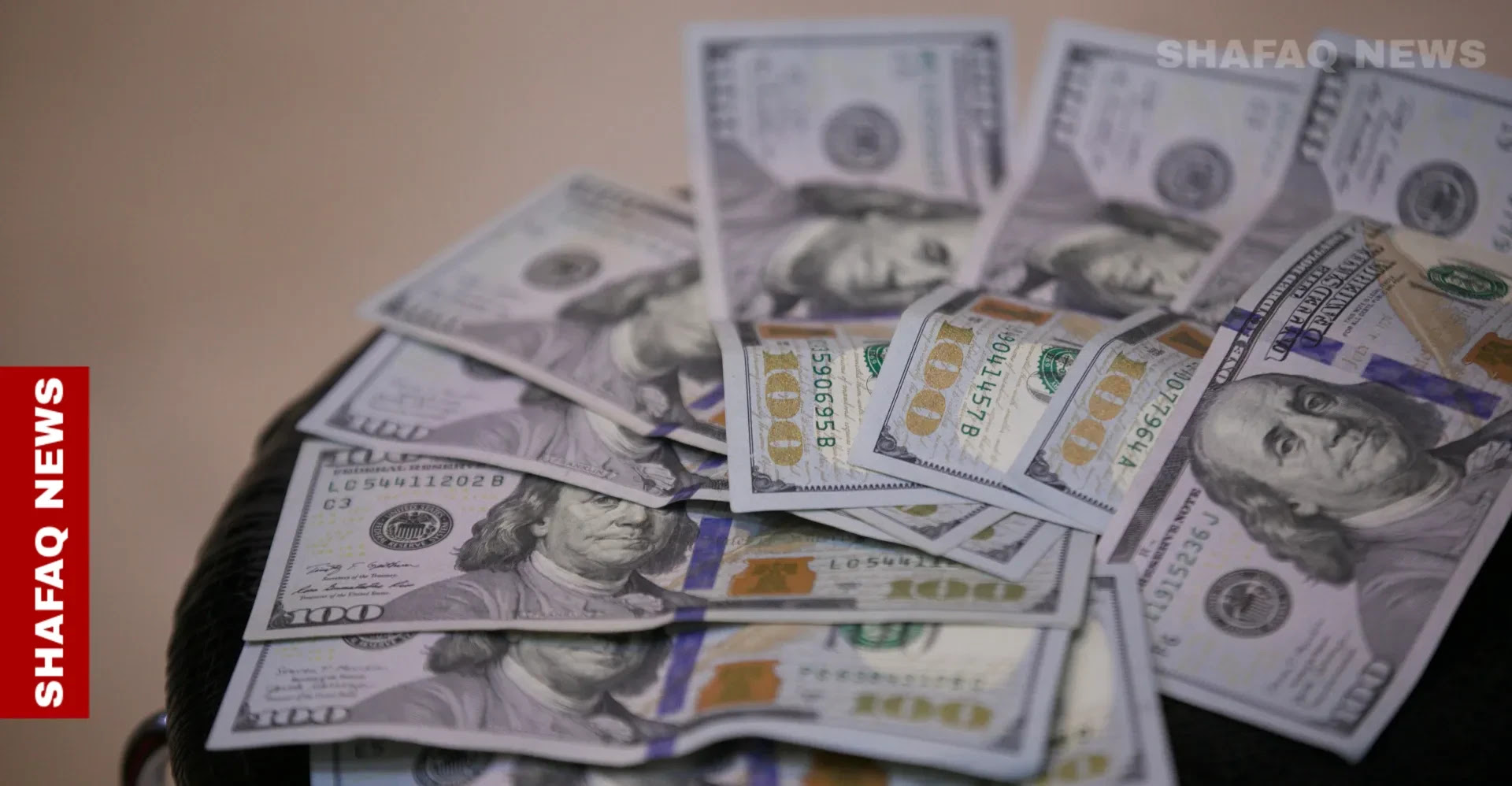
Economic expert Mohammed Al-Hassani suggested on Tuesday that the decision by the Central Bank of Iraq to reduce the amount allocated for air travelers from $3,000 to $2,000 will lead to an increase in demand for dollars in the parallel market during the first phase, with some travelers resorting to buying the remaining amount from local markets.
Al-Hassani told Shafaq News Agency that reducing cash allowances will push a segment of travelers who need larger sums to cover travel expenses to compensate for the difference by buying dollars from the parallel market, which may increase the volume of demand and have an impact on the exchange rate if it is not met with an increase in supply.
He added that the impact will not necessarily be large or long-lasting, as it depends on the number of travelers and the actual size of demand, as well as the ability of bank cards to meet spending needs outside Iraq, which is what the Central Bank seeks to enhance within the policy of expanding electronic payment.
Al-Hassani pointed out that the Central Bank’s success in encouraging the use of bank cards outside Iraq may reduce pressure on the parallel market, noting that any rise in the dollar’s price will be temporary if it is accompanied by regulatory and supervisory measures that ensure market stability and the availability of foreign currency.
An informed source reported earlier today that new directives were issued by the Central Bank of Iraq to reduce the share of foreign currency (dollars) for travelers to $2,000 instead of $3,000, as part of the approved mechanism to meet travel requests.
According to the source, who spoke to Shafaq News Agency, the decision will include Iraqi citizens departing through all airports and border crossings, whether they are heading for tourism, medical treatment, study, performing Hajj and Umrah rituals, as well as business trips.
The mechanism for delivering the funds will remain unchanged, through government and private banks and approved exchange companies, where the traveler receives his share after his passport is stamped and before the flight's departure time.
According to the source, the new instructions included travelers whose circumstances require additional funds (for exceptional medical or commercial reasons) relying on electronic payment cards and loading them with additional balance, stressing that spending outside Iraq through these cards will be done according to the official exchange rate of 1320 dinars per dollar.
Presidential advisor: Funds recovered from corrupt individuals will contribute to reducing the deficit gap and financing projects.

The Prime Minister’s financial advisor, Mazhar Muhammad Salih, confirmed on Tuesday that the funds recovered from corrupt individuals represent exceptional revenues that cannot be relied upon in preparing public budgets, while noting that these funds will contribute to reducing the deficit gap and financing projects.
Saleh said in statements followed by Al-Mirbad that “the funds recovered from the corrupt are important and non-recurring exceptional revenues, as they cannot necessarily and permanently be relied upon in preparing public budgets, but they constitute an important source of revenue in financial planning.”
He continued: “These funds are often directed towards bridging the deficit gap or financing specific projects that directly affect the lives of individuals, or strengthening the country’s financial reserves, and not towards building the annual budget within a long-term fiscal policy, because that is linked to the ceilings and capabilities of fiscal policy within the framework of preparing and implementing public budgets.”
He stressed that "recovering corruption funds is important because it reduces financial waste, supports the public treasury, and enhances the confidence of citizens, investors, and the international financial community in the country's economic system," noting that "the funds recovered from corrupt individuals represent an important support tool for the national economy, but they are not necessarily a complete substitute for the general budget, as this depends on the size and ceilings of public spending."
Qani: The funeral procession of the Supreme Leader in Iraq will make our people's grip stronger in the face of American machinations.
The commander of the Quds Force in Iran's Islamic Revolutionary Guard Corps, Esmail Qaani, commented on the funeral of Iranian Supreme Leader Ali Khamenei in Iraq.
Qaani stated that "the funeral of the leader and the extensive preparations made by Iraq for this historic event demonstrate the depth of the ties between our two nations."
He added that "the funeral of our martyred leader in Iraq will strengthen the resolve of our two peoples in confronting American machinations."
He continued, "The funeral ceremonies for the martyred leader in Iraq will be similar to those held for the martyrs Soleimani and Abu Mahdi al-Muhandis."
Tensions with Araqchi and restrictions on Khamenei's funeral procession... Al-Zaydi is leading Iraq away from Iran

This image is from June 28 26
Paul Davis, an American academic and researcher in national security affairs, believes that the Iraqi government is sending clear political messages that reflect a gradual shift in its foreign policy, led by Prime Minister Ali Faleh al-Zaidi, with the aim of reducing Iranian influence and opening up more to the United States and Arab countries.
Davis, an assistant professor at the Institute for World Policy in Washington, told Shafaq News that limiting the funeral ceremonies for former Iranian Supreme Leader Ali Khamenei within Iraq to Najaf and Karbala, without organizing official ceremonies in Baghdad, "represents a striking indication of the nature of the new relationship that the Iraqi government is trying to forge with Tehran."
He added that "it is natural, given the historical relations and sectarian ties, for Iraq to participate in this occasion, but the absence of the capital from the scene carries political implications that cannot be ignored."
Davis believed that the reports circulating about restricting the participation of Quds Force commander Ismail Qaani, if true, would be a "very significant signal," especially in light of the government's efforts to confine weapons to the state, and the associated influence of armed factions supported by Iran.
He noted that the heated discussions between Prime Minister Ali Faleh al-Zaidi and Iranian Foreign Minister Abbas Araqchi reflect the growing divergence between Baghdad and Tehran, especially with al-Zaidi's anticipated visit to Washington approaching.
He continued: "It appears that al-Zaidi is not only seeking to strengthen his relationship with the United States, but is also working to reposition Iraq regionally, by building closer relations with neighboring Arab countries, and reducing the extent of Iranian influence in Iraqi decision-making."
The American researcher added that this path will not be easy, explaining that the Prime Minister will face pressure from political forces and influential factions within the ruling coalition, and that it is still too early to judge the success of this approach.
Davis’s remarks came after information revealed by Iraqi sources to Shafaq News Agency, which spoke of the Iraqi government imposing restrictions on Khamenei’s funeral ceremonies, limiting them to the governorates of Najaf and Karbala, based on security and political considerations, while avoiding holding any ceremonies in Baghdad.
The sources also reported that Baghdad informed the Iranian side of the need for Iranian military leaders, including Quds Force commander Ismail Qaani, not to participate in the ceremonies, for fear that the event would carry political and security messages that go beyond its religious character.
However, the head of the parliamentary Design Alliance bloc, Amer Al-Fayez, denied to Shafaq News Agency the validity of the reports that Tehran had been informed that Qaani was “persona non grata” inside Iraq, stressing that this information was “completely false” and that it aimed to harm relations between Baghdad and Tehran, especially since Qaani “did not issue anything that warranted taking such a position.”
These developments coincide with al-Zaidi’s preparations to visit Washington and meet with US President Donald Trump, in a visit seen as a pivotal moment in shaping the foreign policy of the new government, amid Iraqi attempts to manage the balance between partnership with the United States and maintaining itsrelations with Iran, at a stage that is witnessing a rearrangement of the equations of influence in the region.
The Iranian president accompanies Khamenei's body to Iraq

An informed source confirmed on Tuesday that Iranian President Masoud Pezeshkian will head the official delegation that will accompany the body of the late Iranian Supreme Leader Ali Khamenei during his funeral ceremonies in the Iraqi cities of Najaf and Karbala.
The body of the deceased is scheduled to arrive via Najaf International Airport on Tuesday evening, and the official and popular funeral ceremonies will take place on Wednesday morning in the two holy cities.
In this context, the streets and roads of Najaf Governorate witnessed the raising of pictures of the late leader and Iraqi and Iranian flags, in addition to the spread of service processions along the road leading from the airport to the shrine of Imam Ali, as well as the other main squares and streets in the city, hours before the arrival of the body.
Iraqi Prime Minister Ali Faleh al-Zaidi is expected to participate this evening in the official reception for the body of the late Iranian leader at Najaf International Airport.
Al-Zaidi faces a test from the "big players"... Washington awaits proof of seriousness in the corruption and weapons files.
Approximately $300 billion has been smuggled out of Iraq.

Before Prime Minister Ali al-Zaidi arrived in Washington in mid-July, Baghdad found itself facing a sensitive political test: the funeral of former Iranian Supreme Leader Ayatollah Ali Khamenei and several members of his family in Iraq.
The event, which was supposed to be a religious ceremony, quickly transformed into a political issue where the interests of Baghdad, Tehran, and Washington intersected, becoming one of the first hurdles before the anticipated meeting between al-Zaidi and US President Donald Trump.
Although the visit to the White House comes amid signs of improving relations between Baghdad and Washington, serious questions remain about al-Zaidi's ability to implement the commitments outlined in the understandings reached between the two sides in what has become known as the "June Agreement."
Conversely, observers believe that the Prime Minister made significant progress toward the US administration in the past week, after launching a broad campaign to prosecute officials accused of corruption—a move seen as an attempt to demonstrate seriousness in fulfilling the pledges made to Washington.
Iranian pressure and Iraqi hesitation:
A well-informed political source revealed that approving the holding of Khamenei's funeral procession in Iraq on Wednesday was not an easy decision within the government. It was preceded by hesitant discussions before the scales tipped under Iranian pressure, supported by positions from forces within the coordination framework and armed factions.
The source, a member of parliament from one of the major Shiite parties, told Al-Mada on condition of anonymity that "Al-Zaidi realizes this issue could put him in an embarrassing position with Trump during his upcoming visit to Washington."
According to information circulating in political circles, the funeral program has undergone a significant change. Baghdad has been removed from the schedule of ceremonies, which were initially planned for the city of Kadhimiya. The visit will now be limited to Najaf and Karbala, with the possibility that Al-Zaidi will receive the body of the Supreme Leader at Najaf Airport.
Estimates suggest that a large funeral procession in the capital might have turned into anti-American demonstrations, punctuated by chants and slogans targeting the US president, similar to the scenes witnessed during funeral processions in Iran.
US President Donald Trump had expressed clear interest in the funeral processions that began earlier in the week in Iran.
In a press statement, commenting on the scenes showing thousands of participants weeping during the ceremonies, Trump said he was surprised by the scale of the public reaction, adding, "Maybe those were fake tears."
Iranian Foreign Minister Abbas Araqchi arrived in Baghdad for his first visit since the end of the last war in the region, coinciding with the launch of what has become known as "Operation Dawn," which targeted members of parliament and officials accused of corruption last week.
According to leaks following the visit, Araqchi discussed the details of the funeral processions with Iraqi officials, while initial reports indicated that Baghdad would be one of the main stops for the event.
However, the Iraqi committee responsible for organizing the pilgrimage quickly denied this information, before the outlines of the new program, limited to Najaf and Karbala, became clear.
Religious rituals, not political calculations.
In contrast, former diplomat Ghazi Faisal offers a different interpretation of the matter. He believes that Washington, including President Trump, understands that the funeral of the former Iranian Supreme Leader is not an official function of the Iraqi government, but rather falls within the realm of religious and sectarian rituals.
Faisal told Al-Mada, "Al-Zaidi is concerned with running the government, while Khamenei's funeral is part of religious tradition." He added that Baghdad's approval of holding the funeral ceremonies in Najaf and Karbala "is simply a response to religious traditions followed with religious figures, officials, or even ordinary citizens."
Faisal points out that Trump himself announced a week's grace period for Iran to complete the funeral ceremonies, out of respect for the occasion, without exerting pressure related to the negotiations between the two sides.
He believes that what transpired represents a "temporary truce" to allow for the conclusion of the ceremonies before the resumption of negotiations between Washington and Tehran.
The former diplomat concludes that the United States, as a multi-religious and multicultural country, generally views religious and sectarian diversity, and its associated rituals, with respect. This makes it unlikely that the funeral ceremonies, in themselves, will turn into a crisis in official relations between Baghdad and Washington, unless they are accompanied by political messages or stances that transcend their religious dimension.
How is al-Zaidi viewed in Washington now?
Regarding al-Zaidi's image in the United States, Kato Saadallah, a researcher specializing in American affairs, believes that Washington still grants al-Zaidi an important political opportunity, but at the same time links the continuation of this support to his ability to implement genuine reforms.
Saadallah tells Al-Mada that the Prime Minister's visit comes at the invitation of US President Donald Trump and coincides with the celebrations of the 250th anniversary of the founding of the United States. He adds that Trump will be attending the NATO summit in Ankara beforehand and will meet with al-Zaidi upon his return to Washington.
He points out that Trump had previously declared his support for al-Zaidi and the current government, a stance that granted Baghdad significant political leeway. However, according to Saadallah, this support will not be open-ended or unconditional.
He adds that the US president, through his envoy Tom Barrack, informed the Iraqi government of a set of priorities that must be addressed if Baghdad wants to maintain American backing. Saadallah identifies
three main priorities . The first is ending the proliferation of weapons outside state control and disbanding militias and armed factions, thereby restoring the state's monopoly on the use of force. The second priority is combating corruption, which, according to the researcher, is the issue Trump focuses on more than any other, based on the conviction that corruption is the gateway through which all other Iraqi crises stem. The third priority is halting the smuggling of hard currency and closing the channels that drain Iraq's financial reserves and fuel financial networks linked to foreign entities. Is "Operation Dawn" enough? Saadallah believes that the recent campaign launched by al-Zaidi against a number of those accused of corruption represents an important step, but it still requires further evidence.
The question arises: Will this campaign be enough for al-Zaidi to take to Washington to convince the US administration, Congress, and American institutions that he has truly begun the fight against corruption, or will it be interpreted as a belated measure that falls short of addressing the challenges?
He believes the answer to this question will largely determine the nature of the American stance toward the Iraqi government in the coming period.
Congress describes al-Zaidi's actions as a "farce"!
Despite the initial American welcome of the recent moves, Saadallah points out that there are still influential voices within Congress who view what is happening in Baghdad with skepticism.
He cites the position of Congressman Joe Wilson, who criticized al-Zaidi's campaign, describing it as a mere "farce," considering it not to represent a genuine confrontation with the system of corruption.
Saadallah notes that Wilson went even further when he published the names of prominent political figures, saying that any serious campaign should start with the "big fish," and in his tweet, he mentioned Nouri al-Maliki, Hadi al-Amiri, and Qais al-Khazali.
The Washington test
: Saadallah believes that the task awaiting al-Zaidi in Washington will not be easy.
If he merely presents the measures taken during the past week, he is unlikely to gain full American support.
However, if he succeeds in convincing the US administration that he will return to Baghdad to complete a broad campaign targeting high-ranking officials accused of corruption, in parallel with practical steps to consolidate weapons under state control, the chances of continued US support will increase significantly.
He adds that the visit comes at a highly sensitive economic time, as Iraq faces a financial crisis due to the halt in oil exports during the recent war with Iran, making Baghdad more reliant on loans and international financial support.
He emphasizes that obtaining funding from the World Bank or major financial institutions will be much more difficult without US political backing, which gives the visit an importance that transcends its diplomatic dimension.
Will the Syrian experience be repeated?
Saadallah suggests that the nature of US support will become clearer after the visit, questioning whether Trump will deal with al-Zaidi in the same way he dealt with Syrian President Ahmed al-Sharaa, by linking support to a series of conditions and procedures.
He adds that if US support is indeed conditional, Baghdad will be required to demonstrate more decisive steps in the areas of combating corruption and disarmament, as these two issues will remain the primary benchmark for judging the government's performance.
Observers view the visit as the culmination of understandings reached between al-Zaidi and US envoy Tom Barrack during Barrack's visit to Baghdad last month, which has become known politically as the "June Settlement."
This settlement includes containing Iranian influence and creating a broader environment for US investment in Iraq.
Meanwhile, former diplomat and head of the Iraqi Center for Strategic Studies, Ghazi Faisal, believes that the real battle facing Ali al-Zaidi's government is combating corruption. He asserts that the government has begun pursuing money laundering, smuggling, and corruption networks, particularly in the oil and electricity sectors, in addition to tracking financial networks in neighboring countries and Europe, involving more than 264 defendants and their assets.
Faisal points out that the World Bank has previously reported that more than $300 billion has been smuggled out of Iraq, suggesting that dismantling these networks and recovering the funds could take seven years or more due to their ties to foreign banks and companies, and the integration of some of the money into the economies of other countries.
Faisal calls for a comprehensive audit of state institutions' accounts by international auditing firms.
He concludes that Washington understands the complexities of combating corruption in Iraq, but will view any real progress on this issue as the most important card al-Zaidi can play at the White House, because the government's success will be measured by the tangible results it achieves in fighting corruption and recovering funds, not merely by launching campaigns.
Shorter version
Al-Zaidi faces a test from the "big players"... Will his campaign convince Washington?

All eyes are on Prime Minister Ali al-Zaidi's upcoming visit to Washington, amid American anticipation of the seriousness of his government in implementing fundamental reforms, foremost among them combating corruption and restricting weapons to the state. While the administration of US President Donald Trump describes these issues as a benchmark for continued support for Baghdad, observers believe that al-Zaidi faces a crucial test to prove his ability to move from launching campaigns to pursuing the "big fish" and achieving tangible results, according to Al-Mada newspaper .
The newspaper, in a report seen by Al-Sa’a Network, quoted its sources as saying that “Al-Zaydi realizes that the anti-corruption file will be one of the most sensitive files during his upcoming visit to Washington, and it may put him in an embarrassing position in front of US President Donald Trump if he does not bring with him clear indications of tangible progress .”
She added that “the funeral of the former Iranian leader is not part of the official work of the Iraqi government, but rather comes within the framework of religious and sectarian rituals,” stressing that “Al-Zaydi is concerned with managing the affairs of the government, while the funeral ceremonies fall within the religious traditions followed with religious or official figures, and that Baghdad’s approval to hold the ceremonies in Najaf and Karbala does not exceed this framework .”
She noted that "Trump gave Iran a week to complete the funeral ceremonies out of respect for the occasion, without exerting pressure related to the negotiations between Washington and Tehran," considering that "what is happening represents a temporary truce before the resumption of the negotiating track between the two sides ."
She stated that "Washington is still giving al-Zaidi an important political opportunity, but it links the continuation of this support to his ability to implement real reforms," noting that "the Prime Minister's visit comes at the invitation of Trump and coincides with the celebrations of the 250th anniversary of the founding of the United States, after the US President's participation in the NATO summit in Ankara ."
She stressed that “American support for the Iraqi government is not open-ended or unconditional,” noting that “the American administration informed Baghdad, through its envoy Tom Barrack, of three main issues that represent a criterion for the continuation of this support .”
She explained that "the first priority is to restrict weapons to the state and end the phenomenon of weapons outside the framework of official institutions, while the second priority focuses on combating corruption, which Washington views as the main gateway to most of the crises that Iraq suffers from, and the third file relates to stopping the smuggling of hard currency and closing the channels that drain the Iraqi financial reserve ."
The report noted that "the recent campaign launched by the government against a number of those accused of corruption represents an important step, but it still needs greater evidence and results," questioning whether "these measures will be sufficient to convince the US administration and Congress that Baghdad has indeed begun a serious battle against corruption, or whether they will be interpreted as belated measures that do not rise to the level of the challenges?"
He added that “merely presenting the measures taken in recent days may not be enough to gain full American conviction, while expanding the campaign to include the top corruption suspects, in parallel with practical steps to restrict weapons to the state, will enhance the chances of continued American support .”
He noted that "obtaining funding from the World Bank and major financial institutions will be more difficult without American political cover, which gives Al-Zaidi's visit to Washington an importance that goes beyond its diplomatic dimension ."
He added that "the government will be required to show more decisive steps in the files of combating corruption and disarmament, because these two files will remain the basic standard for evaluating its performance during the next stage ."
He pointed out that "the government has begun pursuing money laundering, smuggling and corruption networks, especially in the oil and electricity sectors, in addition to tracking financial networks inside and outside Iraq that include more than 264 defendants, while the World Bank has previously spoken about the smuggling of more than $300 billion out of Iraq, which makes recovering the funds and dismantling these networks a process that may take years, and requires a comprehensive audit of the accounts of state institutions through international auditing firms ."
He added that “Washington is aware of the complexities of confronting corruption in Iraq, but it will view any real progress on this issue as the most important card that al-Zaidi can take to the White House, since the government’s success will be measured by the actual results in combating corruption and recovering funds, and not just by announcing campaigns or measures
Iraq's Coordination Framework backs anti-corruption campaign, urges stronger parliamentary oversight
Ruling alliance also calls for mass participation in funeral ceremonies for Iran's Supreme Leader Ali Khamenei

Iraq's ruling Coordination Framework on Monday reaffirmed its support for the government's anti-corruption campaign, calling for closer coordination among the executive, judiciary, and parliament to combat corruption and protect public funds.
The alliance made the remarks during its 283rd regular meeting, held at the office of Hadi al-Amiri, secretary-general of the Badr Organization. The meeting was attended by Faiq Zaidan, president of Iraq's Supreme Judicial Council, and Prime Minister Ali al-Zaidi, according to a statement issued by the Coordination Framework's media office.
The participants reviewed the latest political and national developments, with discussions focusing on sustaining the country's anti-corruption drive.
The Framework reiterated its backing for the government's and judiciary's efforts to combat what it described as the "scourge of corruption" and to halt the waste of public funds.
With Iraq's parliament resuming work following its legislative recess, the alliance also called on lawmakers to strengthen parliamentary oversight in line with ongoing executive and judicial measures, while accelerating the passage of key legislation.
The meeting further addressed preparations for the funeral ceremonies of Iran's Supreme Leader Ayatollah Ali Khamenei. The Coordination Framework said both official institutions and public organizations were continuing preparations for the procession and renewed its call for broad public participation in the ceremonies.
The alliance said such participation would honor what it described as Khamenei's enduring legacy and his support for causes affecting the Islamic world.
The Coordination Framework is a coalition of predominantly Shiite political parties that has formed the backbone of Iraq's governing majority since the 2021 parliamentary elections. The alliance plays a central role in shaping government policy and coordinating positions among its member parties on major political, security, and economic issues.
The meeting comes as Iraqi authorities have intensified efforts to tackle corruption, one of the country's most persistent challenges, through a series of investigations, arrests, and judicial proceedings targeting alleged financial misconduct.
At the same time, Baghdad has closely followed developments in neighboring Iran following Khamenei's death, with Iraqi political and religious figures expressing condolences and organizing official participation in the funeral ceremonies.
An American perspective: Al-Zaydi invokes the "Godfather" to dismantle the deep state in Iraq.

An American report likened Iraqi Prime Minister Ali Faleh al-Zaidi's anti-corruption campaign to what is known as "Michael Corleone's moment" in the movie "The Godfather," questioning whether the ongoing measures represent the beginning of dismantling the entire corruption system, or whether they will be limited to eliminating political opponents.
The Quincy Institute, in its report entitled “The Iraqi Prime Minister Embraces His Inner Michael Corleone,” translated by Shafaq News Agency, recalled the cinematic scene, which it described as one of the most convincing scenes in cinema about power and consolidating control, and how a new system is forged by destroying the old one.
More than half a century after the film "The Godfather," the report argued that Iraq is experiencing its own Godfather moment, explaining that since taking office last May, al-Zaidi has launched an unprecedented campaign targeting figures in various aspects of the political and administrative establishment, including investigations into billions of dollars of money suspected of being misused, and has reached deep into the networks of officials, bureaucrats, and political actors who have benefited from Iraq's patronage and quota system.
According to the report, external powers largely supported Operation Dawn Charge, with US officials and segments of the international community viewing it as a sign that Baghdad may finally have decided to confront the corruption that has undermined governance for two decades. The report also notes that China, one of Iraq’s largest economic partners, has reasons to welcome greater institutional stability.
The report continued that even former Prime Minister Nouri al-Maliki, who has long been associated with the political system that emerged after 2003, praised al-Zaidi's campaign against "those who squandered the money of the Iraqi people," while the leader of the Shiite national movement, Muqtada al-Sadr, expressed his support for the "heroic reform campaign," as he put it.
After describing what al-Zaidi did as a major political victory for him, the report noted that his supporters described the campaign against corruption as the great national battle, compared to the war against ISIS, with the leader of the Services Alliance, Shibl al-Zaidi, describing "the war on corruption as no less important or dangerous than the fight against terrorism."
While the report addressed the rise of the corruption system in Iraq after the 2003 invasion, and its transformation into a complex patronage system fueled by billions of US dollars allocated for reconstruction, it quoted Abu Bakr Jamai, a researcher at the American College of the Mediterranean based in Morocco, as saying that "corruption comes from the absence of law enforcement," adding that corruption, in this context, supports the erosion of the rule of law.
The report stated that more than a decade ago, anti-government and anti-party protests erupted, including in the capital Baghdad, Basra, Najaf, Karbala and Hilla, driven by corruption, lack of electricity, unemployment and poor public services. It added that the protests challenged the assumption that Shiites would automatically support Shiite political elites, but that shared religious identity proved insufficient when citizens were facing temperatures of up to 50 degrees Celsius, without constant electricity or basic services.
According to the report, for then-Prime Minister Haider al-Abadi, these protests represented a major embarrassment, especially since ISIS boasted about providing services such as electricity in the city of Mosul, while al-Abadi responded by launching a series of anti-corruption initiatives, including the establishment of a High Commission for Combating Corruption.
However, the report noted that these measures were seen as cosmetic reforms that added another layer of bureaucracy without addressing the deep-rooted structural problems.
According to the report, al-Zaydi’s approach is markedly different, indicating that he appears ready to meet the challenge of reforming a political system that rewards Iraqi politicians with positions because of their ethnic and sectarian backgrounds.
The report continued that while al-Zaidi’s government targeted its political rivals, it also faced pressure from “Baghdad’s banker,” namely US Special Envoy Tom Barrack, who the report noted also faced accusations in the United States, but considered Barrack to be the model of the US mediator for power who understands where financial influence lies.
The report recalled the famous American bank robber Willie Sutton’s saying, when asked why he robbed banks, “Because that’s where the money is.”
According to the American Institute's report, there is no doubt that international intelligence and financial monitoring mechanisms played a role in uncovering illicit financial networks in Iraq, as it is difficult to move piles of US dollars without leaving a trace, and it is possible that the US Treasury Department and financial tracking systems contributed to identifying suspicious transactions.
However, the report considered that the biggest challenge facing al-Zaydi is that corruption is embedded in the structure of the state itself, and that Iraq’s system is similar to the sectarian power-sharing system in Lebanon, explaining that this model was designed to prevent a recurrence of conflict by ensuring representation, but it has largely failed to achieve effective governance.
The report concluded by saying that ultimately, the question facing Iraq is whether al-Zaidi will become a Michael Corleone, a leader who consolidates his power by eliminating his rivals while leaving his allies untouched, or whether he will be a leader willing to challenge the entire system, including those at the top.
More than just protocol: Radical shifts drive Al-Zaidi's visit to Washington this month!
Introduction: Iraq stands at a new crossroads
in the corridors of international diplomacy. Visits by heads of state are often dismissed as routine protocol procedures filled with forced smiles, but Iraqi Prime Minister Ali Zaidi's visit to Washington in mid-July breaks this mold. In the aftermath of the "Iran 2026 War" and the fragility of the "Islamabad Memorandum," Zaidi carries not merely investment requests, but a "sovereignty first" doctrine. It is a bold attempt to transform Iraq from a regional arena of attrition into a "vital hub" that neither Washington nor the global economy can ignore.
First: Hunting the “Big Fish” – When bullets and money speak,
al-Zaidi’s journey didn’t begin in Washington, but rather in the streets of Baghdad on the still night of the 28th of last month. That night, counterterrorism forces shattered the status quo with swift raids targeting bastions of nepotism. This wasn’t a political “show,” but the first wave of the “50 Whales” list identified by the Supreme Sovereign Council for Integrity.
The operation resulted in the arrest of 47 high-ranking officials, including parliamentarians and governors, and the seizure of large sums of cash hidden in private safes. For al-Zaydi, this move was domestic “political suicide,” but in Washington, it was a strategic “credit card”; it was the only message capable of persuading the US Treasury to lift restrictions on Iraqi banks and translate promises of integrity into concrete reality.
“Al-Zaidi’s categorical refusal of a $200 million bribe from an oil tycoon has become the ‘founding statement’ of his administration, and the moral cornerstone with which he confronts skeptics in the White House, declaring the end of the era of ‘money for silence’.”
Second: The “OPEC Surprise” – Iraq brandishes its surplus weapon
in a high-stakes geopolitical poker game. Al-Zaidi holds a card that could redraw the global energy map: the threat to suspend Iraq’s membership in OPEC. This is not merely a threat to increase production; it is a carefully crafted pressure tactic to extract US recognition of the “Joint Energy and Development Fund.”
By threatening to pump 7 million barrels per day, al-Zaidi presents Washington with two equally unpalatable options: either engage in supporting the Iraqi infrastructure fund on favorable terms, or face an oil flood that could destabilize energy prices and traditional oil alliances. Al-Zaidi is not asking for aid; he is trading the stability of the global market for funding for the “new Iraq.”
Third: “Securing the Future” – Iraq as a Global Reserve Hub.
After the 2026 war exposed the vulnerability of the Strait of Hormuz, al-Zaidi proposes Iraq as a “global reserve hub” for energy, representing a geopolitical “insurance policy” for the West. The race here is not only economic but also a race against time, as Turkey is pushing for a new agreement for the Nord Stream pipeline by a deadline this month.
Through the “Development Road” and the Nord Stream pipelines, al-Zaidi seeks to create a reliable overland alternative, offering the United States three strategic advantages:
Neutralizing the Strait’s vulnerability: ensuring the flow of oil away from regional maritime threats.
The return of the giants: providing security and political guarantees for American energy companies to return to work within a unified legal framework between Baghdad and Erbil.
Lasting stability: transforming Iraq from a “corridor of wars” into a “lifeline” connecting the Gulf to Europe by land.
Fourth: The Technological Fortress – Sovereignty via Starlink and Blockchain.
Al-Zaidi understands that digitally compromised sovereignty is illusory. Therefore, his visit to Washington transcends traditional arms deals, reaching into the realm of “digital sovereignty.” The move towards Starlink and American cloud providers is not merely a technological luxury, but an attempt to decouple from regional fiber optic networks vulnerable to hacking and political blackmail.
In this context, the KBR-Nebras agreements stand out as a cornerstone for building a “technological fortress.” By combining KBR’s infrastructure expertise with a blockchain-based “government contract gateway,” al-Zaidi aims to render corruption technologically impossible. Here, technology not only combats corruption through legal means, but also makes data and contract manipulation a matter of pure programming imagination.
Fifth: The “Hard Stop” Date – The Moment of Truth on September 30.
The date of September 30 remains the shadow over all discussions; it is the date of the “Hard Stop” for all armed activities outside the authority of the state. Al-Zaidi is going to Washington to forge a unique bilateral security agreement: advanced air and intelligence support, without an “army on the ground.”
This gamble represents a “moment of confrontation” with the militias. Without effective American intelligence cover, the withdrawal could be interpreted as a “retreat” that opens the door for the rearming of the factions. Al-Zaidi seeks to secure a technical and security commitment that guarantees the state remains the only force permitted to bear arms, transforming military support from a “combat presence” into a smart “intelligence partnership.”
Conclusion: Can technology outpace inertia?
Ali al-Zaidi’s trip to Washington is the most ambitious attempt yet to transform the Islamabad Memorandum from a fragile, war-imposed truce into a lasting geopolitical and economic reality. Al-Zaidi is betting that individual integrity, bolstered by digital immunity, can break the deadlock of past decades.
As he sits in the Oval Office, the philosophical question facing Iraq’s future remains: Can technology and sovereign vigilance outpace the inertia of a long history of corruption and weapons, or will the powerful find a way to circumvent even blockchain technology? Iraq’s next decade is being written now in Washington, in ink of oil, digital sovereignty, and unwavering resolve.
A missile attack targeted a gas tanker in the Strait of Hormuz, and Iran announced: "It ignored the warnings."
The Strait of Hormuz witnessed a notable security escalation on Tuesday after a commercial gas tanker was attacked with a missile, resulting in a fire on board, amid international reports and an official Iranian admission of responsibility for the incident.
The United Kingdom Maritime Trade Operations (UKMTO) announced that it had received a report of a maritime incident 8 nautical miles east of the "Lima" area of the Sultanate of Oman, confirming that a fire had broken out on board a commercial tanker as a result of it being targeted by an unknown projectile while sailing in the area.
In this context, the American news platform Axios quoted unnamed sources as saying that Iran launched at least two missiles towards commercial ships that were crossing the Strait of Hormuz.
For its part, Iranian state media confirmed the attack, justifying the targeting by claiming the ship had violated instructions. Tehran-affiliated media reported that "a gas tanker was attacked in the Strait of Hormuz after ignoring warnings" issued by the Iranian naval forces.
There have been no official reports yet regarding the full extent of the material damage to the tanker, or any human casualties among its crew, at a time when the security and oil markets are anticipating the repercussions of this escalation in one of the world’s most vital waterways.
108 ships in 3 days... Marine Traffic: Transit through the Strait of Hormuz remains stable
The ship tracking platform MarineTraffic confirmed that traffic through the Strait of Hormuz "remains resilient," noting that 108 vessels transited the waterway between July 3 and 5.
The platform's statement on X read: "MarineTraffic data recorded 108 confirmed transits of the Strait of Hormuz between July 3 and 5, with 43 transits on July 3, 34 on July 4, and 31 on July 5."
It added: "Traffic was generally balanced in direction, with 60 east-west transits and 48 west-east transits."
The statement continued: "Route selection remained fragmented, with 44 vessels using the Iranian route, 30 using the Omani route, and 10 following the IMO route, while 24 vessels were classified as 'dark' or 'unknown'."
The transits also included a wide range of vessel types, including oil tankers, container ships, bulk carriers, and gas tankers, confirming that commercial shipping continues through the Strait of Hormuz, even as operators diversify their route selection strategies in light of ongoing geopolitical and maritime security risks.
The Hormuz Report platform revealed that despite heavy US air cover, the Iranian Revolutionary Guard Corps (IRGC) targeted two commercial vessels in the Strait of Hormuz last night for violating Iranian naval instructions.
The report added, "The attack came just one day after satellite imagery showed between 40 and 45 IRGC fast boats patrolling the Strait."
Want to Support My FX Buddies?
 Thanks
Support My FX Buddies
BuyMeACoffee CashApp:$tishwash
https://paypal.me/tishwash

.jpeg)
After a two-year hiatus, the Iraqi government begins preparing the 2027 budget draft.
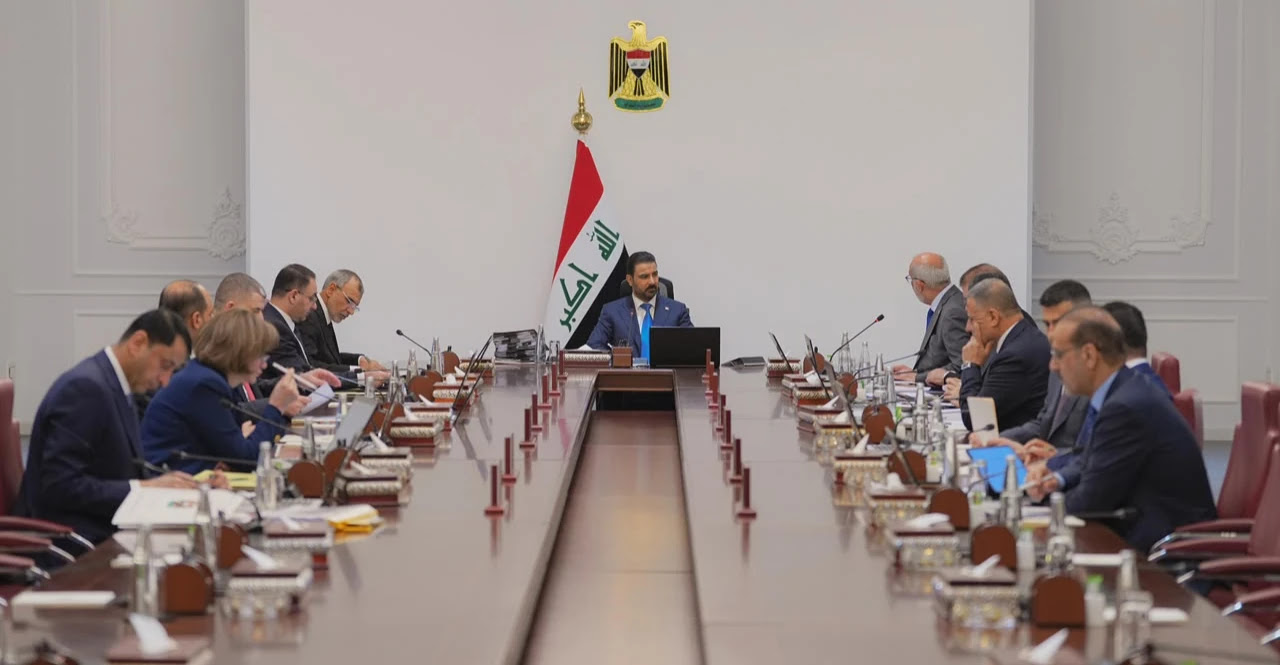
On Monday, Mazhar Muhammad Salih, advisor to the Iraqi Prime Minister for Financial Affairs, revealed that the Ministry of Finance has begun preparing the draft federal general budget law for 2027, in the first new budget that Iraq has begun preparing after two years without approving a federal budget.
Saleh told Shafaq News Agency that the Ministry of Finance began preparing the draft federal general budget law for 2027 during the month of July, based on the Financial Management Law, and that it will finish its work next September.
He added that the draft bill will then be referred to the Ministerial Council for the Economy for discussion, before being submitted to the Cabinet for approval and sent to the House of Representatives.
He pointed out that it is not possible at the present time to determine the financial size of the federal general budget for 2027, explaining that the total value of the budget will be determined after the Ministry of Finance completes the preparation of the draft law.
The government’s commencement of preparing the 2027 budget comes after two years of not approving a federal budget, as no budget was approved for the years 2025 and 2026, despite the previous government, headed by former Prime Minister Mohammed Shia Al-Sudani, enacting the three-year budget law for the years (2023-2025).
The 2025 budget could not be implemented after its amendment schedules were not approved within the House of Representatives and the time period of the law expired, which prompted the Ministry of Finance to adopt a temporary disbursement mechanism at a rate of (1/12) to secure salaries and mandatory expenses.
The 2026 budget was also not approved, due to the delay in forming the government, the economic repercussions of the regional war, and the fluctuations in energy markets, so Iraq continued to manage its spending according to the temporary spending mechanism.
The Minister of Finance reveals details of the 2027 budget and announces its priorities.
Finance Minister Falih Sari revealed on Tuesday (July 7, 2026) some features of the draft budget law for 2027.
The parliamentary media office stated in a statement received by "Baghdad Today" that "the Parliamentary Finance Committee hosted today Al-Sari and the senior staff in the ministry, to discuss the financial and economic situation, and the mechanisms for preparing the draft federal general budget for the year 2027.
The head of the Finance Committee affirmed that "the committee is committed to supporting and enacting laws that contribute to addressing financial challenges, developing non-oil resources, and enhancing the state's financial sustainability."
During the meeting held at its headquarters, the Finance Committee listened to a detailed explanation of the financial and economic situation in the country, with an emphasis on procedures for developing appropriate solutions through legislation that ensure economic stability.
For his part, the Minister of Finance explained that the ministry has set a number of priorities, foremost among them the automation of the ministry’s departments, the establishment of a specialized body, and the adoption of a gradual shift from an itemized budget to a program-based budget.
Al-Sari pointed out that the 2027 budget project includes a phased plan to implement the program and performance budget, starting with a number of governorates as a pilot model, to be gradually generalized to include all governorates of Iraq.
The Minister of Finance also reviewed the Ministry’s plan to repay the public debt by reorganizing dealings with the banks affiliated with the Ministry, which will contribute to reducing the size of the debt, enhancing financial stability and supporting the state’s public treasury.
Sari pointed out that the ministry is continuing to prepare the draft federal general budget law for 2027, in preparation for submitting it to the Council of Ministers, and then referring it to the House of Representatives during the next period.
The meeting witnessed a discussion of mechanisms to maximize public revenues, and to activate the application of the ASYCUDA system, which contributes to raising the efficiency of customs administration and increasing state resources, as well as exploring the possibility of amending a number of related laws, and working on establishing a development fund and an energy fund to enhance revenues and support the public treasury.
The meeting concluded with extensive discussions by committee members regarding financial and economic matters, emphasizing the importance of adopting solutions and procedures that would achieve the public interest and enhance financial and economic stability in the country, in addition to appropriate solutions for the issue of contracts and daily wages.
All eyes are on the framework... Will the vacant ministerial posts be filled, or will the political deadlock continue?
The
Victory Coalition, a component of the Coordination Framework, confirmed on Monday that the Framework's leaders intend to hold a new meeting to discuss three prominent political and security issues.
Coalition spokesman Aqeel al-Rudaini told the Information Agency that "the Coordination Framework leaders will hold a meeting today to discuss three important issues, foremost among them the fight against corruption."
He added that "the other two issues to be discussed are completing the cabinet and Prime Minister Ali al-Zaidi's upcoming visit to Washington, D.C.."
He indicated that "agreeing on completing al-Zaidi's cabinet will be postponed until after his visit to the United States," noting at the same time that "the attendees will continue discussing the appointment of deputy prime ministers to reach a final position."
Diplomats discuss Iraqi-American relations

Diplomats discuss Iraqi-American relations
Last Saturday, the Bahr al-Uloom Forum for Dialogue held a forward-looking intellectual seminar entitled “Iraqi-American Relations: From Crisis Management to Building Interests.” This coincided with the Prime Minister’s official visit to Washington and was attended by the Iraqi government spokesperson, Haider al-Aboudi, and a select group of decision-makers, diplomats, academics, and representatives from think tanks.
The session featured intensive discussions that analyzed the dimensions of the relationship through three strategic axes: reviewing the validity of the foundations laid in 2003 and its aftermath in light of the conceptual shift towards a new Middle East; exploring how to formulate understandings that transcend the traditional security approach to embrace economic partnerships; examining the mechanisms for positioning the Iraqi negotiator amidst a divided American landscape between the White House, Congress, and lobbying groups; and how to protect sovereign decision-making from the competing agendas of Washington’s regional allies. The seminar also addressed leveraging financial reform and combating corruption to attract international confidence and examined the role of mega-projects, particularly the Energy and Development Fund, as a gateway to integration into the global system and achieving an equitable partnership. The seminar concluded with a set of proposals and recommendations that will be submitted to decision-makers in the Iraqi government.
The House of Representatives concludes the first reading of the proposed law on combating information technology crimes.
The Iraqi parliament convened its first session of the second legislative term on Monday, 6 July 2026, under the chairmanship of parliament speaker, Haibat al-Halbousi.
According to a statement issued by the parliament's Media Office, the session included the first reading of two bills: the Combating Cybercrimes Bill and the First Amendment to the Law on the Care of Minors.
In a separate statement, the Media Office announced that the parliament's next session will be held on Thursday, 9 July, at 1:00 p.m.
The agenda will include the swearing-in of several replacement members of parliament, the questioning of the head of the National Investment Commission, and general discussions.
A heated exchange erupted inside parliament; Speaker Halbousi described the chaos in the assembly as a "kindergarten," prompting a member of parliament to demand an apology.
to attestIraqi ParliamentOn Monday, a verbal altercation occurred betweenChairman of the Council Hebat Al-HalbousiDeputy MohammedAbu Al-Eis Al-MousawiAfter the president objected to some members standing in front of the presidential platform in a manner he described as "kindergarten-like".
For his part, the MP respondedMuhammad AbuAl-AisAl-MousawiOn the hadithChairman of the CouncilHe considered what he said to be inappropriate, and demanded that he apologize for the phrase he used.
Government advisor: The 2025 budget contained legal and constitutional problems.
On Monday, the Prime Minister’s advisor, Mazhar Muhammad Salih, revealed that there is a problem with the 2025 budget, which includes non-compliance with the three-year budget law.
Saleh told Shafaq News Agency that the legal problem related to the 2025 general budget is not the lack of a legal basis for it, but rather the adequacy of this basis with the failure to complete the procedure required by Article (77/Second) of the Federal General Budget Law No. (13) of 2023, which is sending the annual budget tables to the House of Representatives for approval.
He added that the Federal General Budget Law No. (13) of 2023 included the fiscal years 2023, 2024 and 2025, but the application of Article (77/Second) with respect to the year 2025 raised a legal and constitutional problem, indicating that the dispute is not about the existence of an effective budget or not, but rather about the legal consequences resulting from non-compliance with the procedure imposed by the law, which is an issue that has not yet been resolved by a judicial ruling or a decisive constitutional interpretation.
This comes hours after Saleh confirmed that the Ministry of Finance has begun preparing the draft federal general budget law for 2027, in the first new budget that Iraq has begun preparing after two years without approving a federal budget.
The government’s commencement of preparing the 2027 budget comes after two years of the absence of an effective federal budget with approved schedules, as the 2025 budget schedules were not approved, nor was a budget law for 2026 approved, despite the House of Representatives, during the government of former Prime Minister Mohammed Shia Al-Sudani, approving the three-year budget law for the years 2023, 2024 and 2025.
The 2025 budget, in its updated form, could not be implemented after its schedules were not approved within the House of Representatives and the fiscal year ended, which prompted the Ministry of Finance to adopt a temporary disbursement mechanism at a rate of 1/12, based on the Financial Management Law, to secure salaries, governing expenses and basic obligations.
The 2026 budget was also not approved, due to political complexities and economic pressures resulting from regional tensions and energy market volatility, so Iraq continues to manage its spending according to the temporary spending mechanism, pending a new federal budget.
Iraq is a choice between Tehran and Washington

Iraqi Prime Minister Ali al-Zaidi's upcoming visit to Washington this July will carry a long-term political test, according to the resolution Iranian Leader Ayatollah Ali Khamenei's congratulations on Iraqi soil.
This incident, which is one of the most difficult to draw on religious circumstances, is turning into a crossroads between Baghdad, Tehran and Washington Meeting with US President Donald Trump.
From an analytical point of view, despite signs of improvement in secondary relations, the visit is unlikely to affect questions about al-Zaidi's ability to fulfill his commitments to “settle the issues”. Other than the “Operation of the Dawn” attack on corruption-accused officials, in our reading, it is an attempt to honor the credibility of the US administration.
We arrived on the XX and Facebook forum responded to the following actions; Here are some of the beneficiaries at the ceremony because of the persistence of Iranian influence, the latest anti-corruption campaign is a positive step towards receiving support, with widespread doubt In the possibility of trying “the greatest creature”.
Under the Iranian pressure supported by strong coordination and factories, after the agreement on the spread after internal growth, with the adjustment of the program to capture Najaf and Karbala, Join the protests for Washington in the winter. In a related context, Abdi Trump's attention to the Iranian ceremony is a test of the size of popular participation.
On the other hand, it analyzes that Washington's dealings with religious extremism do not include official government policy, documenting respect for religious diversity, which opens the chapter “Temporary peace” before the appeal of the negotiations.
But al-Zaidi's image in Washington is not an opportunity, but it is time to implement concrete reforms. The US administration's priorities are identified in three key areas: securing weapons within the state, fighting corruption that has infiltrated the crisis, and stopping the destruction of the disastrous operation
Al-Maliki: Al-Zaidi pledges to overcome Iraq's difficult economic situation

Prime Minister Ali al-Zaidi pledged to resolve the difficult economic situation in Iraq, said Nuri al-Maliki, the leader of the rule of law coalition.
The issue of publishing parts of the pronounced song:
Al-Maliki: The coordination framework aims to remain politically powerful
Al-Maliki: Some radio stations do not set the stage for the end, but they fail
Maliki: We want to establish relations with all countries in the United States on condition that Iraqi sovereignty is respected
Al-Maliki: Al-Zaidi pledges to overcome Iraq's difficult economic situation
Al-Maliki: I am concerned that al-Zaidi is not accountable for any political position and he is committed to it
Maliki: Al-Zaidi's visit to the United States will not start from scratch
Maliki: We do not see any real solutions to fight corruption during the last al-Fitr
Maliki: Corruption in Iraq is an explosion of danger and needs road treatments
Al-Maliki: Dawn prayer must be observed according to principles and legal responsibilities
Al-Maliki: Academic assistance in fighting corruption while you are chairman of the parliament
Al-Maliki: There is no custody for anyone accused of corruption and public finances
Al-Maliki: Judgment is meaningful in terms of the corrupt and that is one of the secure affairs
Al-Maliki: We must strengthen the Hashd al-Shaabi, support and develop it
Some people in Basra are in a bad situation

No comments:
Post a Comment