The Speaker of Parliament affirms the commitment to supporting the independence of monetary policy and monitoring the performance of the Central Bank.
Official statement…
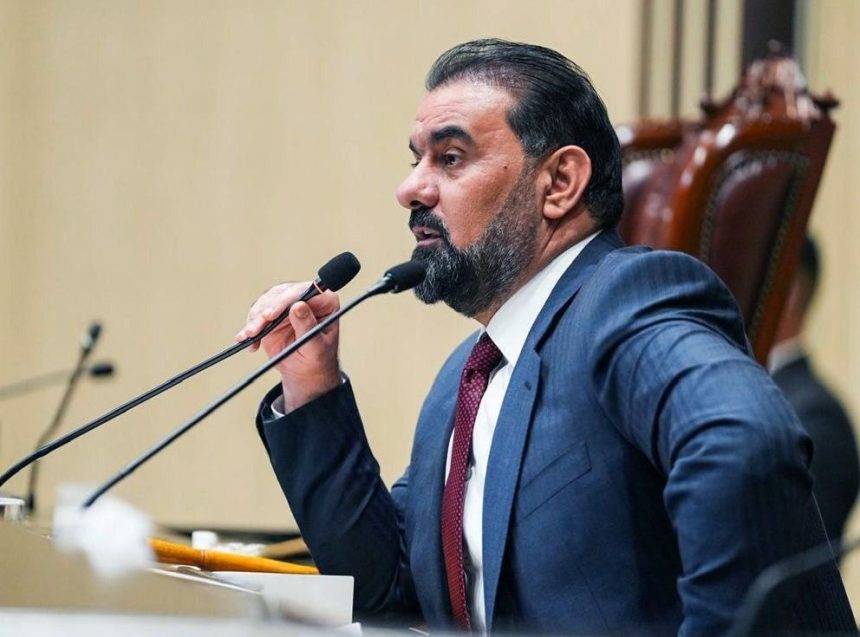
The Speaker of Parliament, Hebat Al-Halbousi, received the Governor of the Central Bank, Ali Mohsen Al-Alaq, on Thursday.
The video for this My FX Buddies Blog post is below here:
The meeting discussed the reality of monetary policy in Iraq and prospects for enhancing its stability, in line with the requirements of macroeconomic stability, and stressed the importance of continued coordination between the House of Representatives and the Central Bank, in order to enhance the effectiveness of economic policies and achieve the desired development goals.
During the meeting, the Speaker of the Council emphasized the House of Representatives’ interest in monitoring the performance of the Central Bank of Iraq and its commitment to supporting the independence of monetary policy, stressing the importance of strengthening effective coordination between monetary and fiscal policies in order to contribute to achieving economic balance and reducing inflationary pressures.
He pointed out that the House of Representatives, based on its oversight and legislative role, affirms its monitoring of the procedures and policies adopted by the Central Bank, in order to enhance transparency and strengthen confidence in the banking sector, stressing the House’s readiness to provide the necessary legislative cover to support financial and banking reforms.
For his part, the Governor of the Central Bank reviewed the most prominent measures taken to enhance monetary stability, regulate the exchange market, and develop the banking sector, stressing that the bank will continue to work in accordance with best international practices and in a way that supports financial stability.
Media Office
of the Speaker of Parliament,
April 16, 2026
Al-Halbousi discusses with Al-Alaq ways to enhance monetary policy stability

Speaker of Parliament Mohammed al-Halbousi received Central Bank Governor Ali Mohsen al-Alaq, where they discussed the reality of monetary policy and prospects for enhancing its stability in line with macroeconomic requirements.
Al-Halbousi stressed the Council’s commitment to supporting the independence of monetary policy and enhancing coordination between fiscal and monetary policies to achieve economic balance and reduce inflation, noting the Council’s readiness to provide legislative cover for financial and banking reforms.
For his part, Al-Alaq reviewed the most prominent measures taken to regulate the exchange market and develop the banking sector, stressing the bank’s commitment to the best international practices to support financial stability.
An Iraqi expert says approving the 2026 budget is almost impossible, and postponement until the end of the year is possible.
Economic and financial expert Haider Al-Sheikh confirmed on Thursday that the discussions circulating within the House of Representatives regarding moving to legislate the federal budget law for 2026 are “almost impossible” given the limited time and its insufficiency for the government and parliament to accomplish this obligation.
The sheikh explained to “Roj News” that “the next Iraqi government is expected to be formed in about a month, but it will need at least three months to prepare and approve the draft budget law before sending it to the House of Representatives, which means that the draft law, if prepared, may reach Parliament during October or the end of this year.”
He pointed out that “Iraq relies primarily on oil exports to maximize its revenues,” noting that “the cessation of maritime navigation in the Strait of Hormuz has directly affected oil exports, as revenues have decreased from about $7 billion to only about $2 billion.”
He explained that “the Iraqi government needs at least $120 billion to prepare and finance the federal budget in order to secure employee salaries and cover the state’s public expenses.”
The International Monetary Fund warns: The ongoing war is pushing the Iraqi economy towards a major downturn.
Want to Support My FX Buddies?
.png)
Support My FX Buddies Big or Small I appreciate it all
BuyMeACoffee CashApp:$tishwash
https://paypal.me/tishwash

.jpeg)
American veto on renewing Sudani's mandate... What is the reason?

Iraqi political sources reported on Thursday that government officials in Baghdad had received an “American message” through an intermediary, opposing the current Prime Minister, Mohammed Shia al-Sudani, assuming the premiership for a second term.
In the details of the message, the sources explained to “Roj News” that “the American administration informed of its position rejecting support for Al-Sudani for a second term as a result of his failure to confront or take a clear stance regarding the attacks of the Popular Mobilization Forces factions against American interests and diplomatic missions in the country.”
This American stance came after US Deputy Secretary of State Christopher Landau summoned Iraqi Ambassador Nizar al-Khairallah to express the United States’ strong condemnation of the attacks carried out by pro-Iranian groups, launched from Iraqi territory and targeting American diplomatic personnel and facilities, according to sources.

Sources confirm that “the American veto on renewing the second term of Al-Sudani prompted the forces of the Coordination Framework to search for a compromise candidate, which is expected to be decided next Saturday, during the Framework’s anticipated meeting.”
The Iraqi political scene is witnessing rapid activity to decide on a candidate for prime minister, within the constitutional deadline and following the election of Nizar Amidi as president of the republic.
This movement is escalating within the “Coordination Framework” blocs despite the disagreements between them. According to a political source who spoke to “Roj News”, Basim al-Badri, head of the Accountability and Justice Commission, has increased his chances after obtaining 8 votes out of 12 votes within the “Framework”.
The informed source close to the “coordination framework” confirms that “Al-Badri received the support of Nouri Al-Maliki, leader of the State of Law Coalition, Qais Al-Khazali, leader of Asa’ib Ahl Al-Haq, in addition to Ammar Al-Hakim, head of the Hikma Movement, along with the Badr and Sadiqun forces (the political wing of Asa’ib Ahl Al-Haq), the Abshir Ya Iraq bloc, the Iraqi Foundation Coalition headed by Mohsen Al-Mandalawi, and the Parliamentary Rights bloc (the political wing of Kata’ib Hezbollah).”
He points out that “the meeting of the coordination framework scheduled for next Saturday may be crucial to ending the political deadlock and coming up with a compromise candidate, given that it is the largest parliamentary bloc and is responsible for this entitlement,” indicating that “Basim al-Badri was put forward as a candidate by Nouri al-Maliki.”
The source also indicates that “Basim al-Badri is close to the Popular Mobilization Forces factions and some of its leaders, in addition to being one of the figures who are organizationally affiliated with the Islamic Dawa Party.”
The proposal of Al-Badri’s name comes within the framework of searching for a middle-ground candidate who can gain internal acceptance among the framework’s forces and alleviate the severity of divisions, in addition to reducing external objections, especially in light of talk about international reservations, including those of Washington.
Following the election of the President of the Republic, Speaker of Parliament Hebat al-Halbousi called on the largest parliamentary bloc to present its candidate within a period not exceeding 15 days, in accordance with Article 76 of the Constitution.
in tab
Maliki and Sudani resort to the 8/12 formula to resolve the prime ministerial candidate crisis.
Maliki and Sudani resort to the 8/12 formula to resolve the prime ministerial candidate crisis.
A source within the Coordination Framework revealed the nature of the initial understandings reached regarding the selection of the next prime minister, explaining that the candidate who secures two-thirds of the votes from the Framework's leaders will win the position. This requires time to finalize this preliminary agreement.
This comes against the backdrop of understandings reached among the Framework's leaders regarding the premiership, which led to the postponement of a crucial meeting until next Saturday.
A source close to the Framework stated that "the Framework's leaders agreed to postpone the meeting, which was supposed to be held Wednesday evening, until Saturday, after reaching important understandings." The source added that "the new understandings require more time to decide on the prime ministership."
Regarding the nature of these understandings, the source revealed that "the initial understandings between the Framework's most prominent candidates, Nouri al-Maliki, leader of the State of Law Coalition, and caretaker Prime Minister Mohammed Shia al-Sudani, which prompted the postponement of the meeting, stipulate that whoever obtains the support of 8 out of 12 leaders from the Shia political bloc will proceed unanimously once the remaining two-thirds are automatically joined, thus securing the premiership."
Trump is seeking a diplomatic solution with Tehran and expects positive results.
US President Donald Trump revealed on Thursday the possibility of holding a new round of negotiations with the Islamic Republic of Iran early next week, with the aim of reaching a final agreement on the nuclear issue.
Speaking from the White House lawn, Trump claimed that economic pressure and the embargo imposed on Iranian ports had pushed Tehran toward diplomacy.
He asserted that the US administration was "handling the situation gently" to create a conducive atmosphere, noting that Iran had agreed not to possess nuclear weapons. Observers see this as an attempt by Washington to promote the success of its strategy after Iran's long resistance to sanctions.
The US president expressed optimism that "positive developments" would soon occur, ensuring that Tehran would be definitively prevented from acquiring nuclear weapons.
Regarding regional developments, Trump announced upcoming meetings with the Lebanese president and the Israeli prime minister to bridge differences, emphasizing his confidence in the sustainability of the ceasefire and Hezbollah's adherence to the ceasefire agreement in Lebanon. This suggests the White House's desire to de-escalate tensions while simultaneously opening diplomatic channels with Tehran.
Trump: Iran has agreed to hand over its stockpile of enriched uranium
US President Donald Trump said on Thursday that Iran had agreed to hand over its stockpile of enriched uranium, indicating that the two sides were "close" to reaching a peace agreement that would end six weeks of war.
"They have agreed to return the nuclear dust to us," Trump told reporters at the White House, using the term to refer to the stockpile of enriched uranium that the United States says could be used to make nuclear weapons.
Trump added that a ceasefire between Israel and Lebanon would include Hezbollah, noting the possibility of a meeting between the leaders of Lebanon and Israel at the White House within the next week or two.
Minerals and “white gold” put Najaf on the investment map in Iraq
The Iraqi Geological Survey Authority confirmed that Najaf Governorate represents one of the most prominent areas for mining investment in Iraq, due to its strategic mineral wealth and high-quality silica sand (white gold).
Senior Geologist Haider Hadi Abdul Zahra, director of the Najaf office of the commission, said, “The commission is working to promote mineral investment within an integrated industrial, geological and economic environment, given the importance of this sector in supporting the national economy and diversifying sources of income.”
He added that “the Authority seeks to develop and promote mineral investment in various regions of Iraq by developing the mining industry and making use of natural resources, while opening the door to investments in accordance with the amended Mineral Investment Law No. (91) of 1988, in a manner consistent with market requirements and contributing to the development of the industrial sector.”
He explained that “the Najaf office provides facilities for the work of the Authority in the covered governorates, through monitoring the field activities of mineral investment operations, providing scientific and technical expertise related to mineral wealth and ways to invest in it, as well as supporting the field teams with experts and technicians to complete mining projects.”
He pointed out that “Najaf Governorate possesses important mineral resources, most notably high-quality limestone deposits used in the manufacture of cement, marble substitutes, and building materials, making it a key factor in supporting housing and urban development projects.”
He added that “the governorate also contains strategic reserves of pure quartz sand and sand suitable for casting used in the ceramics and industrial molds industries, as well as high-quality silica sand used in the manufacture of colored glass.”
He explained that “there are other types of sand used in filtration systems (water filters), in addition to the sand used in the manufacture of concrete bricks, clay bricks, and standard sand used in the manufacture of cement, as well as valley deposits that provide building sand, gravel, and aggregates used in construction work.”
He pointed out that “one of the most prominent indicators of the presence of strategic minerals in Najaf is the mineral strontium sulfate, which is used in advanced industries such as radar and television screens, which enhances the opportunities for advanced industrial investment in the governorate.”
He stressed that “the diversity of mineral reserves in Najaf provides promising investment opportunities in the mining sector, especially in the cement and silica sand industries, which contributes to supporting the national economy and promoting sustainable industrial development.”
Official reports and geological experts confirm that Iraq possesses huge reserves of high-purity silica sand, which is called “white gold” in economic circles, ranging between 350 million confirmed tons and expectations of up to one billion tons in the Anbar and Najaf deserts.
This resource is of paramount strategic importance as it is the primary raw material for the clean energy revolution and the manufacture of solar panels, electronic chips, and optical fibers.
With the purity of these sands reaching 99%, Iraq seeks to transform them from a raw material into advanced manufacturing industries, which could boost the general budget by billions of dollars and provide more than 10,000 job opportunities, coinciding with expectations that the global silica market will grow to reach $85.86 billion by 2033.
Iranian Rial Hype In Pakistan: Are People Really Becoming Millionaires Or Falling For A Scam?
On Piers Morgan Uncensored, Bafel Jalal Talabani Urges Diplomacy, Argues Military Approach in Iran Has ‘Adverse Effect’

PUK President Bafel Jalal Talabani used an appearance on Piers Morgan Uncensored to reject claims of Kurdish involvement in weapons diversion and to argue that military action against Iran risks strengthening, rather than weakening, the state.
Bafel Jalal Talabani, President of the Patriotic Union of Kurdistan, responded to remarks made by United States President Donald Trump regarding the alleged diversion of weapons by Kurdish forces, saying that if the claims are true, the conduct described would be "absolutely shameful."
Talabani did not directly address the accuracy of Trump’s claim, but said that if such actions occurred, they would be “absolutely shameful.”
"I'm sure those words didn't come out of nowhere," he said, adding: "It's one thing to think that tactic of using the Kurds as the bulwark of the assaults was a bad idea, but it's a completely other thing to steal from your allies."
He described the political and administrative landscape in the Kurdistan Region as complex, calling it “a tale of two cities… we’re kind of a country, but not a country,” and noting that governance structures differ across areas, adding he could not speak for actions beyond his knowledge.
“You Can’t Bomb People Into Loving You”
Talabani offered a direct critique of military escalation in Iran, arguing that airstrikes risk producing unintended and counterproductive outcomes.
“You can’t bomb people into loving you,” he said, adding: “I just don’t believe it… I think the tactic is wrong, and it’s having the adverse effect.”
He said, based on accounts from contacts inside Iran, that strikes affecting civilian infrastructure can shift public sentiment. “Every time a school is destroyed, every time a university is destroyed, every time a hospital is destroyed… that’s not helpful,” he said.
Such actions, he argued, can unify populations: “We’ve seen people… who were demonstrating against the regime… now saying, ‘We’re not demonstrating for the regime… we’re demonstrating for our country.’”
Skeptical of Regime Change Through Force
Addressing the prospect of regime change in Iran, Talabani dismissed the idea that military action alone could bring about such an outcome.
“Honestly, I don’t believe so,” he said, arguing that external pressure tends to produce a rallying effect.
“If we were bombed… however unpopular the government… you would see people rally behind the country. It’s an instinctive human reaction,” he added.
He said such pressure can trigger a rally-around-the-flag effect, uniting populations behind the state.
Calls for a Broader Regional Settlement
Talabani urged U.S. policymakers to pursue a wider diplomatic framework that addresses interconnected conflicts across the Middle East.
“I think instead of a small win, there could be the opportunity for a larger win,” he said. “If they concentrated… not just this immediate conflict, but all the things… that exacerbate this conflict.”
He pointed to the potential for agreements extending beyond Iran, including the Palestinian issue and developments in Lebanon.
“If they went for a bigger deal… it would take more time. But the victory would be colossal… it would be a real win,” he said.
Backs Continued Talks and Mediation Efforts
Despite the collapse of recent negotiations, Talabani expressed cautious optimism about diplomacy.
“I’m optimistic… that the Pakistanis are sending a team to Tehran very soon to continue the negotiations,” he said.
He added that progress had been made during previous talks: “There was progress made… on many of the smaller issues… I’ve heard this from both sides.” Talabani also suggested that ceasefire arrangements could be extended to allow diplomacy to continue. “This ceasefire deadline isn’t written in stone… it’s very easy to extend things,” he said.
Warning Against Escalation
Throughout the interview, Talabani emphasized that military escalation is unlikely to resolve the conflict.
“This is one of those conflicts that violence will not resolve,” he said. “My hope is that people will see sense.”
He also cautioned against overreliance on diaspora perspectives in shaping policy, suggesting decision-makers should instead draw on direct intelligence and regional partnerships. “They may not be the right people to listen to,” he said.

No comments:
Post a Comment