Washington escalates tensions with Baghdad: halting dollar shipments and suspending security coordination!
Accusations of government cover for militias and raising the alert level to its highest point

Informed sources revealed on Monday that the United States has halted dollar shipments to Iraq and linked their resumption to the formation of a new government, a move reflecting escalating political and security tensions between the two countries.
According to the sources, Washington also decided to suspend security coordination meetings until the perpetrators of the attacks targeting the US embassy and the logistics support base at Baghdad International Airport are identified. The US administration also froze funding to
several Iraqi security institutions as part of escalating measures related to the deteriorating security situation.
These measures come after a series of attacks targeting US diplomatic sites, including the embassy in Baghdad, the consulate in Erbil, and the Diplomatic Support Center. These attacks have been attributed to armed factions loyal to Iran, some of which are part of the Popular Mobilization Forces (PMF). The frequency of these attacks has increased since the outbreak of the confrontation between the United States and Israel on one side, and Iran on the other, in late February, further complicating the security landscape in Iraq.
In a related development, the US Embassy in Baghdad warned its citizens of the continued security risks in Iraq, despite the reopening of airspace and the resumption of limited commercial flights. The embassy urged them not to travel to the country and to leave immediately if
they are already there.
In a security alert issued Monday, the embassy noted that travelers transiting through Iraq should be aware of the ongoing risks associated with rockets, drones, and missiles. It added that "Iraqi terrorist militias allied with Iran" continue to plan further attacks targeting US citizens and US-related interests, including in the Kurdistan Region.
The embassy accused entities linked to the Iraqi government of providing "political, financial, and operational cover" for these factions. It confirmed that the US mission in Iraq remains operational despite the mandatory departure order, with its services limited to assisting US citizens.
The embassy
also renewed its Level 4 travel warning for Iraq, which advises "not to travel for any reason," and urged US citizens currently in the country to depart immediately.
Regarding departure options, the embassy clarified that land routes to Jordan, Kuwait, Saudi Arabia, and Turkey remain open, but delays and stricter procedures are expected, along with the possibility of increased airfare or unexpected cancellations. It also announced the suspension of all routine consular services, including visa services, limiting communication to emergency cases via email.
buuuuuuuuuut ....
Sudani advisor denies halting dollar shipments from America to Iraq
Prime Minister's advisor Hussein Allawi denied on Monday the news circulating about halting dollar shipments from the United States to Iraq until the formation of the new government, describing it as "inaccurate," and stressing that financial and security relations with Washington are continuing without interruption .
Allawi said in a statement followed by Al-Sa’a Network, “The suspension of dollar shipments from America to Iraq until the government is formed is incorrect, and we categorically deny what some media outlets have reported in this regard, as relations with the United States on the financial and security levels are continuing .”
He pointed out that "the dollar issue concerns sovereign Iraqi funds belonging to the people, which are managed by the Iraqi government and the Central Bank of Iraq, and are protected by previous American decisions that included different administrations and presidents," indicating that "this financial context that is currently being promoted is intended to affect the local market and harm the Iraqi economy ."
He explained that "strategic relations between Iraq and the United States in terms of financial and defense coordination are ongoing, but the security aspect has been affected by developments in the war in the Middle East and changing priorities ."
He added that "counter-terrorism, drug, human trafficking and other strategic issues are ongoing within the framework of joint cooperation, as they are part of regional and international security ."
He added that "the 'Know Your Customer' policy adopted in combating money laundering and terrorist financing is also continuing, to ensure the smooth flow of financial and regulatory work ."
Earlier today, media reports and informed sources indicated that the United States had halted dollar shipments to Iraq and linked their resumption to the formation of the new government, in a move reflecting escalating political and economic tensions between the two sides .
Parliamentary Finance Committee: The 2026 budget is linked to the formation of a new government.
The Finance Committee in the Iraqi Parliament confirmed on Monday that voting on the 2026 budget law is linked to the formation of the next government, the government program, and the speed with which it is sent to the Council.
Committee member Ribwar Karim told Shafaq News Agency that the committee received information from the government indicating that "there is no liquidity crisis, and that employees' salaries are fully secured for the coming months."
Karim added that the parliament is still waiting for the formation of the next government with full powers, so that it can present projects to confront any economic crisis in the next stage.
He noted that if the new government is determined to send the federal budget law to parliament, the finance committee is ready to read, discuss and vote on the law in record time.
Abu Dhabi hints at using the yuan if the dollar becomes scarce due to the regional crisis.

The Wall Street Journal reported that the United Arab Emirates has begun talks with the United States about obtaining a financial safety net in case a war with Iran leads to a deeper liquidity crisis in the oil-rich Gulf state, according to US officials.
The newspaper quoted officials as saying that "Khaled Mohammed Balama, the governor of the UAE Central Bank, raised the idea of establishing a currency swap line with US Treasury Secretary Scott Bisent and officials from the Treasury Department and the Federal Reserve during meetings held in Washington last week."
The officials added that "the Emirati side stressed during the talks that it has so far avoided the worst economic effects of the conflict, but it may need financial support if the situation worsens."
The newspaper said, "These talks showed the UAE's concern that the war would cause significant damage to its economy and its status as a global financial center, by depleting its foreign reserves and raising concerns among investors who considered it a stable and safe destination for their money."
She added that "the conflict has damaged the UAE's infrastructure in the oil and gas sectors, and disrupted its ability to sell oil using tankers crossing the Strait of Hormuz, depriving it of a major source of dollar revenues."
According to officials, "UAE officials have not submitted a formal request to establish a currency swap line, an arrangement that would allow the UAE Central Bank to access dollars at a low cost to support the currency or boost its foreign exchange reserves in the event of a liquidity crisis."
US officials explained that "the Emiratis presented the idea during recent talks as a preliminary and precautionary proposal."
Some officials added that "the Emirati side argued that Trump's decision to attack Iran had plunged his country into a devastating conflict whose effects may not yet be over."
They said that "Emirati officials informed their American counterparts that if the UAE faced a shortage of dollars, it might have to use the Chinese yuan or other currencies in oil sales and other transactions."
The need to restore Iraq's political and economic independence by settling oil revenues in currencies other than the dollar.

Karim Al-Araj, expert and consultant in international economics
Since 2004, due to US sanctions, Iraq has been unable to independently benefit from its oil revenues. With the start of the war between Iran and the United States, the closure of the Strait of Hormuz, and the imposition of restrictions on oil exports, Iraq can regain its political and economic independence by breaking out of the petrodollar cycle and selling its oil in currencies other than the dollar, for example, settling it in yuan.
Iraq is among the world's largest producers and exporters of crude oil. It possesses over 145 billion barrels of proven oil reserves, ranking fifth after Venezuela, Saudi Arabia, Canada, and Iran.
https://i.top4top.io/p_
Image 1 - Countries with the largest proven oil reserves
In addition, it produces approximately 4.4 million barrels of oil per day, ranking sixth among crude oil producers, and with exports of 3.6 million barrels, it ranks fifth among the world's exporters of this product. Annual revenue from these oil exports is estimated at around $110 billion; however, this revenue is indirectly transferred through the Federal Reserve to the Iraqi government and people.
Following Iraq's invasion of Kuwait in 1990, the UN Security Council imposed sanctions on the country and, in Resolution 986, established the Oil-for-Food Program for Iraq. Under this resolution, Iraq was permitted to export its petroleum products, but the proceeds were deposited into an account at the United States Federal Reserve to be used for importing food and medicine.
Following the occupation of Iraq in 2003 and the formation of the Coalition Provisional Government led by the United States within the framework of the multinational forces in that country, the United States effectively assumed, based on Security Council Resolution 1483 of May of the same year, the executive, legislative and judicial responsibilities of the Iraqi government until June 28, 2004. According to Resolution 1483, the Coalition Provisional Government was responsible for managing the Development Fund for Iraq, which in turn replaced the United Nations Oil-for-Food Programme.
Among the tasks of this fund were financing reconstruction, meeting the food and medical needs of the Iraqi people, providing equipment for the security forces, paying the salaries of civilian employees, and covering the expenses of various ministries in the country. However, after the drafting of the constitution and the formation of the Iraqi government in 2007, the United States continued to monitor the fund's revenue sources under various pretexts, such as combating insurgency, al-Qaeda, and terrorism financing.
Based on this, since 2003, the United States has used this tool to control Iraqi oil revenues through its central bank, charging the Iraqi government for this service. This has resulted in the US government effectively controlling Iraq's political and economic independence, forcing the country to spend its oil revenues on imports instead of directing them toward development. Last month, on February 26, 2026, a war broke out between Iran and the United States in the West Asia region (the Middle East). This attack, imposed on Iran under the pretext of combating nuclear weapons, led to Iran's strategic closure of the Strait of Hormuz, through which more than 20 percent of the world's oil depends, thus depriving Iraq of its ability to export its oil. Although this event represents a significant loss for the Iraqi government, given that 90 percent of its revenues depend on this source, it also presents a historic opportunity for the Iraqi government and people to sell their oil in currencies other than the dollar, such as the yuan, thereby ending US political and economic hegemony over Iraq and restoring its political and economic independence.
Based on this, the Iraqi government can take advantage of this opportunity by moving out of the cycle of selling oil in dollars and converting it to other currencies, for example, the yuan, and thus take an important step towards developing Iraq and restoring its political and economic independence.
Towards developing credit policies in Iraq from traditional guarantees to international standards
 Dr. Haitham Hamid Mutlaq Al-Mansour
Reforming credit policies in Iraq is a crucial step toward achieving financial stability and enhancing financing efficiency, particularly within a banking environment that still relies heavily on traditional collateral rather than quantitative risk analysis. This pattern has led to clear distortions in lending, as the actual ability to repay is often overlooked in favor of real estate or personal collateral, which increases default rates and weakens the quality of loan portfolios.
To transition to a creditworthiness analysis model, it is necessary to adopt clear digital tools and quantitative criteria, foremost among them the credit score, such as the FICO Score model, which has proven globally its ability to reduce default rates by 30% to 40%. According to this model, borrowers are classified into three main categories: Excellent (740+) with low risk, Good (670–739) representing the largest segment, and Weak (<600) where the probability of default rises to more than 25%. Risk decreases as income increases. However, relying solely on income is insufficient for diagnosing creditworthiness; the debt-to-income ratio (DTI) is the most important factor in lending decisions. International standards indicate that a safe ratio should not exceed 36% of the borrower's income, with a maximum of 50% in special cases. Herein lies the crucial role of the Central Bank of Iraq in establishing regulatory frameworks for these ratios to ensure the stability of the banking system and prevent defaults.
In the Iraqi banking sector, the income bracket between 500,000 and 1 million dinars represents the largest segment of potential borrowers. This necessitates the development of a realistic lending model that links income to the size of the loan that can be granted. The fundamental problem is not the limited income itself, but rather the mismatch between it and the requested loan size. Practical experience shows that loan applications reaching 100 million dinars are submitted by individuals whose incomes do not exceed 700,000 dinars, leading to a default rate exceeding 40%.
To illustrate the relationship between income and creditworthiness, the following table can be used (assuming an annual interest rate of 9% and a repayment period of 10 years):

The table clearly reveals that creditworthiness is directly dependent on income and its stability, necessitating the adoption of a segmentation system for borrowers rather than treating them as a single entity. Furthermore, the combination of previous and current loans should remain within the 50% limit of income, as exceeding this limit significantly increases the likelihood of default.
In addition, credit history plays a crucial role, with data indicating that over 60% of defaults are linked to past payment patterns, such as late payments or exceeding credit card limits. Given the weak implementation of credit reporting in Iraq, banks face what can be described as a lack of information, leading to inaccurate credit decisions.
Job stability is also a complementary factor, as the likelihood of default drops to less than 10% among those with stable jobs, compared to over 25% in the informal sector. This underscores the importance of a multidimensional credit assessment that considers income, financial behavior, and job security.
Despite all this, the role of guarantees cannot be eliminated, but it must shift from being a decisive element to a complementary one. In advanced systems, creditworthiness constitutes about 70% of the lending decision, compared to only 30% for guarantees, while the situation in Iraq is often the opposite, which necessitates a structural rebalancing of the lending philosophy.
Therefore, building a modern credit system in Iraq requires a shift from a logic of lending against collateral to lending against ability. This transformation cannot be limited to banks alone; it must also encompass the legal framework, digital infrastructure, and market culture. Without this shift, default rates will remain high, potentially exceeding 15–20%, compared to global averages of 3–5%.
Therefore, it can be said that the shift to lending against capacity is expected to enable the banking sector to play a role in the transition to a credit system based on numbers and quantitative standards, which is not only a technical improvement but also an important step towards "credit governance".
short version for the one I sent you this morning
An economist reveals the mechanism for distributing Iraqi oil dollars at the US Federal Reserve.

Economic expert Ziad Al-Hashemi revealed on Monday the distribution map of Iraqi oil dollars deposited with the US Federal Reserve, confirming that the hard currency is distributed among 3 main channels: “Iraq 1”, “Iraq 2”, and airborne shipments .
Al-Hashemi said in a post on the “X” platform, which was followed by the “Al-Sa’a” network, that “the funds entering the (Iraq 1) account are used through 3 main channels. The first, which is the largest, is to finance Iraqi commercial transfers related to imports and government and private letters of guarantee, where these transfers are released from the Federal account (Iraq 1) to multiple accounts .”
He added that "the most prominent of these accounts is the JPMorgan account (correspondent bank), which in turn transfers the funds via the SWIFT system to the final beneficiary, which means that the funds remain within the United States and are not received by any Iraqi party within Iraq ."
He added that "the second track relates to delivering limited quantities of cash dollars to the Central Bank of Iraq, to be used for specific purposes such as travel, medical treatment and study, through monitored channels that are subject to multiple audits to ensure their accurate arrival. These funds arrive by air in the form of shipments spaced out over time, with an average of between 250 and 500 million dollars per shipment ."
He pointed out that "the third path is to transfer the surplus achieved, after completing all Iraqi financial obligations, from account (Iraq 1) to account (Iraq 2), to strengthen the Iraqi monetary reserve, protect the value of the dinar and create a financial buffer that supports the economy ."
He explained that “the Federal Reserve’s halt in sending dollars to Iraq only relates to cash shipments, which constitute only about 7% of Iraq’s total dollar holdings resulting from oil sales, while the dollar transfer system for financing trade and imports continues normally and without obstacles .”
He added that "these remittances are subject to strict scrutiny by multiple parties, which makes it extremely difficult for them to reach entities sanctioned by the US," noting that "if the arrival of dollar cash to the Central Bank were to stop, it would have specific effects on travel, treatment and study, but the Central Bank is able to deal with it, but this may be directly reflected in the dollar exchange rate in the parallel market
MP: There is no draft budget law for 2026... Finance Ministry focuses on controlling spending

MP Ahmed Haji Rashid confirmed on Monday that there is no draft budget law for 2026 at present, indicating that the legal procedures for its preparation will begin in the middle of next year.
Rashid told the Information Agency, "The preparation of the 2026 budget is not underway now; rather, its outlines and preparation are scheduled to begin in May 2025," explaining that "what is being circulated now is merely speculation."
He added that "there are accurate financial statements issued by the Ministry of Finance and submitted to the Federal Board of Supreme Audit to regulate the current expenditure mechanism," noting that "these procedures aim to ensure transparency in spending while awaiting the legal deadlines for preparing future budgets."
Washington has halted dollar shipments to Iraq until a new Iraqi government is formed

Saudi Arabia’s Al-Hadath TV quoted American sources as saying that Washington has decided to halt dollar shipments to Iraq until a new Iraqi government is formed.
Iraq periodically receives shipments of its oil sales proceeds in dollars from the US Federal Reserve, to which these funds are transferred every two months, as part of an Iraqi-American agreement to protect Iraqi funds from claims by international creditors.
Washington is pressing hard to prevent the formation of an Iraqi government loyal to Iran, and US President Donald Trump has officially announced his opposition to the nomination of former Iraqi Prime Minister Nouri al-Maliki.
Iranian Quds Force commander Esmail Qaani publicly visited Iraq just two days before a planned meeting tonight of the coordination framework to nominate the name of the new prime minister.
Iraqi Central Bank Denies Reports of US Dollar Shipment Suspension Amid Rising Tensions
The denial followed reports by the broadcaster Al-Hadath on Monday, which claimed that Washington had suspended all currency transfers and formal security coordination with Iraq following a series of aggressive diplomatic and legal moves by the U.S. State Department.
The Central Bank of Iraq (CBI) issued a statement on Monday rejecting reports that the United States has halted shipments of physical U.S. dollars to Baghdad, pushing back against claims of a financial freeze circulating in regional media.
The denial followed reports by the broadcaster Al-Hadath on Monday, which claimed that Washington had suspended all currency transfers and formal security coordination with Iraq following a series of aggressive diplomatic and legal moves by the U.S. State Department.
The conflicting reports emerge during a period of high-stakes political horse-trading in Baghdad.
While the CBI maintains that the flow of currency from the Federal Reserve Bank of New York remains uninterrupted, the rumors of a "dollar crunch" have already rippled through Iraqi markets.
These developments follow a Friday announcement from the U.S. State Department sanctioning seven senior commanders of Iran-aligned militias, a move that analysts suggest is part of a broader American effort to pressure Iraqi political leaders into excluding paramilitary figures from the next government and implementing a comprehensive disarmament plan.
The friction between media reports of a financial halt and the Iraqi government’s official denial underscores the precarious nature of Iraq’s economic sovereignty.
Even if shipments continue, the mere suggestion of their suspension serves as a potent tool of political signaling. In a country where the daily dollar auction at the Central Bank dictates the price of bread and fuel, the threat of currency withholding represents the ultimate "nuclear option" for Washington.
By linking the availability of cash to the exclusion of sanctioned militia leaders from the executive branch, the U.S. is testing the structural limits of the Iraqi state’s dependence on the American financial system.
According to the reports from Al-Hadath on Monday, the alleged suspension of dollar shipments and security ties was intended as a direct response to the continued presence and influence of "terrorist militias" within the Iraqi state apparatus.
The broadcaster cited sources stating that Washington’s cooperation is now contingent upon the formation of a government that provides a transparent account of those involved in recent attacks against U.S. facilities.
However, the Central Bank’s rebuttal was explicit: it characterized these reports as inaccurate and insisted that the institutional mechanisms for currency transfer remain operational and aligned with international standards.
The underlying tension was codified on April 17, when Thomas "Tommy" Pigott, the Principal Deputy Spokesperson for the U.S. State Department, announced sanctions against seven commanders of what he termed "reprehensible Iran-backed terror groups."
These groups include Kata’ib Hizballah, Kata’ib Sayyid Al-Shuhada, Harakat Al-Nujaba, and Asa’ib Ahl al-Haqq (AAH). Pigott stated that these commanders "exploit [Iraq’s] resources to fund terrorism" and called on Iraqi authorities to "take immediate steps to dismantle these groups."
This institutional pressure is not happening in a vacuum.
According to The Financial Times, U.S. officials have been warning Iraqi leaders for weeks that the inclusion of militia-aligned figures in the government—specifically citing the election of AAH political leader Adnan Fayhan as first deputy speaker of parliament—is "incompatible" with the U.S.-Iraq partnership.
Washington’s grievances center on the "Coordination Framework," the dominant Shiite political alliance currently tasked with forming the next government.
The alliance includes several factions that the U.S. maintains have direct ties to the Iranian regime.
The institutional context of this dispute is rooted in a post-2003 arrangement where Iraq’s oil revenues are deposited at the New York Fed.
To facilitate domestic liquidity, the U.S. Treasury facilitates the delivery of physical dollar pallets to Baghdad. If this supply were truly halted, as Al-Hadath reported, the Central Bank would be unable to sustain the currency auctions that prevent the Iraqi Dinar from entering a hyper-inflationary spiral.
A similar temporary halt in 2015, triggered by concerns over cash flowing to ISIS and sanctioned entities in Iran, led to immediate market instability.
While the CBI denies a current halt, the threat remains a central component of the diplomatic landscape.
The security dimension is equally strained.
On Monday, the U.S. Embassy in Baghdad issued a Level 4 Security Alert, maintaining its "Do Not Travel" advisory.
The embassy warned that militias continue to plan attacks against U.S. targets across the country. Despite the reopening of Iraqi airspace for commercial travel, the mission warned of the ongoing risk of drones and projectiles.
"Iran-aligned Iraqi terrorist militias continue to plan additional attacks against U.S. citizens and U.S.-linked targets throughout Iraq, including the Iraqi Kurdistan Region. Some entities associated with the Iraqi government continue to actively provide political, financial, and operational cover for these terrorist militias," the statement read.
The reported suspension of security coordination—if confirmed despite the government’s pushback—would leave Iraqi forces without critical intelligence-sharing channels at a moment of heightened regional volatility.
"Iraqi airspace has been reopened, and limited commercial flights have resumed. U.S. citizens considering air travel through Iraq should be aware of the ongoing risks of missiles, drones, and projectiles in Iraqi airspace," the statement added.
The U.S. Mission in Iraq stressed on "its operations despite the Ordered Departure status, in order to assist U.S. citizens in Iraq. Do not attempt to travel to the Embassy in Baghdad or the Consulate General in Erbil due to significant security risks."
Stakeholders in Baghdad are currently navigating these contradictory signals with extreme caution.
The Coordination Framework has reportedly discussed the possibility of replacing Adnan Fayhan in his parliamentary post to appease Washington.
However, the demand for immediate disarmament remains a significant impasse. The militias argue that they are a legitimate part of the state security apparatus under the Popular Mobilization Forces (PMF), a legal entity created by the Iraqi parliament.
The structural implication of this standoff is a deepening crisis of governance. Washington appears to be using its control over the dollar supply to force a decoupling of the Iraqi state from the paramilitary groups that helped it survive the war against ISIS.
This policy treats the Iraqi financial system not merely as a partner, but as a lever for regional containment. For the Iraqi government, the challenge is to maintain the CBI's credibility and the flow of dollars while managing a domestic political coalition that relies on the very groups Washington is seeking to dismantle.
As of Monday evening, the market value of the Dinar showed signs of volatility despite the Central Bank's denial, reflecting the public's anxiety over the conflicting reports.
The next steps for the Iraqi political class involve a delicate balancing act: providing enough concessions on government appointments and militia disarmament to satisfy the U.S. Treasury, while avoiding a domestic security crisis with the PMF. For now, the pallets of cash may still be arriving, but the conditions attached to them have never been more stringent.
Want to Support My FX Buddies?
.png)
 Thanks
Support My FX Buddies Big or Small I appreciate it all
BuyMeACoffee CashApp:$tishwash
https://paypal.me/tishwash

.jpeg)
Coordination Framework Nominates Bassem al-Badri for Iraq Prime Minister
Born in Baghdad in 1964, Bassem Hazem Hamid al-Badri holds a PhD with distinction in agricultural policy, awarded in 2013.
link but let's see what 2 hours brings us
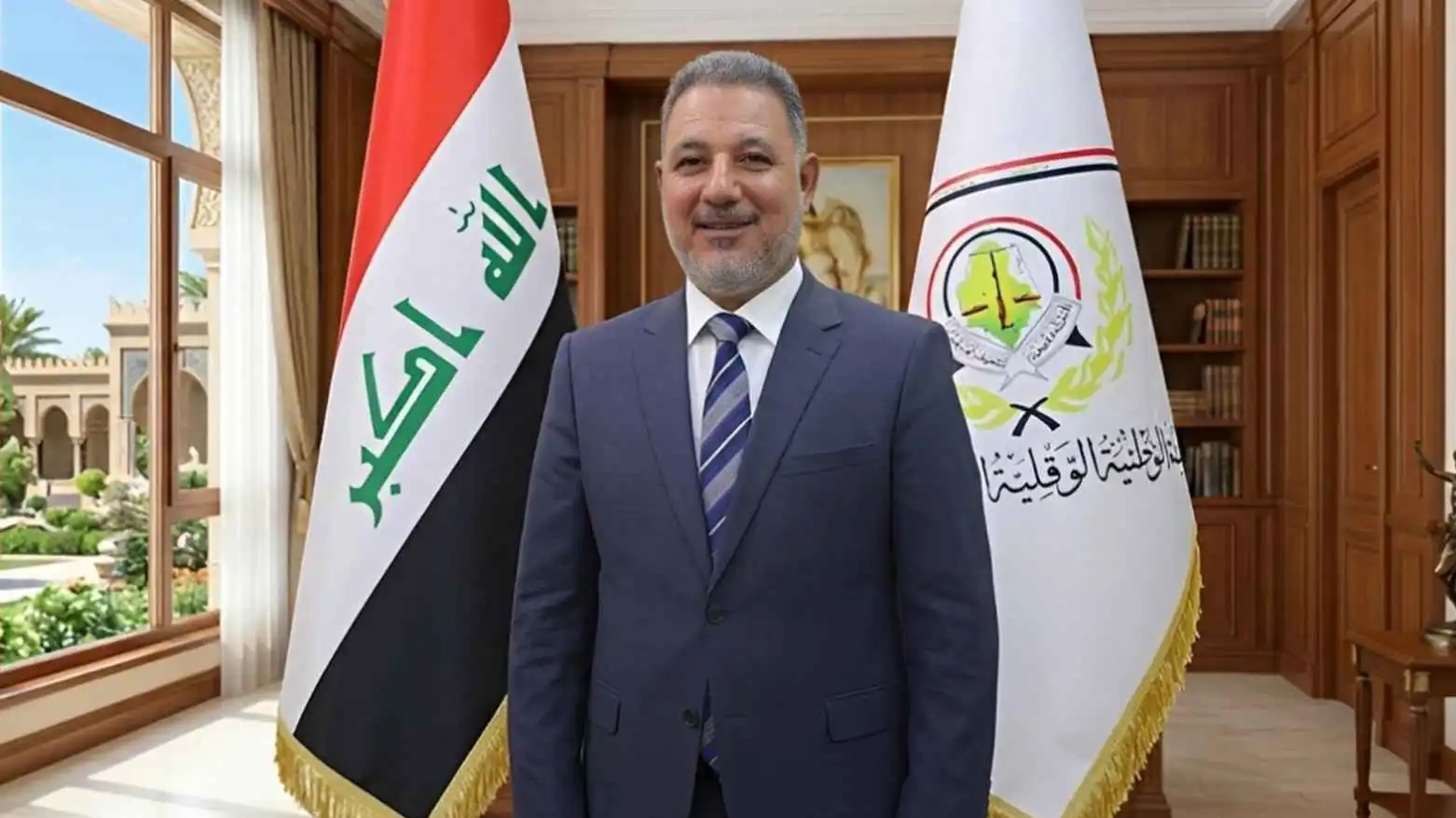
Iraq’s Shi’ite political alliance, the Coordination Framework, has nominated Bassem al-Badri as its nominee for the post of prime minister, a source from the bloc confirmed to Kurdistan24 on Monday.
Earlier in the day, Kurdistan24 correspondent Dilan Barzan reported from Baghdad that most leaders of the Coordination Framework had gathered at the residence of Ammar al-Hakim. He noted that al-Badri—reportedly backed by Nouri al-Maliki—had also arrived at the meeting.
Meanwhile, Mushriq al-Fraiji, an official in the Reconstruction and Development Coalition, told Kurdistan24 that Coordination Framework leaders convened at al-Hakim’s office, where he heads the National Forces Alliance, to discuss resolving the selection of a prime ministerial candidate.
Later, Abbas al-Amiri, Secretary-General of the Coordination Framework, announced that the coalition has postponed the official declaration of its candidate for Iraq’s prime minister until Wednesday.
Speaking to Kurdistan24, al-Amiri said the delay comes as internal discussions continue among the alliance’s leadership.
According to information obtained by Kurdistan24, disagreements over the distribution of ministerial positions in the prospective Iraqi government cabinet have prompted the Coordination Framework to extend its meetings over the next two days.
Born in Baghdad in 1964, Bassem Hazem Hamid al-Badri holds a PhD with distinction in agricultural policy, awarded in 2013. He worked for 15 years, from 1988 to 2003, as a researcher at Iraq’s Ministry of Industry and Minerals, and is fluent in both Arabic and English.
The Coordination Framework, which includes several influential Shi’ite parties, plays a central role in shaping Iraq’s political landscape. While its endorsement of al-Badri signals growing consensus within the alliance, broader agreement among other political factions will be essential for securing parliamentary approval and forming a new government.
Updated at 22:45 P.M.
Qani: Choosing the prime minister is a purely Iraqi decision.
The commander of the Quds Force in the Iranian Revolutionary Guard, Ismail Qaani, affirmed that "the selection of the prime minister is a purely Iraqi decision."
Qaani stated in a press release: "The Iraqi nation follows the leader of the martyrs, Imam Hussein (peace be upon him), in resistance and steadfastness, and Abu al-Fadl al-Abbas in loyalty."
He added: "It is their right to form a government. Iraq is too great for anyone to interfere in its affairs, especially war criminals, particularly those who have committed crimes against humanity... The selection of the prime minister is a purely Iraqi decision."

Ismail Qaani
The firmament of Nairobi Quds Sepah Pasdaran is an Islamic coup
In the name of God, the most gracious, the most merciful
I would like to convey my appreciation and gratitude to Mardam and the Islamic Republic of Iran for the sake of Hamadli and the people of Mardam with the insight and authority of Bazarga and the officials of the coast of Iraq, for my travel to Baghdad, Dashtam Millet of Iraq, for the resistance and the leadership of the martyrs of Imam Hussein. Peace be upon him, may God’s prayers and peace be upon him, according to Abu al-Fadl al-Abbas.
The formation of a State of Haq that broke out in Iraq in more detail as to what happened in Dijran regarding a crime committed against Humanity in a matter that has recently been reported. The election of Nakhst as Minister of Foreign Affairs based on an Iraqi plan, Injam Mishud.31 Farwardin, March 145
Trump: Ready to meet with top Iranian leaders if a breakthrough is reached
US President Donald Trump confirmed on Monday his readiness to meet with senior Iranian officials should a breakthrough be achieved in the upcoming negotiations in the Pakistani capital, Islamabad. Speaking to the New York Post, Trump said, "Vice Secretary JD Vance and our negotiating team are on their way and will arrive in Islamabad within hours." He added, "The core of the negotiations is one non-negotiable demand: Iran must abandon its pursuit of nuclear weapons."
He explained, "We are supposed to be having talks with Iran, so I assume at this point that nobody is playing games." He affirmed that he is "prepared to meet with top Iranian leaders if a breakthrough is achieved." He continued, "We have very good ideas about who is leading Iran, and we believe we are dealing with the right people."
Trump: Reaching a deal with Iran will take no more than one day
US President Donald Trump announced in an interview with Fox News on Monday (April 20, 2026) that reaching a deal with Iran would take no more than one day, stressing that the deal would be signed on Tuesday.
According to what Baghdad Today translated, Trump also confirmed during his statements to the network that the United States is “not in a hurry to reach a deal with Iran, but things are moving at a rapid pace, denying reports that spoke of pressure on Washington to reach a deal with Iran,” as she described it.
It should be noted that the US-Iranian negotiations scheduled for tomorrow, Tuesday, are still uncertain, with conflicting reports about Iran's participation in the negotiations or its abstention.
TREATS
In the name of God, the Most Gracious, the Most Merciful.
Of course, it was a positive and responsible meeting. All opinions and discussions were presented, and it needed more time. Therefore, the Coordination Framework decided to hold the meeting on Wednesday to complete this dialogue. God willing, tomorrow (Tuesday) will also be a continuation of the dialogues.
Naturally, the atmosphere is very positive, and God willing, we will reach a solution by Wednesday.
Venezuela Replaces Central Bank President Days After Sanctions Lifted
Key Points
—Acting President Delcy Rodríguez announced Thursday that Laura Guerra Angulo — a Maduro family relative who had led the BCV since April 2025 — resigned and was replaced by Vice President Luis Pérez, a career central bank technocrat
—The leadership change came just two days after OFAC General License 57 lifted sanctions on the BCV and three state banks, unlocking approximately US$1 billion in frozen oil revenue and reconnecting Venezuela to the SWIFT international payments system
—Multiple analysts had flagged the governance overhaul as a precondition for IMF reintegration, which Treasury Secretary Scott Bessent publicly endorsed at the IMF Spring Meetings this week
Deep Dive
For the complete picture, read our in-depth guide: Venezuela Crisis 2026: Economy, Maduro, Sanctions and Migration
The Rio Times, the Latin American financial news outlet, reports that the Venezuela central bank underwent its most significant leadership change in years on Thursday when acting President Delcy Rodríguez replaced the institution’s head barely 48 hours after the United States lifted sanctions on the bank. The move addresses the single biggest credibility obstacle that analysts had identified in Venezuela’s push to rejoin the international financial system.
Laura Guerra Angulo, who had served as BCV president since April 2025, submitted her resignation on Thursday. Guerra was widely seen as a political appointee — she is a relative of Nicolás Maduro’s son — and her presence at the top of the central bank had been cited by economists at Ecoanalítica, CNN, and independent analysts as incompatible with the institutional independence that the IMF requires for reintegration.
Who Is Luis Pérez
Pérez, who was promoted from the vice presidency of the BCV, is described by Venezuelan financial media as a career technocrat with deep knowledge of the institution’s macroeconomic policy mechanisms and payment systems. He has served on the BCV board since April 2025 and previously held the position of viceminister of mining development. Descifrado, a Caracas-based outlet, characterized his appointment as “a bet on technical continuity with renewed emphasis on digitalization and credit system support.”
 Venezuela Replaces Central Bank President Days After Sanctions Lifted. (Photo Internet reproduction)
Rodríguez instructed Pérez to “assume his functions under the rigor contemplated by law” and to “initiate all management mechanisms as established in the BCV law” — language that signals an awareness of the credibility test ahead. The announcement was made during the same press conference where Rodríguez promulgated the new Ley Orgánica de Minas, the mining sector overhaul that opens Venezuela’s gold, coltan, and rare earth deposits to foreign investment.
Why the Timing Matters
The sequence is deliberate. On Tuesday, OFAC issued General License 57, lifting sanctions on the BCV and three state-owned banks — Banco de Venezuela, Banco Bicentenario, and Banco del Tesoro. The license reconnects Venezuela to the SWIFT payments network and allows correspondent banking relationships with US financial institutions for the first time since April 2019.
At the IMF Spring Meetings the same day, Treasury Secretary Scott Bessent publicly endorsed Venezuela’s reintegration into the Fund, saying the IMF is “working to bring Venezuela back and make it look like a normal economy.” Full IMF and World Bank access would unlock reconstruction credit lines, but the Fund’s governance standards require central bank independence from the executive — a condition that was impossible to meet with a Maduro relative at the helm.
The Credibility Gap That Remains
Analysts cautioned that a leadership change alone is insufficient. Economist Pedro Palma, a former BCV official, said the new president must possess a “clear vision of macroeconomic objectives” and that the institution needs genuine autonomy, not just a personnel swap. Hermes Pérez, an ex-BCV economist and university professor, noted that while GL57 enables SWIFT reconnection and correspondent banking, the deeper structural reforms — monetary policy credibility, inflation targeting, and reserve management transparency — require sustained institutional change.
The urgency is driven by inflation. Venezuela closed 2025 near 500% annual inflation, and Rodríguez herself admitted the crisis was caused by the government’s own policies. A “responsible” minimum wage increase is promised for May 1 — but funding it with oil revenue rather than money printing requires exactly the kind of institutional credibility the BCV currently lacks.

No comments:
Post a Comment