Iraq Proposes Major Dinar Devaluation in 2027 Budget

At a Glance
- The draft 2027 budget proposes setting the official exchange rate at 150,000 IQD per $100 to eliminate the gap with the parallel market.
- MP Dilan Ghafoor said fixing the dollar rate at this level is projected to inject an additional 20 trillion dinars into national revenues, bringing the total estimated budget to 218 trillion dinars.
- The draft bill benchmarks the budget on an estimated crude oil price of $58 per barrel.
- While public employee salaries are secured in the draft, other KRG demands remain unresolved.
- The video for this My FX Buddies Blogpost is below here:
Iraqi Parliamentary Finance Committee member Dilan Ghafoor, quoting Minister of Finance Faleh al-Sari, stated that the value of $100 has been set at 150,000 dinars in the draft 2027 budget, adding that there are numerous unresolved issues regarding the rights of the Kurdistan Region in the draft bill.
Key Statements and Focus Area
- MP Dilan Ghafoor told Channel8 that according to the decision, the gap between the official exchange rate and the parallel market rate will be eliminated.
- Ghafoor noted that the committee's meeting with the Finance Minister was dedicated entirely to gathering comprehensive details on the draft budget bill, emphasizing that the dollar exchange rate was discussed as one of the most critical aspects of the budget.
Speaking to Channel8, Lawmaker Ghafoor said that if the decision is implemented, both the parallel market rate and the official government rate will align at 150,000 dinars.
She stressed that fixing the dollar rate at 150,000 dinars will inject an additional 20 trillion dinars into the budget revenue.
Ghafoor also clarified that the approval and vote of the Council of Ministers and Parliament are required; although the Ministry of Finance has thoroughly studied the matter, “it does not mean this is a final decision. Principal agreement, however, is included in the draft.”
The lawmaker confirmed that the total estimated draft budget will reach 218 trillion dinars. The Next year’s draft budget is estimated at 200 to 240 trillion dinars, with the Kurdistan Region requesting roughly 29 trillion dinars.
This proposed allocation is intended to cover KRG public employee salaries, job promotions, new hires, and the permanent integration of contract teachers and civil servants.
Ghafoor highlighted that, thus far, only the salaries of the Kurdistan Region's public employees have been secured in the draft budget, adding that all other demands from the Kurdistan Region remain under discussion, with no guarantees provided yet.
She underlined that it is critical for the Kurdistan delegation to remain continuously engaged in Baghdad at this stage to resolve outstanding budget issues with the Iraqi government and effectively lobby for its interests.
Regarding the price of oil in the budget, the Finance Minister confirmed that a barrel of oil has been set at $58, while the total draft budget for Iraq next year has been projected at 218 trillion dinars.
FYI
The proposed currency devaluation comes amid a widening spread between Iraq’s official exchange rate and the parallel market, where street transactions have recently fluctuated between 1,570 and 1,600 dinars per dollar.
This drive to readjust the official peg to 1,500 dinars is fueled by a severe fiscal crisis, highlighted by a massive 26.3 trillion dinar ($20.16 billion) budget deficit in the first seven months of 2026 alone after geopolitical conflicts heavily disrupted seaborne crude exports.
While the Central Bank of Iraq (CBI) has historically resisted shifting its formal baseline from the 1,300 to 1,320 range to protect domestic purchasing power, intense pressure from the Ministry of Finance may force the bank to administer this shift.
If the draft budget passes, the administrative realignment will allow the ministry to convert oil dollars into a higher volume of local currency, though financial experts warn it could cause an immediate spike in consumer inflation and drive parallel market rates past 160,000 dinars per $100.
Concurrently, the draft 2027 general budget law is under evaluation by the Iraqi Cabinet and is slated for official submission to parliament by mid-month.
The Kurdistan Regional Government is demanding a full 14.14% share of the 2027 federal budget, calculated using recent census data to expand funding beyond public salaries into regional investment and infrastructure projects.
Budget leaks: 1500 dinars to the dollar set, and the region's share allocated at 13 trillion dinars.
link this is also out of Kurdish news
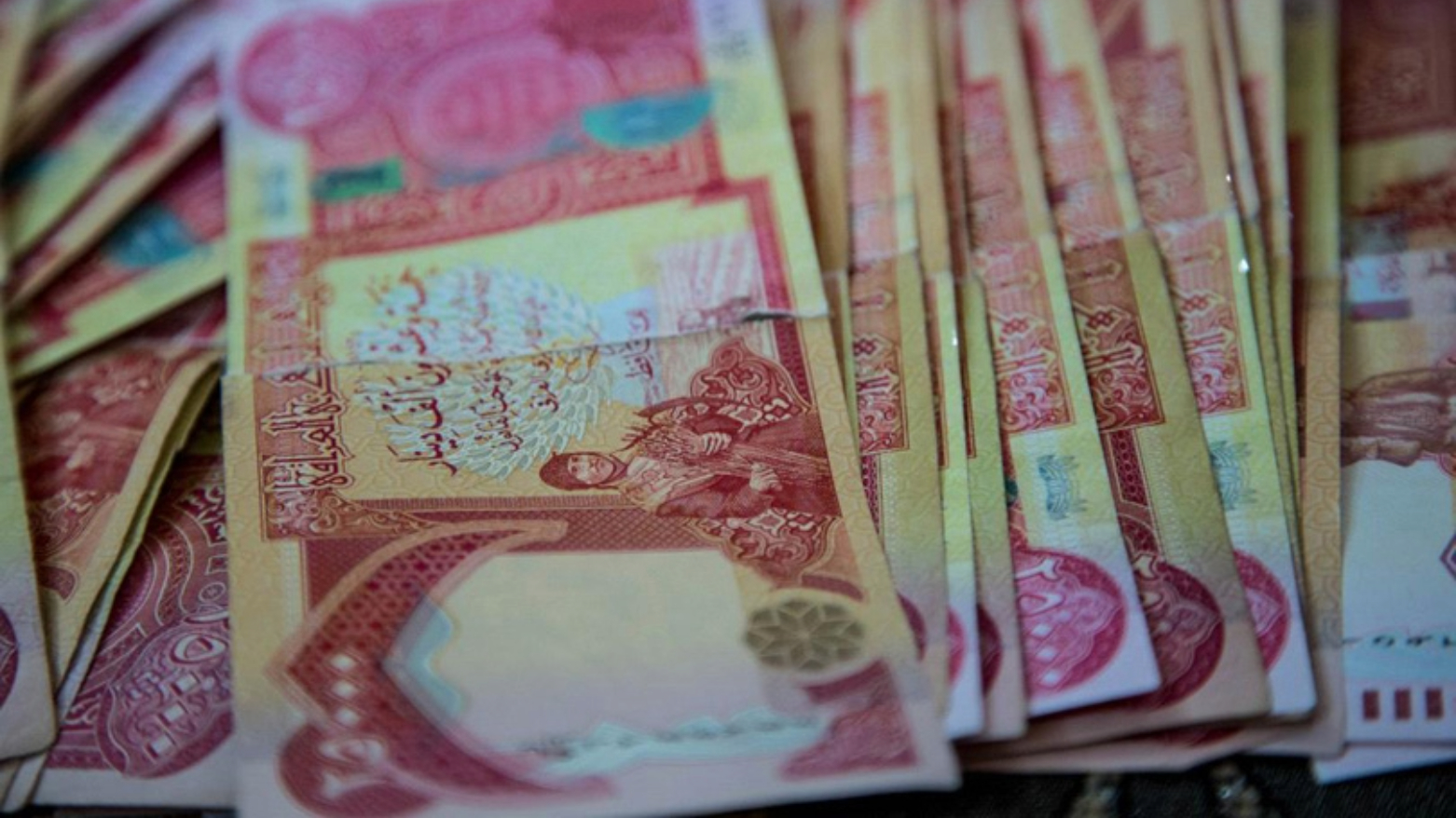
The exchange rate of the US dollar has recorded a significant increase against the Iraqi dinar, exceeding the 150,000 dinar mark per 100 dollars, coinciding with leaks and rumors about the federal government's intention to amend the official exchange rate.
Informed sources told Kurdistan 24 that the Iraqi government has set the exchange rate for the dollar in the draft 2027 budget law at 1,500 dinars per dollar (150,000 dinars per 100 dollars).
According to the project's estimated data, which has not yet been sent to the House of Representatives, the total size of the proposed budget is 218 trillion Iraqi dinars.
Based on the new exchange rate, the budget is estimated at approximately US$145 billion, compared to approximately 166 billion dinars if calculated at the previous official rate (1320 dinars per dollar).
Regarding the Kurdistan Region’s entitlements, the percentage was set at 12.67%, but after deducting sovereign expenses, the region’s actual share will reach only 13 trillion dinars out of 218 trillion dinars, which is less than the region’s share in the 2023 budget.
As part of efforts to resolve the disputes, an official delegation from the Kurdistan Regional Government is scheduled to travel to Baghdad next Wednesday for extensive talks on the budget, while the Finance Committee in the House of Representatives intends to host the Minister of Finance to discuss the amendments and financial provisions of the project.
Currency spokesperson Denies Dinar Devaluation Rumors Amid Market Panic

At a glance
- Market Spokesperson Jabar Goran clarified that changing the exchange rate is an exclusive constitutional power of the Central Bank of Iraq, not the Ministry of Finance.
- Contacts within the Parliamentary Finance Committee confirmed that the proposal is entirely speculative and has not been drafted into any formal bill.
- Goran labeled a devaluation as "suicidal," warning it would devastate living standards.
- Unverified reports originating from an Iraqi MP claiming a proposed devaluation from 132,000 to 150,000 IQD per $100 triggered a massive parallel market panic.
The Slemani Currency Exchange Market spokesperson warned that recent unverified rumors of an official dinar devaluation to 150,000 IQD per $100 are triggering severe parallel market panic and volatility, labeling any such policy move as a "suicidal decision" for the economy.
Key Statements and Focus Area
- Currency Market spokesperson Jabar Goran stated that the instability in local exchange markets “was triggered by statements from an Iraqi Member of Parliament claiming that the Minister of Finance discussed adjusting the exchange rate—devaluing it from 132,000 dinars to 150,000 dinars [per $100].”
- “This inherently created a highly negative reflection on the market and caused a massive panic. However, this proposal has neither become a draft bill nor has it been presented to the members of the Parliamentary Finance Committee,” Goran affirmed.
- A currency trader told Channel8 that “any rumor circulated in the market—whether accurate or inaccurate, and whether it drives up demand or supply—directly impacts individuals and traders alike.”
Briefing reporters in Slemani on Monday, including Channel8, spokesperson Goran stated that according to the constitution and the regulations of the Central Bank of Iraq, "these powers reside exclusively with the Central Bank."
He noted that decisions of this nature require comprehensive analysis by Central Bank experts, adding, "a decision like this is never made haphazardly."
"This would be a suicidal decision,” he stressed, adding that it would create a severe negative impact on the market and drastically lower the citizens' standard of living.
"In my personal opinion, this decision will not be implemented,” he reaffirmed.
The spokesperson highlighted that "at a time when customs tariffs have already been increased on the public due to the ASYCUDA system, coming along and devaluing the currency on top of that would ultimately have a devastating impact on people's lives."
Goran confirmed that according to sources within the Parliamentary Finance Committee and the Central Bank, the exchange rate adjustment remains entirely speculative and has not been drafted into a formal legislative proposal.
Answering questions regarding the motives behind the circulated reports, he said that "the intention of the parliamentarians who circulated this news is either to gauge the public's reaction first or, in one way or another, to manipulate the market."
He called on media outlets not to broadcast this news until the source has been officially verified.
Meanwhile, a currency trader noted that the market witnessed intense volatility as the dollar rate surged past 160,000 IQD before retracing to 159,000 IQD, warning that the instability will persist until the Central Bank officially refutes the devaluation rumors.
He further said that the ASYCUDA system fails to adequately facilitate trade by significantly delaying dollar allocations for merchants importing essential goods, forcing them to purchase dollars directly from the parallel market and thereby driving up demand.
FYI
The instability in the parallel market across the Kurdistan Region comes as Iraqi Parliamentary Finance Committee member Dilan Ghafoor revealed that the draft 2027 budget proposes setting the exchange rate at 150,000 IQD per $100.
Lawmaker Ghafoor explained that this fiscal measure, developed by the Ministry of Finance, aims to completely eliminate the gap between official and parallel trading figures by aligning both rates at the 150,000 dinar threshold.
She added that while a principal agreement has been included in the initial budget draft to inject an additional 20 trillion dinars into state revenues, the adjustment is not yet final as it still requires formal approval and votes from both the Council of Ministers and Parliament.
The Central Bank of Iraq (CBI) has not issued any official statement regarding the matter so far.
However, the apex bank has previously and repeatedly reaffirmed its steadfast commitment to maintaining the official exchange rate at 1,320 IQD per dollar without any alterations.
Kurdistan Merges 94 Government Banks Into National Bank
link banking reform
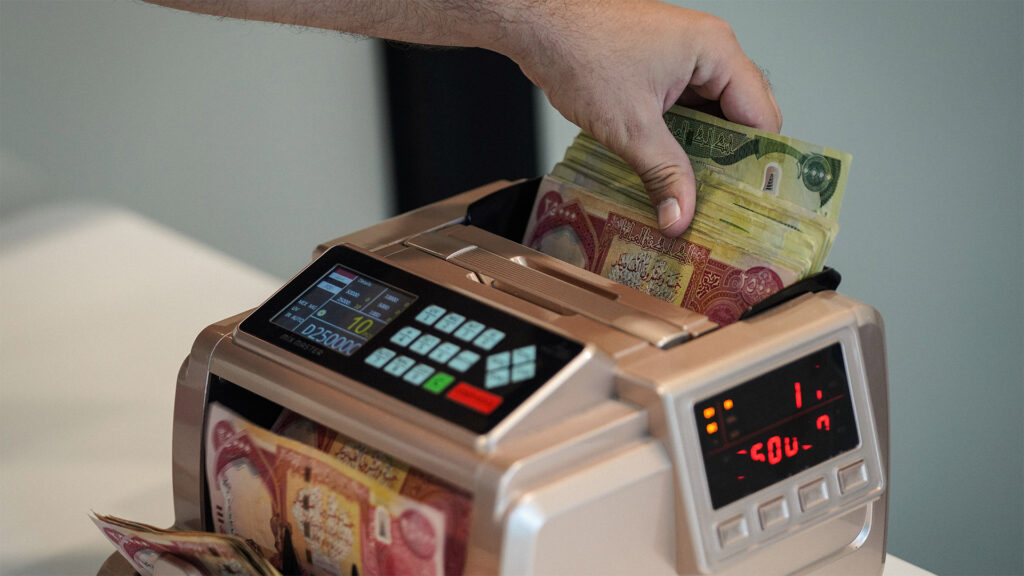
At a Glance
- The Kurdistan Region is consolidating 94 government banks as part of a wider banking sector restructuring.
- Only four banks will remain in central Slemani during the current phase of the merger.
- The National Bank is expected to eventually bring the remaining government banking operations under one institution.
- Authorities aim to complete the merger and accounting procedures across Slemani by the end of 2026.
The Kurdistan Region is undertaking a major restructuring of its government banking system, with dozens of state banks being consolidated ahead of the planned expansion of the National Bank.
Key Statements and Focus Area
- Slemani Consolidation: "We are continuing the process of integrating and merging the banks. Only the banks of Bakhan, Azmar, Slemani, and Tanjaro will remain in central Slemani." — Hersh Tahir, Director of Slemani Bank 1, to Channel8.
- Completion Timeline: "The committee expects the entire bank and accounting-unit merger process across Slemani Governorate to be finalized by the end of this year." — Zmnako Mahmood, Member of the Inspection Board for Private and Public Banks, to Channel8.
- Focus Area: The restructuring is designed to consolidate government banking operations under the National Bank while reorganizing accounts, debts, and surplus staff.
The restructuring extends beyond central Slemani to other parts of the Kurdistan Region, with different arrangements being implemented depending on local banking needs.
Malkandi Bank will temporarily remain operational because a significant number of retirees still receive cash payments through its offices. Penjwen and Bashmakh banks will also remain in place, while Garmian and Parwezkhan banks continue operating in Garmian.
In the Raparin Independent Administration, Kewarash Bank and Ranya Bank have been consolidated under Ranya Bank. Qaladze Bank remains operational because of the Kele border office. In Chamchamal, Charmu Bank has been incorporated into Chamchamal Bank. Sharazoor Bank is being merged with Sayid Sadiq Bank, while Halabja Bank will remain unchanged. Tanjaro Bank has been integrated into the Slemani Traffic Directorate to handle traffic-related revenue collection.
The restructuring also covers specialized financial institutions. Five specialized banks in Slemani have been consolidated into one, while a specialized bank continues operating in Halabja. A major administrative challenge is the transfer of customer records. Some state banks hold up to 95,000 individual citizen accounts, meaning account data and balances must be carefully audited and transferred.
Government banks in Slemani, Halabja, Garmian, and Raparin also hold around 100 billion Iraqi dinars in outstanding loans owed by business owners and investors. These financial obligations must be addressed as part of the wider restructuring. The workforce presents another challenge. Authorities estimate around 1,000 surplus bank employees in the current restructuring, while a standard bank generally requires between 70 and 80 employees.
The Ministry of Finance and Economy has allowed employees to voluntarily transfer to other ministries. Remaining staff will be retained according to operational requirements and professional qualifications, with surplus employees eventually reassigned to other government institutions.
Channel8 has learned that some employees oppose transfers because bank workers currently receive 15 monthly payments annually, compared with 12 payments in other government institutions. Moving outside the banking sector would mean losing the additional three payments, potentially affecting nearly 5,000 bank employees across the Kurdistan Region.
The wider consolidation began in November 2025 but was temporarily suspended by authorities in Erbil before resuming following the issuance of an official ministerial decree.
The final restructuring requires extensive accounting work, including the transfer of customer records, reconciliation of accounts, and settlement of outstanding financial obligations before the new banking structure can fully operate.
FYI
The consolidation follows a broader change in the role of government banks after public-sector salary payments began shifting to private banks through the MyAccount project. This reduced the need for a large network of government banks that had traditionally been used to distribute salaries and pensions.
The restructuring therefore involves more than closing or merging branches. Authorities must migrate large numbers of citizen accounts, reconcile government revenues and expenditures, settle outstanding loans, and reorganize thousands of employees before the remaining institutions can operate within the National Bank structure.
From line-item budgeting to performance-based budgeting: Parliamentary Finance Committee discusses reform with the World Bank

The parliamentary finance committee discussed on Monday with a World Bank delegation the financial situation and mechanisms for developing the budget and enhancing non-oil revenues .
A statement from the House of Representatives' media office, received by "Mail," stated that "the Parliamentary Finance Committee, headed by MP Uday Awad and with the attendance of a number of its members, hosted today, Monday, October 5, 2026, a delegation from the World Bank headed by Mr. Sandeep Mahajan, Regional Director of the Prosperity Sector in the Middle East, North Africa, Afghanistan and Pakistan, to discuss the financial situation, in addition to discussing mechanisms for the transition from an itemized budget to a program and performance budget ."
At the start of the meeting, the committee chairman welcomed the World Bank delegation, noting "the importance of finding opportunities to export goods through more than one outlet and not relying on the Strait of Hormuz, as well as moving towards maximizing non-oil revenues and working to achieve real automation in the tax system ."
The Finance Committee praised "the role played by the World Bank in supporting the committee and the Iraqi government in general, expressing its hope that this support will continue and that procedures related to financial and economic matters will be facilitated, in a way that contributes to shaping the country's financial policy ."
For his part, the head of the World Bank delegation affirmed that the Iraqi government has a clear vision for implementing financial reforms, explaining that the budget is a very important tool for the government, in addition to the need to work on improving the financial situation in general and supplying the budget with revenues, pointing to the bank's role in providing support and expertise, and the importance of building institutions capable of establishing advanced financial systems .
The committee discussed with the World Bank delegation "the mechanisms for transitioning from line-item budgeting to performance budgeting, and the mechanism for auditing data to ensure better performance through reliance on programs and performance, as well as dealing with spending units and financial allocations ."
The possibility of implementing a partial budget transition in stages, through its trial in a number of governorates and institutions, was also discussed, with emphasis on the need to increase non-oil revenues in a way that contributes to supporting the budget and achieving positive results .
Both sides affirmed their readiness to exchange experiences and follow developments in the financial sector, in order to support the move towards the right path, in addition to the importance of providing the necessary support to the Iraqi government and participating in establishing specialized training courses in program and performance budgeting.
Warnings against raising the official exchange rate... The parallel dollar market reasserts itself.
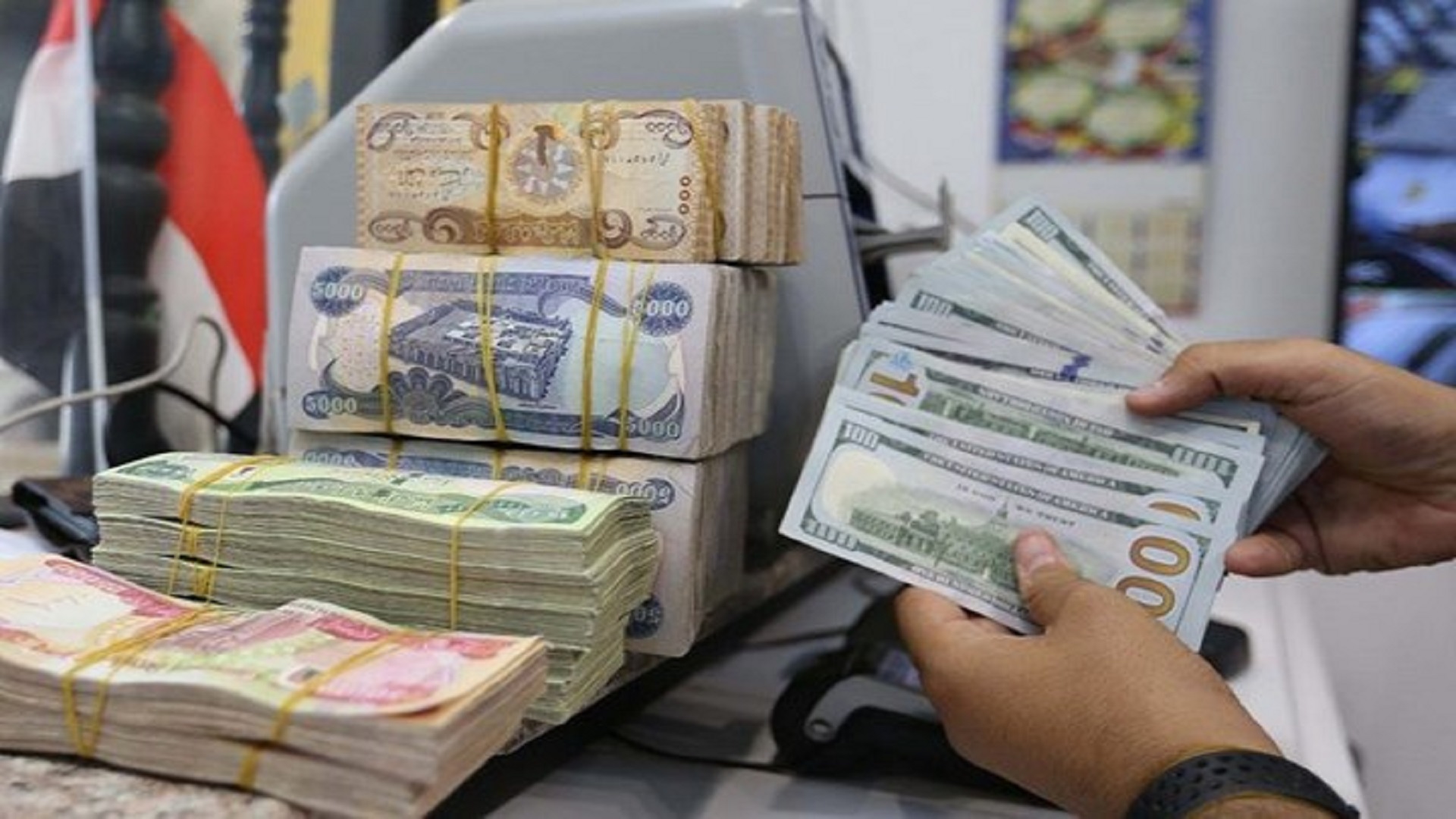
The dollar exchange rate in Iraq's parallel market has surpassed 160,000 dinars per 100 dollars, a development that has reignited concerns about the widening gap between the official and market rates. This comes amid reports of new shipments of US currency arriving in the country, raising questions about the ability of dollar liquidity to stabilize the market and curb speculation.
Data indicates that the official rate remains at 1,320 dinars per dollar in official transactions, while the parallel market rate exceeded 160,000 dinars per 100 dollars by Monday evening, reflecting the continued pressure on the exchange market.
The reasons for the surge include speculation, anxiety, and delayed remittances.
Economic expert Ali Daadoush, in a press statement obtained by Video News Agency, stated that speculation, uncertainty, delays in official bank transfers, and increased demand for dollars to finance imports from Iran are the main causes of the current, volatile exchange rate.
Daadoush added that the uncertainty extends to traders, importers, and citizens holding dinars, due to fears of a possible change in the exchange rate in the 2027 budget. He explained that these factors collectively put pressure on the dollar in the parallel market.
He clarified that the dollars circulating in the parallel market largely originate from currency sold by the Central Bank to citizens for travel, study, and medical treatment. A portion of this currency then returns to the local market after being sold, a phenomenon known as "reverse dollars" or "return dollars."
He pointed out that the demand for dollars has become significantly greater than the supply in the market, driving prices up and exacerbating volatility.
Banks: Shipments Alone Are Insufficient.
For his part, Nabil Al-Abadi, director of the Union Bank, stated in a press interview reviewed by Video News Agency that the exchange rate movement in the parallel market is linked to a range of factors, primarily the level of demand for dollars and the volume of supply, as well as the nature of transactions and transfers taking place outside official banking channels.
He explained that the arrival of new dollar shipments through official channels could contribute to supporting liquidity, but their impact on the parallel market depends on the speed of their entry into the market and the extent to which they reach those with actual demand for the currency.
He pointed out that addressing the gap between the official and parallel exchange rates is not solely related to injecting dollars, but also requires strengthening the role of the banking sector and facilitating access to foreign currency for dealers through official channels, thus reducing the need for the parallel market.
What do the Central Bank's data say?
According to data from the Central Bank of Iraq, foreign reserves declined to $80.633 billion by the end of July 2026, compared to $97.432 billion at the end of the previous year, a decrease of approximately $16.8 billion, or about 17.2 percent, over seven months.
In contrast, the Central Bank confirmed in a statement issued on September 19 that its foreign reserves are sufficient to meet the demand for foreign currency to finance foreign trade, settle bank cards, and cover travelers' requests at the official rate, attributing the current rise in the exchange rate to speculation, expectations, and the exploitation of geopolitical conditions in the region.
From Kurdistan: Warnings against fixing the dollar at 150,000 dinars
. Concerns aren't limited to Baghdad. Jabar Goran, spokesperson for the currency exchange market in Sulaimaniyah, Kurdistan Region, warned of potential negative repercussions should the Iraqi government fix the dollar exchange rate at 150,000 dinars, suggesting this rate wouldn't be included in the general budget.
Goran stated during a press conference, which was covered by the Video News Agency, that "the reaction of citizens and the market will be very negative and severe if the Iraqi government fixes the dollar exchange rate at 150,000 dinars," adding, "Therefore, I believe the dollar exchange rate won't be fixed at this level in the budget."
He also expressed surprise at a member of parliament's remarks regarding the possibility of adjusting the dollar exchange rate, noting that this matter falls under the purview of the Central Bank of Iraq.
He said, "It's strange to me that a member of parliament would speak about adjusting the dollar exchange rate; this is solely within the Central Bank's jurisdiction."
This is a true test for the Central Bank and the government.
Observers believe that psychological factors and future expectations have become influential in market movements. The expectation of a rising dollar price prompts some traders to increase their demand in anticipation of any change, which could create additional demand that drives up the price and widens the gap.
Furthermore, the continued difference between the official and parallel market rates creates an incentive to seek dollars outside official channels. This makes addressing the gap dependent on the banking system's ability to provide dollars regularly and transparently to meet legitimate demand, not merely on increasing supply.
The current situation presents the Central Bank and the government with a real test. While increased dollar liquidity may provide some relief to the market, it will not be sufficient on its own if the factors fueling demand and speculation remain.
The most prominent question remains: Will the new dollar shipments represent the beginning of a path that will calm the market and reduce the gap, or will the parallel market absorb this liquidity and resume its upward trend? The answer will largely depend on the ability of official channels to meet demand and bolster confidence in the stability of the exchange rate, as well as on the exchange rate decisions included in the 2027 budget.
Parliamentary Finance Committee: We have dispensed with the borrowing law and are addressing the issue of banks dealing in dollars.
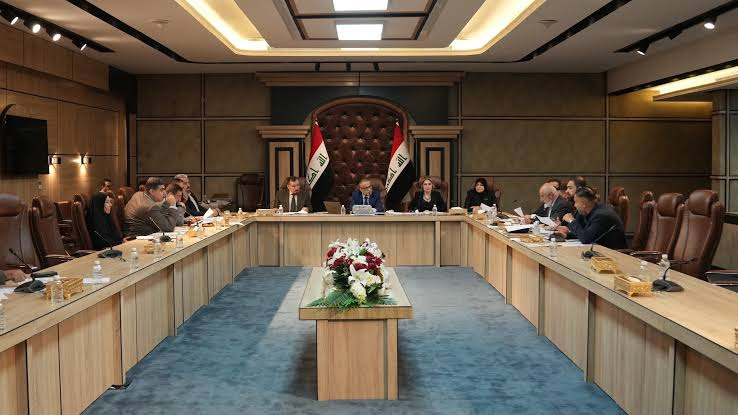
he parliamentary finance committee announced on Sunday that it has dispensed with the borrowing law, stressing that there are solutions for some banks that deal in dollars, while its chairman, Uday Awad, revealed a plan to hold periodic meetings with banks with the aim of banking reform.
Awad said in statements followed by Kalima News, “The problem of banking reform is a necessity in light of the current situation, and private and government banks have not risen to the challenge of solving the financial crisis and have not had any contributions to solving it,” noting that “national banks have capabilities in view of having correspondence and global cooperation.”
He added that "private banks have submitted a set of reforms that will be discussed with the Central Bank, including why our banks are not like the Gulf banks in providing loans, facilities and deposit guarantees so that there is trust between the citizen and the banks," indicating that "there will be a periodic meeting with the banks."
Regarding the dollar issue, Awad explained that "depriving some banks is a realistic matter, as some banks belong to political entities," stressing "the need to prevent political interference in the financial situation," and confirming that "there will be solutions and clear results in the coming days."
Regarding the borrowing law, Awad confirmed that "the law has been dispensed with and is no longer needed, given that the 2027 budget is coming from the government and the law will be included in the budget."
Financing contractors' dues
Al-Zidi launches an economic package worth 3.5 trillion dinars to stimulate the market and finance projects.

Prime Minister Ali al-Zidi launched on Sunday (September 4, 2026) a package of financing measures worth 3.5 trillion dinars, which included allocating 2 trillion for housing and industry, 1 trillion to pay contractors and farmers half, in addition to injecting 500 billion to raise the balance of the “Generations Fund” to 1.5 trillion dinars.
The Prime Minister’s Media Office stated in a statement received by Network 964 that “he chaired a meeting today, Sunday, which included the Minister of Finance, the Governor of the Central Bank of Iraq, the Head of the Board of Advisors, a number of advisors, general managers of government banks, and representatives of private banks, which was dedicated to discussing a number of initiatives and measures aimed at revitalizing the market, stimulating economic activity, and enhancing the role of the banking sector in financing productive and investment activities.”
The statement added that “during the meeting, ways to stimulate economic sectors, particularly industry, agriculture, housing, construction, tourism and services, were discussed, as well as providing the necessary financing for projects, in order to contribute to increasing economic activity, supporting the private sector and providing job opportunities.”
He added that “the meeting resulted in a package of decisions and executive measures to be implemented immediately, as follows:
1. Directing the existing initiatives of the Central Bank of Iraq towards the real estate and housing sector with an amount of (1) trillion dinars, in a way that contributes to revitalizing this sector and the economic sectors related to it.
2. To enhance the liquidity available to the Iraqi Trade Bank and the Industrial Bank by an additional amount of no less than (1) trillion dinars, to direct it towards financing industrial projects and supporting productive activity.
3. The Ministry of Finance will finance the dues of contractors in the amount of (500) billion dinars, which will contribute to enhancing liquidity for companies and contractors and the continuation of project implementation.
4. Paying farmers their dues in the amount of (500) billion dinars, to support the agricultural sector and enhance economic activity in this sector.
5. To strengthen the Generations Fund initiative with an additional amount of (500) billion dinars, added to its current balance of (1) trillion dinars, thereby enhancing its ability to finance targeted initiatives and projects.”
The Prime Minister stressed “the importance of expediting the implementation of the decisions taken, and transforming the financing initiatives into actual measures that directly impact market activity, while monitoring implementation and coordination between the Ministry of Finance, the Central Bank, banks and relevant authorities.”
For its part, the Central Bank of Iraq affirmed its “readiness to support the stability of banking operations and to provide a monetary and financial environment that supports economic activity, within the framework of the approved monetary policy, and in a way that serves development and financial and monetary stability in Iraq.”
Parliamentary Finance Committee discusses the 2027 draft budget

The Parliamentary Finance Committee discussed the draft federal budget law for the fiscal year 2027 on Sunday.
The Parliament's Media Office stated in a press release that "the Finance Committee held a meeting, chaired by Deputy Speaker of Parliament Farhad Amin Atrushi, and attended by the committee's chairman and members, to discuss several items on its agenda, including reviewing the draft federal budget law for the fiscal year 2027, in light of the recommendation of the Ministerial Council for the Economy."
The statement added that "at the beginning of the meeting, the Deputy Speaker welcomed the Minister of Labor and Social Welfare of the Kurdistan Region and his accompanying delegation, emphasizing the importance of discussing the articles of the draft budget law before voting on it, and taking into consideration the transfer of financial allocations for the social safety net, in order to ensure a decent standard of living for impoverished families."
It continued, "The Finance Committee listened to a briefing on the work of the Ministry of Labor and Social Welfare in the region, and the number of families with special needs, estimated at approximately 30,000, stressing the necessity of adding financial allocations to the social safety net in the region, which will contribute to providing a decent life for these families."
He added that "the committee discussed several topics related to its work, including the content of the letter addressed to the Prime Minister's office regarding the requirements of the draft budget law before its approval, and the vote to adopt it on behalf of the committee. The committee also reviewed the financial situation and updates concerning the draft budget law, and listened to the observations of its members."
He noted that "the committee also addressed a number of other matters, including the approval of requests for documents and information sent to the Ministries of Finance, Planning, and Oil, as well as the Central Bank."
2027 Budget: Parliament rebukes the Minister of Finance and decides to summon him.

On Sunday, the parliamentary finance committee decided to host Finance Minister Faleh Sari to discuss the priorities of the 2027 federal budget law and the date it will be sent to the House of Representatives. The committee expressed its displeasure with the minister for not communicating with the committee and informing it of the articles and draft of the law.
Member of Parliament’s Finance Committee, Bassem Al-Gharabi, told Shafaq News Agency that “the Finance Committee met today and decided to host the Minister of Finance to discuss the priorities of the Federal Budget Law for the year 2027 and when it will be sent to the House of Representatives.”
He added that there is "a grievance against the Minister of Finance for not communicating with the Parliamentary Finance Committee and informing the committee about the articles and draft of the budget law," stressing: "We are one team, and we are supposed to work together to pass the budget law."
Al-Gharabi indicated that the date for hosting the Minister of Finance in the committee "will be determined as soon as possible," with the aim of reviewing the size of the budget and oil and non-oil revenues, as well as the size of operational, public and investment expenditures.
For his part, MP Ahmed Al-Saadi, from the Al-Hikma parliamentary bloc, told Shafaq News Agency: “Today I met with the Minister of Finance to inquire about the general budget law for the year 2027,” indicating that the budget “contains clear and new qualitative objectives that differ from previous budgets.”
Al-Saadi added that the Minister of Finance informed them today, "officially, that the budget law includes 100,000 job positions for appointment on a contractual basis, most of which will go to older graduates."
He explained that "the 100,000 job positions will be distributed across all Iraqi governorates according to the population ratio of each governorate," noting that "all contracts in all ministries and state departments will be made permanent in the budget law."
The Finance Committee of the Iraqi Parliament had previously expressed its deep dissatisfaction with the mechanism used in preparing the draft of the Federal General Budget Law for 2027, due to the Ministry of Finance referring the draft to the Council of Ministers without prior consultation and coordination with Parliament.
According to the Federal Financial Management Law, the draft budget was supposed to be submitted to the Cabinet at the beginning of September (last month), and then referred to Parliament by mid-October (this month) for approval, with the draft reaching the House of Representatives on the 15th of this month.
The Parliamentary Finance Committee held a meeting today, Sunday, to discuss the requirements of the draft budget before its approval and voting within the committee, in addition to hosting the Ministers of Finance and Planning and inviting the relevant Directors General in the two ministries to brief the committee on the necessary details and data.
The committee also discussed requesting documents and information from the Ministries of Finance, Planning, and Oil, the Central Bank of Iraq, and reports from the Federal Board of Supreme Audit, as well as determining the list of documents that must be attached to the draft law and the timetable for studying it.
The 2027 budget: 1 million contracts to be finalized and 200 trillion to be spent.
In a few days, the draft federal budget for the year (2027) will land in the parliament building with total spending estimated at about (200) trillion dinars and a deficit of (65) trillion, opening the door to heated discussions regarding the regularization of one million contractors and the funding of employee salaries.
In a statement to Al-Sabah, Ali Al-Moussawi, a member of the parliamentary finance committee, confirmed that the decision to regularize about one million employees from contracts and daily wages on the permanent staff was included in the (2027) budget without the service condition.
For his part, Omar Mohammed, a member of the parliamentary economic committee, explained that the project also includes appointing the top graduates in the third batch, in conjunction with the Ministry of Finance's inventory of the numbers and calculation of the financial costs.
For his part, Jamal Kojar, a member of the parliamentary finance committee, revealed, based on a statement from the Minister of Finance, that the budget will reach approximately 200 trillion dinars, with 150 trillion dinars allocated to the line-item budget and 50 trillion dinars to the program and performance budget. This aligns with the expanded application of this system to link spending to objectives. Committee member Ikhlas al-Dulaimi indicated that the budget faces a projected deficit of approximately 65 trillion dinars (previous estimates indicated around 64 trillion dinars), based on an assumed oil price between $60 and $70 per barrel. Al-Dulaimi affirmed that employee salaries will be secured, given the continued oil exports at rates ranging between 3 and 4 million barrels per day and the existence of a supporting cash reserve at the Central Bank.
Here's How to Support My FX Buddies
 Thanks
Support My FX Buddies
BuyMeACoffee CashApp:$tishwash
https://paypal.me/tishwash

.jpeg)

2 headlines they have a document with it but it's in Arabic
Document confirms: Judiciary seizes assets of Sudanese Coalition MP Firas Rahim Majiser and his family 9 people in total
Parliamentary request to disburse financial differences to members of the Popular Mobilization Forces
Prime Minister: Proceeding with the implementation of government programs and plans

Prime Minister Ali Falih al-Zaidi affirmed today the continuation of the government's programs and plans in the face of challenges.
The Prime Minister’s Media Office said in a statement seen by (Shafaqna Iraq) that “Prime Minister Ali Faleh al- Zaidi received the head of the Supreme Islamic Council of Iraq, Sheikh Humam Hamoudi, and his accompanying delegation.”
He added that “the meeting witnessed discussions on all national files and issues, with dimensions that affect the lives of citizens, and the service and economic aspects.”
He added that “during the meeting, emphasis was placed on the importance of strengthening efforts to complete the formation of the government, and proceeding with the implementation of the government’s programs and plans in the face of the difficult challenges related to crude oil exports, the development of the electricity sector, and diversifying the sources of support for the Iraqi economy.”
A parallel economy operating outside the system... Al-Zaydi begins a long journey to regulate the private sector and the labor market.

The Al-Zaidi government is moving to reorganize one of the largest economic blocs that has operated for decades outside the formal economy. This involves developing a national strategy for transitioning to the formal economy, aiming to broaden the private sector and bring hundreds of thousands of businesses, projects, and workers into the formal registration, social security, financing, and market system.
The figures reveal the scale of the challenge facing this transformation. The latest national labor force survey showed that 66.6% of all workers in Iraq are employed in the informal sector, while approximately 54.8% of the total workforce is employed within the informal sector. Another study, conducted jointly by the Ministry of Planning and the United Nations Development Programme, indicated that around 80% of the Iraqi private sector operates informally.
The most recent step in this process began with the formation of the National Steering Committee for the Transition to the Formal Economy. At its first meeting last August, the committee approved a roadmap for developing the national strategy. Subsequently, in early September, the first national workshop was held in Baghdad, with the participation of 39 representatives from government institutions, employers, workers, and experts from the International Labour Organization.
The committee includes the Ministries of Planning, Labor, Trade, Finance, Industry, Agriculture, and Reconstruction, along with the Central Bank, the Statistics Authority, the Private Sector Development Council, and federations of chambers of commerce, industries, and trade unions. Its aim is to address the informal economy as a complex economic, financial, and social issue, rather than simply a process of registering companies and workers.
In practice, informal employment means that a large segment of the Iraqi population works without adequate social security or formal employment arrangements. The International Labour Organization estimated in 2024 that there were more than five million workers without social security coverage, in addition to hundreds of thousands of private sector companies operating informally.

For its part, the private sector
, according to economist Aqeel al-Muhammadawi, requires addressing the informal economy by developing the private sector and enhancing its capacity to create jobs. Simply registering economic activity is insufficient if businesses and projects continue to face difficulties with financing, procedures, taxes, and market access.
Al-Muhammadawi told Iraq Observer that the transition to the formal economy should be based on providing business owners and workers with genuine incentives to join the system. This can be achieved by simplifying registration, facilitating access to financing, expanding social security, and relying on digital services. Such measures would make the private sector more capable of growth, competitiveness, and absorbing new entrants into the labor market.
These challenges align with the International Monetary Fund's assessment in its report on Iraq, which indicated that weak enforcement of labor market laws and the limited oversight capacity of relevant institutions contribute to the expansion of informal work. This leaves workers unprotected and increases the attractiveness of government jobs compared to the private sector.
Since 2023, Iraq has had a new retirement and social security law for workers, expanding legal coverage to include informal workers, the self-employed, and those working with their families. However, subsequent studies by the International Labour Organization (ILO) have identified persistent obstacles related to registration, awareness, contribution costs, and administrative procedures, leaving large segments of the population outside of effective coverage.
This move towards formalizing the informal economy coincided with Iraq's launch in September of its Decent Work Agenda for the period 2026–2029. Over the next four years, this agenda focuses on developing skills relevant to market needs, supporting business and private sector growth and economic diversification, creating job opportunities, and expanding social protection and workers' rights.
Experts hope that the new approach will present the government with an equation that goes beyond registering shops, workshops and small businesses, to trying to transform unregulated economic activity into a sector capable of obtaining financing, guarantees and legal protection, and in return, becoming a measurable part of the national economy and the planning and production system.
Washington and Baghdad: Will the battle for influence shift from security to the economy?

Despite the end of the American military presence in Iraq, the economic and financial relationship between Baghdad and Washington still raises questions about the extent of the independence of Iraqi economic decision-making, especially with regard to the management of oil revenues, which represent the main source of state revenues.
In this regard, MP Ahmed Al-Moussawi told Al-Maalouma that “Iraq rejects any hegemony from any company or country in the world, whether American or otherwise, and that dealings should be on an equal footing, in a way that preserves the interests of Iraq and its people and prevents its economy from being subjected to an external will.”
He added that "one of the most prominent problems in the relationship between Iraq and the United States relates to Iraqi oil funds deposited with the US Federal Reserve, as well as the measures taken by Washington regarding them, which raises questions about the extent of the independence of the Iraqi economic decision."
Al-Moussawi stated that "the government is required to work on ending forms of dependency that limit the independence of the national economy," noting that "Iraq has exited the provisions of Chapter VII, paid off its outstanding debts, and become a fully sovereign state, which necessitates strengthening its ability to manage its financial and economic resources independently."
He pointed out that "the continuation of these problems may exacerbate the pressures on the Iraqi economy," calling for "a serious governmental stand to address the issue and move towards achieving economic sovereignty, in parallel with the security sovereignty that Iraq seeks to consolidate after the withdrawal of foreign forces from its territory."
For his part, Salam al-Zubaidi, spokesman for the Victory Coalition, told Al-Maalomah that "American control over Iraqi oil and the economic situation is a major concern for the Iraqi public and political forces, given that the Iraqi economy has become heavily reliant on the US Federal Reserve, which has led to numerous crises and economic contraction."
He added that "linking Iraq's resources to a single entity, particularly the US Federal Reserve, is unacceptable, especially since Iraq depends primarily on oil. The funds sent to the Federal Reserve and then returned to Iraq undermine the Iraqi economy and place the government under significant pressure."
Al-Zubaidi explained that "American pressures related to sending dollars are linked to American interests and could significantly hinder the state's general budget," calling for the search for economic and financial alternatives that reduce the impact of these pressures.
He explained that "Iraq needs to get rid of American hegemony, and look for new channels of revenue and diversify sources of funds by building partnerships with other countries," noting that this path requires strategic steps and well-thought-out actions.
This reality opens a wide door for debate within Iraq regarding the relationship between political sovereignty and economic independence, especially since any restrictions or measures related to the dollar and the international financial system could directly impact Iraq's ability to manage its funds and foreign transfers.
Al-Khafaji told: The cabinet will be finalized and voted on next Thursday.
Member of Parliament Miqdad al-Khafaji predicted that the cabinet formation process would be finalized and voted on in Parliament next Thursday.
Al-Khafaji told Al-Mada in an exclusive interview that “the end of this week will be the expected date for finalizing the cabinet and voting on it.”
Regarding the most prominent candidates, he explained that several names were put forward during the negotiations, but none of them has been definitively decided yet, noting that an agreement has been reached on most of the names put forward.
A crucial meeting of the framework will take place this week... a move to finalize the ministerial portfolios.

A member of the Coordination Framework, Uday Abdul-Hadi, confirmed on Sunday that the framework will hold an important meeting this week to determine the date for deciding on the remaining ministerial portfolios in Ali al-Zidi’s government, particularly the Ministries of Interior and Defense.
Abdul-Hadi explained in his interview with Al-Maalouma that "important meetings and encounters were held during the past weeks, which led to important agreements regarding the features of the roadmap to resolve the nine ministerial portfolios that are still being run by acting ministers in Ali Al-Zidi's government, including the Ministries of Interior and Defense."
He added that "the coordination framework will hold an important meeting this week, during which the final details will be determined, through which an agreement can be reached on the date for holding a session of the House of Representatives to vote on the candidates for ministerial portfolios, including the Interior and Defense ministries."
He noted that "this week is very important, and we expect Ali al-Zaidi's government to be completed through the understandings reached, which resulted from a series of important meetings and discussions between the key figures of the Coordination Framework, along with other political forces."
Two soldiers killed in a roadside bomb explosion south of Nineveh
The ministry said in a statement that its spokesman, Major General Special Forces Yahya Rasool Abdullah, explained that the explosion resulted in the death of two fighters and the injury of two others, who were transferred to the hospital to receive the necessary treatment.
The incident comes as the second security breach recorded in Iraq, after security forces managed last week to kill two suicide bombers belonging to ISIS in the Altun Kupri district, north of Kirkuk province.
ISIS seized control of Mosul, the capital of Nineveh province, in mid-2014, before imposing its strict rules on the population and carrying out genocide against its opponents. Iraqi security forces, with the support of the international coalition, were able to defeat the organization militarily in Iraq in 2017.
Washington maintains its influence in Iraq through the dollar, oil, and intelligence.
Makki explained in a televised interview followed by (Al-Mada) that the American military presence decreased significantly after the end of the battles against ISIS, noting that the number of remaining American forces did not exceed about two thousand people, including maintenance, logistics and advisors, and did not constitute a large fighting force.
He explained that the American and other international forces withdrew based on an agreement with the Iraqi government, after it was determined that Iraq no longer needed coalition forces, noting that the military presence was not limited to the United States, as there were limited numbers of French, British and Canadian forces.
He added that the withdrawal did not end American involvement in Iraq, explaining that political relations remained strong and influential, along with economic ties, especially since Iraqi oil revenues are deposited in the American financial system.
Makki stated that this situation made Iraqi governments keen to maintain the relationship with the United States, in order to avoid any shortage or interruption in dollar funding, or the imposition of economic sanctions, in addition to Iraq’s need for American exemptions related to its trade with Iran, gas imports, and payment of its dues.
He pointed out that the security and intelligence relationship between Baghdad and Washington did not break off even during the period of the American withdrawal in 2011, stressing that the exchange of information continued, while the American officers, after their return to Iraq, became part of the Joint Operations Command.
He pointed out that the United States is still involved with the files of radars, air defenses and maintenance of Iraqi F-16 aircraft, considering that the military withdrawal does not mean the end of this interference in the military, security, intelligence, economic and political fields.
Comparison between my withdrawal in 2011 and 2026
Makki distinguished between the first American withdrawal in 2011 and the current withdrawal, explaining that the first withdrawal included large forces that had been present in Iraq since the invasion, while the presence that recently withdrew does not exceed about two thousand people, most of whom are advisors and technical staff.
He pointed out that US forces returned to Iraq in 2014 at the request of the Iraqi government, after ISIS took control of Mosul and reached areas close to Erbil, explaining that the coalition forces fought battles that lasted for about three years and ended with the recapture of Iraqi territory from the organization.
He explained that the American forces were later stationed in limited locations, including Ain al-Assad, Harir and Victory base, before their numbers gradually decreased as a result of the crises with the armed factions and the American-Iranian tension, especially after the assassination of Qassem Soleimani in 2020.
He said the current withdrawal comes in a different regional context, stressing that it does not significantly affect American combat readiness in the region, but it may affect the ability of the Kurdistan Region to confront drones and missiles, given that air defense systems previously relied on American capabilities.
Potential security vulnerabilities
Regarding the ability of Iraqi forces to fill any security vacuum, Makki stated that the government affirms its readiness and experience in confronting any security breach or terrorist threat, but he pointed out that coalition forces were playing an important role on the air front, especially in covering desert areas, valleys, and hard-to-reach regions.
He explained that the government has put in place plans to compensate for this role through helicopters and ground patrols, while warning that the problem is not only related to military capability, but also to the conflict of power and authorities.
He stressed that the absence of a central and disciplined military decision within the military hierarchy could lead to conflicts between different parties, which could be exploited by ISIS cells and remnants of terrorist groups.
Economic influence continues
Makki described economic influence as the most influential factor, along with the fact that a large part of Iraq’s weapons relied on American equipment and maintenance.
He explained that Iraqi funds held abroad pass through a financial system linked to the US Federal Reserve, indicating that the protection of Iraqi funds came after the invasion due to previous debts and financial claims, and that the continuation of this protection is linked to a decision that is renewed periodically by the US President.
He warned that transferring Iraqi funds outside the current system could open the door to creditor claims and asset seizures, which could have serious repercussions on the economic and political situation in Iraq.
Kurdistan's concerns and the monopoly of arms
Regarding the Peshmerga forces, Makki pointed to concerns related to funding, contact zones, air defenses, and intelligence cover, explaining that direct US funding for the Peshmerga would cease, while funding was supposed to come from Baghdad.
He also pointed out that the American presence was contributing to reducing friction between federal forces, the Peshmerga, and armed factions in the disputed areas, warning of the possibility of tensions arising if these issues are not managed firmly.
Regarding the plan to restrict weapons to the state, Makki believed that the coalition's withdrawal could serve the implementation of the plan, because it removes the argument of "occupation" from the discourse rejecting disarmament, and gives the government more room to exert pressure.
However, he pointed out that some factions have begun to put forward new justifications for keeping weapons, such as external threats and air strikes, considering that the success of the plan requires political will and actual implementation, not just the symbolic storage of weapons

No comments:
Post a Comment