By government decision, implementation begins today.
The Central Bank changes the dollar exchange rate to 1520 dinars for citizens and 1510 for banks.
link
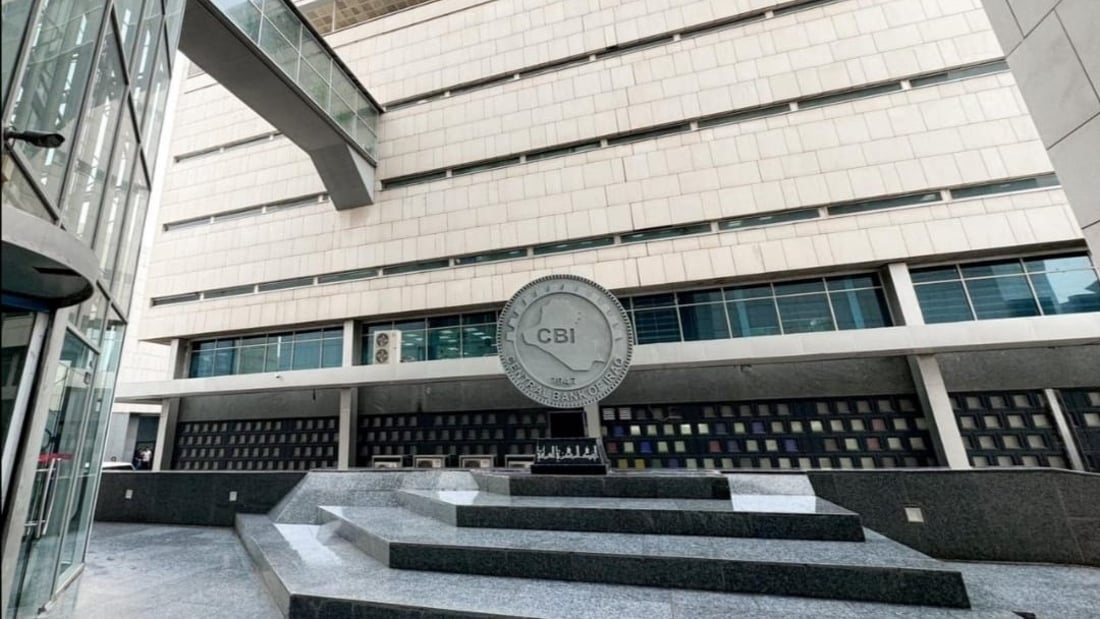
On Wednesday, October 7, 2026, the Council of Ministers decided to amend the exchange rate of the Iraqi dinar against the US dollar, based on the proposals presented by the Ministers of Finance and the Central Bank of Iraq during its regular session No. 544 of 2026. The final selling price of the dollar for citizens and non-bank financial institutions was set at 1,520 dinars per dollar. The Central Bank directed all banks, exchange companies, and electronic payment providers to cease using the previous rate and update their banking systems, officially adopting the new rates effective immediately. The Ministry of Finance set the purchase price of the dollar at 1,500 dinars and the selling price to banks at 1,510 dinars.
The video for this My FX Buddies Blogpost is below:
The Central Bank stated in a statement received by 964 Network : All licensed banks. All licensed electronic payment companies.
All licensed exchange companies. Re: Foreign currency exchange rate (US dollar). With reference to the Cabinet's decision taken in its twenty-second session on October 6, 2026, which included amending the exchange rates of the Iraqi dinar against the US dollar to meet the relevant financial, economic, and monetary requirements, and based on the provisions of the Central Bank of Iraq Law No. 56 of 2004, as amended, it was decided to adopt the following exchange rates:
1. The purchase price of the US dollar from the Ministry of Finance: (1500) dinars per dollar.
2. The selling price of the US dollar to banks: (1510) dinars per dollar.
3. The selling price of the US dollar to the public: (1520) dinars per dollar.”
The statement added that “in light of this, all your institutions must adopt the above prices in their transactions and take the necessary steps to update banking and financial systems and related service delivery channels, and inform the relevant branches and units to operate accordingly. The previous price must be discontinued, and the new price must be adopted as of the start of the working day of October 7, 2026.”


Third change in 6 years: Iraqi authorities devalue the dinar against the dollar

On Wednesday, October 7, 2026, the financial authorities in Iraq announced a reduction in the value of the dinar for the third time in six years, bringing it to 152,000 dinars per 100 dollars, for the currency sold to the public, or "end user".
The exchange rate of the dollar against the Iraqi dinar has increased.
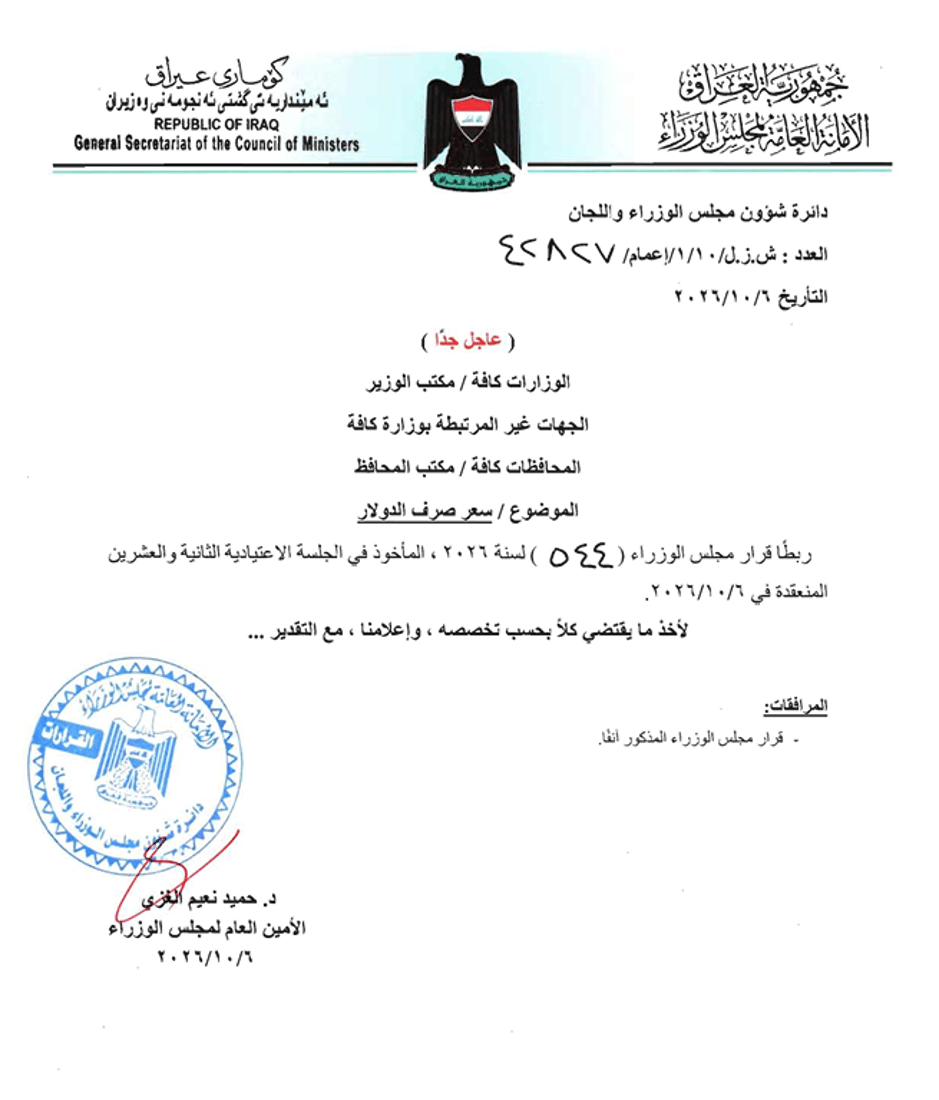
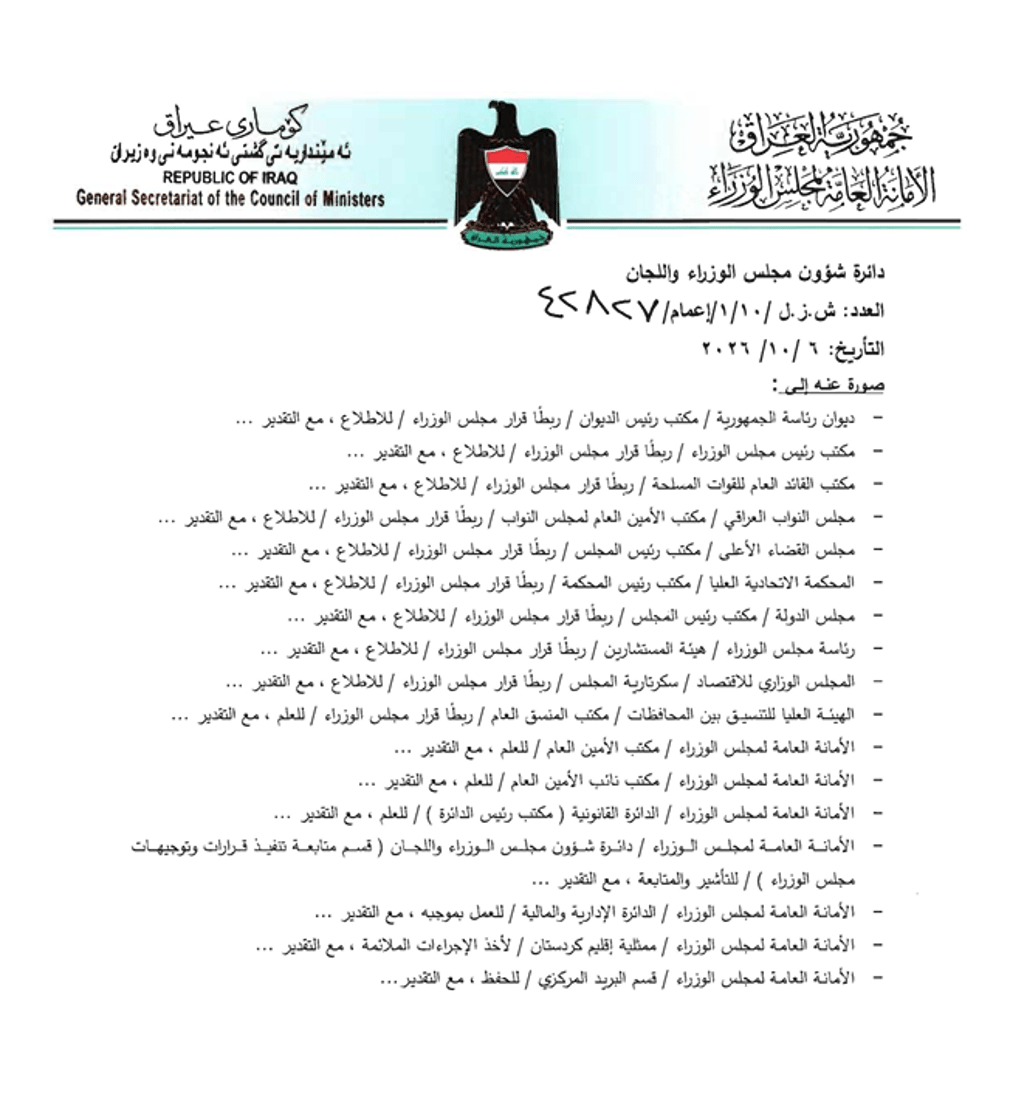
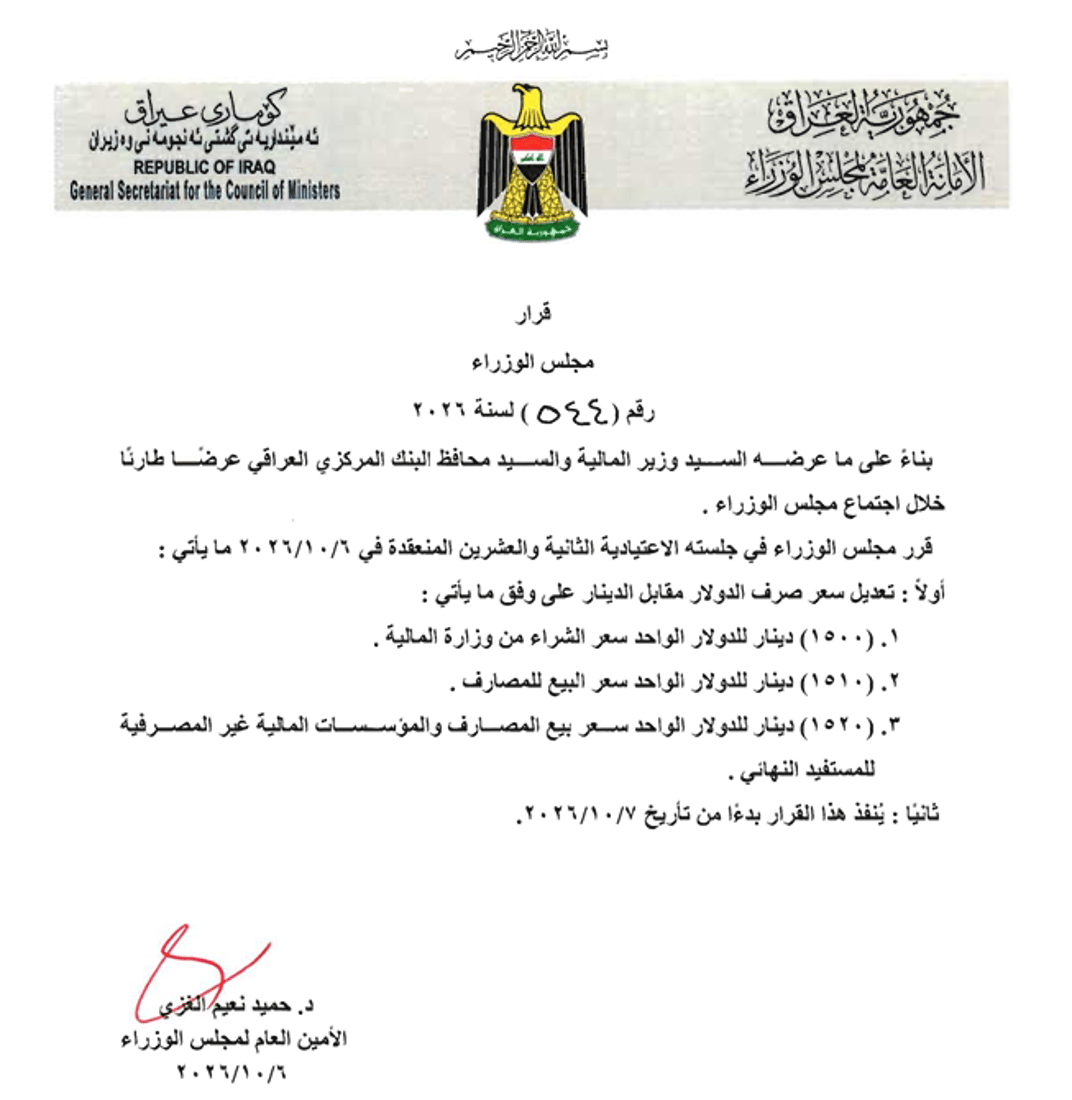
On Wednesday, the Central Bank decided to adopt a new exchange rate for the dollar, according to a document issued by the bank, which stated: “With reference to the Cabinet’s decision taken in its twenty-second session on October 6, 2026, which included amending the exchange rates of the Iraqi dinar against the US dollar in a way that meets the relevant financial, economic and monetary requirements.”
He added: "Based on the provisions of the Central Bank of Iraq Law No. 56 of 2004, as amended, it was decided to adopt the following exchange rates:
- The purchase price of the US dollar from the Ministry of Finance: (1500) dinars per dollar.
- The selling price of the US dollar to banks: (1510) dinars per dollar.
- The selling price of the US dollar to the public: (1520) dinars per dollar.
The bank called on all institutions to "adopt the above prices in their transactions and take the necessary steps to update banking and financial systems and related service delivery channels, and to inform the relevant branches and units to operate accordingly. The previous price must be discontinued, and the new price must be adopted as of the start of the work day."
The Ministry of Finance issued a statement saying: “Based on Cabinet Resolution No. (544), issued in its session held on 6/10/2026, it was decided to amend the exchange rate of the dollar against the Iraqi dinar to become (1500) dinars per dollar.”
It was also decided to suspend the implementation of Cabinet Resolution No. (413) of 2026 concerning the advance payment of customs duties.
On Tuesday, the Finance Committee in the House of Representatives revealed an official proposal to raise the exchange rate of the dollar within the general budget law.
Member of the Parliamentary Finance Committee, Ribwar Orahman, said in a statement followed by “Ultra Iraq”, that “the committee discussed with the Minister of Finance the items of the budget”, and that “the exchange rate of the dollar has not been determined yet and negotiations are continuing in this regard”, indicating that “the proposed ceiling for the exchange rate ranges between 1400 - 1500 dinars”.
Here's How to Support My FX Buddies
 Thanks
Support My FX Buddies
BuyMeACoffee CashApp:$tishwash
https://paypal.me/tishwash

.jpeg)


From Kurdish news one hour at 12:45 am cali time
The dollar is rising wildly in Iraqi stock markets.
- The government raised the exchange rate of the dollar against the dinar.
- The exchange rate of the dollar against the dinar has skyrocketed.
- The government said the decision came after an emergency presentation from the finance minister and the central bank governor.
- The exchange rate in Baghdad is 185, Erbil 180, and Sulaymaniyah 170.
The exchange rate of the US dollar against the Iraqi dinar has risen dramatically and at varying rates in Iraqi provincial exchanges, exceeding 180,000 dinars per 100 dollars in Baghdad, 180,000 dinars in Erbil, and 170,000 dinars in Sulaymaniyah, following the cabinet's decision to set the exchange rate at 1,500 dinars per dollar.
A statement signed by the Secretary-General of the Council of Ministers, Hamid Al-Ghazi, was issued based on what was presented by the Minister of Finance and the Governor of the Central Bank during the Council of Ministers meeting.
The Cabinet, in its regular session held yesterday, Tuesday, decided to amend the exchange rate of the dollar to 1500 dinars per dollar, which is the official purchase price by the Ministry of Finance. The decision set the selling price of one dollar, and its sale to the end beneficiary, at 1520 dinars per dollar.
"We were surprised"
Parliament will have a say in amending the exchange rate.
MP Ibtisam Al-Hilali confirmed on Wednesday (October 7, 2026) that the House of Representatives will have an opinion on amending the exchange rate in the budget law in consultation with the government to control the dollar in the black market, following the government’s sudden decision to change the official rate, stressing her rejection of the decision and warning of its direct repercussions on prices and the livelihood of citizens.
In a statement received by 964 Network , Al-Hilali expressed her rejection of “the Cabinet’s decision to change the exchange rate of the dollar against the Iraqi dinar, noting that this decision will affect the Iraqi citizen and market.”
Al-Hilali said, “We were surprised by the Cabinet’s decision to change and raise the exchange rate of the dollar against the Iraqi dinar, which has repercussions and a direct impact on the Iraqi economy and market.”
She added, “We reject this decision. If the government wanted to address the financial crisis, it should have changed the exchange rate to 1400 dinars per dollar or less to control the market and prevent it from affecting food prices, which directly impacts citizens.”
Al-Hilali explained that “the House of Representatives will have an opinion on changing the exchange rate in the budget law, in consultation with the government, to control the dollar exchange rate in the black market.”
Urgent | No need to panic... A source at the Central Bank of Iraq told the Iraq Observer: Traders can now obtain dollars at the new official rate from any bank, and all Iraqi banks have been provided with $1 billion as an initial payment.

A source at the Central Bank of Iraq stated that traders and businessmen who have remittances can do so at the new official rate that came into effect starting from Wednesday.
The source reassured the markets in a statement to Iraq Observer that there is no need for panic and that traders can now go to the banks to get their transfers at the new official rate of 1520 thousand dinars, noting that instructions have been issued to facilitate procedures for obtaining dollars at the new official rate, stressing that there is enough dollar available to meet the needs of the Iraqi market.
The source added: The Central Bank of Iraq will boost the accounts of the Real Estate Bank, the Housing Fund and the Industrial Bank with an amount of two and a half trillion Iraqi dinars to support the housing and industry sectors.
It will also boost the balances of all Iraqi banks for external transfers by an additional amount of one billion dollars as an initial payment, in addition to the usual boost.
It is worth noting that the Central Bank of Iraq announced today (Wednesday) the adoption of new exchange rates for the US dollar, based on the Cabinet’s decision issued during its session held on October 6, 2026.
The central bank set the new prices as follows:
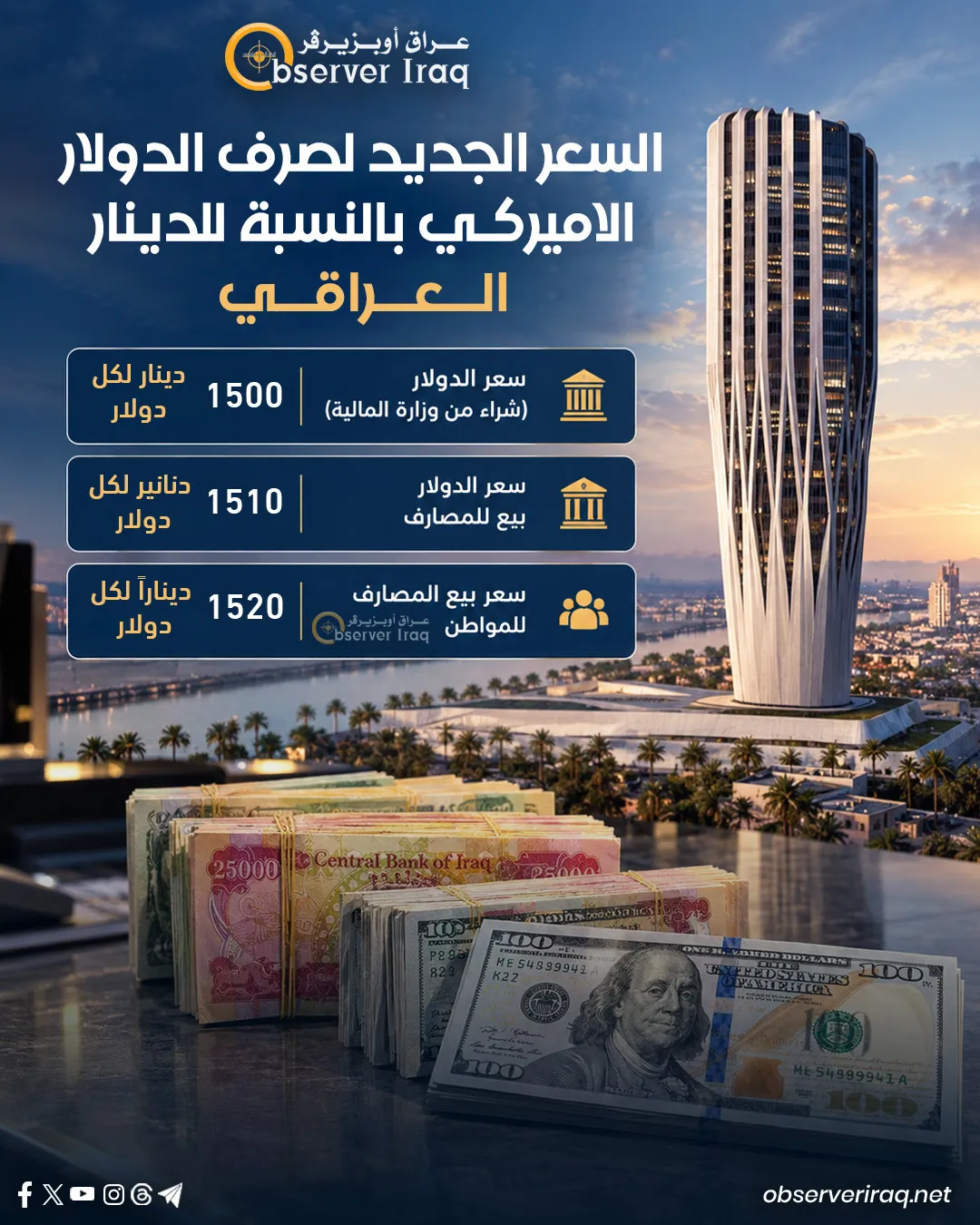
- The purchase price of the dollar from the Ministry of Finance: 1500 dinars per dollar.
- The selling price of the dollar to banks: 1510 dinars per dollar.
- The selling price of the dollar to the public: 1520 dinars per dollar.
The Central Bank confirmed that banks, electronic payment companies, and licensed exchange companies are obligated to adopt the new prices in their transactions and update their systems and channels for providing financial services accordingly.
He noted that the new price will be implemented starting from the beginning of Wednesday, October 7, 2026, with the previous price being discontinued.
A strategic step to enhance financial stabilityy

In line with the commitment of the Central Bank of Iraq and the Federal Government to achieving sustainable economic stability and ensuring comprehensive development, and based on joint coordination with the Council of Ministers and reliance on the provisions of the Central Bank Law No. (56) of 2004 as amended, the Central Bank informs the public of the adjustment of the exchange rate of the Iraqi dinar against the US dollar as of Wednesday, October 7, 2026, according to the following regular mechanism:
- The Ministry of Finance's dollar purchase price: 1500 dinars per dollar.
- The dollar's selling price to banks: 1510 dinars per dollar.
- The cash dollar selling price to the public: 1520 dinars per dollar.The Central Bank of Iraq assures all citizens and the entire economic sector of the adequacy and strength of its foreign reserves, which guarantee the full and immediate fulfillment of all external transfer requests for trade financing, settlement of bank card payments, and cash sales to travelers without any restrictions.
This positive development opens new and tangible horizons that directly serve the national economy and citizens by supporting domestic products and local industry, facilitating fair competition for Iraqi goods in the markets against imported products, encouraging the expansion of national factories and companies, providing an attractive and stimulating investment environment for non-oil productive sectors, and creating new job opportunities that pave the way for the expansion of small and medium-sized enterprises, thus directly contributing to the employment of Iraqi youth and reducing the unemployment rate. The
Central Bank of Iraq affirms its continued commitment to taking all measures that serve the interests of the nation and its citizens and ensure the safety and stability of its financial system.Central Bank of Iraq,
October 7, 2026
10:20 am cali time
From the Dollar to the Dinner Table: Iraq’s Dinar Shift Puts Prices and Purchasing Power Under Pressure
Iraq’s new official exchange rate is set to reverberate through imports, businesses, local production and household budgets as the dollar surges to around 170,000 dinars per $100 in Kurdistan Region markets

Iraq’s decision to reset the official exchange rate of the US dollar to 1,520 Iraqi dinars is likely to have consequences far beyond currency markets, putting pressure on importers, businesses, manufacturers and household budgets across the country as the dollar simultaneously climbed to around 170,000 dinars per $100 in Iraq and the Kurdistan Region markets.
The Central Bank of Iraq (CBI) introduced the new exchange-rate structure on Wednesday, following a decision by the Council of Ministers. Under the new structure, the government will purchase dollars from the Finance Ministry at 1,500 dinars, sell them to banks at 1,510 dinars, and non-bank financial institutions will sell them to final beneficiaries at 1,520 dinars.
The decision represents a substantial change from the previous official rate and comes as Iraq faces significant financial and economic pressures.
The move will allow the government to obtain more dinars for each dollar of oil revenue, but also warned that it will increase import costs and weaken household purchasing power.
The impact is already more complicated in the Kurdistan Region, where the parallel-market dollar rate is substantially above the new official rate. The dollar reached around 170,000 dinars per $100 in regional markets on Wednesday, creating a wide gap between the rate available through official channels and the rate businesses and individuals may face in the parallel market.
Meanwhile, signatures are being collected in the Iraqi Parliament to summon the Governor of the Central Bank of Iraq and the Minister of Finance, according to Kurdistan24’s correspondent in Baghdad, amid growing concern over the government’s newly introduced dollar exchange-rate structure.
The move follows the Central Bank’s decision to set the dollar’s selling price at 1,520 Iraqi dinars for end beneficiaries through banks and non-bank financial institutions, a change that has contributed to market disruption and raised concerns over its potential impact on prices and purchasing power.
Importers face higher replacement costs
For businesses importing goods from Türkiye, China, Iran, the Gulf and other markets, the exchange rate is a direct component of the cost of bringing products into Iraq. When importers must acquire dollars at a higher market rate, they need more dinars to pay the same foreign-currency invoice.
That pressure can quickly move through the supply chain. Importers may increase wholesale prices to protect their margins, wholesalers may pass those costs to retailers, and retailers may ultimately raise prices for consumers.
The effect can reach a broad range of products, including food, clothing, electronics, household appliances, vehicles, medicines, construction materials and other imported goods.
Research conducted by Kurdistan24 found that exchange-rate fluctuations have a significant relationship with inflation in Iraq and the Kurdistan Region, with the parallel exchange rate having a particularly strong impact on the level of inflation across the country.
The research linked that vulnerability in part to Iraq’s reliance on imported goods and services to meet domestic demand.
Local products are not insulated
The effect of a weaker dinar is not limited to products that arrive in Iraq as finished imports.
A locally manufactured product may still depend on foreign inputs. Iraqi and Kurdistan Region businesses can import machinery, spare parts, chemicals, packaging, industrial components, raw materials and other production inputs before selling the finished product domestically.
As the cost of those imported inputs rises in dinar terms, domestic manufacturers face higher production costs.
A factory producing food products, beverages, furniture, construction materials or other goods may therefore be forced to choose between absorbing the additional cost and accepting lower profit margins, or raising its prices and passing part of the increase to consumers.
This creates a form of imported inflation that can spread even into sectors that appear, on the surface, to be entirely domestic.
Businesses face uncertainty as well as higher costs
For business owners, the problem is not simply the price of the dollar today but the difficulty of predicting what the dollar will cost when the next shipment arrives.
Importers need to calculate their replacement costs, while retailers must decide whether to raise prices immediately or wait for the market to stabilize.
A prolonged gap between the official and parallel rates could make that calculation more difficult and encourage businesses to price goods according to the higher market rate rather than the official rate.
Small and medium-sized enterprises may be particularly vulnerable because they generally have fewer financial reserves and less access to foreign-currency financing than larger companies.
Businesses that pay foreign contractors, purchase software and digital services from abroad, import equipment, or have dollar-denominated obligations can also face higher operating costs even when most of their revenues are generated in dinars.
Household purchasing power under pressure
For ordinary people in Iraq and the Kurdistan Region, the most important question is ultimately what the exchange rate does to the cost of everyday life.
A family whose income remains fixed in Iraqi dinars could find that the same monthly salary buys fewer imported or import-dependent goods. Higher prices for food, clothing, medicines, household products, transportation-related goods and other necessities can gradually reduce real purchasing power.
The effect is particularly significant in the Kurdistan Region, where the dollar is widely used in commercial transactions and where the parallel rate has risen sharply above the official rate.
Earlier data from the United Nations in Iraq showed that energy and import-related price pressures can have a disproportionate effect on household expenditure, with the Kurdistan Region experiencing particularly sharp increases in some energy costs.
Who could benefit?
The weaker dinar will not affect every economic actor in the same way.
People and businesses earning income in dollars could receive more dinars when converting their foreign-currency earnings. Export-oriented businesses could similarly benefit from receiving foreign currency while paying some of their domestic costs in dinars.
The government can also obtain more dinars for each dollar of oil revenue under the new official exchange rate. This is particularly important for Iraq because oil sales remain the principal source of state revenue.
The Iraqi government is facing a substantial revenue shortfall amid disruptions to oil exports and that the devaluation is intended to generate more dinar revenue from each dollar earned.
But these fiscal benefits come with a trade-off: the government may receive more dinars from dollar-denominated oil revenues while households and businesses face higher costs for imported goods and inputs.
The parallel-market gap is the key variable
The biggest question for businesses and consumers in the coming weeks may be whether the gap between the official and parallel rates narrows or persists.
The official end-user rate is now 1,520 dinars per dollar, while the dollar was trading around 170,000 dinars per $100 in Kurdistan Region markets on Wednesday. Other Iraqi markets also recorded sharp movements following the announcement.
If the parallel market stabilizes closer to the official rate and businesses can obtain foreign currency through formal channels, the pressure on prices could be contained. If the gap remains wide, however, businesses that depend on market-rate dollars may continue calculating their costs according to the higher rate, potentially keeping upward pressure on prices.
For the Kurdistan Region in particular, this distinction is significant because Kurdistan24 economic researches suggest that movements in the parallel exchange rate have a stronger inflationary effect there than movements in the official rate.
From currency policy to the cost of living
The new exchange rate therefore represents more than a monetary-policy decision or a change on the CBI's exchange-rate sheet. Its effects can travel through almost every layer of the economy—from the importer paying a foreign supplier, to the factory purchasing raw materials, to the shopkeeper replacing inventory, and finally to the consumer paying for goods.
For Iraq’s government, the policy offers a way to increase the dinar value of dollar revenues at a time of fiscal pressure. For businesses, it creates new cost and pricing challenges. And for households whose salaries are paid in dinars, its ultimate impact will depend on how much of the higher currency cost is passed through to prices and whether incomes adjust accordingly.
The coming period will therefore test not only the CBI’s ability to manage the exchange-rate transition, but also the government's capacity to prevent a wider erosion of purchasing power while keeping the parallel market under control.
The longer the gap between the official and market rates persists, the greater the risk that exchange-rate pressures become embedded in prices across both imported and locally produced goods.
Financial advisor: Adjusting the exchange rate is a precautionary measure to protect economic stability.
The Prime Minister's Financial Advisor, Mazhar Muhammad Salih, confirmed on Wednesday that the adjustment to the dinar's exchange rate is part of precautionary measures aimed at protecting economic, financial, and monetary stability. He noted that financing for foreign trade is proceeding regularly and stably.
Salih stated, "The exchange rate of the Iraqi dinar against the dollar and other foreign currencies represents the dinar's external value, and therefore its stability is closely linked to the availability of foreign currency and the economy's ability to finance foreign trade needs."
He added, "The potential repercussions of regional and international crises, particularly the effects of war and unrest that could impact oil exports through the Strait of Hormuz, and their impact on oil revenues, the general budget, and foreign currency inflows, necessitate a precautionary and well-considered approach."
He clarified that "the measures taken do not indicate any imbalance in the economic situation, but rather are part of proactive safeguards to protect economic, financial, and monetary stability, in anticipation of any developments that might affect the state's foreign currency reserves or its ability to finance foreign trade and public spending."
He pointed out that “monetary policy works to manage the exchange market and maintain the smooth flow of foreign currency, ensuring the continued and stable financing of foreign trade.” Meanwhile, fiscal policy works to absorb some of the potential effects of external shocks through balanced management of public spending, revenues, fees, taxes, and government subsidies.
Saleh explained that “customs and tax measures are part of the precautionary system and are used judiciously to regulate imports, enhance public revenues, and rationalize the use of foreign currency, without aiming to increase the burden on citizens or cause unjustified price hikes.”
He affirmed that “the general budget possesses important tools to protect internal stability through continued spending on food, medicine, fuel, and essential services.” He noted that government subsidies, in addition to their social function, represent an economic tool for absorbing shocks and maintaining price stability and domestic demand.
Saleh emphasized that the financial, customs, and tax measures associated with the current phase aim to strengthen the state’s ability to confront any potential decline in oil revenues or foreign currency inflows, maintain the general budget’s ability to meet its obligations, and protect the stability of the domestic market.
He explained that “these measures are not intended to cause a sudden change in the exchange rate or to burden society with the cost of the crisis. Rather, they aim to hedge against these challenges and build a financial and monetary safety net that enables the Iraqi economy to cope with exceptional circumstances, while continuing to provide essential goods and services and maintaining purchasing power and internal stability.”
He pointed out that the strength of the economy in such circumstances is not measured solely by the size of its resources, but also by its ability to manage shocks before their full effects are felt. He emphasized that the integration of monetary and fiscal policy, exchange rate procedures, customs, taxes, spending, and subsidies represents a formula for protecting the economy and citizens from the repercussions of any external disruption in oil markets or international trade
Address the crisis at its root.
The Dawa Party is demanding the government's urgent intervention to address the "insane rise" of the dollar.

The political bureau of the Islamic Dawa Party called on the government and those concerned on Wednesday (October 7, 2026) to intervene urgently and quickly put an end to what it described as the insane rise in the exchange rate of the dollar against the Iraqi dinar, warning of the repercussions of the economic effects and the deterioration of citizens’ purchasing power on the political and social stability in the country.
The party said in a statement received by Network 964 , “We are following with concern the effects of instability and fluctuation in the exchange rate of the Iraqi dinar against the US dollar, and the resulting rise in commodity prices in the markets, and the decrease in the purchasing power of citizens, which will negatively affect the political and social conditions.”
He added that “while we recognize the difficult circumstances resulting from the ongoing war in the region and the inherited financial deficit, we urge those concerned to expedite efforts to curb this insane rise and find urgent solutions to control its repercussions, so that addressing the economic crisis does not come at the expense of the citizen and his ability to secure his basic needs, and to address the root causes of the crisis, strengthen national production, reduce waste and corruption, regulate imports, and tighten control over market activity.”
The party also called on “merchants and businessmen to take into account the difficult circumstances that citizens are going through, and to cooperate in order to overcome these stressful conditions, and to refrain from greed and monopoly. Many of them benefited in previous stages, and today they must consider justice and fairness, and bear their national and moral responsibilities towards our people.”

No comments:
Post a Comment