Central Bank Governor: Banking reform is receiving direct attention from the Prime Minister
link

Al-Alaq: No US embargo on Iraqi funds; meeting expected with the Federal Reserve and the Treasury Department

Central Bank Governor Ali Al-Alaq confirmed that there is no intention to devalue the Iraqi dinar against the US dollar.
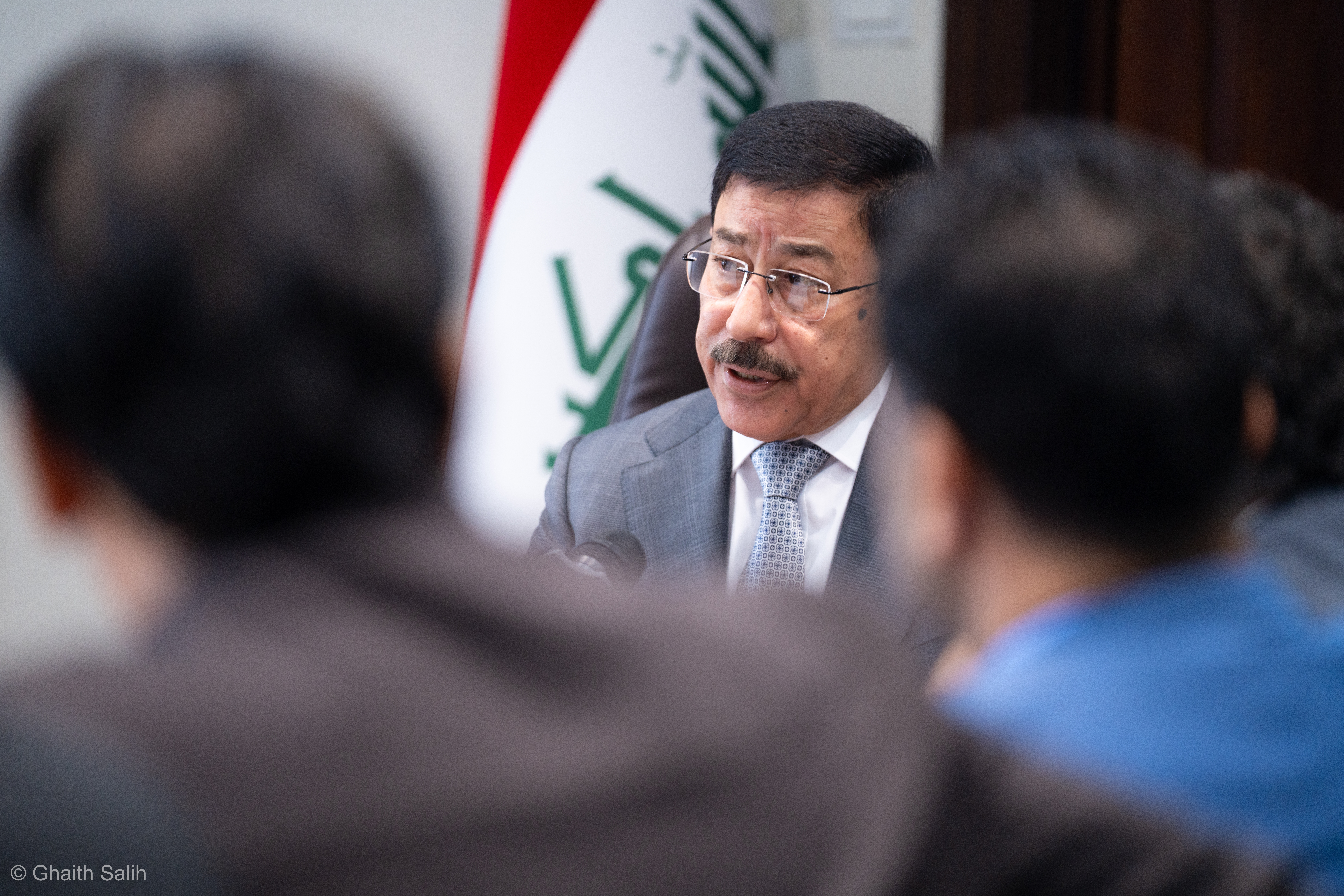
Speaking to a group of journalists and experts, Al-Alaq said, "We will help the government overcome the repercussions of any potential closure of the Strait of Hormuz by discounting treasury bonds and ensuring the payment of salaries."
He indicated that "the banking reform file is receiving direct attention from the Prime Minister. A meeting is expected in the coming days with the Federal Reserve and the US Treasury Department."
Al-Alaq continued, "We invest our cash reserves in several countries, and there are no US sanctions on Iraqi funds."
He added, "Most banks have reached the stage of mergers or liquidation, and only one or two banks remain that are unable to continue operating."
The Central Bank denies any US ban on Iraqi funds

While confirming that there is no intention to reduce the exchange rate of the dinar against the dollar, the Governor of the Central Bank of Iraq, Ali Al-Alaq, denied today the existence of any American embargo on Iraqi funds.
Al-Alaq told a number of journalists that “there is no intention to reduce the exchange rate of the dinar against the dollar, and we will help the government overcome the repercussions of any potential closure of the Strait of Hormuz by discounting treasury bonds and securing salaries,” noting that “the cash reserves are currently being invested in several countries, and there is no American embargo on Iraqi funds.”
He added that “the US Treasury Department and the Federal Reserve praise the role of the central bank.”
He then said that “ the central bank provides dollars to travelers and traders at the official rate.”
He explained that “most banks have reached the stage of merger or liquidation, and only one or two banks remain that are unable to continue,” stressing that “the banking reform file is receiving direct attention from the Prime Minister, and there is an expected meeting in the coming days with the Federal Reserve and the US Treasury Department.”
He confirmed that he “directly oversees the banking reforms file, and the banks concerned and the consulting firm have made significant progress in implementing the reform requirements,” noting that “a meeting is expected in the coming days that will bring together Oliver Wyman and the Central Bank of Iraq with the US Federal Reserve and the US Treasury Department.”
He added: “The meeting will pave the way for the transition to dealing in other foreign currencies for banks that have completed all the required requirements and procedures.”
He also pointed out that “there is no truth to what is being said about the Central Bank obstructing banking reforms, and our interest lies in the return of the deprived banks to activity as quickly as possible.”
He concluded by saying: “The media has a major role, and the international community is watching with interest what is being said by parliamentarians, analysts, and local media.”
A meeting at the Central Bank confirms the institution's neutrality and its role in supporting the budget.
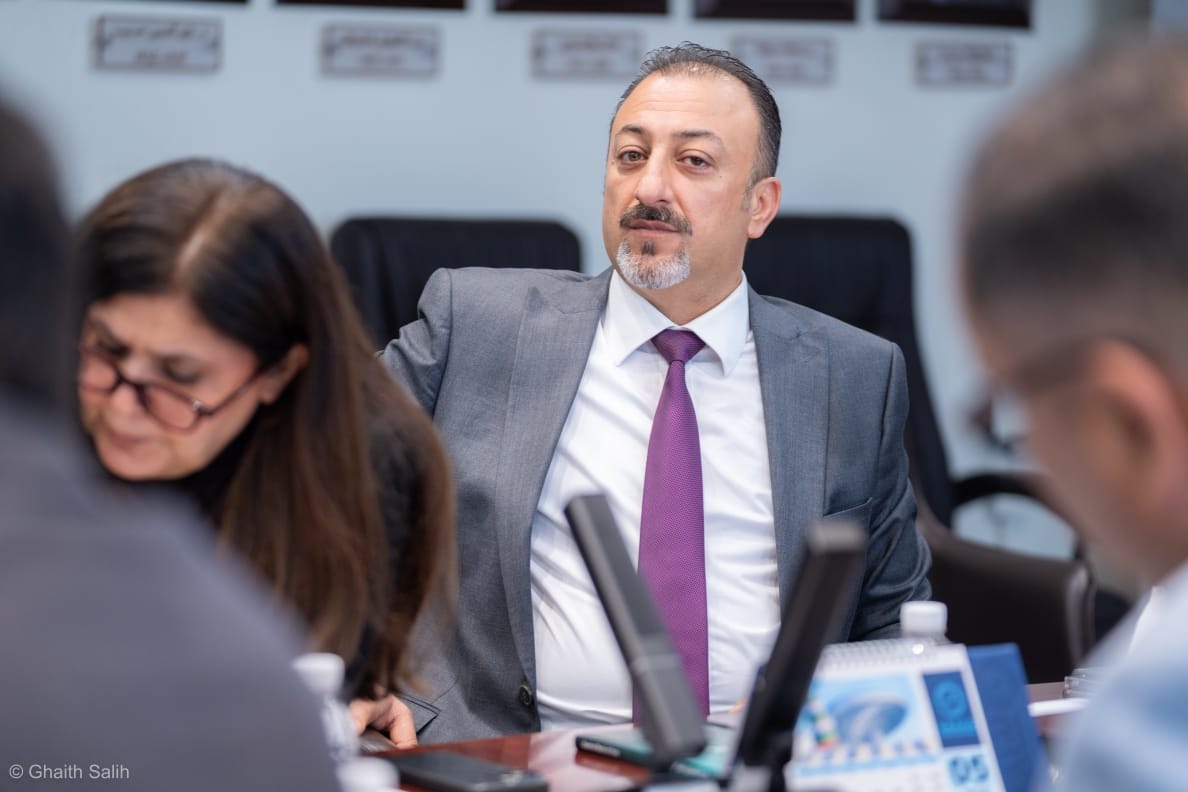
The Central Bank of Iraq held an expanded meeting on Tuesday (May 19, 2026) with representatives from several Iraqi media outlets, in the presence of the bank's governor, Ali Al-Alaq, to discuss a range of financial and monetary issues related to the bank's role in supporting market stability and strengthening compliance and banking oversight procedures.
The meeting was attended by Saif Al-Hashemi, director of the Baghdad Today news agency, along with a number of other media colleagues.
Al-Allaq said during the meeting, which was attended by “Baghdad Today”, that the Central Bank is exercising its role with complete neutrality with regard to the general budget,” stressing that the bank’s responsibility is focused on controlling monetary policy and maintaining the stability of the exchange rate, in addition to managing foreign transactions and supervising banks, without interfering in the form of the budget or its political or economic options.
The governor explained that the central bank is working to create a balance between the planned deficit and the actual deficit through monetary policy tools, noting that the bank’s role in this regard depends on measuring liquidity, the size of issuances, and the level of monetary stability required to support the budget without putting pressure on the market.
Al-Allaq also reviewed the ongoing banking reform phases, which include strengthening compliance, developing payment systems, and improving oversight procedures for the banking sector, stressing that these steps are essential to prevent any practices that harm the market or affect the value of the currency locally.
Regarding financial stability, the Central Bank reassured attendees that the country's economic situation is "stable and under control," and that the measures taken during the past months have contributed to reducing volatility and strengthening confidence in the financial system.
The attendees raised a number of questions about the bank’s relationship with the budget and its role in managing the exchange rate, in addition to mechanisms for reducing speculation in the market, while the Central Bank affirmed its continued communication with the media to ensure clarity of information and avoid inaccurate reporting on financial matters.
This meeting comes amid escalating discussions about the budget deficit and the growing need for an effective monetary policy to mitigate the effects of regional and economic tensions, particularly given the Iraqi markets' vulnerability to the repercussions of the ongoing conflict between Iran, Israel, and the United States, and its impact on local market activity. The Central Bank also aims to clarify its media strategy to ensure that accurate information about monetary policy reaches citizens and those interested in economic affairs.



An economist explains the factors controlling the dollar exchange rate in the parallel market.
Nouri said, “The exchange rate of the dollar in the parallel market depends on supply and demand, and this equation is affected by multiple internal and external factors.” He explained that “the demand for dollars by some traders who do not deal with the external transfer system of the Central Bank of Iraq is affected by the rise in global commodity prices and weak purchasing power.”
He added that "the supply of dollars in the parallel market is limited, and is often linked to a commercial tendency among those who possess the currency for the purpose of selling or speculation," noting that "the liquidity crisis and fears of paying the salaries of employees and retirees also affect the movement of the market and their ability to purchase imported goods."
Nouri explained that "changing the dollar exchange rate is one of the tasks of the Central Bank of Iraq, in accordance with its monetary policy and in coordination with the Ministry of Finance, which is responsible for fiscal policy," noting that "this file has not been fully clarified within the new ministerial formation."
Following the official announcement that the dinar's exchange rate would remain unchanged, the Al-Zaidi government reassured Iraqis: monetary stability and protection of local markets from shocks.

Despite escalating concerns related to the potential closure of the Strait of Hormuz and the decline in Iraqi oil exports, Prime Minister Ali al-Zubaidi's government is attempting to reassure markets and the public by emphasizing the stability of the exchange rate and the continued ability to pay salaries. This comes at a time when economic discussions are intensifying regarding how to manage the next phase and avert any financial shock that might hit the country in the coming months.
The Governor of the Central Bank of Iraq, Ali al-Alaq, confirmed that there is no intention to change the exchange rate of the dollar against the dinar, stressing that "employees' salaries are guaranteed." This stance appeared aimed at containing the wave of anxiety that has intensified following international reports about increasing financial pressures on Iraq due to the decline in oil exports.
Protecting the domestic situation:
These statements come after the Ministry of Oil announced it had generated more than $1.087 billion in oil revenues last month, despite logistical challenges and a sharp decline in export volumes through the Gulf.
Baghdad is facing one of its most sensitive periods in years, with oil revenues plummeting to unprecedented levels due to disruptions in shipping in the Strait of Hormuz. This has prompted experts and economic institutions to warn of potential pressures on salary payments and the exchange rate if the crisis persists.
But the Iraqi government seems keen to prevent these concerns from spreading internally, by emphasizing the continued coordination between the Ministry of Finance and the Central Bank, in addition to relying on the large cash reserves that Iraq possesses.
“Changing the exchange rate is no longer a purely financial
decision as it was in the past, but has become directly linked to Iraq’s ability to continue exporting oil through the Strait of Hormuz and achieve stable financial flows,” said economist Ali Daadoush.
Daadoush added to Iraq Observer that “talking about raising the price of the dollar to 1750 dinars does not seem useful at the moment, because the difference achieved in dinar revenues will not be large compared to the size of the crisis and the potential economic repercussions.”
He explained that “the expected oil revenues during the next seven months, if the current export restrictions continue, may amount to only about $10.5 billion, which is equivalent to 13.6 trillion dinars at the current exchange rate, while it will rise to about 18.3 trillion dinars if the price is changed to 1750 dinars per dollar, a difference of only about 4.7 trillion dinars.”

He pointed out that “this difference is not enough to justify a major step such as changing the exchange rate, due to the potential for price increases, inflationary pressures, and a decline in citizens’ purchasing power.”
The monthly funding required for employee salaries is estimated at about 7.5 trillion dinars, while the government needs more than 52 trillion dinars to cover the next seven months, compared to total expected revenues of only about 21.6 trillion dinars, which means there is a large funding gap that is being dealt with through multiple monetary and financing tools.
According to Daadoush, “The best scenario for Iraq remains linked to the reopening of the Strait of Hormuz to Iraqi oil exports in a normal manner, because that will raise revenues to levels approaching $4 billion per month, which gives the government and the central bank more room to maintain monetary and financial stability.”
He added that “the current coordination between the Ministry of Finance and the Central Bank seems important at this stage, especially with the need to strike a balance between protecting the exchange rate, securing salaries, and preventing any widespread economic disruption.”
Crisis management tool through monetary stability
Meanwhile, Central Bank Governor Ali Al-Alaq revealed deep structural imbalances in the Iraqi economy, explaining that a large part of public spending does not go towards productive projects capable of creating sustainable resources, while the country continues to rely on imports from several countries, including China, Turkey, the UAE, and Iran.
Al-Alaq also pointed out that the electricity sector alone consumes between 23 and 25 trillion dinars annually, compared to very limited revenues, in an indicator that reflects the extent of the pressures on public finances.
Despite these challenges, the Al-Zidi government is betting on its ability to manage the crisis by maintaining monetary stability, preventing a collapse of confidence in the local market, working to find temporary financing alternatives and mitigating the effects of declining oil exports, while awaiting a breakthrough in the regional landscape and the return of normal oil flows.
Want to Support My FX Buddies?
 Thanks
Support My FX Buddies
BuyMeACoffee CashApp:$tishwash
https://paypal.me/tishwash

.jpeg)
Political agreement will facilitate the passage of the oil and gas bill
Political agreement will facilitate the passage of the oil and gas bill
The Iraqi parliament will soon put the oil and gas bill on its agenda, an Iraqi lawmaker said: political understanding and agreement has been reached between most of the parliamentary factions The passage of the bill is considered a nerve of stability, as it is a political and economic issue.
The problems are being solved
"The oil and gas law will be submitted to parliament soon because it is a preliminary agreement between them," Adel Mahlawi, a member of the Taqadoom faction in the House of Representatives, told Sabah newspaper There are political parties.
"Prime Minister Ali Zaydi has expressed his readiness to complete the bill because it is very important and has an economic and service dimension," he said.
"Some of the bills still need national agreement, including the oil and gas bill, but the oil and gas bill gives the provinces a wider opportunity to manage their own affairs and organize it," he said Relationship between the federal government and oil-producing provinces.
Delays in oil exports will hurt Iraq
Meanwhile, Ola al-Nashi, a member of the Oil and Gas Committee in the Iraqi parliament, said: "We have sent an official letter to the Ministry of Oil in order to take advantage of all these opportunities The move comes after changes in the Arabian Gulf that have affected ship movements There were oil fields.
"The oil issue is the backbone of Iraq's economy. Any delay in oil exports or disruption of export lines will directly affect the state's gross revenue," he said.
Export statistics during the conflict
According to the Iraqi Oil Marketing Company (SOMO), about 21 Iraqi oil ships carrying 27 million 678 thousand barrels of oil were disrupted in the Gulf due to tensions in the Strait of Hormuz In March and April, eight ships completed the loading and transit of 9 million 765 thousand 797 barrels of oil He had carried it.
Three other ships carrying 4 million 886 thousand 786 barrels of oil were able to pass during the crisis.
Finally, Al-Nashi stressed that parliament will continue to follow the measures of the Ministry of Oil and SOMO to protect Iraqi oil exports and prevent the loss of economic opportunities, in order to support the budget and provide it Financial entitlements of the country.
He called on the oil ministry to take this development seriously, as it is a political and economic issue and not just a technical issue.
During the visit to Washington and meeting with Trump
Nasif calls on Al-Zaidi to request an increase in Iraq's OPEC quota and to resolve the issue of its oil through the Strait of Hormuz.

MP Alia Nassif called on Prime Minister Ali al-Zubaidi on Tuesday (May 19, 2026) to request an increase in Iraq’s share in OPEC and to find understandings with America and Iran to resolve the issue of oil passing through the Strait of Hormuz, which is closed due to the war, during his visit to Washington at the invitation of US President Donald Trump.
Trump had invited al-Zaidi to visit Washington after he formed his government, during a phone call that included congratulations on his appointment and an invitation to visit the White House.
We hope that during the upcoming visit of Prime Minister Ali al-Zaidi to the United States of America at the invitation of Trump, Mr. al-Zaidi will ask the American administration to increase Iraq’s share in OPEC, and to find common ground between the Islamic Republic of Iran and Iraq to secure Iraqi oil exports through the Strait of Hormuz, because the issue of the Iraqi economy is an existential issue in the current circumstances, and all positions must be united to support our government and our economy.

Finance Minister Faleh al-Sari acknowledged the growing financial challenges facing Iraq in light of changes related to energy markets and declining oil exports.
This is accompanied by a decline in revenues, which requires concerted efforts and support for measures that will secure the state’s financial obligations.
This came during his meeting with the Speaker of Parliament, Hebat al-Halbousi, where a number of files related to financial and administrative reform were discussed.
Al-Sari stressed the need to enact legislation and amend a number of laws, in order to support the paths of financial reform.
For his part, Al-Halbousi expressed his support for the government's efforts in dealing with the complex financial situation the country is going through
An expert suggests "printing new money".
An unprecedented financial crisis hits Iraq: A $5 billion gap threatens salaries.

Financial and banking expert Mahmoud Dagher confirmed on Tuesday (May 19, 2026) that Iraq is currently experiencing its biggest financial and economic crisis since 2003, due to the severe deficit in oil revenues, which did not exceed one billion dollars this month, compared to an actual need of more than 6 billion dollars (equivalent to 8 trillion dinars) to cover the salaries of employees and retirees monthly.
Dagher confirmed, in an interview with journalist Ahmed Mulla Talal, which was followed by 964 Network , that there is no solution to the current crisis except resorting to “discounted transfers” to increase the internal debt by printing new money from the Central Bank and lending it to the Ministry of Finance. This is a necessary measure that will lead to raising the internal debt from 100 trillion to nearly 140 trillion dinars. He warned that this path will inevitably lead to direct pressure on the foreign currency reserve and reduce it, expecting that the dollar exchange rate will take an upward trend in the local markets.
Internal "money creation": No withdrawals from reserves, but printing and borrowing
Dagher refuted the rumors circulating about the state resorting to direct withdrawals from foreign currency reserves, stressing that the mechanism currently in place is “issuing new money” from the central bank and lending it to the Ministry of Finance through debiting remittances via banks.
The banking expert explained that this measure, which was previously used during the era of former Prime Minister Haider al-Abadi, represents a process of creating local money, revealing that discounted transfers started steadily from 3 trillion and then jumped to 4 trillion, and are likely to rise to compensate for the absence of live oil revenues and to secure funds for citizens in the markets.
Indirect depletion... How will foreign currency reserves be affected?
Dagher warned that the real danger to the central bank’s reserves comes indirectly through the movement of liquidity in the market. When a citizen receives his salary in “printed” dinars, he goes to buy, and the merchant returns and asks the central bank for dollars, exchanging them for dinars.
He pointed out that the previous equation was based on the Ministry of Finance handing over dollars to the Central Bank to secure dinars, but now the Ministry of Finance does not have dollars, which puts full pressure on the foreign reserves and threatens to reduce them, recalling how this mechanism previously caused the reserves to drop from 60 billion to 35 billion dollars during previous crises.
The triad of “Al-Zaydi, Finance, and the Central Bank”: The desperate have no choice
The financial expert confirmed that this critical situation was on the decision table from the first day of the appointment of Prime Minister Ali al-Zaidi, who rushed to hold an urgent meeting with the Minister of Finance and the Governor of the Central Bank to develop solutions.
Dagher asserted that there is no alternative solution on the horizon for financing the state other than relying on Central Bank transfers to the Ministry of Finance to increase internal debt, considering that this measure is not an editorial error but rather the option of extreme necessity for which no economic expert in Iraq has a realistic alternative at the present time.
The dollar will rise and domestic debt will jump to nearly 140 trillion.
Dagher predicted that the dollar exchange rate would take an upward turn in the local markets during the coming period, noting that the rise would not be rapid or crazy because the central bank has sufficient reserves and a high adequacy ratio, but this balance is threatened with collapse if the war and its repercussions continue for another year at the same current pace.
Dagher concluded his economic vision by pointing out that Iraq’s internal debt, which previously stood at 94 trillion and has now reached 100 trillion, is strongly heading towards a threshold of between 130 and 140 trillion dinars, which puts the country’s fiscal policy in the eye of the storm.
The Ministry of Oil announced on Monday (May 18, 2026) the total of Iraqi oil exports during the month of April, saying that it amounted to 9 million and 884 thousand barrels, with revenues amounting to about one billion dollars, while Iraq’s oil exports before the US-Iran war and the closure of the Strait of Hormuz amounted to about 100 million barrels with revenues of up to 7 billion dollars, which means a loss of 6 billion dollars during last April.
Al-Awadi: Iraq is not an open arena for conflicts, and the government will take all measures to maintain the stability of the region.

Government spokesman Bassem al-Awadi affirmed that "Iraq is not an open arena for conflicts...and the government will take all necessary measures to maintain the stability of the region."
In a televised statement, al-Awadi said, "The region is witnessing escalating tensions extending from Palestine, Lebanon, and Syria to the Gulf states," noting that "Iraq, as an Arab country and a neighbor to the countries of the region, is keen to listen to the concerns of its brothers."
He added, "The Iraqi government is working continuously to achieve positive results that contribute to calming the situation," clarifying that "Iraq is not an open arena, and some of the information circulating regarding security developments may contain inaccuracies or misinformation."
The spokesperson explained: "The Commander-in-Chief of the Armed Forces, Ali al-Zaidi, is personally overseeing this matter and following up on the file directly. He is in contact with our brothers in the Arab countries and the Gulf states. He has directed the formation of committees at the Ministry of Defense, Joint Operations Command, and military units deployed along the borders to communicate with our brothers to provide appropriate information for verification. If it is proven that any attack originated from within Iraq, the government will take all appropriate measures to preserve the sovereignty of Iraq, its neighbors, and the region."
Trump gives Iran three days to reach an agreement
US President Donald Trump said he had given Iran two or three days to reach an agreement with Tehran, expressing his hope that he would not have to resort to further military action.
Trump added, "We must have a safe country, and we must ensure that Iran does not acquire a nuclear weapon."
He also stated, "The Democrats are trying to prevent me from negotiating with Iran, and Iran wants to destroy the Middle East. This will not happen, and the attack that I decided to suspend should now be underway in Iran."
Trump explained that he is "negotiating with Iran," expressing his hope that he will not have to launch any further attacks against it.
He continued, "I'm not sure we will strike Iran. Leaders have contacted me in the last two days and told me there has been significant progress regarding Iran. I was an hour away from giving the order to launch a military strike before deciding to suspend it."
Trump emphasized, "I will give two or three days; it will be a limited period of time, because I cannot allow them to possess a nuclear weapon."
Trump indicated that "there will be a breakthrough very soon, whether through military means or through an agreement with Iran," explaining that "an agreement is likely to be reached very soon."
The Iranian military had previously warned that it would open "new fronts" if the United States resumed its attacks against Iran.
Indirect talks between the two sides continue through regional and international mediators, while Tehran affirms its commitment to continuing the dialogue with the aim of solidifying the current ceasefire.
Washington discusses a ground operation in Iran: It remains one of Trump's options.
Assistant Secretary of State for International Affairs Daniel Zimmerman told a congressional hearing that a ground operation in Iran remains an option for President Donald Trump.
During the hearing before the House Armed Services Committee, Zimmerman was asked whether sending U.S. troops to Iran was still an option. He responded, "The president has all the options available to him."
When lawmakers pressed him to confirm that the United States could launch a ground operation and potentially escalate the conflict, the assistant secretary reiterated his earlier answer.
Last Monday, President Trump announced that the United States had planned a military strike against Iran on Tuesday but postponed it at the request of Qatar, Saudi Arabia, and the United Arab Emirates to allow time for a possible peace agreement.
Trump added that he had ordered the military to remain ready to attack Iran should the parties fail to reach an acceptable agreement.

No comments:
Post a Comment