Iraqis' salaries are at stake: Will millions lose patience before the state treasury runs out?
August 7, 2026
Baghdad/Al-Masalla: Public finances in Iraq have entered an unprecedented testing phase with escalating fears that the government will be unable to secure the salaries of more than five million employees and retirees monthly, at a time when monthly financial obligations exceed eight trillion dinars while the assets of the public treasury do not exceed two trillion, according to official sources and field monitoring.
This came after repeated setbacks in the disbursement of last month's dues and a sharp decline in oil revenues due to disruptions in exports through the Gulf, prompting the Prime Minister's financial advisor, Mazhar Muhammad Salih, to emphasize that what Baghdad is going through is a temporary hardship and not bankruptcy, indicating the possibility of resorting to external borrowing, pre-export financing, and the International Monetary Fund and the World Bank to overcome the stage.
In contrast, economic experts warned that the continued closure of the Strait of Hormuz could lead to a gradual collapse in revenues, affecting support for the provinces and investment spending, and raising the level of inflation, given the country's almost complete dependence on imports of food and medicine.
The University of Babylon witnessed protests by professors and employees who denounced the delay in salaries, while the movements extended to Kirkuk and Basra with the introduction of controversial proposals such as printing currency despite warnings of an inflationary explosion.
In the space of the X platform, activists expressed widespread anger, with one of them considering the announcement of salary delays after two decades of oil billions as evidence of failure in state management, while others saw the solution as lying in economic rapprochement with the Gulf states instead of isolation.
Between government assurances, expert warnings, and rising public anger, the fate of millions of salaries remains dependent on the course of the Hormuz crisis and Baghdad’s ability to open alternative export outlets before reserves run out.
Securing liquidity sparks controversy among economic circles

Financial and economic experts are discussing a number of proposals aimed at strengthening economic reform and modernizing the state’s financial and monetary structure, and at raising the efficiency of economic performance and developing monetary policy tools, including putting forward ideas and proposals related to restructuring the Iraqi currency and removing zeros from the Iraqi dinar, while others have proposed issuing new currency denominations that are compatible with current economic changes and the noticeable expansion in the size of the circulating money supply.
The proposals from experts and economic stakeholders came in the wake of the liquidity crisis the government is suffering from, which has caused delays in the distribution of salaries to public sector employees and affected the implementation of a number of projects, which prompted the Minister of Finance to request the House of Representatives to host him in order to explain the repercussions of the financial crisis
structural crisis
Financial expert Dr. Nabil Al-Abadi called for the need to avoid treating the proposal to change the national currency as a purely technical or monetary measure, explaining that this issue reflects the depth of the structural crisis that the economy is suffering from, and cannot be a substitute for the required financial, monetary and economic reforms.
Al-Abadi told Al-Sabah: Changing the currency is not a solution in itself, but rather a mirror reflecting the state of the economy, warning against confusing the treatment of symptoms with the treatment of the causes of the problem.
Purchasing power
Al-Abadi explained that removing zeros, as the most widely discussed scenario, essentially represents a reorganization of monetary units and a simplification of arithmetic and accounting operations, without necessarily meaning an increase in the citizen's purchasing power or a rise in the real value of the currency. He pointed out that changing the currency cannot be dealt with as a tool to recover looted funds, but may turn into a double-edged sword in some contexts if it is not managed within a comprehensive reform system.
The financial expert warned that large looted fortunes often do not remain in traceable local cash, or have long since migrated to real estate, foreign assets and accounts in safe financial havens, indicating that their transformation makes them largely immune to any internal monetary measures.
Managing the transition phase
He added that the biggest challenge in such measures is managing the transitional phase, especially with regard to psychological expectations in the market and the possibility of some traders and speculators exploiting the transition period to raise prices under various pretexts, which may lead to inflationary pressures and dissipate the expected administrative benefits of the process of removing zeros. He stressed that the success of any step in this direction requires the existence of solid monetary and economic stability before its implementation, and not considering it as a means to achieve that stability.
He stressed that the essence of a currency's strength is not related to its form or the number of zeros it has, but rather to the strength of the institutions and the economy on which it is based.
chronic disorders
Al-Abadi conditioned any currency change project on genuine financial reform that would address chronic imbalances in the general budget, strengthen the independence of the Central Bank and ensure its ability to manage monetary policy free from financial pressures, and build a productive economy capable of diversifying income sources and generating foreign currency. He explained that a strong currency is a reflection of a strong economy, not its creator. He concluded that addressing economic imbalances requires moving from superficial solutions to fundamental reforms encompassing public finances, the banking sector, production and investment, and diversifying revenue sources. He warned that changing the currency without reforming these areas could become a costly and confusing measure for citizens and the market, without addressing the root of the economic problem.
Issuance of currency denominations
For his part, economic researcher Imad Al-Muhammadawi considered the proposal to change the currency or issue a new currency denomination to withdraw illicit funds from circulation a theoretically positive proposal, noting that it is insufficient to reduce corruption or compensate for the shortage of liquidity.
Al-Muhammadawi explained to Al-Sabah that, from an economic standpoint, the problem is not the form of the currency, but rather how to convince those who possess large sums of money to disclose their source when exchanging them. He indicated that if the currency is changed without strict banking and tax auditing procedures, those with illicit funds can exchange them like the rest of the citizens, and thus the main purpose of the project is lost.
Exploiting loopholes
He added that there is no consensus with the proposal, for several reasons, foremost among them the hesitation that the procedure will turn into a tool for freezing legitimate funds if the specified and explained mechanisms for proving the source of funds are not followed, as well as the possibility of exploiting some loopholes by corruption networks to circumvent the change before it begins, accompanied by its impact on the monetary system of citizens, if it is done suddenly, not to mention the cost and complexities of currency replacement.
The transformation of these proposals into effective tools depends on their being accompanied by a system that requires large sums to be deposited in banks, their sources to be verified and linked to banking and tax data, with a time period granted for replacement, and serious work to uncover the source of the funds.
He pointed out that changing the currency, identifying illicit funds, and exchanging banknotes will not solve the crises unless it is accompanied by a regulatory system capable of uncovering the source of the funds and prosecuting their owners. He added that it could be an opportunity to regulate monetary masses and bring funds circulating outside the banking system into the formal financial system by establishing clear and transparent rules.
He pointed out that the lack of consensus on the proposal does not mean its rejection, but rather requires the establishment of legal, banking, and regulatory guarantees, and an integrated system to uncover those who manipulate public funds and engage in corruption, and to ascertain the source of funds before granting them legitimacy. He emphasized that if these conditions are met, the project will gain its importance and achieve its purpose. That for which it was created.
The salary crisis is under discussion in parliament; the finance minister is exploring ways to address the economic situation.
link
MP Ahmed al-Khazali revealed on Saturday that Finance Minister Faleh al-Sari will be present at the Finance Committee meeting to discuss the repercussions of the economic crisis facing Iraq and to find solutions to the salary payment problem.
Al-Khazali told the Information Agency, "Finance Minister Faleh al-Sari's attendance, scheduled for tomorrow, Sunday, will be at the Finance Committee meeting to discuss the economic problems and repercussions, including the salary payment crisis, in order to find radical solutions to this problem." He explained that the parliamentary finance committee will submit a report to the Speaker of Parliament on the content of this meeting so that the issue can be raised for discussion within the parliament.
He added, "Parliament and the Finance Minister are trying to find sound solutions to this crisis by ensuring that salaries are paid on time."
President Al-Zidi chairs the second session of the Supreme Council for Financial and Monetary Stability: Improving the management of non-oil resources and providing liquidity


Prime Minister Ali Faleh Al-Zaidi chaired the second session of the Supreme Council for Financial and Monetary Stability on Saturday, in the presence of the heads and directors of the relevant authorities and institutions.
The Prime Minister’s Media Office stated in a statement that the session witnessed the discussion of a number of files and issues related to the financial, monetary and economic conditions in the country, in addition to discussing current indicators and challenges and ways to enhance coordination and integration between the financial and monetary policies in a way that supports financial and economic stability.
The statement added that the council discussed mechanisms to improve the management of non-oil resources and provide liquidity, and to support economic and banking reform paths, as well as to enhance the efficiency of the financial system in a way that contributes to consolidating stability and creating a more sustainable economic environment.
Al-Zaydi stressed the importance of continuing coordination and joint work between the relevant ministries and institutions, following up on the implementation of the decisions and recommendations issued by the Council, and adopting practical solutions to the financial and monetary challenges in a way that preserves economic stability and enhances the ability of the national economy to cope with changes, as well as stimulating economic activities, especially non-oil ones.
Al-Moussawi criticizes resorting to American companies, saying it will tie the Iraqi economy to the United States.

Political analyst Haider al-Moussawi criticized the Iraqi government's reliance on American companies in various sectors, despite the Iraqi people's lack of trust and negative experiences with these companies. He pointed out that relying on American companies will tie the Iraqi economy to the United States.
Al-Moussawi told Al-Maalouma, "American companies, whether in the economic or security sectors, have a bad history in Iraq, especially since the people do not trust their work, and they have been involved in the bloodshed of Iraqis in recent years."
He added, "Granting confidence to American companies to operate again in Iraq raises many questions among the people about why other countries were not chosen to diversify the economy and investment sources."
He explained that "linking all Iraqi sectors and agreements to American companies will be tantamount to tying the economy to the United States," noting that "Iraq has had an unsuccessful experience with American companies, which leads to a lack of trust in them."
Economic: The governing framework interferes with financial decisions and restricts the government's powers.
Economic researcher Ziad Al-Hashemi criticized on Friday (August 7, 2026) what he described as the ruling framework’s interference in managing the state’s financial policy, considering that the government has become “deprived of powers” to make crucial financial decisions independently.
Al-Hashemi said in a post on social media, which was followed by “Baghdad Today”, that “the ruling framework in Iraq is dominating the government and making financial decisions on its behalf, in a precedent that indicates that we are facing a government stripped of powers and weak in its ability to make crucial financial decisions independently.”
He added that "the last meeting of the ruling elite gave, according to some sources, the green light to the government to cover its public finances by borrowing five billion dollars a month through the central bank to cover its operating expenses."
He pointed out that "this political decision represents a blatant interference in the powers of the government, and deprives the Central Bank of its independence in managing its monetary policy and regulating its financial relationship with the government, as the Central Bank will be forced, as a result of this political decision, to act as a direct financial financier of the government, in clear violation of the Central Bank Law."
Al-Hashemi stressed that “the decision reveals the lack of intention to fix the government’s financial imbalance and to maintain the status quo, while shifting the pressure to Iraq’s dollar reserves, which will lead to their depletion at a great pace, causing the Central Bank to lose an important part of its monetary tools and weakening its global financial position.”
He explained that "the framework was supposed to call on the government to work seriously to control spending, reduce waste, maximize resources, and not resort to the central bank's reserves except in the narrowest limits and in accordance with the law."
He continued, "What happened was the opposite. Instead of reforming the government's finances, pressure is being exerted on the Central Bank to finance the government's financial imbalance as it is. This confirms once again that Iraq is run by a controlling political system that dictates the government's financial policy, directs the relationship between the government and the Central Bank, and prevents the government from correcting its financial mistakes by combating corruption and curbing inflationary spending."
Al-Hashemi concluded by saying: “The current government and others will remain restricted, not independent, subject, and unable to implement solutions, as long as this political framework continues to interfere in its work, control its decisions, direct its policies, and obstruct its reforms.” He considered that “dealing with the economic and financial crisis in Iraq is now in the hands of a single political system that fundamentally rejects reform and does not want to get the country out of the tunnel it has been in for many years as a result of its practices.”
Asiacell signs an agreement with Apple and becomes the main partner in providing iPhones in Iraq.

Asiacell has signed a direct agreement with Apple to provide iPhones in Asiacell stores throughout Iraq – “original devices, official warranty, and the network that supports them, all in one place,” according to a statement from the company received by Al-Mirbad.
The “Mecca Agreement” redraws the equations of deterrence… Is the region entering a new security phase?
The Middle East region has entered a new phase of security arrangements after Saudi Arabia, Turkey and Pakistan signed the “Mecca Agreement for Joint Defense,” which stipulates that any armed attack on one of the three countries is considered an attack on all of them, in a move that observers described as going beyond traditional military cooperation towards a formula for collective defense, while the three countries confirm that the agreement does not target any particular party.
According to the joint statement, the agreement aims to enhance joint deterrence and expand defense cooperation, thereby contributing to regional security and stability, and establishing a long-term strategic partnership between the three countries.
Saudi Foreign Minister Prince Faisal bin Farhan affirmed that the agreement represents an important milestone in the course of defense cooperation and embodies the shared political will to confront threats to the security of the region, while Saudi Defense Minister Prince Khalid bin Salman described it as a framework for a long-term defense partnership that enhances deterrence, coordination and military integration.
Raed Qarmali, the Saudi Deputy Foreign Minister for Public Diplomacy, explained that the agreement was the result of years of negotiations and aims to develop joint defense capabilities and enhance military readiness and integration, stressing that it does not represent a military axis or bloc directed against any country, nor is it related to an arms race or nuclear programs.
For his part, Turkish President Recep Tayyip Erdogan stressed that the agreement does not target any country, emphasizing that it is open to countries wishing to support regional stability. Turkish Vice President Cevdet Yilmaz also indicated that the agreement constitutes a historic step to enhance collective security, defense cooperation and military industries, expecting that this will also be reflected in economic and investment cooperation.
Political analyst Mu’ayyad Jubeir argues that the importance of the agreement lies not only in its military clauses, but also in its shift from the level of defense cooperation to the principle of joint defense. He considers the phrase stipulating that any attack on one of the three countries is considered an attack on all to be the essence of the agreement and its most prominent transformation.
Jubeir points out that the agreement reflects Saudi Arabia’s desire to diversify its security partnerships in light of regional changes, and to benefit from Turkish military capabilities and defense industries, Pakistani military expertise, and Saudi investment potential, thus opening the way for building a more integrated defense cooperation system.
He adds that the value of the agreement is not limited to the military dimension, but extends to the political dimension, as Turkey and Pakistan have relations with various parties in the region, including Iran, which may give them a role in containing crises and preventing escalation, in addition to their role in strengthening deterrence.
While Riyadh and Ankara insist that the agreement is not directed against Iran, the researcher believes that the security environment that produced the agreement makes Tehran one of the most prominent parties that will monitor its repercussions, explaining that there is a difference between saying that the agreement targets Iran, and acknowledging that it is reshaping the equations of deterrence in an environment in which Iranian influence is one of the most prominent elements.
The analysis concludes that the real test of the Mecca Agreement will not be in the case of traditional wars, but rather in the face of asymmetric threats, such as drone and missile attacks, or targeting vital facilities, shipping lanes and energy, which are challenges that have become the most prominent feature of conflicts in the region in recent years.
Al-Zaidi receives a letter from the Saudi leadership renewing his invitation to visit Riyadh

* Al-Zaydi receives the head of Saudi Arabia's General Intelligence Directorate.
* Conveying a message from the Kingdom's leadership to Al-Zaydi.
* They discussed ways to enhance coordination and joint cooperation regarding security developments in the region.
Prime Minister Ali Faleh al-Zaidi received a letter on Friday from the Saudi leadership renewing its invitation for him to visit Riyadh, according to the Prime Minister's media office.
He added that Al-Zaidi stressed the government’s keenness to “strengthen cooperation relations with the Kingdom, in a way that serves the common interests of the two countries and the two brotherly peoples.”
Al-Zaydi emphasizes that:
* The government's firm stance is to protect Iraq's sovereignty and the interests of its people.
* Not allowing the use of the land as a base for any actions or activities that affect any other country.
* Commitment to the principles of good neighborliness and respect for the sovereignty of sisterly and friendly countries.
The statement continued, "Both sides agreed on the importance of continuing security coordination and information exchange between the relevant authorities, which enhances the ability to deal with any security challenges, contributes to taking appropriate measures in accordance with legal frameworks, serves the security of both countries, strengthens mutual trust, and spares the region the risks of escalation."
Want to Support My FX Buddies?
 Thanks
Support My FX Buddies
BuyMeACoffee CashApp:$tishwash
https://paypal.me/tishwash

.jpeg)

Al-Zaidi to the head of Saudi intelligence: Iraq is keen to strengthen cooperative relations with the Kingdom in a way that serves common interests.
Prime Minister Ali Faleh al-Zaidi affirmed the Iraqi government's commitment to strengthening cooperation with the Kingdom of Saudi Arabia in a way that serves the common interests of both countries and their brotherly peoples, and contributes to supporting regional security and stability.
A statement from al-Zaidi's media office said: "Prime Minister Ali Faleh al-Zaidi received, today, Friday, the head of the General Intelligence Directorate of the Kingdom of Saudi Arabia, Khalid bin Ali al-Humaidan, and his accompanying delegation."
The statement added: "Al-Humaidan conveyed a message from the Kingdom's leadership that included a renewed invitation to the Prime Minister to visit Riyadh, in addition to discussing ways to enhance coordination and joint cooperation regarding security developments in the region."
The Prime Minister affirmed the Iraqi government's commitment to strengthening cooperation with the Kingdom in a way that serves the common interests of both countries and their brotherly peoples, and contributes to supporting regional security and stability.
Al-Zaidi reiterated the government's firm stance on protecting Iraq's sovereignty and the interests of its people, and not allowing its territory to be used as a launching pad for any actions or activities that harm any other country, based on constitutional responsibilities and commitment to the principles of good neighborliness and respect for the sovereignty of brotherly and friendly nations.
Both sides agreed on the importance of continuing security coordination and information exchange between relevant authorities, which enhances the ability to address any security challenges, contributes to taking appropriate measures within legal frameworks, serves the security of both countries, strengthens mutual trust, and spares the region the risks of escalation.
Al-Zaidi receives a letter from the Saudi leadership renewing his invitation to visit Riyadh
* Al-Zaydi receives the head of Saudi Arabia's General Intelligence Directorate.
* Conveying a message from the Kingdom's leadership to Al-Zaydi.
* They discussed ways to enhance coordination and joint cooperation regarding security developments in the region.
Prime Minister Ali Faleh al-Zaidi received a letter on Friday from the Saudi leadership renewing its invitation for him to visit Riyadh, according to the Prime Minister's media office.
He added that Al-Zaidi stressed the government’s keenness to “strengthen cooperation relations with the Kingdom, in a way that serves the common interests of the two countries and the two brotherly peoples.”
Al-Zaydi emphasizes that:
* The government's firm stance is to protect Iraq's sovereignty and the interests of its people.
* Not allowing the use of the land as a base for any actions or activities that affect any other country.
* Commitment to the principles of good neighborliness and respect for the sovereignty of sisterly and friendly countries.
The statement continued, "Both sides agreed on the importance of continuing security coordination and information exchange between the relevant authorities, which enhances the ability to deal with any security challenges, contributes to taking appropriate measures in accordance with legal frameworks, serves the security of both countries, strengthens mutual trust, and spares the region the risks of escalation."
MP proposes digital dinar to fix Iraq's cash shortage

MP Saad al-Awadi, deputy head of the National Approach parliamentary bloc, proposed on Friday a plan to secure salary payments for state employees and retirees through a "digital dinar" and end Iraq's ongoing cash crisis.
In a statement, al-Awadi said the initiative represents “a comprehensive economic plan to address the liquidity crisis and ensure stable salary disbursement through the launch of a digital Iraqi dinar,” easing access to financial entitlements for employees without requiring paper cash transactions.
The plan aims directly to shield employees from the effects of salary delays and liquidity bottlenecks at banks and disbursement outlets, he explained, by depositing salaries as encrypted, protected digital currency into designated financial wallets, allowing citizens to immediately use their salaries for purchases and electronic payments without waiting for cash to become available.
“The current cash bottleneck does not stem from a lack of resources but from paper currency being withheld and hoarded outside the banking system at record rates,” al-Awadi stressed, adding that reliance on a central bank-issued digital dinar would eliminate salary delays, reduce the operational costs of printing and transporting cash, and protect citizens' purchasing power without resorting to domestic borrowing policies.
His proposed roadmap also includes requiring service and commercial sectors to accept digital transactions, along with incentive packages and government guarantees to restore confidence in the banking sector.
Al-Awadi called on the government, the Central Bank, and the relevant parliamentary committees to hold an urgent joint session to establish the legislative and technical frameworks needed to implement the project.
Iraq still lacks official digital payment platforms or electronic trading systems, and globally circulated cryptocurrencies, most notably Bitcoin, the most widely used, remain unadopted in practice for buying, selling, and cash transactions in the country.
When state coffers run low, will the "digital dinar" become a lifeline or a gateway to a new crisis?
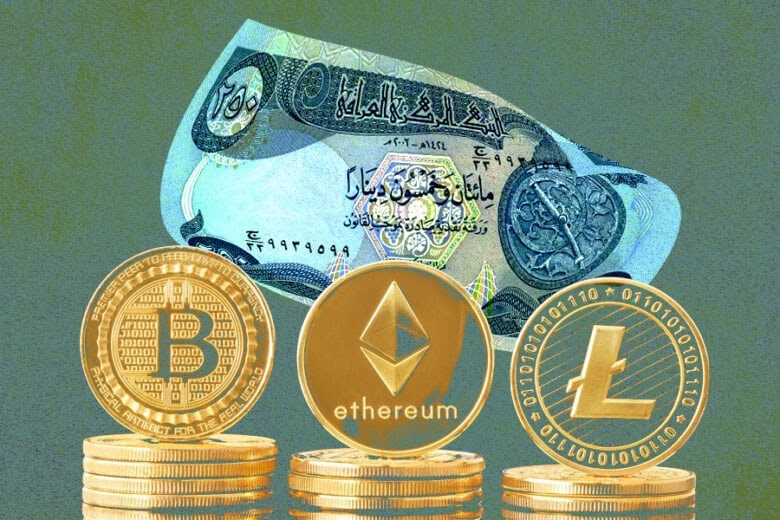
With mounting financial pressures and declining revenues, the possibility of the Iraqi government resorting to digital currency or adopting the digital dinar as one of the options to address the crisis of financing employee salaries during the coming months is once again being discussed, amid economic warnings that this option may not be a solution to the crisis as much as it opens the doors to new financial and monetary risks.
Economic expert Haider Al-Sheikh said that the current financial and economic conditions in Iraq, represented by declining revenues and economic contraction, do not provide a suitable environment for adopting digital currency as a means to address the salary crisis.
Sheikh explained, in a statement to “Baghdad Today” on Saturday (August 8, 2026), that the internal debt exceeded 105 trillion Iraqi dinars, considering that the size of the current financial pressures makes resorting to new monetary tools, including digital currency, an option that needs careful study before its adoption.
He pointed out that the Central Bank of Iraq is aware, in its estimation, that the adoption of digital currencies may weaken its ability to accurately control the volume of liquidity and money in circulation, while warning at the same time of the risks of cryptocurrencies as assets that do not have sufficient stability to be a permanent store of value.
He added that any ill-considered expansion in the use of digital currencies could affect the value of the Iraqi dinar against the dollar and foreign currencies, especially given the sensitivity of the local market to exchange rate movements and liquidity.
The Sheikh’s warnings were not limited to the monetary aspect, as he believed that adopting a digital currency or dinar could pose additional challenges to the central bank in terms of combating corruption, smuggling, money laundering, and financing illegal activities, making the transition to a digital monetary system in need of an integrated regulatory, legislative, and technical infrastructure.
The debate over digital currency comes at a time when Iraq is facing challenges related to fluctuating revenues and a heavy reliance on oil revenues to finance the budget, along with high levels of domestic debt.
While proponents of digital transformation view digital currencies as a tool that can contribute to modernizing the financial system, reducing transaction costs, and promoting financial inclusion, critics argue that their success first requires providing a banking, regulatory, and legislative infrastructure capable of managing their risks.
It should be noted that the digital currency issued by the central bank differs from decentralized cryptocurrencies. The digital dinar, if adopted in the future, will be part of the official monetary system and under the supervision of the monetary authority, which makes the assessment of its feasibility and risks related to its design and management mechanisms, and not simply to it being a digital currency.
US tightens sanctions on Iran's financial network
The US State Department imposed new sanctions on Thursday targeting a network of currency exchange houses, shell companies, banks, and financial facilitators accused of helping Iran move hundreds of millions of dollars through the international financial system.
Through these networks, Tehran accessed oil revenue and evaded sanctions designed to curb its destabilizing activities, laundering funds using front companies, the department said in a statement.
The sanctions form part of the Trump administration's maximum pressure campaign to cut off financial resources that Washington says Iran uses to threaten regional stability, support terrorism, and advance its military capabilities. The department warned that anyone assisting Tehran in evading sanctions would face "serious consequences."
US Treasury Secretary Scott Bessent pledged last week to pursue Iranian funds worldwide under the maximum pressure policy. The Treasury had earlier sanctioned a network linked to Iranian financier Babak Zanjani, accusing it of laundering revenue, concealing ownership, and moving funds through Iran and abroad, including transactions tied to wallets linked to the Islamic Revolutionary Guard Corps (IRGC).
US sanctions crypto exchanges over IRGC transactions

The United States on Friday sanctioned two digital-asset exchanges and a multinational company network accused of laundering billions of dollars, evading sanctions, and moving cryptocurrency for Iran’s Islamic Revolutionary Guard Corps (IRGC), the Treasury Department announced.
The Treasury targeted Shelbit Exchange, Iran-based Aban Tether, and businessman Siavash Kayvanpour and companies linked to him in Georgia, Poland, and the United Arab Emirates. It claimed IRGC-linked digital addresses sent more than $1 million in cryptocurrency to Shelbit, while more than $2 million flowed from Shelbit addresses to IRGC-linked wallets.
Addresses owned or controlled by Kayvanpour also allegedly transferred more than $2 million to Nobitex, Iran’s largest digital-asset exchange, which Washington sanctioned on June 2.
Shelbit supposedly serviced a large Persian-language online gambling network, with tens of millions of dollars in digital assets allegedly laundered through the exchange. Reuters reported on July 31 that at least $4 billion had moved through Shelbit in an Iran-linked network involving more than 2,000 gambling websites, Iran’s central bank, and parties linked to the IRGC. Shelbit denied knowingly facilitating money laundering, sanctions evasion, terrorist financing, or transactions for sanctioned or military entities.
Aban Tether was separately sanctioned for operating in Iran’s financial sector after processing millions of dollars in transactions involving previously designated Iranian exchanges, including Nobitex, Wallex, Bitpin, and Ramzinex.
On June 2, Treasury sanctioned Nobitex and three other exchanges, saying Nobitex processed more than half of all Iranian digital-asset inflows in 2025 and facilitated transactions linked to the IRGC, and on July 24, the Treasury’s Office of Foreign Assets Control (OFAC) targeted four people and nine entities tied to Iranian financier Babak Zanjani, including businesses involved in digital-asset trading and alleged sanctions evasion.
Treasury Secretary Scott Bessent stated that Friday’s action formed part of the Trump administration’s “Economic Fury” and maximum-pressure campaign, pledging to pursue Iranian financial networks operating through dollars, rials, or cryptocurrency. The State Department’s Rewards for Justice program is offering up to $15 million for information that helps disrupt the IRGC’s financial mechanisms.
On August 5, Treasury removed
Iranian Central Bank Governor: Sanctions on cryptocurrency trading platforms are "American propaganda"
In response to the US sanctions imposed on cryptocurrency trading platforms, the Governor of the Central Bank of Iran, Abdolnaser Hemmati, said: "The Americans constantly announce that they have shut down this credit institution or cryptocurrency trading platform, and these claims are propaganda material for the Americans."
These entities have absolutely no connection to us, and the funds we transferred are in our possession and we are currently using them.”
Hemmati added: "This year we have saved even more foreign currency than we did during the same period last year."
A US official: We will lift the embargo on Iran as soon as an agreement on Hormuz is announced.
A US official stated on Friday that the United States will lift sanctions on Iran once an agreement is announced between Muscat and Tehran regarding the Strait of Hormuz.
Reuters, citing the official, reported progress in talks between Oman and Iran concerning arrangements for the Strait of Hormuz, expressing optimism about reaching an agreement soon.
The official added that the United States will lift sanctions on Iranian ports as soon as an agreement is announced guaranteeing the resumption of unimpeded commercial shipping. He clarified that US actions will remain contingent on developments on the ground and will be determined based on events and Iran's adherence to its commitments under the agreement.
What happens to Iraq's armed factions after September 30?
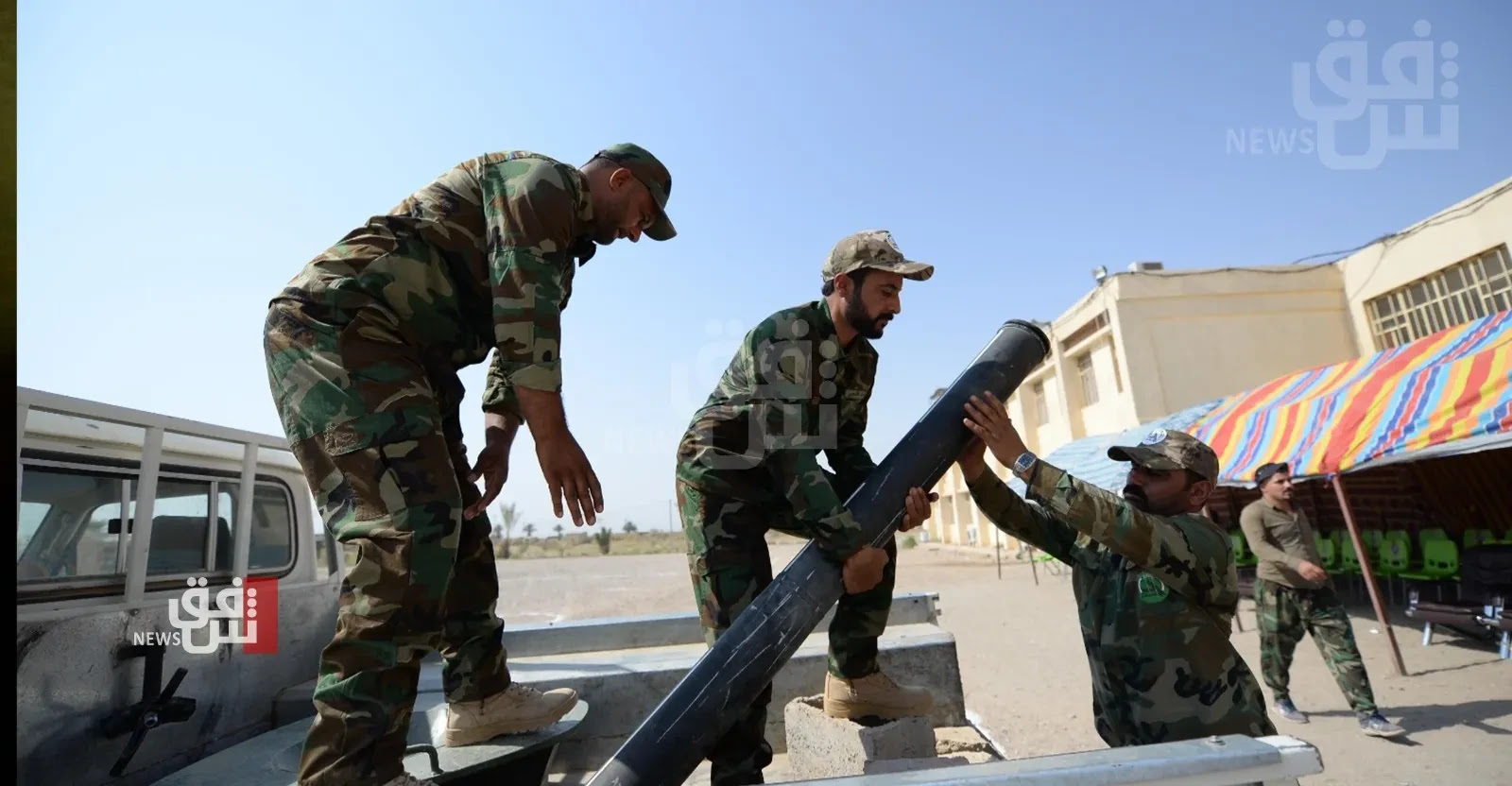
Any armed activity conducted outside state authority after September 30, 2026, will be prosecuted under Iraq's anti-terrorism law, the State Administration Coalition (SAC) stated on Wednesday, describing parties that threaten national security as outlaws who must be confronted.
The coalition, which brings together the country's main Shiite, Sunni and Kurdish blocs, linked the position to its commitment to placing all weapons under exclusive state control, and expressed support for restricting arms to the state under a ministerial program that parliament has approved and that is now in force as law.
The September 30 date corresponds to a government timetable to bring all arms under state control, a process that coincides with the scheduled end of the US-led Global Coalition mission in Iraq. Iranian-backed factions, many of them formally part of the Popular Mobilization Forces (PMF), an umbrella of predominantly Shiite armed groups, are the principal focus of that effort.
What The Anti-Terrorism Law Defines
Iraq's Counter-Terrorism Act, Law No. 13 of 2005, defines terrorism as any criminal act committed by an individual or an organized group that targets people, or official or unofficial institutions, and that damages public or private property with the aim of undermining security, stability or national unity, spreading terror among the population, or fomenting chaos for terrorist ends. The law was promulgated by the Presidency Council under the Law of Administration for the State of Iraq during the Transitional Period, the framework that governed the country at the time.
Article 2 enumerates the acts the law classifies as terrorism. They include violence or threats intended to spread terror or endanger lives; deliberate sabotage or seizure of public buildings, state institutions and public facilities; organizing or leading an armed terrorist group; and using violence to provoke sectarian strife or civil war by arming, inciting, or financing others.
The same article covers armed attacks on the army, police and security services; armed attacks on embassies, diplomatic premises and foreign or international organizations operating in Iraq; the use of explosive, incendiary, chemical, biological or radioactive materials to kill or to spread terror; and abduction or unlawful detention for political, sectarian, national, religious or material ends.
A separate provision classifies certain acts as crimes against state security, among them attempts to overthrow the constitutional system by force, armed confrontation with state forces, and instigating armed insurrection.
Penalties
Under Article 4, anyone who commits, as a primary perpetrator or accomplice, any of the terrorist acts set out in the law is subject to the death penalty. The same penalty applies to anyone who incites, plans, finances or enables such acts. Anyone who intentionally conceals a terrorist act or harbors a person who has committed one is subject to life imprisonment.
The law exempts from punishment anyone who alerts the authorities before a crime is discovered or during its planning, where the information helps arrest the perpetrators or prevent the act, and it provides a reduced, custodial sentence for those who cooperate afterward in a way that leads to other participants' arrest. Funds and materials linked to an offense are confiscated, and offenses under the law are classified as ordinary crimes of moral turpitude.
The government's timetable to place all weapons under state control runs to September 30, after which SAC said armed activity outside state authority will be handled under the anti-terrorism law
"The departure date will not change."
Iraq will be without foreign troops after September 30th: Three facts behind the withdrawal date

Abdul Samad Al-Zarkoushi, a member of the Coordination Framework, confirmed on Saturday (August 8, 2026) that the date for the withdrawal of multinational forces from Iraq after September 30 represents a final and irreversible decision, denying the existence of any movements or attempts to delay the implementation of the withdrawal decision.
Al-Zarkoushi told Baghdad Today that after September 30, Iraq will be "free of any military presence of multinational forces," whether American or from other nationalities.
He explained that the forces stationed at Harir base would also leave, stressing that this would mean the end of the foreign military presence in Iraq, including the American presence, after the specified date.
Three facts behind the withdrawal date
Al-Zarkoushi attributed the setting of September 30 as the date for the withdrawal of foreign forces to three main factors, foremost among them what he described as the Iraqi military and security capability to manage the security file and confront challenges without the need for a foreign military presence.
The second factor, according to Al-Zarkoushi, is that the decision to withdraw came with popular and parliamentary will, and after coordination between Baghdad and Washington, while the third factor is related to the lack of need for the continuation of the foreign military presence inside Iraqi territory.
He stressed that "the date is irreversible," denying any attempts to delay or reconsider the schedule set for the withdrawal of forces.
Iraqi security after withdrawal
He added that the foreign military presence is not beneficial to Iraq, noting that its withdrawal would, in his estimation, enhance security and stability in the country.
He added that the Iraqi security services have been directly managing the security file for years, including identifying targets, confronting them, and pursuing the remaining terrorist networks, considering that these capabilities make Iraq able to manage its security without any foreign military presence.
Talk of a timetable for the withdrawal of foreign forces comes in the context of a process initiated by Baghdad and Washington to reorganize the nature of the security and military relationship between the two countries, and to move from the tasks of the international coalition to bilateral security arrangements.
This comes in conjunction with repeated Iraqi assurances regarding the development of the capabilities of local security forces and the strengthening of their ability to confront terrorist threats.
September 30th is of particular importance in this context, as it is the date that Iraqi officials link to the end of the military presence of multinational forces, at a time when the issue of bases and sites housing foreign forces still enjoys broad political and security interest within Iraq.
Iraq’s al-Zaidi, Macron discuss bilateral ties, regional developments
Iraqi PM invites French president to visit Baghdad as Paris backs economic reforms and security cooperation
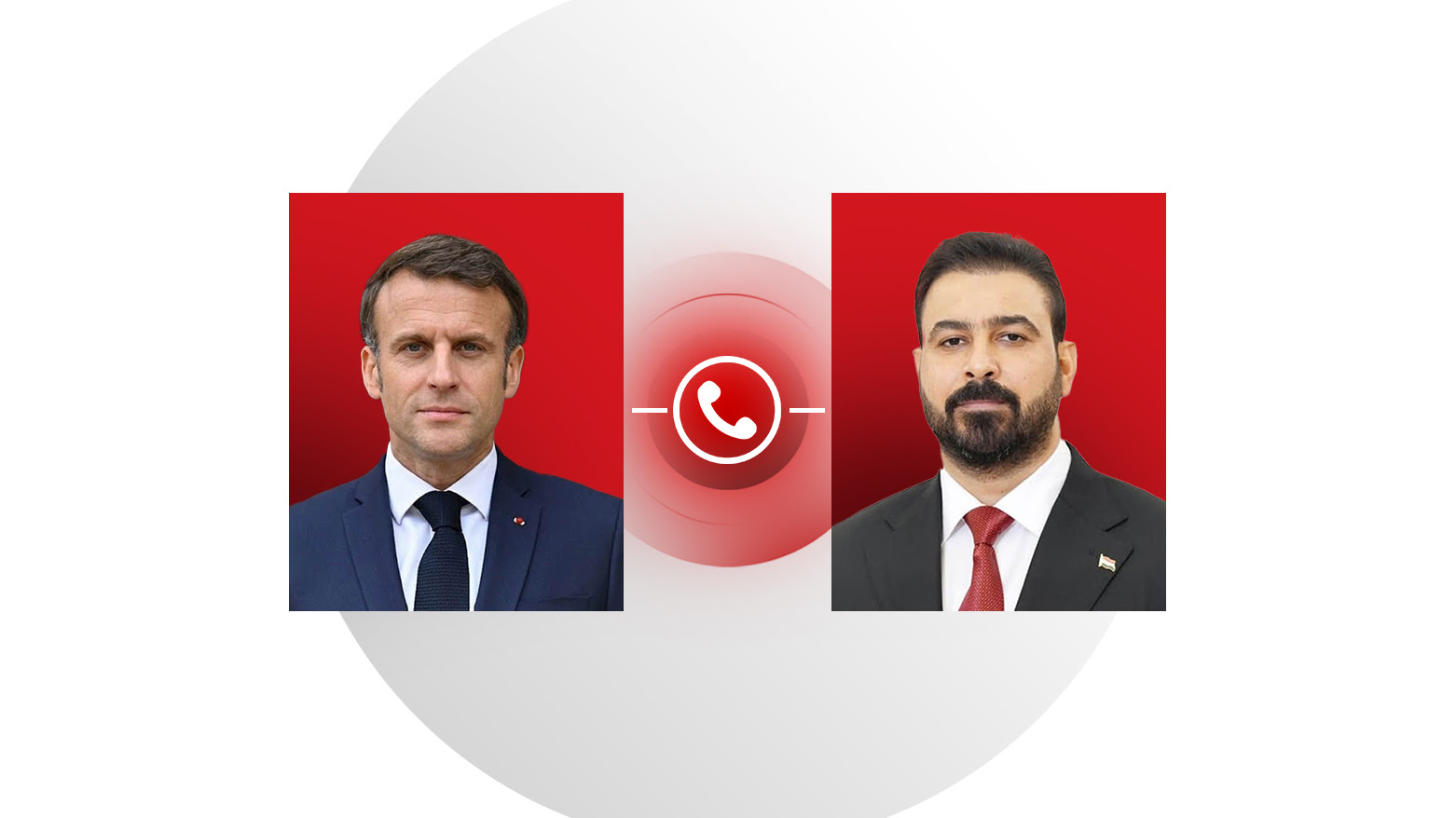
Iraqi Prime Minister Ali Falih al-Zaidi held a telephone call with French President Emmanuel Macron on Saturday to discuss strengthening bilateral relations, economic and investment cooperation, and regional developments, according to the Iraqi prime minister’s media office.
During the call, the two leaders discussed relations between Iraq and France and ways to expand cooperation across various fields, the statement said.
Economic and investment cooperation in Iraq was among the main topics, with the two sides discussing opportunities available to French companies in the country.
They also addressed regional developments and joint efforts to reduce tensions and promote security and stability.
Al-Zaidi emphasized the importance of Iraq-France relations and invited Macron to visit Iraq, while calling for joint efforts to establish a sustainable economic and investment partnership that serves the interests of both countries.
The Iraqi prime minister said his government would continue working to strengthen stability and transform Iraq into an influential economic and political power in the region, citing the country’s natural resources and strategic position connecting international trade routes.
Al-Zaidi also stressed Iraq’s commitment to maintaining balanced relations with neighboring countries and preventing Iraqi territory from being used to threaten their security.
He emphasized that Iraq’s security, sovereignty and national interests must be protected, while stressing the importance of relying on dialogue to address regional and international disputes.
Iraq sets September deadline for coalition withdrawal
During the call, al-Zaidi said September 30 would mark the final deadline for the withdrawal of coalition forces from Iraq.
He said the completion of the coalition’s mission would provide Iraq with greater space to focus on reconstruction and development, strengthen economic growth and improve living conditions for the Iraqi people.
France has been an important partner in Iraq’s efforts to combat terrorism and strengthen the capabilities of its security forces, while French companies have maintained interests in Iraq’s energy, infrastructure and other economic sectors.
Macron, for his part, expressed appreciation for steps taken by the Iraqi government and reaffirmed France’s support for Baghdad’s efforts to combat corruption and implement economic reforms.
The French president also pledged continued French support for Iraq in combating terrorism and strengthening the capabilities of the Iraqi armed forces, according to the statement.
Baghdad and Seoul discuss strengthening economic partnership: Preparatory meeting for the Iraqi-Korean Joint Committee

*External leadership and broad sectoral participation
*Discussing the draft minutes and unifying positions
Economic and scientific files on the table
The Ministry of Trade held a preparatory meeting for the Iraqi side members of the Iraqi-Korean Joint Committee for the tenth session, in preparation for the committee meetings scheduled for the coming period and to discuss ways to expand bilateral cooperation in the economic and scientific fields.
*The Ministry of Commerce assumes the role of rapporteur for the joint committees.
The aim is to strengthen the bilateral partnership and open up broader horizons for cooperation.
According to the ministry's statement, the meeting was chaired by "the Undersecretary of the Ministry of Foreign Affairs for Legal and Multilateral Affairs, Shorsh Khalid Saeed, in his capacity as Vice-Chairman of the Iraqi side of the committee, with the participation of representatives of relevant ministries and sectoral bodies, in addition to the Embassy of the Republic of Iraq in Seoul via video conferencing technology, and the presence of the Chairman of the Iraqi-Korean Business Council."
Riyadh Fakher Al-Hashemi, Director General of the Department of Foreign Economic Relations at the Ministry of Trade, explained that the meeting discussed the draft of the joint minutes and reviewed the observations of the Iraqi ministries and authorities regarding it, in preparation for adopting the final version in a way that ensures the unification of visions and positions in preparation for the convening of the joint committee’s work.
The meeting addressed a number of joint cooperation files between Baghdad and Seoul, including economic, trade, cultural and scientific aspects, in addition to capacity-building programs and exchange of experiences.
Al-Hashemi pointed out that the goal is to strengthen the bilateral partnership and open up broader horizons for cooperation between the Republic of Iraq and the Republic of Korea, in a way that serves the common interests of the two countries.
The Director General of Foreign Economic Relations explained that the Ministry of Trade, represented by the Department of Foreign Economic Relations, assumes the duties of the rapporteur for the joint economic committees between Iraq and other countries, within the framework of its role in coordinating and following up on the work of these committees in a way that enhances international economic cooperation and supports bilateral relations.
An Iranian bank freezes the accounts of the national oil company due to debts.
link

The Fars News Agency, affiliated with Iran's Revolutionary Guard, reported that the state-owned Industry and Mining Bank froze the accounts of the National Iranian Oil Company (NIOC) due to outstanding debts. The agency also noted that the US Treasury Department had previously imposed financial restrictions on NIOC as part of sanctions.
Fares added that this measure comes at a time when, under the budget law, the repayment of the national oil company’s debts has been postponed until the end of March 2027, and that the company has until the end of March to repay its debts.
Iranian President: Full details of the "Memorandum of Understanding" with Washington remain confidential

Iranian President Masoud Pezeshkian confirmed that some details of the arrangements related to the "Memorandum of Understanding" with America are still shrouded in secrecy, noting that the agreement was signed at the presidential level to give it more credibility and political guarantees.
In the third part of his televised address to the Iranian people, marking two years since his inauguration as president, Pezeshkian explained that an understanding had been reached on the general outlines and fundamental principles of the agreement. He stated that the agreement was initially slated to be signed by US Vice President J.D. Vance and Iranian Parliament Speaker Mohammad Bagher Ghalibaf, before US President Donald Trump decided to sign it himself. This prompted the Iranian side to also sign at the presidential level, according to the Iranian news agency IRNA.
Pezeshkian added that "the full details of these arrangements remain confidential, and what has been revealed so far represents only the publicly available part of the story."
Pezeshkian said that since the outbreak of the war, America and Israel have been trying to unite the Gulf states against Iran, stressing that Tehran is working to prevent this from happening, at a time when its relations with neighboring countries have improved significantly.
He stressed that “all Muslims are brothers, regardless of sectarian divisions,” emphasizing that Iranian efforts are focused on strengthening unity, internal cohesion, and good neighborly relations.
Regarding negotiations with European countries, the Iranian president explained that his country had reached an understanding with French President Emmanuel Macron, but the Europeans, according to him, did not have complete freedom to make the decision and needed the approval of another party before they ended up rejecting the understanding and pushing for the activation of the “snapback” mechanism. He stressed that the Iranian leadership was aware of these steps and authorized them, denying what he described as attempts to portray its position as an absolute rejection of negotiations.
Pezeshkian stressed that Iran did not start the war, noting that his country was engaged in dialogue when it broke out, and that the Iranian people stood by their country despite internal objections and complaints, which enabled Iran to persevere and strengthen its power.
He accused America of launching attacks on Iran from the territory of countries in the region, considering that targeting Iranian sites from bases located in Islamic and friendly countries represents a challenge, but he stressed that Tehran does not want to target those countries, but rather the sites from which attacks are launched against it.
He added that “Iran does not accept having its will imposed upon it or being subjected to coercion, but at the same time, it does not seek war, aggression against other countries, occupation of their territories, or expansion of its borders.”
Speaking about the Memorandum of Understanding with Washington, Pezeshkian said that the agreement contributed to ending the war in Lebanon and that it included arrangements for lifting the embargo, recovering Iranian funds and releasing a portion of them, along with easing and lifting some sanctions, in exchange for reopening the Strait of Hormuz according to specific arrangements and regulations. He emphasized that Iran strongly adheres to the memorandum, challenging its critics to show any clause, as he put it, in which Tehran relinquished its rights. He indicated that some measures were taken in response to the other party's failure to fulfill its commitments.
A last-minute decision: Al-Zaidi and Al-Amiri pull Iraq back from the brink of confrontation.
Baghdad is on the brink of an open confrontation; an unprecedented security mobilization, orders to raise readiness, military movements, and armed factions threatening to retaliate against Saudi Arabia... while the government, according to political and security sources, was preparing to take field measures against groups and parties suspected of involvement in attacks outside the borders.
But the last few hours have changed the scene.
According to multiple political and governmental sources, a crucial meeting took place at dawn on Friday between Prime Minister Ali Faleh al-Zaidi and Badr Organization leader Hadi al-Amiri , in an attempt to contain the explosion before it turns into an open internal or regional confrontation.
The equation that emerged from the meeting seemed clear: the government postpones its field operations, and the factions freeze any military response to Saudi Arabia, in exchange for giving Baghdad a chance to move diplomatically and obtain the rights of the victims away from the language of missiles and confrontation.
Sources revealed that the security forces had raised their readiness to high levels, canceling the leave of commanders and officers, and preparing to carry out what the sources described as “special operations” targeting armed groups and parties accused of carrying out attacks outside the borders.
In contrast, the factions had reached the stage of threatening retaliation, before deciding to temporarily freeze the escalation , presenting the government with a set of demands, including an official apology, compensation for victims and damages, and calming the Saudi media discourse towards them.
Simultaneously, the Security Media Cell officially announced raising the level of readiness and combat preparedness of the security and military forces, under the direction of the Commander-in-Chief of the Armed Forces, in an indication that reflected the extent of the tension that Baghdad experienced during those hours.
Then came al-Amiri's public appearance to reveal the outlines of the settlement.
Hours after meeting with al-Zaidi, al-Amiri called on the “Islamic Resistance” factions to hold off on a military response against Saudi Arabia and to prioritize Iraq’s higher interests , stressing that the rights of the dead and wounded could be obtained through diplomatic channels.
Herein lies the most prominent political message: the escalation that was approaching the point of confrontation has been withdrawn from the field to the negotiating table.
This lull comes at a highly sensitive political moment, especially after the meeting of the State Administration Coalition, which took a more stringent stance on weapons outside state institutions, stressing that any armed activity outside the authority of the state after September 30, 2026 , will be dealt with according to the law, including the anti-terrorism law.
Islamic resistance factions decide to postpone their response to the American-Saudi aggression.
In a statement, the Resistance said, "In response to the call of Abu Hassan al-Amiri, and in deference to the honorable stances of some honorable political leaders, it has been decided to postpone the response that was scheduled for today, the 23rd of Safar." The statement
added, "The pure blood of the martyrs has never been, and will never be, a commodity in the market of political calculations. Let the American enemy and its allies in the region know that the blood of our martyrs and wounded is the fuel of our steadfastness, and that sovereignty will not be restored with timid statements, but rather with the fists of the loyal who do not compromise on the sanctity of the land or the dignity of the martyrs."
Hadi al-Amiri, head of the Badr Organization, had called on the leaders and members of the Islamic Resistance in Iraq to postpone the military response to the American-Saudi aggression that recently targeted Iraqi territory.
Houthi missiles and drones hit Saudi-backed forces in Yemen
Yemen’s Houthis (Ansarallah) on Friday struck Saudi-backed forces at Sahn Al-Jinn camp in Marib with a “large number” of missiles and drones, targeting troop concentrations, weapons depots, vehicles, and military equipment.
The group accused Saudi Arabia of reinforcing forces in Yemen and warned that further buildups would face an “immediate and severe” response, reiterating its “siege for siege” policy and threat to strike Saudi-linked forces wherever they are deployed.
The statement gave no casualty or damage figures
Separately, Yemen’s government-aligned naval forces said they foiled a Houthi attempt to strike an oil tanker in the Red Sea with an explosives-laden boat.
On August 5, Houthi military spokesperson Yahya Saree announced an attack on a Saudi oil tanker in the Red Sea, while the group earlier claimed a strike on a “sensitive target” at Najran airport in southern Saudi Arabia. The Houthis have threatened to expand attacks on Saudi-linked shipping in the northern Red Sea as part of their siege for siege campaign against Riyadh.
Al-Amiri and Popular Mobilization Forces leaders discuss field developments and readiness levels
* Al-Amiri receives a number of Popular Mobilization Forces leaders at his office in Baghdad.
* The meeting reviewed the latest developments on the ground.
* Requirements of the current stage and ways to enhance capabilities.
The Secretary-General of the Badr Organization, Hadi al-Amiri, discussed with a number of Popular Mobilization Forces leaders on Saturday strengthening coordination between the concerned parties, reviewing the reality of field performance, and raising the level of efficiency and readiness.
The media office of the Secretary-General of the Badr Organization stated in a statement that "the importance of maintaining a high level of readiness, enhancing coordination between the concerned parties, reviewing the reality of field performance, and raising the level of efficiency and preparedness was emphasized."
On Friday, Al-Amiri called on the leaders of the "Islamic Resistance in Iraq" to postpone the military response to the recent US-Saudi attack on Iraqi territory.
Al-Amiri promised, saying, "We will pursue the rights of all martyrs and wounded through diplomatic channels, and we will achieve all of that."

No comments:
Post a Comment