Monday, October 12, 2026

Did the Iraqi Central Bank Really Announce Freezing the Parallel Market


Important Announcement

In compliance with the directives of the Central Bank of Iraq, we announce the suspension of the publication of US dollar exchange rates in the parallel market effective immediately, until the issuance of new official directives in this regard.

The video for this My FX Buddies Blogpost is below here:


From Base to Bank: Between SWIFT and the Federal Reserve of New York... The Hidden Influence to Subjugate Post-Withdrawal Iraq

link

The moment the news broke about "Iraq being cut off from the SWIFT system," it seemed at first glance like a banking story concerning an electronic network used by banks to send financial transfer messages. However, behind this cold phrase lies a much larger story—the story of a country from which American forces withdrew militarily, while the United States did not withdraw to the same extent from certain key aspects of the financial system upon which the Iraqi economy is based.
 
Military withdrawal does not necessarily mean the end of influence. Sometimes, when soldiers leave the base, a state's influence remains in the banking system, the dollar, foreign accounts, and financial correspondent networks. This is precisely what makes the SWIFT news worthy of consideration from a perspective that transcends purely banking terminology. However, a crucial distinction must be made: Iraq has not been completely severed from SWIFT as a state, according to available data. What is happening is related to restrictions, sanctions, and pressures on specific Iraqi banks and their ability to access the international financial system and foreign correspondents. In fact, the Central Bank of Iraq announced last July that it had reached an agreement to reinstate seven restricted Iraqi banks to non-dollar-denominated foreign correspondent banking channels after they fulfilled compliance and governance requirements.
 
So why is the news about "Iraq being cut off from Swift" appearing at this time?
 
Here, politics becomes clearer than the news itself. Iraq ended the US military presence in September 2026, but its oil revenues are still tied to a highly sensitive external financial system. Recent reports reveal that Iraqi oil revenues, which constitute about 90% of the state budget, pass through the Central Bank of Iraq's account at the Federal Reserve in New York. This gives Washington financial leverage even after the end of the US military mission. This means that the real question is not: Has SWIFT been closed to Iraq? Rather: To what extent can Iraq move within the global financial system without running into doors whose keys are held by the United States and its allies?
 
All of this represents a new form of influence. In ancient wars, a state could identify its adversary by the color of its military uniform. In modern economic warfare, however, pressure can come from a bank screen, a correspondent account, a sanctions list, or a transfer that stalls midway. The most dangerous aspect is that sanctions need not be comprehensive to be effective. It is enough to exclude certain banks, impose dollar restrictions on them, or raise compliance requirements to a level that makes dealing with them risky for foreign banks, for the circle of influence to begin widening.
 
This is not a theoretical assumption. US sanctions records already include Iraqi banks subject to financial restrictions, some even bearing Iraqi SWIFT/BIC codes. This demonstrates that the issue concerns financial institutions and their access to the international system, rather than a complete isolation of Iraq from the SWIFT network. Money is not merely a medium of exchange; it's a map revealing the relationships between them: Who transfers the funds? Where do they go? Who is the true beneficiary? Which bank does the transfer pass through? Which foreign entity accepts dealings with them? All these questions have become part of international security today, which is why controlling the flow of money can sometimes be more effective than controlling territory.
 
Iraq lies at the heart of this equation. It is a major oil-producing nation, and its geographic location places it at the crossroads of Iran, the Gulf states, Turkey, and the United States. Furthermore, its economic relations with the outside world depend on the dollar, correspondent banking relationships, and international financial networks. In response, Baghdad has announced steps to reintegrate its restricted banks into the global financial system. This reveals that the struggle is not merely about punishment, but also about restructuring the Iraqi banking sector according to international compliance and governance standards. Hence, the withdrawal of US forces from Iraq becomes even more intriguing.
 
If the military presence has ended, the question that looms in the background is: Has influence shifted from a military base to a financial system? The reality is that economic influence did not disappear simply with the end of the military presence. This makes the current moment extremely sensitive. Sovereignty in the 21st century no longer means merely having political decisions within the state's borders; it also means that the state possesses the genuine ability to manage its finances, protect its banking system, and ensure its trade is open to the world without its economic tools becoming external instruments to be used when needed.
 
Therefore, today’s “SWIFT” news, even in its current form which needs scrutiny, reveals something more important than the news itself, which is that the battle over Iraq may shift from… Who owns the weapons? to… Who owns the keys to the money?, so that Iraqi sovereignty will be facing a quieter and more complex test, as the military war may end with the departure of the last soldier, but the influence of the war remains for a long time deep in the bank accounts.

In a world where sometimes the sounds of sirens go unheard, a single financial transfer being halted can have a greater impact on changing a nation's behavior than a hundred tanks on its borders.


Parliamentarian: No session today to vote on vacant ministerial portfolios

link

A responsible parliamentary source confirmed that there will be no session today, Monday, for the purpose of voting on the government cabinet .

The source told Asharq Al-Awsat newspaper, as reported by Al-Sa’a Network, that “the government has not yet submitted an official request to the parliament’s presidency to schedule a session to vote on the vacant ministerial portfolios .”

He continued: "This means that disagreements still exist, whether regarding rotating some positions or creating others, as well as the possibility of overriding the American veto regarding some candidates for government positions, especially deputy prime ministers .


Iraqi lawmaker challenges dollar hike in federal court
link

Iraqi lawmaker challenges dollar hike in federal court

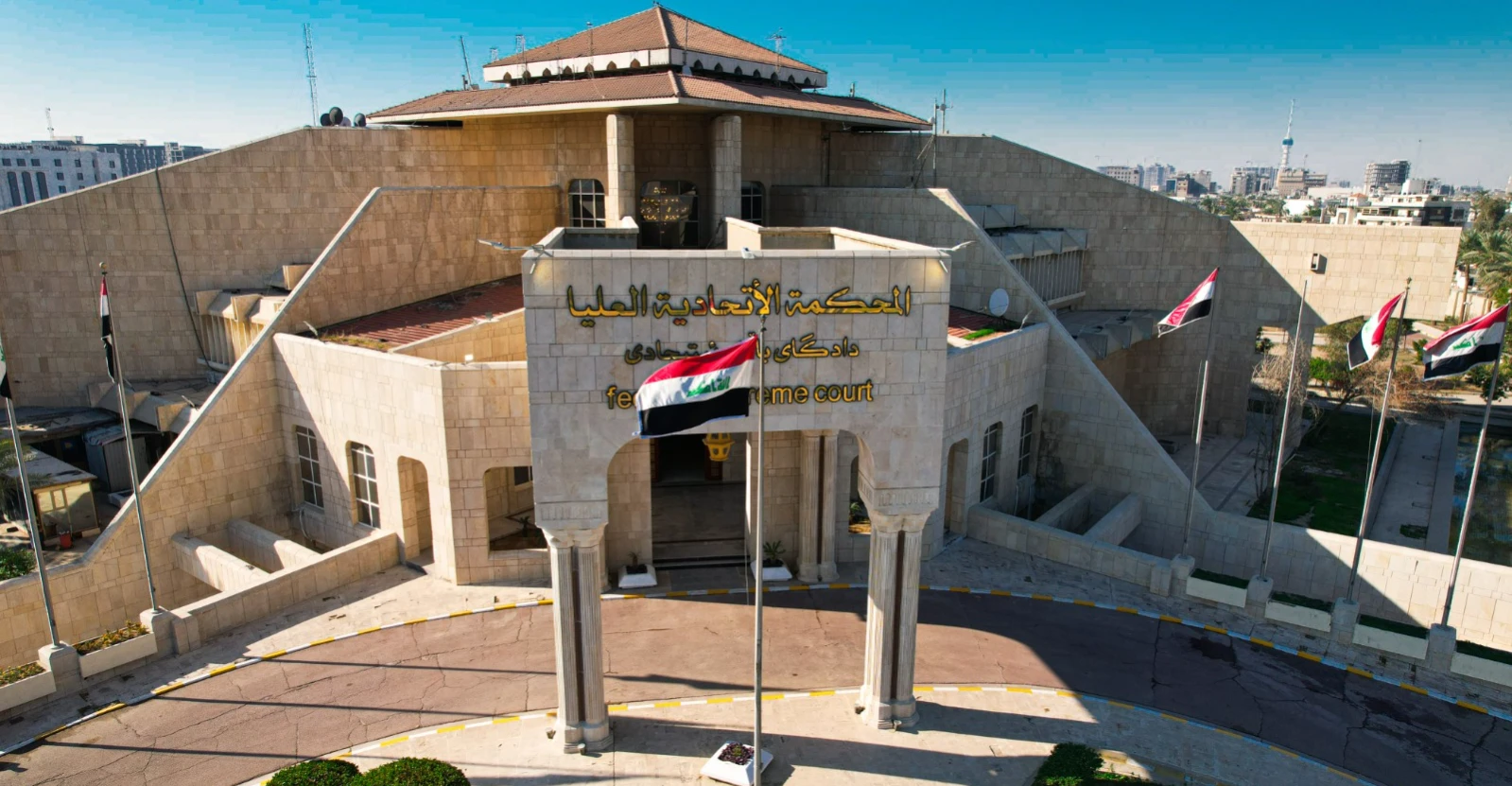
Hoqooq (Rights) parliamentary bloc leader Su’ud Al-Saadi filed a formal challenge with Iraq’s Federal Supreme Court on Sunday against the government’s decision to raise the US dollar exchange rate.

Al-Saadi told Shafaq News that the appeal targets Cabinet Resolution No. 544, which approved the exchange-rate adjustment. He said the court had accepted the filing and would set a hearing date in the coming days.

The Cabinet approved the measure on October 6 following an emergency recommendation from the finance minister and Central Bank of Iraq (CBI) governor. Under the new structure, the dollar is priced at 1,500 dinars for purchases from the Finance Ministry, 1,510 for sales to banks and 1,520 for the public.

The change raised the end-user rate by 20,000 dinars per $100 from the previous 132,000 dinars. The parallel-market rate had climbed to around 165,000 dinars per $100 ahead of the decision amid speculation over a possible devaluation.

Al-Saadi’s court challenge follows his bloc’s earlier call for Iraqis affected by the devaluation to contest the decision and for parliament to hold a special session on the rate.

On October 8, Prime Minister Ali Al-Zaidi told parliament that the government had faced three alternatives: compulsory savings, paying salaries every 45 days or taking on additional debt. He said public debt exceeded 208 trillion dinars (about $136.8B) and that the government needed around 10 trillion dinars (about $6.58B) each month.

Parliament Speaker Haibet Al-Halbousi said the exchange-rate decision would not be reversed and had the backing of political bloc leaders.


Here's  How to Support My FX Buddies


Fr$$ to You:    Hit the thumbs up, subscribe, click the share button
Or consider a Youtube 
Thanks


💃Hype the Video!!! 

Support My FX Buddies  

 BuyMeACoffee                              CashApp:$tishwash

https://paypal.me/tishwash


Big or Small I appreciate it all  Thank you in advance for your generosity! 🙏


$2.99


The money exchange union condemns the setting of the dollar exchange rate at 155,000 dinars and threatens a general strike.
 

link

5359677431301743162_119.jpg


The General Syndicate of Exchange and Mediation in Iraq condemned on Sunday the video circulating and attributed to the Ministry of Interior regarding the buying and selling prices of the dollar in exchange companies, demanding that the ministry issue an official clarification regarding setting the dollar exchange rate in the parallel market at 155,000 dinars per 100 dollars, according to what was stated in the statement.

The union said in a statement seen by “ Al-Jarida ” that exchange companies of categories (A and B) do not receive cash dollars from the Central Bank of Iraq inside their premises, explaining that the delivery of dollars allocated to travelers is done through approved outlets at airports, in accordance with the applicable regulations and instructions.

She added that Class (C) exchange and brokerage companies have not received any cash dollars from the Central Bank since July 1, 2024, noting that their activity in the local market depends on buying and selling currencies according to market mechanisms, and not on obtaining dollars at the official rate from the Central Bank.

The union stressed that trading prices in the parallel market are subject to the supply and demand mechanism, questioning the possibility of obligating exchange companies to buy dollars from citizens at a price of 1545 dinars and sell them at a price of 1550 dinars per dollar, at a time when the market price, according to the statement, is 1650 dinars per dollar.

She warned that setting prices without clarifying the legal and regulatory basis could lead to market confusion and expose licensed exchange companies to pressure and complaints, calling on the Ministry of Interior to clarify the legal basis for the traded price and to differentiate between the dollar allocated for official purposes and the dollar traded in the local market outside of official mechanisms.

The union stressed its respect for the Ministry of Interior and the security services, and its appreciation for their efforts in maintaining security and enforcing the law, but it rejected, according to the statement, any measures that might affect the rights of licensed exchange companies or expose them to accountability outside the legal frameworks and instructions issued by the Central Bank and the competent authorities.

In a notable escalation, the union threatened to call for protest measures, including a general strike and a work stoppage in exchange and brokerage companies, if the pressure on companies continues without a clear legal basis, stressing that it retains its right to take the necessary judicial and administrative measures.

The union concluded its statement by emphasizing that licensed exchange companies are part of the Iraqi financial and economic system, calling for addressing imbalances in the exchange market through realistic solutions and institutional coordination, instead of holding companies responsible for price differences resulting from supply and demand conditions.


No comments:

Post a Comment