$100 billion in Iraqi savings revealed at the US Federal Reserve


Al-Anzi explained in a statement to Al-Furat News Agency that “Iraq has been objected to several times regarding not relying on high prices in budgets, and the necessity of not exceeding $65 per barrel in order to be able to save,” noting that “oil prices have changed a lot, but the competent authorities did not think about the future and did not adopt the proposed prices.”
He added that “Iraq is able to demand additional amounts from its savings held by the US Federal Reserve, as Iraq has savings in the US Federal Reserve exceeding $100 billion, which were transferred to JPMorgan,” explaining that “these funds belong to Iraq after 2003 and have accumulated, and the only beneficiary of them is JPMorgan, which gives simple interest rates, and it is not known whether they reach Iraq or not, and they have not been addressed, despite the amounts being doubled.”
US, in control of oil dollars, heaps pressure on Iraq over Iranian influence
Washington has threatened senior Iraqi politicians with sanctions targeting the Iraqi state — including potentially its critical supply of oil revenue sourced via the Federal Reserve Bank of New York — should Iran-backed armed groups be included in the next government, four sources told Reuters.
The warning is the starkest example yet of US President Donald Trump’s campaign to curb Iran-linked groups’ influence in Iraq, which has long walked a tightrope between its two closest allies, Washington and Tehran.
The US warning was delivered repeatedly over the past two months by the US Charges d’Affaires in Baghdad, Joshua Harris, in conversations with Iraqi officials and influential Shi’ite leaders, including some heads of Iran-linked groups via intermediaries, according to three Iraqi officials and one source familiar with the matter who spoke to Reuters for this story.
Harris and the embassy did not respond to requests for comment. The sources requested anonymity to discuss private discussions.
Since taking office a year ago, Trump has acted to weaken the Iranian government, including via its neighbor Iraq.
Iran views Iraq as vital for keeping its economy afloat amid sanctions and long used Baghdad’s banking system to skirt the restrictions, US and Iraqi officials have said. Successive US administrations have sought to choke that dollar stream, placingsanctions on more than a dozen Iraqi banks in recent years in an effort to do so.
But Washington has never curtailed the flow of dollars from the oil revenues of Iraq, a top OPEC producer, sent via the Federal Reserve Bank of New York to the Central Bank of Iraq.
The US has had de facto control over Iraq’s oil revenue since it invaded the country in 2003.
Iraqi Prime Minister Mohammed Shia al-Sudani’s office, the Central Bank of Iraq and Iran’s mission at the United Nations did not respond to requests for comment.
“The United States supports Iraqi sovereignty, and the sovereignty of every country in the region. That leaves absolutely no role for Iran-backed militias that pursue malign interests, cause sectarian division, and spread terrorism across the region,” a US State Department spokesperson told Reuters, in response to a request for comment.
The spokesperson did not answer Reuters questions about the sanction threats.
Trump, who bombed Iran’s nuclear facilities in June, threatened to again intervene militarily in the country during protests last week.
No armed groups in new government
Among the senior politicians to whom Harris’ message was passed were Prime Minister al-Sudani, Shia politicians Ammar Hakim and Hadi Al Ameri, and Kurdish leader Masrour Barzani, three of the sources said.
The conversations with Harris started after Iraq held elections in November in which al-Sudani’s political bloc won the single-largest bloc of seats but in which Iran-backed militias also made gains, the sources said.
The message centered on 58 members of parliament views by the US views as linked to Iran, all the sources said.
“The American line was basically that they would suspend engagement with the new government should any of those 58 MPs be represented in cabinet,” one of the Iraqi officials said. The formation of a new cabinet could still be months away due to wrangling to build a majority.
When asked to elaborate “they said it meant they wouldn’t deal with that government and would suspend dollar transfers,” the official said.
The US has had de facto control over oil revenue dollars from Iraq, a top OPEC producer, since it invaded the country in 2003.
Iran has long supported an array of armed factions in Iraq.
In recent years, several have entered the political arena, standing for election and winning seats as they seek a slice of Iraq’s oil wealth.
Financial Times: Washington threatened to cut off dollar supplies to Iraq if Baghdad refused to replace Adnan Faihan

The Financial Times reported on Friday that Washington is pressuring senior Iraqi politicians to form a government that is free from armed factions.
A report in the newspaper, translated by the Mail, stated that "in tense meetings with senior Iraqi political leaders tasked with forming the next government, US officials have been pressing the Iraqis in recent weeks to present a 'credible' plan for the rapid disarmament of the factions ."
The newspaper added that they "threatened to take punitive measures if this did not happen, according to five people familiar with the talks, three of whom said the threats included economic measures such as limiting the flow of cash dollars allocated for Iraqi oil sales ."
She explained that "tensions have escalated with Washington following the election of Adnan Faihan, a former member of Asaib Ahl al-Haq, as first deputy speaker of parliament last month."
According to the newspaper, one of the people familiar with the talks said, "The US embassy was furious and said this was hostile behavior and an act of defiance, and they demanded his replacement."
Renad Mansour, director of the Iraq Initiative at Chatham House, told the newspaper, "Iraq is further from America's attention than it has been for decades, yet the Trump administration has considerable influence, both directly and indirectly, in shaping the government ."
Victoria Taylor, who held a senior position at the State Department until last May, said: "The Trump administration's policy toward Iraq is more directed by Iran than by its relationship with Iraq ."
Informed sources reported that since Fayhan’s election, US officials have suspended all meetings with their allies who voted for him and issued a list of MPs they do not want in the government.
The newspaper noted that "Washington threatened to cut off dollar supplies to Iraq if Baghdad refused, according to three sources familiar with the negotiations, which one of them described as 'the nuclear option '."
Where does the money go?
Baghdad Today investigates: Iraq's budget has no deficit... Revealing the "figures" that citizens are not meant to see - Urgent
From the moment the new tax and fee decisions on seaports were announced, a wide wave of questions erupted among citizens and economic experts: Is the real goal to maximize non-oil revenues, or to strangle Iraq’s only seaport and push traders towards alternative ports in neighboring countries?
Behind this question lies a simpler and more sensitive hypothesis: Before talking about new taxes, where does the money collected daily from ports, border crossings, communications, electricity and other sectors actually go, money that is supposed to compensate for part of the state’s dependence on oil?
The figures that the citizen does not see in the budget
The Ministry of Finance’s data for 2024 indicates that Iraq’s total revenues during the first nine months amounted to about 114.3 trillion dinars, of which about 101.9 trillion dinars were from oil, compared to only about 12.4 trillion dinars in non-oil revenues, i.e., between 10-11% of total revenues, while the share of oil remained at around 89%.
If this path is approximated on the basis of a full year, the actual annual non-oil revenues are calculated to be around 16-17 trillion dinars, which is much less than what the budget tables assumed for the non-oil revenue sector, where the estimates and ambitions were much higher than reality, before the figures proved that the actual collection fell far short of the plan.
In contrast, the three-year budget projects annual spending exceeding 210 trillion dinars, with a planned deficit of around 63-64 trillion dinars. This means that any significant improvement in non-oil revenues could transform the fiscal deficit within a few years, if it were to shift from an uncontrollable "structural" deficit to one that could be managed through reforms rather than continuous borrowing.
The port is not zero... a revenue map within the maritime system
Iraqi ports are not merely gateways for containers and goods; they are a complex system involving dozens of entities, companies, and fees. On paper, this system is supposed to be a significant source of non-oil revenue, but reality raises more questions than it answers.
Direct and indirect revenues associated with the port include – but are not limited to – the following items:
Revenue of the water transport company.
Revenue of the land transport company related to the transport of containers and goods to and from the port.
Revenue of the container cleaning company.
Revenue of the Standardization, Quality Control, and Laboratory Testing Authority.
Revenue of dock handling companies.
Revenue from container storage fees at the docks, which many traders describe as "exorbitant."
Revenue from half of the fines imposed on shipping companies.
Revenue from berthing and dock usage fees.
Revenue of the free zone.
Revenue from vehicle entry permits to the port. Revenue from
customs declarations.
Revenue from weighbridges (load scales).
Revenue from sonar and radiation scanning equipment.
Revenue from security and technical inspection of goods.
Revenue from electricity consumed by refrigerated trucks within the port.
Revenue from companies managing truck entry and the preemptive yard.
Revenue from handling and exporting special petroleum products.
Most importantly, the potential revenues from activating the international TIR system, which could make Iraq a regional transport hub and increase the volume of transit containers and related revenues to several times the current situation.
With this amount of fees and revenues, the question becomes legitimate: Why does the citizen feel that the state is "poor" whenever it needs to cover a deficit, while there is a sea of money within the port system alone, and no one knows where its entire flow is going?
From "maximizing revenues" to maximizing the burdens on the citizen
The government's rhetoric often focuses on the phrase "maximizing non-oil revenues," but implementation usually begins with the citizen's pocket and ends with the politically easier sectors, such as:
-New taxes on imports.
-Additional fees at ports and harbors.
Taxes and fees on phone and internet cards.
-Various fees apply to transactions, permits, and official records.
The paradox is that the question is not posed as follows: Has the state really exhausted all possibilities of collecting revenues from outlets, ports, communications, electricity, state property, and internal taxes, before turning to new taxes that burden imports, trade, and market activity?
In the ports sector alone, complaints from traders and business owners are repeated, stating that:
Customs and tax fees are rising without any clear justification for the service or the time required for the transaction.
Storage, handling and fines costs make the port less competitive compared to neighboring ports.
-Part of what is paid does not actually reach the state treasury, but is leaked through intermediaries and unofficial fees.
With the new taxes being presented as a purely "financial" step, many are wondering: Are we facing a genuine attempt to build a sustainable non-oil revenue base, or are we facing hasty decisions that will drive investors and traders away from the Iraqi port and make them look for alternative outlets?
Is Iraq's only sea outlet being choked off?
Part of the popular and political debate revolves around a sensitive hypothesis: Could the current fees and taxes turn the Iraqi port from an "opportunity" into a "burden," effectively serving competing ports in neighboring countries?
A trader who sees the cost of a container at an Iraqi port is higher than at a nearby port will not question the state's economic philosophy, but will simply choose the cheapest and safest route. Over time, the high fees become an incentive to avoid the national port, rather than a means of building sustainable revenue.
In this context, the following questions become urgent:
Has the impact of the new taxes on the volume of goods entering through the port been assessed over one or two years?
Is there a comparative study that shows how many containers were diverted to other ports due to the high costs at the Iraqi port?
-Were the contracts of the companies operating within the port – transportation, handling, storage, organization – reviewed before imposing any additional costs on the trader and the consumer?
If the answers are vague or absent, it means that the financial decision is being made in isolation from an integrated vision of maritime transport and foreign trade, which opens the door wide to doubts and accusations.
The bigger picture: The port is a model for the rest of the non-oil sectors.
The port is just one part of a larger picture. The same questions could be asked today about other sectors that are supposed to be revenue streams, not burdens on the budget:
Communications and Internet: a market worth billions of dollars annually, but the citizen does not know exactly how much the state collects in taxes, fees and privileges, and how much is lost due to the lack of transparency or weak negotiation with companies.
Electricity and billing: Millions of subscribers, government and private billing, technical losses and thefts, and a blurry final picture about: How much actually enters the state treasury as a result of all this?
Customs and land ports: Frequent complaints about customs evasion, fictitious invoices, and a large discrepancy between what is supposed to be collected according to the volume of imports, and what is actually recorded in official reports.
State property and real estate taxes: lands, properties and buildings that are rented or exploited in unclear ways, with the absence of a comprehensive survey that shows the amount that the state could gain if it only reorganized this file.
In all these sectors, one idea stands out: there are revenues already on the table, and what is needed is not the invention of new taxes, but rather a state that knows how to collect what is due to it and closes the loopholes for leakage and corruption.
How much could non-oil revenues add to the budget if they were seriously collected?
If the discussion moves from generalities to approximate figures, a rough picture can be drawn as follows:
Available figures indicate that actual non-oil revenues currently hover around 16-17 trillion dinars annually (taxes, fees, customs, various official levies).
Previous parliamentary and international estimates spoke of losses in ports and customs alone amounting to approximately USD 10-12 billion annually, or between 13-16 trillion dinars, due to evasion, corruption and partisan control over the crossings.
Accordingly, a realistic – not ideal – scenario for regulating ports and collecting revenues could push annual non-oil revenues to a level of 25-30 trillion dinars within a few years, meaning an increase of at least 10-15 trillion dinars over what is currently being collected, even before developing revenues from:
Telecommunications and internet companies.
-The civil aviation sector, airports and navigation fees.
-Municipal fees, electricity, water and waste.
-Direct and indirect taxes on income, profits and real estate.
Conversely, one economist points out that allowances and salaries for special grades consume approximately 2 trillion dinars annually, while the cost of basic salaries within these grades does not exceed 400 billion dinars. The remaining 1.6 trillion dinars goes towards allowances, privileges, and associated expenses. This means that eliminating the allowances and maintaining basic salaries could save the state approximately 1.6 trillion dinars annually from a single, clearly defined area of expenditure.
In practice, the equation can be simplified as follows:
Today approximately:
-Oil: More than 100 trillion dinars annually.
Non-oil: approximately 16-17 trillion dinars.
Under reasonable conditions within 3-5 years:
Non-oil revenues could approach 25-30 trillion dinars, an estimated increase of between 10-15 trillion dinars annually.
-With the addition of savings from the cancellation of special grade allocations (about 1.6 trillion dinars), the total potential improvement in the budget situation rises to about 16.6 - 21.6 trillion dinars annually between an increase in revenues and a reduction in spending.
This means that adding between 16.6 and 21.6 trillion dinars annually to the budget is not a numerical dream, but a realistic goal if the system of evasion and corruption in the ports and taxes is dismantled, the collection system is modernized and linked electronically, and unjustified privileges at the top of the spending pyramid are eliminated.
With the current fiscal deficit hovering around 63-64 trillion dinars annually, improving the budget by this amount (between 16.6-21.6 trillion dinars) could:
The theoretical deficit is reduced to approximately between 41 and 47 trillion dinars annually.
-It reduces the state’s need for internal and external borrowing.
-It creates a wider margin for financing investments instead of burning most of the budget on salaries, subsidies and high privileges.
What do we need to do to make the deficit disappear instead of remaining chronic?
Controlling the outlets and abolishing special grade allocations will boost the budget by 16.6-21.6 trillion dinars annually, but eliminating the deficit, which currently hovers around 63-64 trillion dinars, requires a broader package of three parallel fronts, without transferring the cost to the poor classes:
Further maximization of non-oil revenues: If reform is limited to the ports, non-oil revenues can be raised to 25-30 trillion dinars. However, with serious reform in the telecommunications sector, genuine taxes on large profits, and fees on luxury real estate and non-essential goods, this figure could theoretically be gradually pushed towards 35-40 trillion dinars, representing an additional 10 trillion dinars on top of the initial increase, without affecting people's daily livelihoods.
Reducing waste in operational spending and fictitious projects.
Reviewing the top allocations file alone is not enough. If unnecessary operational spending (travel, committees, rent for unused government buildings, inflated service contracts, stalled projects) is gradually reduced by 10-15% of total operational spending, at least 10-15 trillion dinars can be freed up annually, without touching the salaries of low-income employees or social safety nets. The
energy and gas sector must be reformed instead of being literally burned off.
Iraq still imports a portion of its fuel and energy needs, while flaring billions of cubic meters of associated gas annually. Converting this gas into electricity and domestic fuel production, reducing imports, and establishing genuine partnerships in the petrochemical sector could collectively save and add between 5 and 7 trillion dinars annually, whether in the form of additional revenue or reduced import costs.
If this package is combined with the previously discussed increase in non-oil revenues and the adjustment of special grade allocations, we will be faced with an overall improvement in the budget situation that could theoretically reach the following limits:
16.6 – 21.6 trillion dinars (outlets + special grades)
Plus 10 trillion dinars (further maximization of non-oil revenues)
Plus 10-15 trillion dinars (reducing waste in operational spending and fictitious projects)
Plus 5-7 trillion dinars (Energy and Gas Sector Reform)
This total ranges approximately between 41.6 and 53.6 trillion dinars annually, a figure very close to the current total deficit of 63-64 trillion dinars. This leaves a theoretical deficit of 10-20 trillion dinars that can be addressed with improved oil prices or a reprioritization of investment spending, instead of the "black" deficit that consumes every new year.
What needs to happen before any new tax is implemented?
From a regulatory and media perspective, the following questions should be posed to the government before proceeding with taxes and fees that burden the port and sensitive sectors:
-A detailed annual public statement of non-oil revenues.
How much revenue is collected from ports, border crossings, communications, electricity, taxes, and state property, how is it spent, and what is the size of the deficit and surplus?
-Clarifying the actual impact of the new taxes on trade and final costs for the importer and consumer, through published studies, not through general slogans.
-Reviewing the contracts of companies operating within ports, outlets and service sectors before imposing any additional costs on citizens and merchants.
-Linking any new tax to a tangible success story, such as developing port infrastructure, speeding up clearance, reducing container dwell time, or expanding the application of the TIR system and transforming Iraq into a real transport hub.
Without these steps, the popular impression will remain the same: whenever the state is unable to control its real resources, the easiest way is to knock on the taxpayer’s door, instead of opening files on wasted revenues in ports and other sectors.
Want to Support My FX Buddies?
.png)
Support My FX Buddies Big or Small I appreciate it all
BuyMeACoffee CashApp:$tishwash
https://paypal.me/tishwash

.jpeg)
Sudani's chances are improving again... New information revealed by MP Al-Luwaizi

MP Abdul Rahman Al-Luwaizi, from the Reconstruction and Development bloc, said that what is being circulated regarding an official concession or political marketing to hand over the premiership to the leader of the State of Law Coalition, Nouri Al-Maliki, is “untrue in word and deed,” stressing that the political reality indicates a different course in managing the nomination file.
Al-Luwaizi explained in televised statements followed by “Jarida Platform” that what is currently happening is opening the way for the current Prime Minister, Muhammad Shia Al-Sudani, to give Nouri Al-Maliki the political opportunity to enter the race for the nomination, indicating that this option does not mean deciding the position in favor of Al-Maliki, but rather subjecting him to a test of his ability to form the government within the existing equations and balances.
He added that Maliki’s failure to form a government, if he is officially tasked with it, will reopen all political options, noting that Mohammed Shia al-Sudani’s chances may rise again strongly, based on considerations of internal balances and the magnitude of the challenges that any new tasked person may face.
Al-Luwaizi indicated that if the option of assigning Al-Maliki proceeds, the Reconstruction and Development bloc will have a "significant" ministerial share within the new government formation, explaining that the talk is about five sovereign or heavy service ministries.
He also pointed out that the political blocs that had previously objected to al-Sudani’s appointment and nomination for the premiership may receive modest ministerial shares compared to the supporting blocs, which reinforces the hypothesis of al-Sudani’s repositioning as a strong option in the next stage.
Al-Luwaizi concluded his remarks by emphasizing that the political scene is still open to several scenarios, and that the decision regarding the premiership will remain contingent on the candidate's ability to overcome political complexities and form a government that enjoys broad consensus.
To suppress the protests
Following UN condemnation, the US Treasury targets an oil fleet parallel to the Iranian regime.
The US Treasury Department announced on Friday (January 23, 2026) a new package of sanctions targeting what it described as the “parallel fleet” used by the Iranian regime to smuggle oil and finance its security apparatus and regional proxies, in response to what Washington considered a “brutal crackdown” against peaceful protesters and a complete internet blackout inside Iran.
A statement from the ministry, translated by Baghdad Today, said that the Office of Foreign Assets Control (OFAC) imposed sanctions on nine ships and a number of companies that own or operate them, after they were involved in transporting hundreds of millions of dollars' worth of Iranian oil and petroleum products to foreign markets, indicating that these revenues are "the right of the Iranian people" but are used, according to the statement, to finance armed groups, weapons programs and security agencies instead of being directed to basic services.
US Treasury Secretary Scott Bessent said that "the Iranian regime is engaging in economic self-destruction, accelerated by President Trump's maximum pressure campaign," noting that Tehran's decision to "support terrorists at the expense of its own people" has led to currency collapse and deteriorating living conditions. He emphasized that today's sanctions target a "critical element" in financing repression inside Iran, and that the Treasury will continue to pursue the tens of millions of dollars that the regime "is stealing and attempting to smuggle through foreign banks."
The statement noted that the new measure was issued pursuant to Executive Order 13902 concerning the oil and petrochemical sectors in Iran, and as a continuation of the sanctions campaign targeting Iranian oil exports in support of the second National Security Presidential Memorandum (NSPM-2) aimed at imposing "maximum economic pressure" on Tehran.
According to the Treasury Department, the sanctions targeted ships flying the flags of various countries, including the Seabird, AVON, AL DIAB II, CESARIA, LONGEVITY 7, EASTERN HERO, AQUA SPIRIT, CHIRON 5 and KEEL, as well as companies in the UAE, India, Oman, Seychelles, Marshall Islands, Panama and Liberia, as part of the network transporting Iranian oil to East Asia, Pakistan, Somalia and other countries since 2025.
The US Treasury confirmed that all assets and interests of the individuals, companies, and vessels subject to the sanctions are frozen within the United States or within US jurisdiction, and that dealing with them or providing services to them by Americans or through the US financial system is prohibited, while warning that individuals and financial institutions around the world may be subject to potential sanctions if they deal with the listed entities.
The statement noted that the goal of the sanctions "is not punishment in itself, but rather changing the behavior of the regime," while pointing out that there are mechanisms to remove individuals and entities from the sanctions lists if legal criteria are met, and calling on those wishing to request removal to review the Office of Foreign Assets Control's guidelines on removal procedures from the lists.
This escalation in sanctions comes after the adoption of a resolution at the UN Human Rights Council, which, by a majority of 22 votes, condemned the Iranian regime’s crackdown on peaceful protesters and called on Tehran to stop the excessive use of force, respect human rights and ensure accountability for violations.
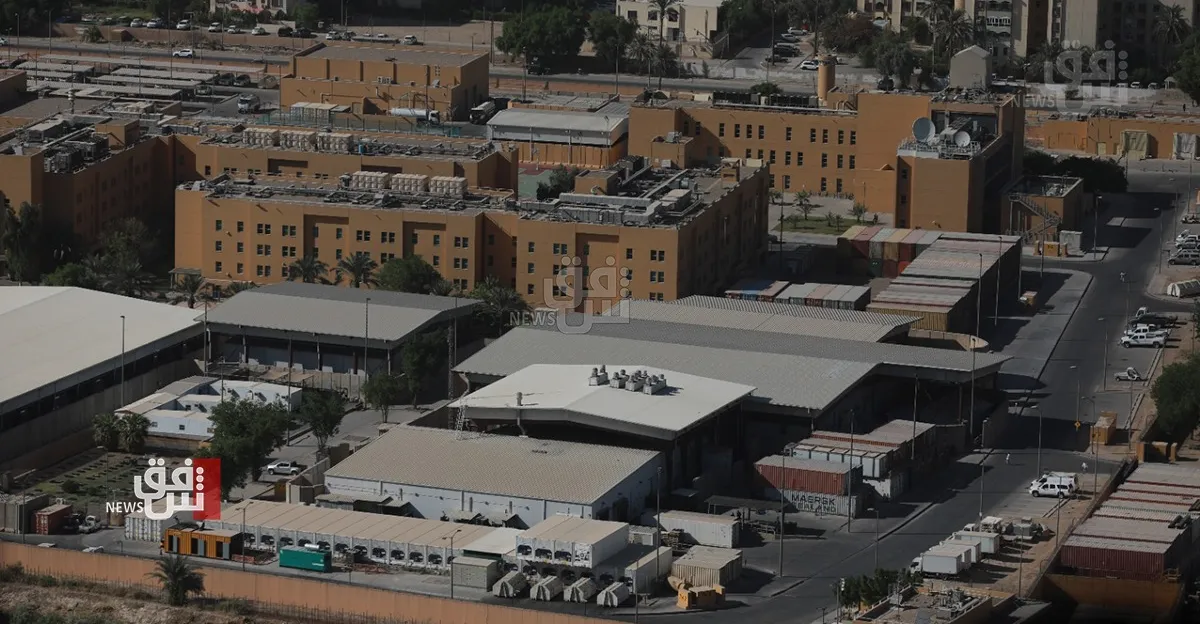
Announcement of a joint US military exercise at the embassy and Baghdad airport
US President Donald Trump stated that a large naval fleet is moving towards the Middle East region, including an aircraft carrier and a number of destroyers.
This came in a statement to reporters aboard the presidential plane, "Air Force One," on his way back to the United States after meeting with leaders from around the world in Davos, Switzerland.
Trump said, "We have a large number of ships moving in that direction, in case of any emergency... I don't want anything to happen, but we are watching them very closely."
The US forces in the Middle East are being reinforced with the aircraft carrier USS Abraham Lincoln and a number of destroyers equipped with guided missiles and additional air defense systems that could be critical to defense if any Iranian attack occurs on US bases in the region.
According to media reports and statements by a US Navy official, the aircraft carrier "Abraham Lincoln" and three destroyers are making their way to the Middle East region, with estimates suggesting their arrival within the next few days.
US media reported that the US force includes an aircraft carrier, cruisers and missile destroyers, in addition to squadrons of fighter jets belonging to the Air Force and ground-based air and missile defense systems.
American warships, including the aircraft carrier Abraham Lincoln, several destroyers, and fighter jets, began moving from the Asia-Pacific region to the Middle East last week, amid rising tensions and escalation between Tehran and Washington over the recent protests in Iran.
It is noted that the US military had amassed a large force last summer before its strikes last June against sites in Iran.
The White House announced last Thursday that President Trump and his team are closely monitoring developments in Iran, and stressed that "all options regarding Tehran remain on the table."
They are waiting for the green light.
Video: "Night Hunters" in Diyala and Wasit! Secret movements of the US Delta Force in Iraq detected - Breaking News
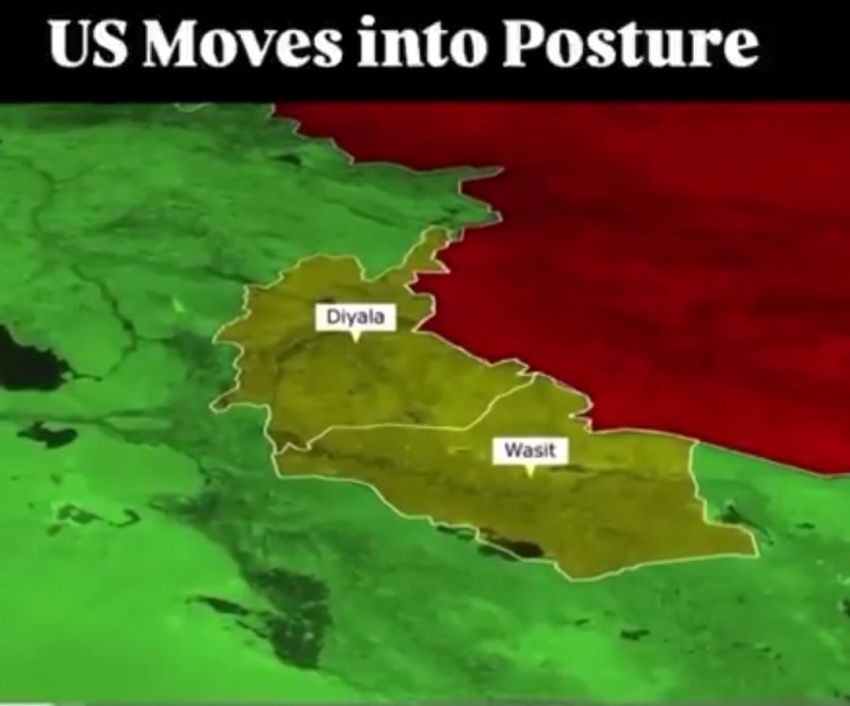
In a dangerous video, it is claimed that the US Delta Force and Night Hunters have secretly deployed in the provinces of Diyala and Wasit, less than 300 miles by air from the Iranian capital, Tehran. An analysis published by the Owen Strategies platform speaks of five “killer fingerprints” that it says reveal the Pentagon’s readiness to launch a large-scale air attack on Iran, amid official silence from the US Department of Defense and the governments concerned regarding these claims.
According to the video, the US military has quietly begun to shift into something resembling a "full-scale war" through a series of successive field steps; the first stage, according to the analysis, was the establishment of a "refueling bridge" through the flow of KC-46A Pegasus aircraft from Britain to Al Udeid Air Base in Qatar, to provide round-the-clock aerial refueling for the heavy bombers that might carry out the strikes.
The second phase refers to a continuous electronic surveillance and reconnaissance system, using MQ-4C Triton drones and RC-135V Rivet Joint aircraft, to draw an accurate picture of the locations of Iranian radars and missile systems.
The third phase illustrates what the video calls "offensive deployment," with B-2 Spirit stealth bombers positioned at Diego Garcia, and F-15E Strike Eagle aircraft, described as the best platform for carrying bunker-buster bombs, at bases inside Jordan.
The analysis adds that the fourth phase relates to a "naval blockade," with the aircraft carrier USS Abraham Lincoln and an accompanying strike group of destroyers equipped with the "Aegis" system moving towards the Gulf.
While the fifth phase focuses on "digital disruption" through operations led by the US Cyber Command to target secure communication networks in Iran, in parallel with putting the Patriot and THAAD air defense systems at Prince Sultan Air Base on high alert.
The video describes what it sees as "the most terrifying signature" by claiming the presence of elite Delta Force units and the 160th "Night Hunters" regiment inside Iraqi territory, after the transfer of MH-60M Black Hawk aircraft to bases in Diyala and Wasit, which theoretically puts them within a short operational distance of the Iranian interior, without the analysis attaching documented images or official data to confirm this information so far.
These escalating readings are spreading at a time when the region is witnessing escalating tension between the United States and Iran, including additional financial sanctions, Western warnings of possible military strikes, along with decisions by global airlines to cancel or modify flights to Israel and countries in the Middle East, amid fears that the situation could slide into a wider confrontation that could directly affect the security of Iraq, the Gulf, and the Eastern Mediterranean.
US restrictions prevent smuggling of US dollars outside Iraq

Washington is exerting pressure on senior Iraqi politicians
to form a government that excludes the armed factions.
It also threatened Iraq with a dollar crisis if
it does not present a credible plan to rapidly
disarm the factions.
U.S. officials are pushing Baghdad to exclude Iran-backed Shia militias from the next government and to quickly disarm them, with warnings of restricting dollar access (e.g., limiting Federal Reserve cash supplies or tightening financial channels) if Iraq doesn't comply. This ties into broader U.S. efforts under the Trump administration to curb Iranian influence and militia power in Iraq.

No comments:
Post a Comment