The dollar "earthquake" hits Iraqi markets at the start of 2026... Expectations of breaking the 146,000 barrier
Amid commercial paralysis
The exchange rate of the US dollar against the Iraqi dinar recorded a sudden increase on Sunday (January 4, 2026) with the start of trading in the new year, which sparked a wave of concern in economic and popular circles.
The video for this My FX Buddies Blog post is below here:
The exchange rate in the middle of trading on Sunday reached 145,750 dinars per 100 US dollars in the Al-Kifah and Al-Harithiya exchanges in the capital, Baghdad.
Economic experts told Baghdad Today that the rise is expected to continue in the coming hours, with expectations that the stock exchange will close at a price exceeding 146,000 dinars.
Paralysis of commercial activity
Our correspondents in the local markets reported that this sudden surge caused a state of "economic paralysis," with many buying and selling operations halting while awaiting price stabilization.
Observers also noted to "Baghdad Today" that there has been an increasing and unprecedented demand for hard currency since the early morning hours.
Atrushi: The oil and gas law must be passed as soon as possible.

The second deputy speaker of the Iraqi parliament, Farhad Atrushi, indicated that so far more than 40 people have nominated themselves for the position of president of the republic, but the two parties, the Democratic Party and the Patriotic Union, do not have a candidate. He stressed that in order to solve the financial problems and implement federalism, the oil and gas law must be passed as soon as possible. At the same time, regarding the parliamentary committees, he said: The committees are formed temporarily.
On Sunday, January 4, 2026, during his participation in the "Today's Talk" program on Kurdistan24, Atroushi said: In Iraq, the parliament is the center of the political process and the center for making important decisions, so maintaining the position of Deputy Speaker of Parliament for the Kurds is very important.
He added: “Today the new parliament held its first session, during which I submitted a proposal that the parliament’s presidency should have special legislative authority for the next four years, in order to have clarity in the implementation of laws and the identification of important laws. They also welcomed the proposal.” He also said: “In the next session, we will decide on the general outlines of the parliament’s policy and form a special committee.”
He continued: “The oil and gas law must be issued in order to implement fiscal federalism, because a large part of Iraq’s revenues are provided through oil and gas, and without implementing the law and the constitution, no problem will ever be solved, and the constitution must be the arbiter.”
He added, "So far, more than 40 people have nominated themselves for the presidency, and we expect that number to increase tomorrow, but neither of the two main parties has yet put forward a candidate for the position." He also stressed that the Kurds must be united on the issue of the presidency and have a single position.
He went on to say: "Tomorrow we will form a committee to lay some foundations and monitor the distribution of parliamentary committees," and said: The distribution of parliamentary committees should be temporary only to carry out the work of parliament until the new government is formed.
Food prices: Why do they vary from one market to another in the capital?

Food prices in Baghdad are no longer just a reflection of supply and demand, but are affected by rental costs, government fees, and the purchasing power of the population, creating a clear gap between upscale and popular areas and putting the consumer in front of difficult choices to find suitable prices.
In Baghdad's markets, from Karkh to Rusafa, the price differences for food and other goods are evident from one area to another. In Mansour, for example, a kilogram of lake fish can cost up to 20,000 dinars.
In other areas, such as Al-Bayya’, the price of a kilogram of the same fish is ten thousand dinars, while the price drops in the outskirts of the capital to about five thousand dinars only.
The price paradox
This price discrepancy extends to all food items and various goods, including electrical appliances and other materials. The price differences raise numerous questions and concerns among citizens, who emphasize the importance of the government setting fixed prices to stabilize markets and commercial activity.
Economists argue that pricing is not solely determined by supply and demand, but is also influenced by additional factors, most notably rent costs, service fees, and other expenses. Shops rented in upscale areas pay high rents, forcing owners to raise prices to cover expenses and achieve moderate profits, while prices are lower in less expensive areas.
Conversely, others argue that price increases are often based on the purchasing power of the population. In areas inhabited by high-income earners, merchants can raise prices without straining consumers' budgets, while lower-income groups are taken into consideration when setting prices.
Taxes and fees
Some traders attribute the problem of high prices to several factors, including the heavy taxes and fees imposed on them, which forces them to raise and double prices.
Rental disparities
In contrast, a number of shop owners believe that the reasons for the price differences are due to the difference in shop rental amounts from one area to another.
The Ministry of Commerce had previously announced the opening of cooperative shopping centers to provide goods at competitive prices, support the poor segments, alleviate the burdens on families, and meet their basic needs.
Despite the Ministry opening several cooperative hypermarkets in Baghdad and some governorates, the disparity in prices of basic commodities still poses a major challenge to the concerned authorities.
Individual income differences
Furthermore, economist Ali Daadoush believes that “the issue of price differences between regions stems from differences in individual incomes. There are areas like Mansour or Yarmouk whose residents have high incomes.”
He explained that “the seller there sells his goods and materials at double the price, so the price of bananas, for example, is higher in these two areas than in popular areas such as Al-Sha’la or Sadr City.”
He adds that “the difference in material prices is due to structural economic factors in the business environment in Baghdad, including operating costs. The rent for a shop in an upscale area may be ten times the rent in a popular area, and this difference is directly passed on to the price of the goods. In addition, there are logistics and supply chain costs in terms of truck arrival, transportation costs, and even unofficial levies or difficulty of accessing some areas, and all these factors affect the final price.”
According to Daadoush, “Purchasing power and consumption patterns play a major role in the difference. In affluent areas, consumers accept a higher price in exchange for better service in terms of (conditioning, arrangement, and packaging), while in popular areas, competition depends entirely on the lowest price.”
He points out that “the multiplicity of intermediaries plays a role in the price difference, and it is noted that in some areas, reliance is placed on (high-rises) close to residential areas, while traders in other areas are forced to buy from secondary distributors, which adds a new profit margin in each link.”
opportunity cost
He adds that “a slight difference in prices is normal from an economic standpoint, as it reflects the opportunity cost and location, but a large difference in subsidized or strategic basic commodities is a clear indicator of a flaw in oversight and market efficiency.”
Daadoush points out that “the absence of pricing makes traders raise prices as soon as the dollar rises, but they (forget) to lower them when it falls, because there is no legal authority to hold them accountable for the price, and this is what is called (price stickiness).”
According to Daadoush, reducing price discrepancies and ensuring consumer protection requires working on several key paths, most notably the Ministry of Trade announcing a daily indicative price for basic commodities through a smart application, and obligating large stores to use the barcode system and electronic invoices to ensure tax and pricing transparency, in addition to working to reduce the intermediary links that increase costs by encouraging direct sales from the factory to the consumer through government outlets or government-supported outlets

The Iraqi banking sector is currently witnessing a remarkable transformation led by the Iraqi government through the Central Bank, within the framework of structural and regulatory reforms aimed at rebuilding the financial system on more efficient and transparent foundations.
These reforms, which came after years of concentration and weak governance and banking infrastructure, seek to create a banking environment based on fair competition and the prevention of monopolies, instead of relying on privileges or currency auction interventions.
The Central Bank of Iraq has enlisted the help of specialized international consulting firms, most notably Oliver Wyman, to develop modern frameworks for governance, risk management, and bank restructuring, in order to ensure the standardization of criteria, raise the efficiency of boards of directors, and enhance compliance with international regulations.
This collaboration is seen as a key step towards breaking traditional business patterns and opening the way for more competitive banks to provide quality services.
The impact of these reforms is not limited to the banking sector alone, but extends directly to the Iraq Stock Exchange, where the banking sector constitutes the largest part of the number of listed companies and the market value of the trading volume.
With the implementation of new governance standards and the restructuring of some banks, investors, using brokerage and financial trading firms, are reassessing bank shares based on transparency and management strength, rather than size or connections. This is reflected in tangible changes in the number of shareholders, trading volumes, and daily trading values, as liquidity gradually shifts towards the most compliant and adaptable banks.
While these transformations may lead to short-term market volatility, in the medium term they are shaping a more mature financial market, one where monopolies diminish, stocks are priced according to actual performance, and the base of informed shareholders expands to attract investment from ordinary citizens. Ultimately, the current banking reforms represent an opportunity to rebalance stability and competition, and to build a financial sector that supports both the national economy and the capital market.
Iranians turn to stablecoins as rial plunges to new lows

Iran has seen a rise in stablecoin usage as its currency continues its steep decline this week as it dropped to trading at 1.42 million against the United States dollar before recovering slightly to around 1.38 million. The collapse erased household savings and pushed the prices of essential goods higher.
According to reports, inflation rose to 42.2% year over year in December, while food prices and health-related costs climbed to 72% and 50%, respectively.
The reports have worsened public frustration amid fears of hyperinflation. Demonstrations have expanded across several areas in Tehran and some major cities. Shopkeepers near the Grand Bazaar closed their stores and gathered in protest, adding their voices to the frustration of the masses.
Stablecoin usage on the rise in Iran as rial plunges
According to videos scattered online, there are several groups chanting against the ruling class, though authorities dispute the timelines around the footage. President Masoud Pezeshkian has also acknowledged the unrest, urging officials to move swiftly to tackle the issues that he describes as legitimate economic concerns. He has instructed the interior minister to engage directly with the leader of the protest.
Parliament Speaker Mohammed Bagher Qalibaf has also called for urgent measures to protect the Iranian rial. He made the call while accusing foreign adversaries of taking advantage of the unrest.
Despite these statements, footage has shown security forces deploying tear gas in some areas. Meanwhile, Iranians are now swiftly turning to cryptocurrencies and stablecoins as the rial continues to lose value.
Most of them confirmed to have made the move to protect their purchasing power. Blockchain analysts have long tracked this trend in sanctioned economies, where access to traditional banking remains limited.
Iranians are particularly gravitating towards stablecoins pegged to the United States dollar, as they see it as a practical hedge against local currency declines, especially during periods of instability and rapid devaluation cycles.
The shift is also in line with Iran’s engagement with digital assets. According to earlier reports, Iran’s Ministry of Defense Export Center has signaled its intention to accept digital assets for payments for sales of arms overseas.
Geopolitical tensions and economic turmoil
The economic crisis has also caused a swift fallout as Central Bank Governor Mohammed Reza Farzin resigned on Monday, according to state media.
Meanwhile, the renewed United Nations sanctions in 2025, which are tied to Iran’s nuclear program, have further restricted its access to three global markets, intensifying capital flight.
Authorities have also announced temporary shutdowns across Tehran and other provinces, citing energy shortages and cold weather. Meanwhile, residents claim that despite the government shutdown, there has been a history of crypto firms tied to the administration carrying out energy-intensive mining operations.
Geopolitical risks have resurfaced as the United States has warned Iran against any attempt to rebuild nuclear or missile capabilities. United States President Donald Trump has said that the United States would act again if Iran moved ahead to restore its nuclear program, though he noted that there could be a negotiated deal.
Around $7 per person: Iran approves monthly subsidy to "ease economic burdens" amid protests

The Iranian government announced on Sunday that it will pay a monthly subsidy to every citizen to "ease economic burdens," a week after protests erupted over deteriorating living conditions.
Government spokeswoman Fatemeh Mohajerani told state television, "Individuals can receive an amount equivalent to one million tomans (about seven US dollars) per month, deposited into their accounts for four months."
She explained that the money will be disbursed to each Iranian in the form of credit that can be used to purchase certain goods, and aims to "ease the economic burdens on citizens."
The minimum wage in Iran, a country with a population of over 85 million, is approximately US$100. The average monthly salary is around US$200.
The Iranian economy has suffered for years from US and international sanctions imposed on Tehran because of its nuclear program. The annual inflation rate in Iran reached 52% in December.
The national currency lost more than a third of its value against the US dollar during the past year, leading to a sharp decline in citizens' purchasing power.
Protests continued in Iran on Sunday for the eighth consecutive day, amid economic anxiety over the devaluation of the currency.
At least 40 cities witnessed protests of varying degrees, according to an AFP tally based on official data and media reports.
Iranian official reports indicate that at least 12 people have been killed in clashes since Wednesday, including security personnel.
The Fall Of Iran Could Change Everything
Regime Change Would Transform the Middle East—But Not Necessarily for the Better

What Happens if Iran’s Regime Falls from Power?
As Iranian protests reportedly turn violent, the Islamic Republic faces its greatest crisis since its founding more than 46 years ago.
While previous protests involved elites or smaller segments of society, the current unrest is spreading across Iranian society, including traditionally supportive elements.
Even Islamic Revolutionary Guard Corps veterans suffer the consequence of runaway inflation and the Iranian rial’s hemorrhaging value.
The closure of the Tehran Bazaar is often the harbinger of government collapse if not revolution.
It is increasingly likely that Supreme Leader Ali Khamenei’s legacy will be the collapse of the Islamic Republic.
If the Iranian public has its say, his son Mojtaba will also hang.
The Fall of Iran: What Happens Next?
The reverberations of the Islamic Republic’s collapse will reshape the region.
The likelihood of a smooth succession in Iran is slight. There is no centralized leadership to the current protest movement, and as the collapse of the Georgetown conference demonstrated, the diaspora opposition leaders and groups are more polarized than ever.
Rather than build bridges, Crown Prince Reza Pahlavi’s team has chosen instead the slash-and-burn tactics and exaggerated claims of credit preferred by groups like the Mojahedin-e Khalq. The 50,000 registered regime defectors Pahlavi claimed just six months ago appear little more than a fevered dream; Iranians are on the street, but there is no indication that they are doing so at Pahlavi’s direction.
Still, even Syria-like chaos will neuter Iran’s ability to threaten the region. Traditionally, when the Iranian regime is under threat, its security forces retreat from the periphery toward Tehran; they do not lash out at the region if it means leaving core interests exposed.
Who Wins?
The primary beneficiaries of regime collapse will, in the short term, be both Iraq and the Gulf Arab states.
The Islamic Republic has, since the U.S.-led ouster of Iraqi President Saddam Hussein’s regime, repeatedly impinged on Iraqi sovereignty. Secretary of State Colin Powell’s State Department and George W. Bush-era National Security Council official Zalmay Khalilzad naively believed Iranian promises that it would take a hands-off approach to post-war Iraq; by the time they were willing to acknowledge they were wrong, it was too late. A deliberate see-no-evil approach marked President Barack Obama’s subsequent willingness to withdraw from Iraq and engage Iran diplomatically.
More Winners and Losers
While the Islamic Revolutionary Guard Corps will remain a potent force based simply on the resources they have stolen and squirreled away, regime collapse will lead to a ticking clock on the willingness of Iraqis to listen to them. Immediate losers will be Hadi al-Amiri’s Badr Corps, Qais al-Khazali’s Asa’ib Ahl al-Haq, and Nouri al-Maliki’s ambition to return to the premiership, as well as Patriotic Union of Kurdistan leaders Bafil and Qubad Talabani’s leverage of the Islamic Republic against their Kurdish rivals. Rumors of Iraqi Hashd al-Shaabi involvement in countering Iranian protesters will cause generational antagonism among Iranians toward their Iraqi Shi’ite co-religionists.
The Gulf Arab states may benefit in the short term, but could quickly lose some of their relevance. In 1981, the Gulf Cooperation Council (GCC) was formed to coordinate policy and defense among the frontline Gulf emirates, sultanates, and monarchies: Kuwait, Saudi Arabia, Bahrain, Qatar, the United Arab Emirates, and Oman. The GCC consistently underperformed. Even 45 years later, their militaries lack interoperability. Internal antagonism toward Qatar for its sponsorship of Sunni extremist groups and, more recently, the Saudi-Emirati rivalry has ensured that dysfunction rather than solidarity characterizes any effort to stake common positions.
The Gulf Arab states may benefit in the short term, but could quickly lose some of their relevance.
The Islamic Republic’s collapse might exacerbate GCC divisions, especially if Riyadh and Abu Dhabi take their rivalry, already playing out in Sudan and Yemen, into Iran, with both Gulf states funding and arming different proxies. With the threat of the Islamic Republic’s “export of revolution” removed, there will be little reason for the GCC to continue to exist. Its six members will end the pretense of unity. Qatar will solidify its ties with Turkey, and the United Arab Emirates-Saudi Arabia rivalry could even lead to military skirmishes. Absent the threat of Iranian irredentism, Bahrain will thrive; while it lacks oil, it will be even better positioned to be the Singapore of the Persian Gulf.
The United Arab Emirates will also benefit in the short term. It has long served as a repository for no-questions-asked investment. But, should Iran collapse, then it could expect billions of dollars to pour into the country as regime officials desperately seek to protect their stolen assets. Such financial flows will likely draw international attention that could spark a longer-term diplomatic crisis between Abu Dhabi and Washington.
Should civil war erupt in Iran—and its likelihood is high—then the Arab Gulf states must also be prepared for hundreds of thousands, if not millions, of Iranian refugees. The first wave will be upper- and middle-class Iranians who can afford apartments in Sharjah, if not posh hotels in Dubai. With time, however, more working-class and rural Iranians will begin to flee by dhow and speed boat across the Persian Gulf, perhaps overwhelming the Emirates and its Gulf neighbors.
Oman is typical: Rather than plan for Iran’s fall, Muscat prefers wishful thinking that diplomacy can resolve any internal disputes before violence erupts.
Within Washington, there may be too much optimism that the Islamic Republic’s collapse will resolve the Houthis’ fight. Such a belief misunderstands the Houthis: while the Islamic Revolutionary Guard Corps co-opted the group, it did not create it. Indeed, the Houthis have intellectual and political roots in Yemen’s Imamate that predate Iran’s 1979 Islamic Revolution. While southern Yemen rejects the Houthis, they do have a constituency in northern Yemen, which is one reason why the U.S.-backed Presidential Leadership Council has failed to end the Houthi scourge.
Within Washington, there may be too much optimism that the Islamic Republic’s collapse will resolve the Houthis’ fight.
Hezbollah might also survive in some form. Israel defeated Hezbollah’s military, but it is harder to uproot its ideology. A recent research trip to Lebanon confirmed that Hezbollah did not surrender, but rather internalized the lesson that they must revert to their pre-2000 covert cell structure. Perhaps they will no longer wield drones and missiles, but plastique and AK-47s can be equally dangerous in the hands of experienced users.
Many in Israel expect they can renew the warm ties they enjoyed with Iran before the 1979 Islamic Revolution. This, too, is wishful thinking. Many Iranians will resent Israel’s suspected association with the Mujahedin-e Khalq in subsequent years, as well as the tendency of some Israelis to support “South Azerbaijan” separatism. While Crown Prince Reza Pahlavi’s visit to Israel won cheers in Washington, Jerusalem, and among some diaspora Iranians, Israel’s subsequent bombing campaign against Iran offended many Iranian nationalists. Decades of propaganda also take their toll. Egyptians remain overwhelmingly anti-Israel decades after the Camp David Accords; it is unrealistic to believe that generations of Iranians fed anti-Israel conspiracies will switch sides overnight.
Perhaps the biggest long-term winner of the Islamic Republic’s collapse will be Turkey. Just as Qatar replaced Saudi Arabia as a financier for Islamic extremism, Turkey has transformed itself into an ideological engine that seeks to export its own brand of Islamist extremism with an aggressiveness akin to 1980s-era Iran. President Recep Tayyip Erdoğan will see Khamenei’s collapse not as a warning about his own future, but rather as an opportunity to expand Turkey’s own revolutionary export and terror sponsorship.
What will emerge is not a more peaceful Middle East, but simply a change in the flavor of the extremism most threatening to regional security and U.S. interests.
A Time of Change in Iran? Chaos or Crisis?
Regime change in Iran will be welcome. The devil we know is not always better than the devil we do not. But, any tendency on the part of the White House and Washington think tanks to see Iran’s collapse as a “Hail Mahdi” pass to security and a peaceful Middle East will be embarrassingly naïve.
Is changing the head of the Central Bank enough to save the Iranian economy?

Amid the continued decline of the Iranian rial and rising inflation rates, Iranian authorities appointed Abdolnasser Hemmati as the new governor of the Central Bank of Iran, in a move that comes at a very sensitive economic time for the country, with escalating living pressures, growing anxiety in the markets, and protests that began in the capital Tehran’s bazaar before spreading to a number of provinces.
In his first remarks after taking office, Hemmati identified controlling inflation as the most important task for the central bank, pledging to deal “firmly” with imbalances in the banking system, and stressing that citizens will notice signs of a return to stability in the economy in the coming days.
Iranian Rial Exchange Market
The new governor of Iran’s central bank linked the existing tensions in the exchange market to a number of factors, foremost among them the multiplicity of exchange rates, rent-seeking, corruption, and speculation, considering that these elements have weakened confidence in the national currency and contributed to accelerating its decline.
Hemmati explained that the Central Bank is moving towards the gradual elimination of the preferential currency and working to unify the exchange rate, within the framework of a plan aimed at reducing the gap between the official rate and the free market rate, and limiting opportunities for speculation, which contributes to restoring monetary stability.
He also pointed to tightening control over the banking system and liquidity, as part of efforts to reduce inflationary pressures, while emphasizing the bank’s support for the stock market and the exchange, as one of the channels for regulating the flow of liquidity and relieving pressure on the foreign exchange market.
Regarding his relationship with parliament, Hemmati said he would consult with the MPs, but stressed that managing economic issues should be based on economic principles and professional expertise that takes into account the country’s circumstances, and not just be managed according to political considerations.
Following the announcement of these trends, a fundamental question arises as to the extent to which changing the leadership of the central bank, in itself, can bring about a real shift in the economic trajectory, in light of accumulated internal complexities and continuous external pressures.
In this context, economics professor Peyman Molavi believes that changing the head of the central bank “cannot, in itself, constitute a solution to the economic crisis in Iran,” explaining that the existing problems do not necessarily change with a change in the head of monetary management.
Molloy points out that any tangible improvement is linked to addressing two key indicators:
The first is Iran’s low ranking on the Economic Freedom Index, where the country comes in low positions globally, which limits the chances of achieving positive results in the rest of the sectors.
The second indicator relates to the protection and clarity of property rights, particularly with regard to hard currency.
Molloy emphasizes that improving the ranking of economic freedom is a prerequisite for any economic success, given its connection to several factors, including the extent of state intervention, currency strength, monetary policies, laws and regulations, property protection, and freedom of foreign trade.
The President of the Republic receives the Iranian Ambassador
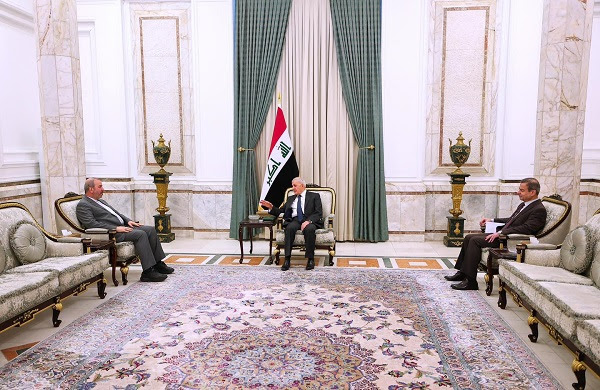
His Excellency the President of the Republic, Dr. Abdul Latif Jamal Rashid, received today, Sunday, January 4, 2026, at Baghdad Palace, the Iranian Ambassador to Iraq, Mr. Mohammad Kazem Al-Sadegh.
During the meeting, ways to develop bilateral relations between the two countries and prospects for cooperation in various fields were discussed in order to serve the aspirations of the
two friendly peoples.
The meeting also addressed the latest regional and international developments, and emphasized the importance of continued coordination between the two neighboring countries in order to consolidate the foundations of peace and stability in the region.
After Savaya's message... Will 2026 open a new chapter for Iraq?
link last paragraph is the best imo
Political analyst Ghazi Faisal commented on the recent message from Mark Savaya, the envoy of US President Donald Trump, to the Iraqi people, in which he called for the beginning of a new era based on respect for the constitution, building an independent state that is not subject to Iranian hegemony, and confronting political and financial corruption, the plundering of wealth, and the failure to develop industry, agriculture, and services.
Faisal said in a statement followed by “Al-Sa’a” that “the American message, despite continuing within the policy of containment, carried a different language that reflects the need for comprehensive radical reforms that restore the true sovereignty of the Iraqi people and allow them to confront poverty, backwardness, unemployment and economic chaos.”
He explained that "these imbalances did not arise spontaneously, but rather came as a result of an Iranian strategic dominance over Iraq, in which the Iraqi economy, security and society were exploited to pay the price for Iran's internal crises."
Regarding the possibility of the United States imposing a new equation that would make the Iraqi state the sole entity monopolizing weapons and decision-making, he pointed out that "the central challenge lies in correcting the course of a political system that began in 2003, which violated the constitution and produced parties that failed to build a modern state and an open economy."
He stressed that "Iran has succeeded in creating more than 34 armed factions linked to the Revolutionary Guard, using Iraq as an arena for its regional influence at the expense of the country's security and stability."
He added that "the American message was directed directly to the Iraqi people in an attempt to reshape political legitimacy outside the traditional frameworks," considering that "the current crisis is a deep legitimacy crisis, and that the Iraqi parliament has often become a formal facade, while the constitution stipulates that the people are the source of sovereignty."
Faisal concluded by saying: “The year 2026 holds the potential for transformation, if a new national leadership and a clear strategic vision are available, capable of rebuilding a modern state based on democracy, a free economy, and stability, benefiting from Iraq’s wealth, estimated at more than $15 trillion, while moving away from the corrupt rentier system and engaging in a new regional project based on peace and sustainable development.”
"Your time is up."
After opening in 2026 with a declaration of all-out war: How will Savaya turn the tables on everyone and carry out its threat?
On the first day of 2026, US President Donald Trump's envoy to Iraq, Mark Savaya, chose to begin the year with a "historic promise": a year to end militias, uncontrolled weapons, corruption, and foreign interference, along with a long list of ills that have burdened the state and society. In his message to the Iraqi people, Savaya presented himself as the bearer of a "decisive year," pledging to work to make 2026 the year that would end instability, the plundering of resources, poor services, smuggling, unemployment, militias, money laundering, fraudulent contracts, poverty, foreign interference, embezzlement, inequality, corruption, circumvention of the law, and injustice.
This "long list" has been transformed in political and media discourse into "18 crucial issues" that Savaya said would be among the priorities of his mission in Iraq during the new year, in a speech laden with messages of deterrence such as: "Your time is over, and the time of Iraq and the Iraqis has begun." But as soon as the wave of flashy headlines subsided, a simpler and more pressing question emerged: Can 18 chronic Iraqi problems truly be resolved in 12 months, even by an envoy with exceptional influence in the White House?
The 18 files in Savaya's speech: A map of a state's crisis
Based on what Savaya’s letter contained and statements surrounding it, the 18 files he placed under the title “Year of Decision” can be summarized as follows:
Political and security instability.
Plundering the country's wealth.
Poor services (electricity, water, health, education).
Uncontrolled weapons outside the control of the state.
Smuggling (oil, goods, currency) across ports and borders.
Unemployment, especially among young people.
Militias linked to external powers or operating outside the logic of the state.
Money laundering through banks, money exchange companies, and economic fronts.
Political and civic ignorance as an environment for manipulating sectarian and populist discourse.
Internal tensions between blocs, components, and governorates.
Fake contracts and paper projects in various sectors.
Poverty and the associated widening social gap.
Foreign interference in decision-making and sovereign matters.
Direct embezzlement of public funds.
Inequality in the distribution of wealth and opportunities between regions and groups.
Corruption as a general umbrella for all financial and political networks.
Circumventing the law and using it as a shield to protect the powerful.
The injustice inflicted on the ordinary citizen and the segments of victims and the marginalized.
On paper, this list looks more like a "state crisis map" than a one-year program. It touches on almost everything that has accumulated since 2003 in terms of political, economic, and security problems, and puts them all together under the heading "2026."
An envoy outside the diplomatic school: From "the cannabis king" to the man of Iraqi missions
Part of the controversy surrounding Savaya is not just about what he said in his New Year's message, but about the nature of the man himself. The new envoy is not a career diplomat who graduated from the school of the US State Department, but a businessman of Iraqi Chaldean origin who made his fortune in the legal cannabis industry in Michigan, and is described by American press reports as one of the most prominent figures in this sector, and the "cannabis king" of Detroit.
His political career is more closely linked to the world of election campaigns and Republican funding, as he emerged as one of Trump’s supporters in Michigan, before suddenly transforming from a controversial business figure into a special envoy handling one of the most complex files in the Middle East.
Numerous analyses have linked his appointment to the Trump administration's desire to deal with Iraq through a "trusted man" outside the traditional diplomatic corps, who has direct access to the president and is able to move nimbly between the worlds of politics, business, and security, with a particular focus on three issues: Iranian influence, militias, and redrawing the terms of investment and energy in a country that possesses one of the world's largest oil reserves.
In this sense, the New Year's message is not merely a protocolary greeting, but rather the announcement of an American political and security program with a new executive channel, setting 2026 as a test year for Washington's ability to reshape the rules of the game within Iraq.
The promises are ambitious… but the problem lies in the structure of the system, not in the texts.
From within Iraq, researcher and academic Ali al-Jubouri offered a more cautious analysis, focusing on the gap between rhetoric and actual capability. Al-Jubouri told Baghdad Today, "The promises attributed to US President Donald Trump's envoy to Iraq, Mark Savva, regarding 2026 being the year to end uncontrolled weapons, militias, corruption, and foreign interference, fall within the realm of ambitious political discourse. However, they clash with a highly complex Iraqi reality that makes their full realization extremely difficult without fundamental changes."
He adds that "the problem of loose weapons is not just a security issue, but rather the result of political, economic and social accumulations that have extended for years, where some armed factions have become part of the equation of political and economic influence, and have extensions inside and outside state institutions, which makes dismantling or limiting them a complex internal sovereign decision, and not just the result of an external pledge or pressure."
Al-Jubouri links the issue of militias to the broader map of conflict in the region, stressing that “the issue of militias is directly linked to regional and international balances, and any talk about ending them or restricting weapons to the state requires a unified and undivided Iraqi political will, and broad internal consensus that precedes any field action, in addition to reducing reliance on external axes in national decision-making.”
Then he moves on to the second point in Savaya’s speech: corruption. According to Al-Jubouri, “Corruption in Iraq is structural, not circumstantial, as it has infiltrated the joints of the state through networks of interests that transcend parties. Eliminating corruption cannot be achieved with temporary slogans, but rather requires deep administrative and legal reform, a genuine activation of accountability, and protection of oversight institutions from political pressures.”
As for foreign interventions, he says that “Iraq is still an arena for the intersection of regional and international interests, and that reducing these interventions depends on the state’s ability to strengthen its economic sovereignty, unify its foreign policy, and build balanced relations based on interests, not alignments.”
Al-Jabouri concludes his reading with a warning against turning 2026 into a "year of miracles": "The year 2026 may witness partial steps or relative improvement if a genuine national will is available, but portraying it as a decisive year for the end of all these thorny issues seems closer to political promises and slogans than to a program that can be implemented on the ground unless the internal rules of the game change radically."
With this description, Savaya's discourse transforms from a "promise of decisive action" into a point of reference: where does what can actually be accomplished begin, and where does the ability of any foreign envoy end when his questions touch upon the structure of the regime itself?
Uncontrolled weapons and militias: The issue that tests the credibility of the slogan
If Savaya has indeed compiled 18 issues into one basket, the first thing Iraqi forces and the public will hold him accountable for is the file of militias and uncontrolled weapons. This file, in particular, is not only related to the security chaos, but also to the position of these factions within the state, their entanglement with the shadow economy, and their network of alliances stretching from Tehran to Damascus and Beirut.
Much of the American approach to Iraq in recent years has placed these Iranian-linked armed groups at the center of attention, linking any effort to reorganize the American presence to Baghdad’s ability to control these factions or reintegrate parts of them into state institutions according to new rules.
But this is precisely where the limits of the "year of decision" become apparent. Militias are no longer merely armed groups operating outside the law; some possess political representation, economic fronts, a presence in parliament and the government, and enjoy a social base in certain provinces. Any "direct" attempt to end this influence within a single year effectively means a redistribution of power within the Iraqi system, not simply the implementation of a series of security measures. This type of transformation cannot be managed with a congratulatory message, but rather through profound internal compromises that have yet to materialize.
Structural corruption and the parallel economy: When Savaya's list intersects with the spoils network
Another part of Savaya's list relates to corruption, money laundering, plundering of resources, fictitious contracts, embezzlement, and poor services. These are not mere labels, but rather the features of a system that has been formed over more than two decades, linking public funds with partisan quotas and turning contracts and projects into tools for personal gain, as revealed by Iraqi oversight and media reports on ports, border crossings, oil contracts, and reconstruction deals.
When al-Jubouri says that corruption is "structural," he implicitly means that dismantling it requires reshaping the relationship between the state, political parties, and the economy, not merely pursuing a few individuals or opening dozens of files in the media. Here, too, the power of a foreign envoy, regardless of their relationship with the White House, appears limited without an internal decision that redefines the very structure of the political system, or at least establishes new "red lines" to protect what remains of the state from organized plunder.
Foreign interventions and the limits of Washington's power
Savaya's list also includes "external interference" and "internal tensions," as if the envoy is trying to encompass everything regional actors have been accused of in Iraq over the past years. But the irony is that Washington itself is one of the most important external players on the Iraqi scene; the presence of American forces, the network of alliances, and the role of international financial institutions all make the United States part of the equation of intervention, not merely an external observer.
Here a twofold question arises: To what extent can the Trump administration reduce the influence of its regional rivals in Iraq, foremost among them Iran, without itself being seen as a party exercising parallel interference? And to what extent does Baghdad have a real margin to say "no" to any of the competing axes, if its economic sovereignty is not strengthened and the levels of dependence in the energy, finance and arms files are not reduced?
2026: A year of testing for the insider before it becomes a year of testing for Savaya.
Savaya's message about "the end of the era of corruption and militias" gave a segment of the public a glimmer of hope and provided the media with ready-made material for sensational headlines. However, it simultaneously raised expectations to a level that would be difficult for any political actor, whether domestic or foreign, to fully meet within a single year.
If we start from Ali al-Jubouri’s reading, the fundamental question becomes not: Can Savaya finish 18 files in 2026? Rather: Does the Iraqi political system have the readiness to open these files from their roots?
Without a relatively unified political will, internal compromises that redefine the role of weapons, and genuine strengthening of oversight and judicial institutions, the US envoy's message will remain more of a "statement of intent" than a binding roadmap. The year 2026 could become a transitional year, testing the limits of both Washington and Baghdad simultaneously: the former in terms of its willingness to use pressure and incentives, and the latter in terms of its readiness to relinquish part of the network of interests forged after 2003.
Between Savaya's statement, "Your time is up," directed at "those who have wreaked havoc in Iraq," and al-Jubouri's warning that changing the rules of the game requires more than mere rhetoric, Iraq stands on the threshold of a year that could mark the beginning of a different path, or simply another link in the chain of postponed promises. The difference will be decided, as always, internally before externally.
Al-Tamimi: The House of Representatives is still being run by Al-Halbousi.
Political analyst Qasim al-Tamimi believes that the Iraqi Parliament is still being run by Mohammed al-Halbousi, albeit behind the scenes.
Al-Tamimi told Al-Maalouma, “Parliament elected Hebat as its speaker, but without Mohammed al-Halbousi, he wouldn’t have obtained the position. Therefore, al-Halbousi will remain influential and manage the Parliament from behind the scenes.”
He added, "The process is managed by the heads of the political and parliamentary blocs. Consequently, Hebat doesn't have as strong political influence as al-Halbousi, especially since the current Speaker of Parliament holds a master's degree in political science but is unqualified to manage the Parliament."
He explained, "The actual management of Parliament may be in al-Halbousi's hands, and this indicates a major flaw in the quota system. Agreements have played a strong role in selecting positions, despite hopes that the current session would be based on competence, integrity, and ability. It seems, however, that it remains at square one."
The initial meetings raise doubts... Is it the prestige of Al-Halbousi or the prestige of Parliament?

The manner in which the new Speaker of Parliament, Hebat al-Halbousi, appeared in his first diplomatic meetings sparked widespread controversy regarding the independence of the position and the limits of separation between the constitutional role and party affiliation. While observers saw the scene as reflecting the continued influence of the leader of the “Progress” party within the legislative institution, and raising questions about who actually runs the parliament, a close associate of al-Halbousi’s party downplayed the importance of the controversy, describing it as “political exaggeration.”
In this regard, writer and media figure Salem Mashkour says, “The scenes that followed the election of Hebat al-Halbousi as Speaker of Parliament, especially his meetings with a number of foreign ambassadors, raise more than one question mark about the nature of the Speakership and the limits of its independence. Holding these meetings inside the headquarters of the “Progress” party, and not in the Parliament building, reflects confusion in separating the constitutional position from the party identity, as the head of the legislative authority is supposed to act as a representative of all Iraqis, not as an extension of a political party.”
Mashkour adds, “The most prominent problem was the seating arrangement during those meetings, where Mohammed al-Halbousi appeared to be the actual host, while the new Speaker of Parliament sat on the sidelines, as if the visit was directed to the party leader and not to the Speaker of Parliament, which gave a worrying symbolic impression of the balance of power within the legislative institution.”
He believes that “this picture constitutes an early negative indicator of the performance of the parliament’s leadership in the next stage, and fuels fears that Hebat al-Halbousi is merely a figurehead, while the affairs of the council are actually run by Mohammed al-Halbousi, whether from behind the scenes or directly.”
The writer and media figure concludes that “the continuation of this pattern will weaken the prestige of the position, undermine the independence of parliament, and reproduce the crisis of constitutional institutions being subject to the logic of party leadership.”
The diplomatic approach of Iraqi Parliament Speaker Al-Halbousi has attracted the attention of political observers, especially after his appearance in two official meetings with foreign ambassadors, in which the head of the Progress Party, Mohammed Al-Halbousi, was present alongside him without any official capacity.
In the first meeting, Mohammed al-Halbousi received the Ambassador of the Islamic Republic of Iran to Iraq, Mohammed Kazem Al-Sadiq, in the presence of Hebat al-Halbousi, and chaired the discussion on bilateral relations and developments in the regional situation, at the headquarters of the Progress Party and not at the Parliament building, as confirmed by the statements of the party leader’s media office.
This scene was repeated on the same day as the meeting with the Jordanian ambassador, which raised questions about the limits of the Speaker of Parliament’s protocol powers in the context of official diplomacy, especially since the meetings took place outside the House of Representatives and within a party framework, which is contrary to the usual norms in diplomatic protocol.
For his part, political analyst Ghalib al-Daami believes that “the scene accompanying the movements of the Speaker of Parliament, Hebat al-Halbousi, is surprising. Even Shiite leaders, despite their broad political influence, do not accompany ministers or officials in their diplomatic, professional and official movements, while the new Speaker of Parliament has not appeared alone so far, but always alongside the leader of the Progress Party, Muhammad al-Halbousi.”
Al-Daami adds, “This constant presence of Mohammed al-Halbousi reinforces the impression that al-Halbousi’s prestige may not be able to step out of the shadow of his party leader, which opens the door to serious questions about who actually runs the parliament, and whether Mohammed al-Halbousi is the real Speaker of Parliament, even if from outside the constitutional position.”
However, he rules out the continuation of this scene for long, suggesting that “the relationship between the two sides will witness tension or disagreements during the coming months, as Hebat al-Halbousi begins to feel sensitive about direct interference in the management of parliamentary affairs, which may push him to try to impose greater independence for his position, or reshuffle the cards within the Progressive Political House.”
Hebat al-Halbousi, who was elected Speaker of Parliament last Monday, is considered one of the names closely associated with the head of the Progress Party, Mohammed al-Halbousi, who faced an undeclared “veto” from the Coordination Framework forces and the Kurdistan Democratic Party, as he wanted to pass himself as a candidate for the presidency of the council.
In addition, political researcher Al-Khattab Al-Tamimi, who is close to the “Progress” party, finds that “the controversy surrounding the appearance of Mohammed Al-Halbousi alongside Speaker of Parliament Hebat Al-Halbousi involves a great deal of exaggeration and politicization. Mr. Al-Halbousi is the leader and head of the Progress party, and all ministers and officials belonging to the party, including Hebat Al-Halbousi, are considered part of this party system led by one head.”
Al-Tamimi adds that “this partisan reality does not mean there is any overlap or conflict of powers within the legislative institution,” stressing that “Haybat al-Halbousi, within the parliamentary framework, is the Speaker of the House of Representatives with full powers, and there is no infringement on the independence of his constitutional position.”
He affirms that “promoting the existence of hegemony or guardianship is a discourse circulated by politically failed parties and some media outlets that hold preconceived and hostile positions towards Mohammed Al-Halbousi.”
The political researcher, who is close to the “Progress” party, continues, “What happened yesterday at Mohammed Al-Halbousi’s guesthouse in the Karma district was not an official meeting in the protocol sense, but rather a social and political invitation that included the Speaker of Parliament, the Minister of Planning, and a number of MPs. It is natural for the host to lead the gathering, without this implying any diminution of the Speaker’s position or powers.”
Regarding the ambassadors’ meetings, Al-Tamimi explains that “the appearance of Mohammed and Hebat Al-Halbousi sitting together on one sofa, without any distinction in seating or the scene, does not deviate from the usual protocol or political context,” considering that “talking about a “deliberate exposition” or “hidden messages” reflects a state of crisis among parties seeking to exaggerate the scene and read it outside its natural context, perhaps with direct political push and direction.”
He points out that “Haybat al-Halbousi has a clear space to work within the parliament, and he will perform his duties within this space without pressure,” explaining that “although he is part of the party system led by Mohammed al-Halbousi, in the national sphere he will work as the leader of his constitutional institution, in accordance with his position as Speaker of the House of Representatives.”
Regarding the reason for the ambassadors’ presence at the party headquarters, he notes that “the reception of the ambassadors came within the framework of congratulating the ‘Progress’ party on obtaining its political entitlement, in light of the relations that link these missions to the party leader,” stressing that “the place of the meeting and its nature reflect this context, and that the congratulations were directed at the same time to both Mohammed al-Halbousi in his capacity as leader of the party, and Hebat al-Halbousi in his capacity as Speaker of Parliament, without any conflict or duplication of roles.”
Trump and his war against Iran: Iraq is the first to be affected, and the factions are "outside the equation."

US President Donald Trump’s threat to target Iran, and news that he gave Israel the green light to carry out the strike, has revived talk about Iraq’s role and what it will face as a result of this repeated escalation. While observers confirmed that Iraq, like the rest of the region, would be affected by this matter if it were to happen, they downplayed the role of armed factions in it, after they moved towards engaging in political work.
Observers also pointed out that what is happening will create a new Middle East, not ruling out regime change in Iran, especially after the popular protests, Trump’s intervention in them, and his emphasis on carrying out military action to protect the Iranian people.
 Political analyst Nizar Haidar told Roj News , “What is truly regrettable is that Iraq remains a backyard for the American-Iranian conflict in the region, and this makes it live in constant anxiety about the possibility of any military escalation specifically between the two sides, even though the Sudanese government has made great efforts during the last two years to prevent Iraq from becoming involved in any military escalation that the region has witnessed, starting with the Gaza issue, passing through Lebanon, Syria, Iran and Yemen.”
He adds that “what is happening now requires the new Iraqi government to avoid Iraq becoming involved in any escalation in the region, whatever its form, identity, or background.”
He continues, “If military operations are renewed between Tehran, Washington, and Tel Aviv, this will affect the region in general, and Iraq is within the circle of influence, especially since Iraq is experiencing a transitional phase from one state to a new constitutional state, and it needs political stability to complete the required entitlements after the elections. It is about to try to build new financial and economic partnerships in the region and the world, and it needs stability in order to succeed in attracting the investments it needs in various sectors, specifically in energy, oil, gas, and electricity.”
He continues, “Any new escalation will not even be considered by the factions, because it has been proven to them in the last two years that their weapons are useless and will not change anything. When they entered the electoral process, it was in an attempt to move to the edge of the state and its institutions, considering that they bear a considerable part of the responsibility under the dome of parliament and in the new government. They must act with greater responsibility and in a political manner to spare Iraq from any potential dangers in the event that some of them act recklessly and think of engaging in any potential military escalation.”
Two days ago, during his meeting with Israeli Prime Minister Benjamin Netanyahu in Washington, Trump asserted, “I hear that Iran is trying to rebuild its nuclear sites, and if they do, we will strike them again.”
Trump also threatened yesterday to intervene militarily in Iran to protect protesters against the deteriorating economic and living conditions in the country.
Trump said in a post on the Truth Social platform: “If Iran shoots and violently kills peaceful protesters, as they have done before, the United States of America will come to their aid.”
Trump added: “We are on high alert and ready to act.”
Iran is witnessing large protests, with the demonstrations spreading to smaller cities and nighttime activism returning, while the government tries to contain the anger, in the face of escalating judicial and security crackdowns.
This coincided with reports of deaths in several cities, in what is considered the largest escalation in three years against the backdrop of rising inflation, currency deterioration and rising prices.
These protests are the largest since 2022, following the death of Mahsa Amini, who died after being detained by police.
The 12-day war between Iran and Israel broke out between June 13 and 24, 2025, during which Iran’s infrastructure and nuclear reactors were targeted, as well as dozens of the country’s top military leaders.
During that war, Iraq, like other countries in the region, was affected by the suspension of air routes as well as other effects, in addition to the fall of missile debris on its territory. The country's airspace was also used in the war by both Israel and Iran.
Key changes
 For his part, political analyst Ghazi Faisal told Roj News that “Trump declared his support for the will of the Iranian people to liberate themselves from the regime and the rule of the jurist, and the authority and power of the Iranian Revolutionary Guard and the confrontations that the demonstrators are subjected to.”
He continues, “Washington stands with this people who have lived under a totalitarian, one-party authoritarian regime, and Trump has declared that he will intervene militarily to protect the Iranian people in the event of random attacks.”
“This is a new development in the ongoing confrontation between Washington and Tehran, and raises the possibility of the Shah’s son returning to a monarchy or republic within the framework of an agreement with the various Iranian forces, and building a new system that respects human rights and freedom of expression.”
He added that “Iraqi parties loyal to Iran and believing in the Guardianship of the Islamic Jurist will stand with Iran in statements and declarations, just as we have seen Hezbollah and the Houthis do in the region, but this will not change anything in the strategy to liberate Iran and dismantle the current regime,” explaining that “we are facing pivotal changes in the region, and we are moving towards a new Middle East that is completely different from what it was before October 7.”
Want to Support My FX Buddies?
.png)
Support My FX Buddies Big or Small I appreciate it all
BuyMeACoffee CashApp:$tishwash
https://paypal.me/tishwash

.jpeg)
The Iraqi government allocates "high" capital to the newly revamped Rafidain Bank.
On Saturday, Mazhar Mohammed Saleh, the financial advisor to the outgoing Prime Minister, revealed that the new Rafidain Bank will have highly efficient capital, with the possibility of bringing in an international strategic banking partner.
Mazhar told Shafaq News Agency that "the study prepared by one of the major financial companies specializing in banking and financial reform does not go for the option of privatizing Rafidain Bank before starting its structural reform through institutional specialization."
He explained that "this study proposes redefining Rafidain Bank as the sovereign bank of the government, so that its role is limited to managing government financial operations, primarily managing the unified treasury account, and its operational link with more than a thousand government disbursement and spending units."
Saleh also pointed out that “this sovereign bank is entrusted with an organic link to the center of finance and policy in the financial authority, in order to ensure the organization of state finances through precise coordination between revenues and expenditures, and linking this to the cash budget (the government’s cash flow budget), with the aim of achieving the highest levels of efficiency in financial management, discipline, governance, and transparency.”
The government financial advisor added that "the study proposes the establishment of another bank called (Al-Rafidain - One), which operates as a mixed public-private joint-stock company, and follows the principles of the modern banking market."
“This bank is supposed to have highly efficient capital and operate in accordance with Basel (3) regulations, which will enhance the strength of the banking system and deepen the national banking market,” according to Saleh.
He pointed out that “this bank’s business model is based on high compliance levels and low risks, and its main activity is to grant bank credit to natural and legal persons, in accordance with the latest modern banking practices, while employing advanced financial information technology (FinTech) in a way that achieves digital financial inclusion, and contributes to integrating the national banking market and transforming it into a unified and effective force.”
Saleh concluded by saying that “Rafidain Bank – One undertakes the practice of financing foreign trade, with the possibility of bringing in an international strategic banking partner, which will raise its operational and technical capabilities, and gradually elevate it to the ranks of regional banks with high credit ratings, and make it a real lever for modernizing the Iraqi banking sector and supporting sustainable economic development.”
In 2021, the Iraqi Ministry of Finance approved a package of reform measures related to the restructuring of Al-Rafidain Bank, in accordance with the "White Paper" on economic reform in the country.
At the end of 2024, Ernst & Young, a professional services firm, confirmed that the restructuring of Rafidain Bank had reached 74%. Firas Kilani, an expert on the restructuring project from the British company, said that "the bank's restructuring project has progressed very significantly since it began in September 2024."
At the beginning of 2025, outgoing Iraqi Prime Minister Mohammed Shia al-Sudani announced that the project to restructure Rafidain Bank had reached its final stages.
Rafidain Bank was established under Law No. (33) of 1941 and commenced its operations on 5/19/1941 with a paid-up capital of (50) fifty thousand dinars. The bank currently has (164) branches inside Iraq in addition to (7) branches abroad, namely: Cairo, Beirut, Abu Dhabi, Bahrain, Sana’a, Amman, Jabal Amman.
Despite the Iraqi government's attempts to improve the performance of Rafidain Bank and restructure it, the bank's branch in Abu Dhabi committed financial and administrative violations, in addition to monitoring indicators of mismanagement that prompted the UAE Central Bank to impose "large financial" fines on the branch, amid warnings that these measures may end with the complete closure of the branch, according to informed sources who spoke to Shafaq News Agency at the end of 2025.
The Yemeni Minister of Information, Culture and Tourism, Muammar Al-Iryani, announced at the beginning of October 2025 the closure of the Iraqi state-owned Rafidain Bank branches in Sana'a.
Al-Iryani said in a post on the “X” website that “the decision by the Iraqi Rafidain Bank to close its branch in Sana’a and end its financial and banking activity is a step in the right direction, and a direct result of international efforts aimed at drying up the sources of funding for the Houthi group.”
He pointed out that this measure "reflects a positive response to governmental warnings and American and international pressure, and sends a clear message to the rest of the regional and international financial institutions, about the need to review their activities, and to ensure that they do not fall into the circle of exploitation or employment to serve the agendas of the Iranian regime and its terrorist arms in the region."
Al-Iryani stressed that "the Houthis have turned the financial and banking institutions operating in the areas under their control into tools for plundering the money of Yemenis and financing their cross-border terrorist activities."
Last August, US Congressman Joe Wilson accused the state-owned Rafidain Bank of conducting financial transactions with the Houthi group in Yemen, threatening to cut off US funding to Iraq as a result.
Wilson wrote in a post on the “X-formerly Twitter” platform that “the Iraqi state-owned Rafidain Bank is conducting financial transactions on behalf of the Houthis, a terrorist organization,” adding, “We have a name for these countries: state sponsors of terrorism.”
He added, "I will work to cut off funding to Iraq during the next appropriations bill" in the US budget. Wilson also urged the US Treasury Department to "sanction" Rafidain Bank.
The House of Representatives publishes the agenda for its second session and moves towards voting on its internal regulations.
The media department of the Iraqi parliament published today, Saturday, the agenda for the second session of the sixth electoral cycle, for the first legislative year, first chapter.
The department stated that the session is scheduled to be held next Monday, January 5, 2026, at 10:00 AM, indicating that the agenda is limited to three main items.
She added that the first paragraph includes voting on the internal regulations of the House of Representatives, while the second paragraph stipulates the formation of a committee that will select members of parliamentary committees in accordance with the provisions of the internal regulations, and the third paragraph is to be dedicated to conducting general discussions.
The Iraqi parliament held its first session of its new term on December 29, during which it voted to elect Hebat al-Halbousi as Speaker of the House, Adnan Faihan as First Deputy Speaker, and Farhad al-Atroushi as Second Deputy Speaker.

KDP to send negotiating delegation to discuss Iraqi presidency
The Kurdistan Democratic Party (KDP) Political Bureau has decided to send a negotiating delegation to discuss the post of Iraqi president with political parties in the Kurdistan Region.
The decision was made during a meeting of the KDP Political Bureau on Saturday, December 3, 2026. Danar Abdul Ghaffar, a member of the Iraqi parliament, told the party’s media that the KDP has not yet nominated a candidate for the presidency.
He said that in the coming days, a KDP negotiating delegation will begin talks with other political parties in the Kurdistan Region with the aim of reaching agreement on a joint and consensual candidate for the post.
Iran is fighting the economic crisis by supporting the dollar and the middle class

In the detailed economic moment, Iran officially closed the dollar bill for withdrawal, the latest price of 28,500 tomans, in the decision to sell President Massoud Bzshkian, opened a broad chapter on the question of whether the mistake represents the reform of the magazine or the highest social risk of the burden, especially in the country Increased subsistence disorders and increased leukemic capacity.
In explaining the consequences of the resolution, it is clear that doctors through political and social instability are continuing to support dollar funds that create widespread networks, proving that they are different Exchange rates are transferred to the corruption channel instead of being a means of protecting consumers, and confirming that the government is trying to transfer support from the import ring to the consumer The end live.
In this context, Deputy Governor of the New Central Bank Abdul Nasser emphasized that the number of exchange rates represents one of the biggest differences The Iranian economy announced a gradual plan to drain oil resources, at the time of the decision hours after the appointment, and on the occasion of demands related to the appreciation of the dollar and the agreement الغلاء.
Unfortunately, the commitment to support the old policy aims to provide the basic commodity at lower prices, other than a wide discount to market prices The freedom, which exceeded the previous 70,000 tomans, made the cash subsidy available in the interests of the middle class, which most economists justify the absence of competition and transparency Deep crisis instead of treatment.
In reading the reports, concerns are raised about the direct transition of the shock to the prices of the basic weapons, especially since previous experience has shown that any support is raised without delay Ta'awiz is an active compliance to the wages of limited income, which puts the government in a sensitive social test.
And on the communication channels, the Iranian economist said on the platform that the decision is “correct from the beginning but not for the sake of timing”. Cash assistance to the consumer. Posted on Facebook, based on social norms that “the fight against corruption does not have to be played across the pockets of the poor”, a lecture on creating a gap of trust between the street and the industry القرار.
On the other hand, market forces believe that exchange rate unification, in line with stable monetary policy, will ease uncertainty and increase some market discipline The latter are cautioned against partial or repeated implementation when applying new estimates.
Venezuelan Defense Minister: We were subjected to an attack and aggression from the United States; it is the biggest attack the country has ever faced.

Paderno explained in statements followed by Al-Furat News that "his country will use all its capabilities to defend the independence and sovereignty of Venezuela," noting that "the aggression launched by the United States is the biggest attack the country has ever faced."
He stated that "the Venezuelan people are united and will resist to stop the American aggression," noting that "a state of general mobilization has been declared in the ranks of the armed forces, and everyone will work to implement the instructions of the Commander-in-Chief."
there is no war hahaha
Government warning: Venezuela's war could ignite oil prices and threaten market stability
Saleh said in a press statement: “Venezuela is no longer a marginal player in the energy market, at least psychologically, despite its current limited production of (700-800) thousand barrels per day,” explaining that “most of its production is heavy oil, which many refineries around the world depend on, making any disruption to its exports a direct cause of global operational bottlenecks.”
He explained that "the quantitative impact of Venezuela may seem limited compared to the global production of 102 million barrels per day, but Venezuela has the highest proven oil reserves in the world, and is a highly symbolic country in the energy market balances in the southwest of the globe."
Saleh added that "the outbreak of a US-Venezuelan war would add a geopolitical risk premium that would immediately raise prices in the short term, as the market would interpret the event as a dangerous indication of the return of oil as a political and military weapon, which threatens the stability of supplies in South America."
He pointed out that "refinery bottlenecks resulting from disruptions in heavy oil supplies will generate an adverse effect that will push towards higher crude prices, especially in light of tensions in global energy belts, primarily the Middle East, and weak and declining inventories."
The financial advisor added that "the combination of these factors could lead to compounded price effects, raising oil prices to around $70 a barrel or more, if military tension continues in the three key global energy regions (Eurasia, the Middle East, and South America), which is known as 'systemic risk' in the oil market."
Earlier today, US forces launched an attack on Venezuela targeting several key sites.
US President Donald Trump revealed that successful and extensive strikes had been carried out on Venezuela, and indicated that Maduro and his wife had been captured and airlifted out of Venezuela.
First official comment from Maduro's deputy on the announcement of his arrest
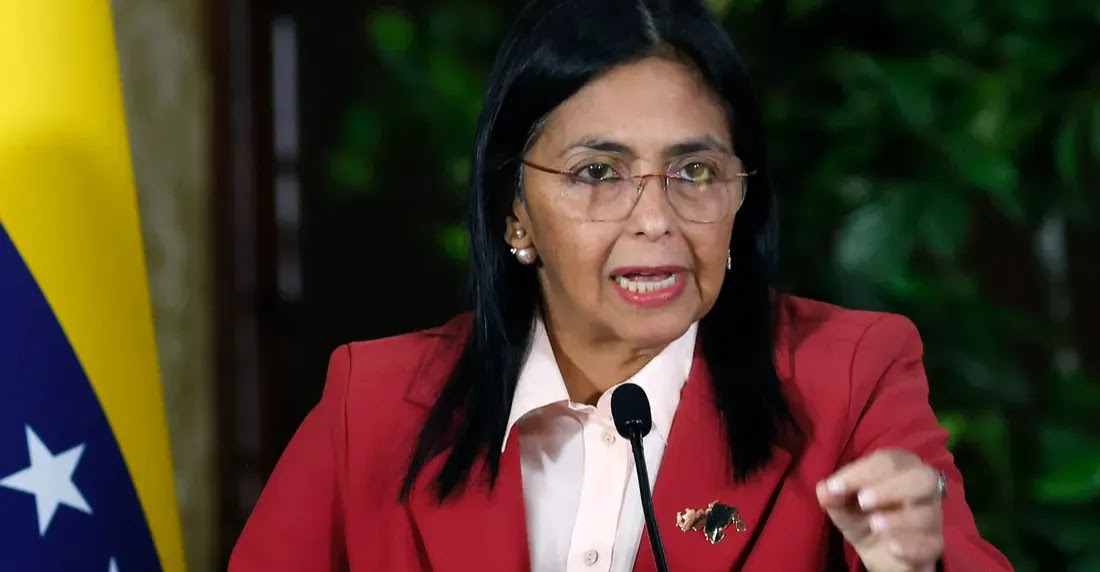
Venezuelan Vice President Delcy Rodriguez confirmed on Saturday that the government does not know the whereabouts of President Nicolas Maduro and his wife.
Rodriguez told state television that the Venezuelan government is demanding proof that Maduro and his wife are alive.
She added that what happened represents a dangerous escalation and a violation of national sovereignty.
Earlier today, US President Donald Trump announced the arrest of Venezuelan President Nicolas Maduro, following airstrikes on the country.
Venezuela entered a sudden military escalation early Saturday morning after a series of explosions rocked the capital, Caracas, as the government spoke of a US attack targeting civilian and military sites in more than one state.
Tehran condemns Washington's attack on Venezuela: a violation that threatens the international order.
Iran’s Foreign Ministry on Saturday condemned the US attack on Venezuela, calling it a violation of peace and a threat to the international order.
The ministry said in a statement, which was seen by Shafaq News Agency: “We condemn in the strongest terms the American attack on Venezuela and what it constitutes as a flagrant violation of the sovereignty and territorial integrity of this country,” indicating that “the military aggression against Venezuela constitutes a clear violation of the fundamental principles of the Charter of the United Nations and international law.”
The statement added that "the American attack on an independent state and a member of the United Nations is a violation of peace and security and its repercussions threaten the international order," stressing Venezuela's right to defend its sovereignty and territorial integrity and the right of its people to self-determination.
Earlier today, US President Donald Trump announced the arrest of Venezuelan President Nicolas Maduro, following airstrikes on the country.
Venezuela entered a sudden military escalation early Saturday morning after a series of explosions rocked the capital, Caracas, as the government spoke of a US attack targeting civilian and military sites in more than one state.

No comments:
Post a Comment