Sudani meets with Oliver Wyman to discuss debt rescheduling and improving borrowing costs.
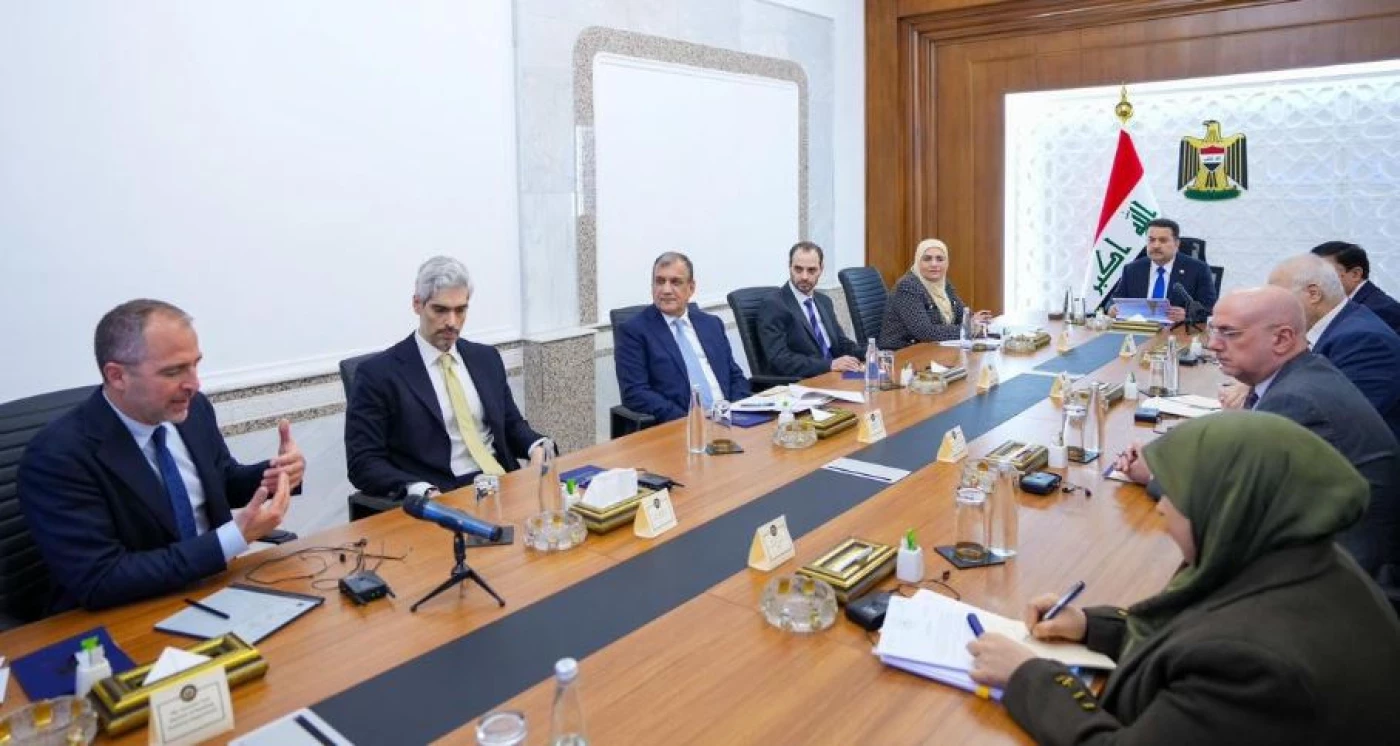
On Monday, January 12, 2026, caretaker Prime Minister Mohammed Shia al-Sudani discussed debt rescheduling and improving borrowing costs during a meeting he held with representatives of the financial auditing firms "Oliver" and "Ayman," in the presence of the Minister of Finance, the Governor of the Central Bank, and a number of financial and economic advisors.
The video for this My FX Buddies Blog Post is below here:
A statement from the office of Prime Minister Mohammed Shia al-Sudani, a copy of which was received by Al-Jabal, stated: “Prime Minister Mohammed Shia al-Sudani chaired a meeting today, Monday, dedicated to discussing financial organization, scheduling, and management of public debt, both external and internal, in the presence of the Minister of Finance, the Governor of the Central Bank of Iraq, a number of financial and economic advisors, as well as representatives of the global financial auditing firm Oliver Wyman.”
The statement added, "The meeting witnessed a comprehensive and detailed presentation of the plans and programs adopted in scheduling public debts, and the priorities of financial treatments, in accordance with the most appropriate reform steps, and scientific paths based on similar successful global experiences, taking into account the particularity of the Iraqi experience and relying on developing the strong and reliable characteristics of the Iraqi economy."
During the meeting, according to the statement, Al-Sudani pointed to "the government's completion of the financial and economic reform process, and the benefit of the expertise of major international companies in scheduling public debts, both local and foreign, and the importance of adopting medium-term strategies in accordance with the nature of the debts, the credit rating and global indicators in this field, with the importance of emphasizing the development of budgets based on a realistic assessment of the availability of financing and the ability to implement."
The statement continued, “Al-Sudani also stressed the need to achieve the desired benefits from public debt management and employ them within the framework of promoting economic growth, easing pressure on the national currency, improving borrowing costs, and maintaining the financial reputation of the Iraqi economy and its strengths, while emphasizing the stages of diagnosis, improvement, and developing successful strategies for implementation within the steps of managing and scheduling public debt, in line with long-term economic reform.”
The statement concluded, "Al-Sudani directed the Ministry of Finance, the Central Bank, and financial advisors to continue communicating and following up with Oliver Wyman in order to develop the best executive formulas and financial mechanisms for dealing with public debt, within the framework of sound financial indicators that contribute to the goal of developing the Iraqi economy."
Sudanese: The government has completed the path of financial and economic reform.

Prime Minister Mohammed Shia Al-Sudani confirmed on Monday that the government has completed the path of financial and economic reform, while directing the Ministry of Finance, the Central Bank and financial advisors to continue communication and follow-up with Oliver Wyman in order to develop the best executive formulas and financial mechanisms for dealing with public debt .
In a statement received by Mail, Al-Sudani’s office said that “Al-Sudani chaired a meeting today, Monday, dedicated to discussing financial organization, scheduling and management of public debt, external and internal, in the presence of the Minister of Finance, the Governor of the Central Bank of Iraq, a number of financial and economic advisors, as well as representatives of the global financial auditing firm Oliver Wyman .”
The statement added that "the meeting witnessed a comprehensive and detailed presentation of the plans and programs adopted in scheduling public debts, and the priorities of financial treatments, in accordance with the most appropriate reform steps, and scientific paths based on similar successful global experiences, taking into account the particularity of the Iraqi experience and relying on developing the strong and reliable characteristics of the Iraqi economy ."
During the meeting, Al-Sudani pointed to the government's completion of the financial and economic reform process, and the benefit of the expertise of major international companies in scheduling public debts, both local and foreign, and the importance of adopting medium-term strategies in accordance with the nature of the debts, the credit rating and global indicators in this field, with the importance of emphasizing the development of budgets based on a realistic assessment of the availability of funding and the ability to implement .
He stressed "the need to achieve the desired benefits from public debt management, and to employ them within the framework of promoting economic growth, easing pressure on the national currency, improving borrowing costs, and preserving the financial reputation of the Iraqi economy and its strengths, while emphasizing the stages of diagnosis, improvement, and developing successful strategies for implementation within the steps of managing and scheduling public debt, in line with long-term economic reform ."
The Prime Minister directed the Ministry of Finance, the Central Bank, and financial advisors to continue communicating and following up with Oliver Wyman in order to develop the best executive formulas and financial mechanisms for dealing with public debt, within the framework of sound financial indicators that contribute to the goal of developing the Iraqi economy .
Government advisor: The price of a barrel of oil in the 2026 budget is between $55 and $62.

The Prime Minister’s financial advisor, Mazhar Muhammad Saleh, predicted on Monday that the average price of a barrel of oil in the 2026 budget would range between $55 and $62, noting that these estimates are subject to change due to several factors.
Saleh said that “global forecasts, based on OPEC analyses and the context of the global oil market, as well as estimates from a number of international financial institutions, indicate that the average price of a barrel of global oil (Brent crude) expected for 2026 may move within an approximate range of between $55 and $62 per barrel, with an average tendency of approximately $61 in a considerable number of market estimates.”
He pointed out that "these estimates are based on market analyses and informal research related to OPEC forecasts and supply and demand balances in the global economy, and do not represent an official price figure announced by the organization."
He added that "these estimates remain subject to change depending on a number of influencing factors, most notably developments in geopolitical conflicts, changes in the pace of global energy demand growth, production policy decisions within the framework of 'OPEC+', as well as the accelerating shift towards renewable energy and climate policies."
Saleh's appearance: High oil prices may protect the currency despite geopolitical tensions
In his interview with Al-Furat News Agency, Saleh pointed out that "if regional tensions lead to higher oil prices while the flow of oil resources continues uninterrupted, this may enhance monetary stability rather than threaten it. Higher oil prices increase foreign reserves, giving monetary policymakers more room to intervene in the exchange market, whether by managing the supply of foreign currency or controlling local liquidity and directing monetary demand in a way that preserves price stability and the exchange rate together."
He explained that “political tension is not the only factor in putting pressure on the currency, but rather it becomes a conditional variable whose final effect depends on the continuity of oil exports in terms of quantity and regularity, the level of global oil prices and their medium-term trends, the efficiency of monetary policy tools in absorbing psychological shocks and speculations, in addition to the harmony of fiscal policy with monetary policy in managing surpluses or deficits.”
Saleh concluded by saying that "the situation does not allow for a definitive judgment or a mechanical prediction of a rise in the exchange rate simply because of escalating tensions, as the balance of influence remains dependent on the dynamic interaction between oil, reserves, market behavior, and the institutional capacity of the state to intervene rationally."
Expert: The government acknowledges the deficit but fears the impact on the comfort of the elderly.
"They resorted to superficial solutions that burden the citizen."

Economic expert Ziad al-Hashemi said on Monday (January 12, 2026) that the Iraqi government has begun to halt spending on multiple expenditure categories, considering the move an implicit admission of a real financial crisis, but he stressed that it is avoiding “provoking the bigwigs or affecting the comfort zone in which they and their followers and supporters enjoy themselves.”
Al-Hashemi criticized the government's steps in managing the financial crisis, explaining that selling old cars and equipment or stopping funding for scholarships are secondary measures that do not rise to the size of the large financial deficit. He stressed that the real treatment begins with reviewing the salary scale, rationalizing the allowances for higher grades, and combating fictitious salaries, in addition to restructuring the loss-making public sector companies or partially privatizing them, warning against being satisfied with superficial solutions that burden the economy and the citizen.
Al-Hashemi stated in a post, which was followed by 964 Network , that “the Iraqi government has begun (liquidating its assets) and stopping spending on multiple expenditure categories, in an implicit admission of the existence of a real financial crisis that the government is suffering from!”
He added that “selling old cars and used equipment and stopping funding for scholarships is a sound step to rationalize spending, but it is a secondary step and not sufficient on its own to bridge the large financial deficit gap, which requires bigger, bolder and stricter steps and decisions that match the enormity of the deficit that the government is suffering from!”
He continued: “The government should have started by reviewing the salary scale, controlling and rationalizing the salaries of senior and special grades and their billion-dollar allowances, and combating the situation of multiple salaries and fictitious salaries, which amount to tens of thousands and which unfairly drain enormous financial resources!”
He explained that “instead of focusing on the mechanisms of state institutions, it would have been better to focus on the institutions themselves, especially public sector companies, which drain large financial resources without any economic return to support the government’s finances! This can be achieved by liquidating and selling all loss-making companies or restructuring them and opening the door to an investment partnership with the private sector to transform those companies from loss-making companies with an old business model into companies with performance, production and profitability!”
He stressed that “all of this and other important steps were not given the required priority by the Iraqi government in its plan to control spending, and it was content with giving priority to controlling secondary spending areas that will not help it much in achieving the required financial discipline!”
He concluded that “the government, as is clear, does not want to provoke the big players, nor does it want to affect the comfort zone in which they and their followers and supporters enjoy themselves. Therefore, it decided to settle for superficial solutions while continuing to bear the full financial burden, even if this leads to more deficits and financial crises that burden the economy and the citizen!”
Al-Sudani to Al-Halbousi: Parliament must fulfill its legislative duties
To support the reconstruction and development process

Speaker of Parliament Hebat al-Halbousi discussed on Monday with Prime Minister Mohammed Shia al-Sudani the progress of ongoing dialogues between political forces to resolve the remaining constitutional entitlements, while both sides stressed the need to activate the legislative role of the new parliament in a way that serves reconstruction and development plans.
A statement from the media office of the Speaker of Parliament, a copy of which was received by 964 Network, stated that “Speaker of Parliament Hebat Al-Halbousi met today, Monday, with Prime Minister Mohammed Shia Al-Sudani.”
The statement added that “during the meeting, developments in various fields were reviewed, and the course of dialogues between political forces and the importance of sustaining them were discussed in order to complete the constitutional requirements, after the people had fulfilled their electoral obligation.”
He added that “the meeting emphasized the importance of the new House of Representatives undertaking its legislative duties in order to support the reconstruction, development and building process and to meet the aspirations of the citizens.”
Warnings of escalating public anger following tax and customs duty hikes

Economic expert Ahmed Al-Tamimi warned on Monday (January 12, 2026) of the possibility of escalating public anger in Iraq due to the government's decisions to raise taxes and customs duties, coinciding with rising prices of basic commodities in the markets, which increases the pressure on the living standards of citizens, especially those with limited income.
Al-Tamimi told Baghdad Today: “Any increase in taxes or customs duties, if not accompanied by clear social protection measures, will directly affect the prices of goods and services, because the merchant and the importer will pass on the cost of the increase to the end consumer, while the Iraqi citizen is already suffering from the erosion of income as a result of inflation and the high cost of living.”
He added that “the Iraqi public is sensitive to economic decisions that affect livelihoods, and such measures could turn from an economic issue into a social and perhaps political crisis if they are not managed wisely and transparently.”
He pointed out that “raising customs duties may be financially justified to support non-oil revenues, but the current timing is not appropriate due to weak market control and the absence of local alternatives capable of meeting market needs, which leads to higher prices without a tangible improvement in services or income levels.”
Al-Tamimi stressed that “continuing this approach without societal dialogue or governmental clarification will increase public discontent, especially with citizens feeling that the economic burdens fall on them alone, in light of the absence of real reforms to combat waste and corruption and improve financial management.”
For his part, economist Ziad Al-Hashemi believes that implementing the new customs system and imposing customs duties, along with regulating remittances through a unified governance system, represents a correct and initial step in the right direction, but he stressed that the problem lies in the implementation mechanism and the state’s management of the transition process from the previous situation to the new system.
Al-Hashemi explained in a statement to “Baghdad Today” on Sunday (January 11, 2026) that “the rapid and comprehensive application of the system has led to confusion in Iraqi markets and has directly affected citizens,” noting the need for “the government to reassess the implementation mechanism, and perhaps introduce amendments to mitigate the damage caused by the speed of implementation.”
He added that "the solution lies in adopting a phased implementation mechanism, starting with focusing on specific priority goods, reviewing the customs duties imposed on them, and monitoring the repercussions of this phase before moving on to other goods, so that the process is carried out in several stages that allow for absorbing the change and reducing the damage to society, markets and traders, in addition to its impact on supply and demand."
Al-Hashemi stressed that “the gradual approach helps the government achieve its goals in controlling remittances and commercial operations and achieving non-oil revenues that support public finances, while at the same time giving traders an opportunity to rearrange their situations and the volume of goods, and sparing the consumer the shock of a sudden rise in prices in the markets.”
He concluded by saying that "this well-thought-out approach will ensure a smooth transition to the new system," expressing his hope that the government will adopt this path during the next phase to ensure market stability and protect the citizen.
The Ministry of Oil is discussing bilateral relations between the two countries in the fields of oil, gas and energy with Washington.

Deputy Prime Minister for Energy Affairs and Oil Minister Hayyan Abdul Ghani discussed with the Chargé d'Affaires of the US Embassy bilateral relations between the two countries in the fields of oil, gas and energy.
A statement from the Ministry of Oil, seen by Al-Mirbad, said that the minister received on Monday the US Chargé d'Affaires in Baghdad, Joshua Harris, and discussed bilateral relations in the fields of oil, gas and energy.
MP sounds alarm bell with "worrying" predictions about the 2026 budget: Debt is draining revenues

On Monday, January 12, 2026, Iraqi Member of Parliament Ahmed Al-Sharmani spoke about the financial and economic challenges that the next Iraqi government will face, noting that the accumulated internal and external debts have become a direct pressure on the national economy.
Al-Sharmani told Al-Jabal platform that “the current financial indicators are sounding the alarm, and the continued reliance on borrowing to finance operational expenses, especially salaries and government support, will increase the financial burdens and reduce the state’s ability to implement real development projects.”
Al-Sharmani explained that "the accumulated debts, both internal and external, have become a direct pressure on the national economy, and debt servicing drains a large part of public revenues, which limits the government's ability to meet the needs of citizens and improve the level of basic services."
He added that "the 2026 budget is expected to have a high deficit as a result of fluctuations in global oil prices, the absence of serious reforms in non-oil economic sectors, as well as the inflation of operating expenses compared to investment expenses."
Al-Sharmani stressed that "the new government is required to adopt a clear financial and economic policy based on diversifying sources of income, supporting the private sector, combating waste and financial corruption, in addition to restructuring the tax and customs system in line with the economic reality of the country."
The Iraqi parliament member concluded his remarks by saying, "Parliament will seriously oppose any budget that does not take into account financial balance and does not provide realistic solutions to the economic crisis. Efforts must be combined between the executive and legislative authorities in order to overcome the challenges and protect the future of the Iraqi economy."
Want to Support My FX Buddies?
.png)
Support My FX Buddies Big or Small I appreciate it all
BuyMeACoffee CashApp:$tishwash
https://paypal.me/tishwash

.jpeg)
Trade: 15 Memoranda of Understanding and a number of agreements to be signed with Morocco next month

– The Ministry of Trade announced on Sunday that a preparatory meeting of the Iraqi-Moroccan Joint Committee was held to discuss the signing of fifteen memoranda of understanding and several agreements during the committee's meetings in Baghdad on February 18-19.
The ministry stated in a press release received by the Iraqi News Agency (INA) that "the Iraqi-Moroccan Joint Committee held its preparatory meeting in Baghdad, chaired by the Iraqi Deputy Chairman of the Committee, Administrative Undersecretary of the Ministry of Trade, Sattar al-Jabri, in preparation for the joint committee meetings scheduled to be held in Baghdad on February 18-19."
The statement added that "the meeting discussed the Iraqi side's report on preparations for the upcoming meeting with the Moroccan side, with the participation of representatives from relevant ministries and government agencies, as well as representatives from the private sector."
It continued, "The meeting addressed approximately fifteen memoranda of understanding and several agreements slated for signing with the Moroccan side during the joint committee meetings, which will contribute to strengthening bilateral cooperation in various fields."
The statement indicated "the Iraqi side's keenness to open up broader horizons for joint cooperation and build strategic partnerships, as well as to sign memoranda of understanding that serve the mutual interests of the two brotherly countries, which are united by solid diplomatic relations and important economic and developmental commonalities."
The war between the dinar and speculators: details of government measures to contain the parallel dollar.

where financial and monetary authorities are engaged inIraqA multi-front battle is underway to maintain the stability of the national currency and prevent the exchange rate in the parallel markets from plummeting to levels that would burden citizens. While the central bank's tools are being used to absorb the momentum in the black market, other measures are being employed.Ministry of FinanceWith an iron fist, the files of administrative corruption that caused the leakage of hard currency through vital channels such asBaghdad International Airport.
Government sources confirmed that a package of proactive measures has been activated to contain the recent surge in the exchange rate. These measures focus on "strengthening field oversight," with relevant authorities conducting intensive monitoring campaigns of buying and selling activity in informal markets.
The aim of these measures is to curb "irrational speculation" that artificially inflates demand for the dollar. The government believes that narrowing the gap between the official rate (1320) and the parallel market rate necessarily requires cutting off the sources of "political dollars" and "smuggled dollars," and channeling the money supply towards official banking channels that provide currency at fixed rates to merchants and citizens.
Currency reserves: "The first line of defense"
remains.IraqThe hard currency reserves represent a "historical buffer" preventing the dinar's collapse. According to economic sources, the central bank uses these reserves prudently to meet "real demand" related to legitimate foreign trade and the needs of citizens traveling abroad.
The availability of strong financial backing providesMonetary AuthorityThe ability to maneuver: the more trade finances are financed through the "electronic platform" and correspondent banks, the less traders rely on the parallel market, which automatically reduces pressure on exchange offices and lowers the unofficial exchange rate.
Alongside economic measures, accountability and integrity files emerged as an integral part of the market regulation process. They have re-establishedMinistry of FinanceAn investigation has been opened into the case of "manipulating the sale of dollars to travelers" at the port.Rafidain BankairportBaghdadThe international case exposed loopholes exploited by corrupt individuals to smuggle currency under the guise of travel.
Furthermore, acting on a directive from the Ministry of Finance, the bank summoned [someone/something].Mesopotami


The Minister of FinanceSami's SpectrumI had previously issued a decision to suspend the director of Rafidain Bank.Ali Al-FatlawiMore than 20 officials and employees were arrested on suspicion of manipulating dollar sales at the outlet.Baghdad International AirportIn addition to other violations,
this move sends a clear signal that the subsidized dollar is intended only for those who are eligible, and that any manipulation at airport outlets will be met with strict administrative and judicial penalties. This will help close a significant loophole that was being used to funnel state funds into the parallel market.
Experts' view: "Reform requires patience."
Despite optimism surrounding the government's measures, economic experts believe that tangible results in reducing the exchange rate may take time to become clearly visible in the markets.
Data confirms thatIraqi governmentDetermined to end the "dual exchange rate" this year, between encouraging transactions through official platforms and purging state-owned banks of administrative corruption, the path seems clear towards a "stable dinar".
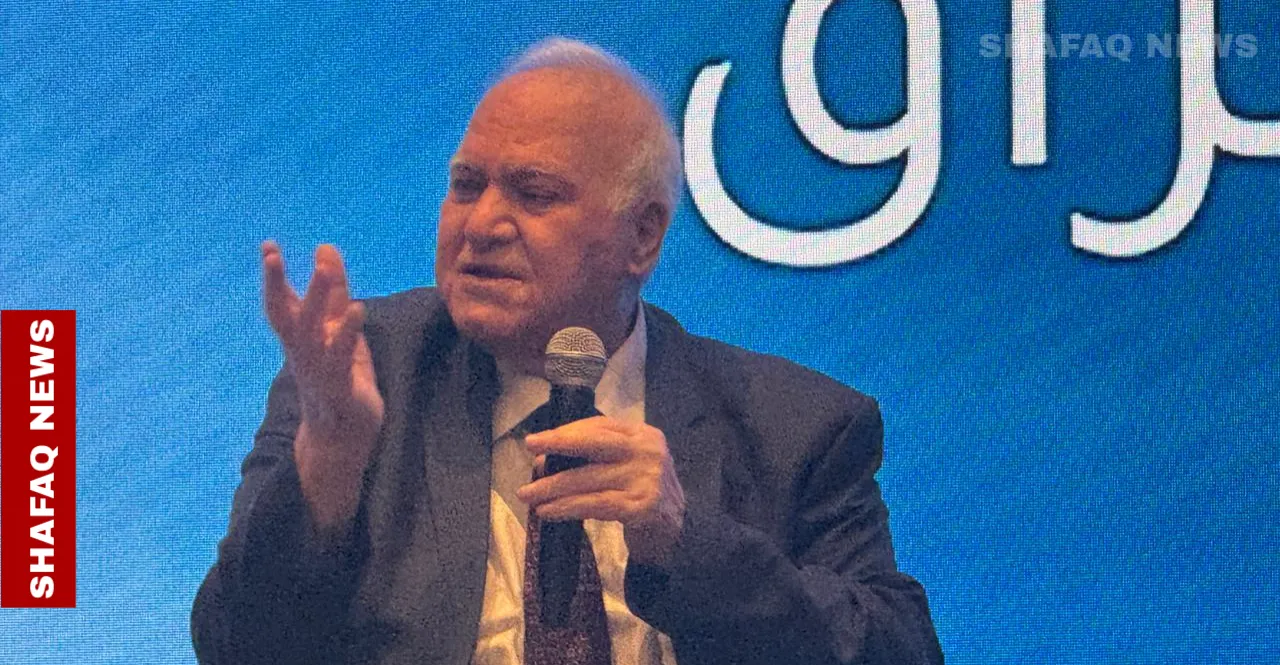
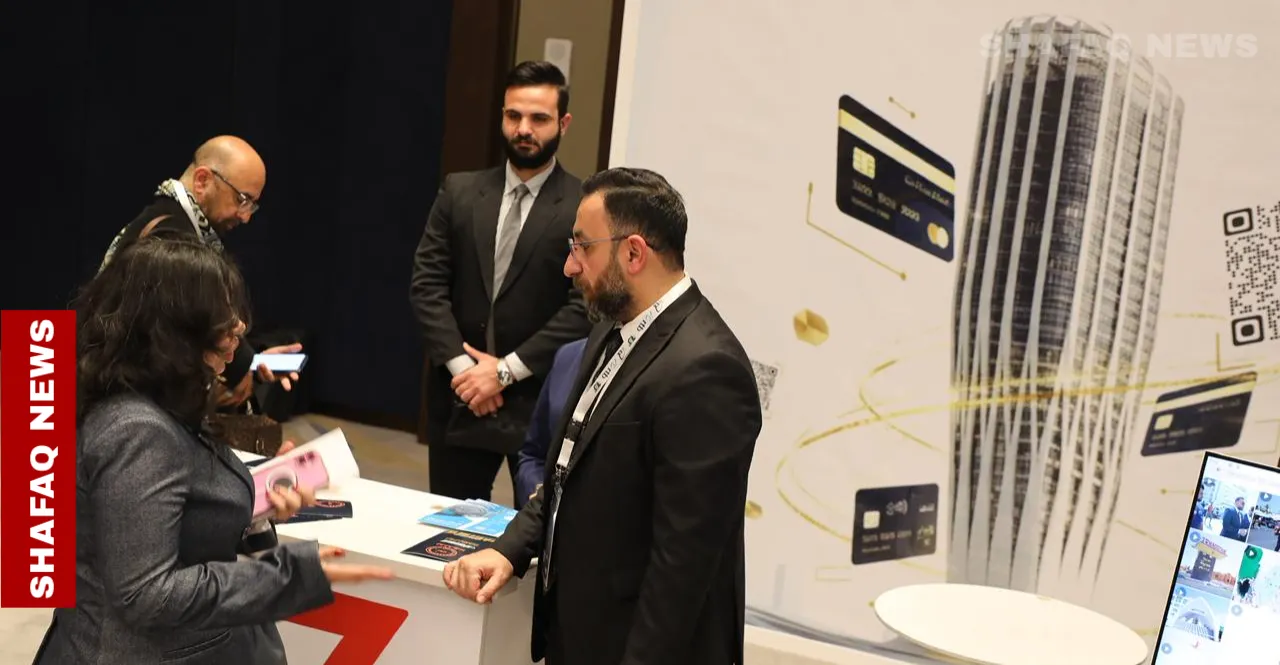
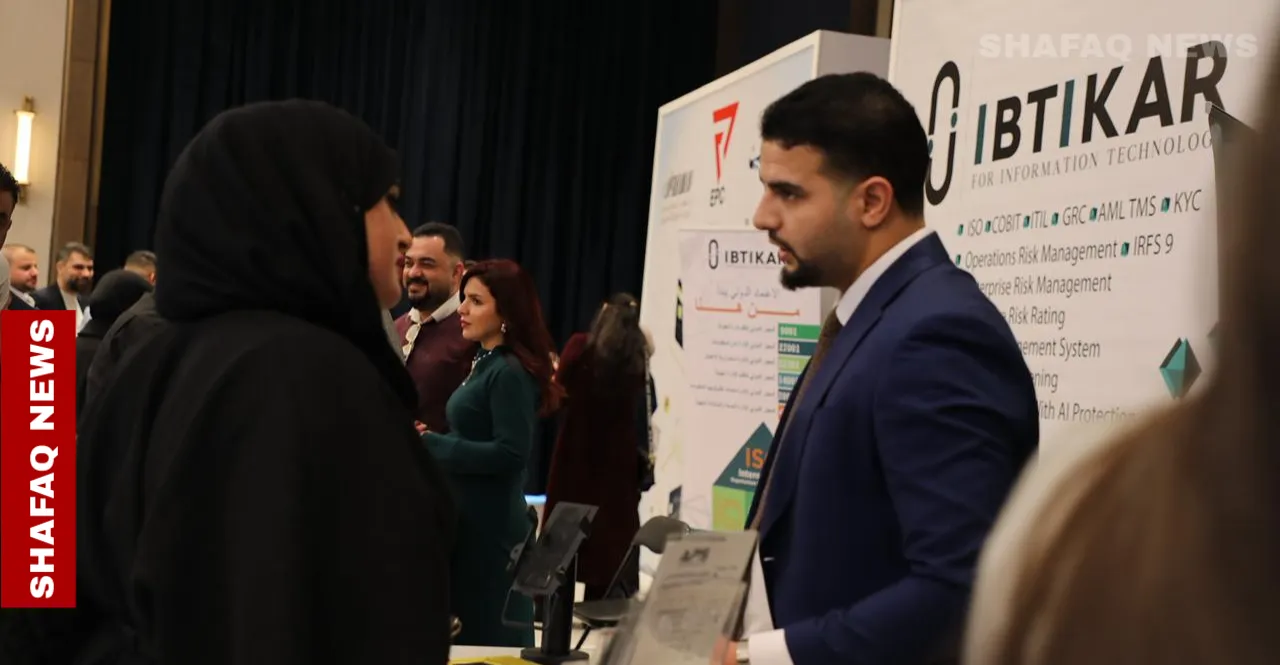
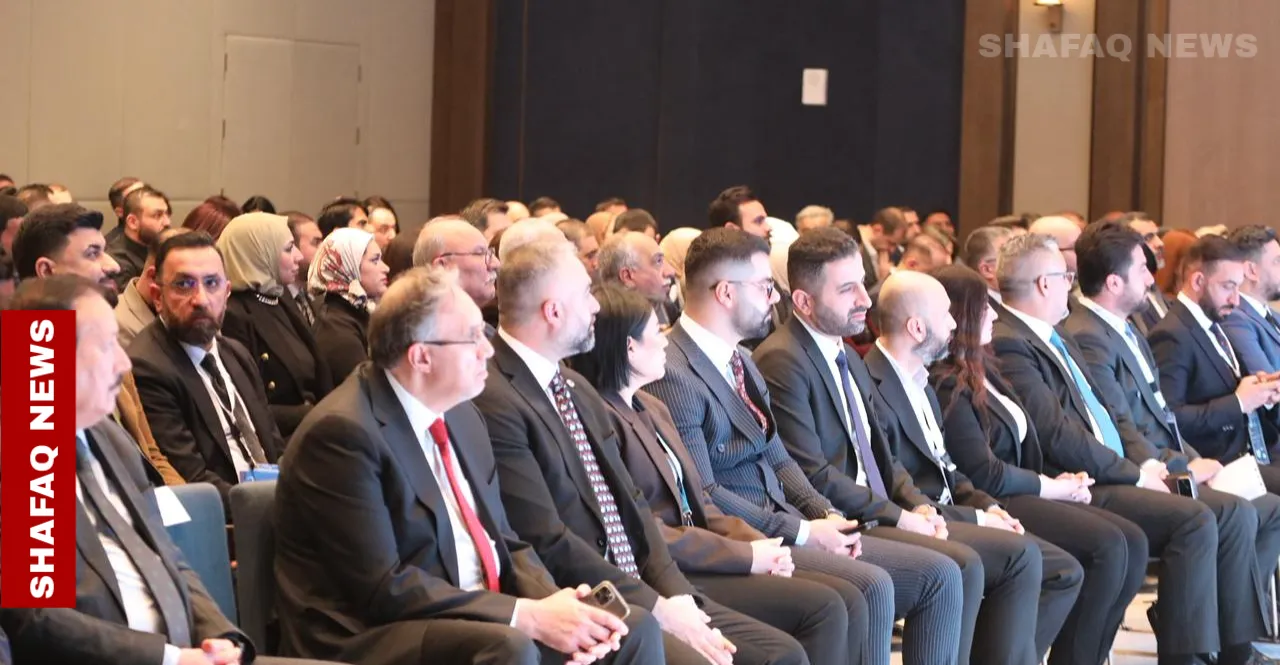
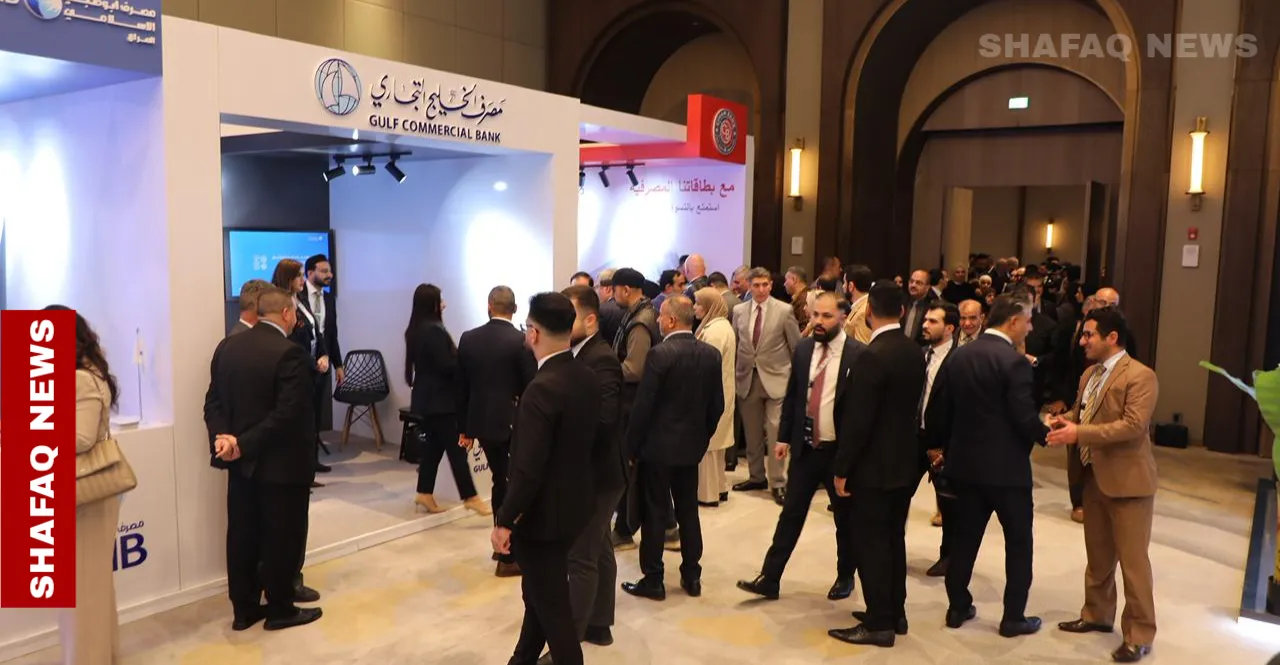
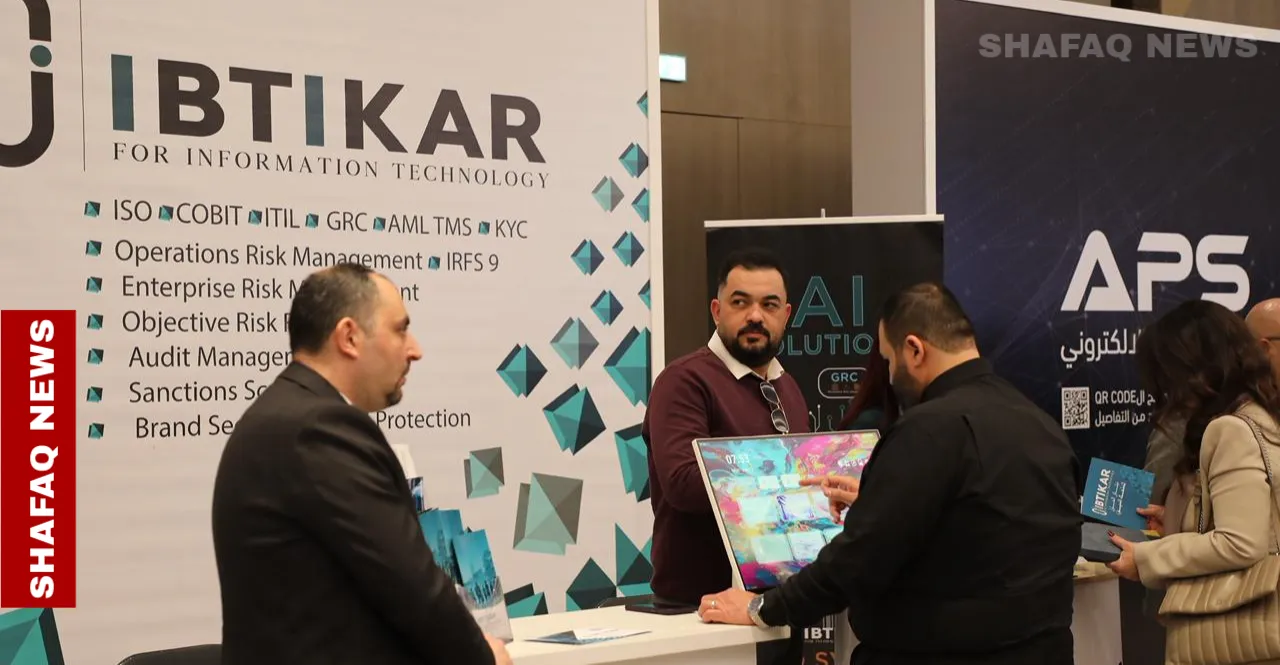
"Turning Point": Conference in Baghdad charts the future of Iraqi banks (Photos)

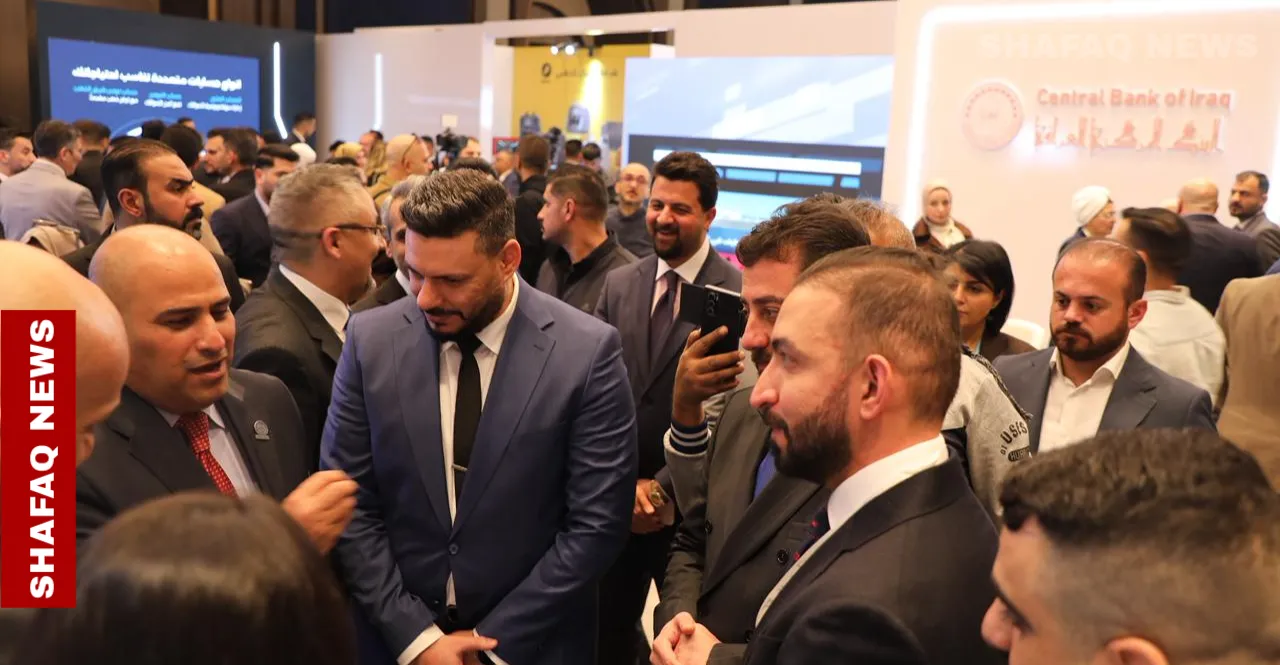
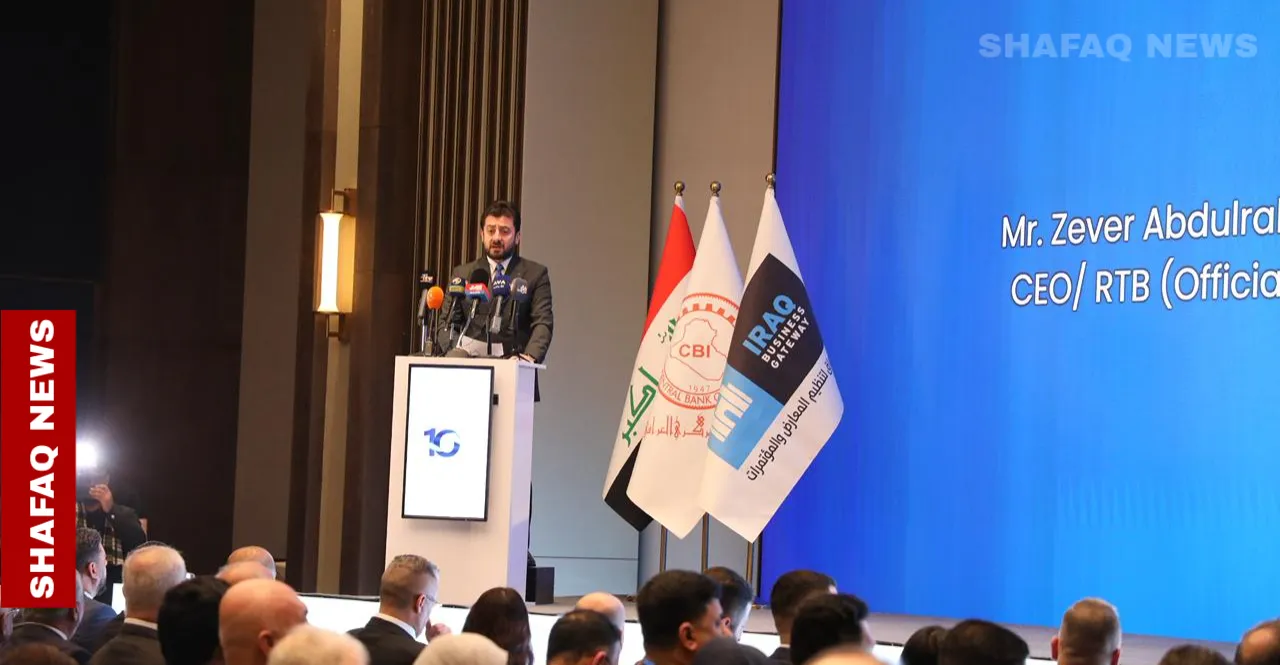
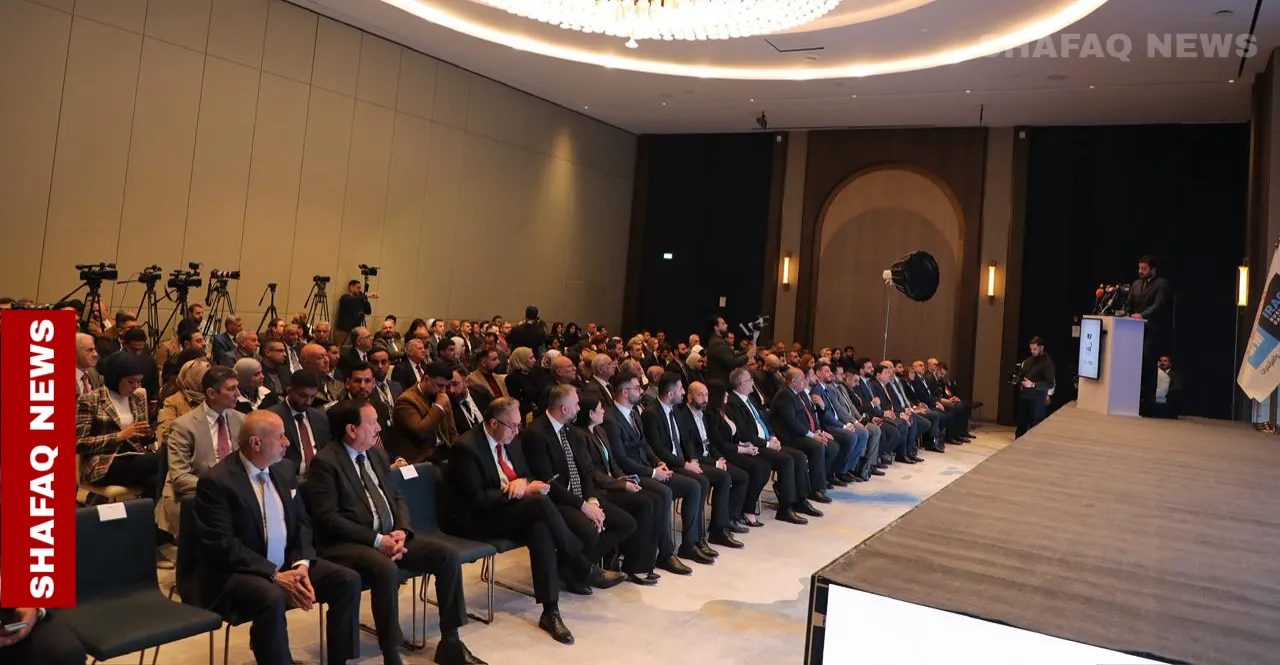
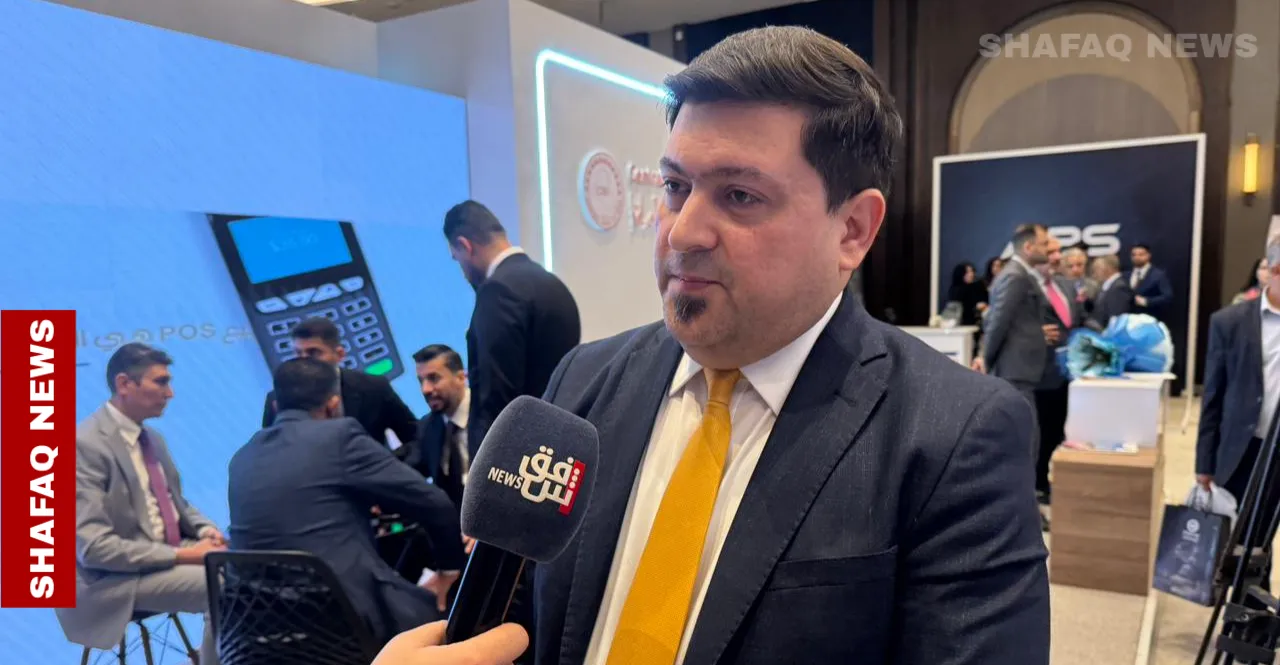
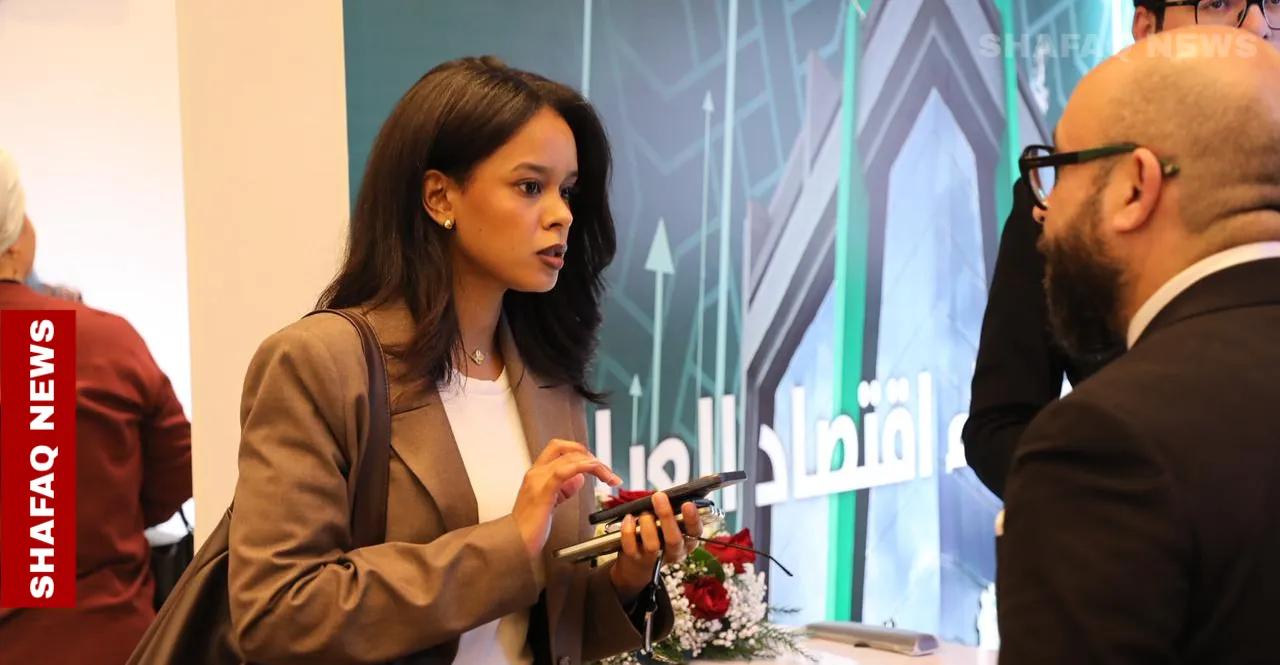
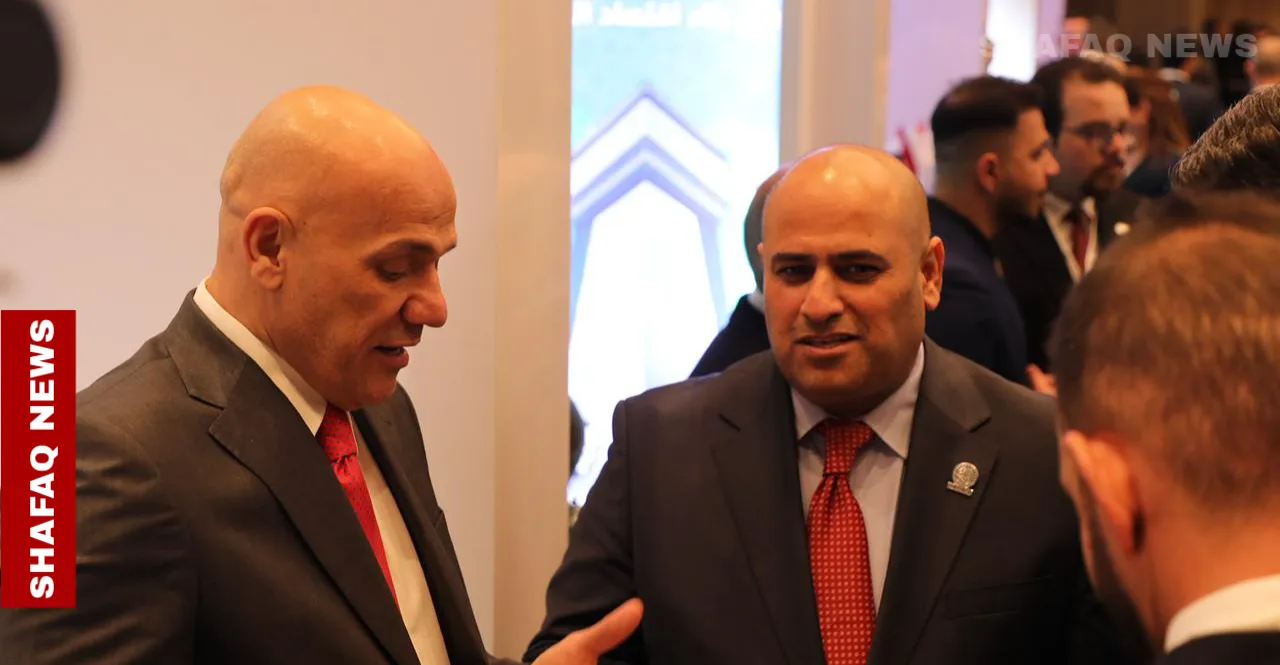
The 10th annual banking conference, held on Monday in the capital Baghdad, discussed banking policies, financial reforms and the development of digital services with the participation of representatives from foreign banks, in a move aimed at transferring international expertise and supporting the reform process in this Iraqi sector.
The Prime Minister’s advisor, Mazhar Muhammad Saleh, told Shafaq News Agency that the conference is being held at a very important time for the banking process, especially since the sector is experiencing a phase that can be described as labor pains, which includes both government and private banks.
He explained that "two international companies specializing in financial evaluation are currently evaluating the performance of banks, as Ernst & Young is supervising the evaluation of government banks, while Oliver Wyman is evaluating private banks, and the results will be presented in the coming weeks."
Saleh pointed out that the conference is not limited to highlighting reform paths, but also aims to present the results achieved and measure the actual benefit of integrating the basic reform environment with its outputs, in a way that contributes to advancing the Iraqi banking reality.
He stressed that developing the banking sector requires an important intermediary, namely information technology, explaining that compliance, financial regulation, and operational plans, no matter how advanced, lose their value without an integrated technological infrastructure.
He added that the availability of technology in Iraq today represents an advanced turning point that enhances the chances of success for banking reform and deepens the community's connection to the banking system.
For his part, the Assistant Director General of the Central Bank of Iraq, Ali Abdul Sahib, described the conference as a qualitative leap for the banking sector, contributing to raising Iraqi banks to the level of foreign banks, as well as clarifying the banking reform plan implemented by the Central Bank in cooperation with the American auditing and consulting firm Oliver Wyman, with the aim of ensuring that banking procedures are good and in accordance with international standards and external requirements.
Abdul Sahib noted during his interview with Shafaq News Agency that the conference was attended by banking figures and foreign experts from outside Iraq.
In the same context, the Managing Director of the Regional Commercial Bank, Rahva R Abdul Rahim Tayeb, affirmed that digital transformation and financial inclusion represent a fundamental pillar in the bank’s new vision through the development of electronic channels, the simplification of banking procedures, and the enhancement of electronic payment solutions.
Tayeb explained to Shafaq News Agency that this approach contributes to expanding access to banking services and enabling individuals and companies to integrate into the formal financial system.

No comments:
Post a Comment