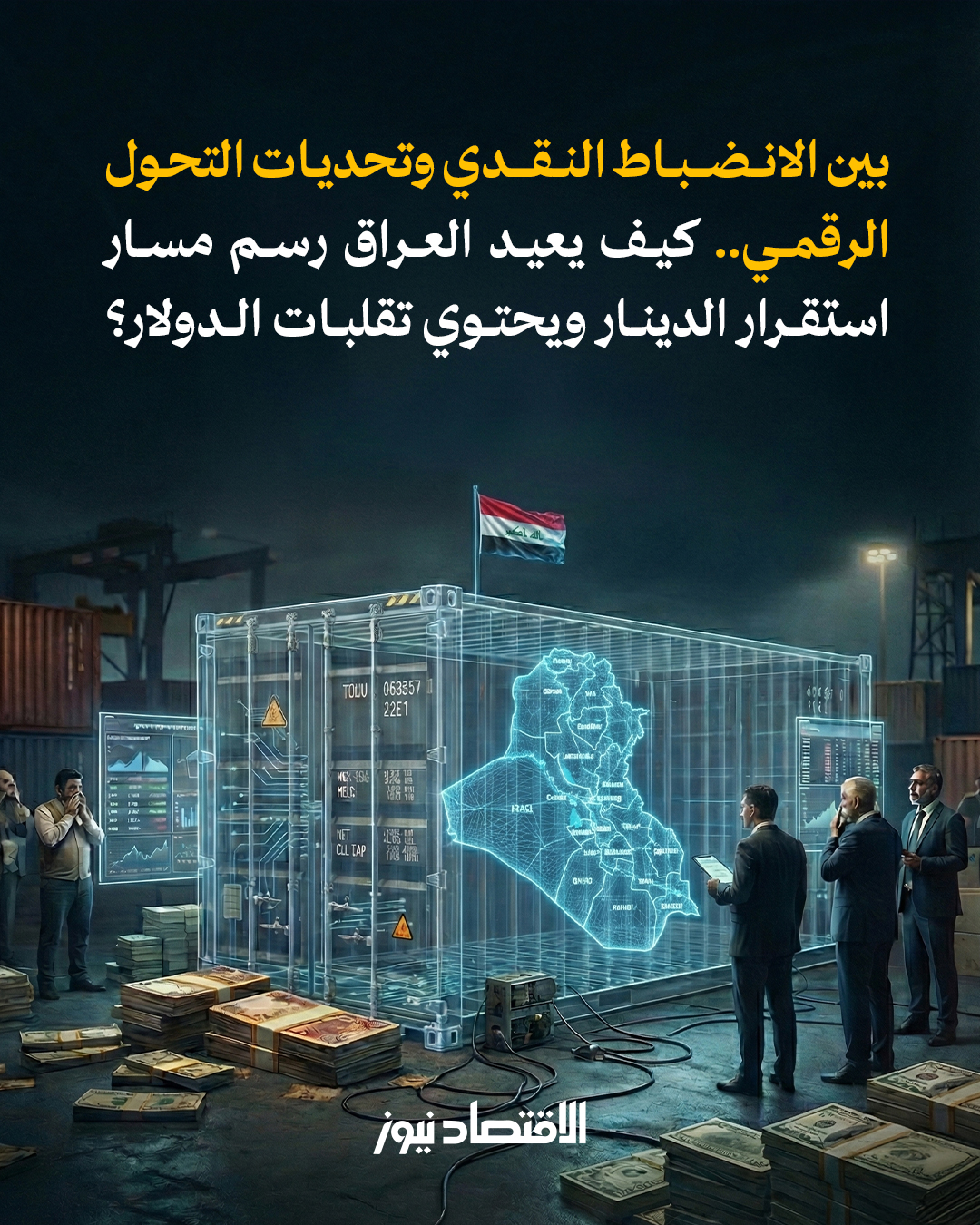
The Iraqi exchange market has been witnessing a remarkable fluctuation in the exchange rate of the dollar against the dinar for several days now, a situation that cannot be separated from a set of profound transformations that have occurred in the monetary, customs and financial policies of the state.
The video for this My FX Buddies Blog post is below here:
While some public opinion focuses on the current rises in the parallel market, a deeper reading emerges that sees these fluctuations as a natural transitional phase within a broader reform path aimed at regulating the economy, enhancing transparency, and protecting financial stability in the medium and long term.
The "Skoda" system: From the customs gate to the heart of the currency exchange market
Economist Nabil Al-Marsoumi puts his finger on one of the most important direct reasons for the rise in exchange rates in the parallel market, which is the application of the European digital auditing system known as "Skoda".
This system links customs data between border crossings and banks. It came into effect on December 1st, starting with four main commodities: gold, jewelry, mobile phones, cars, and refrigeration equipment, before being later extended to various imported goods.
Al-Marsoumi stated that the core objective of the "Skoda" initiative is clear: to regulate the use of the dollar, prevent invoice manipulation, ensure goods conform to certificates of origin, and close one of the most serious avenues for waste and corruption in foreign trade.
However, according to Al-Marsoumi, its practical implementation has been hampered by an incomplete institutional framework, namely the duplication of customs regulations between the Kurdistan Region's border crossings and those in central and southern Iraq.
He pointed out that this duality created a strong incentive for a segment of traders to avoid the official platform and instead turn to the parallel market to obtain dollars, or to divert import routes towards the region’s ports, which raised the demand for foreign currency outside official channels and pushed the parallel price to levels approaching 145,000 dinars per 100 dollars, and then exceeded it at some times.
Al-Marsoumi warns that the continuation of this situation not only has monetary repercussions but also threatens the state's customs revenues, which could lose a significant portion due to the diversion of trade to outlets not subject to the same digital system. Furthermore, the widening gap between the official and parallel exchange rates, if prolonged, could gradually affect the prices of imported goods, and consequently, inflation rates and the standard of living for citizens.
From here, the essence of the problem emerges: reform in itself is necessary, even inevitable, but its success depends on providing the requirements for comprehensive and fair implementation, and on close coordination between the Central Bank, government agencies, and associations of traders and importers, to reach a transitional formula that encourages adherence to the new system instead of running away from it.
Government and Central Bank: A quiet battle to restore balance
In contrast to this critical diagnosis, government sources confirm that the state, in partnership with the Central Bank and relevant economic bodies, has already launched a series of measures and policies that have begun to bear fruit gradually, with tangible decreases in dollar exchange rates recorded in recent days in Baghdad and Erbil.
These measures stem from a comprehensive vision for regulating the exchange market, one that does not rely on superficial or temporary solutions, but rather on a combination of monetary, fiscal, and regulatory policies. The Central Bank has maintained the official exchange rate of the dinar at 1,320 dinars to the dollar, serving as a key anchor of stability for official transactions and sending a clear message to the markets that monetary policy remains coherent and capable of controlling overall trends.
In addition, the use of the dinar within the local economy was strengthened by imposing restrictions on the use of the dollar in domestic transactions, especially in the real estate and luxury goods sectors, which contributed to reducing unproductive demand for the US currency.
Regulating the market and curbing speculation
Within the same framework, the relevant authorities intensified their efforts to regulate the exchange market and restrict the buying and selling of foreign currencies to official channels, in an attempt to dry up the sources of speculation that previously fueled unjustified increases in the black market.
Trade policy has also moved towards expanding the use of alternative currencies in imports, such as the euro, the Chinese yuan and the Indian rupee, which has relatively eased the pressure on the dollar and opened up a wider margin for maneuver in managing the demand for hard currency.
This multi-tool approach reflects an official recognition that addressing the exchange rate issue cannot be done by injecting dollars into the parallel market, as some demand, because that simply means feeding the same demand and perpetuating the vicious cycle instead of breaking it.
Official reading: The fluctuation is "temporary," not structural.
In this context, the Prime Minister’s financial advisor, Mazhar Muhammad Salih, offered a calmer and more in-depth reading of the recent fluctuations, considering that the volatility witnessed in the parallel market is “temporary” in nature and does not reflect a structural imbalance in the Iraqi economy.
Saleh explained that these moves represent natural market reactions when receiving new signals from fiscal policy, especially after the launch of the fiscal discipline package that focused on re-examining public spending patterns, enhancing revenue efficiency, and expanding and adjusting tax and customs bases.
The market, he said, tends by its nature to "test" new policies before adapting to them and returning to more stable paths.
The most important thing in Saleh’s speech is his confirmation that “the impact of these fluctuations has not been transferred to the daily standard of living, as the annual inflation rate has remained around 2.5%, which is a relatively low level, thanks to the combination of three basic policies: a monetary policy with a fixed official exchange rate, a supportive fiscal policy in which subsidies constitute about 13% of the GDP, and a defensive trade policy that has contributed to absorbing price shocks.”
Between the noise and the reality… why wasn't the citizen affected?
Saleh goes even further, pointing out that the parallel exchange market has become "practically detached" from income and consumption levels, and its influence has shifted to the asset sector, which is not directly linked to the daily lives of the majority of citizens. He uses a striking description when discussing the role of modern supermarkets in absorbing what he calls the "colorful noise" of the exchange market and transforming it into stable "white noise" in terms of prices.
This description reflects the fact that the Iraqi economy, despite its fragility in some aspects, now has better tools to absorb shocks, compared to previous years when any movement in the exchange rate was immediately and strongly reflected in the prices of basic commodities.
Field indicators show an actual decrease in prices.
It is noteworthy that this analysis was not merely theoretical, but was accompanied by tangible indicators on the ground. The dollar exchange rate fell at the close of trading in the Al-Kifah and Al-Harithiya exchanges in Baghdad, reaching 146,900 dinars per 100 dollars, after having been higher in the morning. Similarly, buying and selling prices declined at currency exchange offices, and comparable decreases were recorded in Erbil, reflecting a gradual improvement in overall market sentiment.
The bottom line is… a painful but necessary reform.
It can be said that Iraq stands today at a critical economic crossroads: deep reforms are necessary, but they come with a transitional cost, most notably the volatility in the exchange market. The Skoda system is not the problem in itself, but rather part of the solution, provided that its implementation is completed uniformly and fairly across all border crossings, and is accompanied by genuine dialogue with economic stakeholders.
Between the diagnosis of the two monetary decrees and the optimistic reading of the government and the central bank, a more balanced picture emerges: what is happening is not a collapse, but a reformist labor, the success of which depends on the ability to manage the transitional phase wisely, and to reconcile the requirements of fiscal discipline, the reality of the market, and the interests of the citizen.
In the end, it seems that the battle to stabilize the dinar is not a battle of a day or a week, but a long process, the most prominent title of which is: building an economy that is less fragile, more transparent, and more able to withstand shocks.
There is no "official" intention to raise the price of the dollar in Iraq
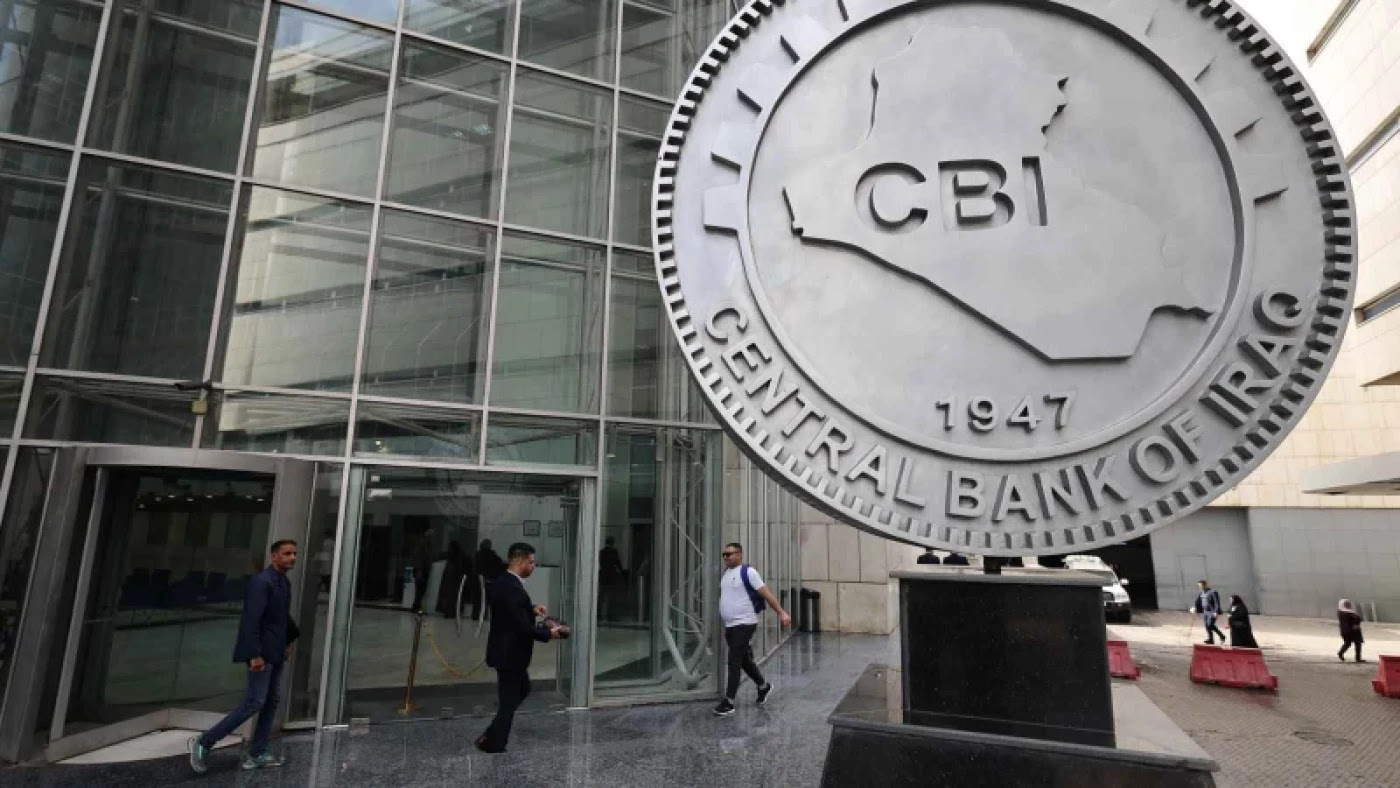
An official source at the Central Bank of Iraq stated that there is no intention to raise the exchange rate of the dollar during the current period.
The currency exchange in Iraq entered a state of confusion at the beginning of the new year 2026, as the price of the dollar against the dinar rose to 1470 and 1480 per dollar, or 147,000 or 148,000 per (100 dollars), accompanied by a noticeable rise in the value of the US currency amid news of a government intention to officially reduce the price of the dinar.
In this context, the official source, who requested not to be named, told Al-Jabal platform on Tuesday, January 6, 2026, that “the Central Bank of Iraq has no intention at the present stage of changing the official dollar exchange rate, as the current rate represents monetary stability at the general price level and is beneficial to the poor classes, given that Iraq depends to a very large extent on imports and any change in the exchange rate at the present stage will affect the general price level and inflation rates,” repeating, “Therefore, there is no intention to change the exchange rate as some are promoting.”
Intertwined factors
There are several factors that determine the price of the local currency against global currencies, including other internal factors and external factors. The responsible source stated that "the first of the internal factors is the inflation rate, and the monetary reserves of dollars and gold reserves," noting that "this determines the strength of the local currency, which is mainly affected by inflation rates."
The source explained that "there is a basket of currencies (considered a reserve at the central bank), and the higher the reserve, the more stable the monetary situation, the better and more stable the price level, and the lower the inflation rates, the higher the value of the local currency will be," adding: "The extent of monetary and economic stability of any central bank in any country has an important impact."
The source pointed out that "the Jordanian dinar has been stable for years at a higher rate than the dollar, knowing that the Jordanian economy is an economy that depends on foreign aid and foreign transfers, but Jordan has reserves related to political stability, and this has a major role in determining the extent of the stability of local currencies."
For his part, Professor of International Economics, Nawar Al-Saadi, explained to Al-Jabal that “the price of any currency against the US dollar is linked to a set of interconnected economic and monetary factors, and not to a single factor as is sometimes rumored.
Al-Saadi said in an exclusive interview with Al-Jabal: “From my point of view, the first decisive factor is the relationship of supply and demand for foreign currency within the economy. Whenever the demand for dollars increases to finance imports, transfers, or savings, compared to a limited supply, the local currency is subjected to downward pressure. In addition, monetary policy plays a pivotal role, whether in terms of the central bank’s tools for managing liquidity, the size of foreign reserves, or the level of confidence in the monetary authority’s ability to defend the exchange rate.”
Al-Saadi also explained that “the value of the currency cannot be separated from the overall performance of the economy, such as the size of the gross domestic product, the structure of the economy, the balance of payments, and the level of political and security stability, in addition to international variables, most notably the strength of the dollar globally and US interest rates.”
Regarding the difference in the value of $100 between Iraq, Turkey, and China, Al-Saadi stated that "this is normal and reflects the difference in monetary and economic systems, as each country issues its currency according to the size of its economy, its monetary mass, and its financial policies. Therefore, the nominal figure for the exchange rate does not necessarily reflect the strength of the economy, but rather one must look at the purchasing power, the level of inflation, and the ability of the currency to perform its functions within the economy."
Who is responsible?
Regarding the entity responsible for determining the exchange rate, Al-Saadi explained that “the Central Bank of Iraq is the official entity authorized to determine the official price of the dinar against the dollar and manage it within the framework of monetary policy, whether through the currency sale window or other tools. However, at the same time, there is a price that is formed in the parallel market as a result of the transactions of traders, importers and individuals. This price is directly affected by non-monetary factors, such as restrictions on transfers, international compliance requirements, and the nature of Iraq’s foreign trade, especially with countries subject to sanctions, which pushes some traders to look for dollars outside official channels, and raises its price in the parallel market.”
The professor of international economics concluded his remarks by noting that “what is being circulated about the possibility of raising the dollar exchange rate to 2,000 dinars or more during the current year is exaggerated talk and is not based on realistic economic data,” pointing out that “any radical change in the exchange rate of this magnitude presupposes the existence of a severe financial crisis, or a major collapse in reserves, or a broad economic or political shock, which are factors that are not currently available.”
The economist pointed out that "Iraq still has good cash reserves supported by oil revenues, and the central bank is still able to manage the exchange rate within reasonable margins, despite the existing challenges."
The Iraqi Trade Bank announces that all its branches will be open during official holidays.

The Iraqi Trade Bank announced on Tuesday that all its branches will be open during official holidays, based on the directives of the Central Bank.
The bank's media office stated in a statement received by the Iraqi News Agency (INA) that, "Based on the directives of the Central Bank of Iraq, it has been decided to open all branches of the Iraqi Trade Bank to receive customers during official holidays from ten o'clock in the morning until one o'clock in the afternoon. Working hours during this period will be limited to receiving and processing foreign transfers and the pre-customs declaration only, and no other banking operations will be carried out other than those mentioned above."
He added that "work will continue at the bank during official holidays until 31/1/2026".
The 2025 budget tables: Who bears the responsibility for the trillions of dinars lost?

The 2025 budget tables raise a pivotal question: Who will answer for managing the funds of an entire year away from parliamentary oversight? Between continuous postponement and parliamentary statements, the citizen remains facing the hypothesis of non-transparent spending, while the government and parliament prepare for the 2026 budget in less favorable financial circumstances, making transparency the first real test.
Between a simple question on paper: “Where are the 2025 budget tables?” and a more complex question about the shape of the 2026 budget in light of cheaper oil and a heavier deficit, the financial scene in Iraq is moving on shaky political ground that makes every numerical entitlement a file for contention and postponement.
MP Mudar Al-Karawi summarizes one aspect of the picture when he says that “the 2025 budget schedules were expected to reach the Finance Committee in the House of Representatives during February or March of last year, but they have not been sent yet.” But behind this statement is a whole fiscal year in which public money was spent without the detailed distribution of its expenditure passing through the House of Representatives as the constitution requires, as if trillions of dinars were managed in “dark rooms” outside the oversight light.
The tripartite law, which included the budgets for 2023, 2024, and 2025, was presented to the public as a reform step that would end the annual delay in approving the budget and provide a basis for planning for three consecutive years.
But the end of 2025 revealed a harsh paradox: the state has an effective budget law, but its third year is almost a “year without schedules”; spending continues, contracts are signed, and obligations are postponed, while the document that is supposed to explain to Iraqis how and where their money was spent has not been completed or has not yet been presented on a clear legislative path.
A full year's schedules without a clear legislative path
Al-Karawi links the completion of the parliamentary leadership and the formation of committees, particularly the Finance Committee, to the reopening of this stalled issue. With the resumption of sessions, the committee will face two overlapping tasks simultaneously: first, demanding that the government submit the 2025 budget schedules with detailed section by section; and second, developing a clear mechanism for finalizing the 2026 budget by proposing ideas that align with Iraq's current financial realities, rather than simply repeating the approaches of past years.
The crux of the problem is that Iraq entered the “tripartite budget” experiment based on a single law covering the years 2023, 2024 and 2025, with huge spending figures, a clear deficit, and a hypothetical oil price that was more optimistic than what the market later proved.
The law stipulated sending annual schedules that clarify where the money goes each year, from provincial projects to sectoral allocations, but what happened in practice is that the third year turned into a gray area; spending is ongoing, and obligations are continuing, while the schedules that give Parliament the right to examine and amend have not arrived at all, or have remained locked away in the executive drawers.
With this transformation, the “2025 schedules” become more than a financial document; they become a test of the limits of real oversight of public finances, and a mirror reflecting how trillions of dinars can be managed away from public parliamentary debate, at a time when the citizen is asked to bear the consequences of those decisions without being informed of their details.
Who is held accountable for a lost fiscal year?
The question of “Who is accountable?” oscillates between politics, oversight, and the judiciary, and has yet to find a definitive answer. Theoretically, the House of Representatives possesses broad oversight tools; the Finance Committee can request a detailed report from the new government on its spending plans for 2025, summon relevant ministers and officials to explain the reasons for the delays, and even proceed with questioning if it is proven that the delay was not a mere administrative oversight but a deliberate political decision to avoid public debate on the figures.
In contrast, the Financial Control Bureau can present to the representatives and the public a report that answers the direct question of the street: On what basis were hundreds of trillions spent in a year whose schedules were not approved?
What is the extent of the commitments that were postponed to 2026 without a clear legislative cover? And how did these commitments overlap with the contracts and projects that were extended or referred in light of this vacuum? Opening the “books of 2025” in this manner is not a supervisory luxury, but rather a prerequisite to convince people that talk of “financial reform” is not just a slogan for political consumption.
However, the deeper dilemma lies in the conflict of interests; the forces that participated in managing the 2025 budget within the executive branch are almost the same ones that have the upper hand within parliament.
Here, accountability becomes a test for the entire political system: Does it have the courage to subject a full fiscal year to a genuine review, or will the file be moved from shelf to shelf until it is forgotten under other headings?
2026... A new year born from cheaper oil and heavier spending
The biggest challenge, as Al-Karawi points out, is looming from the gateway of 2026. The new year does not start from a zero point, but rather on top of accumulated layers of public spending; inflated salaries that have come to swallow the largest part of the budget, long-term contracts in the electricity and infrastructure sectors, obligations towards the region and governorates, in addition to internal and external debts whose interest accumulates year after year.
In contrast, the oil prices on which the three-year budget assumptions were based have declined significantly; this means that each barrel is now being sold at a price lower than the price at which the spending was designed.
This difference does not remain confined to tables and calculations, but is directly reflected in the state’s ability to finance salaries and services, and in its margin for investment spending.
Therefore, Al-Kroui warns that the financial situation in 2026 “will not be easy”, and that the matter “requires taking decisions that would provide a degree of flexibility and smoothness in financial dealings, secure funding for state departments and ensure the continuity of the salary file.”
Politically, the 2026 budget appears to be an early test for both the incoming government and the new parliament; it will reveal the extent to which political forces can move from the logic of postponing the problem to the logic of acknowledging the numbers as they are, and bear the cost of moving from the discourse of “oil abundance” to the discourse of managing scarcity with greater transparency before the public.
Basel conditions
A message to Yemen, Dubai, and Washington: "Rafidain One" is a final attempt to cut off the arms of "political money" and whitewash international reputation.
link
Between an antiquated state-owned bank that is the oldest in Iraq, and increasing international pressure on compliance and transparency, the “Rafidain One” project emerges as an attempt to rebuild the image of the state banking system almost from scratch, by separating the sovereign function from commercial activity, and creating a modern banking entity that operates according to the logic of the market, not the logic of the government department.
Speaking to Baghdad Today, financial expert Saleh Rashid, a banker, believes that the establishment of the new bank has four main advantages, and describes it as a "pivotal step in the path of reforming the government banking system," at a time when statements by the Prime Minister's financial advisor, Mazhar Muhammad Saleh, reveal a government determination to transform Rafidain Bank into a sovereign treasury bank, and to launch "Rafidain One" as a mixed joint-stock company that responds to Basel 3 standards, and is preparing to receive an international banking partner.
From "The White Paper" to "One River"
Reforming state-owned banks, especially Rafidain and Rasheed, is not a new concept. It is one of the pillars of the "White Paper" for economic reform that the government approved years ago, which clearly stipulated the restructuring of state-owned banks, addressing their eroded capital, cleaning their balance sheets of non-performing loans, and making them capable of lending and development instead of merely serving as a payroll repository.
However, for years the reform remained confined to studies and promises, before the government, since 2024, began contracting with specialized international companies to develop a roadmap for restructuring Rafidain Bank. According to statements, it reached about 74% of the project stages by the end of the same year, before the Prime Minister confirmed at the beginning of 2025 that the restructuring project had entered its final stages.
In this context, the proposal to divide the Tigris and Euphrates rivers into two distinct entities emerges:
A sovereign bank that retains the original name "Rafidain Bank", whose role is limited to managing government financial operations, primarily the unified treasury account, and linking with hundreds of disbursement and spending units in ministries and agencies.
A modern market bank called “Al-Rafidain – One”, which operates as a mixed public-private joint-stock company, follows the principles of modern banking and Basel 3 standards in terms of capital adequacy, risk management, and compliance.
With this division, the government is trying to remove commercial and credit activity from the heavy bureaucratic cloak of the traditional state bank, and place it in a framework closer to the logic of the market and partnership with the private sector.
Four advantages... How do experts interpret the idea of the new bank?
Saleh Rashid summarizes the advantages of establishing "Rafidain One" in four main points, each of which can be read in light of Iraq's banking experience over the past decades:
A lower-risk environment and greater transparency: The banker points out that the new bank "will enjoy a less risky operating environment, with lower risks, while adopting transparency and flexibility in lending, credit, and import matters." This point is crucial in a country where state-owned banks have suffered a series of defaults and doubtful debts, in addition to suspicions of misappropriating their foreign assets. A new capital structure and advanced internal control systems give the bank the opportunity to move beyond the historical burdens of the traditional Rafidain Bank's budget.
Public-Private Partnership: Rashid affirms that "Rafidain Bank will be a public-private partnership," a model that allows the state to retain a controlling stake while simultaneously opening the door to local and potentially foreign shareholders. This model, if implemented correctly, can reduce direct administrative and political interference in credit decisions and bring the bank closer to genuine market practices in pricing and creditworthiness assessment.
Compliance, Basel standards and international partner: Mazhar Muhammad Saleh’s statements reveal that the government study “suggests that the bank should have highly efficient capital and operate in accordance with Basel 3 regulations, with the possibility of bringing in an international strategic banking partner,” which means trying to link the new bank to the global compliance chain, from combating money laundering and terrorist financing, to transparency and disclosure standards, at a time when the Iraqi banking sector is under continuous external pressure to raise the level of compliance.
Digital financial inclusion and private sector financing: The same study indicates that the bank's business model is based on "granting credit to individuals and corporations according to the latest modern banking practices, while employing advanced financial information technology to achieve digital financial inclusion." In practice, this means that "Rafidain One" is intended to be a gateway to expanding its customer base beyond government employees and retirees, reaching small and medium-sized enterprises (SMEs) and companies that need trade finance and advanced electronic payment services.
Amid US accusations and problems with foreign branches
These ambitious plans come as Rafidain Bank itself faces unprecedented pressure abroad. Its Abu Dhabi branch has recently been subjected to hefty fines from the UAE Central Bank for administrative and financial irregularities, with warnings that the branch could be closed if the violations persist, according to informed sources. Reports also indicate difficulties facing other branches of the bank outside Iraq, reflecting years of poor management and limited compliance with international regulatory standards.
On another front, the bank found itself at the center of a political controversy in the United States after a member of the US House of Representatives accused Rafidain Bank of conducting financial transactions on behalf of the Houthi group in Yemen. The congressman threatened to work to "cut off funding to Iraq" through appropriations legislation and called on the Treasury Department to sanction the bank. These accusations, which Baghdad denied, placed Rafidain Bank under intense media and lobbying scrutiny in Washington, linking it to a broader issue concerning Iraq's financial role in funding Iranian-backed groups in the region.
In Yemen, the legitimate government's announcement of the closure of the Al-Rafidain branch in Sana'a was described as "a step in the right direction to dry up the sources of funding for the Houthis," according to official statements, in the context of international pressure on any financial institution that could be exploited to circumvent sanctions.
This background makes the “Rafidain One” project more than just an internal update; it is also a message to the outside world that Iraq is trying to restructure its most important bank in line with global compliance standards and reduce points of friction with the US Treasury Department and international financial markets.
What does "one Rafidain" mean for depositors and the private sector?
At the level of individual depositors, the average citizen may not feel an immediate difference between the traditional two banks and "one bank," but the stated idea of the new bank is based on:
Accelerating the procedures for opening accounts and personal and housing loans.
Adopting more advanced digital interfaces and expanding the use of cards and electronic payments.
Providing credit products aimed at entrepreneurs and small and medium enterprises, after government banks had for decades focused on financing state salaries and limited facilities.
On the other hand, separating the sovereign and commercial roles should remove some of the invisible constraints that previously made the bank hesitant to grant loans or enter into long-term partnerships, fearing constant overlap between its decisions and those of the Ministry of Finance and the Central Bank. With a sovereign bank with a clearly defined function and a market bank operating with a commercial mindset, the map of responsibilities becomes more transparent, making it easier for local and foreign investors to assess risks.
But all of that remains conditional on how the idea is implemented on the ground:
Will Rafidain One have a real margin of independence in credit decisions?
Will the rules of governance be respected, or will the influence of parties and quotas infiltrate the board of directors and senior management as happened in other institutions?
Will the bank be given the digital tools and infrastructure that will allow it to compete with private banks that have more experience in some products?
These are questions that will be answered in the first few years of the new bank's existence.
Structural reform of state-owned banks: a first step that is not enough on its own
International finance experts have long maintained that any serious economic reform in Iraq must go through the state-owned banks, as they control most of the official liquidity and serve as a primary channel for implementing fiscal policies, from salaries and subsidies to financing public projects. Previous international reports have indicated that the accumulated losses and non-performing loans at Rafidain and Rasheed banks alone amount to billions of dollars, making these banks a burden on public finances rather than effective tools for development.
From this perspective, Rafidain One is presented as the first phase of "structural reform of state-owned banks." However, genuine reform will not be complete unless the following elements are addressed concurrently:
Cleaning up the balance sheets of government banks from sovereign and quasi-sovereign debts that have accumulated as a result of non-banking political decisions.
Building a strong supervisory system within the banks themselves ensures the independence of risk and compliance committees from administrative interference.
Developing human resources, from branch employees who have been accustomed for years to paperwork and routine, to a team capable of dealing with digital banking systems and complex products.
Banking reform should be linked to broader policies to encourage the private sector, so that the new bank does not become merely a modern facade for an economy that still relies on the state as the largest employer and the largest borrower at the same time.
Between reputation and substance... which "Two Rivers" do we want?
In essence, the debate is not about the name “Rafidain One” or the logo that will be displayed on its new facades, but rather about whether Iraq is capable of moving from the “dilapidated state bank” model to the “disciplined commercial bank” model without the idea getting lost in the corridors of bureaucracy and quotas.
The success of the experiment will be determined by what the Iraqi sees, not by what is written in the reform statements; by the depositor’s ability to obtain transparent and fast service, by the small business owner’s ability to access a fair loan, and by the state’s ability to use its sovereign bank to manage its public finances efficiently, away from constant exposure to external pressures.
Only then can it be said that "Rafidain One" was not just a separation of accounts or a change of addresses, but a turning point in the relationship of Iraqis with their banks, and in the way the world views the Iraqi banking system as a whole.
Want to Support My FX Buddies?
.png)
Support My FX Buddies Big or Small I appreciate it all
BuyMeACoffee CashApp:$tishwash
https://paypal.me/tishwash

.jpeg)
A simple question on paper: "Where are the 2025 budget tables?", and a more complex question about what the 2026 budget will look like in light of cheaper oil and a heavier deficit.
link
Between a simple question on paper, "Where are the 2025 budget tables?", and a more complex question about the shape of the 2026 budget in light of cheaper oil and a heavier deficit, the financial scene in Iraq is moving on shaky political ground that makes every numerical requirement a subject of contention and postponement. MP Mudhar al-Karawi summarizes one aspect of the picture when he says, "The 2025 budget tables were expected to reach the Finance Committee in the House of Representatives during February or March of last year, but they have not been sent yet." But behind this statement lies an entire fiscal year in which public funds were spent without the detailed allocation of expenditures passing through the House of Representatives as required by the constitution, as if trillions of dinars were managed in "dark rooms" beyond the reach of oversight.
The three-year budget law, encompassing the 2023, 2024, and 2025 budgets, was presented to the public as a reform measure that would end the annual budget delays and provide a foundation for three consecutive years of planning. However, the end of 2025 revealed a stark paradox: the state possessed an effective budget law, yet its third year was virtually a "year without schedules." Spending continued, contracts were signed, and obligations were postponed, while the document meant to explain to Iraqis how and where their money was spent remained incomplete or had not yet been presented through a clear legislative process.
A full year's schedules without a clear legislative path
Al-Karawi links the completion of the parliamentary leadership and the formation of committees, particularly the Finance Committee, to the reopening of this stalled issue. With the resumption of sessions, the committee will face two overlapping tasks simultaneously: first, demanding that the government submit the 2025 budget schedules with detailed section by section; and second, developing a clear mechanism for finalizing the 2026 budget by proposing ideas that align with Iraq's current financial realities, rather than simply repeating the approaches of past years.
The crux of the problem is that Iraq embarked on a "three-year budget" experiment based on a single law covering the years 2023, 2024, and 2025, with massive spending figures, a clear deficit, and a hypothetical oil price far more optimistic than the market later proved. The law stipulated the submission of annual schedules detailing how funds were allocated each year, from provincial projects to sectoral allocations. However, in practice, the third year became a gray area; spending continued, obligations persisted, while the schedules that would grant Parliament the right to review and amend them were never submitted, or remained locked away in executive offices.
With this transformation, the “2025 schedules” become more than a financial document; they become a test of the limits of real oversight of public finances, and a mirror reflecting how trillions of dinars can be managed away from public parliamentary debate, at a time when the citizen is asked to bear the consequences of those decisions without being informed of their details.
Who is held accountable for a lost fiscal year?
The question of "Who is accountable?" oscillates between politics, oversight, and the judiciary, and has yet to find a definitive answer. Theoretically, the House of Representatives possesses broad oversight tools; the Finance Committee can request a detailed report from the new government on its spending plans for 2025, summon relevant ministers and officials to explain the reasons for the delays, and even proceed with questioning if it is proven that the delay was not a mere administrative glitch but a deliberate political decision to avoid public debate on the figures.
In contrast, the Financial Control Bureau can present to the representatives and the public a report that answers the direct question of the street: On what basis were hundreds of trillions spent in a year whose schedules were not approved? What is the size of the obligations that were postponed to 2026 without a clear legislative cover? And how did these obligations overlap with the contracts and projects that were extended or referred in light of this vacuum? Opening the “books of 2025” in this way is not a supervisory luxury, but rather a prerequisite to convince people that talk of “financial reform” is not just a slogan for political consumption.
However, the deeper dilemma lies in the conflict of interests; the forces that participated in managing the 2025 budget within the executive branch are almost the same ones that wield significant influence within parliament. Here, accountability becomes a test for the entire political system: Does it possess the courage to subject a full fiscal year to a genuine review, or will the file simply be shelved until it is forgotten under other pretexts?
2026... A new year born from cheaper oil and heavier spending
The biggest challenge, as Al-Karawi points out, is looming from the gateway of 2026. The new year does not start from a zero point, but rather on top of accumulated layers of public spending; inflated salaries that have swallowed up the largest part of the budget, long-term contracts in the electricity and infrastructure sectors, obligations towards the region and governorates, in addition to internal and external debts whose interest accumulates year after year.
Conversely, the oil prices upon which the three-year budget assumptions were based have fallen significantly, meaning that each barrel is now sold at a price lower than the price at which spending was planned. This difference is not confined to tables and calculations, but directly impacts the state's ability to fund salaries and services, as well as its margin for investment spending. Therefore, Al-Karawi warns that the financial situation in 2026 "will not be easy," and that it "necessitates taking decisions that will provide a degree of flexibility and fluidity in financial dealings, secure funding for government departments, and ensure the continuity of the payroll."
Politically, the 2026 budget appears to be an early test for both the incoming government and the new parliament; it will reveal the extent to which political forces can move from the logic of postponing the problem to the logic of acknowledging the numbers as they are, and bear the cost of moving from the discourse of "oil abundance" to the discourse of managing scarcity with greater transparency before the public.
inventory
In reality, Iraq is discussing a three-year budget with spending ceilings approaching 200 trillion dinars annually, compared to planned revenues of around 135 trillion dinars. This translates to a projected deficit of approximately 65 trillion dinars for each of the years 2023, 2024, and 2025, assuming the assumptions of the budget law are met. These assumptions are based on a hypothetical oil price of around $70 per barrel and daily exports of approximately 3.5 million barrels, including a share of oil from the Kurdistan Region estimated at around 400,000 barrels per day.
With prices repeatedly dropping to levels closer to $60, every $10 difference in price theoretically translates to a loss of approximately 10 to 12 trillion dinars annually in revenue, assuming export volumes remain unchanged. A simple calculation shows that maintaining current spending levels with lower oil prices, and without a radical overhaul of expenditure categories, will push the actual deficit in 2026 into the tens of trillions of dinars. This transforms any talk of a "rescue budget" into merely a recycling of accumulated deficits, effectively carried over from 2023, 2024, and 2025 to the new year under the guise of "continuity."
From 2025 tables to the financial confidence test with the street
In the background, the 2025 budget remains a stark indicator of how the state manages public finances during moments of political transition. A state that allows an entire fiscal year to pass without providing a detailed account of where its funds went will face a real challenge in convincing its citizens that the 2026 budget is a "rescue" budget, not a "patchwork" one. Iraq, which officially claims to want to move towards serious financial and structural reform, cannot turn a new page before providing an accounting of the previous one: Where were the budgets? Who decided to withhold or postpone them? How much was actually spent on development, and what was diverted to other channels unseen by the public?
What Mudhar al-Karawi raises in his brief statement opens a door that goes far beyond a mere technical inquiry; he puts his finger on a gap between the constitutional text and actual practice. If the political forces want to prove that their talk of "financial reform" is not just a slogan, the starting point will not be choosing a new oil price figure in the 2026 budget, but rather confronting a question that seems simple, yet is far more serious than the headline suggests: How were the trillions of dollars in 2025 managed in "dark rooms," and who has the courage to open the door for Iraqis to see the whole picture?
Al-Rasheed Bank announces the launch of Reconstruction Bonds (Third Issue)

Al-Rasheed Bank announced today, Tuesday, the launch of its third issuance of reconstruction bonds. The bank's media office stated in a press release that "the third issuance of reconstruction bonds will be issued in denominations of 500,000 Iraqi dinars only, with the disbursement of the fourth and final semi-annual interest payments." The statement further clarified that "the fourth and final semi-annual interest payments will also be disbursed to reconstruction bonds in denominations of 1,000,000 Iraqi dinars only."
The bank called on the citizens included to "visit the relevant branches to complete the receipt procedures," stressing "its full commitment to fulfilling all government bond obligations, within the framework of its national role in supporting reconstruction plans and enhancing confidence in the Iraqi banking sector."
"The Impossible Law": Why have 5 parliamentary sessions failed to resolve the "oil and gas" issue, and what lies behind the "obstruction"?
Since the adoption of the Iraqi Constitution in 2005, the oil and gas sector has remained one of the most sensitive and complex issues in the relationship between Baghdad and Erbil, and between the federal government and the oil-producing provinces in general. The oil wealth, which forms the backbone of the state's finances, is still managed through a mix of outdated laws, ministerial decrees, and temporary political agreements, in the absence of a modern federal law regulating this sector as stipulated in the constitutional articles pertaining to oil and gas management. This legislative vacuum has not remained merely a legal loophole, but has, over the years, transformed into a constant source of tension and one of the major gateways to political and financial conflict in the country.
Throughout successive governments, dozens of attempts have been made to pass an oil and gas law. Numerous drafts were formulated, subjecting themselves to arduous negotiations between Baghdad and Erbil, and between Shia, Sunni, and Kurdish forces. However, none of these drafts reached the final vote in Parliament due to conflicting visions regarding powers, the management of oil fields, export mechanisms, and revenue sharing. Each time the crisis between the central government and the Kurdistan Region escalates, or the issue of oil contracts in the region and the provinces is raised, the law resurfaces as the "postponed solution" that everyone rhetorically claims to possess, but no one actually pursues to its conclusion.
Who decides on the oil wealth and who gets their share?
The core of the dispute has revolved for years around two major questions: Who has the final say in managing oil wealth? And how are revenues divided between the federal government, the regional government, and the producing governorates? The Kurdish forces believe that the constitution granted the regions a clear margin in managing new fields and in concluding contracts, and that the absence of the law allowed Baghdad to use the budget and oil file as a political and financial pressure card against Erbil in every crisis.
Conversely, forces in Baghdad adhere to a view that unifying decisions regarding contracting, marketing, and exporting is a sovereign and economic necessity, and that leaving the door open to unilateral agreements threatens the unity of the state's oil policy and creates "parallel economies" at the expense of the public treasury. This debate has not remained theoretical; it has been translated into action on the ground at significant junctures, including the formation of the Ministry of Natural Resources in the Kurdistan Region, the signing of contracts with international companies independently of the federal government, and the repeated recourse to the Federal Supreme Court to resolve disputes, resulting in rulings that invalidated several of the foundations upon which the region's contracts were based and deemed the export of oil independently of Baghdad unconstitutional.
These decisions restored the balance of legal power in favor of the center, but they did not close the file in practice. Rather, they made the need for a comprehensive federal law more urgent, so that each party would not continue to interpret constitutional texts according to its interests, or rely on judicial and selective decisions to resolve the dispute with the other party.
Producing governorates: wealth on paper, services absent on the ground
In addition to the federal-Kurdish dimension, there is an equally important internal dimension within the oil-producing provinces themselves, particularly in Basra and the southern provinces. These provinces believe that the management of the oil and gas sector has been concentrated for decades in federal institutions in Baghdad, while the production areas suffer from deteriorating services, weak infrastructure, and high unemployment rates.
Hence, repeated demands arose for granting provincial governments a greater role in planning, management, and oversight, ensuring fair shares of revenues, and preventing decision-making from being concentrated in "limited departments" within federal ministries and agencies that possess contracting and spending authority without sufficient transparency. This sense of marginalization was present in the protests in Basra and other areas, where the slogan "Where is our oil?" became an expression of the deep gap between the wealth on paper and the reality on the ground.
The Sudanese government and its postponed promises to enact the law
In this context, the current government cabinet, headed by Mohammed Shia al-Sudani, came to power with explicit promises to address the issue. The political compromises and agreements that preceded the formation of the government stipulated the inclusion of the oil and gas law in the government program, with a commitment to work towards its completion within a specific timeframe. This was enshrined in the program approved by the Council of Representatives.
Later, the relationship between the federal government and the regional government witnessed several rounds of negotiations, which resulted in understandings on some general principles related to the management of the fields and the export of oil through the SOMO company, and mechanisms for settling financial dues. However, all these understandings remained contingent on the absence of a law that would transform them into a binding commitment that does not change with changing circumstances or governments.
As time passed and the government remained in power without resolving the issue legislatively, questions increased about the reasons for the delay, and about whether the law was still a political bargaining chip, rather than an urgent legislative and economic requirement.
Shirwani: The oil and gas law is a national interest, not a Kurdish issue.
Against this backdrop, oil expert Dr. Kovand Sherwani confirms that the demand for legislation on oil and gas is no longer the exclusive domain of one party or a particular group.
Shirwani told Baghdad Today in a special statement that “the demand to legislate the oil and gas law is not limited to the Kurdish forces only, but other political forces are participating in it, because this law represents a general national interest for all Iraqis, and contributes to the sound management of the oil sector, and closes many doors of corruption, and prevents the monopolization of decision and powers by a limited number of state bodies.”
He explained that the oil and gas law “is supposed to regulate the distribution of powers, rights and duties among all parties involved in the oil industry, including the federal government, the regions and producing governorates, in a way that ensures a clear and fair partnership in managing this vital sector,” noting that the absence of this law leaves the field open to conflicting interpretations of constitutional texts, and to differing decisions and interpretations in Baghdad, Erbil and the governorates, which ultimately affects the stability of oil policy and the citizens’ confidence in state institutions.
A suspended law and open disputes between Baghdad and Erbil
Shirwani points out that “in the current cabinet headed by Mr. Mohammed Shia Al-Sudani, there was a political agreement between the various forces, and the oil and gas law was included in the government program and approved by the House of Representatives. It was hoped that it would be legislated during the first six months of the government’s term, but this has not been achieved so far, despite the significant understandings that took place between the federal government and the regional government regarding the articles and draft of the law.”
He believes that continuing to postpone a decision on this issue "keeps the disputes between Baghdad and Erbil open, and makes the management of oil wealth subject to political interpretations and speculations, instead of being subject to a clear law that binds everyone and enhances citizens' confidence that oil revenues are managed for their benefit and not for the benefit of narrow networks of beneficiaries."
Between national interest and a political bargaining chip
Between legislative gridlock and the pressures of economic reality, the oil and gas law file is becoming increasingly complex. Operating companies need a stable legal environment to plan long-term investments, regulatory bodies warn of the risks of multiple decision-making centers, and the political forces themselves have come to realize that leaving the file pending gives each party the ability to use it as a bargaining chip in every new entitlement.
Among these parties, the reading of experts such as Shirwani stands out, confirming that taking the law out of the category of “negotiating paper” and into the category of “general national interest” may be a first step to reduce areas of conflict, and to put in place a binding framework for managing the wealth on which the entire Iraqi state is based.
Iraqi Parliament to summon CBI Governor over USD rates, liquidity crunch

Iraq’s parliament will summon Central Bank (CBI) Governor Ali al-Allaq next week to discuss the rising US dollar exchange rate and a liquidity crisis that has delayed salary payments for public employees and retirees, a source told Shafaq News on Tuesday.
The session will also include senior officials from state-owned lenders Rafidain Bank and Rasheed Bank, focusing on cash shortages, declining bank reserves, questions over the handling of funds and allocations, and the absence of a clear credit policy, the source said.
Among the issues to be examined are allegations that Rafidain Bank granted special approvals for large loans and advances based on favoritism, as well as reported major administrative violations within the bank.
Lawmakers are also expected to question the establishment of Al-Rafidain One, citing a lack of disclosure over its structure and mechanisms, and whether it signals the start of privatizing Rafidain Bank or opening it to private investors. Contracts signed by the bank and the legality of those agreements will also be reviewed.
The US dollar exchange rate could rise to 150,000 Iraqi dinars per $100, the spokesperson for Al-Sulaimaniyah currency exchange market, Jabbar Koran, forecasted yesterday, citing increased demand for foreign currency and insufficient dollar injections by the CBI.
Earlier, Parliament Speaker Haibet al-Halbousi said the legislature will host several officials next week, including representatives from the Federal Board of Supreme Audit, the Integrity Commission (CoI), the Federal Public Service Council, and provincial councils, as well as the CBI Governor, the head of the Martyrs Foundation, and the head of the National Pension Authority, as part of parliament’s oversight role.
Tehran briefs Baghdad on Iraqi government formation

Iranian Ambassador to Iraq, Mohammad Kazem Al-e Sadegh, on Tuesday delivered a written message from Iranian Foreign Minister Abbas Araghchi to Iraqi caretaker Foreign Minister Fuad Hussein, addressing Tehran’s views on recent developments in Iraq, including steps toward forming a new government.
According to the Iraqi Foreign Ministry’s media office, the message emphasized “supporting stability and strengthening the political process.” It also outlined Iran’s perspectives on key international issues, as well as regional political and security developments.
The briefing comes after Iraq’s parliament elected its speaker, Haibet Al-Halbousi, and two deputies, clearing the way for the next constitutional step: the election of a president. Fouad Hussein is among the candidates for the post, nominated by the Kurdistan Democratic Party (KDP).
Under Iraq’s constitution, the president will then task a nominee from the largest parliamentary bloc, currently the Shiite Coordination Framework, with forming a new government. Cabinet formation in Iraq is typically based on political consensus.
Trying to look at the economics of 2026

In light of the conflict of wills that the world and the Middle East region in particular are witnessing, the year 2026 seems to be full of major economic changes related to Iraq’s geopolitical position, as the data presents us with what tips the scales of economic containment in our country in favor of the regional integration project in the Middle East.
This was clearly demonstrated in a series of events that took place in the last days of 2025, following repeated statements by some American politicians regarding the promising future of the Iraqi economy and the changes it would witness as a result of the US Congress canceling the authorization to use military force against Iraq, the announcement of the end of the work of the UNAMI mission, and the statement by the head of this mission about something like an “economic Marshall Plan” in Iraq, in addition to the statements of the Secretary-General of the United Nations during his visit to Baghdad, during which he affirmed that “Iraq is now a normal country and we will stand by the Iraqis to make their country prosperous,” then the landing of the first European commercial plane at Baghdad Airport after a 35-year hiatus, and the lifting of the travel ban by a country like Switzerland on a number of Iraqi cities, and other data that indicate the features of possible economic changes.
What is said about the fiscal deficit and public debt does not have a significant impact on the nature of this establishment, as the public debt to GDP is still within acceptable limits, and it does not seem difficult to address the fiscal deficit by reducing expenditures and increasing non-oil revenues, with the increasing likelihood of supporting Iraq’s request to increase its share of oil production in “OPEC” by about 300,000 barrels per day, by reconsidering its export share among member states according to its production capacities, the size of the reserve and the population.
This reading is not based solely on the data we have mentioned, but also because oil price rates have become more subject to geopolitical variables than to the law of supply and demand. Despite what is said about the surplus of supplies in global markets, international tensions still cast a shadow on market movements. The positions of many countries regarding the war in Ukraine are still hindering Russian oil supplies to global markets, despite what is said about the efforts of the American president to end that war. The hints about a possible military strike against Iran are still a factor putting pressure on expectations in the oil markets, while Trump’s hinting at the military option against Venezuela, which is one of the major producers, has contributed to the state of anxiety that the markets are witnessing.
With the decline in storage rates coinciding with the cold waves that swept through Europe and many parts of the world, the possibilities of support are available for Iraq’s request. What makes going in this direction analytically likely is the geopolitical vision in the region, through which international wills seek to create a state of stability and economic recovery in Iraq during the next stage, for strategic goals related to the issue of the balance of power and influence.
Experts: The rise in the dollar exchange rate is temporary.

The dollar exchange rate has recorded a limited increase in the parallel market over the past few days, amid fluctuations in supply and demand, while the Central Bank of Iraq has confirmed the stability of the official exchange rate and the absence of any change in the adopted monetary policy.
Economic and financial expert Dr. Nabil Al-Abadi stated that the rise in the parallel market exchange rate is due to three factors: internal structural issues related to a single-sector economy dependent on oil, market behavior and speculation, and external restrictions on bank transfers. He added to Al-Sabah newspaper that customs complexities through the ASYCUDA system have driven some demand to the parallel market, while speculation and rumors fuel short-term fluctuations.
For his part, Haider Ghazi, the media officer of the Central Bank of Iraq, confirmed that the official price is fixed at (1320) dinars per dollar, and that any increase in the parallel market is due to demand outside the banking system, especially transfers related to customs duties.
Al-Abadi and other experts indicated that the optimal solution requires structural reforms that include diversifying income sources, stimulating local production, and restructuring the financial sector, while reform measures by customs and the central bank will begin to alleviate pressure on the parallel market during the period. Next.
Iraqi ports officially begin implementing international standards for the unified accounting system.

The General Company for Iraqi Ports announced on Tuesday the official start of implementing international standards for the unified accounting system, during an expanded meeting that included the financial affairs and auditing departments at the company's headquarters.
The company’s general manager, Farhan Al-Fartousi, said in a statement that “this approach comes in accordance with the directives of the Minister of Transport regarding the need to adopt the latest accounting systems to enhance accuracy, transparency and compliance with international standards.”
For his part, Assistant Director General for Administrative and Financial Affairs Ahmed Khalaf explained, according to the statement, that “the company was among the first institutions to adopt this system,” stressing that “the meeting discussed the procedures, obstacles and requirements for implementation in order to prepare accurate accounts and avoid previous mistakes.”
He pointed out that “the implementation of the new system will contribute to the development of financial work, improve the quality of reports, and support decision-makers with accurate and reliable information.”
Sudanese bloc: The dollar crisis will last 15 days, and government formation will take a long time.
Comment from Reconstruction and Development

A’ed Al-Hilali, a political commentator close to Prime Minister Mohammed Al-Sudani’s coalition, said on Tuesday (January 6, 2026) in his interview with journalist Miqdad Al-Humaidan that the reason for the rise of the dollar is the Central Bank’s holiday at the end of the year and its preoccupation with inventory operations, considering that the Prime Minister’s rivals want to prolong the negotiations so that Al-Sudani becomes “undesirable”, while creating crises, even though Al-Maliki himself will not reach the position in the end, according to predictions.
Al-Hilali added that currently “there is no platform and no dollar, and therefore the situation needs two weeks to restore the dollar to what it was,” expressing his belief that “the Iraqi dinar, compared to the currencies in nearby countries, is much better.”
“The coordination framework has three names for the premiership: Al-Sudani, Al-Maliki, and Al-Abadi. As for Basim Al-Badri, his chances have declined, as have those of Al-Abadi. What remains are two names.”
“Today, when we want to pass a prime minister, we will prolong the time period, create crises, and demonize Al-Sudani. Consequently, Al-Sudani will become undesirable to the Iraqi public. Therefore, we will move towards a figure who is perhaps a consensus candidate, from within the coordination framework, and it is not necessarily Mr. Al-Maliki. But we are betting on prolonging the time and creating crises.”
Maliki's bloc: We are older than Khomeini... Our headquarters is next to the train station and our organization has been exhausted
Abbas Al-Bayati, a prominent leader in the State of Law Coalition, says that the Dawa Party was founded before Khomeini's movement, as it was founded in 1957, while Khomeini's movement began in 1964. He explains that when the party was in power, it benefited from popular support, votes, and elections, but it was consumed organizationally, politically, and internally. Al-Bayati confirms in an interview with journalist Mona Sami, which was followed by 964 Network , that the Dawa Party maintained its internal system, its collective leadership, its status, its address, and its name, represented by its headquarters next to the International Railway Station, its Secretary-General Nouri Al-Maliki, its nine leaders, and its Afaq TV channel.
Abbas Al-Bayati – a leader in the Dawa Party, in an interview with journalist Mona Sami:
The recent meeting between al-Sudani and al-Maliki did not address the nomination for prime minister, but rather aimed to remove obstacles and lingering tensions resulting from the heated and stifling election atmosphere and its aftermath. Following the elections, statements made by both sides led to heightened tensions, and the meeting was intended to restore normalcy.
The Dawa Party, within the government – in terms of popular support, votes, and elections – benefited, but organizationally, party-wise, and internally it was consumed. However, this consumption did not affect the overall average of its seats in the elections; the overall average of seats remained between 25-35 and did not change.
Just as the Dawa Party produced Maliki, and before him Abadi, Ali al-Adeeb, Jaafari, and Sheikh al-Asafi, it will produce dozens more like Maliki. But for now, Maliki is the symbol and the leader; no one should challenge him. He is the one in charge and capable of managing the situation.
Al-Sudani is not al-Maliki's party successor, but politically, he possesses qualifications that could enable him to be a leading Shiite political figure. However, he has no affiliation with our party, movement, or organization. Al-Sudani was a member of a party called the "Iraq Organization," from which he officially left. The Dawa Party's Iraq Organization split in 1998, and when we were in the opposition, they gained a presence, sometimes strong, sometimes weak, depending on the circumstances.
The Dawa Party was founded before the movement of Imam Khomeini, which began in 1963-1964, while the Dawa Party was founded in 1957.
The brothers in the Iraq organization were part of the Dawa Party and split off in 1998. They now have another one called the “Islam Callers Party, Iraq Organization.” Then the “Internal Organization” split off from the “Iraq Organization,” not from us.
I am not saying that this party received Iranian support, but anyone who wants to work in any field must have support from a certain party.
The first split was in the eighties, and the original party remained with its internal system, collective leadership, status, address and name. Now it is represented by its headquarters next to the international train station, its Secretary-General Mr. Maliki, its nine leadership, and its Afaq channel.
Mr. President of Sudan was a member of the Iraqi branch of the Islamic Call Party, and joined them after the fall.
The framework restricted itself when consensus became the path to choosing the prime minister.
We are extremely keen on this system, because we made many sacrifices for its birth. We will not give up on this system, and we will hold on to it with our molars and defend it with our teeth and nails.
The number of seats is not a measure for choosing the prime minister, and this measure has been left. Consensus will be produced 24 hours before the naming and election of the president of the republic, a prime minister, and the white smoke will rise before the end of this month.
The most alarming thing you might hear... reports of the arrival of "US Delta Force" in Iraq
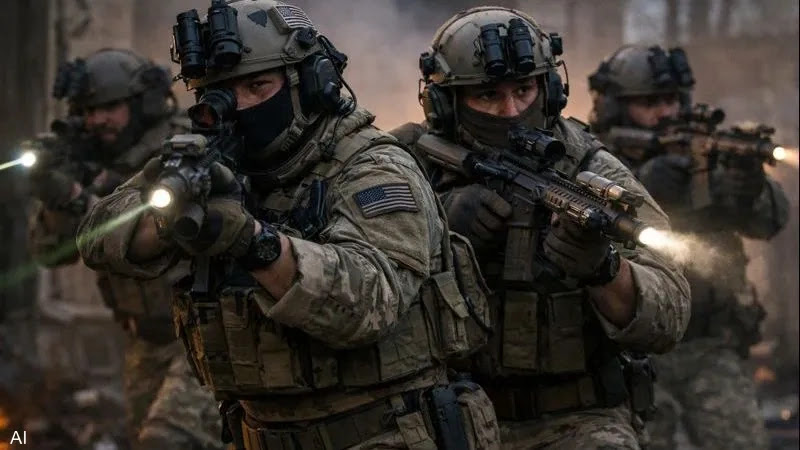
Over the past few hours, media reports circulating on Iraqi platforms and Iranian opposition channels have intensified, speaking of the arrival of the elite American force known as "Delta Force" in Iraq or its deployment near its borders with Iran, in a move that observers see as highly sensitive if it coincides with any possible military decision against Tehran.
According to what Baghdad Today has observed, these platforms indicated that units of Delta Force have been deployed around the Iraqi-Iranian border, with talk of a “major shift” that the security landscape may witness in the next stage, and a direct link between this news and a possible strike scenario targeting vital facilities inside Iran, against the backdrop of the existing tension between Washington and Tehran.

Delta Force is one of the most secretive special units within the US military, and its name has recently come to the fore after the operation to arrest Venezuelan President Nicolas Maduro and transfer him to the United States, making any indication of this force’s movement in the Middle East a source of widespread concern and interest.
Iranian opposition journalist Behnam Gholipour wrote on his X platform account, as translated by Baghdad Today, that “it is certain and reliable that the US Delta Force has arrived in Iraq,” and claimed that this information was also confirmed by an Israeli journalist, without providing any details about the size of the force, its deployment location, or the nature of its mission.

Inside Iraq, media platforms reacted to this news, and security expert Ahmed Al-Sharifi considered that “moving elite units such as Delta in the vicinity of Iraq usually carries operational and not showy implications, and may be linked to files that go beyond the scope of the Iraqi interior to a wider regional arena,” warning that “using Iraqi land or airspace in a direct clash with Iran will put Baghdad at the heart of a confrontation that the country cannot bear politically or security-wise.”

Meanwhile, a security source speaking to Baghdad Today revealed the last recorded presence of Delta Force inside Iraq, explaining that "the last time Delta Force entered Ain al-Asad Air Base was after the operation targeting the commanders of victory." The source clarified that "the operation was carried out by drones, after which Delta Force entered the base and left after only three days. Their presence at that time was a precautionary measure in case of any emergency or unforeseen development on the ground." The source indicated that this pattern of deployment "confirms the nature of this force as a rapid intervention unit in very exceptional circumstances, and not as a permanently stationed force."

In contrast, a more cautious stance has emerged from within Iraq regarding the current leaks. An informed source revealed on Tuesday the truth behind the rumors circulating about the presence of this force in the capital. Speaking to Baghdad Today, the source stated, "The news reported by some websites and social media platforms about the possible presence of the US Special Operations Forces (Delta) in Baghdad, or at some locations where US forces are deployed, whether at Ain al-Asad or Harir bases, is inaccurate." The source emphasized that "the presence of this force has not been officially recorded, and there are no reliable indicators to confirm it."
The source added that "Delta Force is a highly secretive unit, its movements are limited and it is subject to direct orders from the White House and in accordance with known procedures," noting that "the presence of this force in Baghdad has not been recorded or indicated so far."
He explained that “this does not mean an absolute denial of the matter, especially with the presence of American movements between the embassy and the Ain al-Asad and Harir bases,” indicating that “the identity of the forces that are moving may not always be clear, but in any case, we have not recorded the presence of Delta Force within Iraqi territory until this moment.”
These developments come amid escalating rhetoric from US President Donald Trump towards Iran, with repeated threats of a "harsh response" if Tehran continues to expand its nuclear and missile activities or resorts, as he put it, to "bloody repression" of internal protests, in parallel with reports of US forces and fighter jets being moved to bases in Europe in preparation for possible military options.
Experts believe that any actual deployment of Delta Force in or near Iraq will be interpreted in Tehran and its allies as an indication of preparations for special or focused operations, which could open the door to reactions from Iran and regional armed factions, and turn Iraqi territory once again into an arena of mutual pressure between Washington and Tehran, at a time when no official announcement has yet been issued by the Iraqi government or the US Department of Defense (the Pentagon) confirming or definitively denying this news.
Iranian protesters plead with Trump: 'Don't let them kill us'
 Message sent to Iran International shows the plea with US President, January 6, 2025
Protesters in Iran have appealed directly to Donald Trump for protection according to new videos sent to Iran International on Tuesday after the US president twice warned Tehran not to kill demonstrators or face US intervention.
In one clip, a woman holds a sign reading, "Trump, a symbol of peace. Don't let them kill us," while another shows the same message spray painted in red on a concrete wall.
The woman holds the sign in English while she says in Farsi, "Help, we need HELP."
there's more but I don't want to bombard you but if you want to see them click here

No comments:
Post a Comment