The cry of "Where's the salary?" during Ramadan: The embers of waiting burn the pockets of retirees
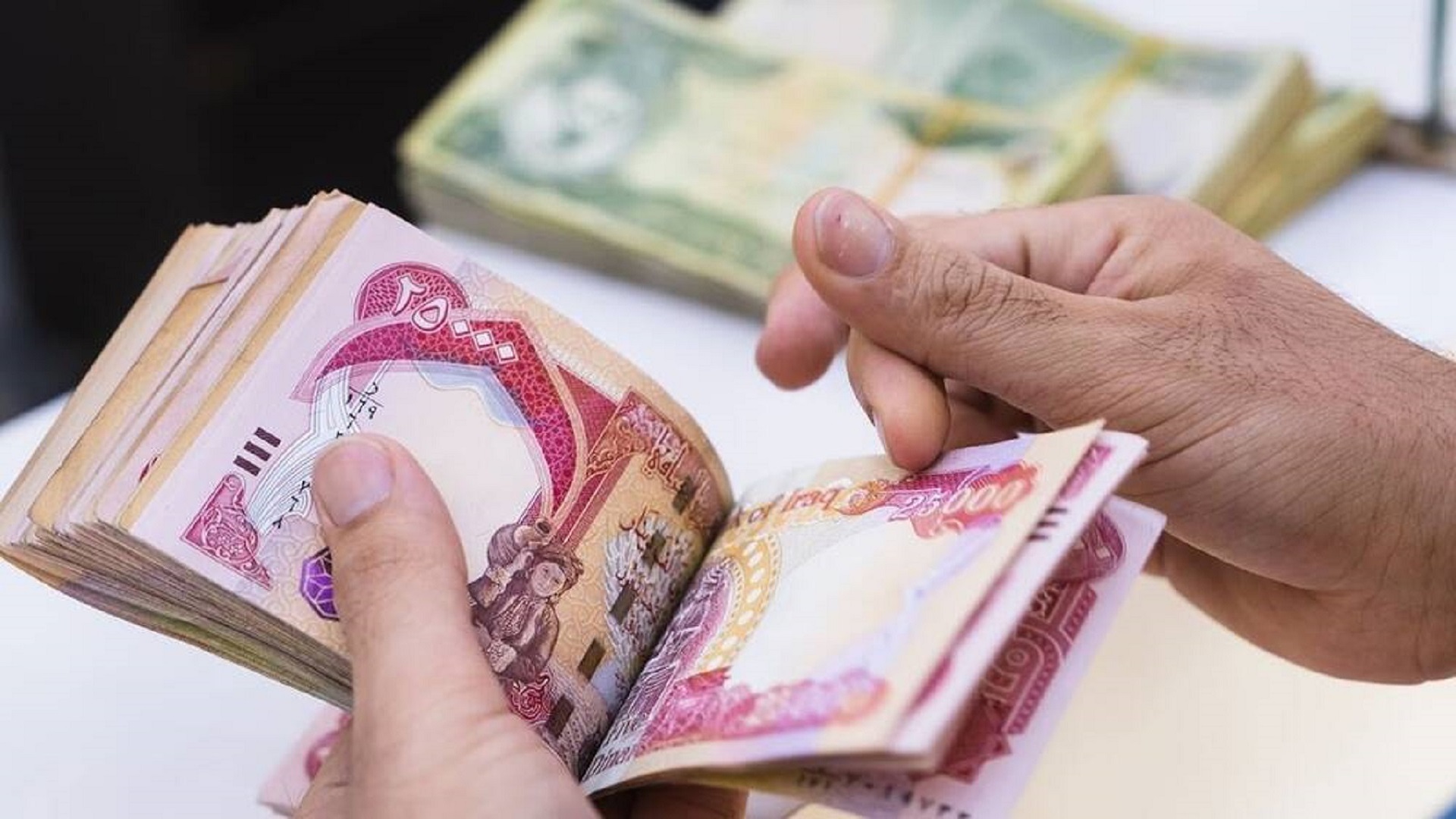
As the sun set on the second day of March, the unending cry of anguish resurfaced in Iraq: "Where's the salary? Why isn't it here?" This is no longer just a passing comment on social media platforms, but has transformed into a collective plea from retirees who find themselves "forgotten" amidst the regional tensions and political conflicts.
The video for this My FX Buddies Blog post is below here:
The delayed disbursement of financial entitlements at Rafidain and Rasheed banks has sparked widespread discontent, amid reports of a cash liquidity crisis. This delay comes at a particularly difficult time, coinciding with the holy month of Ramadan and its associated high costs and exorbitant living expenses, leaving this segment of society, who have dedicated their lives to serving the country, facing empty pockets and a lack of financial security.
The public question is escalating sharply: Why does this humiliating scenario repeat itself every month? And where are the radical solutions that the concerned authorities promised to end the suffering of the nation's builders?
For their part, activists and human rights advocates directed urgent and strongly worded appeals to the Ministry of Finance, stressing that the salary is a “sacred legal right and not a favor from anyone.”
Activists warned against continuing the policy of marginalization and being satisfied with empty promises that no longer feed the hungry or sustain a family, demanding an immediate end to this disregard for the dignity of Iraqi retirees.
Private banks: Services seeking trust

In recent years, Iraq has witnessed a remarkable expansion in the number of private banks, in a scene that reflects economic transformations and initiatives to develop the financial sector outside the traditional governmental framework. This expansion is clearly evident in major cities, where citizens now find themselves faced with a wide range of private banks competing to provide diverse services, from loans and financing for small and medium enterprises, to electronic payment services and internal and external transfers.
But this expansion raises fundamental questions: Does the proliferation of private banks actually mean real benefit to citizens and the economy, or are they just numbers and statistics that do not reflect on people's daily lives? And do their services differ from government banks to a degree that makes citizens trust them more or less?
Between quantity and benefit
Economic expert Duraid Al-Anzi says that the country is going through an economic year that has been described as “exceptional” in terms of financial resources, but this has not translated into real economic development, despite talk of economic building and an industrial and agricultural revolution, noting that the abundance of money could have led to significant inflation had it not been for the expansion of banks to absorb these resources.
Al-Anzi explained in a statement to Al-Sabah that the number of banks in the country has witnessed a remarkable expansion by decisions issued by the Governor of the Central Bank, as licenses were granted to approximately 30 to 35 new banks, some of which are actually operating and others are closed, considering that this step is one of the mistakes of successive governments, as the banking activity was stronger and more effective than the activity of the banks themselves.
Al-Anzi stressed that the country does not have a developed economy or effective monetary activity, explaining that the banks that were established with a capital of up to 400 billion dinars remained without real economic activity, in the absence of agriculture, industry and organized trade.
Al-Anzi explained that the volume of financial transactions in banks may reach $70 billion, or half a billion to one billion dollars per bank, over a period of 20 years or more, without an effective economic policy or organized investment direction, despite the announcement of huge investments.
He pointed out that the Cabinet announced investment projects amounting to $100 billion, a large number that is supposed to stimulate the market. However, sales of residential units resulting from these investments do not enter the banking system, due to the fears of investors and citizens about exchange rate differences when withdrawing and converting to dollars, which has caused a state of confusion and lack of confidence.
He explained that the absence of decisions supporting economic and banking activity led to the accumulation of many negatives, in light of the lack of active sectors such as tourism, agriculture, industry and trade, and the lack of raw materials used for local production, which made the market dependent on imports only without creating an internal economic cycle.
Al-Anzi questioned the usefulness of expanding banks in the absence of real trade and economic activity, pointing out that punishing 35 banks all at once had no clear effect, as if 35 houses had been closed instead of 35 banks, stressing that the dollar did not witness any significant change, either up or down, which indicates the weak influence of these banks.
He pointed out that the governor of the central bank defended the sanctioned banks, explaining that the sanctions were in dollars and not dinars, and that some of those banks were accused of currency smuggling, but the reality confirms that they were not carrying out any effective activity.
Al-Anzi concluded by saying that economic development is the basis for the work of banks, but its absence has led to weak banking performance. He called for a review of bank policies and their working mechanisms, modernization of banking tools, and opening the door to real partnerships, including dividing banks into sections for international dealings and others for the local market. He considered that real investment is not limited to building residential complexes only, but requires moving the wheel of the economy in its various sectors.
Between trust and caution
Citizens differ in their assessment of the services provided by private banks compared to government banks. Ahmed Hussein, an employee at a private company in Baghdad, says: “Sometimes I need to complete financial transactions quickly, such as paying bills or obtaining an international bank transfer,” indicating that private banks are often faster than government banks, and do not require much paperwork, which is very convenient.
Zahraa Mahmoud, a housewife from Karkh, says: "I use a private bank to deposit my husband's salary and transfer household expenses," adding, "Sometimes the procedures are quick, but I don't put all our money in it for fear of any unexpected problems."
Ali Sami, a government employee, indicated that he prefers government banks for large transactions or savings, while private banks are suitable for daily transactions or small loans, but he does not see them as a safe option for long-term savings.
This discrepancy reflects a common feeling on the street: the speed and flexibility of the service are there, but they do not replace the guarantees or long-term reputation that state-owned banks provide.
Services and challenges
Some believe that government banks still enjoy higher credibility in some matters such as government salaries and long-term savings, due to their connection with state guarantees, which is something that is absent in many private banks.
On the other hand, we spoke with employees of private banks about the challenges they face daily. One of them, who preferred not to mention his name, said: “The pressure is great, because customers expect unlimited speed in transactions, and at the same time there is a need to follow official procedures to protect their money,” noting that the balance between speed and accuracy is sometimes difficult.
Employee Fatima Qais adds: "We are trying to provide innovative services such as digital wallets and mobile money transfers, but the biggest challenge is building trust with customers," stressing that some of them still doubt our ability to protect their money.
Expansion and features
According to economist Dr. Ikram Abdul Aziz, private banks in Iraq have witnessed a remarkable expansion in their scope of work within the economic activity in recent years. She added in her interview with Al-Sabah that Iraq has about sixty private banks which together hold approximately 15 percent of the total deposits in the country, compared to government banks which dominate the largest percentage.
Abdul Aziz explained that private banks, despite their important role in financing projects in various economic activities, suffer from a weakness in their capital, which limits their ability to expand in lending and financing activities. She pointed out that these banks need to raise the efficiency of management, improve the level of performance, and enhance the factors of stability and security, especially since they went through difficult circumstances during previous periods in which they were unable to pay the dues of some depositors, which constituted a major challenge for them in light of the political and security conditions that Iraq went through.
She indicated that developing the economic and investment environment in the country requires more effective financial and regulatory governance, stressing that public confidence still tends more towards government banks, which hold about 85 percent of total deposits and finance public sector and government projects, which enhances their position with depositors in terms of feeling safe and confident.
In contrast, Abdul Aziz pointed out that private banks are characterized by greater flexibility in providing banking services that meet customer needs, as well as providing high-quality services and distinguished customer service, with an increasing reliance on technology in providing services electronically. These services include opening accounts faster, granting personal and commercial loans at a relatively faster pace compared to government banks, in addition to issuing bank cards, providing investment services in various sectors, commercial financing for industrial and commercial projects, as well as current accounts, savings accounts and deposits, smartphone applications and advanced electronic services.
She pointed out that one of the most prominent problems facing the banking sector in general in Iraq is that about 90 percent of cash liquidity is still outside the formal banking system, whether with individuals or in the market, which reflects weak confidence in banks. She attributed this to the existence of a complex bureaucracy and problems within some private banks in particular, in addition to the absence of a strong and effective system for protecting deposits, which makes the public hesitant to deposit their money.
Abdul Aziz also pointed out that the activity of a number of private banks had long been focused on selling currency instead of providing real banking services, but this trend has begun to be reviewed and redirected towards providing better and more diverse banking services, in order to ensure the continuity of these banks and enhance their role in the national economy.
Abdul Aziz stressed that the Central Bank of Iraq has worked to improve the efficiency of the banking sector, both public and private, by developing a plan to reform banks extending until 2025, with the aim of achieving financial inclusion, accelerating the provision of services, and enhancing deposit guarantees. She mentioned that there are well-known private banks in Iraq, such as Ashur International Bank, Al-Taif Bank, and the Development Bank, in addition to many other banks, that seek to develop their performance and enhance their presence in the market.
Abdul Aziz concluded her remarks by emphasizing that the government is working on restructuring state-owned banks to make them more efficient financial institutions, while private banks are also witnessing a trend towards improving their performance and raising their efficiency, stressing the need for these reforms to reflect positively on the banking sector in the near future and enhance confidence in it within society.
In a related context, the Central Bank of Iraq issued instructions to private banks, which include controlling transactions and transparency by obligating banks to adopt the final invoice in commercial transfers to ensure transparency, controlling the limits of financial operations, providing immediate notifications to customers about suspicious transactions, applying strict controls on the appointment of senior management (managers, board members) in terms of experience and integrity, requiring the approval of the Central Bank, having sufficient balance in the statutory and mandatory reserve, submitting an annual work plan to open new branches, in addition to banks being subject to periodic supervision, the necessity of complying with anti-money laundering rules, updating records, managing dormant accounts, as well as identifying a decrease in the balance in accounts, and regulating transactions according to instructions specific to foreign currency. These instructions are crucial for the continuation of the license to practice banking work, and to avoid penalties.
A government advisor affirms the Iraqi economy's ability to overcome the short-term crisis.

Saleh explained to Al-Furat News Agency that "the Strait of Hormuz, located in the southern Gulf, is a vital waterway for approximately 11% of global trade and 20% of the world's crude oil and gas exports. He noted that more than 94% of Iraqi oil exports pass through ports in southern Iraq and then through this strait, making its closure a severe challenge for the Iraqi economy, which is almost entirely dependent on this waterway."
Saleh revealed that "closing the strait would mean a drop in oil exports from over 3.4 million barrels per day to less than a quarter of a million barrels, with daily losses ranging between $200 million and $255 million due to the disruption of the normal flow of oil. He added that even with global oil prices rising to record levels, potentially reaching $150 per barrel, monthly revenues would plummet from around $7 billion to just over $1 billion, an amount insufficient to cover only 25% to 30% of monthly operating expenses."
Saleh pointed to the "scarcity of alternatives available for exporting Iraqi oil in the event of the Strait's closure," explaining that the only available alternative is the Kirkuk-Ceyhan pipeline with a capacity ranging between 200,000 and 210,000 barrels per day, which can be increased, in addition to a small quantity not exceeding 10,000 barrels that can be exported overland to Jordan. He emphasized that these combined quantities represent only a small fraction of normal exports.
Saleh warned that "the relationship between oil revenues and the stability of the Iraqi dinar is a direct and direct one," noting that the main source of dollars in Iraq is oil revenues deposited in the US Federal Reserve. He added that any disruption or decrease in these revenues means a decline in the flow of dollars to finance the national economy, thus increasing demand for them as a safe haven in the current climate of uncertainty. He stressed that if the crisis persists, foreign reserves will be depleted in defense of overall stability, which could lead to resorting to austerity measures contingent on the duration of the war in the Gulf.
The economic advisor addressed "other repercussions extending to aspects of the macroeconomy, most notably imported inflation, as Iraq imports most of its food, medicine, and basic commodities. He pointed out that shipping and insurance costs have jumped by up to 50%, which will directly impact commodity prices over time. He also warned of the technical damage resulting from the closure of oil fields, explaining that a sudden and prolonged shutdown could cause permanent damage to oil reservoirs, requiring time and significant investment to restore previous production levels even after the strait is reopened."
Saleh concluded that "the fundamental solution lies in expediting the diversification of oil export outlets and reactivating the dormant pipelines. He warned that without these alternatives, the national economy will remain hostage to recurring regional crises, and stressed that the economy's ability to overcome the crisis in the short term will remain primarily dependent on the size of the available foreign currency reserves."
Gulf Keystone halts production at oil field in Kurdistan Region

The London-listed Gulf Keystone Petroleum said Monday it has halted production at the Sheikhan oil field in the Kurdistan Region as it continues to face aerial attacks amid escalating regional conflict.
The company said in a statement that “it has temporarily shut-in production operations and has taken measures to protect staff in light of the developing regional security environment,” adding that “The Company’s assets have not been impacted.”
The Sheikhan oil field is located about 60 kilometers northwest of Erbil.
The decision follows strikes launched against the Kurdistan Region by Iran and allied armed groups in response to US and Israeli attacks on Iran on Saturday. Attacks on Erbil continued into Monday.
Gulf Keystone said it is “closely monitoring the situation and will provide further updates as appropriate.”
The pro-Iran Iraqi armed group Saraya Awliya al-Dam has claimed responsibility for attacks targeting US positions in Erbil.
The announcement comes days after UAE-based Dana Gas said it had halted gas exports to power generation stations in the Kurdistan Region. The Kurdistan Regional Government (KRG) said the suspension would reduce electricity supply by between 2,500 and 3,000 megawatts, cutting power availability to only a few hours a day.
The gas facility was previously attacked in November, slashing the Kurdistan Region’s power generation by nearly 80 percent.
The regional escalation followed strikes launched earlier Saturday by the United States and Israel against Iran, prompting Iranian retaliation that has affected several Middle Eastern countries, including Bahrain, Jordan, the United Arab Emirates, Qatar and Saudi Arabia.
Iran’s Foreign Minister Abbas Araqchi told his Iraqi counterpart on Saturday that Tehran’s response to US and Israeli strikes would target US military bases in the region and would be “limited to military sites,” according to the Iraqi foreign ministry.
On the front lines of tension... an expert reassures regional security and turns attention to its economic repercussions on Iraq

Security and political expert Ali Al-Maamari confirmed on Monday (March 2, 2026) that the regional security situation is still in the assessment phase, but initial indicators after about 24 hours show that the situation is still under control.
The architect told Baghdad Today that it is still too early to make a final judgment on the security situation, but it can be said that it is under control so far, noting that if there is no direct intervention from other major international powers, the level of escalation will remain limited.
Economic risks are escalating
He added that the general assessment indicates that the ongoing operations are based on intelligence information and studies on both sides, and therefore are being conducted within precise calculations, which reduces the chances of the situation getting out of hand or turning into a broad regional conflict.
He indicated that the greatest impact may be economic, noting that the repercussions on Iraq will be negative from an economic standpoint, while from a security perspective, current indicators do not suggest significant unrest.
Close monitoring of indirect skirmishes
The architect pointed to the presence of American forces in Jordan, as well as their deployment in the Gulf region, considering that the indirect skirmishes are proceeding according to calculated data and schedules between the two sides, which reinforces the hypothesis that security stability will remain within its current limits.
Iranian stability is within the calculations of the major powers.
Regarding the situation inside Iran, the architect believes that the United States “is not seeking to destabilize the country internally in a comprehensive manner, because that does not serve its fundamental interests,” explaining that the goal, if there is one, is related to attempts at pressure or political change, but if there are no plans ready for that, the pace of operations is likely to slow down in the coming days.
He concluded by saying that the situation remains open to several possibilities, but current data suggests continued security control, in contrast to escalating economic concerns.
Iraq remains vulnerable to the effects of tensions between Iran and the United States, given its strategic geographic location and the presence of armed factions within its borders. In recent years, the country has witnessed a series of indirect escalations, including missile and drone strikes, and attacks targeting bases and headquarters of armed groups, making it an arena for exchanging messages between the two sides.
Despite these tensions, current data indicates that operations are being conducted according to intelligence plans and meticulous studies, which has helped to mitigate direct security risks. However, the greatest danger remains economic, as Iraq's budget depends almost entirely on oil exports, and any regional escalation could affect oil prices and government revenues.
Iraqi oil tankers, gather to export oil... a quick solution to avoid losses from the closure of Hormuz
link
The expert's proposal

Academic and economic expert Nabil Al-Marsoumi presented solutions he described as quick, which Iraq could begin to implement to mitigate the repercussions of the closure of the Strait of Hormuz on oil exports, especially with the loss of about 3.2 million barrels per day of southern oil.
Al-Marsoumi suggested utilizing the private sector's "huge" tanker fleet, which he said includes more than 20,000 tankers that are out of service. He explained that these tankers could be used to transport crude oil to the ports of Aqaba, Banias, and Mersin, to reduce losses resulting from the cessation of exports. At the same time, he pointed out the need to expedite the increase of exports from the Kirkuk fields via Ceyhan by between 50,000 and 100,000 barrels per day, as was the practice before the pipeline was shut down.
What happens after the Strait of Hormuz is closed? Are there any quick solutions?
After the Strait of Hormuz was practically closed and Iraq lost its oil exports to the south, which amounted to 3.2 million barrels per day of crude oil, Iraq had only meager exports of no more than 210,000 barrels per day, of which 200,000 barrels were through the Turkish port of Ceyhan and 10,000 barrels per day were exported to Jordan by tankers. As a quick solution, Iraq could use the huge fleet of tankers owned by the private sector, which consists of more than 20,000 modern tankers ready for operation and also idle because they were used to transport oil from the Qayyarah field and black oil from the refineries to the southern ports, at a fee of no more than 300,000 dinars per trip and at a rate of only two trips per month.
This huge fleet, with each tanker having a capacity of 36,000 liters, could be used to transport crude oil to Aqaba, Banias and Mersin in Turkey and alleviate the impact of the closure of the Strait of Hormuz on the Iraqi economy.
On the other hand, Iraq can quickly resume exporting between 50,000 and 100,000 barrels per day from the Kirkuk fields via the Ceyhan outlet, as was the case before the Ceyhan pipeline was closed.
Want to Support My FX Buddies?
.png)
Support My FX Buddies Big or Small I appreciate it all
BuyMeACoffee CashApp:$tishwash
https://paypal.me/tishwash

.jpeg)
Iraqi authorities are taking measures to protect American-branded restaurants in anticipation of attacks.

A security source reported on Tuesday that security forces have intensified their patrols and checkpoints in front of a number of restaurants belonging to agencies representing American brands in the capital, Baghdad, as a precautionary measure in anticipation of attacks that may target them.
The source told Shafaq News Agency that the deployment included strengthening surveillance around specific locations and increasing foot and vehicle patrols, in addition to inspection and monitoring procedures for cars and surrounding traffic, without recording any security breach so far.
He added that these steps are part of broader precautionary measures taken by the relevant authorities to protect sites that may be considered potential targets, in conjunction with the escalation of security tensions in the region and the accompanying threats and attempts to target American interests in more than one location during the past few days.
Iraq and Kurdistan Region directly affected by the ongoing war, says Hussein

Iraq is increasingly affected by the ongoing war in the region, Iraq’s Deputy Prime Minister and Foreign Minister, Fuad Hussein, stated on Monday, noting that Iran continues to strike areas in the Kurdistan Region, particularly the city of Erbil, while the opposing side in the conflict targets sites in southern and western Iraq.
A statement from the Iraqi Foreign Ministry said the remarks came during a phone call between Hussein and Britain’s Minister of State for the Middle East, Hamish Falconer, in which they discussed developments in the conflict and its regional repercussions.
Falconer outlined the UK’s new position, including allowing US forces access to certain facilities while facilitating related procedures, the statement said, adding that both sides emphasized the dangers of continued strikes on Gulf countries and the severe implications for regional security and stability.
Hussein warned that prolonging the conflict could worsen instability and create chaos in the region, questioning the objectives of extending the war given its human, security, and humanitarian costs. He stressed the urgent need for intensified international and regional efforts to achieve an immediate ceasefire, aiming to contain escalation and restore stability.
The fourth night of war: 7 countries subjected to intense bombing simultaneously

Early Tuesday morning, the fourth night of the war waged by the United States and Israel against Iran, witnessed major developments, as 7 countries were bombed simultaneously, making it one of the most violent phases of this war.
Israel was subjected to a wave of bombardment from Iran and Lebanon, through a wave of missiles and drones, targeting large areas of Israel, Jerusalem and Haifa.
Hebrew media reported that Israel was subjected to waves of shelling from the north and south, launched by Iran and Lebanon (Hezbollah).
At the same time, Iran is under heavy bombardment, and according to Iranian media, the city of Karaj (west) has been hit hard.
The capital, Tehran, has also been under continuous bombardment for more than two hours, initially targeting the radio and television building.
The bombing continues in Iran and Israel to this day, and in parallel, the British base in Cyprus was targeted, without revealing the details.
At the same time, Bahrain, Kuwait, the UAE and Doha were targeted by Iranian shelling, supposedly targeting sites where US forces were present.
Rubio: We want a new system in Iran, and the people must act.

US Secretary of State Marco Rubio confirmed early Tuesday that his country wants a new regime in Iran, while expressing his hope that the Iranian people will be able to overthrow the regime.
Rubio said in a speech: "We want a new regime in Iran, and the goal of the operation is to destroy Iran's ballistic capabilities."
He added, "Iran, even when weak, poses a threat... so what would it be like if we left it alone? This operation had to be carried out, and we acted proactively to prevent Iran from harming us."
He continued, "All these threats come from Iran, which is still under sanctions. Iran produces more than 100 missiles per month, in addition to thousands of drones."
He added, "We aim to end the Iranian threats, and we hope that the Iranian people will be able to overthrow the regime."
He pointed out that "we will not stand idly by in the face of Iranian attacks on airports and civilian sites, and we will not stand idly by in the face of Iranian attacks."
Reuters: Three drones shot down over Erbil airport in northern Iraq

Security sources told Reuters on Monday that three armed drones were shot down over Erbil airport in northern Iraq, where US forces are stationed.
Explosions were heard Monday morning near Erbil International Airport in Iraq's Kurdistan region, where forces from the US-led international coalition are stationed, according to an AFP correspondent.
Early this morning, an AFP photographer reported that air defenses shot down at least two drones near the airport, which houses a coalition forces base.
Since the start of the American-Israeli attack on Iran, Erbil, where a huge complex of the American consulate is also located, has been subjected to attacks by drones that are shot down by air defenses.


No comments:
Post a Comment