It carries the Pakistani flag
Trump reveals Iran's "gift" to the United States: 10 oil tankers crossed the Strait of Hormuz
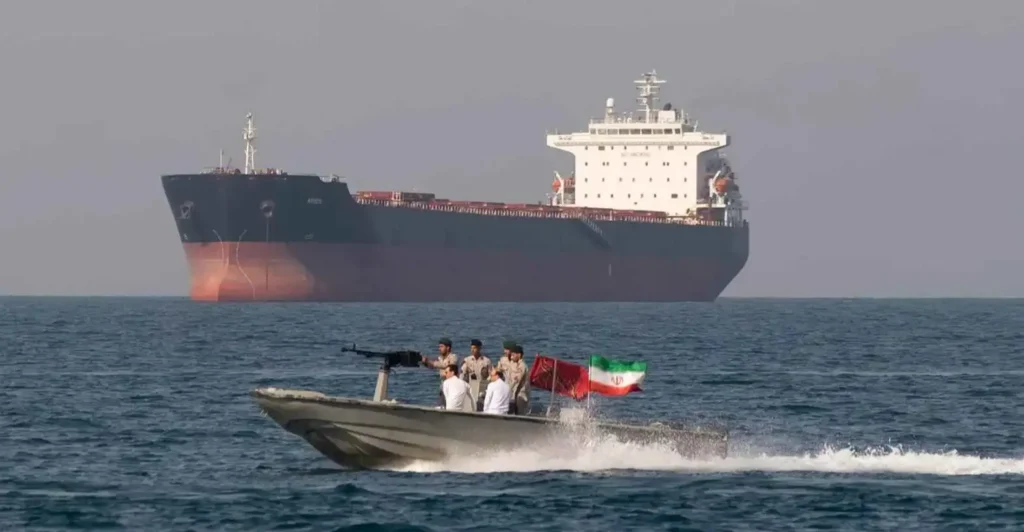
US President Donald Trump said that the "gift" Iran gave to the United States was allowing eight Pakistani-flagged oil tankers to pass through the Strait of Hormuz, before they added two more tankers to bring the total to 10.
The video for this My FX Buddies Blog post is below here:
US President Donald Trump revealed on Thursday the Iranian gift he had spoken about two days earlier, which was allowing 10 oil tankers flying the Pakistani flag to pass through the Strait of Hormuz, indicating that Washington does not need the Strait of Hormuz and that America's oil production is greater than that of Saudi Arabia and Russia, according to him.
It was unclear to the media whether the Iranian gift was the passage of these ships through the Strait of Hormuz, or the United States receiving the cargo of these ships.
On Tuesday (March 24, 2026), Trump said that Tehran had offered a “precious gift” related to the Strait of Hormuz as a gesture of dialogue, explaining that the leaders currently being negotiated with “are different from the previous ones” and have become “without air power or navy” and tried to sink the aircraft carrier with 100 missiles and then failed.
Trump explained during a cabinet meeting on Thursday, “They said, to show that we are serious and present, we will allow you to have 8 large oil tankers. That was two days ago, and they said they will sail tomorrow.”
He continued: “I think it was flying the Pakistani flag. I said I think we are dealing with the right people, then they apologized for something they said, and said they would send two more tankers,” adding: “So the number became 10 tankers already.”
Trump pointed out that “controlling Iran’s oil is an option. We have destroyed much of Iran’s stockpile of ballistic missiles and their factories, and the same applies to drones. We have also destroyed all of Iran’s boats designed to plant mines, and we do not know if they have planted mines in the Strait of Hormuz.”
Trump noted that Iran had launched more than 100 missiles at one of our most valuable assets, but we shot them all down. He added that he was not eager to make a deal with Tehran and that he had many targets he wanted to strike there before the war ended, according to him.
Trump said, "We don't need the Strait of Hormuz and our oil production is greater than that of Saudi Arabia and Russia."
Heated exchanges between Washington and Baghdad: The skies are under surveillance, and the field is open for striking factions - Urgent
Fox News reported on Wednesday (March 25, 2026) that the United States will continue to carry out military strikes inside Iraq against what it describes as “Iran-linked factions,” despite recent tensions with the Iraqi government.
The network quoted the Chairman of the Joint Chiefs of Staff of the US Army, General Dan Kane, confirming, as translated by "Baghdad Today," that US forces are using helicopters and aircraft to carry out attacks targeting any party that threatens US interests and forces, stressing that these operations will continue to prevent those threats.
She stated that these remarks came after what she considered “threats” made by Iraqi Prime Minister Mohammed Shia al-Sudani, stressing that Washington would not stop its strikes despite those positions.
In this context, the network indicated that a Kurdish official – whose identity was not revealed – questioned the possibility of Baghdad moving towards escalation with the United States, but the Iraqi embassy in Washington categorically denied any intention to enter into war, explaining that the government’s statements only relate to dealing with the parties that target Iraqi forces.
The report added that the United States, according to the network, has become less inclined to differentiate between the Popular Mobilization Forces and other armed factions, with a tendency to deal with them as a single system within the threats.
For its part, the network quoted a US State Department official as saying that his country’s position is consistent with statements by Secretary Marco Rubio, who stressed the need for the Iraqi government to take measures to protect diplomatic missions and prevent the use of its territory to threaten the United States or its allies.
The network concluded its report by noting that the US Central Command and the Department of Defense (the Pentagon) declined to comment on the details of the recent strikes, amid accelerating security developments in Iraq.
This comes as tensions have been escalating between the United States and armed factions inside Iraq recently, against the backdrop of repeated attacks targeting bases housing American forces, as well as the vicinity of the American embassy in Baghdad.
Washington responds to these attacks with a series of airstrikes that it says target sites of factions linked to Iran, as part of what it describes as “self-defense” and protecting its interests in Iraq and the region.
Corporate social responsibility and its economic impact
Corporate social responsibility (CSR) has become a cornerstone of the modern economy. Companies are no longer measured solely by their profits or production capacity, but also by their contribution to sustainable development and the promotion of social stability in the environments in which they operate. For this reason, major global companies are increasingly prioritizing CSR initiatives due to their positive impact on the economic and social environment, as well as on the long-term sustainability of their operations.
In recent international experiences, large companies allocate a portion of their annual profits to finance development and service projects in the communities surrounding their investments. These initiatives include building schools, hospitals, and sports facilities, in addition to developing infrastructure such as roads and public services, thereby contributing to improving the quality of life and enhancing local economic activity.
These initiatives contribute to stimulating local economic growth by improving infrastructure and public services, enhancing investment attractiveness by creating a stable environment and a community that interacts with economic projects, providing job opportunities and raising income levels in areas close to investment projects, as well as reducing social tensions that may arise between local communities and major economic projects.
In the Iraqi experience, a number of important models can be pointed to in this field. Foreign oil companies investing in the energy sector have presented multiple initiatives within the framework of social responsibility, which have contributed to the implementation of service and development projects in areas near the oil fields.
These projects included developing roads and infrastructure, building schools and healthcare facilities, and providing job opportunities for local residents. These initiatives positively impacted the economic and social environment in these areas and contributed to improving relations between local communities and investing companies. The Iraqi banking sector also demonstrated its commitment to supporting corporate social responsibility initiatives by implementing service and cultural projects in Baghdad and several other cities.
Among the most prominent of these initiatives is what was implemented by the Central Bank of Iraq in cooperation with the Association of Iraqi Private Banks through the Tamkeen Fund, which contributed to financing many projects aimed at rehabilitating public spaces and reviving cultural and heritage centers in Baghdad, most notably the revival of Al-Mutanabbi Street and Al-Rashid Street, which contributed to enhancing cultural and economic activity in these areas and restoring life to important urban centers.
The Baghdad Pulse project also comes to complement these efforts, given its economic, cultural and environmental dimensions that contribute to reviving Iraqi urban heritage, enhancing job opportunities and supporting economic activities related to the tourism and cultural sector.
Building social responsibility and sustainable development in Iraq requires strengthening the legislative and regulatory frameworks that encourage companies and investment institutions to adopt sustainable development programs in the communities in which they operate.
In this context, Iraq’s Vision (2050) can represent a strategic framework for enhancing the role of social responsibility in supporting sustainable development programs, by integrating the principles of good governance with environmental and social activities within national development policies.
US House Speaker: The operation against Iran is nearing completion
He added in press statements that "the objectives of the operation against Iran have been achieved, but we still have to resolve the issue of the Strait of Hormuz," noting that "resolving the issue is a huge project that requires the help of international partners."
He added that "the buildup of forces near Iran does not necessarily mean a ground invasion will take place."
Calls for the enactment of the oil and gas law within a constitutional framework

The passage of the oil and gas law is a pivotal step towards regulating the management of national wealth in Iraq and ensuring a fair distribution of revenues between the federal government and the regions, while preserving the sovereignty of the state and the rights of all Iraqis.
Members of the House of Representatives and legal experts stress the need to establish a robust constitutional framework that ends disputes, enhances transparency, and keeps pace with modern developments in the energy industry, while protecting national resources from waste and mismanagement, thus paving the way for a new phase of wise oil and gas management and promoting national and international investment in this vital sector.
It is worth noting that the House of Representatives, during its session that discussed the repercussions of exporting Iraqi oil, recommended that the next government program should include the enactment of the oil and gas law, and that it should be presented to the House of Representatives in order to begin voting on it.
MP Ahmed Shaheed told Al-Sabah that passing the oil and gas law represents a fundamental step to regulate the management of national wealth between the federal government and the regions, ensuring a fair distribution of revenues and preserving the sovereignty of the state and the rights of all Iraqis.
Shahid called for the swift enactment of the law to provide a fair constitutional framework for Iraqis and to end disputes related to the management of oil wealth, especially between Baghdad and the Kurdistan Region.
He added that "the current stage requires a thorough study of the law's articles and their revision to keep pace with modern changes in the energy industry and global developments in natural resource management, along with a review of oil contracts and agreements to ensure their consistency with the Iraqi constitution and to safeguard national sovereignty over natural resources." The MP emphasized that "updating the law's provisions must include clear mechanisms for managing oil fields, regulating contracts with international companies, and guaranteeing transparency in revenues, thereby putting an end to the leakage of wealth and the waste of resources, and establishing a new era of sound oil and gas management in Iraq."
For his part, MP Ali Saber told Al-Sabah that “addressing the oil and gas issue in Iraq should not be limited to enacting a law only, but requires an integrated legislative and economic vision that reorganizes the philosophy of managing national wealth in a manner consistent with the constitution and the requirements of modern development.”
He explained that "the current stage calls for a comprehensive review of the legal system regulating the oil sector, through the preparation of specialized parliamentary studies that examine the mechanisms of investment, production and export, in addition to setting clear rules for managing oil revenues in a way that achieves a balance between the federal government and the producing regions and governorates."
Saber pointed out that "updating the legal framework for the oil sector must take into account global shifts in energy markets and adopt the principles of governance and transparency, while developing parliamentary oversight mechanisms to ensure the sound management of natural resources and prevent any waste or misuse of oil wealth." He added that "developing the oil investment environment is a fundamental factor in strengthening the national economy, as a clear and stable legal framework encourages international companies to expand their investments in oil fields, gas projects, and energy infrastructure. This will positively impact increased production, job creation, and diversification of income sources, thus supporting the long-term stability of the Iraqi economy."
For her part, Dr. Zainab Al-Saadi, a legal expert specializing in constitutional affairs, confirmed in a statement to Al-Sabah that Article 112/First of the Constitution constitutes an explicit legal and constitutional obligation on the federal government, regulating the relationship with the oil-producing regions and governorates.
She explained that "this article gives legal texts binding force to protect the rights of oil-producing entities and ensure a fair distribution of resources, which makes any new agreements unnecessary, whether through temporary budget laws that end with the end of the fiscal year or through political understandings that are not based on a clear constitutional basis."
Al-Saadi added that “adherence to this constitutional framework reinforces the principle of the rule of law and limits any transgressions that may occur as a result of non-binding political understandings or agreements,” stressing that “the constitution has established clear mechanisms to ensure the stability of the relationship between the federal government and the oil-producing regions and governorates, in a way that preserves everyone’s rights and ensures the management of national resources according to sound legal frameworks.”
She noted that "the application of these constitutional provisions represents the cornerstone of any future policies related to oil and resources and prevents legal vacuums or illegal practices that could lead to disputes between the central government and the regions."
Anbar Alliance: Trump is planning a new roadmap for the occupation of Iraq
Mohammed Dhari, a leader in the United Anbar Alliance, revealed on Wednesday that Trump is planning to draw up a new roadmap for occupying Iraq and controlling its resources, but in an undeclared way.
Al-Dhari told Al-Maalouma News Agency that “the strategic agreement signed in 2008 between Iraq and America is now a thing of the past and its terms are not recognized after Zionist-American aircraft bombed security sites of the Popular Mobilization Forces and the army, and this agreement is no longer binding on the caretaker government.”
He added that “President Trump is planning to draw up a new roadmap with Iraq in isolation from its external environment, giving America special control over its destiny and tightening its grip on the country’s wealth,” indicating that “there is a parliamentary consensus to cancel the clauses of the strategic agreement with America, as it was still born after its forces targeted security sites of the army and the Popular Mobilization Forces. This trend is the prominent sign of canceling all agreements concluded with America and considering them null and void after America reneged on its commitments to Iraq.”
He asserted that "the bombing of Popular Mobilization Forces security sites by Zionist-American aircraft constitutes an end to the American partnership and a rejection of all agreements with America."
The postponed budget and blocked corridors… Iraq between internal paralysis and lost opportunities

At a sensitive regional moment, with global oil prices soaring due to shipping disruptions and threats of closure of vital waterways, Iraq should have been one of the biggest beneficiaries of this boom. However, reality reveals a harsh paradox: a country almost entirely dependent on oil is unable to capitalize on the price surge, hampered by export disruptions and internal administrative chaos.
The budget crisis in Iraq cannot be separated from the broader regional context, particularly given the threats to vital maritime routes and the resulting disruptions or restrictions on oil exports. This highlights the gravity of the situation, where two negative factors converge simultaneously: internal paralysis due to political delays and external pressure stemming from geopolitical crises.
Iraq, which is supposed to have alternative plans for exporting its oil in emergencies, finds itself today shackled as a result of the lack of strategic planning and the delay in settling political entitlements, foremost among them the selection of the presidency of the republic and the presidency of the Council of Ministers, which has directly affected the obstruction of the approval of the budget, and thus the obstruction of the ability to act quickly in the face of crises.
The result is that the state loses twice:
Once its projects and services are disrupted due to budget shortfalls, and again when it misses the opportunity to capitalize on high oil prices due to export difficulties. This dual loss reveals the fragility of the economic structure and underscores that over-reliance on oil, without logistical and strategic alternatives, poses an existential threat to the Iraqi economy.
The continuation of this situation also weakens Iraq's position in regional competition, especially as neighboring countries move to secure alternative energy routes and strengthen their infrastructure, at a time when Iraq remains captive to internal political crises.
The current stage requires a radical shift in thinking, based on separating vital files—foremost among them the budget—from political disputes, and working to build a flexible export system that includes multiple outlets, including land routes and pipelines, to reduce dependence on threatened routes.
In conclusion, Iraq today faces not a single crisis, but a confluence of crises: delayed decision-making, geographical vulnerability, and missed opportunities. Unless this equation is addressed, the country will continue to pay the price for its strategic location instead of capitalizing on it.
Want to Support My FX Buddies?
.png)
Support My FX Buddies Big or Small I appreciate it all
BuyMeACoffee CashApp:$tishwash
https://paypal.me/tishwash

.jpeg)
urgentA parliamentary source told Al-Furat News: Signatures are being collected to hold a session next Monday and end the presidential election crisis.
A source told Al-Furat News Agency that "parliamentary efforts are underway to break the deadlock, with a parliamentary session scheduled for Monday to elect the president." The source
also revealed that "signatures have been collected from members of parliament to convene Monday's session and resolve the presidential issue," noting that "more than 160 signatures have been gathered to hold the session next Monday to elect the president."
It is worth noting that Iraq has been in a constitutional vacuum since January 29, 2016, after the parliament failed to vote on a president and postponed the parliamentary session designated for this purpose multiple times due to political disputes between parties and competition for key positions.
Currently, the competition for the presidency is between the two major Kurdish parties that govern the Kurdistan Region: the Kurdistan Democratic Party (KDP) and the Patriotic Union of Kurdistan (PUK).
The Iraqi constitution stipulates a clear timeframe for electing the president, requiring that the election take place within 30 days of the first session of the new parliament, with the incumbent president continuing to perform his duties until a new president is elected.
With parliament's failure to elect a president, Iraq has entered a constitutional vacuum, potentially leading to problems regarding the powers of outgoing officials, as well as delays in completing projects and managing the country's daily affairs.
Parliament has not scheduled a new session to vote on the presidential election, and the legislative authority has offered no comment or justification for this, except for remarks suggesting that the 30-day period stipulated by the constitution refers to official working days and excludes holidays—an interpretation lacking any basis in the constitution or parliament's internal regulations.
Trump: I have suspended the period for destroying power plants for 10 days until April 6th.
US President Donald Trump announced on Thursday (March 26, 2026) a 10-day suspension of the destruction of facilities and power plants in Iran, noting that this suspension will continue until April 6.
Trump confirmed in a press statement that "this decision came at the request of the Iranian side," noting at the same time that "the talks currently underway are continuing and are going very well and excellently, as he described it."
He added that "the negotiations are progressing positively, despite what some media outlets are reporting in terms of statements that he described as false and contrary to the current reality of the negotiation process."
Last Monday, Trump announced a five-day postponement of military strikes against Iran's power plants and energy infrastructure.
The US president had previously threatened to strike Iran’s power grid if the Strait of Hormuz was not opened, while Iran vowed to strike infrastructure across the Gulf states in retaliation.
Financial Times: Russia continues to supply Iran with drones and satellite imagery
Western intelligence sources told the Financial Times on Thursday that Russia continues to supply Iran with drones, intelligence, and satellite imagery as part of growing military cooperation between the two countries.
The sources said that "Moscow is close to completing phased shipments that include drones and related equipment," noting that "Russian support is not limited to equipment, but also includes intelligence and satellite images used to improve Iranian operational capabilities."
She added that "Russian and Iranian officials have privately discussed additional arrangements for delivering drones via different transport routes, amid escalating regional tensions."
The report noted that "this cooperation comes within the framework of expanding the military partnership between Moscow and Tehran, which includes the exchange of technologies and expertise in the field of drones and reconnaissance systems."
The sources pointed out that "the shipments are sent in stages, and some of the transfers were carried out secretly to avoid detection, while coordination between the two sides continues regarding the supply of additional equipment during the coming period."
The Kremlin recently said it was noticing conflicting statements from the United States and Iran regarding negotiations, warning that any extension of the Iranian war to the Caspian Sea would be "extremely negative".
He added that "the situation surrounding Iran has destabilized global energy markets," noting that "Russia had previously warned that any military escalation in Iran would affect global stability."
The most serious threat in eight decades: The World Trade Organization warns of disruptions to the trading system.
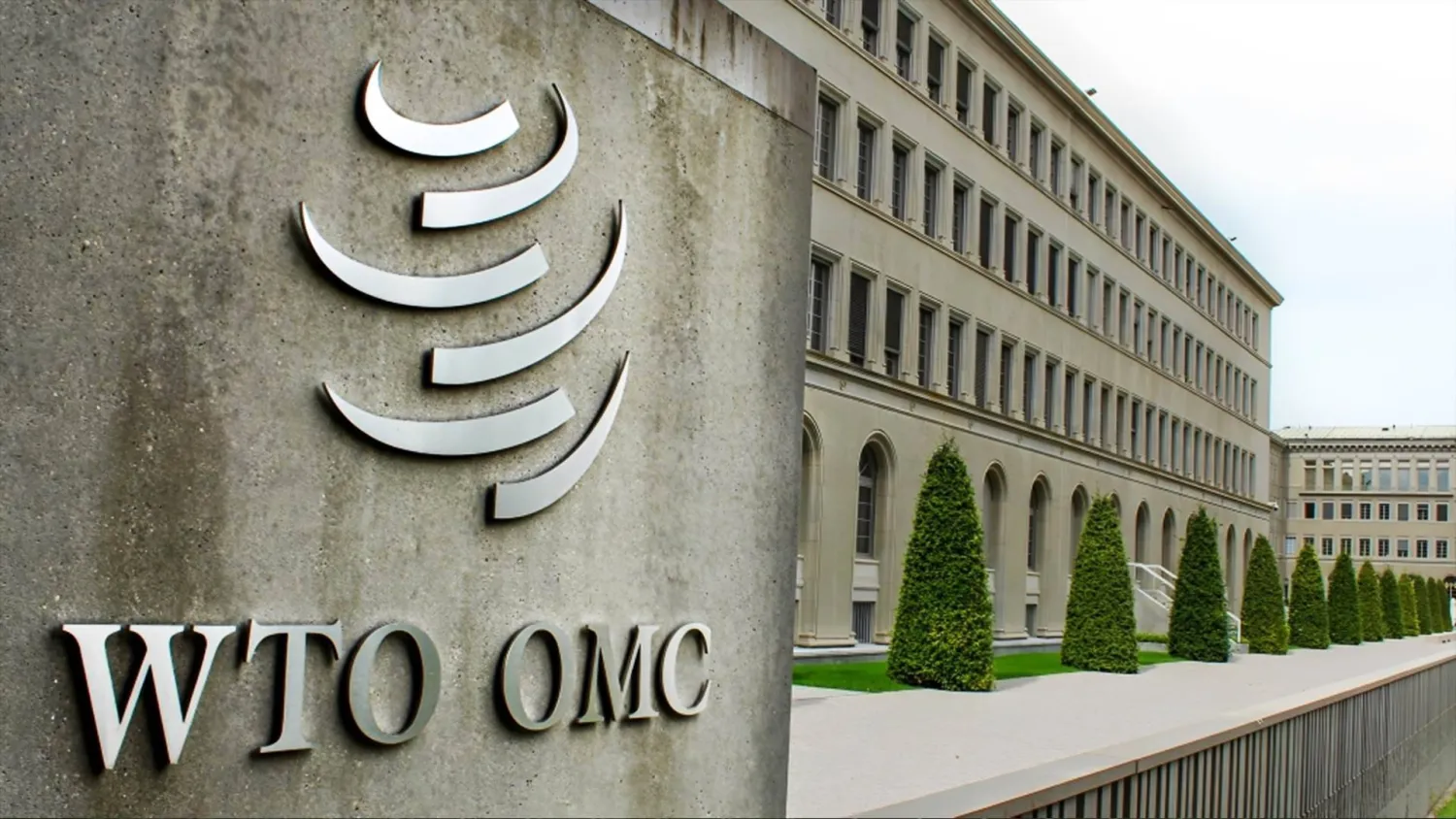
The Director-General of the World Trade Organization, Ngozi Okonjo-Iweala, warned of unprecedented disruptions to the global trading system, describing the current phase as the most dangerous in eight decades, as the organization's ministerial conference opened on Thursday.
IIwiala stressed that the multilateral world order has undergone radical and irreversible transformations, noting that the scale of current challenges now exceeds what the world has witnessed in previous periods, in light of escalating international crises.
This warning comes at a time when the 166 member states are facing clear divisions, coinciding with a meeting of trade ministers in the Cameroonian capital, Yaoundé, as part of one of the organization's most prominent conferences, amid economic repercussions related to tensions in the Middle East.
During the four-day conference, members seek to revitalize the role of the organization, whose effectiveness has declined due to geopolitical tensions, stalled negotiations, and escalating protectionist policies, in an unstable international environment.
AIwiala pointed out that the current turmoil began before the recent conflicts and has contributed to the disruption of energy, fertilizer and food markets, stressing that governments and international institutions are facing increasing challenges in dealing with geopolitical tensions, the repercussions of climate change and rapid technological development.
She added that these transformations are accompanied by a growing sense of doubt about the effectiveness of the multilateral system, considering that what is happening reflects a deeper flaw in the international system that was established after the Second World War.
She concluded by saying that holding the conference in Africa comes at a very sensitive time, in light of simultaneous crises in the Middle East, Sudan and Ukraine, stressing that the African continent represents the "continent of the future".
Rubio and Masrour Barzani discuss attacks targeting sites inside Iraq
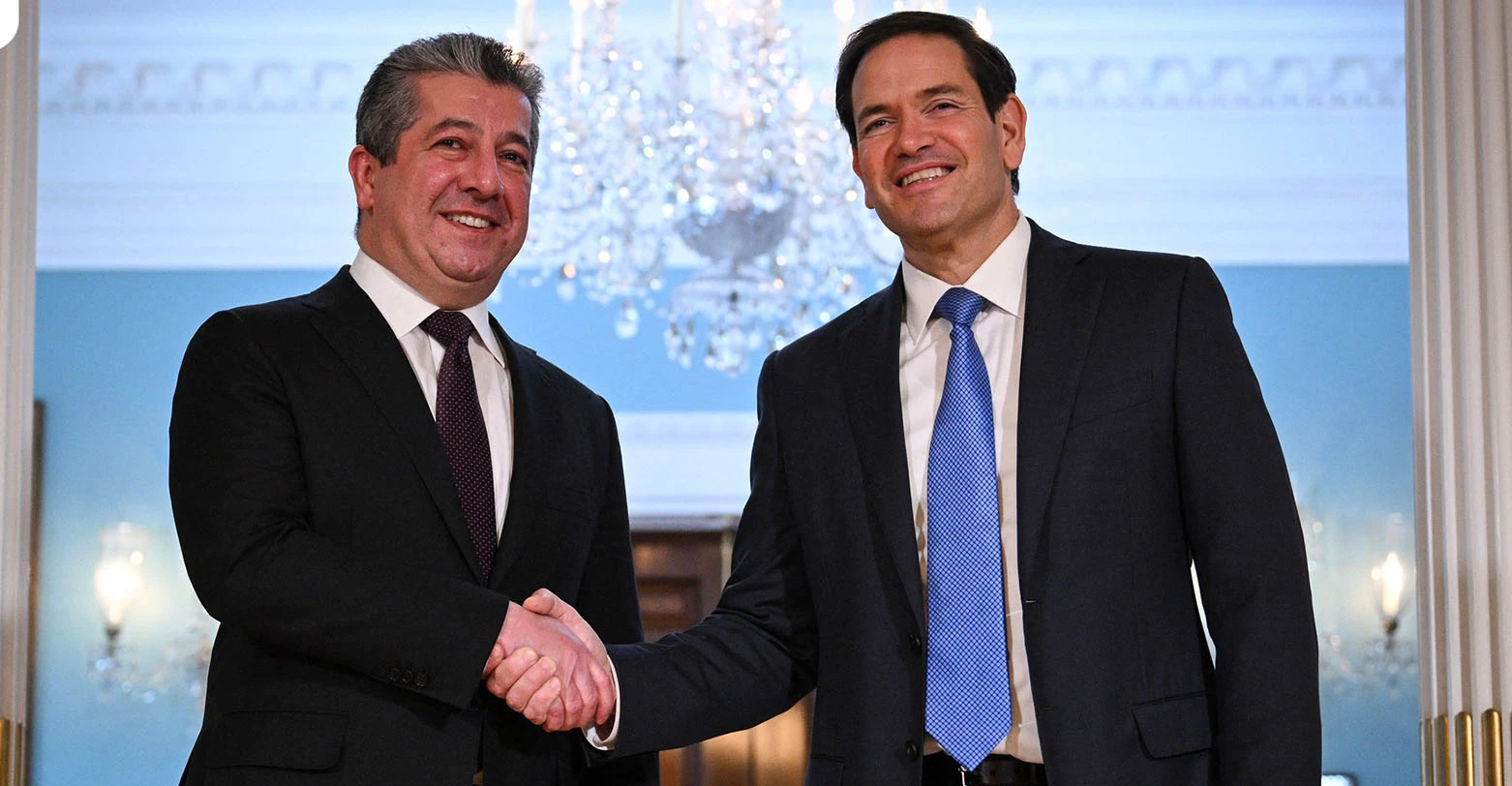
The US State Department announced on Thursday that Secretary of State Marco Rubio had a telephone conversation with Kurdistan Regional Government Prime Minister Masrour Barzani to discuss security developments in Iraq and the region.
According to a statement from the US State Department, seen by Shafaq News Agency, Rubio affirmed during the call the United States’ support for the Kurdistan Region, praising the role of the Peshmerga forces in combating terrorism and promoting stability.
The statement added that the two sides discussed current security challenges, including attacks targeting sites inside Iraq, and ways to protect diplomatic missions and international forces.
The US Secretary of State also stressed the importance of maintaining Iraq’s stability and strengthening cooperation between the federal government and the Kurdistan Regional Government, affirming his country’s continued support for the region in the security and economic fields.
For his part, Masrour Barzani expressed his appreciation for the American support, stressing the importance of continued joint coordination to confront security challenges and ensure stability in the region.
In a statement issued by the Kurdistan Regional Government and received by Shafaq News Agency, Marco Rubio offered his condolences and sympathy to Masrour Barzani and his solidarity with the Peshmerga victims, while emphasizing the continued support of the United States for the Kurdistan Region and the Peshmerga forces.
For his part, the Prime Minister expressed his thanks and appreciation to the US Secretary of State for his call and condolences.
In another part of the discussions, relations between the Kurdistan Region and the federal government were discussed, in addition to reviewing the current economic challenges.

No comments:
Post a Comment