Baghdad markets under pressure of anxiety... Citizens rush to stockpile food in anticipation of war

With the escalation of regional tensions and the ongoing confrontation between Iran, Israel, and the United States, signs of concern have begun to appear in some Iraqi markets among citizens, represented by the purchase of additional quantities of food and the stockpiling of fuel, in addition to the search for lanterns and alternative sources of lighting, in anticipation of any emergency that may accompany the expansion of the war in the region.

Observers believe that these concerns reflect the sensitivity of the Iraqi public towards regional developments, especially in light of past experiences that have made citizens more inclined to prepare in advance for any emergency, while others confirm that Iraqi markets are still stable and there are no indications of a shortage of basic goods.

Economic expert Khattab Al-Dhamin confirmed that the ongoing war has broad negative repercussions on the region, and especially on Iraq, given its shared borders with Iran and the intertwining of economic and political interests between the two countries.

Al-Dhamin told Iraq Observer that “the expansion of the war could lead to instability in the border region and affect the flow of food supplies, as reliance on Iran as a primary source may decrease, leaving Turkey as the only option, which would be reflected in higher food and fuel prices.”
He added that “closing the Strait of Hormuz will directly affect oil and fuel exports to Europe and other countries, which will be reflected in Iraqi and Gulf revenues.”

The economist warned that “the current state of tension may exacerbate the economic and living conditions in Iraq and lead to crises in electricity and fuel, which will push citizens to resort to traditional alternative means in their daily lives.
Foreign oil companies evacuate their employees from Iraq
Reuters reported on Saturday that several foreign oil companies have begun evacuating their foreign staff from oil fields in Iraq to Kuwait.
This comes amid fears of an escalating conflict in the region, as the US military in recent days abruptly canceled a major military exercise planned for an elite paratrooper unit, a move that has sparked speculation within the US Department of Defense about the possibility of sending ground troops to the Middle East as the confrontation with Iran widens.
Financial and consulting institutions have warned of potential repercussions on global oil supplies if the war with Iran continues, pointing to the possibility of a large part of production being halted due to the closure of the Strait of Hormuz.
Approximately 20% of the world's daily oil demand passes through the Strait of Hormuz. With the strait effectively closed for seven days, this meant that roughly 140 million barrels of oil, equivalent to about 1.4 days of global demand, were unable to reach the market.
Following Pezeshkian's pledge to neighboring countries, Iran bombs Qatar and Bahrain.
Iran’s Tasnim news agency reported on Saturday that the Revolutionary Guard launched missile attacks toward Bahrain and Qatar, following an apology from Iranian President Masoud Pezeshkian for previous attacks.
Tasnim News Agency reported that "the Revolutionary Guard's missile battalion launched a new wave of missile and drone attacks today towards Bahrain and Qatar."
For its part, the Qatari Ministry of Defense confirmed that the armed forces had intercepted a missile attack targeting the State of Qatar.
Iranian President Masoud Pezeshkian had announced earlier on Saturday that his country apologized to neighboring countries for any unintended damage during the Israeli-American war, calling on them to confront groups seeking to target Iran’s security through their territories.
Pezeshkian said: "Our country harbors no animosity towards neighboring countries. We apologize to neighboring countries for any unintended damage and urge them to confront groups that seek to target Iran's security from their territories."
On February 28, the United States and Israel launched a series of raids on targets in Iran, including the capital Tehran, causing extensive damage, civilian casualties, and the assassination of Iranian Supreme Leader Ali Khamenei and some leaders of the Revolutionary Guard and the army.
Iran retaliated against the US-Israeli attack, resulting in widespread repercussions across the region. These repercussions affected Iraq, Israel, Jordan, Kuwait, Bahrain, Qatar, the UAE, and Saudi Arabia.
In his first public appearance since the outbreak of the war, the Iranian president stated that the interim leadership council approved yesterday a policy of not attacking neighboring countries or launching missiles at them unless an attack on Iran originates from those countries.

Iranian President Masoud Pezeshkian affirmed on Saturday that his country will not succumb to pressure or threats, stressing that “Iran’s surrender is a dream that will never come true.”
Pezeshkian stated that those who claim to defend human rights have targeted “innocent Iranian students,” referring to recent events in the country. He also expressed his gratitude to the Iranian people who are present in the streets supporting the armed forces in what he described as “defending the country.”
The Iranian president added that the people's support for their leadership and armed forces is the key factor in thwarting what he described as "the enemies' plans."
Regarding regional relations, Pezeshkian stressed that Iran harbors no animosity towards neighboring countries, but rather seeks to cooperate with them to enhance the region’s security and stability.
He revealed that Iran's interim leadership council had decided not to target neighboring countries, as long as their territories were not used to attack Iran. He also called on countries in the region to confront the groups he described as "terrorist" that seek to threaten Iranian security from their territories.
Trump: Defense companies will quadruple weapons production
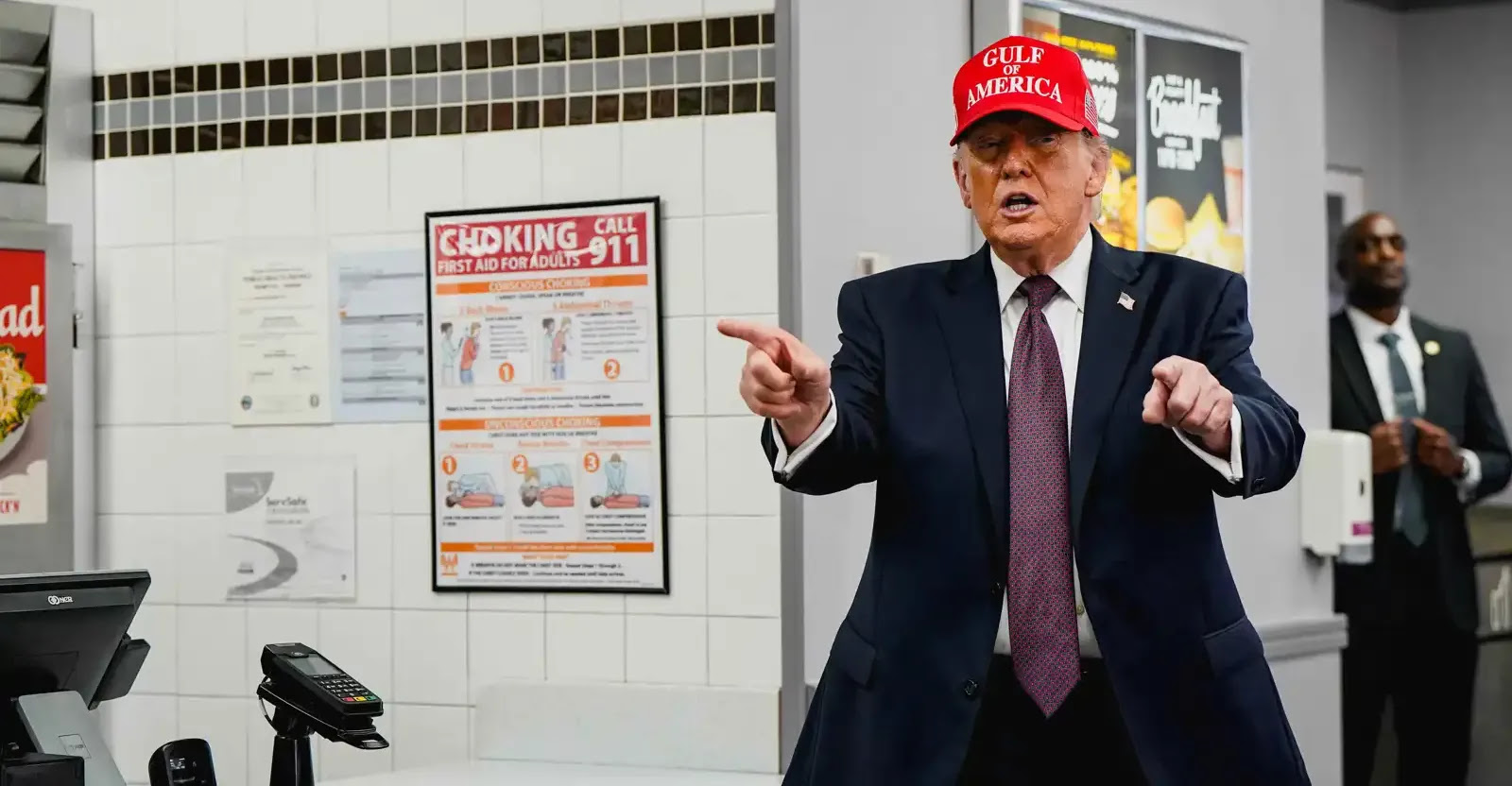
US President Donald Trump announced on Friday that defense companies have agreed to quadruple production of "premium class" weapons, and that they are seeking to reach the highest production levels as quickly as possible.
Trump added in a post on the Truth Social platform: "I had a very good meeting with the largest American defense weapons manufacturers where we discussed production, and I will meet with weapons manufacturers again in two months."
He noted that "the expansion of weapons production began 3 months ago and we have already started establishing factories and producing many weapons."
The US president asserted: "We have an unlimited stockpile of medium-range munitions that we have used in Iran and recently in Venezuela."
Trump held a meeting at the White House with defense arms companies amid concerns that a prolonged war could deplete U.S. stockpiles.
The meeting was attended by Lockheed Martin, Northrop Grumman, RTX, Boeing, Honeywell, and L3 Harris Technologies.
White House spokeswoman Carolyn Leavitt said on Friday that Trump would ask these companies to manufacture more weapons.
Levitt stated in a statement: "The U.S. military has sufficient stockpiles of ammunition and weapons to continue to defeat the Iranian regime and achieve the objectives of Operation Epic Wrath. However, Trump has always been very focused on strengthening our armed forces, and that is why this meeting with defense contractors was scheduled weeks in advance."
Since February 28, Israel and the United States have been launching attacks on Iran, killing hundreds of people, including Supreme Leader Ali Khamenei and a number of security officials.
Iran responds by launching attacks on Israel and what it describes as "American interests" in Arab countries, resulting in deaths, injuries, and damage to civilian facilities, including ports and residential buildings.
The US embassy warns of factions targeting hotels in Kurdistan.
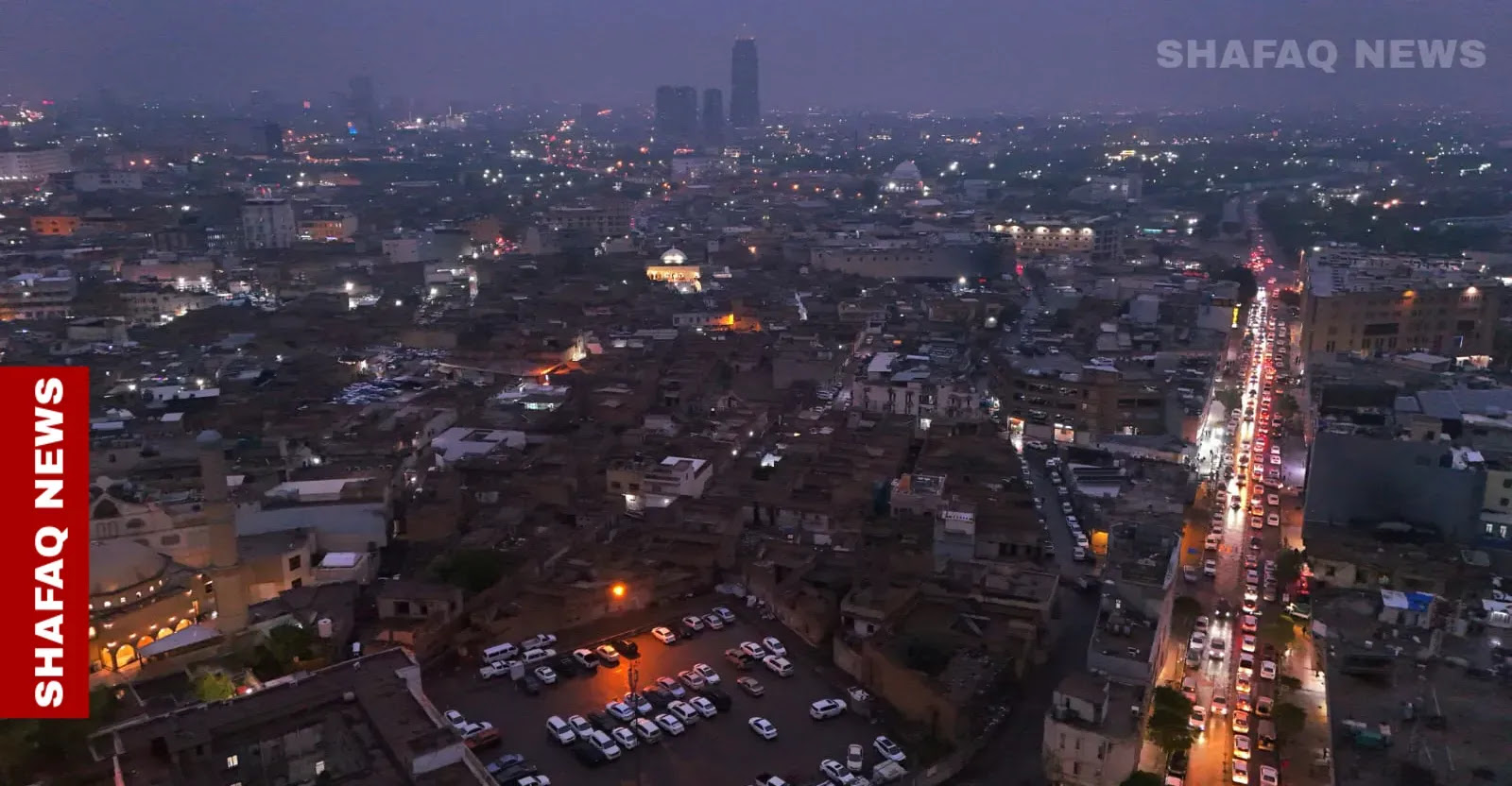
The US Embassy in Baghdad warned its citizens in the Kurdistan Region on Friday evening of potential attacks targeting hotels where they are staying in the region, while outlining a set of precautionary measures and options for leaving Iraq.
The embassy said in a statement received by Shafaq News Agency: "Iranian-backed factions may seek to target hotels frequented by foreigners in the Kurdistan Region of Iraq. We strongly urge U.S. citizens to leave as soon as they can do so safely, and to reconsider their accommodation options if they choose not to leave."
She added that "the United States government cares about your safety and will continue to share the information you need to make the right decisions about your security," stressing that "the U.S. government is evaluating all options to help its citizens leave the Middle East region."
She continued: "American citizens in Iraq are strongly advised to leave as soon as it is safe for them to do so. Americans who choose not to leave should be prepared to remain in place within a secure location for extended periods, and should have stockpiles of food, water, medicine, and other essential supplies."
Regarding departure options, the embassy explained that "commercial flights are not currently operating from Iraq. There are land routes to Jordan, Kuwait, Saudi Arabia and Turkey, and most land border crossings are open, but they may close without prior notice."
She noted that "local ground transportation options are still operational, and Americans should seriously consider departing via one of these ground routes if they believe it is safe to do so. Airspace in neighboring countries may also be closed, and local entry and exit requirements apply."
Iran: The new Supreme Leader will be chosen within the next 24 hours.

The Assembly of Experts announced today, Saturday (March 7, 2026), that the selection of the new Supreme Leader in Iran will take place within the next twenty-four hours.
Fars News Agency quoted a member of the Assembly of Experts, as reported by Baghdad Today, as saying, "We hope to meet to choose the new Supreme Leader within the next 24 hours."
The council explained that "the constitutional procedures for selecting the new leader are being carried out according to the mechanisms adopted within the religious and political establishment in the country," noting that "consultations among the council members are continuing to finalize the decision in the near future."
The Assembly of Experts is the body constitutionally authorized in Iran to elect the Supreme Leader and oversee his performance, and it includes a number of senior elected clerics.
These developments come amid a rapidly escalating military situation in the region, following the announcement by official Iranian media of the assassination of Supreme Leader Ali Khamenei during US and Israeli missile attacks targeting sites inside Iran, which also resulted in the deaths of several senior officers, including the commander of the Iranian Revolutionary Guard, Mohammad Pakpour.
Escalating conflict in the region threatens the economies of Iraq and the wider region... Expert explains the gains and risks - Urgent
Iraq is the second largest oil producer in OPEC, with an output of more than 4 million barrels per day, and exports about 3.3 to 3.5 million barrels per day to global markets, mostly through ports in the Arabian Gulf.
In the event of an escalation of war between Iran and Israel, one of the biggest risks is the potential closure or disruption of the Strait of Hormuz, a strategic waterway through which about 20% of the world’s oil trade passes.
Some economic effects have already begun to appear during periods of escalation; the tension in the region led to a rise in global oil prices by between 6% and 7% at some times, giving Iraq short-term financial gains estimated at an additional $150 to $160 million as a result of the price increase.
On the other hand, the continuation or expansion of the war could lead to significant negative consequences, such as the cessation of oil exports or a decrease in production due to security risks and disruption of transportation routes.
For his part, Dr. Ziad Arabsh, an expert in global economic affairs, confirmed on Saturday (March 7, 2026) that "there are several acute and multi-dimensional challenges facing the economies of Arab countries with the continued US-Israeli escalation with Iran," explaining the most prominent of them as follows:
Energy markets deteriorated as Brent crude reached $93 a barrel, its highest price since November 2022 following the start of the war in Ukraine.
Supply of goods, particularly food, to Arab markets was disrupted.
Return of recession indicators and growing inflationary pressures.
The problem of unemployment has emerged, especially among migrant workers.
A substantial decline in the gross domestic product (GDP) of Arab economies.
He added in his interview with "Baghdad Today" that "the short-term effects of the war, which may continue for two weeks, began with immediate disruptions represented by the rise in oil prices and initial disruptions, as prices exceeded $93 per barrel with jumps in the prices of derivatives and gas."
He explained that "energy is involved in the production of more than 500,000 commodities, such as fertilizers, plastics, chemicals, petrochemical products, paints, rubber and nylon, in addition to its use in transportation operations, which means that its high cost leads to disruption of food, industrial and agricultural production chains, and contributes to the continued rise in prices of various goods and services."
Short-term economic effects:
1- Energy and Production
Oil and gas export revenues have increased for some exporting countries, but they face increasing risks related to the passage of oil and gas through maritime straits, in addition to rising insurance and reinsurance costs.
Conversely, energy-importing countries such as Jordan, Lebanon, Morocco, Tunisia, Syria, Yemen, and Sudan are suffering from high fuel and commodity prices. Industrial production, particularly in the cement, food, and textile sectors, is also facing increasing difficulties due to supply chain disruptions and the stagnation of land, sea, and air transport.
Meanwhile, countries like Egypt and Algeria are experiencing both gains from increased energy exports and losses from higher import costs.
2- Transportation and Shipping
Trade in the Red Sea, the Mediterranean, and the Arabian Sea has seen a significant decline, with shipping costs between Asia and Europe rising. The cancellation of some regional flights in the Gulf, Syria, and Jordan has also led to a substantial increase in shipping costs and disrupted some aspects of tourism.
3- Inflation and commodity prices
The effects of rising costs have been passed on to consumers, as price indices have risen by about 10% on average. This is clearly evident in the increase in bread and food prices as a result of rising transportation and energy costs, leading to a general wave of inflation in Arab economies.
4- Tourism
Inbound tourism to the Gulf countries has witnessed a significant decline due to the suspension of tourist flights, and some other countries have also been affected by the decrease in tourism from the Gulf.
Conversely, some countries, such as Egypt and Morocco, have experienced growth in intra-regional tourism as a result of redirecting tourists away from destinations like the Gulf, Lebanon, and Turkey.
5- Banks, investments and insurance
Gulf markets have come under pressure as foreign investment flows have declined, and shipping and trade insurance rates have risen by between 20% and 50% depending on transit areas, with reinsurance costs doubling.
6- Unemployment and financial transfers
Unemployment rates have risen as remittances have declined by between 5% and 10%, which is equivalent to monthly losses of approximately $2 to $3 billion for Egypt and about $1 billion for Jordan. The impact is particularly concentrated on migrant workers in the construction and tourism sectors.
7- Net effects between countries
The results vary among Arab countries:
Winning countries: such as Algeria, which benefits from increased oil and gas exports.
Losing countries: such as Jordan, which is almost entirely dependent on energy imports.
Countries that combine gains and losses: such as Egypt, which may be harmed by a decrease in Suez Canal revenues of about 10%, but benefits from increased gas exports.
The economist also pointed to medium-term effects (within weeks), including:
1- Energy and Production
If the escalation continues and the maritime straits are disrupted, the price of oil may exceed $100 per barrel, an increase of between 20% and 30%, which may lead to the closure of some factories and the disruption of production chains, with inflation rates rising to between 15% and 25%.
2- Transportation and Shipping
Imposing a broad air embargo could lead to the relative isolation of Gulf economies, with a sharp decline in maritime trade and rail and road transport.
3- Inflation and Commodities
The intertwined economic effects will continue to result from rising energy, raw material and intermediate commodity prices, along with increased transportation and logistics costs.
4- Banks and Investments
Capital may flow out of the region, with banking liquidity tightening and reinsurance costs rising sharply.
5- Employment and unemployment
Labor markets are expected to face increased pressure as hundreds of thousands lose their jobs, raising the risk of economic recession due to decreased demand and purchasing power, which could lead to social unrest, increased migration, and higher structural unemployment.
Trump offers "full immunity" to Iranian diplomats in exchange for defection
US President Donald Trump made a direct appeal to Iranian diplomats around the world, urging them to seek asylum in the United States.
This offer came during a speech he delivered at the White House, assuring them that they were capable of playing a role in "shaping a new and better Iran with great potential."
Trump’s speech was not limited to diplomats, but extended to members of the Revolutionary Guard, the army and the police in Iran, where he called on them to lay down their weapons and join what he described as “the right side of history.”
The US president pledged to provide "complete immunity" and "total safety" to those who respond to his call, in contrast to a clear threat to those who continue to fight alongside the current regime, warning them that they "will face a completely guaranteed death."
In remarks made during a sporting event at the White House attended by Argentine football star Lionel Messi and Inter Miami, Trump confirmed that US military operations against Iran are ongoing and are "ahead of schedule."
Want to Support My FX Buddies?
.png)
Support My FX Buddies Big or Small I appreciate it all
BuyMeACoffee CashApp:$tishwash
https://paypal.me/tishwash

.jpeg)
Parliament adjourns its "secret" session, with details remaining confidential.

The Iraqi parliament adjourned its closed session on Saturday night, which was dedicated to discussing regional developments and was attended by security leaders, while a female MP refused to give full details about the proceedings of the session.
Late on Saturday night, Parliament decided to postpone the session dedicated to discussing the US-Iran war and its impact on Iraq, which was attended by security leaders, until next Monday.
Parliament held the session at nine o'clock on Saturday evening, with a full quorum of MPs.
Regarding the proceedings of the session, MP Ibtisam Al-Hilali, from the State of Law bloc, told Shafaq News Agency that "the House of Representatives hosted in its session the security leaders headed by the Chief of Staff of the Army, the Deputy Commander of Joint Operations, the Air Command, and other security leaders."
She added that "the council discussed the American and Israeli aggression against the Islamic Republic of Iran, the events and the regional war in the region, and the American attack on some headquarters of the security forces and the Popular Mobilization Forces was also discussed."
She added that the Speaker of Parliament would issue an official statement regarding the session, and that recommendations would be submitted to the government to preserve the security and sovereignty of Iraqi territory.
For her part, MP Duha Al-Bahadli, from the National Approach Bloc, told Shafaq News Agency that "the session addressed the issue of the attacks and the American presence, which was raised politically, and Parliament condemned these attacks, especially the incident of the airdrop in the desert near the governorates of Najaf and Karbala."
She explained that "parliamentary demands emphasized the unity and security of Iraq above all else, and that Iraqi blood is not to be taken lightly, and support for the Popular Mobilization Forces and not harming them, as positions are what govern the political scene."
Talabani: Regime change in Iran is not currently on the table, and the war could be prolonged.
The head of the Patriotic Union of Kurdistan, Bafel Jalal Talabani, said that the ongoing war with Iran is still in its early stages, predicting that it will be "long and difficult," while ruling out the possibility that the current escalation will lead to a change of regime in Tehran in the near future.
In an interview with Fox News, Talabani revealed that he had a telephone conversation with US President Donald Trump, describing him as "very calm and charming in conversation."
He also noted that he had spoken with Iranian Foreign Minister Abbas Araqchi, confirming that the latter appeared "very frustrated" during the call.
Talabani denied the validity of reports that spoke of Iranian Kurdish fighters crossing into Iran to participate in the fighting, explaining that "most of the active fighting forces are located outside Iran and on the borders," in an indirect reference to elements of the Kurdistan Free Life Party (PJAK).
Regarding the possibility of an internal uprising in Iran, Talabani said that current indicators do not support this scenario, adding: "So far we have not witnessed any uprisings or widespread popular movements."
He also warned that the entry of Kurdish fighters into Iranian territory could raise security concerns in Turkey, arguing that Ankara might see this as a legitimate reason to intervene militarily against those forces, which could open a new front in the escalating conflict in the region.
In response to a question about whether there are currently armed operations launched from Iraqi Kurdistan involving Iranian Kurds towards Iran, he replied, "No, I don't see this... In fact, this could be a negative thing. Iranians, like others, have a strong nationalist tendency. And I think that if they feel that Kurds coming from abroad might cause their country to be divided or dismantled, this could actually unite people against this separatist movement."
He added: "Then there are complications related to Turkey, as it will have legitimate concerns about this happening, and we may see Turkish intervention against Kurdish forces. At the same time, there is also a problem related to the Azerbaijanis."
He expressed his belief that "the scenario is very complex, and perhaps pushing the Kurds to be the spearhead is not the most appropriate option."
Reuters quoted sources as saying that the Kurdish groups' goal was to control border towns, including the cities of Oshnavieh and Piranshahr.
According to independent estimates, the combined force of Kurdish fighters numbers between 5,000 and 6,000 fighters.
Two Kurdish sources said that coordination with America is stronger than with Israel, but a cross-border attack would require air support from both.
Speculation has intensified about the potential involvement of Kurdish fighters in the ongoing conflict with Iran, after Iraqi Kurdish officials revealed earlier that thousands of Kurdish fighters in northern Iraq are preparing for a possible military operation inside Iranian territory with US support.
The Associated Press quoted three Kurdish officials as saying that Trump discussed the developments with leaders of the two main Kurdish parties in Iraq, at a time when US and Israeli strikes on targets inside Iran continue.
Al-Shammari: Most of the forces within the Coordination Framework withdrew their nomination of former Prime Minister Nouri al-Maliki, with the exception of two parties.
MP Kazem al-Shammari, from the Services Bloc, confirmed that most of the forces within the Coordination Framework have withdrawn their support for former Prime Minister Nouri al-Maliki, with the exception of only two entities that still back his candidacy. He indicated that the Framework currently lacks a "big father figure" capable of managing disputes and proposing initiatives.
Sudani ally reads Maliki tweet as ‘withdrawal’ from premiership race
BAGHDAD — A senior ally of Prime Minister Mohammed Shia al-Sudani said Saturday that a recent tweet by former Prime Minister Nouri al-Maliki amounts to a de facto withdrawal from the race for the premiership — a significant shift after weeks in which Maliki had resisted pressure to step aside.
Bahaa al-Araji, head of Sudani’s Reconstruction and Development bloc in parliament, said on Al-Sharqiya TV that he interpreted Maliki’s message as stepping back from the nomination.
“I read Mr. Maliki’s tweet, in which he called on the next government to follow an independent national approach away from political axes. This represents a withdrawal from the nomination for the position of prime minister, and he should be thanked for that under the current circumstances,” Araji said, adding that the tweet “reflected the position of a statesman and a leader who understands the situation in all its details.”
Araji also said the Coordination Framework’s most recent meeting reflected a shift away from Maliki’s candidacy. “Its leaders reached a consensus that it would be difficult to proceed with Mr. Maliki’s nomination,” he said.
He positioned Sudani as the dominant figure in the current political moment. “Sudani is no longer just a candidate. Today, Sudani is the decisive figure at this stage. Who among the other candidates can reach an understanding with both the United States and Iran at the same time?”
Araji also noted his bloc’s parliamentary weight in ongoing negotiations, saying its 50-odd seats entitle it to five ministries.
In the March 5 tweet, Maliki wrote that Iraq “must be an effective balancing element in its regional environment” and called for an “independent national approach that does not engage in axes” — language Araji interpreted as a signal of withdrawal.
Maliki’s candidacy had become an increasingly awkward standoff within the Coordination Framework. After being nominated following the 2025 elections, he faced mounting pressure to stand down but refused to withdraw, repeatedly absenting himself from Framework meetings rather than formally conceding — leaving the alliance in the position of having to either force him out or proceed with a nominee that Washington had publicly rejected. U.S. President Donald Trump warned that Washington could reconsider its support for Iraq if Maliki became prime minister, and the Foreign Ministry said the U.S. message included an “explicit hint” of sanctions.
KBR company personnel withdraw from their work site in the Majnoon oil field

This morning, KBR company personnel left their work site at the Majnoon oil field in Basra province, without any official explanation for their departure.
The Majnoon field is one of the largest oil fields in Iraq, and foreign companies oversee a number of technical and service projects related to production and development operations there.
Iraq extends airspace closure again by 72 hours
BAGHDAD — Iraq’s Civil Aviation Authority on Saturday extended the country’s airspace closure for another 72 hours, keeping it shut to all incoming, outgoing and transit flights until noon Tuesday.
The authority cited “the continued assessment of the security situation and regional developments,” adding that the measure would be reviewed in line with new developments and that airlines would be notified of any updates.
Iraq has kept its airspace closed since last Saturday following U.S. and Israeli strikes on Iran and subsequent Iranian missile and drone launches across the region. The closure was previously extended for 24 hours, then 48 hours, before Saturday’s 72-hour extension.
The Tehran stock market is closed until further notice.
Iranian Economy Minister Ali Madani Zadeh announced on Saturday, March 7, that the stock market will remain closed until further notice, based on a decision issued by the Supreme Council of the Stock Exchange.
It is worth noting that the Iranian government announced last week the suspension of all administrative and economic activities in the country following the killing of Supreme Leader Ali Khamenei, and this suspension was scheduled to continue until Sunday, March 8.
Outcomes of the "practical procedures" of the security meeting between Washington, London and Manama
The US Central Command announced on Saturday the practical steps for the outcomes of the “virtual meeting of the Defense Working Group” between Bahrain, the United States and the United Kingdom, which falls within a broader path for security integration in the Gulf, according to the Command.
According to a statement from the US Central Command, the most prominent outcomes of the practical measures discussed in such meetings are as follows:
Possible measures to counter maritime and drone threats
- 1. Strengthening joint maritime surveillance
- Expanding the use of unmanned maritime systems (USVs) to monitor vital waterways such as the Gulf and the Strait of Hormuz.
- Integrating sensor data between the US, British and Bahraini fleets via joint command centers in Bahrain (where the US Fifth Fleet is based).
- Using artificial intelligence to analyze ship traffic and monitor unconventional threats.
- 2. Defense against drones
- Deployment of short-range air defense systems designed to intercept drones and low-altitude missiles.
- Introducing electronic warfare technologies to disrupt the guidance and communication systems of unmanned aerial vehicles (UAVs).
- Joint exercises to simulate drone swarm attacks on ships and oil facilities.
- 3. Protecting shipping and energy lines
- Intensify multinational maritime patrols around energy infrastructure and ports.
- Developing rapid response plans for any threat to commercial vessels or oil tankers.
- Improve coordination with existing naval alliances such as the Combined Maritime Forces (CMF).
- 4. Operational integration between armies
- Unifying command and control procedures between Bahrain, the United States, and Britain.
- Expanding joint military exercises, especially in coastal defense and maritime security.
- Broader sharing of intelligence information about threats in the Gulf.
How might Bahrain's strategic role evolve?
- 1. Regional Security Center
Bahrain is poised to enhance its role as a command and operations center in the Gulf, benefiting from the presence of the US Fifth Fleet and defense cooperation networks with the West.
- 2. A platform for Gulf defense integration
Bahrain could become a hub for connecting:
- Western defense systems
- Gulf States Capabilities
Within a more integrated defensive framework.
- 3. Developing national defense capabilities
The agreement could lead to:
- Upgrading Bahrain's air and naval defense systems
- Acquiring advanced technologies to counter drones and missiles
- Expanding training and armament programs.
- 4. A regional deterrent message
Strengthening trilateral cooperation sends a deterrent message that:
- Gulf security is a shared interest between Western allies and countries in the region.
- Any threat to navigation or energy will be met with a response
"Iraq without a government": A legal proposal that could break the political deadlock
Iraq has been experiencing a political deadlock for nearly four months since the parliamentary elections, as the sharp division within the “coordination framework” over the identity of the next prime minister, and the dispute over the definition of the “largest bloc,” have frozen constitutional processes, amid anticipation of what will result from last-minute understandings between the forces holding the reins of the initiative.
While Iraqis were waiting for the emergence of an executive authority that would translate the results of the November 11, 2025 elections, the ongoing war between Iran on one side, and the United States and Israel on the other, which entered its sixth day, imposed new realities, amid direct American pressure led by Donald Trump on Iraqi political forces to exclude specific figures from the premiership.
Rebalancing
In the midst of this crisis, the vision of the head of the Iraqi Supreme Judicial Council, Judge Faiq Zaidan, emerged as a decisive legal step aimed at restoring credibility to the ballot boxes by correcting what he described as the “sin of misinterpretation” of Article 76 of the Constitution.
Zidan’s vision is based on the principle of “first come, first served,” by adopting the winning list in the vote as the “largest bloc,” and granting it the exclusive right to nominate the prime minister, instead of the current interpretation that allows for the merging of blocs within parliament after the elections, which ends the era of subsequent alliances that emptied the ballot boxes of their content and opened the door to a long political deadlock.
In this context, Haider Ali “Abu Tara Al-Fayli,” a representative of the Fayli Kurds, says, “The negotiations to form the Iraqi government are continuing despite the internal disagreements within the coordination framework, but we see that Judge Faiq Zaidan was clear and settled the matter in his last proposal regarding the largest bloc as a constitutional clarification, and we, as representatives, follow the opinion of the Supreme Judicial Council.”
Al-Faily warns that “the failure to form a government has disrupted all state departments, and this is a serious danger in light of what is happening in the region, and it is considered a direct threat to Iraq, so it is necessary to expedite the resolution in the coming days.”
Washington veto
However, this optimism clashes with the firm stance of the State of Law Coalition, which views direct American intervention as a violation of sovereignty, especially after President Trump's threats to halt aid if the coalition's leader, Nouri al-Maliki, assumes the premiership.
Coalition leader Arif al-Hamami affirms: “Our candidate so far is al-Maliki, and the last meeting of the framework (the day before yesterday, Tuesday) confirmed our commitment to him,” noting that “the decision to change is not in the hands of al-Maliki, but rather in the hands of the framework that appointed him.”
He believes that “changing the candidate as a result of American pressure and dictates is an insult to national legitimacy, as the American government is not rational and does not respect treaties, and yielding to it will mean its future interference even in the details of ministries.”
Regarding Judge Zaidan’s vision, Al-Hamami explains that “what Judge Zaidan presented is a vision and not a binding decision, as the constitutional amendment requires impossible steps and its clash with the rejection of 3 governorates may end it,” considering that “the big obstacle now is the Kurds’ delay in nominating the president of the republic, which is the main obstacle.”
“The Independent Alternative”
On the other side of the coordination framework, the picture looks more pessimistic regarding consensus. Rahman al-Jazairi, a leader in the framework, believes that we are facing a “clear political suffocation” that coincides with the armed conflict in the region.
Al-Jazairi says that “Judge Zaidan’s proposal will create a new character, as there are opponents of Al-Sudani’s appointment despite his having the most seats (46 seats in the Iraqi parliament, which consists of 329 seats), and there are widespread objections. On the other hand, there is no official withdrawal of Al-Maliki, nor a unanimous decision from the framework, and the current meetings are private and unofficial.”
The Algerian adds a security dimension to the scene: “The Popular Mobilization Forces fighters are now being targeted by Israeli and American aircraft missiles, and this will inevitably delay the formation of the government, and we will remain stuck in a state of (emergency government).”
He also reveals a surprising scenario: “Perhaps after Eid al-Fitr a legal option will be imposed, either by dissolving parliament or reconsidering the issue of the prime minister. There is now an (independent) figure outside the framework table, who is close regionally and has the approval of the supreme religious authority in Najaf, and he may be announced in the coming days as a compromise candidate.”
These debates come at a time when the head of the Judicial Council, Faiq Zaidan, confirmed in an article published on March 3 that the previous interpretation of 2010 allowed for changing the results expressed by the voters, which led to repeated crises, the latest of which is the one Iraq is experiencing.
For their part, the four presidencies – President Abdul Latif Jamal Rashid, Prime Minister (outgoing) Mohammed Shia Al-Sudani, Speaker of Parliament Hebat Al-Halbousi, and Chief Justice Faiq Zaidan – stressed in their meeting yesterday, Thursday, the importance of expediting the completion of constitutional requirements.
The specter of economic collapse looms over Iraq following the Strait of Hormuz crisis.
Talk of a crippling economic crisis that could hit Iraq in the coming period has become a major topic of conversation among the Iraqi public and political and economic circles alike. These fears have been amplified to an unprecedented degree by the recent threats and attacks in the Strait of Hormuz, and the possibility of its closure by Iran due to escalating regional tensions.
This strategic waterway is a lifeline for a country like Iraq, whose economy and budget depend almost entirely (rentier) on revenues from crude oil sales. Therefore, any closure of the strait would mean a forced halt to Iraqi oil exports, threatening a severe economic catastrophe that would cripple the state and the livelihoods of its citizens.
Warnings: Total collapse within 3 months
Economic experts warn of the immediate and catastrophic consequences of any disruption to navigation in the Strait of Hormuz. In this context, economic journalist Haider Hamid told Kurdistan 24, "Iraq exports more than 90% of its total oil exports through the Strait of Hormuz, and any disruption to this sector will have a serious and direct impact on the Iraqi economy and the national budget."
Hamid issues a stark warning, saying: "If the situation continues as it is, and the Iranian side keeps the strait closed or obstructs navigation in it, the Iraqi economy will completely collapse in just three months."
Export alternatives: Political optimism amid the storm
In contrast to the pessimistic economic outlook, political analyses appear more optimistic, relying on "emergency alternatives." Experts believe that despite the seriousness of the regional challenges that could spill over into Iraq, the flow of oil cannot be stopped, and the country will resort to alternative export methods.
Political observer Atheer Al-Sharaa explains: “Today, Iraq has options for exporting oil, such as reactivating pipelines through the Turkish port of Ceyhan, or through the Jordanian port of Aqaba, or even through Syria. There are actual studies to find strategic alternatives to the Strait of Hormuz.”
Al-Sharaa adds: “I believe that Iraq will not be economically affected to that extent if alternatives are activated, but we are undoubtedly facing major economic, political and security transformations in the region, and Iraq will not be immune to the repercussions of these challenges.”
Two decades of strategic failure
With Iraq facing a "fait accompli" due to the Strait of Hormuz crisis, a fundamental question arises, raised by both the public and specialists: Why have successive Iraqi governments failed over two decades to find or achieve alternative and safe sources and methods for exporting oil, especially since the state budget and the payment of its employees' salaries depend on it almost entirely? This question puts the country's strategic development plans to a severe test and a historical review.
From Baghdad, Saif Ali Kurdistan, with his consultation."
Economic Crisis Strangling Iraq After Targeting the Strait of Hormuz

No comments:
Post a Comment