The dollar is manipulating the Shammar dishdashas, but Rabia will not compromise on her Eid elegance.
The dollar is above 1500 dinars, and vendors are talking about prices that are double, even in the most remote cities of Iraq.
The video for this My FX Buddies Blog post is below here:
With the arrival of Eid al-Fitr and people heading to the markets to shop, residents of Al-Awainat village, which belongs to the Rabi’a district in Nineveh, compare prices last year with current prices. Sellers say that a clear increase can be observed, reaching double the price for some goods. Rifa’i Shatti, the owner of a children’s clothing store, told 964 Network that children’s dresses were sold last year for prices close to 10,000 dinars, while this year they have reached 30,000 dinars.
In their simple analysis and reading of the market, the locals attribute this rise to the large increase in the dollar exchange rate, which exceeded the threshold of 155,000 dinars per hundred dollars, in addition to the new customs tariff system “ASYCUDA”, which ended the estimated customs duties on containers and turned them into specific customs duties for each imported item.
Sales at Hadhil Abdul Karim's wholesale food store were unaffected, because buying sweets is an indispensable part of the holiday traditions, no matter how high the prices rise.
Fadel Halil, a citizen from Al-Awainat village, told 964 Network that the used dishdasha (bare) he used to buy for Eid was much more expensive than last year, demanding fairness from shop owners and merchants. Anwar Tharwi, the owner of a men's (new) clothing shop, indicated that the price increase was also evident in his products.
Economic paralysis hits Kurdistan amid regional war
Energy fields shut down and markets declined by 85%

The cities of the Kurdistan Region are experiencing a state of escalating anxiety as a result of the continued American-Israeli attack on Iran and the exchange of shelling between several parties, including drones belonging to armed factions and Iranian shelling that targeted various areas in the region.
The ongoing war in the region has directly impacted the oil and energy sector in Kurdistan, with company headquarters and oil and gas fields subjected to daily attacks by drones and missiles. These attacks have led to the shutdown of the Kor Mor oil field, causing a two-thirds drop in electricity production, as well as the cessation of operations by foreign companies, including the Canadian company Shamaran and the American company HKN, in addition to the closure of the Lanaz refinery in Erbil.
The repercussions of the war have extended to other sectors, disrupting education and paralyzing key economic sectors, most notably the car and real estate markets. In this context, Abbas Hussein, a member of the Sulaimaniyah Car Dealers Union, confirmed that the war's effects have been severely felt in the sector, with activity declining by 85%. He told Al-Mada that "citizens are now avoiding investing their money in buying or trading in cars due to fear and instability." He added that "activity within dealerships is currently limited to citizens selling their cars to generate cash, given the 15% drop in prices." For his part, economist Othman Karim explained that “the conditions of war and security instability are pushing citizens to focus on securing their basic needs, rather than spending on luxury goods.” He added that “cars are considered non-essential in such circumstances, leading to a significant decline in demand.”
Karim pointed out that “some sectors, such as real estate, the gold market, and car dealerships, were already suffering from instability, and the war has exacerbated their situation and further paralyzed them.”
Since the outbreak of the war with Iran on February 28, cities in the Kurdistan Region have witnessed a marked escalation in drone and missile attacks targeting various areas and vital facilities, negatively impacting the lives of residents.
These developments caused a near-total power outage in the initial days, before a return to reliance on private generators, along with rising fuel prices, including cooking gas, and a worsening of the economic and living crises.
The Kurdistan Region shares a long border with Iran, stretching from Haji Omran in Erbil, through Penjwen and Hawraman in Halabja Governorate, to the outskirts of Kalar District in Sulaimaniyah, placing it at the heart of the regional escalation.
In this context, academic economist Alaa Abdul Rahman confirmed that the region is at the center of the crisis due to its geographical location. He stated that “talk of potential intervention by Iranian Kurdish opposition parties, coupled with the ongoing bombardment, has led to a near-total paralysis of most vital sectors.” He
added that “citizens are currently stockpiling essential goods such as food, fuel, and medicine, while priorities related to purchasing cars or other goods have declined.”
He pointed out that “even merchants and investors are avoiding investing their capital in this climate of uncertainty, as investing under these circumstances is considered risky, given the ambiguity surrounding the end of the war and the possibility of its expansion.”
Want to Support My FX Buddies?
.png)
Support My FX Buddies Big or Small I appreciate it all
BuyMeACoffee CashApp:$tishwash
https://paypal.me/tishwash

.jpeg)
US military: We targeted missile factories in Iran's KhargUS military: We targeted missile factories in Iran's Kharg
The US military confirmed on Thursday that it had targeted missile factories on Iran’s Kharg Island, stating that the factories were used to manufacture surface-to-surface missiles to strike its forces and countries in the region.
The US military said in a statement seen by Shafaq News Agency that "prior to Operation Epic Wrath, the Iranian regime used the Kharg surface-to-surface missile plant to assemble ballistic missiles that threatened Americans, neighboring countries, and commercial shipping."
The army continued: "The image dated March 1, 2026 shows the factory before the American strikes, while the image dated March 11, 2026 shows the same site after the American forces bombed the facility with precision munitions."
US President Donald Trump announced early last Saturday that the United States had carried out "one of the most powerful bombing raids in the history of the Middle East," completely destroying all military targets on Iran's Kharg Island, and threatening to strike its oil infrastructure if freedom of navigation in the Strait of Hormuz is obstructed.
Trump said in a post on his social media platform Truth Social: “Moments ago, at my direction, the United States Central Command carried out one of the most powerful bombing raids in the history of the Middle East, completely destroying all military targets on Iran’s crown jewel, Kharg Island. Our weapons are the most powerful and advanced the world has ever known.”
A series of attacks targeted the Iranian cities of Kerman and Bushehr.
Iranian local sources reported on Thursday evening that a series of explosions occurred as a result of strikes on various locations in a number of cities across the country.
A local official in Iran’s Kerman province reported explosions in the cities of Bardsir and Baft, noting that there were no casualties.
Meanwhile, four explosions occurred as a result of an attack on a missile site in the city of Borazjan in Bushehr, southern Iran.
Meanwhile, the US military announced that it had bombed the Iranian "Kharj" missile factory on March 11 with precision munitions.
The US Central Command said that "the factory was being used by the Iranian regime to assemble ballistic missiles."
Europe calls for "de-escalation" as Iran renews its attacks on Bahrain and Israel.
EU leaders said in a statement: “We condemn any actions that threaten navigation or prevent ships from entering and leaving the Strait of Hormuz.”
They stressed: We reiterate the need to protect the region’s airspace, ensure maritime security, and respect freedom of navigation, and we call for a halt to attacks against power plants and water stations.
They stated: We strongly condemn Iran’s indiscriminate attacks against countries in the region and express our solidarity with the affected countries. We call for de-escalation, restraint, protection of civilians and civilian infrastructure, and respect for international law.
Simultaneously with this statement, Bahrain announced that its air defense systems had intercepted 5 missiles from Iran in the past few hours.
Iranian television also announced: the launch of a new wave of missiles.
In Jerusalem, sirens sounded after Iranian missiles were detected.
Arab media outlets confirmed: Missiles were launched from Iran towards central Israel.
The Israeli military said it was continuing to target Iran’s ballistic missile system and the regime’s air defense systems .
These developments come in the context of a war that has entered its third week between the United States and Israel on one side, and Iran on the other, since the strikes that began on February 28, before gradually expanding from targeting military and nuclear facilities to strikes that affected the energy sector, especially after the attack on the South Pars field and Asaluyeh facilities, which prompted Tehran to respond by targeting vital facilities in the Gulf, including Ras Laffan in Qatar, which exacerbated fears of disruption to global energy supplies and a rise in oil and gas prices.
US Secretary of Defense: Our mission in Iran will end soon, and expect a strike today.

US Defense Secretary Pete Hegseth confirmed on Thursday that the mission of US forces inIranIt will end soon.
He added that "US forces have targeted more than 7,000 targets inside Iran, and the United States is winning on its own terms and according to its objectives," noting that "Iranian attacks on US forces have decreased by 90%, and that US forces have damaged more than 120 Iranian vessels."
Hegseth explained that "Iran's main industry is based on state-sponsored arms, and the world, the Middle East, and our allies in Europe should thank the president."Trump
For his part, US Joint Chiefs of Staff Chairman Dan Keane confirmed that "forces used bunker-buster bombs to destroy Iranian anti-ship cruise missiles," explaining that "air operations have expanded to penetrate deep into Iranian airspace." He added that "
forces are working to prevent Iran from launching drones," noting that "A-10 fighter jets have entered southern Iranian airspace."
But then they also have this released too:
After targeting 7,000 sites in Iran, Washington threatens a new attack "more violent" than the previous one.
Statements by the US Secretary of Defense

US Defense Secretary Pete Hegseth said on Thursday that Washington had struck more than 7,000 targets in Iran, indicating that it would not stop until the mission was completed and Iran's missile platforms and industrial base were destroyed. Hegseth announced a new attack on Iran today, describing it as the "strongest" attack to date.
We will not stop until the mission in Iran is complete.
We will finish the mission, and the sacrifices of our soldiers make our commitment stronger.
Most of the media wants Americans to believe that we are going into a maze or a swamp.
We will not stop until the mission in Iran is completed, and the sacrifices of our soldiers make our commitment even stronger.
Iran is a vast country and has diverted state resources to manufacturing missiles and drones.
We struck more than 7,000 targets in Iran, a number that reflects overwhelming power.
Today will be the strongest in terms of attacks.
Iranian attacks on our forces have decreased by 90%.
We damaged more than 120 Iranian ships.
Iran's main industry is based on state-sponsored terrorist arms.
The world, the Middle East, and our uncooperative allies in Europe should thank President Trump.
We will win according to our terms and in accordance with our goals.
Our aim is to destroy Iran’s missile platforms and industrial base, and prevent it from acquiring a nuclear weapon
The office of Grand Ayatollah Sistani: Tomorrow, Friday, is the last day of Ramadan.
Saturday is the first day of Eid.
The office of Grand Ayatollah Ali al-Sistani announced today, Thursday (March 19, 2026), that the crescent moon of Shawwal could not be sighted, therefore Friday will be the completion of the month of Ramadan and Saturday will be the first day of Eid al-Fitr.
The office said in a statement received by Network 964 , “The office of His Eminence Sayyid al-Sistani (may his shadow last) in Najaf al-Ashraf announces that tomorrow, Friday, is the last day of the blessed month of Ramadan, and Saturday, corresponding to (March 21, 2026), is the first day of Shawwal for the year 1447 AH.”
The UAE announces the dismantling of a "terrorist" network funded by Hezbollah and Iran.

The UAE State Security Service announced on Friday the dismantling of a "terrorist" network that it said was funded and run by the Lebanese Hezbollah and Iran.
they tweeted the info as well
According to the official Emirates News Agency (WAM), the network sought to infiltrate the national economy and implement foreign schemes that threaten the country's financial stability. The State Security Service explained that its members worked according to a pre-prepared strategic plan in coordination with foreign parties linked to Hezbollah and Iran, in violation of economic and legal regulations, including money laundering, financing terrorism, and threatening the country's security.
The UAE announcement comes amid an unprecedented escalation of security tensions in the Gulf as the war between the United States and Israel on one side and Iran on the other enters its third week. Gulf states have requested an urgent discussion at the UN Human Rights Council regarding Iranian strikes on energy infrastructure in Bahrain, Kuwait, Oman, Qatar, Saudi Arabia and the UAE.
US intelligence confirms Mojtaba Khamenei was injured in an Israeli attack
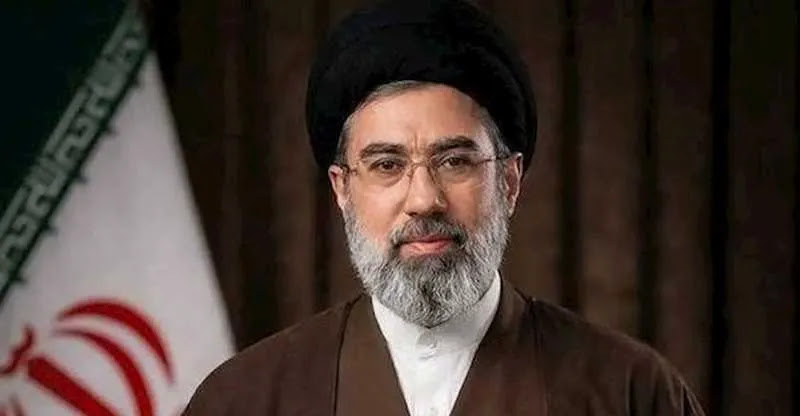
US intelligence confirmed on Thursday that Iran’s new Supreme Leader, Mojtaba Khamenei, was seriously injured in an Israeli military strike.
US Director of National Intelligence Tulsi Gabbard said in a press statement that "Mojtaba Khamenei was seriously injured in an Israeli attack."
Gabbard noted that "Mojtaba Khamenei is more hardline than his late father," adding that "the decision-making process in Iran is unclear due to Mojtaba Khamenei's injury."
For his part, the director of the US Defense Intelligence Agency, James H. Adams, said that "the objectives set in Iran were fully achieved."
Last Monday, US President Donald Trump expressed doubt about the survival of Iran’s new Supreme Leader, Mojtaba Khamenei, suggesting he may have been killed in the opening strike that killed his father, Ali Khamenei, at the start of the war.
The Strait of Hormuz: Five European countries and Japan are on the front lines of the crisis.
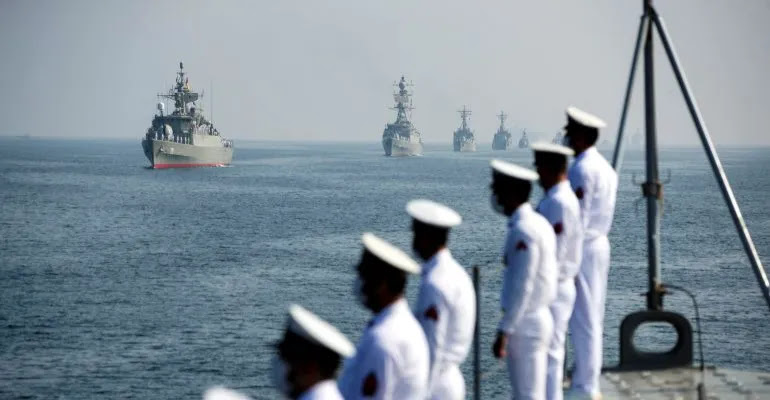
Five European countries, along with Japan, announced on Thursday their readiness to put in place plans to ensure navigation in the Strait of Hormuz, which was closed by Iranian military forces following the US-Israeli war on their country.
A joint statement issued by Britain, France, Germany, Italy, the Netherlands and Japan on the sidelines of the Brussels summit read: "We condemn Iran's attacks on commercial vessels in the Gulf."
The European countries and Japan added: "We are ready to contribute to ensuring passage through the Strait of Hormuz, and we will take steps to stabilize energy markets."
The countries continued in their statement: "We will work to support the most affected countries through the United Nations," calling for "an immediate halt to attacks on oil and gas facilities."
Iran is exploiting its location in the Strait of Hormuz to put pressure on the energy market and force countries to negotiate for safe passage, which raises the cost of conflict for the United States and its allies.
The recent attacks have caused unprecedented disruption to shipping and increased risks, with the number of passing ships declining sharply.
Asian countries such as India, Turkey and Pakistan began negotiating with Tehran to secure supplies, amid a de facto closure of the strait to "enemy ships".
In contrast, Washington is finding it difficult to form a maritime coalition, and the resumption of normal navigation could take weeks even in the best-case scenario.
The Pentagon is sending 2,200 troops to the Middle East.

The US Department of Defense (Pentagon) announced on Thursday that three Navy ships carrying approximately 2,200 soldiers will head to the Middle East next week .
Politico quoted a Pentagon official, in a report followed by Al-Sa’a Network, as saying that “the Department is also considering sending more troops to the region.”
He added that "the military movements are part of plans to strengthen the American military presence in the Middle East during the next phase."
Emergency international session on the situation in the Middle East
The UN Security Council will hold an emergency consultation session tonight regarding the situation in the Middle East.
Diplomatic sources stated that "the UN Security Council is holding a closed and emergency consultation session tonight regarding the situation in the Middle East."

No comments:
Post a Comment