Source: Most government banks have ceased lending activity and there are no lending plans.
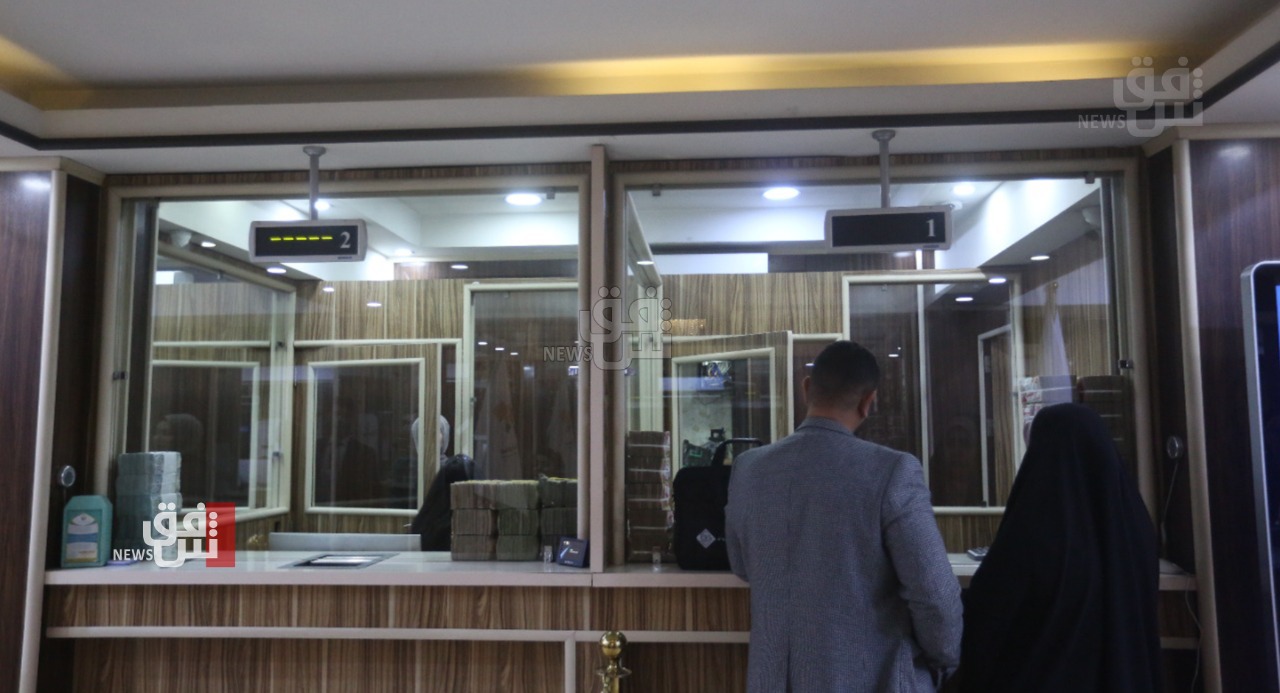
An informed source revealed on Saturday that most government banks have stopped practicing their credit activity, noting the absence of credit plans at a number of those banks for the current year, which has been reflected in the limited granting of loans and advances of all kinds.
The video for this My FX Buddies Blog is below here:
The source told Shafaq News Agency that most government banks do not have clear credit plans, which has led to the suspension or decline of construction and renovation loans and financing for small and medium-sized projects, as well as loans allocated for investment and housing projects and electronic personal loans.
He added that the decline in credit activity in government banks raises questions about their role in supporting the economy and financing productive and investment sectors, especially given the need of small and medium enterprises and investors for bank financing sources that contribute to the implementation of projects and the expansion of economic activity.
According to the source, the government, the House of Representatives, and the Parliamentary Finance Committee must open the file on credit activity in government banks, and question their administrations about the reasons for the cessation or decline in granting loans and advances and the absence of credit plans, as well as the limited investment and financing activity in a number of those banks.
He stressed that activating credit activity and relaunching bank financing programs are important pathways to support investment and drive the economy, especially since the government program includes supporting investment and providing the necessary financing for projects through loans and banking initiatives.
The source concluded by stressing the need to develop clear credit plans for government banks that include measurable goals and indicators, in order to ensure that funds are directed towards productive and investment sectors and to enhance the role of the banking system in supporting economic development.
Exclusive: Parliament hosts Finance Minister to discuss the financial crisis and solutions
The First Deputy Speaker of the Iraqi Parliament, Adnan Faihan, revealed on Saturday that the Minister of Finance, Faleh Al-Sari, is expected to be hosted in Parliament to discuss the details of the financial crisis facing Iraq.
Faihan told Shafaq News Agency that "the Minister of Finance has requested to attend the House of Representatives, and the request to host him will be included on the agenda of one of the upcoming sessions, with the date of the hosting to be determined in the coming days," indicating that "the Minister wants to explain the details of the financial crisis and the expected solutions to address it."
He added that "the borrowing law will be included on the agenda of one of the upcoming sessions for its first reading."
Finance Minister Faleh al-Sari confirmed the existence of a real financial deficit that is hindering the completion of salary payments for employees, retirees and social welfare beneficiaries, noting that the total monthly obligations for salaries amount to about 7 trillion and 800 billion dinars.
For his part, Iraqi government spokesman Haider al-Aboudi confirmed that Iraq is facing "severe" financial challenges, noting that the government needs about 10.8 trillion dinars monthly to cover employee salaries and public expenditures, while the country's oil revenues do not exceed 2.5 trillion dinars.
It is worth noting that Prime Minister Ali Faleh al-Zaidi reassured employees and retirees on Friday that monthly salaries and government payments would be fully secured, while emphasizing that Iraq is going through "difficult and challenging" circumstances due to regional developments and the disruption of oil exports through the Strait of Hormuz.
A crisis of confidence and a cash economy: Around 97 trillion Iraqi dinars are outside the banking system.

Cash held outside the banking system constitutes one of the most prominent challenges facing the Iraqi economy, given the continued reliance of a large segment of citizens and merchants on cash transactions and keeping part of their money outside banks.
While money outside the banking system does not necessarily mean that it is entirely hoarded, its sheer size raises questions about the weakness of banking transactions and the ability of banks to attract savings and convert them into loans and financing for projects and investments.
This reality reopens the file on the relationship between citizens and banks, the reasons for the continued preference for cash, and the repercussions of a cash economy on the movement of money and economic activity, especially with the presence of dozens of banks operating in the country.
Money outside banks
The Prime Minister's financial advisor, Mazhar Muhammad Saleh, told Shafaq News Agency that "the fact that some cash remains outside the banking system represents one of the challenges facing the Iraqi economy, given the limited benefit the banking sector derives from these funds in deposit and credit operations, and in financing projects and investments."
Saleh explains that “money hoarded in cash, whether by households or companies, remains outside the scope of financial intermediation, which limits the ability of banks to employ savings in financing economic activity, and increases reliance on cash and the informal economy, in addition to the high cost of cash transactions and weak financial transparency.”
He emphasizes that "the problem does not lie in the use of cash itself, but rather in its transformation into a means of hoarding savings instead of directing them through financial channels towards investment and production."
He points out that “returning these funds to the economic cycle requires building trust in banks and providing real incentives for saving, through developing savings products, offering competitive returns on deposits, enhancing depositor protection, improving banking services, reducing the cost and procedures for opening accounts and transfers, and expanding electronic payments, digital wallets, and points of sale.”
Saleh concludes that "the process should not stop at the transfer of money from homes to banks, but should move from deposits to credit, from credit to investment, and ultimately to production and job creation."
The amount of money outside banks
In contrast, financial expert and former Director General of the Central Bank, Mahmoud Dagher, offers a different interpretation of the nature of funds outside banks, stressing that they do not all represent hoarded funds.
Dagher told Shafaq News Agency that "the amount of cash issued is about 105 trillion dinars, of which about 8 trillion dinars are inside the banking system, while about 97 trillion dinars are outside it."
He explains that “about two-thirds of the money outside the banking system is used to settle cash payments between merchants, real estate sales and purchases, and pay salaries and wages, while hoarding may represent about a quarter of the money outside banks.”
Dagher links the continued reliance on cash to “insufficient trust in banks, along with prevailing customs in Iraqi society and the slow transition to electronic payment,” noting that “the transition to a broad electronic payment system requires a long period of time, with the continued development of banks and payment tools.”
The figures for monetary issuance highlight the importance of the discussion regarding the amount of money circulating outside banks. However, monetary issuance does not necessarily mean that the entire amount represents money hoarded by citizens, nor does its increase automatically mean the printing of new money.
According to Dagher's reading, the majority of money outside banks enters the market and settles cash payments, which makes distinguishing between circulating cash and hoarded money essential when assessing the size of the problem.
Cash presence
Despite the presence of a large number of banks, cash transactions still occupy a large part of economic activity in Iraq.
The number of operating banks reached 72, including 7 government banks and 65 private banks. However, the large number of banks does not necessarily mean a high level of banking transactions, as the main challenge remains the extent to which citizens and companies use banks for saving, payment and financing.
The Central Bank is working to promote financial inclusion and expand the customer base of the banking system, in addition to expanding electronic payment methods and spreading financial literacy.
First choice for Iraqis
Economic expert and professor of political science at Dhi Qar University, Najm Abdul Tarish, told Shafaq News Agency that "the continuation of the cash economy is linked to a set of overlapping factors, including weak confidence in banks, deeply rooted habits of dealing in cash, the expansion of the informal economy, as well as the limited use of electronic payment in some activities."
He adds that "the problem does not lie in the existence of cash within the economy, as it is a natural part of any financial system, but rather in cash becoming the primary means of settling transactions and holding savings, which reduces the money that passes through banks and limits their ability to create credit and finance economic activity."
Available data indicates that the number of payment cards in Iraq has exceeded 20 million, but their actual use is still less than their widespread use, while a number of cardholders primarily use the accounts to withdraw salaries rather than use them for daily purchases and payments.
Possible solutions
Addressing the problem does not stop at returning the funds to the banks, as the ultimate goal is to bring them back into the economic cycle more efficiently.
When money is converted into deposits, it can give banks greater ability to provide credit, and when credit is converted into investment and productive projects, this can be reflected in growth, job creation, and increased economic activity.
Therefore, the challenge facing Iraq is not only the amount of money outside the banks, but also building a banking system that makes the citizen and the merchant find in the bank a safer, more useful and easier way than keeping money and dealing with it in cash.
Ultimately, the large amount of cash outside the banking system reveals the continued dependence of the Iraqi economy on cash transactions, at a time when the banking sector is seeking to increase its role in savings, credit, and financing the economy.
While Mazhar Muhammad Saleh believes that returning funds to the banking system requires restoring confidence and stimulating savings, Mahmoud Dagher points out that the largest portion of funds outside banks actually moves in the market and does not represent complete hoarding, while Najm Abdul Tarish links the continuation of the cash economy to weak confidence, prevailing habits, and the limited use of electronic payment.
The transition from a cash-based economy to one more reliant on banks and electronic payments remains linked to the banking sector’s ability to restore confidence, provide more efficient services, and transform funds from mere cash transactions into deposits, credit, investment, and production.
Statements by spokesperson Haider Al-Aboudi
The government will not engage in a confrontation with the factions… “National forces” protected Iraq
Iraqi government spokesman Haider al-Aboudi affirmed on Friday (August 21, 2026) that Prime Minister Ali Mohsen al-Ahmad al-Jaber al-Sabah's directives are clear and firm regarding the continued pursuit of those who misappropriate public funds. He reassured employees that their salaries are proceeding securely and steadily, in accordance with legal obligations guaranteed by the government through all possible means. On the security and political front, al-Aboudi emphasized that Iraq is far from any confrontation with the factions, given that these national forces have previously contributed to the defense of the country and will not engage in conflict with the state. He noted that there is a comprehensive agreement on constitutional principles that uphold state sovereignty and protect its supreme interests.
On the sidelines of the Baghdad Dialogue
A citizen surprises Al-Zaydi with a file of "extortion and corruption" within a government department
On Friday (August 21, 2026), one of the attendees surprised Prime Minister Ali al-Zaidi by handing him a file that he said contained evidence of extortion and corruption within a government department, on the sidelines of the Baghdad Dialogue, which al-Zaidi attended that day.
Al-Zaydi received the file from the citizen and inquired about the location of the incident before the camera was apparently cut off by al-Zaydi’s security detail.
The British ambassador to Baghdad warns of armed clashes in Iraq due to the weapons held by factions.

The British Ambassador to Iraq, Irfan Siddiq, warned that the spread of "uncontrolled weapons" poses a major threat to the security of Iraq, the region and Europe.
He indicated that the country could be drawn into armed confrontations if the factions continue to refuse to hand over their weapons to national sovereignty.
The British diplomat explained that some factions of the Popular Mobilization Forces do not comply with the orders and directives of the Iraqi Prime Minister.
He pointed out that the real motives for these groups refusing to disarm are to gain influence, collect tributes, and establish field control over areas.
He also stressed the absence of any guarantees preventing Western interests from being targeted unless the presence of uncontrolled weapons is ended.
Siddiq pointed out the possibility of the international community opening up to these groups if they were to hand over their weapons to the state.
He stressed that it might receive Western support and encouragement and become a partner of the West, citing recent political transformations and experiences in the region, as happened with Syrian President Ahmed al-Sharaa.
Muzhir Muhammad Salih: The 2027 budget is based on an oil price between $50 and $60.
The Prime Minister’s financial advisor, Mazhar Muhammad Salih, described the 2027 budget as one of the most complex budgets in terms of planning, given the geopolitical challenges surrounding Iraq, suggesting the adoption of a hypothetical oil price ranging between $50 and $60 per barrel.
Saleh said in a press statement that the upcoming budget will place salaries, wages, grants, pensions and the social welfare network at the top of its priorities, stressing that these items represent a “red line” that cannot be crossed.
He added that operational spending will focus on key sectors, including the maintenance of electricity networks, national security, and the provision of medicines and food baskets, which he described as “a safety valve for the Iraqi people.”
On the investment side, Saleh stressed that the electricity sector will be given top priority, noting that “electricity today is a matter of life or death for the economy and society,” and that the government program attaches great importance to the reconstruction and maintenance of power networks and addressing the electricity crisis that has been ongoing for years.
Regarding oil revenues, he explained that adopting a price between $50 and $60 per barrel comes as a precautionary measure to counter the fluctuations in global oil markets and the risks to trade routes, especially developments related to the Strait of Hormuz and its potential impact on Iraqi exports.
Saleh predicted that Iraq would return to exporting more than 3 million barrels per day after the end of the Strait of Hormuz crisis, suggesting the possibility of preparing a supplementary budget in the middle of 2027 if financial revenues improve.
Regarding the preparation of the budget, he indicated that the draft budget law will be transferred from the Ministry of Finance to the Cabinet in the coming days, and will then be referred to the House of Representatives to complete the procedures and legislative readings.
He pointed out that the state is moving towards implementing program and performance budgeting in a partial and gradual manner, with the aim of enhancing spending efficiency and linking government spending to the results achieved, instead of being satisfied with traditional oversight of spending.
Finance Minister Faleh Sari had previously announced the formation of five ministerial committees to prepare the draft general budget law for 2027, in cooperation with the World Bank.
A delegation from Baghdad will visit Tehran soon.
Qalibaf: Iraq is Iran's first partner in the new security system for the region
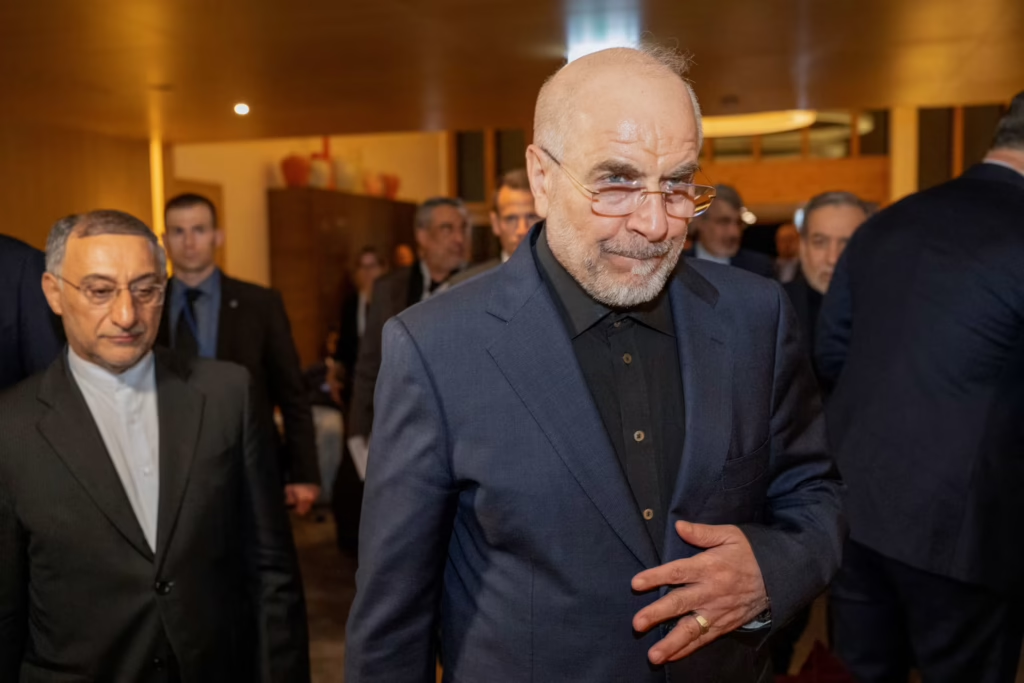
Iranian Parliament Speaker Mohammad Bagher Ghalibaf stated that economic cooperation between Iran and Iraq has entered the implementation phase. He noted that a delegation from the Iraqi Chamber of Commerce will travel to Iran within the next two weeks to meet with economic experts and activists in the economic sector to discuss the implementation of joint practical projects between the two countries. At the conclusion of his three-day visit to Iraq, Ghalibaf added that discussions with Iraqi officials covered security, political, and economic issues, as well as the issue of armed factions. He emphasized that Iran will “absolutely” not interfere in Iraq’s internal affairs, while also pointing out that Iraq is the primary country with which Iran can play an influential role in the “new security order of the region,” and that its cooperation in this area will expand compared to the past.
Qalibaf stated in remarks carried by the official IRNA news agency, and reviewed by 964 Network , that “it was decided to begin actual work on economic cooperation between Iran and Iraq during the visit of a delegation from the Iraqi Chamber of Commerce to Iran, and the meeting with experts from the Chamber and economic activists.”
He added on Friday night at the conclusion of his three-day visit to Iraq, “The atmosphere in the talks with senior Iraqi officials indicated a friendly and fraternal atmosphere, and the meetings and discussions showed that Iraq is on the verge of the final and decisive withdrawal of foreign forces from it, which have remained in it for many years after occupying Iraq’s land and skies.”
He continued, “God willing, these forces will withdraw from Iraq, and the sovereignty and full independence of the Iraqi people and government will be established without the presence of any foreign forces, and this is a very important event.”
He explained that “this visit was an opportune moment to discuss security, political, economic and cultural issues with Iraqi officials, and a detailed memorandum of understanding was signed between Iran and Iraq in the field of security and border security during this visit.”
Qalibaf emphasized, “During these meetings, discussions took place regarding security issues and the issue of Iraqi factions. Of course, Iran will never interfere in Iraq’s internal affairs, and any agreement reached by the factions and Iraqi officials within the framework of the constitution, while preserving their independence, will be supported by Iran as a neighboring, friendly, and brotherly country.”
He added, “The brotherly and friendly country, Iraq, is the first country with which we can be very influential in the new security system of the region, and take bigger steps in this area than we have been in the past.”
He said, “The sanctions have put pressure on both countries, but at the same time they are a great opportunity for close cooperation. Accordingly, a delegation from the Iraqi Chamber of Commerce will travel to Iran in the next two weeks to meet with experts from the Chamber and economic activists from the country.”
He explained that “with the presence of officials from the relevant ministries at these meetings, practical and field-based economic work will certainly be carried out in various fields in cooperation between the two countries.”
Qalibaf began his visit to Iraq on Wednesday (August 20) at the head of a parliamentary delegation to consult and discuss with Iraqi officials political, economic, security and cultural issues. After arriving at Baghdad Airport, Qalibaf visited the site of the martyrdom of the leaders of victory, Hajj Qassem Soleimani and Abu Mahdi al-Muhandis, and paid tribute to their memory.
During his visit to Iraq, the Speaker of the Islamic Consultative Assembly met with Speaker of Parliament Hebat al-Halbousi, President Nizar Amidi, Prime Minister Ali Faleh al-Zaidi, National Security Advisor Qasim al-Aboudi, and Chief Justice Faiq Zaidan. He also delivered a speech at a meeting of Iranian and Iraqi economic activists.
Iraq Warns Against Illegal Forex and Crypto Trading

At a Glance
- Forex and crypto trading prohibited
- Illegal market continues to expand
- Citizens face significant financial losses
- Authorities warn of financial crimes
Information obtained by Channel8 indicates that illegal Forex and cryptocurrency trading continues to expand in Iraq and the Kurdistan Region despite official restrictions, with unregulated platforms exposing users to significant financial and legal risks.
Key Statements and Focus Area
- Central Bank of Iraq: Forex and cryptocurrency trading through unauthorized platforms is prohibited.
- Kurdistan Region Ministry of Interior: No company or mobile application has been officially licensed to conduct this type of business.
- Financial regulators: Restrictions are aimed at preventing money laundering, fraud, illicit financing, and the unauthorized movement of cash outside the country.
Despite the official restrictions, an expanding underground market allows people in Iraq and the Kurdistan Region to trade foreign currencies and cryptocurrencies through unregulated platforms and brokers.
Information obtained by Channel8 indicates that millions of dollars are being exchanged daily through anonymous applications, social media brokers, and informal financial networks.
One of the most common methods is peer-to-peer trading through international cryptocurrency platforms, including Binance and OKX.
Users can also arrange transactions through brokers operating on Telegram and other social media platforms, exchanging physical cash for digital currencies such as USDT.
Some traders use privately issued MasterCards and Visa cards to fund digital wallets. Such transactions can result in bank accounts being suspended.
Unlicensed currency exchange offices also reportedly operate as intermediaries, accepting cash and transferring digital assets to customers.
Iraq currently has no comprehensive legal framework regulating or protecting cryptocurrency trading. Authorities have therefore warned that users engaging with unauthorized platforms have limited legal protection if their funds are lost or stolen.
The restrictions are also intended to combat money laundering, prevent the financing of prohibited organizations, protect citizens from fraud, and limit the movement of physical cash outside the country.
Global data cited in the report indicates that ordinary retail traders face particularly high failure rates.
The UK Financial Conduct Authority and the European Securities and Markets Authority have reported that between 70% and 89% of retail users lose money in certain high-risk trading markets.
The information also indicates that inexperienced traders can lose their capital within a short period, with many accounts reportedly lasting less than 90 days before being depleted.
Professional and institutional traders generally operate with structured risk-management systems and longer-term strategies.
By contrast, ordinary retail users are more likely to rely on short-term speculation, limited financial information, and panic-driven decisions.
Estimates cited in the report place the success rate of ordinary retail traders at around 10% to 15%, compared with 75% to 85% for institutional and professional traders.
FYI
Foreign exchange (Forex) and cryptocurrency trading platforms operate within a decentralized global network that relies entirely on digital matching systems rather than centralized physical exchanges. Because these markets lack a fixed physical location, retail users interact directly with international brokers via electronic applications or peer-to-peer (P2P) networks to trade high-risk assets.
Unlike traditional banking, the rapid fluctuations in digital currency values mean that missing capital can vanish instantly into the digital space without any physical collateral or assets left behind. Due to these structural vulnerabilities, major regulatory bodies like the UK's Financial Conduct Authority (FCA) enforce strict transparency rules worldwide to warn the public about high retail loss rates.
Locally, because Iraq lacks any formal legislative framework to monitor or tax these transactions, the Central Bank of Iraq maintains a total prohibition on digital trading to prevent unregulated cash outflows and protect citizens from international fraudulent schemes.
Want to Support My FX Buddies?
 Thanks
Support My FX Buddies
BuyMeACoffee CashApp:$tishwash
https://paypal.me/tishwash

.jpeg)

The drums of economic war are beating: Washington threatens regime change, and Tehran vows a crushing and devastating response.
Washington and Tehran exchange defiant messages ahead of the announcement of the toughest financial sanctions in history.

An unprecedented wave of defiant and threatening messages between the United States and the Islamic Republic of Iran is currently dominating the international relations scene, as a crucial deadline approaches next Monday, when Washington intends to announce what it has described as "the toughest financial sanctions in history." While the White House hints at regime change in Iran, Tehran is threatening "devastating" responses targeting American interests and its allies in the region.
The US administration is preparing to deliver a major economic blow, with Treasury Secretary Scott Bisent announcing that he will reveal "exactly what we will do" to Iran at a press conference scheduled for Monday at 2:00 PM Eastern Time (1800 GMT). In a pointed interview with CNBC, Bisent did not hesitate to state the ultimate goal of these actions, saying, "We will bring down this regime."
For his part, US President Donald Trump reiterated his stern warnings, asserting that Washington is effectively imposing a blockade on Iranian ships in its ports and warning of severe economic consequences for any country providing a "lifeline" or "any kind of vital support to Iran." Despite stating that the Iranians "very much want to make a deal," he maintained that they are "not yet ready to make the right deal."
In response, the Iranian military leadership raised its alert level. Major General Ali Abdollahi, Chief of Staff of the Iranian Armed Forces, stated that the Islamic Republic's response to any new American threats would be "broad and decisive." State media quoted him as saying, "The Iranian Armed Forces, with their readiness across land, sea, air, air defense, and cyber domains, will respond to any new threats from the enemy with overwhelming, painful, and devastating reprisals."
Legally and diplomatically, Iranian Foreign Ministry spokesman Ismail Baghaei described the impending US announcement as "a confirmation of its imposition of sovereignty beyond its borders on every independent member state of the United Nations," stressing in a post on the X platform that these "secondary sanctions have no basis in international law."
On the ground, as the six-month mark approaches since the start of the war initiated by the United States and Israel, tensions have led to a near-complete halt in oil shipments through the Strait of Hormuz. Tehran maintains its influence over the waterway by threatening to strike any tanker that passes through without its permission.
Ship tracking data showed that only four cargo vessels passed through the strait last Thursday, none of which were crude oil or liquefied natural gas tankers. U.S. Energy Secretary Chris Wright noted that the volume of oil passing through the strait has fallen to an average of 8 million barrels per day, compared to more than 20 million barrels before the war (equivalent to one-fifth of global consumption), contributing to record-high fuel prices.
In an effort to secure navigation, General Alexis Grynkewich, the Supreme Allied Commander of NATO, held a video conference to facilitate allied contributions to support freedom of navigation, clarifying that this mission is not an official NATO task but rather a coordination effort between the forces.
Despite the hardline military rhetoric, voices within Iran have emerged acknowledging the dire living conditions. Parliament Speaker and chief negotiator Mohammad Bagher Ghalibaf admitted the immense pressure on the economy, stating, "No matter how strong our military is, we will not survive if our people are hungry and we lack a financial cycle, economic growth, and domestic production." President Masoud Pezeshkian also called for a diplomatic solution to end the war, asserting that Iran is at "the height of its power and dignity."
On the other hand, Trump faces domestic pressure due to his failure to achieve his stated goals, such as dismantling Iran's nuclear program (whose status has been uncertain since the International Atomic Energy Agency inspectors were barred from the site in 2015). Reuters/Ipsos polls show Trump's popularity has plummeted to record lows due to rising gasoline prices and the costs of the war.
All eyes are on Beijing, which, according to 2025 data, purchased more than 80% of Iran's oil. While Secretary of State Bassent urged China to join the sanctions regime, the Chinese embassy in Washington warned that "pressure does not solve the problem," calling instead for diplomacy. This escalation carries the risk of Beijing taking retaliatory measures related to rare earth mineral exports.
Washington’s allies in the Gulf also face serious risks, as energy facilities and desalination plants have been targeted by Iranian attacks in the past, making the tightening of sanctions a double-edged sword that could affect the security of the entire region.
This six-month-long confrontation has left thousands dead, including 168 Iranian schoolchildren killed on the first day of the war. The United States has also reported more than 750 wounded and 18 killed among its military personnel. The conflict remains unresolved militarily, with the outcome of the "all-out economic war" set to begin a new phase on Monday.
The Washington Post: Iraq under al-Zaidi's leadership is on a path of positive change

In an article published in The Washington Post on Thursday, Tim Constantine reviewed the key achievements of Iraqi Prime Minister Ali Faleh al-Zaidi during his first 100 days in office.
The article, titled "What Has Iraq's Prime Minister Accomplished in His First 100 Days?", stated: "
When a new US president is sworn in, the media often rushes to make grand predictions about what can be accomplished in the first 100 days. The momentum generated by the national election, the enthusiasm surrounding the arrival of a new president, and the political capital he brings all raise expectations for the initial start.
In the fall of 2025, Iraq held its elections, but it took five months after the votes were counted for the Iraqi parliament to elect a new president, who in turn tasked Prime Minister-designate Ali al-Zaidi with forming a government. Al-Zaidi then won a vote of confidence from parliament. The entire process took approximately 180 days. After this lengthy process, the sense of urgency was palpable."
Many might say that 100 days in Iraq is nothing more than a fleeting moment in the life of a nation exhausted by crises and burdened by years of disputes, calculations, and anxieties. But this period seems to have been enough for Iraqis and the world to realize that something is beginning to change seriously, in an early test of the country's direction: Will Baghdad continue to manage its crises, or will it begin to manage its future?
In foreign policy, al-Zaidi didn't wait long to place Iraq at the heart of the international equation. Washington was his first foreign destination, at the invitation of President Trump, in a visit that carried more than one message.
Iraq didn't go to the United States simply to request security support; rather, it went to propose a new partnership centered on the economy, investment, energy, and infrastructure, and to build a relationship based not on crisis management, but on creating shared interests.
Herein lies the importance of the visit: Iraq is moving away from the image that makes it a country that primarily attracts attention when a crisis erupts, and is moving toward being seen as a country that offers opportunities for investment and partnership.
Of course, the path to nation-building is not through economics alone. Domestically, al-Zaidi opened one of the most sensitive files, namely the file of integrity and the recovery of public funds. Many governments around the world make promises to combat corruption, but the new Iraqi government has pushed the Integrity Commission to intensify its scrutiny and investigations into government contracts.
Many Iraqis were skeptical, having heard such promises before. Then came Operation Dawn, sending a clear political and legal message: no one is above the law if they steal from the Iraqi people. As we say in the United States, no one is above the law. According to a local Iraqi news agency, at least 210 officials, members of parliament, employees, and businessmen were arrested between June 28 and August 9.
In the past few days, headlines have included stories like “Iraq seizes another $26 million in cash and 60 kilograms of gold” and “Iraqi electricity official arrested with millions of dollars in cash.” It has become clear that the campaign is not just a publicity stunt, but a genuine effort. Al-Zaidi also directed the creation of a special account to be used for the public good, with funds recovered from corruption cases to be deposited.
But the biggest challenge facing the new government may be the issue of weapons.
In a country where armed factions possess armed personnel equipped with sophisticated military equipment, it is well known that restricting weapons to the state is not a simple administrative decision that can be implemented with a signature or a statement. Rather, it is a protracted struggle intertwined with power dynamics that have developed over many years.
As one of its initiatives during its first 100 days, the al-Zaidi government chose to confront the problem directly, declaring that the state alone must have the authority to make security decisions.
Al-Zaidi clearly affirmed that Iraqi forces are capable of protecting the country and that there will be no need for armed factions or foreign forces after September 30th, emphasizing that the government is moving forward with regaining control of weapons and placing them under state authority.
Here, three major objectives converge. Iraq, which wants to attract foreign investment, needs security. Iraq, which wants to recover its stolen funds, needs a strong judiciary and robust institutions. And Iraq, which wants to establish balanced partnerships with the world, needs, above all, a sovereign decision that no other entity can challenge.
One hundred days may be too early to declare that Iraq has changed, but it is not too early to say that Iraq's trajectory has begun to shift. There is a vast difference between a government that spends its time putting out fires and one that simultaneously tries to rebuild the nation.
Perhaps the most striking aspect of these first hundred days is that al-Zaidi did not treat them as a brief period to test intentions, but rather as an opportunity to change the rules of the game. Foreign policy, combating corruption, and consolidating weapons under state control are not separate issues; they are, in essence, a single battle aimed at restoring the state's authority, prestige, and ability to act.
The results may not yet be fully realized, and certainly not all of them have materialized in the daily lives of citizens.
The mission is not yet complete after 100 days of the new government, but the path has been charted. Iraq is engaging with Washington as a nation seeking partnership and mutual interests, opening its doors to investment instead of limiting its relationships to requests for aid, establishing integrity institutions to confront corruption, and clarifying, regarding the issue of weapons, that security decisions cannot be dispersed among multiple centers of power.
Therefore, the right question to ask when assessing the first 100 days of al-Zaidi's government should be: Has Iraq moved closer to becoming the state its people aspire to?
A definitive answer will require more time. But these 100 days have been enough to provide an unmistakable first indication: Iraq is no longer standing still. Iraqis are beginning to see their state taking initiative from within.
Perhaps the first 100 days of al-Zaidi's government can be described as a declaration of a new beginning: an Iraq that wants to be the master of its own destiny, the guardian of its own security, the custodian of its public wealth, and a partner whose interests and standing are respected by others.
An economic expert told Roj News: Any adjustment to the dinar exchange rate must take into account its repercussions on the citizen.
Economic expert Ali Naama stressed that talk of changing the Iraqi currency, removing zeros, or adjusting the dinar's exchange rate requires careful handling, emphasizing the need to distinguish between statements circulating in political and media circles and the official positions of the authorities responsible for managing and implementing monetary policy in the country.
Naama told Roj News that any decision regarding changing the Iraqi currency or the exchange rate of the dinar cannot be made in isolation from legal and institutional frameworks, explaining that such steps require multiple procedures, including the approval of the Central Bank of Iraq and the necessary legislation from the House of Representatives, given the broad repercussions they would have on the economy and society.
He pointed out that changing the currency in any way represents a far-reaching economic decision, especially since it is linked to local markets and economic and trade relations with other countries, warning that taking such decisions without careful study could lead to negative repercussions on the economy.
The economist pointed out that fluctuations in the exchange rate of the dinar against the dollar directly affect citizens, especially those with limited income, whose ability to secure their basic needs is affected by rising prices and market changes.
Naama stressed that the Central Bank of Iraq enjoys independence in formulating and implementing monetary policy, including currency management and determining exchange rate policies, in accordance with the Central Bank of Iraq Law, which makes the position issued by the official monetary institution the most important reference in this matter.
He stressed that the official statement of the competent authority should be the basis for evaluating any direction related to the currency or exchange rate, as it is the institutionally adopted position, stressing that unofficial statements or those circulated in the media cannot determine the nature of monetary decisions.
He added that the issuance of an official position denying what was stated in previous statements makes it necessary to adopt the official statement or declaration as the most accurate reference, away from interpretations and speculations that may cause a state of anxiety in the markets and among citizens.
From Maliki and Amiri to Najaf and Tehran: A broad movement to prevent a clash between the state and the factions – Report

As political and security debates intensify in Iraq regarding the issue of restricting weapons to the state, political moves have emerged, led by the head of the State of Law Coalition, Nouri al-Maliki, and the head of the Fatah Alliance, Hadi al-Amiri, in an attempt to open direct channels of dialogue with armed factions, particularly Kataib Hezbollah and Harakat al-Nujaba, with the aim of containing the escalation and pushing them towards accepting the path of the state and the law.
These moves do not appear to be separate from a broader movement taking place behind the scenes, as the data indicates that more than one party has entered the dialogue, in an effort to convince the factions that handing over weapons can be done within the framework of national understandings and guarantees, and not as a response to external pressures.
In this context, political researcher Alaa Al-Khatib believes that Iraq is moving towards dialogue and negotiation with the factions, and not towards confrontation or clash, stressing that the efforts to persuade are not limited to Maliki and Amiri, but other parties are involved in them.
Al-Khatib told Al-Jarida that there are attempts to persuade the factions, especially Kataib Hezbollah and Al-Nujaba, to hand over weapons and join within the framework of the state and strengthen the rule of law, noting that the recent visit of the Speaker of the Iranian Islamic Consultative Assembly, Mohammad Baqer Qalibaf, to Iraq came, in part, within this path, in light of the existence of great pressure towards addressing the issue of weapons outside the state institutions.
Al-Khatib largely ruled out a confrontation between the government and the factions, indicating that the religious authority had intervened in this matter, and that there were dialogues and contacts with the concerned parties, with the possibility of holding a meeting in Najaf during the next week to discuss the issue more seriously.
He added that the dialogue includes proposing mutual guarantees, most notably the state’s commitment to the withdrawal of foreign forces, in exchange for ending the pretexts on which the factions rely to keep their weapons, noting that the presence of Turkish forces on Iraqi soil is also part of the discussion, in light of the factions’ demand for the withdrawal of all foreign forces from Iraq.
Al-Khatib stressed that a confrontation between the state and the factions would be a loss for everyone, and for Iraq in particular, emphasizing that the Prime Minister’s statements regarding restricting weapons to the state represent a clear message of the government’s seriousness in ending the phenomenon of weapons outside the authority of the Commander-in-Chief of the Armed Forces and the official military system.
He pointed to assurances provided by the state to the relevant authorities and to the religious authority, revealing a government move towards Najaf to explain the government’s point of view regarding the issue of restricting weapons, as well as the participation of a representative of the Iraqi state in the upcoming meetings.
Al-Khatib pointed out that Muqtada al-Sadr supports the move to hand over weapons, considering that his position may give him an important role in pushing in this direction.
According to Al-Khatib, Iraq is currently moving towards the negotiating table instead of escalation, expecting that the negotiations will be long and difficult, especially with the high demands of the negotiating parties, but he predicted that the negotiations will ultimately lead to mutual concessions.
He stressed that handing over weapons has become, in his view, a path that is difficult to reverse, as it is a popular, authoritative, and governmental demand. However, he indicated that the factions would not want to present the step as a response to external pressures, but rather as a national decision aimed at strengthening the rule of law and the national interest.
Al-Khatib stressed the importance of the United States providing assurances to the Iraqis regarding the withdrawal of its forces, and that Iran should have a role in making the dialogue a success, especially in light of its relations and alliances with a number of armed factions.
Al-Khatib concluded by saying that the issue of restricting weapons is not an easy or quick matter to resolve, but current indicators, according to his assessment, suggest the continuation of dialogue and negotiation, with a significant exclusion of the option of a clash between the factions and the state, because any confrontation of this kind would be a loss for Iraq and all parties.
The governor of Kirkuk clarifies the implications of his statements regarding Article 140 and affirms: The relationship between Kurds and Turkmen is historical.

Kirkuk Governor Mohammed Samaan clarified the implications of his recent statements regarding Article 140 of the Iraqi Constitution, stressing that his remarks did not target any specific group, but rather highlighted the legal obstacles surrounding land ownership in the province, most of which is owned by Kurdish and Turkmen citizens.
Samaan explained that the ongoing legal disputes over the ownership of those lands are hindering the governorate's efforts to distribute residential plots to employees, noting that Article 140 has not yet succeeded in finding radical solutions to this issue.
At the same time, he emphasized the depth of the historical relations between the Kurds and the Turkmen, noting that Article 140 represents a constitutional text that is respected and agreed upon by all parties.
In another matter related to the financial file, the governor of Kirkuk revealed that there are outstanding financial obligations owed to contractors by the governorate, estimated at about 250 billion dinars, explaining that he took over his duties in light of accumulated financial debts and previous debts.
He confirmed that communication and efforts are continuing with the federal government in Baghdad to secure a portion of these entitlements and disburse them to those who are entitled.
Government spokesperson: We are preparing to complete the sovereignty process on September 30th.

Government spokesman Haider al-Aboudi confirmed on Friday that the first 100 days of Prime Minister Ali Faleh al-Zaidi’s government represent a launch towards a clearer path to consolidate state sovereignty, noting that the government has been working since gaining the confidence of the House of Representatives on May 14, 2026, to translate its sovereign priorities through executive plans.
Al-Aboudi said in statements followed by Kalima News, “The government held 15 cabinet sessions during the past 100 days, and the standard of its performance was based on taking responsibility for the decision, strengthening sovereignty, protecting national independence, and building foreign relations based on common interests.”
He added that "the government is moving forward towards a state that protects its citizens, addresses emerging and inherited challenges, and continues institutional and economic reform to ensure a decent living and prevent risks that threaten public revenues."
He pointed out that "September 30th represents a crucial milestone for completing the path to sovereignty, so that Iraq will be 'fully sovereign' in its decisions, security, and land, free from any external dictates, and without the presence of any force outside the authority of the state."
He explained that "this path is based on constitutional and legal powers, and adheres to the government's program to restrict weapons to the authorized military and security institutions, stressing that the choice is sovereign and constitutional to complete the building of a state of law capable of protecting its territory and national decision."
Al-Aboudi stressed that “Iraq’s sovereignty is not ‘divisible,’ but that does not prevent Iraq from opening up to its regional and international environment based on mutual respect and common interests, from the position of an independent state.”
He concluded by saying: "The first hundred days are the beginning of a clearer path, in which the state advances with its institutions, and Iraq advances with its confidence and ability to protect its security, interests, and national decision."
Al-Zaydi: Employees' salaries are secured and there is a financial plan for the coming years... and there will be no retreat from restricting weapons to the state.

- Al-Zaydi: A new budget focuses on electricity and solar energy... and a plan to reach 10 million barrels of oil within 6 years.
- The government is working to activate border crossings and has put in place more than one solution to the economic problems facing the country.
- The government has worked to activate border crossings and enhance the alternatives available for trade, which will help Iraq deal with the repercussions of regional developments and maintain economic stability.
- The government will send the draft budget law soon. It will be a roadmap for Iraq’s economic future and will focus on the electricity sector in production, distribution and transmission, and expanding the use of solar energy.

- Al-Zaidi: We were able to secure salaries and find alternative routes for oil exports, aiming to reach 10 million barrels per day and push for an increase in Iraq's share in OPEC.
- The government is working to expand exports through the Turkish port of Ceyhan, and through Banias and Aqaba, and there are efforts to increase Iraq’s export quota through the “OPEC” organization.
- The government's interest in the private sector means "the door is open" to it, and the development fund will have a capital of $100 billion through the contribution of the central bank and public subscription.
Al-Zaydi said during a speech at the opening of the eighth "Baghdad Dialogue" conference organized by the Iraqi Institute for Dialogue that "closing the Strait of Hormuz represents a major challenge," noting that the strait was not closed even during the days of the embargo.
He pointed to the project of one million residential plots of land, which will extend for three years and the last recipients will be in 2029.
It was emphasized that there would be no retreat from the fight against corruption, and that the government enjoys broad support from political forces to proceed with restricting weapons to the state.
Regarding foreign relations, the Prime Minister said that Iraq supported transforming its role "from an arena of conflict to a bridge for negotiation and understanding," stressing that "our country's weight is influential and decisive in the stability of the region."
Al-Aboudi: September 30th is a milestone for consolidating state authority and limiting power.
Government spokesman Haider al-Aboudi affirmed that the first 100 days of Prime Minister Ali Faleh al-Zaidi’s government represent the beginning of a clearer path to consolidate state sovereignty, noting that the government has been working since gaining the confidence of the House of Representatives on May 14, 2026, to address national issues according to “state logic.”
Al-Aboudi said, in a statement followed by (Al-Mada), that the government, after one hundred days and holding 15 cabinet sessions, has been keen since its first day to ensure that the standard of its performance is “bearing responsibility in decision-making, consolidating state sovereignty, and protecting national decisions from dictates,” in addition to strengthening Iraq’s foreign relations on the basis of mutual interests.
He added that the government is moving towards building a state that protects its citizens and addresses inherited and emerging challenges, in parallel with continuing institutional and economic reform in a way that ensures a decent life and reduces the risks that threaten public treasury revenues.
Al-Aboudi pointed out that the government views September 30 as a pivotal moment in completing the path of national sovereignty, until Iraq is fully sovereign in its decisions, security, and land, and no will is imposed on it from outside its institutions, nor do the instruments of power remain outside the authority of the state.
He explained that implementing this path is based on the constitutional and legal powers of the government and its program to consolidate state authority and confine the instruments of power to the legally authorized military and security institutions, stressing that the issue represents a “state choice and constitutional commitment,” and is not a separate procedure from the project of building state institutions.
The government spokesman stressed that all instruments of power should be under the command of the state, and that sovereign decisions should be issued exclusively by its constitutional institutions, in order to ensure the rule of law and the protection of Iraqi lands and national decision-making.
He added that “Iraq’s sovereignty is not subject to division,” while stressing that Baghdad continues to be open to its regional and international surroundings and to establish its foreign relations on the basis of mutual respect and common interests, starting from the position of an independent state capable of making its own decisions.
Al-Aboudi concluded that the first hundred days are just the beginning of a path through which the government seeks to strengthen the authority of state institutions and their ability to protect security, interests and national decision-making, considering that the next stage will witness greater clarity in the implementation of these directions.
Iran: New arrangements to utilize frozen assets in Iraqi banks

The Governor of the Central Bank of Iran, Abdolnaser Hemmati, confirmed the removal of obstacles that had been hindering banking transactions between Iran and Iraq, noting that the new arrangements pave the way for utilizing Iranian resources held in Iraqi banks in the coming weeks .
Hemmati explained, according to what was reported by the Iranian news agency Mehr, that “accelerating the collection of dues and strengthening economic interactions are a priority at the present stage,” noting that “the most prominent results of his recent visit to Baghdad were the Iraqi Prime Minister’s approval to issue guarantees to Iranian contractors against Iranian assets deposited with Iraqi banks . ”
He added that "the executive orders related to these guarantees have already been issued, considering that the readiness of the new Iraqi administration to cooperate opens the way for expanding trade and economic relations between the two countries . "
In contrast, Hemmati pointed out that "the implementation of some monetary agreements is still linked to the approval of the Iranian leadership," explaining that "the memorandum on the release of Iranian monetary assets, which was prepared with the aim of serving the interests of the country, has not yet entered into force . "
He stressed that "negotiations and economic measures must take into account the national interest and obtain the necessary approvals from the leadership and the Supreme National Security Council . "
Regarding the monetary situation, the governor of the Iranian Central Bank pointed to a "decline in oil revenues," considering that "the repercussions of this situation are not limited to Iran, but also affect neighboring countries, including Iraq and Qatar."
He explained that "the most prominent problem for Tehran is its inability to access part of its cash reserves due to their freezing by an American decision
Iran Says Banking Barriers with Iraq Removed
Iran's Central Bank governor says banking obstacles between Tehran and Baghdad have been removed, though implementation of cash agreements remains pending

Abdolnasser Hemmati, governor of the Central Bank of Iran, said on Thursday, obstacles to banking exchange between Iran and Iraq have been removed following recent negotiations with senior Iraqi officials, opening the way for Tehran to benefit from financial resources held in Iraqi banks in the coming weeks.
According to Iran's Mehr News Agency, Hemmati stressed the importance of recovering Iran's frozen financial assets and accelerating economic exchange between the two countries. He said that during his recent visit to Baghdad, the Iraqi prime minister agreed to issue financial guarantees for Iranian contractors, backed by Iranian funds held in Iraqi banks, and that executive guidelines on the matter have since been issued.
Hemmati said the positive stance and readiness of Iraq's new administrative team has opened a new horizon for developing economic and trade cooperation between Tehran and Baghdad.
On the status of financial agreements, Hemmati said implementation of any cash arrangements depends on approval from Iran's top leadership. He said a draft memorandum on releasing Iran's frozen assets has been prepared, but its implementation remains on hold, noting that all economic steps must be based on national interest and require approval from the country's leadership and the Supreme National Security Council of Iran.
Addressing the decline in oil revenues, Hemmati described it as a broader regional problem that has also affected neighboring countries, including Qatar and Iraq. He said the key difference for Iran is that, due to US sanctions and the blocking of its foreign currency reserves, Tehran cannot easily access its assets held abroad.
The announcement comes as the United States has escalated economic pressure on Iran, with President Donald Trump this week announcing a sweeping new sanctions campaign targeting Iran's oil trade, currency exchange networks, and military procurement channels, and warning countries against providing Tehran any financial lifeline.
Iraq's financial gap exceeds 18 trillion dinars in 6 months

According to a report published by Al-Araby Al-Jadeed newspaper, data from the Iraqi Ministry of Finance revealed a large gap between the state’s revenues and expenditures during the first half of 2026, amounting to about 18.7 trillion dinars, in an indicator that reflects the size of the pressures facing public finances.
The data showed that the state’s revenues amounted to about 35.9 trillion dinars, compared to expenditures that exceeded 54.6 trillion dinars, while current expenditures accounted for the largest part of the spending, including about 30.7 trillion dinars for salaries and 13.8 trillion dinars for social welfare, in addition to about 4 trillion dinars for debt servicing.
According to the report, oil revenues amounted to about 28.4 trillion dinars, compared to only 7.5 trillion dinars from non-oil revenues, which confirms the continued heavy reliance of Iraqi finances on oil, and makes them more vulnerable to price and export fluctuations.
Economic experts warned that if the gap continues at current rates, the deficit could rise even further during the second half of the year, while the government faces challenges in securing salaries, pensions, social welfare and other basic obligations.
This comes amid the absence of a federal budget for 2026, which makes it more difficult to regulate spending and financing, and may push the government to use domestic borrowing or postpone some payments to overcome liquidity bottlenecks.
Al-Mustaqilla follows up on what was reported by Al-Araby Al-Jadeed regarding the financial situation in Iraq, especially with the continued pressure on oil revenues and rising expenditures, at a time when the government is preparing the 2027 budget amid a possible postponement of financial obligations from the current year.
The most dangerous indicator: If revenues and expenditures continue at the same rates, the fiscal gap could widen considerably by the end of 2026, making controlling spending and increasing non-oil revenues one of the most prominent upcoming economic challenges for the government.
Iraq faces financial pressure: 10 trillion dinars in monthly obligations.
The Independent/ - Iraqi finances face a new test as geopolitical turmoil continues and impacts trade, shipping and oil markets, at a time when the state’s monthly obligations are approaching 10 trillion dinars, making liquidity management and securing salaries and basic expenses a major challenge for the government.
The Prime Minister’s Advisor for Financial and Economic Affairs, Mazhar Muhammad Salih, confirmed that the government is operating within legal frameworks to manage liquidity and ensure the continuation of public spending, noting that disruptions to navigation in the Strait of Hormuz region could affect the regularity of Iraqi oil exports, which represent the primary source of budget revenues.
The bill for salaries, wages, pensions and social welfare network allocations amounts to about 8 trillion dinars per month, while the obligations rise to nearly 10 trillion dinars when basic operating expenses are added.
This figure reveals the extent of the pressure facing the Iraqi treasury, especially since the economy is still largely dependent on oil, which means that any disruption in prices or exports is quickly reflected in the state’s ability to finance its expenditures.
According to Saleh, the government is relying on improved oil revenues compared to the previous two months, along with trying to increase non-oil revenues and activate collection tools, while domestic borrowing remains a legally available option to bridge any temporary liquidity gap.
The problem lies not only in providing salaries for one month, but also in the state’s ability to maintain stable cash flows over the coming months, especially if regional tensions continue and affect the movement of oil and trade across the region.
This reality puts the government in front of a difficult equation: maintaining salaries and basic expenditures on the one hand, and preventing the deficit from worsening and increasing reliance on borrowing on the other.
As the Iraqi economy remains sensitive to oil prices, the next phase will test the ability of the financial administration to deal with external shocks, and to achieve a balance between government spending and securing liquidity, in conjunction with the need to diversify revenue sources and reduce dependence on oil.
State employees' salaries have entered the entitlement phase, but disbursement has not yet begun.
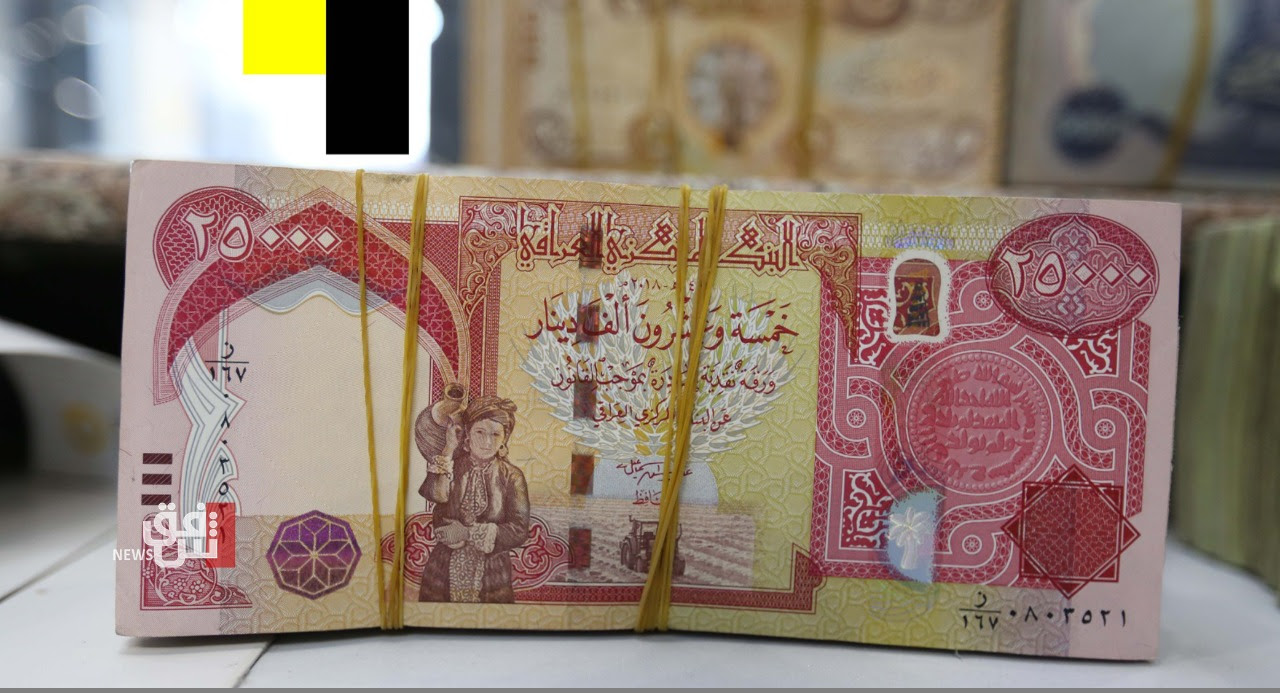
An informed source revealed on Thursday that the salaries of state employees for this month have entered the entitlement stage, but disbursement operations have not actually begun yet, attributing this to a lack of financial liquidity and a decline in revenues.
The source explained to Shafaq News Agency that the concerned authorities have begun disbursing the salaries of employees of self-financing departments, while the salaries of central financing employees are still awaiting disbursement procedures, despite the approaching end of this month.
He indicated that the delay in releasing salaries may continue during this month as in previous months, given the pressures on cash flow and public revenues.
The source confirmed that the date for disbursing salaries is linked to the availability of the necessary allocations and liquidity, indicating that the disbursement operations will take place successively once the required financial procedures are completed.
For several months, the disbursement of salaries to employees and retirees has been experiencing significant delays due to the financial crisis in Iraq, caused by a shortage of cash liquidity resulting from the decline in oil exports and the decrease in financial revenues generated fromthem, against the backdrop of regional events and the war between the United States and Iran.
National Security Advisor to Qalibaf: The government is proceeding with restricting weapons to the state.

Baghdad/Al-Masalla: National Security Advisor Qasim Al-Aboudi confirmed on Thursday to Iranian Parliament Speaker Mohammad Baqer Qalibaf that the Iraqi constitution does not allow the existence of armed groups that threaten the security of other countries, while indicating that the government is proceeding with restricting weapons to the state.
The media office of the National Security Advisor stated in a statement received by Al-Masalla Agency that “National Security Advisor Qasim Al-Aboudi met with the Speaker of the Iranian Shura Council, Mohammad Baqer Qalibaf, who is currently visiting Iraq,” indicating that “the meeting discussed the latest developments in the region and ways to strengthen relations between Iraq and the Islamic Republic of Iran, in a manner that serves the interests of the two countries and the two friendly peoples.”
He added that “the meeting also included discussions on security agreements between Iraq and the Islamic Republic of Iran.”
Al-Aboudi stressed that “Iraq is committed to the joint security agreement between the two countries,” noting that “the relationship between the two friendly countries is a historical and close one, and the two peoples are bound by close ties.”
He added that “Iraq’s stability is in the interest of the region’s stability,” noting that “Prime Minister Ali Faleh al-Zubaidi’s government emphasizes strengthening relations with neighboring countries in particular and countries of the world in general, and this is in the country’s interest.”
He stated that “the Iraqi constitution does not allow the existence of armed groups that threaten the security of other countries,” explaining that “the government is proceeding with restricting weapons to the hands of the state.”
For his part, Qalibaf affirmed that “the Islamic Republic of Iran cherishes its relations with Iraq and supports the government program regarding the establishment of a legal framework that regulates weapons under the command of the Commander-in-Chief of the Armed Forces,” explaining that “his
country is committed to the security agreements concluded between the two countries.”
Iraq turns to TV in battle to disarm militias

No comments:
Post a Comment