Iraq reopens the debate on removing zeros from its currency: widespread controversy and unanswered questions.
On Saturday, Iraqi Minister of Communications Mustafa Sanad revealed a government decision to remove zeros from the Iraqi currency or change it to address the problem of looted funds from the state, estimated at 8 trillion Iraqi dinars, so that it would be useless, but without further details, which opened a series of questions about this decision, the moment of its implementation, and its feasibility.
The video for this My FX Buddies Blog is below here:</span>
It appears that the Iraqi government , through the Central Bank, is considering removing three zeros from the dinar, and that the process would mean re-evaluating the nominal value of the currency, so that 1,000 old dinars would be equal to one new dinar, with salaries, prices, balances and obligations being converted at the same rate, within the framework of simplifying monetary and accounting transactions, reducing the size of figures in budgets, accounts, invoices and banking transactions, as well as facilitating the circulation of large sums, and reducing the cost of printing, transporting and storing huge quantities of banknotes.
However, observers believe this measure is merely an administrative and regulatory principle, not an economic reform in itself. They argue that citizens will not become richer simply by removing zeros, and that the dinar's true value against the dollar will not automatically change. According to a former advisor who worked with the previous government headed by Mohammed Shia al-Sudani, "The process will be ineffective without monetary, economic, and even political stability. Removing zeros without controlling inflation, maintaining exchange rate stability, and reforming public finances and the banking sector could turn the process into a costly, cosmetic change with no real impact on the economy."
He explained to Al-Araby Al-Jadeed that “replacing the currency requires a large cost to print the new papers and update the accounting and banking systems and payment devices, while replacing the currency completely is broader than just removing zeros, and its goal may be to update the categories and designs, raise the levels of protection against counterfeiting, or reorganize the structure of the circulating currency.”
The advisor, who preferred to remain anonymous, added, " The Central Bank of Iraq has the authority to regulate the currency withdrawal and exchange process, and to determine the duration and locations of the exchange. However, the question that arises is: Does changing the currency control the anti-corruption process? The answer, frankly, is that it means nothing. Even the money that was stolen will become worthless, but this does not negate the fact that it affected the Iraqi economy, because it was stolen from Iraqis and from the Iraqi state. Moreover, these decisions, in reality, will not address the financial deficit, weak production, or unemployment, because the stability of the currency is not related to zeros or the shape of the currency, but rather to the stability and diversification of the economy."
Minister Mustafa Sand’s talk about removing zeros and changing the currency was preceded by a government denial of this issue. In June, Iraqi government spokesman Haider al-Aboudi said that “the news circulating about the imminent removal of three zeros from the Iraqi currency, or the revaluation of the dinar, or the adjustment of the dollar exchange rate, is not based on any official decisions, and that the government does not have any project in this direction at the present time,” stressing that “the existence of quantities of printed banknotes is not necessarily related to procedures for changing the currency or adjusting its value.”
Meanwhile, the Economic Observatory "Eco Iraq" criticized the government's inconsistent communication on Sunday, specifically the announcement of sensitive economic and monetary decisions, such as currency reform, by unqualified entities, amidst the silence of the Central Bank of Iraq and the Ministry of Finance. In a statement, the observatory said, "Managing a matter as significant as the national currency through scattered statements, instead of clear official conferences and statements issued by the relevant monetary and financial authorities, reflects a weakness in government coordination." It further explained that "such confusion opens the door to rumors and speculation, disrupts markets, and harms citizens and the country."
The observatory warned that "this ambiguity, which affects the economic security of citizens, may affect their confidence in the national currency and increase the demand for foreign currencies and gold, thus exacerbating the state of anxiety in the market," holding the Central Bank and the Ministry of Finance "responsible for clarifying the truth about the decision and any confusion that befalls the Iraqi market as a result of their silence," demanding that the competent authorities "issue an official statement explaining the reasons for changing the currency, the implementation mechanisms, the timetable, and the guarantees for protecting citizens' savings and market stability."
It is worth noting that the Iraqi government has been suffering from a liquidity shortage since the beginning of this year, and a financial deficit that is hindering the payment of employee salaries. This was confirmed by the Ministry of Finance, which disbursed salaries to some ministries due to the lack of funds, while postponing payments to others. Government spokesman Haider al-Aboudi also acknowledged the existence of a financial crisis last month, stating in a televised interview that "there is a significant gap between the state's current revenues and the requirements for providing monthly salaries and other obligations." He explained that "the solutions the Iraqi government is working on may result in irregular salary distributions, and there will be delays until salaries are fully disbursed."
The official Iraqi news agency, WAA, quoted financial expert Nabil Al-Abadi last Sunday as saying that “changing the currency is not a solution in itself, but rather a mirror reflecting the state of the economy. Removing zeros, as the most widely discussed scenario, essentially represents a reorganization of monetary units and a simplification of accounting and computational processes, without necessarily meaning an increase in the purchasing power of the citizen or a rise in the real value of the currency.” He pointed out that “changing the currency cannot be dealt with as a tool to recover looted funds, but may turn into a double-edged sword in some contexts if it is not managed within a comprehensive reform system.”
Al-Abadi warned that “the large looted fortunes often do not remain in the form of traceable local currency, as they have long since migrated to real estate, foreign assets, and accounts in safe financial havens,” explaining that “the biggest challenge in such measures lies in managing the transitional phase, especially with regard to psychological expectations in the market, and the possibility that some traders and speculators will exploit the transition period to raise prices under various pretexts, which may lead to inflationary pressures and dissipate the expected administrative benefits of the process of removing zeros,” and that “the success of any step in this direction requires the existence of solid monetary and economic stability before its implementation, not considering it as a means to achieve that stability.”
For his part, economic researcher Ahmed Abdullah pointed out that “the government is seeking to get out of the liquidity crisis by any means possible, whether by removing zeros, replacing the currency, or printing a new batch of money. These measures need to be studied thoroughly, because changing the currency does not necessarily lead to raising its value, but may sometimes lead to the opposite. Therefore, the government should strive to raise the value of the current currency.” He continued his conversation with “Al-Araby Al-Jadeed” by saying that “this decision does not yet have political or popular consensus, due to the possibility of exploiting some loopholes by corruption networks to circumvent the process before or during the replacement process, not to mention the cost and complexities of replacing the currency.”

Economic Observatory: Government silence regarding "currency change" is confusing the Iraqi dinar market

On Sunday, the Economic Observatory of Iraq criticized the confusion in the government’s discourse, which is represented in announcing sensitive economic and monetary decisions, such as changing the currency, through unqualified entities, amid the silence of the Central Bank of Iraq and the Ministry of Finance.
The observatory stated in a statement received by Shafaq News Agency that "managing a file as large as the national currency through scattered statements, instead of clear official conferences and statements issued by the competent monetary and financial authorities, reflects a weakness in government coordination," explaining that "such confusion opens the door to rumors, speculation, market disruption, and harm to citizens and the country."
The observatory warned that "this ambiguity affects the economic security of citizens and may affect their confidence in the national currency and increase the demand for foreign currencies and gold, thus exacerbating the state of anxiety in the market."
Eco Iraq held the Central Bank and the Ministry of Finance "responsible for clarifying the truth about the decision and any confusion in the Iraqi market resulting from their silence," demanding that the competent authorities "issue an official statement explaining the reasons for changing the currency, the implementation mechanisms, the timetable, and guarantees to protect citizens' savings and market stability."
Iraq to Drop Zeros From Its Currency as Dinar Redenomination Returns?
Iraq's Communications Minister Mustafa Sanad says Iraq has decided to remove zeros from the dinar and reprint the currency, but the Central Bank remains the country's monetary authority and has not publicly confirmed a timetable.

Is Iraq preparing to remove zeros from its currency after years of discussion over a possible dinar redenomination?
The question returned to the forefront Sunday after Communications Minister Mustafa Sanad said the decision had been made and that Iraq's currency would soon undergo changes and be reprinted.
"The decision to remove the zeros from the Iraqi currency has been made; the Iraqi currency will soon undergo changes and be reprinted," Sanad said in an interview with INews Iraq.
The statement would represent a major development in a monetary reform proposal discussed in Iraq for more than a decade.
But it also raises questions over timing and implementation because the Central Bank of Iraq (CBI), rather than the Communications Ministry, is the country's monetary authority.
The CBI has not, in the material reviewed for this report, announced a specific timetable for removing zeros. In June, the bank stressed its commitment to supporting the dinar and maintaining monetary and economic stability, while warning against inaccurate reporting about currency-related measures.
What Would Removing Zeros Mean?
Removing zeros, commonly referred to as redenomination, would change the numerical denominations of Iraq's banknotes without necessarily changing the currency's real purchasing power.
For example, under a hypothetical three-zero adjustment, 1,000 old dinars could become one new dinar, with prices, wages, bank balances, contracts and other financial values adjusted proportionally.
The policy would therefore be fundamentally different from a devaluation or revaluation of the dinar.
Earlier discussions by the Central Bank have presented deleting zeros as a technical and administrative reform intended to simplify accounting, reduce the volume of cash in circulation and make financial transactions more efficient.
The CBI's broader reform agenda has also focused on strengthening the banking sector and expanding international banking relationships.
In July, Prime Minister Ali Falih al-Zaidi said seven Iraqi banks had been prepared to return to international correspondent-banking channels after meeting compliance and governance requirements.
Why Is the Idea Returning Now?
The proposal comes as Iraq attempts to modernize a heavily cash-dependent economy while managing significant fiscal and monetary pressures.
The country remains highly dependent on oil revenues, leaving government finances sensitive to fluctuations in crude prices and production.
At the same time, the amount of currency circulating in the economy has grown substantially, making the physical handling of large-denomination dinar payments increasingly cumbersome.
A redenomination could make everyday accounting and financial reporting more straightforward.
It could also complement efforts to move transactions into the formal banking system, particularly if the replacement of banknotes encourages citizens and businesses to deposit large cash holdings rather than keeping them outside financial institutions.
Not a Shortcut to a Stronger Dinar
A critical distinction is that removing zeros would not automatically make the dinar more valuable.
If the conversion were purely proportional, an item costing 50,000 old dinars could simply be priced at 50 new dinars after three zeros were removed.
Salaries and bank deposits would undergo the same mathematical adjustment.
The reform would therefore simplify the currency rather than instantly increase Iraqis' purchasing power.
The CBI has previously emphasized the importance of monetary stability, and in June it rejected misleading claims surrounding currency and state financing operations.
The bank said its strategy remained focused on supporting the dinar and maintaining financial and economic stability.
A Reform With Political and Practical Risks
Any decision to redenominate the currency would require extensive preparation.
The government and central bank would need to coordinate the printing of new notes, establish a conversion period, adjust accounting and payment systems, update contracts and financial records, and conduct a large public information campaign.
Businesses, banks and government institutions would also need sufficient time to adapt.
The transition could be particularly sensitive in Iraq because of the size of the informal cash economy.
Authorities would need to ensure that counterfeit notes, unregistered wealth and illicit funds do not enter the financial system during the exchange process.
At the same time, political agreement would be needed across Baghdad's fragmented political landscape, including coordination between the Central Bank, Finance Ministry, Parliament and other state institutions.
Banking Reform Moves in Parallel
The currency debate comes as Iraq's financial sector is already undergoing a broader reform process.
The CBI said in February that Iraqi commercial and Islamic banks and branches of foreign banks had completed a major stage of a comprehensive reform program, with institutions choosing among paths including remaining independent, merging or exiting the market.
The bank said further work would focus on addressing identified deficiencies and achieving full compliance.
The bank has also been working to expand the ability of compliant Iraqi banks to conduct international transactions in currencies including the euro, UAE dirham, Chinese yuan and Jordanian dinar.
Those reforms are relevant to a potential redenomination because changing the physical currency without strengthening the banking infrastructure would address only part of the problem.
What Happens Next?
Sanad's statement has revived a proposal that has circulated through Iraqi economic policy debates for years.
But the key question now is whether the statement represents a finalized government decision ready for implementation or a political announcement ahead of formal action by the country's monetary authorities.
The Central Bank will ultimately be central to determining how, and whether, the reform proceeds.
For Iraqis, the practical significance will depend less on the number of zeros printed on a banknote than on what accompanies the change: monetary stability, functioning banks, transparent conversion rules and confidence that the new currency will retain its purchasing power.
Until those elements are established, the prospect remains best framed as a major policy signal rather than an immediate change in the value of the Iraqi dinar.
ASYCUDA Implementation Minutes Finalized, Awaiting Cabinet Green Light

At a Glance
- ASYCUDA execution minutes are finalized and await Council of Ministers approval.
- A KRG customs official confirmed the protocol will be circulated post-approval.
- Customs officials state prices on daily necessities will actually decrease.
- Border income has dropped due to regional U.S.-Iran military tensions.
The implementation minutes for the ASYCUDA custom system are finalized and pending Council of Ministers approval, amid declining customs revenues and reduced trade at the Ibrahim Khalil border crossing.
Key Statement and Focus Area
- A KRG customs official told Channel8 that the ASYCUDA minutes will be officially circulated following approval by the government.
- Customs officials point out that this system will not increase the price of all goods, and tariffs on certain daily necessities will actually decrease.
Customs revenues at Kurdistan Region border crossings have dropped due to regional military tensions and the conflict between the U.S. and Iran.
This decline coincides with a Central Bank decision to deny official-rate dollars to Kurdistan traders, stalling trade at the Ibrahim Khalil border crossing.
To counter the resulting deficit, customs officials revealed that a new revenue-sharing mechanism is being implemented with Baghdad.
Speaking to Channel8, an official at the Kurdistan Region Directorate General of Customs said that border revenues at the Iranian crossings have decreased due to wartime repercussions.
The official confirmed that an agreement has been reached on a 50-50 customs revenue split between Baghdad and Erbil. To execute this, he added, separate bank accounts for federal and regional customs authorities will open.
Regarding the implementation of the border tracking system, the official noted that the surge in collections stems directly from government anti-corruption campaigns and tax evasion crackdowns.
The source also stressed that the ASYCUDA system is a registration and organization database, not a magic wand.
FYI
Iraq began fully operating the ASYCUDA electronic system at its federal border crossings in January 2026, and the KRG is scheduled to join the process in September.
Erbil and Baghdad spent several months of intensive negotiations before achieving a draft breakthrough.
The Kurdistan Region currently utilizes 14,000 customs tariff classifications, which will be restructured under the ASYCUDA system to align precisely with international standards.
Despite the agreement on the automated customs data, both governments are still negotiating final regulatory alignment regarding regional tax collection authority versus central treasury reallocation, alongside the legal recognition or closure of six unofficial border crossings operating within the Kurdistan Region.
Minister of Communications: The decision to remove zeros and change the Iraqi currency has been finalized.
Communications Minister Mustafa Sand said that the decision to remove zeros from the Iraqi currency and change it has been finalized, noting that implementing this step will contribute to bringing hoarded funds out of the banking system and returning them to the economic cycle .
During a televised interview followed by Al-Sa’a Network, Sand added that “the currency exchange process will push those who hoard money to disclose it, while other amounts will remain outside the exchange process, especially money that its owners cannot show,” referring to money obtained from corruption or illegal activities, in addition to money that is lost or belongs to deceased people, which may reduce the size of the circulating cash mass.
He pointed out that "the value of the money that may not be exchanged could reach, according to his estimates, about 8 trillion dinars," considering that "its non-return practically means that the state will not be obliged to issue its equivalent in new currency."
Sand’s statements come after a wide controversy she stirred up regarding changing the Iraqi currency and removing zeros, as the “Eco Iraq” observatory denounced the announcement of sensitive economic and monetary decisions through unqualified entities, while the Central Bank of Iraq and the Ministry of Finance remained silent .
The observatory said in a statement received by Al-Sa’a Network that managing a file as large as the national currency through scattered statements, instead of official statements issued by the competent monetary and financial authorities, reflects a weakness in government coordination, warning that ambiguity may open the door to rumors and speculation and affect citizens’ confidence in the national currency, and demanding that the Central Bank and the Ministry of Finance issue an official clarification regarding the truth of the decision, its implementation mechanisms and its timetable .
Iraq Struggles to Contain Volatile Dinar Currency Disparity

At a Glance
- The Iraqi dinar reached its peak value during the 1970s when one dinar was worth four U.S. dollars.
- Conflict and economic embargoes during the 1990s caused the currency to crash to 3,000 dinars per dollar.
- The Central Bank fixed the official rate at 1,320 IQD, but parallel market rates remain high at 1,530 IQD.
- The government has failed to contain the significant price gap between official state channels and open market vendors.
Channel8 has learned that decades of geopolitical conflict, sanctions, and market resistance have left Iraq unable to bridge the gap between its official 1,320 IQD peg and parallel market rates exceeding 1,530 IQD, cementing a historic decline from its four-dollar peak in the 1970s.
Key Statements and Focus Area
- On current market disparity: A persistent, wide gap remains between Iraq's official and market exchange rates, with open markets trading at 1,530 IQD despite the Central Bank's 1,320 IQD official peg.
- On structural historical declines: This modern monetary disparity mirrors the volatile historical trajectory of the Iraqi dinar, which collapsed from its historic peak of four dollars per dinar to some of its lowest historical levels.
- On modern monetary interventions: Although the government devalued the dinar to 1,460 IQD in 2021 due to crashing oil revenues and later revalued it to 1,320 IQD in 2023, the market resisted, with street prices occasionally spiking to 1,700 IQD.
Chronological Eras of the Iraqi Dinar Value
- 1968–1979 (The Peak): The currency maintained its absolute highest valuation, trading at a stable rate of 1 IQD to $4.00 USD.
- 1980–1988 (The Iran-Iraq War): Wartime economic strain caused a minor depreciation, adjusting the value to 1 IQD to $3.30 USD.
- 1991–2003 (The Sanctions Era): Under a crushing economic blockade and excessive domestic printing, the currency collapsed to 3,000 IQD to $1 USD.
- 2004–2021 (Post-War Stabilization): The introduction of a new currency stabilized the market, keeping exchange rates steady between 1,180 IQD and 1,200 IQD per dollar.
In recent weeks, the Iraqi dinar strengthened against the U.S. dollar, with the exchange rate dropping from a peak of nearly 160,000 IQD to 153,000 IQD per 100 dollars.
This decline was driven by the U.S. government lifting restrictions on several private Iraqi banks and the Central Bank of Iraq addressing rumors of currency devaluation.
Market traders told Channel8 that ongoing government financial stabilization measures, including organized customs duty collections via the ASYCUDA system, helped restore public sector confidence, keeping the dollar from climbing back to its June peaks.
Speaking to Channel8 today, Jabar Goran, spokesperson for the Slemani Currency Exchange Market, highlighted that deleting zeros from the dinar would compel holders of hidden cash reserves to disclose their origins, effectively rendering tens of trillions in illicit funds unusable.
Goran also dismissed rumors of an Iraqi dinar exchange-rate adjustment, stating that a devaluation is unnecessary because rising revenues have offset increased expenditures.
The spokesperson previously predicted that if regional geopolitical tensions ease and vital maritime trade channels like the Strait of Hormuz remain stable, the parallel market exchange rate could significantly strengthen, potentially dropping down to a range between 146,000 and 147,000 IQD per $100 USD.
FYI
The Iraqi dinar was originally introduced into circulation in 1932. Following the regime change in 2003, the Coalition Provisional Authority introduced an entirely overhauled banknote series widely known as the "Bremer Print."
This new issue systematically replaced both the pre-1991 high-quality "Swiss Print" and the poorly printed, easily counterfeited banknotes produced locally during the 1990s sanctions era.
This monetary timeline demonstrates that prolonged foreign wars, domestic mismanagement, and geopolitical shifts remain the primary drivers behind the dynamic instability of the dinar against global currencies.
Al-Zaydi affirms to the Kurdistan Democratic Party the importance of strengthening partnership and joint action.

Iraqi Prime Minister Ali al-Zaidi stressed on Sunday the importance of continuing joint work with the Kurdistan Democratic Party to consolidate the partnership, enhance stability, and preserve Iraq’s unity and sovereignty.
This came in a congratulatory message addressed by Al-Zaydi to the leadership, members, and supporters of the party, on the occasion of the eightieth anniversary of the party's founding.
In his congratulatory message, Al-Zaydi recalled the party's history and its contributions to national life alongside other Iraqi political forces, stressing the importance of building a future that fulfills the aspirations of all Iraqis.
 Thanks
Support My FX Buddies
BuyMeACoffee CashApp:$tishwash
https://paypal.me/tishwash

.jpeg)

At the head of an economic delegation, the head of the Central Bank of Iran visits Iraq.

The head of the Iranian Central Bank, Abdolnaser Hemmati, is expected to arrive in Baghdad later this afternoon, Sunday, at the head of a high-level economic delegation, on an official visit, according to a source at the Iranian embassy in Iraq who spoke to Shafaq News Agency.
For its part, the official Iranian news agency IRNA stated that Hemmati’s visit to Iraq aims to hold talks with officials in the economic and banking sectors in Iraq.
She explained that the two sides are seeking to establish new mechanisms for joint trade exchange within the framework of the agreement concluded between the two central banks in the two countries.
Hemmati pledges to Iranian businessmen in Baghdad to follow up on their dues
The governor of the Central Bank of Iran, Abdolnaser Hemmati, pledged to Iranian businessmen in Baghdad on Sunday to follow up on a number of issues facing their businesses in Iraq.
According to Iranian press reports, Hemmati said during his meeting with "Iranian economic activists" in Baghdad, "obstacles to recovering export revenues, problems related to customs tariffs, and the dues of Iranian contractors in Iraq will be addressed."
Hemmati arrived in Baghdad on Sunday at the head of an economic delegation on an official visit, and discussed with Iraqi Trade Minister Mustafa Nizar Al-Ani ways to strengthen economic and trade relations between the two countries, facilitate the movement of goods and trade, and activate joint agreements and memoranda of understanding
Iraqi trade officials discuss economic and banking cooperation with the governor of the Central Bank of Iran.
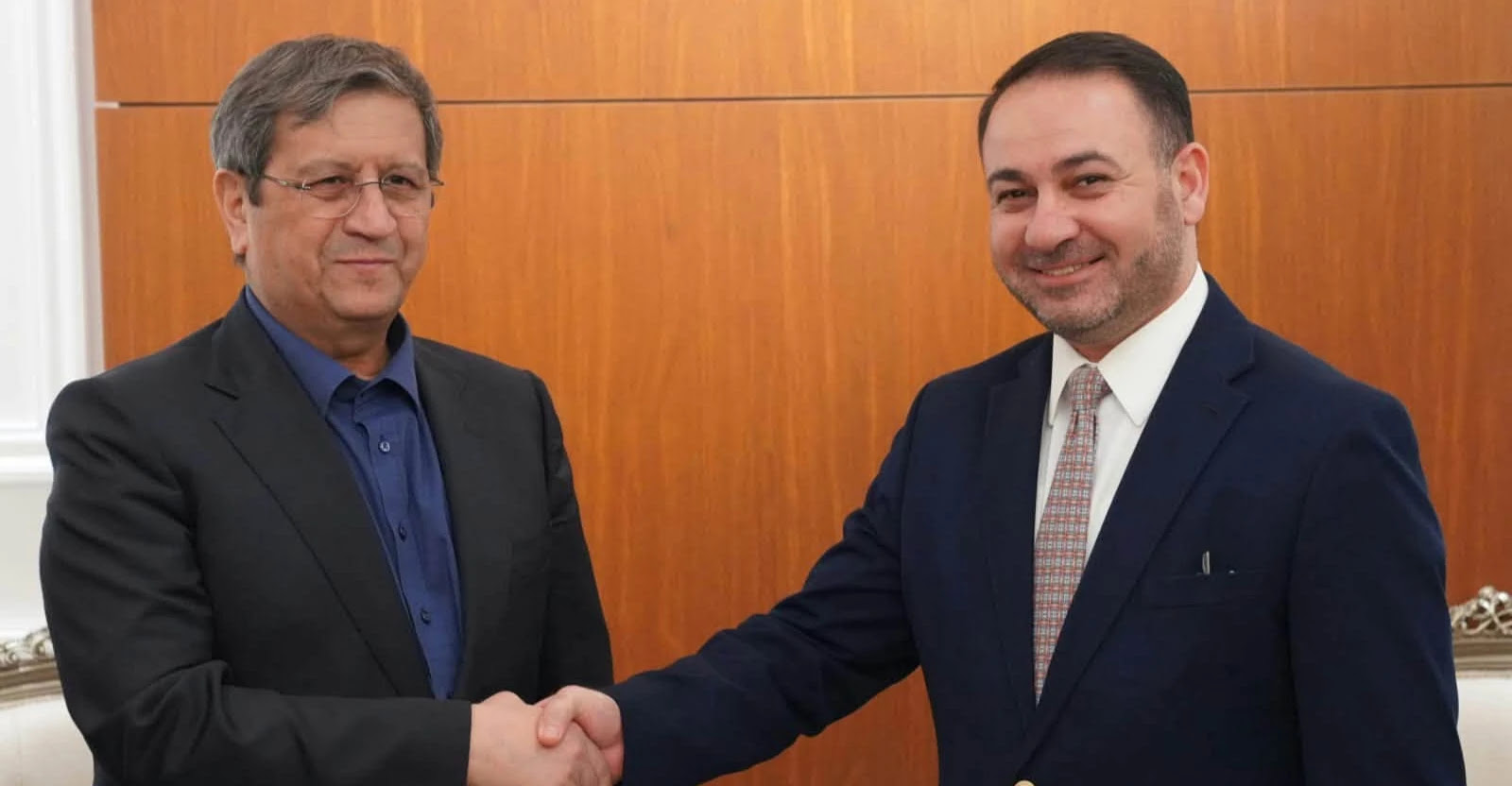
During his meeting with an Iranian delegation on Sunday, Iraqi Trade Minister Mustafa Nizar Al-Ani discussed ways to strengthen economic and trade relations between Iraq and Iran, and to open new horizons for joint cooperation in a way that serves the mutual interests of the two countries.
According to a statement from the ministry received by Shafaq News Agency, the meeting addressed the importance of developing the volume of trade exchange, facilitating the movement of goods and trade between the two countries, as well as strengthening cooperation in the economic and investment fields, in line with the two countries’ directions to expand the economic partnership and activate joint agreements and memoranda of understanding.
According to the statement, Al-Ani stressed Iraq’s keenness to strengthen cooperation with the Iranian side and develop trade relations in a way that contributes to supporting the national economy and opening new opportunities for the private sector and businessmen in both countries.
The statement added that the meeting comes within the framework of the Iraqi-Iranian movement to expand economic and trade cooperation, particularly in the areas of trade, transportation, investment, industry and services, in a way that enhances common interests and supports the development process in both countries.
For its part, the Fars News Agency reported that the Governor of the Central Bank of Iran, Abdolnaser Hemmati, discussed with the Iraqi Minister of Trade, Mustafa Nizar Al-Ani, ways to facilitate economic relations and remove obstacles that hinder trade exchanges between the two countries.
The Iranian agency indicated that this meeting came within the framework of strengthening bilateral cooperation to develop trade, investment and monetary relations, as both sides emphasized the broad potential available for developing economic relations, and consulted on activating previous agreements and raising the level of banking interactions between the two neighboring countries.
During the meeting, Hemmati, according to the statement, pointed to the role of the private sector in facilitating export and import operations, and stressed the need to adopt new mechanisms to accelerate the pace of trade exchanges, especially at border crossings.
For his part, the Iraqi Minister of Trade welcomed the development of cooperation, stressing the Iraqi government’s determination to overcome the challenges facing economic actors and to strengthen trade ties with Iran, according to the statement.
The head of the Iranian Central Bank, Abdolnaser Hemmati, arrived in Baghdad on Sunday afternoon, leading a high-level economic delegation, on an official visit, according to a source at the Iranian embassy in Iraq who spoke to Shafaq News Agency.
For its part, the official Iranian news agency IRNA stated that Hemmati’s visit to Baghdad aims to hold talks with officials in the economic and banking sectors in Iraq.
She explained that the two sides are seeking to establish new mechanisms for joint trade exchange within the framework of the agreement concluded between the two central banks in the two countries.
Economic: Washington is pressuring Iraq through four mechanisms in the energy sector.
The economic expert, Faleh al - Zubaidi, confirmed on Sunday that the United States is exerting financial and political pressure on Iraq through four main mechanisms, aiming to reduce international companies' investments in the energy sector.
Al-Zubaidi told Al-Maalomah that "Washington employs four main mechanisms to pressure Iraq in the energy sector. The first is replacing international companies with American ones, and the second is using oil revenues deposited in the US Federal Reserve to pressure for the imposition of political decisions."
He added that "the third mechanism involves amending licensing round contracts, while the fourth is forcing Baghdad to develop its gas sector through American companies," explaining that "these measures aim to reduce international companies' investments in the Iraqi energy sector."
Earlier, Hamid al-Moussawi, a member of the parliamentary economic committee, confirmed that the United States is pressuring global energy companies to prevent them from investing in Iraq, calling on the government to take action to open the field to foreign companies and strengthen the national economy.
Finance Minister: Iraq is moving towards approving its first program and performance budget.

Finance Minister Faleh Sari confirmed on Sunday that Iraq is moving towards approving its first program and performance-based budget in its history.
The ministry said in a statement received by the Information Agency that "the Finance Minister confirmed during his meeting with the British Ambassador that Iraq is moving towards approving its first program and performance-based budget in its history, according to a new methodology in managing public spending that links resource allocation to objectives, programs, and results, thus enhancing the efficiency of public funds use."
He pointed out that "the closure of the Strait of Hormuz has had direct effects on the Iraqi economy, given the link between trade and oil flows and developments in the region," stressing that "the ministry is proceeding to overcome the current circumstances by strengthening non-oil revenues, developing financial management tools, and continuing the reform process."
The Evolution of the issued currency and circulating money in Iraq 2004–2026
The development of the issued currency and the currency circulating outside the banking system is one of the important monetary indicators that help in assessing the size of the cash liquidity and the trends of monetary transactions in the Iraqi economy during the period from 2004 until May 2026, based on the monthly data for the recent period and the annual data for the previous period.
These indicators are of particular importance because they show the relationship between the issuance of money on the one hand, and the amount of money held by the banking system on the other, as well as the amount of currency circulating outside banks, which represents the largest part of the money circulating in the economy.
First: The general development of the issued currency
@2x.png)
The volume of currency issued took a clear upward trend during most of the period between 2004 and 2026, as it rose from about 8.02 trillion dinars in 2004 to 10.26 trillion dinars in 2005, then continued to rise to reach 21.30 trillion dinars in 2008, before reaching 35.78 trillion dinars in 2012 and 40.63 trillion dinars in 2013.
The year 2014 saw a slight decline in the issued currency of 1.84%, reaching approximately 39.88 trillion dinars. This decline continued in 2015 with a 3.26% decrease. However, 2016 witnessed a strong increase of 17.23%, bringing the issued currency to approximately 45.23 trillion dinars. After a slight decrease in 2017, it stabilized almost in 2018 before resuming its growth trajectory in 2019 and 2020.
The period 2019–2022 was characterized by a relative acceleration in the volume of currency issuance; the currency issued rose from 51.83 trillion dinars in 2019 to 66.03 trillion dinars in 2020, then to 76.56 trillion dinars in 2021 and 87.56 trillion dinars in 2022, which shows a significant expansion in the volume of currency issued during this period.
As for 2023, the issued currency exceeded the 100 trillion dinar mark for the first time in the data presented, reaching about 102.14 trillion dinars in October, before decreasing to 101.48 trillion dinars in December 2023. In 2024, the issued currency generally fluctuated around the 100–104 trillion dinar level, and reached about 100.54 trillion dinars at the end of the year.
During 2025, the movement was characterized by fluctuation around the level of 100 trillion dinars, falling to 97.96 trillion dinars in May before returning to 101.01 trillion dinars in October, and ending the year at 99.80 trillion dinars. In the first months of 2026, the issued currency took a remarkable upward trend, rising from 101.43 trillion dinars
in January to 113.56 trillion dinars in May 2026, recording an increase of nearly 11.98% in just five months.
Second: Currency development in commercial banks
@2x.png)
Third: The evolution of currency outside banks
@2x.png)
The majority of the issued currency remained outside banks during the years 2004-2026. The currency outside banks increased from about 9.11 trillion dinars in 2005 to 18.49 trillion dinars in 2008, then to 30.59 trillion dinars in 2012 and 34.99 trillion dinars in 2013.
Despite the decline in the issued currency in 2014 and 2015, the currency outside banks remained at high levels, reaching 36.07 trillion dinars in 2014 and 34.86 trillion dinars in 2015, then rising strongly to 42.08 trillion dinars in 2016, before declining slightly in 2017 and stabilizing almost in 2018.
Since 2019, currency outside banks has begun a clear expansion phase, rising from 47.64 trillion dinars to about 59.99 trillion dinars in 2020, then 71.53 trillion dinars in 2021 and 82.03 trillion dinars in 2022. This development represents a significant expansion in the volume of cash outside the banking system.
During 2023, the currency held outside banks continued its upward trend, reaching 85.78 trillion dinars in January, exceeding 90 trillion dinars in May, and then reaching 94.62 trillion dinars in December. In 2024, it remained at high levels, reaching 95.70 trillion dinars in September before ending the year at 93.40 trillion dinars.
In 2025, the currency outside banks ranged between about 90 and 94 trillion dinars, ending the year at 92.56 trillion dinars. In the first five months of 2026, it recorded a strong increase, reaching 94.15 trillion dinars in January, then 97.03 trillion dinars in February, and 101.58 trillion dinars in March, before reaching 106.81 trillion dinars in May 2026.
Fourth: The relationship between the issued currency and the currency outside banks
@2x.png)
According to the data, the relationship between the issued currency and the currency outside banks was strong and relatively stable; the currency outside banks represents the largest part of the total issued currency, while the cash held by banks represents the remaining part.
For example, in May 2026, the issued currency amounted to about 113.56 trillion dinars, while the currency outside banks amounted to 106.81 trillion dinars, compared to 6.75 trillion dinars with commercial banks. Thus, the currency outside banks accounted for about 94.1% of the total issued currency, compared to only about 5.9% with commercial banks.
These figures indicate a continued relatively high reliance on cash outside the banking system, which has been an important feature of the monetary circulating structure over
the past 22 years.
Fifth: Recent trends during 2023–May 2026@2x.png)
The monthly data reveals a clear difference between monetary developments in 2023, 2024, 2025 and the first months of 2026. In 2023, there was a clear upward trend in the currency outside banks, despite some monthly fluctuations. In 2024, the issued currency stabilized around the level of 100 trillion dinars, while the currency at the banks was characterized by fluctuation.
As for 2025, it was characterized by relative stability in the issued currency and the currency outside banks, with limited monthly changes compared to 2023. Meanwhile, 2026 until May showed a strong upward trend in the issued currency and the currency outside banks, as the currency outside banks rose from 94.15 trillion dinars in January to 106.81 trillion dinars in May, an increase of approximately 13.45%.
During the same period, the currency issued rose from 101.43 trillion dinars to 113.56 trillion dinars, while the currency held by commercial banks fell from 7.28 trillion dinars in January to 6.75 trillion dinars in May. This means that the increase in currency issuance during this period was directed more towards outside the banking system.
Economic indicators
The time series reveals a long-term upward trend in the volume of currency issued and currency outside banks in Iraq. Currency issued moved from 8.02 trillion dinars in 2004 to 113.56 trillion dinars in May 2026, while currency outside banks rose from 9.11 trillion dinars in 2005 to 106.81 trillion dinars in May 2026.
The continued rise of currency outside banks indicates that a large proportion of cash liquidity remains outside the banking system, and the large gap between currency outside banks and currency held by banks reveals the low relative weight of bank cash compared to cash circulating outside the banking system.
On the other hand, the large fluctuations in the currency at commercial banks, especially during some months such as May 2026, indicate periodic changes in the amount of cash held by banks, while the general trend of the currency outside banks remained more strong and continuous.
The most important trends also concluded that the issued currency has seen significant long-term growth, while the currency outside banks has remained the main component of cash liquidity, and the currency outside banks has risen particularly since 2019, and continued to record record levels during the first months of 2026.
MILITARY STUFF
PMF Brigade Assumes Security Control of Sector From Iraqi Army

At a Glance
- PMF 52nd Brigade assumed security control of the Bastamli sector in Saladin.
- The handover forms part of a broader security restructuring.
- Forces repositioned amid media reports of rising terrorist threats.
The 52nd Brigade of the Popular Mobilization Forces (PMF) officially assumed field security responsibilities for the Bastamli sector in Saladin’s Amerli from the Iraqi Army, citing strengthening security in the area.
Key Statement and Focus Area
- The PMF stated the handover "is part of a broader restructuring of security sectors and responsibilities."
- The PMF emphasized "the vital importance of continuous coordination and joint cooperation.
According to the official statement, the 2nd Battalion of the Iraqi Army's 86th Brigade handed over field duties and checkpoints in Bastamli village to the PMF's Northern and Eastern Tigris Operations Command during a formal ceremony in eastern Saladin Governorate.
The PMF stated that "the transition aims to strengthen field coordination and integration between the forces, supporting efforts to maintain security, stability, and the protection of the region and its residents."
The event was attended by 52nd Brigade Commander Ahmed al-Amerli and the Commando Brigade Commander, alongside military officials and officers from both sides.
"Attendees emphasized the vital importance of continuous coordination and joint cooperation," the PMF said, highlighting that the handover also aims to elevate field readiness and operational control, ensuring all duties are executed in strict accordance with approved military protocols.
FYI
These security adjustments by the forces take place at a time when some media outlets are reporting a resurgence of the threat of terrorism, particularly following rumors regarding the withdrawal of U.S. forces.
Prime Minister Ali al-Zaidi earlier reaffirmed September 30 as the final deadline for the full withdrawal of U.S.-led coalition forces from Iraq during a meeting with the Commander of U.S. Central Command, Admiral Charles Brad Cooper.
He also underlined that restricting weapons exclusively to state authority protects citizens, strengthens sovereignty, and ensures the stability required for economic development.
Iraq is moving forward with completing its air defense system and enhancing its capabilities to monitor the skies.
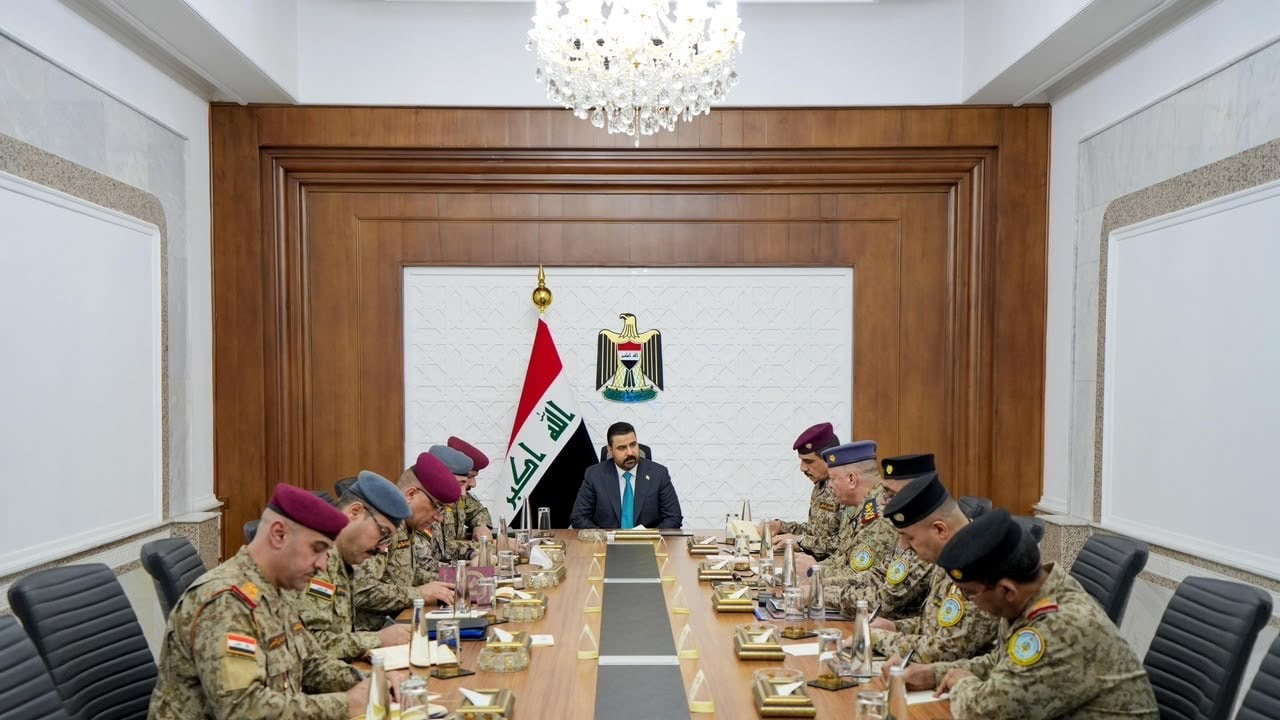
Prime Minister and Commander-in-Chief of the Armed Forces Ali Faleh al-Zaidi chaired a meeting of the Air Defense Command on Sunday, which was dedicated to discussing plans to develop air defense capabilities and enhance its readiness to protect Iraqi airspace.
The Prime Minister’s Media Office stated in a statement received by Kalima News that the meeting was held in the presence of the Director of the Office of the Commander-in-Chief of the Armed Forces and the Chief of Staff of the Army, and discussed a plan to build and develop air defense capabilities in order to enhance the protection of airspace and achieve Iraqi sovereignty.
The meeting discussed the contracts signed with foreign companies to equip the Air Defense Command with advanced specialized systems, and ways to accelerate their implementation.
Al-Zaydi stressed the need to expedite the implementation of contracts and the supply of contracted systems, which would contribute to completing the air defense system and enhancing its capabilities in monitoring and controlling Iraqi airspace.
Parliament awaits the arrival of the Popular Mobilization Forces law
The House of Representatives intends to complete the legislative process for the Popular Mobilization Forces bill, in preparation for discussing it as soon as it arrives from the government in the next few months.
Member of the Parliamentary Security and Defense Committee, MP Mahmoud Faleh Al-Shammari, confirmed to Al-Sabah that the Popular Mobilization Forces are an important security institution within the official system and are directly linked to the Commander-in-Chief of the Armed Forces, which necessitates the enactment of legislation that regulates its work and clearly defines its structure.
Al-Shammari explained that the House of Representatives is keen to proceed with the legislation of the law expected to arrive by the end of this month, noting that there is a trend to host the leaders of the Popular Mobilization Forces inside the parliament to discuss the details of the project and listen to the technical and administrative observations, which will contribute to maturing the legislation, ensuring the organization of its structure and preserving the rights and entitlements of its members.
Maliki's coalition proposes separating the date of the American withdrawal from the issue of arms control.
link
A source within the coordination framework revealed on Sunday a proposal submitted by the State of Law Coalition, led by Nouri al-Maliki, to separate the date of the withdrawal of US forces from Iraq from the issue of dismantling weapons, within the framework of a vision that is still "under study".
The source told Shafaq News Agency that the State of Law Coalition submitted a proposal to "separate the date of the withdrawal of US forces from Iraq from the issue of disarming weapons," explaining that the main idea revolves around separating the two issues by a period of time, even if it is short, with the aim of "giving messages of reassurance and confidence to all factions," stressing that the matter is still under study.
The source indicated that the withdrawal of US forces would take place according to the agreed schedule, coinciding with the arrival of dozens of American companies in Iraq following the agreements made by Prime Minister Ali al-Zaidi during his recent visit to Washington.
The issue of armed factions is one of the most sensitive issues facing the Iraqi government, with the approach of September 30, which the main political forces have set as the deadline for restricting weapons to official institutions.
In September 2024, Iraq and the United States agreed to end the military mission of the US-led international coalition against ISIS in Iraq, as part of a phased plan to move the security relationship between the two countries from the framework of the coalition to a bilateral partnership.
The first phase of the mission ended in September 2025, while forces remained in the Kurdistan Region to support operations against the organization in Syria, with the final phase to be completed by the end of September 2026.
The international coalition was formed in 2014 to assist Iraqi forces in confronting ISIS, which at the time controlled large areas of Iraq and Syria. The mission of the coalition forces later shifted primarily to training, advising, and intelligence support, while Baghdad asserts that its forces are now capable of assuming responsibility for security and pursuing the organization's cells.
The Iranian army commander announces a $30,000 reward for anyone who captures or kills an American soldier.
link
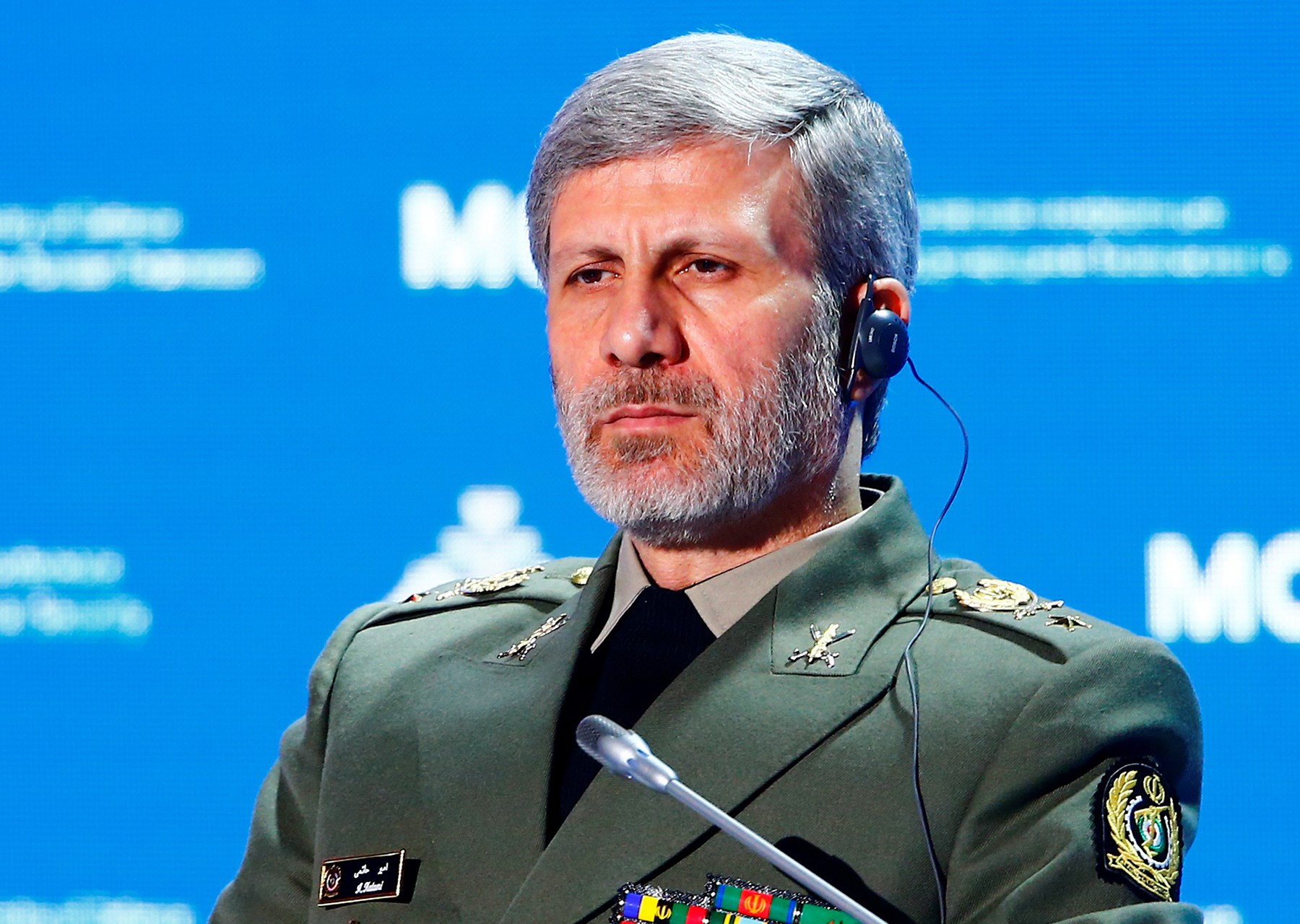
During a ceremony held to mark Journalist's Day, the commander-in-chief of the Iranian army, Amir Hatami, announced a financial reward of $30,000 for every Iranian who manages to capture or kill a member of the American forces, according to Iranian media reports.
Hatami said the reward would be given by the "Iranian people" to whoever carries out the operation.
The announcement comes amid escalating tensions between Iran and the United States, with Iranian officials previously announcing bounties targeting US President Donald Trump.
On May 15, the head of the National Security Committee in the Iranian Parliament, Ebrahim Azizi, announced the preparation of a draft law that includes allocating a reward of 50 million euros to whoever kills Trump, according to the aforementioned source.

No comments:
Post a Comment