The Central Bank of Iraq is taking steps to reduce the dollar gap; A unified exchange rate for currency exchange offices is approaching 1320.

Informed sources revealed to the Independent Press Agency new moves within the Central Bank of Iraq aimed at reducing the large gap between the official exchange rate of the dollar and the prices circulating in the local market, through a package of measures being worked on to regulate the sale of foreign currency and tighten control over exchange companies, in conjunction with the continued rise of the dollar in Baghdad and other governorates.
The video for this My FX Buddies blog is below here:
The sources said the anticipated measures focus on reorganizing the mechanism for the dollar's access to the market and meeting the actual and legitimate demand for foreign currency, thereby reducing the dependence of traders and citizens on the informal market and limiting speculation that has pushed the exchange rate away from the levels set by the central bank.
According to information obtained by the Independent Press Agency, one of the options being considered in the coming period is setting a more disciplined and unified price for selling dollars through exchange companies and authorized outlets, so that the prices are much closer to the official price, instead of the wide gap currently recorded between the dollar available through official channels and its price in the market.
The sources indicated that the move, according to the available information, is not related to changing the official price of the dinar, but rather to trying to bring the price at which the dollar reaches the end beneficiary closer to the approved official levels, foremost among them the level of 1320 dinars per dollar, through procedures related to distribution, control, pricing and the mechanism of the work of exchange companies.
This information comes at a time when the Central Bank officially confirms that there is no intention to change the official exchange rate, as it was categorically denied on June 17, 2026, the news that spoke of amending the price of the dinar, warning against circulating documents or information not issued by it.
The official pricing system announced by the Central Bank in February 2023 is based on a rate of 1,300 dinars for purchasing dollars from the Ministry of Finance, 1,310 dinars for selling dollars to banks, and 1,320 dinars as the maximum selling price from banks and non-bank financial institutions to the end user. Official bank data also shows the rate remaining at 1,310 dinars per dollar.
Tightening restrictions on exchange companies
Sources from “Independent Press” confirm that the current phase is already witnessing increased oversight of exchange companies, and that this trend is likely to expand in the coming days, especially with regard to the sources of buying and selling dollars, the approved prices, the movement of funds, and compliance with the Central Bank’s regulations.
These moves are consistent with measures taken by the bank during the past months to strengthen oversight of the money exchange sector. In June 2026, the bank asked A and B category money exchange companies and brokerage firms to provide it with data relating to bank accounts for regulatory and supervisory purposes. It also continued during 2026 to withdraw licenses from violating companies and tighten compliance requirements.
Last April, the Central Bank confirmed its ability to meet all requests from banks and exchange companies for dollars allocated to travelers, pilgrims, and foreign transfers, indicating that a key part of its strategy is based on increasing access to dollars through official channels instead of allowing demand to flow to the informal market.
25,000 dinars gap for every 100 dollars
The anticipated moves are gaining even greater importance as the large gap between the official price and the local market continues.
The selling price of the dollar in Baghdad exchange shops on Monday, September 14, 2026, was recorded at about 157,000 dinars per 100 dollars, while the buying price was about 156,000 dinars, while the Al-Kifah and Al-Harithiya exchanges recorded about 156,500 dinars per 100 dollars.
Assuming a rate of 1320 dinars per dollar for the end beneficiary through official channels, the value of 100 dollars is approximately 132,000 dinars, which means there is a gap of approximately 25,000 dinars per 100 dollars compared to the selling price traded in some exchange shops in Baghdad.
According to sources, this gap is what the central bank seeks to gradually reduce, not by changing the official price, but by expanding official channels and facilitating the fulfillment of the real demand for dollars, while increasing oversight of entities that buy currency at the official price and then these prices are not actually reflected in the end beneficiary.
The Central Bank had previously paved the way for this path.
The anticipated move brings back to the forefront a previous position of the Central Bank, in which it stressed that the dollar circulating in Iraq comes mainly from the Central Bank through banks, exchange companies and brokerage, and that dealing at prices far from the set price is related to speculation more than it is a normal independent exchange market.
The bank also confirmed on June 22, 2026, the continuation of its reform program to maintain monetary and financial stability, stressing its continued commitment to meeting legitimate demand for dollars and taking the necessary policies to maintain exchange rate stability and the integrity of financial channels.
According to sources from the Independent Press Agency, the coming days will be important regarding the dollar issue, and may witness the implementation of additional measures at the level of exchange companies and pricing and distribution mechanisms, in an attempt to create a more disciplined price in the market and reduce the space in which speculation moves.
The sources confirmed that the ultimate goal of the proposed measures is to bring the dollar available to citizens and merchants through legal channels closer to the official rate, and to increase the ability of official channels to meet demand, which, if the measures are implemented efficiently and the required quantities are provided, may lead to increased pressure on the informal market and push exchange rates to gradually decline.
However, the sources stressed that the success of these measures will remain linked to the central bank's ability to ensure that the dollar reaches the rightful beneficiary at the set price, and to prevent its resale outside official channels, in addition to securing the needs of trade and foreign transfers on a regular basis.
Thus, the Iraqi exchange market enters a new phase of anticipation, amid a still significant gap between the official and parallel market rates. All eyes are on the Central Bank to see what measures it may announce in the coming days, and to what extent they can bring the dollar back to levels closer to the official rate.
U.S. Warns Iraq: Disarm Militias by Sept. 30 or Dollar Transfers Stop
Two Iraqi government sources tell Kurdistan24 that Washington could halt dollar transfers unless Iran-aligned armed factions disarm by Sept. 30.
link oh boy! If this is true...
The Trump administration has warned Iraq that monthly dollar transfers could be suspended unless Iran-aligned armed factions surrender their weapons by Sept. 30, two sources familiar with the Iraqi government told Kurdistan24, tying one of Washington’s most powerful financial levers over Baghdad to an increasingly contentious disarmament deadline.
The sources said the warning was delivered directly to Prime Minister Ali al-Zaidi during his visit to Washington, where U.S. officials made clear that failure to curb armed groups threatening American and regional interests would carry consequences for bilateral relations and Iraq's access to dollar liquidity.
Kurdistan24 has not independently obtained a U.S. government document setting out the warning, and no public statement from Washington confirming the ultimatum was included in the reporting. The account rests on two Iraqi government sources familiar with the discussions.
One source said Washington had already demonstrated its ability to exert pressure through the timing of dollar transfers early in al-Zaidi's tenure.
"From the beginning of Ali al-Zaidi's time in office, America delayed the timing of dollar transfers, and this had a direct impact on the value of the dinar," the source told Kurdistan24.
The source said transfers later returned to normal following al-Zaidi's Washington visit after the two sides reached an understanding.
According to the same source, U.S. officials told the Iraqi prime minister that Baghdad's inability to prevent armed groups from targeting American interests or neighboring countries would damage relations and that the problem had to be addressed at its source.
The warning substantially raises the stakes surrounding the Sept. 30 deadline.
Until now, the dispute over weapons outside direct state control has largely been framed as a security and sovereignty issue. The reported U.S. position adds a potentially immediate economic consequence to Baghdad's handling of Iran-aligned factions.
Pressure on Baghdad After Washington Visit
According to Kurdistan24's sources, al-Zaidi returned from Washington convinced that a disruption to dollar flows represented a genuine risk.
He subsequently pushed through the Coordination Framework for armed factions to accelerate the surrender of weapons, the sources said.
That effort initially moved with greater urgency, but several armed groups responded with threats against the prime minister, prompting the issue to be handed to the Coordination Framework for further negotiations, according to the reporting.
Several factions, including Kataib Hezbollah, Harakat al-Nujaba, Kataib Sayyid al-Shuhada, Saraya Awliya al-Dam, Ashab al-Kahf and the Karbala Battalions, have resisted the weapons handover process.
Some have sought to portray the process as a reorganization rather than disarmament and have attached conditions that include a complete withdrawal of U.S. forces from Iraq.
Those positions illustrate the political difficulty facing Baghdad: Washington is demanding measurable action by a fixed deadline, while some of the factions expected to disarm reject the premise or conditions of the process.
Why Dollar Transfers Matter
The significance of the U.S. warning stems from the structure of Iraq's oil-dependent financial system.
Economic observers note that Iraq's oil revenues are held through the Central Bank of Iraq's account at the Federal Reserve Bank of New York, with dollar liquidity subsequently made available to Iraq's financial system.
The arrangement gives Washington considerable influence over the movement of U.S. currency into Iraq.
Disruptions to that flow can put pressure on the dinar's market exchange rate and complicate the Central Bank's ability to supply foreign currency to an economy heavily dependent on imports.
The report cited an earlier delay in a $500 million dollar shipment in April 2026 as an example of the market's sensitivity to interruptions.
The backgrounder also placed Iraq's foreign-currency reserves at $79.2 billion in August, down from $97.8 billion in April.
Those figures help explain why the reported U.S. warning carries consequences beyond the immediate security dispute.
A prolonged restriction on dollar liquidity could affect exchange-rate stability, import financing and the government's broader fiscal position. The exact economic effect would depend on the scope and duration of any U.S. measure, and the supplied reporting does not establish that Washington has yet implemented a cutoff.
Sept. 30 Becomes a Wider Pressure Point
The date has acquired broader strategic significance.
According to Kurdistan24's follow-up, Sept. 30 also coincides with the scheduled conclusion of the international anti-ISIS coalition's military mission in Iraq, while Baghdad has been pressing armed factions to bring weapons under state authority.
Washington's reported ultimatum therefore connects three issues that have often been treated separately: the future of the U.S.-led military presence, the status of Iran-aligned armed groups and Iraq's access to dollar liquidity.
For al-Zaidi's government, that creates a compressed timetable.
The prime minister must navigate factions that retain significant armed and political influence while also avoiding a confrontation with Washington that could spill rapidly from security relations into the economy.
The sources who spoke to Kurdistan24 portrayed the dollar warning as an attempt to force that choice.
If their account is borne out, the Sept. 30 deadline is no longer simply a test of whether Baghdad can persuade armed factions to relinquish their weapons.
It is also a test of how far Washington is prepared to use financial leverage to compel Iraq's government to enforce state control over armed actors, and how much economic risk Baghdad is willing to carry if the disarmament process falls short.
An economist explains the extent to which cash liquidity can be withdrawn from citizens.

Economic expert Dr. Safwan Qusay explained the possibility of withdrawing the cash liquidity held by citizens and transitioning entirely to electronic systems.
Qusay told Al-Maalouma, "Some studies indicate that Iraq has the capacity to fund credit cards, with the aim of withdrawing the estimated 70 trillion dinars held by Iraqis, so that banks can access it to finance public expenditures."
He added, "By selling real estate shares or shares in companies with suitable returns through the Iraq Stock Exchange, banks can withdraw this liquidity through such projects."
He pointed out that "there is a need to incentivize Iraqis to buy bonds and shares through the returns and interest generated by the nature of the project being sold. This is one solution for withdrawing cash liquidity, which can be implemented in the coming period."
 Thanks
Support My FX Buddies
BuyMeACoffee CashApp:$tishwash
https://paypal.me/tishwash

.jpeg)

Al-Zaidi's consultation with the head of Rothschild Bank on expanding Iraq's cooperation with international financial institutions
The Iraqi Prime Minister and the head of the Rothschild Bank met in Paris and discussed ways to expand Iraq's cooperation with international and global banks and financial institutions.
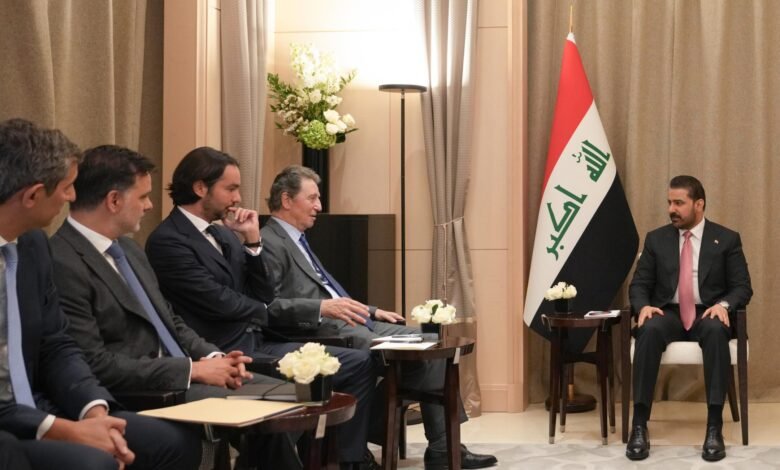
Iraqi Prime Minister Ali Falih al-Zaidi met and held talks with Edouard de Rothschild, chairman of the Rothschild Bank, at his residence in Paris, the capital of France, on Monday.
According to a statement from the Iraqi Prime Minister's Office, during the meeting, the two sides discussed ways to expand Iraq's cooperation with international and global banks and financial institutions, the Iraqi government's measures to develop and strengthen the banking sector, improve Iraq's credit rating, and the government's goals for creating a strong and diversified economy.
Edouard de Rothschild emphasized the importance of investment opportunities available in Iraq and the areas through which international financial institutions can contribute to Iraq's development programs.
He received him at his residence
Al-Zaidi discusses banking cooperation with a descendant of the Rothschild financial empire in Paris
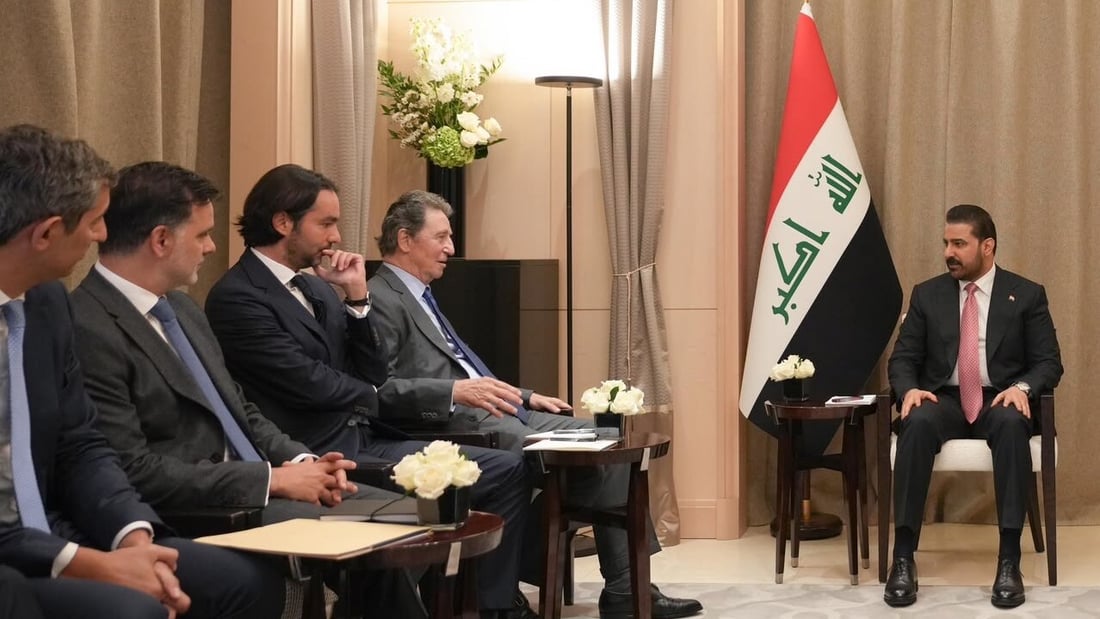
Prime Minister Ali al-Zaidi met on Monday (September 14, 2026) from his residence in Paris with the head of the French Rothschild Bank, Edward de Rothschild, to discuss ways to expand Iraq’s cooperation with international and global banks. He reviewed the government’s steps to develop the banking sector and raise Iraq’s credit rating. For his part, Rothschild stressed the importance of investing in Iraq.
The Rothschild family is the oldest and most renowned banking dynasty in modern history. Its financial empire was founded in 18th-century Germany by Mayer Amschel Rothschild and his five sons. The family's influence extended to major financial centers in Europe through financing governments, strategic projects, mining, and banking institutions. Today, the group is active globally in financial consulting, wealth management, and investment portfolios through major entities, most notably Rothschild & Co.
Al-Zaidi’s office stated in a statement, a copy of which was received by 964 Network , that “Prime Minister Ali Faleh al-Zaidi received, today, Monday, at his residence in the French capital, Paris, the head of Rothschild Bank, Edward de Rothschild.”
The meeting included discussions on “ways to expand Iraq’s cooperation with international and global banks, reviewing the government’s work in expanding and developing the banking sector, raising Iraq’s credit rating, and the government’s objectives in building a strong and diversified economy.”
For his part, Rothschild emphasized “the importance of the investment opportunities available in Iraq, and the areas in which international financial institutions can participate in Iraq’s development plans.”
Al-Zaidi arrived in Paris on Sunday (September 13) as part of a European tour that began in France and then Germany, to expand international partnerships, attract investments, and benefit from European expertise and technology in the energy, industry, transport, and infrastructure sectors.
Dagher discusses the reason behind the soaring dollar exchange rates in local markets.

Economic expert Mahmoud Dagher confirmed on Monday that exchange rates in the local market are rapidly affected by levels of stability or instability, as well as future expectations, whether political or economic. He explained that these factors are behind the recent rise in the dollar's price on the parallel market.
Dagher told Al-Maalouma, "The instability in the region and its repercussions on Iraq, along with political and economic events and tensions, have contributed to market disruption and the rise in the dollar's exchange rate." He pointed out that "the price has exceeded 155,000 dinars per 100 dollars on the parallel market, compared to the official rate of 132,000 dinars per 100 dollars."
He added that "reports circulating in some agencies and channels regarding Washington's threat to withhold currency shipments to Iraq have destabilized the market and created expectations among traders that the exchange rate could continue to rise." He noted that "such news and expectations directly influence market behavior and speculators, despite doubts about their veracity."
Dagher stated that "addressing the high exchange rate must begin with its root causes and be done within the framework of the existing economic system," emphasizing that "the dollar's rise may continue as long as the underlying reasons persist, in addition to the continued negative expectations affecting market participants." He called for addressing these factors to restore stability to the exchange market.

No comments:
Post a Comment