Tuesday, August 27, 2024

Soon Resumes Investigation into Changes Made to the General Budget Law tables

Parliamentary Finance Committee confirms that it will soon resume its investigation into changes made to the General Budget Law tables

link

The Parliamentary Finance Committee confirmed that it will soon resume its investigation into changes to the general budget law tables that were officially approved by the Council of Representatives, and objected to by the Prime Minister's Office.

The Video for this blog is below here:


Committee member, MP Moeen Al-Kazemi, said in a statement to the National Iraqi News Agency ( NINA ), that "the parliamentary investigation committee assigned by the Finance Committee will resume its work soon, to determine the reasons for the change in the general budget tables officially signed by the Speaker of Parliament and sent to the Council of Ministers."

He added, "The government is working with its tables approved by the Council of Representatives, and there is no financial damage to the public treasury," indicating, "The work on the general budget ceiling of 226 trillion dinars has been suspended, and the government is proceeding with implementing its tables that were approved by the Council of Representatives."

He explained
, "The Parliamentary Finance Committee is following up on the reasons for the difference between the government version of the general budget tables and the paper and electronic version of the Council of Representatives."

Parliamentary Finance: Salaries are secured and investigation into changing budget schedules resumes
link

Parliamentary Finance: Salaries are secured and investigation into changing budget schedules resumes

A member of the Parliamentary Finance Committee commented on the financial situation of the state treasury and its impact on salaries, while announcing the resumption of the investigation into changing the budget schedules.

Moeen Al-Kadhimi said, during his hosting on the {Free Talk} program broadcast by Al-Furat satellite channel on Tuesday evening: "I expect that the government will not be able to spend 211 trillion dinars and the spending will be based on what is available; therefore, we see a delay in spending project funds for ministries and governorates according to the planned expenditure."

Al-Kadhimi expected that "government spending will not exceed 160 trillion dinars, including securing all salaries, including employees, retirees, and social care, in addition to the availability of some operational and possible projects." 
Regarding the 2024 budget schedules, Al-Kadhimi said that "the schedules that arrived from the government were approved without any changes, and after they were approved by the Presidency of the Council and sent to the Council of Ministers, the government revealed that they did not match the original version and demanded an explanation for the change."

"In light of this, the Finance Committee took the initiative to form an investigation committee to clarify this dispute. Then the Parliament Presidency objected to this formation, and we were surprised by that. In turn, the Presidency formed an investigation committee headed by Deputy Speaker of Parliament Shakhwan Abdullah and a number of members.
We do not know what the results are.

A letter was issued from the Presidency to the Prime Minister's Office confirming that the decision of the House of Representatives to approve the tables sent by the government is identical to what was stated by it,"

Al-Kadhimi concluded by saying, "The Finance Committee will resume its work by verifying the change in the tables, and we will have a serious review to find out the contexts and the link that introduced the distorted tables."


Minister of Finance stresses the importance of completing plans to regulate the work of the government banking sector

link

upload_1724768886_2147296338.jpg

 - Minister of Finance Taif Sami stressed, today, Tuesday, the importance of completing plans to regulate the work of the government banking sector.

A statement by the ministry - received by the Iraqi News Agency (INA) - said: "Minister of Finance Taif Sami chaired a coordination meeting with the international auditing and oversight firm Ernst & Young to follow up on the ongoing technical plans to merge and organize the work of Rafidain and Rashid Banks and insurance companies."

He added, "During the meeting, which was attended by a number of the ministry's general managers and formations, a report was presented by the auditing firm on the final stages of its work regarding organizing the work of the government banking sector, in addition to discussing the proposed plans and final implementation stages in line with the priorities of reform and development."

The Minister of Finance stressed - according to the statement - "the importance of implementing these procedures to contribute to enhancing confidence in the banking system and providing a stable financial environment that supports economic growth, which is positively reflected on the national economy in general and achieving sustainable development and stimulating growth in various sectors."

Sami explained, "The importance of benefiting from the expertise of solid international companies such as Ernst & Young in the field of regulating and restructuring financial institutions, as the ministry aims to make Iraqi banks internationally and locally acceptable to provide better services to citizens. The auditing company's expertise will also contribute to improving the efficiency and effectiveness of financial institutions, as it is expected that merging and regulating financial institutions will improve the quality of banking services provided and enhance investor confidence in the Iraqi economy."

The statement continued, "Iraq is witnessing transformations in the government banking sector through the adoption of ambitious work programs to restructure government banks, aiming to enhance the efficiency of these banks and improve their services provided to citizens and companies and strengthen financial suitability by increasing capital and diversifying sources of income, in addition to improving governance by applying high standards of transparency and accountability and adopting the latest banking technologies to provide more efficient services, as well as increasing confidence in the banking sector and thus attracting foreign investments."


To resolve the issue of banks "deprived of the dollar"... Al-Alaq to Washington soon
link

1724580216_2023-08-16t113334z_1837372612_rc2do2a1c4nh_rtrmadp_3_iraq-cenbank.jpg

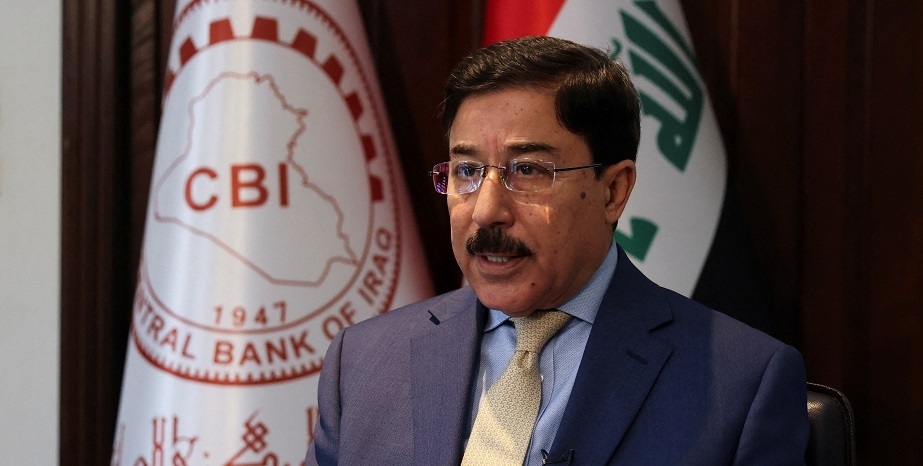
A responsible source in the Central Bank of Iraq revealed, today, Sunday (August 25, 2024), the imminent visit of the Governor of the Bank, Ali Al-Alaq, to ​​the United States of America to resolve the issue of Iraqi banks deprived of the dollar.

The source told Baghdad Today that "at the end of this month there will be an important visit by the Governor of the Central Bank of Iraq, Ali Al-Alaq, to ​​New York City in the United States of America to hold several meetings with the US Federal Reserve and the US Treasury to discuss the file of Iraqi banks that are banned from dealing in dollars, and the possibility of lifting this ban, as this has had a negative impact on the Iraqi banking and financial reality."

The source, who requested anonymity, said, "These Iraqi banks are not being punished, but are only being deprived of dealing in dollars, and Al-Alaq's visit comes to lift that deprivation, as well as to discuss protecting the Iraqi banking system and supporting its stability."

It is noteworthy that the Governor of the Central Bank of Iraq, Ali Al-Alaq, settled the controversy on Wednesday (August 7, 2024) regarding the reconsideration of the dollar exchange rates .

Al-Alaq said in press statements, followed by "Baghdad Today": "There is no intention to reconsider the dollar exchange rates," noting that "the Central Bank sells more than 250 million dollars daily at the official price ."

He pointed out that "the bank covers the requirements of foreign trade and some do not want fundamentalist methods," noting that "the view that the dollar price has risen or fallen is not a correct indicator ."

He stressed "the success of the Central Bank in controlling inflation compared to other countries," adding, "We will reach 100 percent of foreign transfers without going through the US Federal Reserve by the end of this year ."

He stressed that "the financial situation in Iraq is still proceeding within what is planned in the state's general budget," indicating that "for the first time, by virtue of the new budget and financial management law, the allocations of the governorates and ministries are being rotated ."

Al-Alaq said, "The Central Bank is undergoing a major transformation process by reorganizing foreign trade, and our procedures in foreign trade are being carried out for the first time with the participation of international institutions ."

He added, "There are small traders outside the system who are putting pressure on the market, and a mechanism to regulate their trade is about to be launched. We are focusing on getting everyone involved in the proper, fundamental channels ."

He revealed that "the Central Bank has opened channels for the Chinese, Turkish, Indian and Emirati currencies," announcing "the imminent launch of a new audit mechanism for trade in foreign currencies ."

He stressed that "all commercial foreign transfer operations are subject to review by the specialized international company," revealing "meetings in New York at the end of August to discuss lifting sanctions on banks and reviewing transfer operations ."

Al-Alaq explained, "The dollar is not given to the traveler until the departure stamp is obtained," indicating that "the new mechanism guarantees that the dollar reaches the traveler 100 percent, and we started with it in Baghdad, then Najaf, Basra, Erbil, Sulaymaniyah, and Kirkuk ."

He added, "There is a government trend to increase capital support for the Real Estate Bank and the Housing Fund in the budget," noting that "the bank's initiatives have an exceptional role in trying to fill the housing deficit ."

The Governor of the Central Bank announced that "the paragraph on increasing the capital of the Real Estate Bank and the Housing Fund in the budget has not been implemented yet, and we do not want the bank's financing to be an alternative to the investor's obligations," pointing out that "the Real Estate Bank has been directed to finance complexes with completion rates of 80 to 90 percent ."


Parliament knows nothing about the "Saudi Investment Protection" law.. What is its impact on Iraq? - Urgent

link

1724612912_download.jpg

Member of Parliament, Jawad Al-Yassari, confirmed today, Monday (August 26, 2024), that Parliament does not know the details of the Saudi Investment Protection Law that is scheduled to be legislated during the next stage.

Al-Yassari told Baghdad Today that "the Iraqi parliament has not yet reviewed the Saudi investment protection law that is scheduled to be legislated during the next stage," noting that "it is certain that this law will go through several stages of study and discussion before it is passed."

He added, "Iraq has good investment laws, and we do not believe that there is a need to legislate an investment law specific to a particular country," noting that "this step will open the door to the country that wants its own law, and this will be at the expense of Iraq, as there are fears about this matter."

He added: "But there may be agreements to protect investors' money, and this is a natural right for any investor, especially since Iraq is going through conditions that are still unstable."

He continued: "We are waiting for the draft law to be presented to the House of Representatives, which will be submitted by the government, for the purpose of reviewing it and knowing its paragraphs and what they include, so that it can be discussed to determine the extent of the necessity of legislating such a law specific to Saudi investments, and how it is possible to protect those investments with a law that is binding on Iraq to implement."

Iraq is preparing a draft law to protect Saudi investment, with the aim of submitting it for discussion in Parliament, in preparation for its approval in the coming months, with the aim of enhancing economic cooperation between the two countries.

This was announced during a meeting between the Chairman of the Federation of Saudi Chambers, Hassan bin Mujib Al-Huwaizi, and the Chairman of the Iraqi-Saudi Friendship Committee in the Iraqi Parliament, Shaalan Al-Karim, and his accompanying delegation, as part of an official visit to the Kingdom.

Regarding the impact of the law, experts confirm that after its approval, there will be a gradual increase in the level of trade exchange between the two countries, which currently exceeds approximately one billion US dollars per year, with a growth rate estimated at around 10% annually.

On July 18, 2023, the Iraqi Council of Representatives postponed voting on (the draft law to ratify the agreement on the encouragement and mutual protection of investments between the government of the Republic of Iraq and the government of the Kingdom of Saudi Arabia), and it has not been included on the Council’s agenda yet.

Economic relations between Iraq and Saudi Arabia are diverse in different fields, especially in the energy sector; where a $27 billion agreement was signed last year to develop a solar power plant, with the participation of TotalEnergies, and the Saudi company ACWA Power was invited to join part of this deal.


Finalizing the approval of the Industrial Investment Law

link

Today, Monday, the head of the Parliamentary Investment Committee, Muhammad Al-Zayadi, revealed that the final touches had been put in place to approve the Industrial Investment Law within the House of Representatives.  

Al-Ziyadi told Al-Ma'louma Agency, “Approving this law will contribute significantly to moving the wheel of the Iraqi economy, as it grants great privileges and guarantees to investors in the industrial sector.” 

He added, "His committee held an expanded meeting with the Economic Committee to resolve the disputed points within the law," noting that "the law, if approved, will reflect positively on the labor market by providing many job opportunities for young people within the country."

He continued, “His committee has put the final touches to approve the industrial investment law soon in the House of Representatives, as it is one of the important laws.” 


The Iraqi income will reach 3 thousand dollars in 2024.. How much will he spend on food, transportation, clothing and communication?

link

The Iraqi income will reach 3 thousand dollars in 2024.. How much will he spend on food, transportation, clothing and communication?

Global statistical data revealed expectations of family and individual income in Iraq versus their consumer spending during the year 2024, as it is expected that the total family income in Iraq will reach 139 billion dollars, which is approximately equivalent to the Iraqi budget, while the size of consumer spending for all Iraqi families during 2024 will amount to 108 billion dollars.


According to data from Statista, which was tracked by Sumaria News, “the disposable household income per capita in Iraq is expected to reach about $3,000 in 2024, or $12,000 for a family.”
In contrast, consumer spending per capita on food and non-alcoholic beverages in Iraq is expected to reach $750, while spending per capita on housing will reach $540 in 2024.
 
As for health care, it is expected that the individual will spend $112, compared to spending $103 on clothes and shoes, while the individual will spend $114 on the family. As for culture and entertainment, the Iraqi individual is expected to spend about $56 during the year, $100 on restaurants, $35 on alcohol, $70 on education, $81 on communications, and $203 on transportation.


Prime Minister's Advisor Announces New Tax Reform Packages to Be Launched Soon

link

887.png

The Prime Minister's Advisor for Financial Affairs, Mazhar Mohammed Saleh, announced on Monday the most prominent government steps to maximize non-oil revenues, while indicating the imminent launch of new tax reform packages.

Saleh said, as reported by the official news agency, and reviewed by "Al-Eqtisad News", that "one of the basic principles of the government's program in the field of financial reform, which was approved by the Council of Representatives in October 2022, is maximizing non-oil resources in the general budgets of the Republic of Iraq, as quantitative targets were set for them so that their contribution to the total revenues generated by non-oil economic activity would increase to 20 percent instead of their historical rates that do not exceed 10 percent in the best of cases."

He added, "Diversifying non-oil revenue sources and maximizing them in public budgets is one of the biggest reform challenges in the financial and economic fields in the country."

He pointed out that "these challenges come from two main factors: the first is the degree of connection between the diversification of budget resources and the success of diversification in the country's gross domestic product, especially the three sectors of agriculture, industry and services."

He explained that "the oil production sector still dominates a percentage of the components of that gross domestic product, which sometimes reaches 60 percent, which gives the national economy a rentier character and direct coexistence with the financial flows provided by the oil resource, mostly without anything else."

He added, "The second factor of these challenges is related to non-governmental activity in generating the gross domestic product, and we mean specifically the activity of the market or the private sector."

He added, "The majority of economic forces generating income and wealth within market activity conduct their economic activities within the framework of what is called the 'shadow economy', which are 'grey' markets that are not regulated and are not known to the regulatory, tax and banking authorities as is commonly known, and their percentage amounts to about 70 percent of the total private sector activity in the country."

He stressed that "the grey or shadow markets are one of the most important factors causing the decline in non-oil revenues in the country's general budget components."

He pointed out that "the first step taken by the current government to maximize non-oil revenues began with adopting a new approach to tax reform," noting that "the Council of Ministers approved earlier this year 8 new packages to reform the country's tax system, led by the principle of expanding tax bases, especially those that are hidden, evading or neglecting annual tax accounting."

He stressed by saying: "Two tax reform packages have been launched, and the remaining packages will be launched sequentially and gradually within the government's reform policy in the financial field and maximizing the state's resources from sources of income and wealth outside the oil sector, as this is accompanied by administrative and legislative reform and high-precision digital governance of tax institutions in the areas of assessment and collection with high transparency and efficiency."


Iranian President: We do not want war with anyone, but we will not submit to injustice

link

Iranian President: We do not want war with anyone, but we will not submit to injustice

Iranian President Masoud Pezeshkian confirmed that his country "does not want war with anyone."

We do not want war with anyone, but we will not submit to injustice and will continue to oppose the oppressor," Bazeshkian said.

He added, "Everyone is affected by the crimes taking place in Gaza, but human rights advocates support the Zionist entity."

He pointed out that "we are able to strengthen relations with neighboring countries and we must work to overcome the sanctions imposed on us."

Iran: We do not seek to increase tension in the Middle East, and our response to the assassination of Haniyeh will be measured

link

Iran announced that it does not seek to "increase tension" in the Middle East. 

Iranian Foreign Minister Abbas Araghchi said, "We do not seek to increase tension in the Middle East, and our response to the assassination of Ismail Haniyeh will be decisive and calculated."

US National Security Adviser Jake Sullivan said the United States was concerned that the conflict in the Middle East could turn into a wider regional war.

It is noteworthy that the Israeli army announced at dawn yesterday, Sunday, a "preemptive attack" against Hezbollah, with the aim of removing threats to Hezbollah after observing its preparation to launch shells and missiles towards Israel.

Hezbollah announced that it launched 320 missiles in the first phase of the attack to facilitate the passage of the offensive drones towards their target, targeting 11 Israeli sites and barracks, stressing that its drones passed as planned.

Later, Hezbollah denied in a statement the Israeli allegations of thwarting its military operations, stressing that they contradict the facts on the ground.

Saturday, August 24, 2024

Is Iraq heading towards printing new paper currency?

Is Iraq heading towards printing new paper currency?

link

50538.jpeg

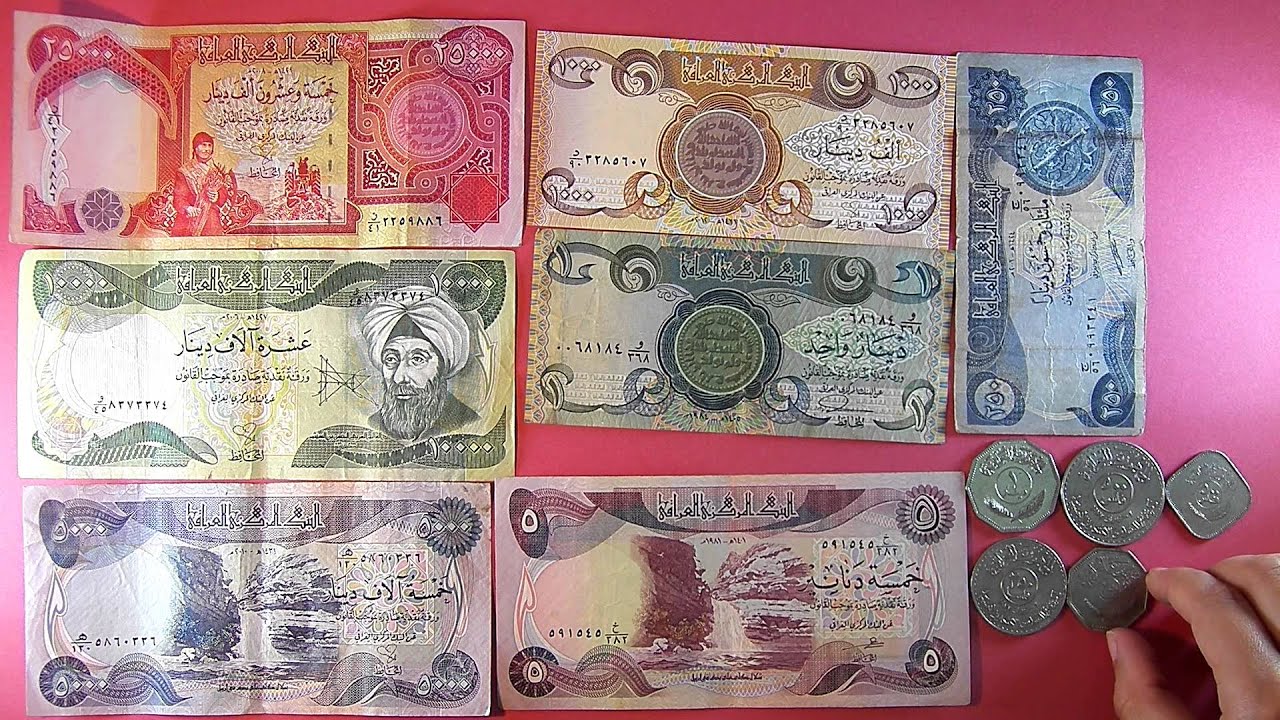
The Parliamentary Finance Committee confirmed, on Thursday, that there is no intention to print new paper currency.

The video for this blogpost is below here:


Committee member Moeen Al-Kazemi said in a statement followed by "Al-Eqtisad News": "There is no intention to print new paper currency at the Central Bank," noting that "the Ministry of Finance began funding ministries and governorates with salaries two days ago."

He added that "the cash mass required monthly to pay employees' salaries is estimated at four million employees and four million beneficiaries of the Retirement Authority and two million social care, which is approximately 7 trillion and 500 billion dinars." He

continued that "this amount is prepared monthly and there is no shortage in this aspect, considering that the current export is approximately 3 million and 400 thousand barrels of oil at a price of more than $ 75 per barrel."

He explained that "providing the necessary liquidity is done by the Central Bank and delivered to the Ministry of Finance, which in turn delivers these numbers and the cash mass to the ministries and governorates, and there is no acute problem regarding cash liquidity."


Parliamentary Finance Committee confirms that there is no intention to print new paper currency

link

The Parliamentary Finance Committee confirmed, on Thursday, that there is no intention to print a new paper currency.

Committee member Moeen Al-Kazemi said, "There is no intention to print new paper currency at the Central Bank," noting that "the Ministry of Finance began funding ministries and governorates with salaries two days ago." He added that "the cash mass required monthly to pay employees' salaries is estimated at four million employees, four million beneficiaries of the Retirement Authority, and two million social care, which is approximately 7 trillion and 500 billion dinars."

He continued, "This amount is prepared monthly and there is no shortage in this aspect, considering that the current export is approximately 3 million and 400 thousand barrels of oil at a price of more than $ 75 per barrel." He explained that "the provision of the necessary liquidity is done by the Central Bank and delivered to the Ministry of Finance, which in turn delivers these numbers and the cash mass to the ministries and governorates, and there is no acute problem regarding cash liquidity."

ADDED POST PRODUCTION THIS CAME OUT LATER ...


Experts rule out lifting sanctions on Iraqi banks

link

1724406812%D8%A7%D9%84%D8%B9%D9%82%D9%88%D8%A8%D8%A7%D8%AA.jpg

 With the Finance Committee in the Iraqi parliament calling on Washington to lift banking sanctions on banks sanctioned inside Iraq experts ruled out this issue for the time being, at least, especially in light of the data and fluctuations that are plaguing the region and trying to drag Iraq into it.

The dinar and the fear of its exchange rate from falling against the dollar returns to the forefront, but from the gate of parliament, specifically with the demands of the Financial Committee from Washington to lift its sanctions on punishing banks on the grounds that they are affecting the status of the dinar demands that may be ahead of their time, as economists say, especially since there are international companies that audit the status of these banks, which must first comply with the demands of the US Federal Reserve.

Economist Safwan Qusai told Kurdistan 24, "There is supposed to be compliance with the demands of the US Federal Reserve, Citibank and JP Morgan, there is now a global audit firm, certainly K2 and other American companies are re-auditing these restricted banks in order to determine the reasons for the shortcomings in the financial transfers that existed in previous periods."

As long as the economic factor is linked to the political and with the attempt of some parties to withdraw Iraq from the covenants and covenants between him and the United States, the latter thought a thousand times before lifting the sanctions on banks, which requires political sophistication and a review of the file of Iraqi-American relations in order to serve the Iraqi people.

Political analyst Hussein al-Janabi told Kurdistan 24, "The United States wants Iraq to be a strategic ally in the region, and any weakness in this matter it considers threatens its existence in the region, so it tries to hold on strongly to economic pressure."

Banking experts do not rule out structuring some banks that will be punished by the United States if efforts to remove them from the list of 14 banks on charges of money laundering and dealing in dollars with Iran fail.

Economist points to a “solution” that will “lower” the dollar exchange rate

link

1724355419_1313.jpg

Today, Thursday (August 22, 2024), Mustafa Akram Hantoush, an expert in economic and financial affairs, commented on the reasons for the fluctuations in the dollar exchange rate in the Iraqi markets.

Hantoush told Baghdad Today, "The parallel market needs to be dismantled in order for the exchange rate to decrease. Previously, there were solutions to the issue of cigarettes and gold, and the tax was reduced and the merchant was allowed to buy through the platform again, and the exchange rate stabilized at 145 thousand dinars."

He added, "We have small traders who do not have a facilitating mechanism, and we have trades such as gold and cleaning materials that have not been processed, and we have huge trade with Iran and Syria worth millions of dollars, and these can be processed by giving them currency or gold," stressing that "most countries have solved the problem of trade with Iran, despite the American sanctions imposed on them, and solved the problem of travel to those countries."

The dollar exchange rate in the parallel markets rose again, as the markets recorded prices close to 150,000 dinars for every 100 dollars, even though the Central Bank of Iraq sells it at 1,320 dinars for every one dollar.

With the government's efforts to control prices in parallel markets, commercial markets witnessed a decline in the exchange rate in recent weeks, but it rose again, which indicates an economic problem that is still present in the country.

In response, parliamentarians raised a movement to question the governor of the Central Bank within the legislative dome, as the Finance Committee in the House of Representatives, on Sunday (August 4, 2024), directed a request to the Presidency of Parliament to question the governor of the Central Bank .

A document signed by the members of the Finance Committee, received by Baghdad Today, stated: “We, the members of the Finance Committee listed below, are the signatories for the purpose of hosting the Governor of the Central Bank due to a major defect in the management of the bank .”

The document added: "Therefore, we demand that the Governor of the Central Bank be questioned in the nearest session, in accordance with the applicable articles of the constitution and internal regulations."


Iraq's Al-Sadr calls for million-man march in Baghdad to support Palestine

link

Iraq's Al-Sadr calls for million-man march in Baghdad to support Palestine

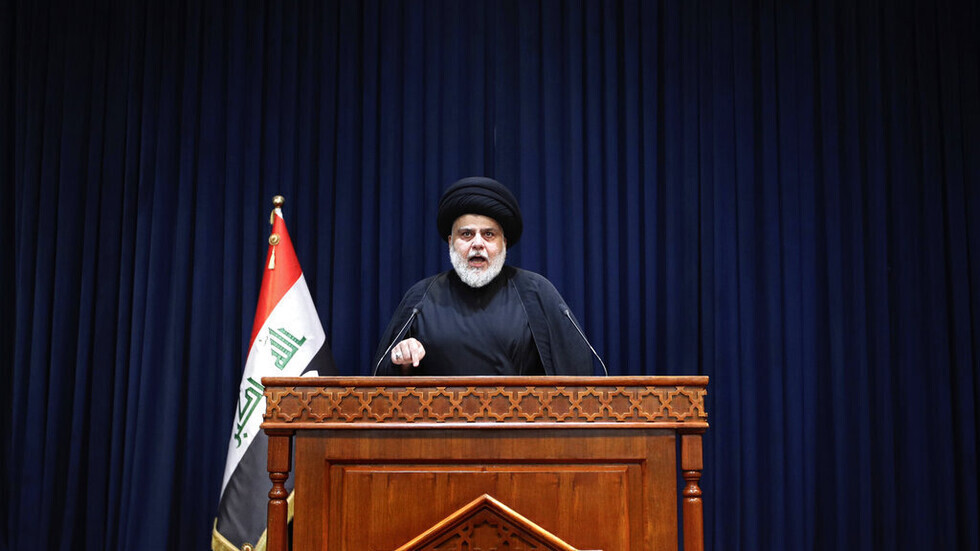
Influential Iraqi Shiite cleric Muqtada al-Sadr called for a million-man march in Baghdad's Al-Tahrir Square to show solidarity with the Palestinian cause.

In a statement read by the Imam of Kufa Mosque, Al-Sadr urged all Iraqis, except those he labeled as corrupt, to participate in the demonstration, which is scheduled for the first Friday after the 17th of Rabi' al-Awwal (September 20), coinciding with the birthday of the Prophet Muhammad (PBUH).

"I call on all my Iraqi brothers, except the corrupt, to take to the streets in a million-man march that truly reflects the depth of the Iraqi people's sympathy for the Palestinian cause and the suffering brothers in Gaza," the statement read.

Al-Sadr emphasized that the demonstration should be peaceful and that participants should wear shrouds (White Kaffan), a "symbol of readiness for martyrdom."

"Let your voice and image reach the entire world... this is what will please the Prophet, his family, and our esteemed religious authorities, both living and deceased," he said.

It is the second time that the Shiite cleric has called for a mass demonstration in support of Palestine and Gaza, which are currently experiencing a catastrophic situation due to the Israeli aggression that killed more than 40,000 Palestinians, primarily women and children.

His previous call for a million-man demonstration was issued on October 9, 2023, when hundreds of thousands flocked the streets in Baghdad expressing support for Palestine.


Al-Alaq in New York at the end of August.. Will he succeed in lifting the

ban on the sanctioned Iraqi banks?

link


Washington has sanctioned 32 banks over suspicions of money laundering and smuggling to Iran


The Governor of the Central Bank of Iraq, Ali Mohsen Al-Alaq, intends to visit the US capital, Washington, at the end of this month to discuss lifting the ban on Iraqi banks sanctioned by the US Treasury Department, as well as enhancing bilateral cooperation between the monetary institution in Iraq and the US Federal Reserve.


Al-Alaq's visit to Washington comes at a time when the gap between the official and black market rates for exchanging the dollar against the dinar continues, despite the measures taken by the Central Bank of Iraq over the past months, which it says "contributed to limiting its rise to double," but it is not known whether the visit will witness success in lifting the ban or stabilizing the exchange rate.


"double penalties" 


The head of the Parliamentary Finance Committee, Atwan Al-Atwani, had previously confirmed that the fluctuation of the dollar exchange rate creates a state of economic and financial instability, especially with the widening gap between the official selling price of the dollar and the parallel market price. 


Al-Atwani said in a statement on the sidelines of his chairing of the committee meeting that hosted the Governor of the Central Bank of Iraq, Ali Mohsen Al-Alaq, to ​​discuss the monetary policy file in the country, that "the widening gap between the official selling price of the dollar and the parallel market price creates a state of economic and financial instability."


He stressed that "the stability of the exchange rate is a central issue for the state, as there is a duality in the issue of imposing US sanctions between Iraqi banks and correspondent banks, which requires the management of the Central Bank of Iraq to move effectively and address this crisis, in addition to tightening control over the work of private banks, in a way that ensures the integrity of all their procedures and work."


Visit to protect the Iraqi banking system


In contrast, the financial advisor to the Iraqi Prime Minister, Mazhar Mohammed Salih, said, “Historically, Iraq has kept its oil receipts account at the Federal Reserve Bank in New York, based on a previous UN Security Council Resolution No. 1483 in May 2003, in addition to the foreign currency reserve account in dollars.”

The US Federal Reserve is the main source of the dollar, meeting Iraq's foreign trade financing needs and facilitating payments for international exchange between our country and the world, according to Saleh.


He continued in his statement to Al-Jabal: "Thus, the upcoming visit of the Governor of the Central Bank of Iraq, Ali Al-Alaq, to ​​New York City, USA, comes to protect the Iraqi banking system and support its stability after 32 banks were banned from dealing in the dollar currency by the monetary authority in the United States for unknown reasons."


He added: "The Central Bank of Iraq, by virtue of its work and responsibility in maintaining the stability of the financial system of Iraq, must negotiate with the American side regarding the issue of banks that are sanctioned or deprived of the dollar to alleviate the severity of the deprivation in a way that enhances the effectiveness of the banking system in supporting development and economic activity," noting that relations between Iraq and the United States are outlined by "the strategic framework agreement signed between the two countries in 2008 and are directed towards many axes that aim to sustain relations between the two parties and strengthen them for the benefit of our country, and that the economic axis and financial and banking cooperation is one of those axes that aim to deepen bilateral relations between the two parties."


Banking sanctions 'no longer justified'


In turn, financial researcher Bassam Raad explained that the upcoming visit of the Governor of the Central Bank of Iraq, Ali Mohsen Al-Alaq, to ​​Washington has “positive effects and aims to achieve Iraq’s financial interests and obtain technical support in the banking field to ensure the success of the monetary policy plan by relying on authorized banks as correspondent banks in foreign transfer operations,” noting that the visit aims “to maintain a bilateral dialogue on possible measures for the purpose of lifting sanctions by the US Treasury Department on banks banned from dealing in the US dollar.”

He stressed in his statement to Al-Jabal that the banks that are banned from dealing in foreign currency (dollars) are currently committed to international standards for combating money laundering and are working to take due care in financial transactions, noting that accordingly, “the sanctions are unjustified, especially after the Middle East and North Africa Financial Action Task Force (MENAFATF) confirmed in May of this year that Iraq is one of the countries committed to the recommendations in the field of combating money laundering and terrorist financing.”


AUG 21 24

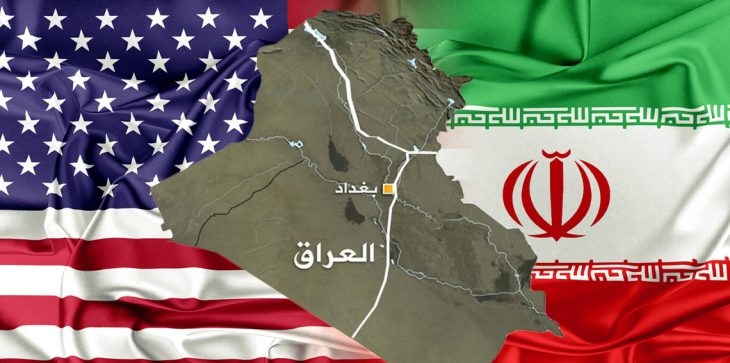
Iranian-American agreement to keep Iraq away from Middle East events

link

The Israeli newspaper, The Jerusalem Post, revealed on Wednesday that there is an Iranian-American agreement to keep Iraq away from the current conflict, noting that the Iraqi Prime Minister intervened to prevent the American response to the recent bombing of Ain al-Assad.

The newspaper said in a report, which was followed by Al-Mutalaa, that: “There is news circulating in intelligence circles about instructions reaching armed factions inside Iraq to stop attacks against American forces and their bases to prevent the country from sliding into open war,” indicating that: “The Iranian authorities decided to stop attacks against American bases in Iraq as a result of the escalation of tension to unprecedented levels and the increasing risk of Iraq turning into a war zone.”

She added that: "Prime Minister Mohammed Shia al-Sudani was able to convince the Americans not to respond to the recent targeting of Ain al-Assad base and to cancel any plans to target armed factions inside the country," stressing to the Americans that: "Iraq is committed to maintaining its security and preventing its lands from turning into a battlefield between the American and Iranian parties."

The newspaper pointed out that: "The Iranian instructions do not include any mention of the attacks carried out by the factions inside Iraq against Israeli targets, including the continuous bombing of the port of Eilat," explaining that: "The cessation of attacks is limited so far to American bases and interests only, according to its description."


Islamic Banks Association: A national electronic payment company contributes to enhancing development

link

The Iraqi Association of Islamic Banks considered the Central Bank’s move to establish a national company specializing in managing electronic payments as a step towards strengthening the development system in the country. 

The association stated in a statement received by Al-Sabah, a copy of which said that “the recent measures of the Central Bank were fruitful,” noting that “the Central Bank is preparing to hold talks with the US Treasury Department and the US Federal Reserve to return the banks banned from dealing in the US dollar.” 

In its statement, the Association appreciated the continuous efforts made by the Central Bank and the Anti-Money Laundering and Combating the Financing of Terrorism Office through the committee, which resulted in a positive evaluation by the Financial Action Task Force (FATF). 

She stressed that the Central Bank's establishment of a national company specialized in managing central electronic payment in Iraq is a positive step in developing the financial development system and enhancing the efficiency of electronic payment in the country. 


Al-Sudani extends an official invitation to the Iranian President to visit Iraq

link

Iraqi Prime Minister Muhammad Shiaa Al-Sudani sent an official invitation to Iranian President Masoud Pezeshkian to visit Iraq.

In a phone call with his Iranian counterpart, Iraqi Foreign Minister Fuad Hussein conveyed the Sudanese invitation to Pezeshkian to visit the capital, Baghdad, according to what the Iranian Foreign Ministry announced in a report issued by it.

In a phone call yesterday, Thursday, Hussein congratulated Abbas Araghchi on his election as the new Minister of Foreign Affairs in Iran.

The Iraqi Foreign Minister expressed his hope that the countries Iraq and Iran would continue to cooperate and interact closely on various issues related to bilateral relations and important regional and international issues.

In turn, Iranian Foreign Minister Abbas Araqchi stressed the “special” effort made by the new Iranian government and its president, Pezeshkian, to comprehensively expand and deepen relations between the two neighboring and Muslim countries, and thanked the Iraqi Prime Minister’s invitation for President Pezeshkian to visit Baghdad and welcomed it.

Iraq Investment Map 2024

link

ScreenHunter-2427.png.pagespeed.ce.f44SrI9ggn.png

Iraq's National Investment Commission (NIC) has just published its Iraq Investment Map 2024.

The 283-page report includes details of investment opportunities, in addition to sectoral and regional data.

Click below to download the full report:

English      you might want to open and browse through  it's 182 pages

Arabic

See also Investor Guide to Iraq 2024.


Investor Guide to Iraq 2024

link    this one is only 55 pages and easy to read

xScreenHunter-2429.png.pagespeed.ic.CoKIF0tQOB.webp

Iraq's National Investment Commission (NIC) has just published its Investor Guide to Iraq 2024.

The 55-page guide gives an overview of the investment climate in Iraq.

Click below to download the full report:

English

Arabic

See also Iraq Investment Map 2024.


Can Washington “limit” Tehran’s economic expansion in Iraq? Expert answers - Urgent

link

900.jpg

Professor of International Economics, Nawar Al-Saadi, commented today, Friday (August 23, 2024), on the possibility of the United States of America succeeding in limiting Iran's economic expansion in Iraq.

Al-Saadi told Baghdad Today that “Iran has great economic and political influence in Iraq, and this influence has been strengthened over decades of complex bilateral relations between the two countries. Iran considers Iraq an essential part of its strategy of influence in the Middle East, whether through direct investments or through the export of gas and electricity. However, we must take into account that the United States has powerful pressure tools, including economic sanctions imposed on Iran.”

“These sanctions have already complicated Iran’s ability to implement major projects and expand its economic influence in Iraq. On the other hand, the United States’ ability to completely reduce this influence may face significant challenges. Iraq relies heavily on Iranian gas to operate its power plants, making it difficult for the Iraqi government to take steps that could cut off these supplies without a reliable alternative,” he explained.

“The US success in economically strangling Iran in Iraq by withdrawing investment projects in the energy sector, in this regard, we must take into account that withdrawing investments from energy projects controlled by Iran in Iraq may have a limited impact. Many of these projects depend heavily on Iranian infrastructure, which means that withdrawing them or trying to replace them with other projects requires huge time and resources. Iraq suffers from a major energy shortage, and any move to withdraw Iranian investments may lead to an increase in this shortage, which may increase political and economic tensions within Iraq,” he added.

Al-Saadi stressed that “therefore, I believe, based on my reading of the scene, that Iraq may prefer to remain in balanced relations with both parties (Iran and the United States) to ensure stable energy supplies and achieve its economic goals. Therefore, canceling or withdrawing projects completely may face resistance not only from Iran but also from parties within Iraq.”

He explained that "Iran will not stand idly by if the United States tries to limit its influence in Iraq. Iran has multiple means to respond, including deepening its relations with Iraqi political parties and maintaining military and political influence in the country. Iran may also resort to using its economic and political tools to pressure the Iraqi government to resist any attempt to reduce Iranian influence."

The professor of international economics concluded by saying: “I believe that the United States will face major challenges in its attempt to limit Iranian influence in Iraq, and the success of these attempts depends largely on the American ability to provide reliable alternatives to Iraq in the areas of energy and investment, in addition to cooperating with Iraqi parties that may be hesitant to confront Iran directly. On the other hand, Iran will strive with all its might to preserve its interests in Iraq and will not hesitate to use all means at its disposal to ensure the continuation of its economic and political influence.”

Security expert Mukhallad Hazem confirmed on Thursday (August 22, 2024) that the truce that resulted from the government’s agreement with the factions to stop targeting American military headquarters and bases has ended.

Hazem said in an interview with Baghdad Today, "The truce has broken down, and if there is an escalation from the American side, the reaction from the factions will continue against the military bases and headquarters of the American forces."

He added, "No one knows what moves the American forces will make, and the targeting may not be timed, as happened in the bombing of Jurf al-Sakhar, but in general, the truce that was previously sponsored by the Iraqi government has ended, and the factions are now moving at any time and targeting any area where American interests are present."


US government decides to address Iraq's energy crisis in exchange for economic "strangulation" of Iran

link

07_11_2018_59205205481_25022.jpg

Forbes Economic Network revealed in a report published today, Wednesday, August 21, 2024, that there is an agreement between Prime Minister Mohammed Shia al-Sudani and US President Joe Biden, signed during his visit to the US capital, Washington, stipulating "the significant introduction of American companies into the energy sector to limit Iranian economic expansion in Iraq." 

The network said, according to what was translated by "Baghdad Today", that the agreement includes the introduction of KBR, Truss Atlantic Petroleum, Honeywell, UOP, Baker Hughes, Emerson, and Arc Energy companies to the Iraqi energy market in a big way, especially investing in the gas and oil sectors in cooperation with local government institutions, starting from the Nahr Bin Omar field project in southern Iraq, which it described as a "giant" for gas and oil. 

The network said that the agreement between the US administration and Al-Sudani aims to "limit Iran's economic expansion in Iraq and its control over the energy market by supplying Iraq with gas fuel and investing locally, which is consistent with Washington's policy of imposing an economic blockade on Tehran, which was subjected to great leniency during Biden's term, especially in Iraq," according to its description. 

She added, "The new shift in economic dealings between the two countries will guarantee the United States a greater economic siege on Iran than before, in addition to providing experienced companies to work in Iraq, which is struggling to attract foreign oil companies, especially after the recent wave of withdrawals from its oil market, which negatively affected its imports." 

The network, quoting unnamed American officials, explained that the details of the agreement will also guarantee the provision of thousands of local job opportunities and the development of the Iraqi economy, thus creating greater security and economic stability than the current one, stressing, quoting the official of the Rasib company contracting with the companies, Ahmed Imad Mohsen, that the timing "is a very important factor and the timing of this agreement is the most important" in reference to the suitability of the current conditions for the entry of American companies in a large way into Iraq. 

Mohsen also confirmed that this is "the first time that American companies of this size have been brought into the country, and it is something that has not been tried before," according to his description, stressing that the current work plan is "completely new and aims to address the electricity crisis completely in Iraq by providing gas fuel and local facilities for generating energy," which he indicated would eliminate Iraq's need to import from Iran. 

Forbes explained that the Iranian government receives approximately five billion dollars annually from Iraq in exchange for energy, stressing that the current American deal and the entry of its companies into the Iraqi market on this large scale aims to cut off Iran’s supply of those billions, a matter confirmed by the Washington Institute, which said that when Trump left power in 2021, Iran had only five billion dollars in its official treasury, which it obtained from selling energy to Iraq.

Former US Secretary of Defense Robert Wilkie explained to the network the reasons behind the US concluding the deal, which he described as "exceptional" with Al-Sudani and bringing in its companies in this amount, explaining, "The US government believes that strangling Iran economically and depriving it of the billions it obtains through Iraq has now become a necessity to secure the Middle East region and US interests," referring to the recent security events in the region. 

"Weakening the Iranian economy will necessarily mean weakening China and Russia, which is now more urgent than ever," Wilkie continued, stressing that "achieving this weakening now requires more than just making the Iraqi energy sector independent of Iran, but rather making the United States control the energy sector in countries that do not have to depend on Iranian or Russian gas or oil," according to his description. 

“Theoretically, any country that controls the energy sector in Iraq will have the strongest influence in the region, which means that the Iraqi energy market can be used to balance Iranian influence in the entire region,” the former US official added in his explanation of the US decision. “The United States was able to provide cheap fuel to its allies in the event of imposing sanctions on an oil country like Iran. Iraq is now central to this strategy that aims to cut off funding to the Iranian regime.” 

 The network also indicated that the Iraqi government believes that it is in its economic interest to achieve full investment in the gas and energy sector and save the billions that are given to Iran in exchange for importing them, in addition to the fact that the new agreement will address the energy crisis in Iraq, which it said has been ongoing for decades, which greatly serves the economic interest of the Iraqi government.


Iraq's Acting Parliament speaker denies secret additions to 2024 budget

link

 Iraq's Acting Parliament Speaker, Mohsen Al-Mandalawi, refuted claims on Wednesday regarding the alleged addition of 8 trillion dinars (about $6 billion) to the 2024 budget without specifying its allocation. This comes after reports circulating on local outlets and social media platforms raised concerns over the integrity of the budget process.

In a statement, Al-Mandalawi clarified, "The budget tables approved by Parliament are identical to those sent by the Cabinet and returned as per Parliamentary Decision No. 64, without any alterations, emphasizing that "the Parliament's leadership has established a high-level committee to investigate the raised concerns and uncover the truth behind the matter."

Al-Mandalawi further explained that during the 27th session of Parliament, held on June 3, 2024, lawmakers approved the estimated figures for the 2024 Federal General Budget Law and its annexes—Tables A through F and the deficit financing table—precisely as submitted by the Cabinet. He noted that the Cabinet was granted the authority to reallocate 2 trillion dinars in budgetary allocations for governorates outside the Kurdistan Region, to be distributed based on population and poverty rates.

The Acting Speaker sternly warned, "Any entity attempting to mislead public opinion by concealing facts or distorting events for unlawful purposes will face legal accountability. The principles of impartiality and objectivity in reporting must be upheld."

In June 2023, Iraq passed a three-year budget that included a record $152 billion in spending, of which the semi-autonomous Kurdistan Region's share is 12.6 percent.

In May, Iraqi Prime Minister Mohammed Shia al-Sudani unveiled the country's 2024 budget on Sunday, allocating 211 trillion Iraqi dinars (approximately $162 billion) for total expenditures.


Did the Iraqi government fail to maintain the truce between the factions and Washington?

link

The positions and statements of the Iraqi armed factions operating under the umbrella of the " Islamic Resistance in Iraq " continue, confirming that they are no longer in the truce with Washington, and that the option of resuming attacks on American bases has become available again. This comes after statements by the Iraqi government confirming the postponement of the withdrawal of international coalition forces from the country following recent attacks on the Ain al-Assad base, which houses American soldiers and is located in Anbar Governorate in the west of the country. The advisor to the Iraqi Prime Minister, Diaa al-Nasiri, also confirmed the freezing of dialogue with the United States on the file.

The government's retraction of its promises to end the international coalition's mission has provoked the Iraqi armed factions. Although they have not yet issued any unified position on ending the truce, positions have begun to emerge following successive statements by each faction separately, indicating a lack of prior coordination between them, at a time when the government is seeking to control the factions' rhythm and avoid dragging the country into a new escalation.

In a press statement, Haidar al-Lami, a member of the political council of the al-Nujaba group, confirmed that the truce, which was intended to give the government time to negotiate the withdrawal of American forces from the country, has ended, and that options for targeting military bases are now available. He pointed out that the Iraqi armed factions “ended this truce, after procrastination and stalling by America regarding the withdrawal of its forces during the talks with the Iraqi government.”

As for the security official of the Iraqi Hezbollah Brigades, Abu Ali al-Askari, he confirmed that "we have no commitment to stop operations against the American occupation forces in Iraq." He said in a statement issued on Wednesday evening, "We have no commitment to stop operations against the American occupation forces... All that matters is that the work is subject to the balances specific to the stage."

Two days ago, Kazem al-Fartousi, spokesman for the Sayyid al-Shuhada Brigades, one of the most prominent Iraqi armed factions, confirmed to Al-Araby Al-Jadeed that the position of the Iraqi resistance factions has been clear and announced from the beginning, that the failure of diplomatic efforts to end the American presence in Iraq will push them to resume their operations to liberate all Iraqi territory. This matter is fixed and announced, and we are awaiting the government’s official position regarding the latest developments in its negotiations, even though we know that there is no American seriousness in withdrawing.

For his part, a deputy in the Coordination Framework Alliance confirmed that the positions of these factions are not yet official, especially since the government is seeking to extend the truce, explaining to Al-Araby Al-Jadeed that “the Al-Nujaba Movement and Hezbollah are among the most hardline resistance factions in their positions against Washington, and that there are less hardline voices within the resistance.” The deputy, who requested anonymity, confirmed that “these factions have taken a position to end the truce unilaterally, and that they have confirmed that they will strike American bases in Iraq if America strikes the factions in response to targeting the Ain al-Assad base,” indicating that “the government, in turn, has provided them with guarantees that Washington will not carry out any strike, in an attempt to calm the situation.”

He pointed out that "the government side is exploiting the period of the Arbaeen pilgrimage and the factions' preoccupation with it, to move towards not violating the truce," indicating that "the situation is not reassuring, and the biggest role is for the government, which is working hard to control the rhythm of the two parties."

Forces in the Coordination Framework are working to remove the circle of confrontation

Forces within the Coordination Framework are also seeking to remove the issue from the circle of military confrontation, calling on parliament to intervene. Al-Fatah Alliance leader Ali Al-Fatlawi said in a press statement on Wednesday that "the political forces are determined to expel American forces from the country and have no intention of backing down from this decision at all." He called on the House of Representatives to intervene "in the upcoming sessions to discuss the expulsion of these forces, because this presence threatens security and stability in Iraq."

On August 5, the Ain al-Asad base was subjected to a missile attack, for which a new group calling itself “the Revolutionaries” claimed responsibility, and which resulted in the injury of a number of American soldiers within the US-led international coalition forces. Two days later, the Iraqi authorities announced the arrest of five people who they said were involved in the attack on the base, while no details about them have been revealed so far.

Since the beginning of last February, the Iraqi resistance factions have entered into a truce with the American side following the assassination of the leader of the Iraqi Hezbollah Brigades, Abu Baqir al-Saadi, stressing that this comes to pave the way for the Iraqi government to take the initiative towards developing solutions to end the presence of the international coalition in the country.