Al-Hanzal is seeking to strengthen banking cooperation and enable Iraqi banks to open accounts in the United Kingdom in the British Parliament.

The head of the Iraqi Private Banks Association, Wadih Al-Hanzal, announced on Wednesday that ways to develop banking and trade relations between Iraq and the United Kingdom were discussed during a meeting between the Iraqi banking delegation and the head of the Iraqi-British Parliamentary Friendship Group in the British Parliament.
Al-Hanzal said in a statement that the Iraqi banking delegation met with the head of the Iraqi-British Parliamentary Friendship Group, Sadiq Al-Hassan, where they discussed mechanisms to enhance cooperation between financial and banking institutions in the two countries and expand joint economic partnerships.
He added that the meeting addressed the importance of enabling Iraqi banks to open accounts with British banks, given the important role this plays in facilitating financial and commercial transactions and strengthening the Iraqi banking sector’s connection to the international financial system.
He pointed out that this step is in line with the reform and development programs that the Iraqi banking sector is witnessing, and contributes to supporting the business and investment environment and expanding opportunities for economic cooperation between Baghdad and London.
Al-Hanzal stressed that the meeting reflected a shared desire to strengthen economic and banking relations between Iraq and the United Kingdom, in a way that serves mutual interests and supports development efforts in both countries.
Prime Minister's Advisor: Growing International Interest in Iraq's Banking Reform Program

The Prime Minister's Advisor for Banking Affairs, Saleh Mahoud, affirmed on Wednesday that Iraq is making steady progress towards building a more efficient, open, and integrated financial sector within the global economy. He noted the growing international interest in the country's banking reform program.
In a statement received by Al-Eqtisad News, Mahoud said he participated over the past three days in a working visit to London as part of an Iraqi banking delegation that included representatives from the Central Bank of Iraq, the Association of Iraqi Private Banks, and several other banks and electronic payment companies. The visit aimed to strengthen international cooperation and support the financial and banking reform process in Iraq.
He added that the visit, organized in coordination with the British Embassy in Iraq, provided a platform for dialogue between Iraqi and British financial and banking institutions, thereby enhancing economic and financial cooperation between the two countries.
He explained that on the first day, the delegation held meetings with Hogan Lovells, a firm specializing in legal consulting on financial and banking legislation, and also participated in a dialogue with Chatham House. He emphasized the government's full support for the banking reform projects led by the Central Bank of Iraq in cooperation with international consulting firms.
He noted that the meetings held at the British Parliament addressed the development of banking and economic cooperation, encouraging British investment in Iraq, and strengthening partnerships between financial institutions in both countries.
Mahoud explained that the visit reflected the level of international interest in Iraq's banking reform program, emphasizing that Iraq continues to implement plans to develop its financial sector in accordance with international standards and to enhance the investment climate and economic growth.
Faihan and Al-Amiri agree to hold a parliamentary session to complete the government cabinet.

The Iraqi Deputy Speaker of Parliament, Adnan Faihan, and the Secretary-General of the Badr Organization, Hadi al-Amiri, agreed on the necessity of holding a parliamentary session soon to complete the vote on the cabinet of Prime Minister al-Zaidi's government. A
statement from the Deputy Speaker's media office, received by the Information Agency, indicated that "Faihan and al-Amiri emphasized the importance of Parliament's role in keeping pace with current changes and contributing to shaping national policies and priorities for the next phase."
The statement added that "the two sides agreed to expedite a session to complete the cabinet and vote on the remaining ministerial positions, thus ensuring the completion of the government formation and strengthening the performance of constitutional institutions."
It further explained that "both parties stressed that the current challenges necessitate enhanced coordination and consultation among national forces and a unified stance on critical issues, in order to safeguard Iraq's higher interests, bolster its political stability, and preserve its national achievements. They emphasized the importance of supporting the legislative and oversight role of Parliament to contribute to realizing the aspirations of citizens for a strong, stable state capable of confronting challenges."
The presidencies discuss regional developments and emphasize the importance of finalizing the government cabinet.

The four presidencies affirmed on Wednesday the importance of supporting the government, and while stressing the need to expedite the completion of the cabinet, they pointed to Iraq’s firm position calling for an immediate cessation of hostilities and an end to all forms of escalation.
The media office of the President of the Republic stated in a statement received by Al-Maalomah that “President Nizar Amidi hosted a meeting of the presidencies at Baghdad Palace, which included Prime Minister Ali Falih Al-Zaidi, Speaker of Parliament Hebat Al-Halbousi, and Chief Justice Faiq Zaidan, where the general situation in the country and its political, security and economic developments were discussed, in addition to developments in the region.”
He added that "those gathered stressed the need to expedite the completion of the cabinet as soon as possible, which would contribute to raising the efficiency of government performance and enhancing the ability of executive institutions to implement the ministerial program and achieve its goals. They also stressed the importance of continuing to support and strengthen the government's efforts and procedures in implementing its program and development plans, and taking measures to meet the needs of citizens, improve their living conditions, and raise the level of basic services in various governorates."
According to the statement, the presidencies stressed the importance of enacting the necessary legislation, amending and strengthening investment legislation in a way that contributes to supporting government performance and developing state institutions, and enhances development and reform paths and achieves the public interest.
The presidencies reaffirmed their commitment to the principle of restricting weapons to the state as a fundamental pillar of the rule of law and consolidating the state’s prestige, praising the national positions and steps announced by the parties and forces that took the initiative to sever their ties with the Popular Mobilization Forces in accordance with the constitution, the law and the requirements of building the state.
She also stressed that security and military decisions must be exclusively in the hands of the Iraqi state and its constitutional institutions and under the command of the Commander-in-Chief of the Armed Forces, in order to enhance security and stability and preserve the country’s unity, sovereignty and independence of its national decision, stressing the importance of the role of the judiciary in enforcing the law and holding accountable all those who transgress against public funds and state institutions or threaten the security of the state, in order to ensure the protection of the constitutional system and the preservation of citizens’ rights, and to consolidate justice and the rule of law.
On the economic and financial front, the presidencies stressed the importance of strengthening financial stability, supporting the national economy, diversifying sources of income and not relying solely on oil revenues, through developing the productive, industrial, agricultural and tourism sectors, encouraging local and foreign investment, supporting the private sector and enabling it to play its role in economic development, while emphasizing support for the government’s efforts and measures aimed at implementing economic reform programs and achieving sustainable development.
Regarding regional and international developments, the presidencies affirmed Iraq's unwavering position calling for an immediate cessation of hostilities and an end to all forms of escalation and tension in the region, urging recourse to dialogue and diplomacy to address conflicts and resolve disputes. They emphasized that the continuation of conflicts threatens the security and stability of the region's peoples and negatively impacts the global economy, energy security, and international trade. They affirmed Iraq's support for all efforts aimed at consolidating security, stability, and peace, and rejected the use of Iraqi territory to launch attacks against any country that would harm the security and stability of the region. The participants also stressed the importance of strengthening relations and understandings with the Arab and Islamic world in a way that serves common interests and enhances regional stability
Al-Marsoumi reveals the conditions set by foreign companies for resuming oil production in Kurdistan.

Economic expert Nabil al-Marsoumi explained on Wednesday that foreign companies operating in the oil sector have set a number of conditions before resuming production and exports in the Kurdistan Region.
Al-Marsoumi stated in a Facebook post that "these conditions include, firstly, the necessity of protecting oil fields and wells from drone and missile attacks to ensure the safety of facilities, workers, and foreign technical staff."
He added that "the second condition is the establishment of a clear and regular mechanism to guarantee the payment of current financial dues upon the resumption of exports, in accordance with the amendments to the federal budget law."
He pointed out that "the third condition pertains to the necessity of settling outstanding debts and previous dues owed by the companies, including those owed to the Norwegian oil company DNO, which previously announced the cessation of production and exports via pipelines in the region due to delayed payments estimated at approximately one billion dollars."
Al-Marsoumi emphasized that "resolving these issues is essential for the normal resumption of oil activity in the region."
An economist calls on Al-Zaidi to bring specialized ministers to Washington to prevent businessmen from taking "commissions".

Economic expert Hashim al-Haboubi criticized on Wednesday Prime Minister Ali al-Zaidi's intention to take groups of businessmen and investors with him on his upcoming visit to Washington, D.C., describing the move as "unfortunate" and a repetition of previous scenarios.
Al-Haboubi told the Information Agency, "Prime Minister Ali al-Zaidi's announcement of his intention to take businessmen and investors to Washington, similar to what al-Sudani did previously, is not at all in the public interest." He pointed out that "these individuals will not invest in America, but rather seek to act as intermediaries between the government and American companies to obtain commissions."
He added, "Preserving public funds requires taking ministers specializing in the financial and economic sectors, along with a very limited number of advisors. This is the correct approach to ensure that contracts and economic activities are concluded directly between the state and companies without any intermediaries, thus avoiding suspicions of corruption."
Between denials of printing and declining revenues, Iraqis are asking: Where will the salaries come from?

The measures that the government intends to adopt to address the worsening financial deficit after the cessation of about 90% of oil revenues are shrouded in mystery, especially with regard to securing the salaries of employees and retirees, which represents the most prominent challenge at the present stage.
Official statements regarding the mechanisms for addressing the crisis have been contradictory. While Foreign Minister Fuad Hussein spoke of printing approximately 25 trillion dinars to secure financial obligations, the government, through its official spokesperson, quickly denied any currency printing.
Amid this discrepancy, questions are mounting among the public and economic circles about the sources of funding for salaries and basic expenditures, amidst widespread anticipation of the government's expected measures and their potential impact on the country's financial and living conditions.
Economic expert Mazen Al-Ashqar, in a statement to Al-Maalomah, warned of "real dangers threatening the stability of the Iraqi dinar and its purchasing power should the government resort to printing money to cover the budget deficit and the salary crisis resulting from the decline in oil exports."
Al-Ashqar stated that "current financial indicators place the country at a critical economic crossroads, especially with the accumulation of sovereign debt nearing $100 billion." He pointed out that "any move towards borrowing or issuing new currency without a comprehensive reform vision and a genuine approach to addressing the structural roots of the crisis will deepen the economic recession and cause direct inflationary repercussions that affect citizens' livelihoods." He explained that "sustainable solutions to the financial crisis do not lie in recycling debt or increasing the money supply, but rather in adopting a serious national strategy to recover wasted and looted public funds."
For his part, former MP Abdul Qadir Muhammad, in a statement to Al-Maalouma, affirmed that "combating corruption is not achieved through statements alone, but rather by referring those involved to the judiciary and revealing names and facts to the public, especially if the case involves huge sums that affect public funds and the prestige of the state." He noted that "the Iraqi public is looking forward to opening the major files that have squandered billions of dollars over the past years and holding all those involved accountable, regardless of their positions or political affiliations."
Economic concerns are escalating in Iraq following the Strait of Hormuz crisis, which revealed the extent of the country's reliance on limited export routes and exposed the fragility of government solutions and approaches to dealing with emergencies. Experts assert that successive governments have failed to build an integrated oil pipeline network that would allow for diversification of export outlets. Furthermore, Iraq lacks a national fleet capable of transporting large quantities of crude oil, making the Iraqi economy more vulnerable to regional developments and disruptions that threaten trade and energy flows.
Economic reforms and improvements to government spending... Finance Minister: A draft budget for 2027 will be prepared soon, based on a new approach.

Member of the Parliamentary Oil, Gas, and Natural Resources Committee, Murtadha al-Saadi, and Minister of Finance, Faleh al-Sari, discussed files and issues related to the financial and economic situation in the country, as well as the challenges facing the economic sector and ways to address them.
The Minister of Finance affirmed that "the government has placed the economic file among the priorities of its executive program," noting that "the next phase will witness the implementation of a package of economic and financial reforms aimed at addressing the existing challenges fundamentally, in coordination with state institutions and in cooperation with international partners."
Al-Sari explained that "the government is moving towards preparing a program-based budget and gradually transitioning from traditional budgets, which will contribute to enhancing the efficiency of government spending and linking financial allocations to objectives and results, in line with the requirements of financial and administrative reform," pointing out that "the ministry will begin preparing the initial draft of the 2027 budget in the coming period, according to the adopted reform visions and directions."
For his part, MP Murtadha al-Saadi affirmed his full support for the government's efforts to develop the economic and financial situation, stressing the importance of integrated work between the legislative and executive branches to overcome current challenges and achieve a more stable and prosperous economic future for Iraq, which will positively impact the level of services and development and improve the living conditions of citizens.
Prime Minister: We are moving towards preparing a comprehensive economic vision for Iraq until 2050.

Prime Minister Ali Faleh al-Zaidi affirmed that the government is working towards preparing a comprehensive economic vision for Iraq until 2050, based on diversifying income sources, enhancing investment, and improving resource management efficiency.
During his chairmanship of the second session of the Financial Stability Council, al-Zaidi stated that the council will form an effective institutional framework to strengthen coordination and integration between fiscal and monetary policies in Iraq.
According to a statement from his media office, he added that the government is working towards preparing a comprehensive economic vision for Iraq until 2050, based on diversifying income sources, enhancing investment, and improving resource management efficiency.
The Prime Minister stressed the importance of unifying efforts among relevant institutions to ensure financial stability, address economic challenges, and develop policies that safeguard the national economy.
The meeting included discussions on the general framework for the council's work, mechanisms for implementing financial and monetary plans and strategies, and ways to revitalize various economic sectors and enhance their capacity to contribute to economic growth and job creation.
 Thanks
Support My FX Buddies
BuyMeACoffee CashApp:$tishwash
https://paypal.me/tishwash

.jpeg)
Reflections on the Limits of the Market and the State: A Vision of Economic Philosophy
. Haitham Hamid Mutlaq Al-Mansou
Since the emergence of the modern state, economic debate has revolved not only around resources and wealth, but also around a deeper philosophical question: Who possesses the wisdom to govern society? Is it the state, as the representative of the general will, or the market, as the embodiment of individual choices and freedoms? Classical political philosophies, from Plato to Hegel, believed in the possibility of a rational authority capable of guiding society toward the common good. In this view, the state represented the collective reason that transcends individual interests and works to achieve justice, order, and stability. This understanding was reflected in many economic models that granted the state a central role in managing economic activity and directing resources.
In contrast, modern liberal philosophy, particularly with Adam Smith, began with a different premise: that when individuals pursue their own interests within a sound legal framework, they indirectly contribute to the common good through what he called the "invisible hand." Thus, the market became not merely a mechanism for exchange, but a philosophy based on trust in human freedom and the capacity for rational economic decision-making. However, the twentieth century revealed the limitations of both models. Experience demonstrated that the market is not an inherently rational entity and that it can generate monopolies, inequality, and financial crises. Similarly, experience showed that the state is not a pure embodiment of public reason and can be plagued by bureaucracy, corruption, and the waste of resources.
This led to the most significant intellectual shift in modern political economy: the move from searching for a "perfect actor" to acknowledging the "limitations of any one individual's uniqueness." The question then becomes: Who is best equipped to manage society? And, indeed, how do we build institutions that minimize everyone's mistakes?
This shift finds its philosophical roots in the works of philosophers such as Karl Popper, who warned against the illusions of absolute knowledge, and Friedrich Hayek, who argued that knowledge is distributed among millions of individuals and cannot be monopolized by any central authority. Along similar lines, public choice theory asserts that politicians and bureaucrats are no less susceptible to interests and incentives than investors or consumers.
From this perspective, the concepts of "market failure" and "governmental failure" emerged. The market may fail because it sometimes prioritizes profit over justice, and the state may fail because it sometimes prioritizes power over efficiency. Most contemporary economic crises arise between profit and power.
This problem is most evident in rentier economies, including Iraq. A state that relies on oil as its almost sole source of revenue gradually transforms from a productive state to a rent-distributing state. Over time, public sector employment becomes a substitute for economic activity, and the relationship between citizens and national wealth becomes one of distributive entitlement rather than one of production and shared value creation. Figures indicate that oil constitutes approximately 90–95% of Iraqi state revenues, and that millions of citizens depend directly or indirectly on government spending. In contrast, the contribution of non-oil productive sectors remains limited, while youth unemployment persists at high levels. These indicators do not reflect the failure of the market alone, nor the failure of the state alone, but rather the imbalance in the relationship between them.
Philosophically, the core of the problem lies in the disconnect between wealth and labor. When wealth is derived from rent rather than production, economic incentives diminish and political conflicts over resource allocation intensify. The state then becomes an arena for rent-seeking, while the market loses its capacity to fulfill its developmental role.
Therefore, the real challenge facing Iraq is not choosing between the state and the market, but rather rebuilding the relationship between people and wealth. A mature economy is not based on state dominance nor on an unregulated market, but rather on establishing an institutional framework that makes wealth a product of creativity, work, investment, and production. The greatest lesson of contemporary economic thought is that development is not achieved when the state monopolizes the market or the market monopolizes the state, but when institutions succeed in controlling the state's tendency toward expansion and the market's tendency toward monopoly, directing them both toward serving society.
From the above, the most important economic question emerges: not who manages whom? The state or the economy? Rather: how do we make the state and the market together serve humanity, development, and justice? Wherever wealth is the fruit of production, and wherever power is subject to accountability, the economy meets ethics, efficiency meets justice, and development is transformed from mere numbers in budgets into a civilizational project that restores humanity to its rightful place as both the goal and the means of development.
Recent international experiences clearly demonstrate that economic development cannot be achieved through absolute state control of the economy, nor can it be achieved through the unchecked unleashing of market forces. The world has undergone diverse experiences that have revealed the limitations of each model and shown that economic success depends on the ability of institutions to balance the role of the state with market mechanisms.
In the former Soviet Union, central planning served as a model for a state that sought to manage the economy entirely. This model achieved significant successes in rapid industrialization and the development of military and scientific capabilities. However, the absence of competition, weak economic incentives, and bloated bureaucracy gradually led to a decline in efficiency and productivity. Over time, the system became incapable of responding to accelerating economic and technological changes, revealing the limits of the state's ability to manage economic activity on its own.
Conversely, the 2008 global financial crisis revealed the limits of absolute confidence in the markets' ability to self-correct. The expansion of financial speculation and weak regulatory oversight led to one of the greatest economic crises in modern history, confirming that markets, despite their efficiency in allocating resources and stimulating innovation, are not immune to failures that can threaten economic and social stability.
In contrast, China presented a different model based on a blend of strategic state planning and market mechanisms. Since the late 1970s, the state has maintained its role in shaping the major directions of the economy and investing in infrastructure, education, and industry, while simultaneously opening the field to private initiative, competition, and investment. This balance has contributed to one of the fastest economic transformations in modern history.
Singapore also provides another example that a country's success is measured not so much by the extent of its intervention as by the efficiency of its institutions. The state played a pivotal role in planning, regulation, and human capital development, while simultaneously providing a competitive environment that attracted investment and business, making it one of the most competitive economies in the world.
The Nordic countries have managed to present a model that combines market efficiency with the requirements of social justice. They have adopted an economy based on competition and the private sector, while simultaneously providing high levels of social protection, public services, and investment in education and health, which has allowed them to achieve high rates of growth, stability, and social cohesion.
The Norwegian experience is particularly relevant for oil-producing countries, as it successfully transformed oil revenues from a temporary rentier resource into a long-term investment asset by establishing a massive sovereign wealth fund that invests oil revenues for the benefit of future generations. This has helped avoid many of the imbalances that plague rentier economies and has linked oil wealth to sustainable development rather than immediate consumption.
Taken together, these experiences demonstrate that the problem lies not in the existence of the state or the market, but rather in the nature of the relationship between them. When the state becomes too large and monopolizes economic activity, efficiency and innovation decline. Conversely, when markets are left unregulated or unsupervised, the risks of monopolies, crises, and social inequality increase. Therefore, the most successful experiences have not based their models on the triumph of either the state or the market, but rather on building institutions capable of mitigating the shortcomings of both. A wise state is one that sets the rules and provides a fair institutional environment, while an efficient market is one that transforms labor, knowledge, and investment into wealth and production. When this balance is disrupted, the manifestations of governmental or market failure become apparent. However, when balance is achieved, the economy becomes an instrument of development, and human beings are the primary beneficiaries of wealth and growth.
- Historically, thinkers oscillated between two extremes: trusting the state as a rational authority representing the collective good (Plato to Hegel), or trusting the market and individual self-interest as guided by Adam Smith’s “invisible hand.”
- Both models have proven flawed in practice. The 20th century showed that markets can produce monopolies, inequality, and crises, while the state often suffers from bureaucracy, corruption, and inefficiency.
- Drawing on Karl Popper, Friedrich Hayek, and public choice theory, the author argues that knowledge and wisdom are dispersed among individuals. No central authority can possess perfect knowledge, so the focus should shift from choosing between state or market to building institutions that minimize the mistakes of both.
- A distributive rather than productive economy.
- Weak incentives for work and innovation.
- High youth unemployment and limited non-oil sector growth.
- Rent-seeking behavior and political conflict over resource allocation.
- China: Strategic state planning combined with market mechanisms.
- Singapore: Strong institutions, efficient regulation, and a competitive business environment.
- Nordic countries: Market efficiency paired with social justice and strong public services.
- Norway: Excellent example for oil nations — using a sovereign wealth fund to turn oil rents into sustainable long-term investments.
Iraq is moving towards balancing programs with US support and in coordination with the World Bank.

Iraqi Finance Minister Faleh Sari discussed on Wednesday with the US Chargé d'Affaires to Iraq, Joshua Harris, prospects for economic cooperation between Baghdad and Washington and ways to strengthen the partnership with US financial institutions, while both sides affirmed their support for the path of economic and financial reforms.
The Ministry of Finance said in a statement, reported by Shafaq News Agency, that the minister stressed that the government has given the economic file high priority within its program, noting that the next stage will witness reforms aimed at addressing economic and financial challenges in a radical way, and in cooperation with international partners.
The minister revealed a government trend towards preparing a program budget and gradually moving away from the traditional budget system, with the aim of raising the efficiency of spending and linking financial allocations to goals and results, in line with the requirements of financial and administrative reform.
For his part, the US Chargé d'Affaires affirmed his country's support for the Iraqi government and its readiness to enhance economic and financial cooperation, in a way that contributes to supporting stability and achieving sustainable economic growth in Iraq.
This trend coincides with what the government spokesman, Haider al-Aboudi, announced, that the Council of Ministers approved a directive to proceed with drafting a "program budget" in coordination with the World Bank and the Parliamentary Finance Committee, within the framework of economic reform.
The Iraqi government announces the establishment of a $150 billion development fund and sets a date for the end of the weapons collection campaign.

Iraqi government spokesman Haider al-Aboudi announced on Wednesday that the cabinet has decided to establish a development fund project with international guarantees and contributions amounting to $150 billion to achieve economic stability through investment. He also revealed that the timeframe for implementing the plan to restrict weapons to the state ends by next September, coinciding with the withdrawal schedule of international coalition forces from the country.
Al-Aboudi said during a press conference attended by Shafaq News Agency in Baghdad that the government based its management of its files on a national vision supported by the mandate and confidence of the House of Representatives, stressing its determination to commit to restricting weapons completely to the hands of the state according to the timetables specified in the ministerial program, which ends next September, coinciding with the end of the tasks of the international coalition.
The government spokesman added that the Cabinet, under the direction of the Prime Minister, approved the formulation of a "program budget" in coordination and joint cooperation with the World Bank and the Parliamentary Finance Committee to advance economic reform in the country.
In response to a question from the agency's correspondent, Al-Aboudi explained that the Development Fund represents an investment vehicle completely independent of the state's general budget, and is based on international contributions from Iraq's friends with guarantees ranging from $100 billion to $150 billion, with the aim of promoting sustainable stability.
Al-Aboudi indicated that the Prime Minister’s upcoming visit to the United States will resolve many issues, mainly related to economic aspects, stressing that Iraq adopts balanced and parallel relations with all countries.
Regarding the relationship with the Kurdistan Region, Al-Aboudi stressed that the Prime Minister directed the oil companies operating in the region to work on increasing oil production, with the aim of reaching financial outcomes and radical solutions that are directly related to securing the salaries of the region’s employees and getting out of the current crises.
The Prime Minister receives an invitation from Putin to participate in the eighth meeting of the Gas Exporting Countries Forum in Moscow.

Prime Minister Ali Faleh al-Zaidi received an invitation on Wednesday from Russian President Vladimir Putin to participate in the eighth meeting of the Gas Exporting Countries Forum (GECF) in Moscow.
The Prime Minister's Media Office stated in a press release received by the Iraqi News Agency (INA) that "Prime Minister Ali Faleh al-Zaidi received the Ambassador of the Russian Federation to Iraq, Albrus Kutrashev."
According to the statement, the Ambassador delivered two written congratulatory messages from Russian President Vladimir Putin and Russian Prime Minister Mikhail Mishustin during the meeting. In these messages, they emphasized the importance of bilateral relations, which are based on friendship and mutual respect, and expressed their aspiration to strengthen and develop joint cooperation in a way that serves the interests of both friendly nations and contributes to ensuring regional and international stability and security.
The statement added that "the Prime Minister received an invitation from the Russian President to participate in the eighth meeting of heads of state and government of the Gas Exporting Countries Forum, which will be held in Moscow on October 27."
The Central Bank of Russia issues a 1000 ruble banknote.
This is on the CBI website
The Central Bank of Russia has issued into circulation the new banknote of the (1000) Russian ruble denomination
Russian ruble banknote of (1000) denomination
United Nations: Sending peace envoy to Washington to contain escalation and end the war
UN Spokesperson Farhan Haq announced on Wednesday (June 10, 2026) that the United Nations has dispatched its Middle East peace envoy, Jean Arnault, to Washington, D.C., as part of an urgent diplomatic effort to contain the rapidly escalating situation in the region.
Haq said the recent events were "alarming and tense," noting that Arnault had arrived in Washington to meet with US officials with the aim of working to end the war and prevent the confrontation from escalating.
He added that the UN envoy began his work immediately upon arrival, through a series of meetings and consultations in Washington, as part of the United Nations' efforts to reduce tension and push the parties towards de-escalation and political solutions.
This move comes at a time when the region is witnessing a rapid military escalation, following US President Donald Trump’s announcement that the United States is carrying out a military response against Iran, coinciding with reports of explosions and the activation of air defenses in several areas in southern Iran, and raising the alert level at US bases spread throughout the region.
From the CBi website
For regulatory and supervisory purposes, it has been decided that exchange companies ( A , B ) and foreign currency brokerage firms will provide us with the following . For more information, click here
Greetings,
To: Foreign Currency Exchange and Brokerage Companies
For regulatory and supervisory purposes, the following has been decided:
2. Bank Accounts
You are required to provide us with the names of the banks with which your companies deal. You must designate one of these banks so that the account held there is dedicated to the deduction of fees collected by that bank—or any other financial obligations related to your companies—and you must notify the bank accordingly.
Should you decide to change the designated bank used for these deductions, you are required to notify us and provide a clearance certificate issued by the previous bank.
Please ensure compliance with the above.
Regards,
Prof. Dr. Ammar Hamad Khalaf
Acting Deputy Governor
June 10, 2026
Iraq to launch the third phase of the ASYCUDA project next month

Finance Minister Faleh Sari directed on Wednesday the launch of the third phase of the ASYCUDA project next month.
A ministry statement indicated that the minister "chaired a meeting to follow up on the implementation of the ASYCUDA system project, in the presence of the Director General of the General Authority of Customs, Thamer Qasim Dawood, representatives of the United Nations Conference on Trade and Development (UNCTAD), and a number of specialists and technicians involved in the project."
The meeting included "a review of the progress achieved in the project's implementation phases and a discussion of the technical and procedural requirements for the third phase, which the minister directed to be launched at the beginning of next month. This will support efforts to develop customs operations and enhance digital transformation at ports and customs centers."
He emphasized that "the ASYCUDA project represents one of the fundamental pillars in modernizing customs administration, as it provides tools that contribute to simplifying procedures, enhancing transparency and oversight, and increasing performance efficiency, which will positively impact non-oil revenues and improve the business environment."
Al-Zaydi affirms his government's commitment to restricting weapons to the state.
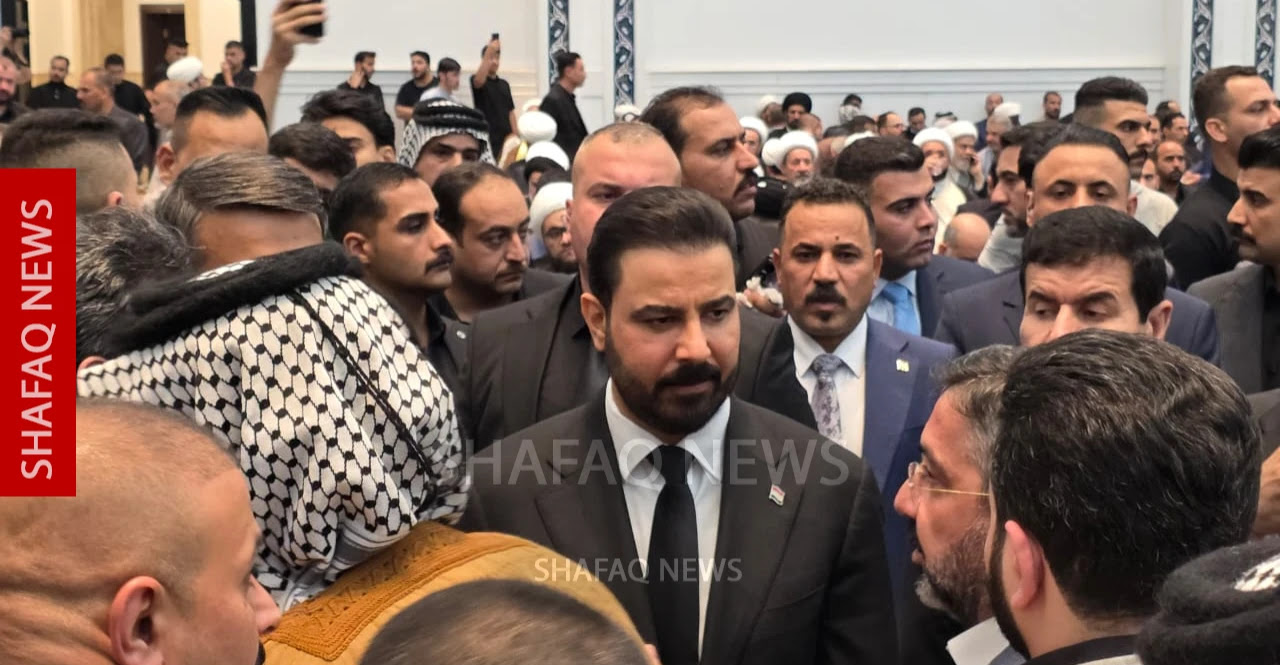
Prime Minister Ali Faleh al-Zaidi confirmed on Wednesday that the Iraqi government is proceeding with restricting weapons to the state.
Al-Zaydi said in a statement received by Shafaq News Agency, on the anniversary of ISIS elements entering Mosul, that “the government is proceeding steadily in consolidating security and stability, strengthening Iraq’s sovereignty and protecting its independent national decision, confining weapons to the hands of the state, and continuing the path of construction, reconstruction, reform and comprehensive development, in order to achieve the aspirations of our people for a strong and capable state that provides a decent life and promising opportunities for its citizens.”
The Prime Minister expressed his "appreciation for the national positions of the political forces supporting the path of stability, reform and development, which strengthens unity and national decision-making, and contributes to consolidating the foundations of the state and building the future of Iraq."
The Coordination Framework had previously authorized Prime Minister Ali al-Zaidi to take the necessary measures to preserve the country’s higher interests, while supporting the project to restrict weapons to the state and to separate the Popular Mobilization Forces from political, partisan and social frameworks.
This path was reinforced after al-Sadr announced the disassociation of the “Peace Brigades” from the Shiite national movement and their affiliation with the state, and his call for other factions to move away from partisan and sectarian frameworks and to come under the authority of the government.
In the same context, Asaib Ahl al-Haq announced the formation of a central committee to begin procedures for disengagement, inventory of personnel, weapons, and vehicles, and to organize the connection with the Commander-in-Chief of the Armed Forces, while the Imam Ali Brigades announced similar procedures that include inventory, handover, transfer, and reintegration of affiliates within state institutions.
Exclusive: Thomas Warrick reveals the behind-the-scenes details of Trump's strategy towards Tehran
Thomas Warrick, a senior fellow at the Atlantic Council and former deputy assistant secretary of the U.S. Department of Homeland Security for counterterrorism policy, revealed on Wednesday evening the behind-the-scenes details of President Trump’s strategic vision toward Tehran, stressing that the current escalation is due to “miscalculations” in dealing with previous crisis stages.
Warrick explained to Shafaq News that President Trump believed the airstrike Washington launched against Iranian military targets—in response to the downing of a US Apache helicopter—would be sufficient to end the escalation and de-escalate tensions. However, the Iranian response defied expectations, launching 21 drone and missile attacks targeting several Gulf Arab states.
Warrick noted that this Iranian move sent a clear message to the White House, indicating that Tehran is adopting a strategy of escalation rather than de-escalation.
According to the former security official, this Iranian behavior led Trump to believe that Tehran was stalling and avoiding reaching a real agreement that would end its nuclear weapons program.
As a result, Warrick concluded that President Trump now believes that "military pressure" is the only remaining tool that might force the Iranian leadership to accept his terms for sitting down at the negotiating table.
This evening, US President Donald Trump held a meeting in the White House Situation Room to discuss options for launching new strikes against Iran, hours after he announced that the United States would strike Tehran "again and very hard today," according to the Axios news website.
The website quoted two American sources as saying that one of the options Trump is considering is to carry out a large-scale, short-term operation aimed at pressuring Iran to change its position in the negotiations, without providing further details.
On Wednesday evening, US President Donald Trump threatened Iran with new and severe attacks, accusing Tehran of "playing dumb" in talks aimed at ending the war in the Middle East. He added in remarks to reporters from the White House that Washington "will strike hard again today, just as we did yesterday."
He also explained that his country wants a "real and effective agreement," stressing that "Iran agreed not to possess nuclear weapons and now they have to sign."
It is worth noting that the United States launched airstrikes on several sites in southern Iran on Tuesday evening, following the US president's confirmation that Tehran had shot down an American Apache helicopter in the Strait of Hormuz, further increasing the doubts surrounding the prospects for peace between the two countries.
In response, Iranian forces launched missiles and drones toward US bases in Kuwait, Bahrain and Jordan, all of which were reportedly shot down and intercepted.
There were also mutual clashes between Israel and Iran from Sunday evening until Monday morning, before both sides announced a halt to the attacks after Trump urged both sides to de-escalate.
This escalation has further complicated efforts to reach an agreement between Washington and Tehran to end the war that erupted on February 28, 2016, despite the US president repeatedly stating over the past period that an agreement was close.
US strikes on Iran begin
Iranian media reported early Thursday that explosions occurred in Hormozgan province in southern Iran, in what they said were caused by US strikes targeting locations in the province overlooking the Strait of Hormuz.
The Iranian news agency Mehr reported that explosions were heard in the city of Sirik in Hormozgan province, while other Iranian media outlets reported attacks in southern regions of the country, coinciding with the sound of explosions on Kish Island.
Media reports also indicated that air defense activity was heard in the west of the capital, Tehran, in addition to the activation of air defenses at the Asaluyeh Petrochemical Complex in Bushehr, without an immediate official tally regarding the nature of the targets or the extent of the damage.
The Iranian news agency Tasnim quoted a military source as saying that Iranian forces "remain on full alert."
In Israel, Channel 12 reported that the Israeli army raised its alert level in preparation for the possibility of renewed fighting with Iran.
These developments come hours after US President Donald Trump threatened new strikes against Iran, saying the United States would attack Tehran "very hard" if a peace agreement is not reached.
US Defense Secretary Pete Hegseth also announced that his country would bomb "key facilities" in Iran.
This comes a day after the US carried out strikes on Iranian air defense sites, control stations and surveillance radars near the Strait of Hormuz, an operation described as a response to the downing of the US helicopter and the targeting of forces and commercial shipping in the region.

No comments:
Post a Comment