Digital Banking License in Iraq
Dr. Nabil Rahim Al-Abadi

Having worked in various banks and having witnessed firsthand the daily operations of electronic payment channels, ATMs, and back-office banking systems, I can confidently say that the Central Bank of Iraq's decision to issue licenses for fully digital banks is unlike any previous decision. This is not merely an administrative adjustment to the licensing landscape; it is a complete redefinition of the nature of banking in Iraq.
The video for this My FX Buddies Blog is below here:
Throughout my career, I've progressed from traditional payment systems that relied on manual data entry in core banking systems, to the era of network connectivity and the widespread adoption of ATMs—a stage academically termed digitization, meaning the conversion of paper records to electronic format. Following this, we entered the digitalization phase when banks began linking their services, and customers transitioned from visiting branches to using mobile applications for money transfers or inquiries. However, as every experienced banking operations manager knows, these two phases still retain the "branch mentality"—there's always a manual back-end account, an auditing officer, and a branch that maintains the documentation.
What the central bank is doing now, under the umbrella of the reform plan implemented by Oliver Wyman, is moving the sector into its third, radical phase: true digital transformation. Here, we are no longer talking about a bank with branches offering electronic services, but rather a complete banking entity emerging without branches, without physical vaults, and without the paper archives that have burdened operations for years. This digital entity will become a direct replacement for the banks that will exit the market after the reform plan is implemented. And that is the crux of the matter.
Regarding the challenges, the biggest one isn't technology, but rather the banking mindset. The most serious obstacle to implementing this project is attempting to manage the new digital bank with the mindset of a traditional branch manager. Digital banking requires staff who understand that banking products are designed based on the customer's mobile journey, not on the branch's location or interface. This explains why the training workshops target operations managers, payments managers, and branch managers simultaneously—because everyone needs to understand that their role will fundamentally change.
Granting a license to a digital bank is not merely a paperwork approval; it is a complex national project requiring meticulous management of its scope, a timeline that ensures a smooth transition for customers from withdrawing banks, and skillful management of reputational risks should the service be disrupted, even for a single hour, after launch. The Iraqi citizen, accustomed to receiving their salary from a branch employee, should not feel for a moment that their money is at risk when it suddenly shifts to an electronic application. This is where the role of financial literacy managers, whom you are targeting to fulfill this national duty, comes in.
In my estimation, the new digital bank that will obtain this license will not be merely a second choice, but will excel in several areas. It will offer smaller, faster lending products through artificial intelligence algorithms that learn from customer financial behavior instead of requiring guarantors and paper guarantees. It will also provide a mobile payment service that surpasses any existing traditional wallet, all with significantly lower operating costs. In conclusion, this step is an implicit acknowledgment by the Central Bank that the future of banking lies not in opening new branches, but in engineering purely digital financial systems. And, based on my experience within the banking and financial institutions, I affirm that the success of this new entity hinges on the extent to which our banking staff grasp the tools for managing digital transformation and project management.
Government measures to limit exchange rate volatility

The dollar exchange rate in local markets continued to fluctuate between rising and remaining stable, amid anticipation from economic circles of any financial or political changes that might affect market activity. Meanwhile, economic experts and specialists expressed their confidence that the new measures taken by the government and the central bank would contribute to its stability, attributing the fluctuation in the exchange rate to several reasons, including geopolitical tensions in the region.
Order size
Professor of International Economics, Nawwar Al-Saadi, stated that the most prominent reasons for exchange rate fluctuations are the disparity between the demand for and supply of dollars in the local market, in addition to the impact of foreign remittances and import financing. He explained that any tightening or delay in transfer procedures through official channels pushes some traders to resort to the parallel market, which creates pressures. Additional to the exchange rate.
Al-Saadi added, in an interview with Al-Sabah, that speculation and rumors play an influential role in shaping traders’ expectations, in addition to some smuggling operations and taking advantage of price differences between the official and parallel markets, noting that regional and international variables and global monetary policies are indirectly reflected in the movement of the dollar within Iraq.
Al-Saadi pointed out that achieving sustainable stability in the exchange rate requires enhancing the efficiency of the banking sector and expanding official channels to meet the real demand for the dollar, as well as continuing measures aimed at reducing speculation and illegal activities and narrowing the gap between the official rate and the parallel market rate.
noticeable fluctuation
For his part, academic economist Dr. Ahmed Al-Majidi attributed the fluctuation in the dollar exchange rate to a set of overlapping factors, and praised the measures taken by the government and the central bank, which clearly contributed to controlling the exchange market and reducing speculation.
Al-Majidi added to Al-Sabah that the Central Bank has tightened its control over the currency sales window and the regulation of foreign transfer operations, in addition to enhancing compliance with international standards regarding combating money laundering and the financing of terrorism, stressing that the government measures have contributed to improving the flow of dollars through official channels and reducing reliance on the parallel market.
Relative stability
As for his expectations for the next stage, he predicted that exchange rates would remain within the current levels if the current policies continue, with the possibility of achieving a further gradual decline, noting that the return of the exchange rate to its previous levels before the regional crises remains dependent on several factors, including the stability of the geopolitical situation, the continuation of fiscal and monetary discipline, and the effectiveness of market oversight.
He noted that the recent measures taken by the government and the central bank have played a pivotal role in controlling exchange rates, although challenges remain in light of the changing circumstances. Regional and international.
economic recession
Economic researcher Haider Al-Sheikh believes that the fluctuation in the exchange rate of the dollar against the Iraqi dinar does not mean a decrease in exchange rates, explaining that prices will remain as they are for a period of time.
Sheikh told Al-Sabah that the market and commercial activity in Iraq are almost at a standstill as a result of the repercussions of the Middle East events and the public’s fear of buying and maintaining cash liquidity, noting that in light of the stability of the region and the reopening of the Strait of Hormuz to commercial ships and oil tankers, there will be activity in the market and an increase in demand for foreign currency.
weak demand
For his part, economic expert Dirgham Muhammad Ali attributed the weak demand for the dollar to the decline in trade and import demand for the dollar due to the recession and weak trade exchange with countries with which the trader deals in dollars, in addition to the near-complete cessation of tourism and travel, which weakened the levels of demand for the dollar.
Ali added, in an interview with Al-Sabah: “Most of the demand was for commercial contracts, and tourism bookings are often made in dollars. Due to the war conditions, demand for dollars is decreasing, which reduces the pressure on its price.”
Dollar distribution mechanisms
Meanwhile, economic researcher Ahmed Eid believes that the market is still facing a gap resulting from high demand for dollars outside official channels, especially for import, trade, foreign transfers and savings purposes, explaining that the problem is not related to a shortage of dollar liquidity as much as it is related to the mechanisms for distributing dollars and regulating their access to the real beneficiaries.
Eid added to Al-Sabah that regional tensions related to trade and energy routes are now directly affecting market behavior, pushing some traders and citizens to increase their hedging demand for the dollar, which is reflected in price levels in the parallel market.
He pointed out that the continued difference between the official and parallel prices and the fluctuation of prices between rising and remaining stable indicates that monetary measures alone may not be sufficient to achieve complete stability, unless they are accompanied by greater facilities for financing foreign trade and reducing reliance on the informal market.
He predicted that exchange rates would remain at their current levels during the next phase if the central bank continues to cover commercial demand and oil revenues return to stable levels, but he warned that the market would remain vulnerable to any sudden political or financial developments within Iraq or in the region.
Government Adviser: 2027 Budget Will Strengthen Fiscal Sustainability
Financial adviser to the Prime Minister, Mudhhir Mohammed Salih, said on Monday that Iraq’s 2027 federal budget is being prepared with a reform-oriented vision aimed at enhancing fiscal sustainability and supporting economic reform, despite delays in its approval.
Salih explained that Iraq’s fiscal policy continues to be administered under the provisions of the Federal Financial Management Law No. 6 of 2019, particularly Article 13, which regulates public spending when the federal budget law has not yet been enacted. Under this provision, the Ministry of Finance is authorized to allocate monthly spending equivalent to one-twelfth of the previous year’s actual current expenditures, excluding non-recurring expenses, to ensure the continuity of government operations.
He noted that this mechanism has enabled the state to meet essential obligations, including salaries, wages, pensions, social protection benefits, and operational expenditures necessary for maintaining public services. The same provision also allows continued financing of ongoing investment projects based on actual completion rates or delivered work, subject to available liquidity and anticipated allocations in the forthcoming budget.
According to Salih, Iraq’s public finances faced exceptional challenges in 2026 due to geopolitical and regional developments that disrupted global energy markets, supply chains, and international trade. These factors directly affected oil revenues, which remain the country’s primary source of public income, increasing pressure on the government’s ability to finance both operational and investment spending.
He stated that these circumstances prompted the government and the Ministry of Finance to prepare the 2027 budget within a broader reform framework designed to preserve fiscal sustainability and macroeconomic stability.
The adviser indicated that the upcoming budget will prioritize improving the efficiency of public resource management, rationalizing operational expenditures, safeguarding social spending for vulnerable groups, and directing resources toward investment projects with strong economic and developmental returns.
Other key priorities include diversifying public revenue sources, reducing dependence on oil income, supporting financial and administrative reform programs, expanding government digitalization efforts, and strengthening the national economy’s resilience against external shocks to ensure medium- and long-term financial stability.
Salih added that these objectives are aligned with Iraq’s national financial strategy, public financial management reform programs, and the goals of Iraq Vision 2035, which seeks to build a diversified and sustainable economy capable of achieving comprehensive growth and development while reinforcing the country’s fiscal resilience in the face of regional and international challenges.
Investing in Iraq: Moves to strengthen partnerships and transform the country into a platform for economic exchange

Three main messages summarized the Iraqi presence at the Geneva Economic Forum: Geography is an asset, crises can be turned into stability, and the private sector needs international protection. The head of the Federation of Chambers of Commerce, Amer Al-Fahdawi, emphasized to the Swiss and Arab side that Iraq’s current qualifications require an organized international dialogue that paves the way for the flow of capital and the building of smart partnerships that go beyond the traditional frameworks of trade.
The Federation of Iraqi Chambers of Commerce stated in a statement, which was reviewed by (Shafaqna Iraq), that “within the framework of strengthening international trade relations, the President of the Federation of Iraqi Chambers of Commerce, Amer Al-Fahdawi, participated in the opening of the activities of the Arab-Swiss Business Forum.”
He explained that “this forum is organized by the Arab-Swiss Chamber of Commerce and Industry in cooperation with the Union of Arab Chambers and the League of Arab States Mission in Geneva.”
He added that “the forum’s work focuses on analyzing the impact of geopolitical crises on the business environment and vocational education, as well as exploring the role of the private sector and the creative economy in shaping the jobs of the future in light of the rapid developments in artificial intelligence.”
Iraq's location and resources
Al-Fahdawi stressed, during his participation in the session, according to the statement, that “speaking from an Iraqi perspective has great significance, as Iraq is not an observer of what is happening, but rather is at the heart of geopolitical and economic interactions.”
He explained that “Iraq’s geographical location, its wealth, its Arab depth, and its trade connections with the world make it quickly affected by any disturbances in the region, but at the same time make it capable of being part of the solution and economic stability.”
He pointed out that “the economic reality requires organized work on several fronts, including enhancing the flexibility of the private sector, protecting workers, developing skills, building international partnerships, and working to transform Iraq into a platform for economic communication with the world.”
He pointed out that “the current stage requires a mechanism for dialogue and joint work between Arab and international chambers of commerce to monitor the impact of crises on companies and the labor market, enhance cooperation, and build new economic bridges with international economic institutions in order to strengthen the Iraqi economic situation and increase the flow of investments into the Iraqi market, given the diverse economic assets that Iraq possesses, which require highlighting them through international institutions.”
An expert warns: Delaying the completion of the cabinet threatens governmental confusion and weakens decision-making.
Political expert Mahmoud Al-Hashemi warned of the repercussions of the continued delay in resolving the issue of the ministerial cabinet, stressing that leaving portfolios vacant for a long period leads to clear confusion in government performance and affects the efficiency of state institutions.
Al-Hashemi said in a press statement that continuing to work with an incomplete cabinet negatively impacts the implementation of the government program, due to the lack of decisiveness in a number of sovereign and service ministries, which necessitates relying on temporary alternatives that lack full decision-making powers.
He added that the continued management of some ministries by acting or temporary appointment weakens the effectiveness of government decisions and delays the response to the economic and service challenges facing the country.
He pointed out that the repercussions of this delay are not limited to administrative aspects only, but extend to affect the public’s confidence in government institutions, explaining that the citizen evaluates performance through the services provided and the general stability, and that any ministerial vacuum is quickly reflected in the level of confidence.
Al-Hashemi explained that the continued political disputes over the distribution of ministerial portfolios are hindering the launch of strategic projects and leading to the freezing of a number of investment and administrative reform files, noting that some vital ministries are directly affected in the absence of the original minister.
He concluded by stressing the need to expedite the resolution of the cabinet formation issue and to prioritize the requirements of state administration over political calculations, warning that any further delay would exacerbate the political and economic costs to state institutions.
Al-Zidi's visit to Washington: A government move towards economic openness

Al-Zaidi's visit to Washington represents an important milestone for testing the government's ability to balance economic issues and political pressures, as it seeks to attract investments and reposition Iraq regionally.
The announcement of the visit came during a meeting between Al-Zaidi and businessmen and representatives of the private sector and local banks, where he confirmed that the delegation would include economic figures with the aim of expanding mutual investment opportunities and economic partnerships between the two countries.
The visit is of particular importance as it is al-Zidi's first to Washington since assuming the premiership, and it comes months after an official invitation extended to him by US President Donald Trump following his appointment to form the government, when he spoke of a "new chapter" in relations between the two countries.
The visit also coincides with a period in which Baghdad is undergoing transformations on both the security and political levels, most notably the project to restrict weapons to the state and restructure armed factions, as well as the repercussions of regional tensions and the recent war between Iran and Israel and the economic and security challenges it has left for Iraq.
Messages that go beyond economics
For his part, Iraqi political affairs expert Majashaa Al-Tamimi said that “Al-Zaidi’s visit to Washington, accompanied by businessmen, has political dimensions that go beyond the direct economic aspect, especially since it comes at a stage that is witnessing the redrawing of many balances within the region.”
Al-Tamimi added that “through this visit, the Iraqi government is trying to present itself as a partner capable of building balanced relations with the United States without engaging in the politics of axes, and it also seeks to show that Iraq is open to investments and international partnerships according to the logic of common interests.”
He explained that “bringing businessmen along gives the visit a practical dimension and sends a message to the inside and outside that the government wants to move from traditional political discourse to focusing on the economy, development and job opportunities,” noting that “the visit also shows Baghdad’s desire to strengthen its regional and international position through stable relations with Washington.”
According to economists, the visit comes at an important time for Iraq, as it coincides with ongoing American pressure regarding the issue of armed factions and Iranian influence, as well as Baghdad’s need for economic and investment support to help it overcome the challenges imposed by the recent regional turmoil.
Partnerships and investments
On the economic side, the government affirms that the next phase will witness the launch of a development fund with substantial capital and participation from the central bank, in addition to plans to finance new productive and industrial projects aimed at diversifying the economy and reducing dependence on oil.
The anticipated visit coincided with one of the most difficult financial crises that Iraq has faced in recent years, following the disruption of oil export routes through the Strait of Hormuz and the accompanying disruption to oil revenues, which represent the backbone of the general budget.
Faced with this reality, Baghdad began searching for new funding sources through the World Bank and international lending institutions, in parallel with efforts to attract American and Western investments, in an attempt to mitigate the effects of the crisis and provide additional sources of support for the Iraqi economy.
Iraq is a promising market in energy, industry, housing, and infrastructure.
In this context, economic researcher Sarmad Al-Shammari said that “the visit represents an important opportunity for Iraq to reintroduce itself to American and international investors as a promising market with great opportunities in the energy, industry, housing and infrastructure sectors.”
He added that “the participation of businessmen in the government delegation gives the visit a clear economic character, because the government seeks to transform political relations with Washington into real investment partnerships that will be reflected in the local economy.”
He explained that “Iraq needs billions of dollars in investments in multiple sectors in the coming years, and it also needs the transfer of technology and administrative and industrial expertise, which makes the United States an important partner at this stage.”
He pointed out that “the success of the visit will be measured by the government’s ability to transform meetings and agreements into actual projects that provide job opportunities, support the private sector, and contribute to diversifying sources of income.”
The recent war has had direct repercussions on the investment environment in Iraq, after several foreign companies left or reduced their field presence, particularly in the oil, energy and services sectors.
Amid arms control and regional tensions, al-Zaidi outlines Iraq's future in Washington.
Political and economic circles are turning their attention to the upcoming visit of Iraqi Prime Minister Ali al-Zaidi to the United States , considering it the first major foreign test for his government, and a dual message concerning the future of the Iraqi economy on the one hand, and the political positioning of Baghdad amidst the region’s conflicts on the other.
The announcement of the visit came during a meeting between Al-Zaidi and businessmen and representatives of the private sector and local banks, where he confirmed that the delegation would include economic figures with the aim of expanding mutual investment opportunities and economic partnerships between the two countries.
The visit is of particular importance as it is al-Zidi's first to Washington since assuming the premiership, and it comes months after an official invitation extended to him by US President Donald Trump following his appointment to form the government, when he spoke of a "new chapter" in relations between the two countries.
The visit also coincides with a period in which Baghdad is undergoing transformations on both the security and political levels, most notably the project to restrict weapons to the state and restructure armed factions, as well as the repercussions of regional tensions and the recent war between Iran and Israel and the economic and security challenges it has left for Iraq.
Messages that go beyond economics
For his part, Iraqi political affairs expert Majashaa Al-Tamimi said that “Al-Zaidi’s visit to Washington, accompanied by businessmen, has political dimensions that go beyond the direct economic aspect, especially since it comes at a stage that is witnessing the redrawing of many balances within the region.”
Al-Tamimi added to “Eram News” that “the Iraqi government is trying through this visit to present itself as a partner capable of building balanced relations with the United States without engaging in the politics of axes, and it also seeks to show that Iraq is open to investments and international partnerships according to the logic of common interests.”
He explained that “bringing businessmen along gives the visit a practical dimension and sends a message to the inside and outside that the government wants to move from traditional political discourse to focusing on the economy, development and job opportunities,” noting that “the visit also reflects Baghdad’s desire to strengthen its regional and international position through stable relations with Washington.”
According to economists, the visit comes at an important time for Iraq, as it coincides with ongoing American pressure regarding the issue of armed factions and Iranian influence, as well as Baghdad’s need for economic and investment support to help it overcome the challenges imposed by recent regional turmoil.
artnerships and investments
On the economic side, the government affirms that the next phase will witness the launch of a development fund with substantial capital and participation from the central bank, in addition to plans to finance new productive and industrial projects aimed at diversifying the economy and reducing dependence on oil.
The anticipated visit coincided with one of the most difficult financial crises that Iraq has faced in recent years, following the disruption of oil export routes through the Strait of Hormuz and the accompanying disruption to oil revenues, which represent the backbone of the general budget.
Faced with this reality, Baghdad began searching for new funding sources through the World Bank and international lending institutions, in parallel with efforts to attract American and Western investments, in an attempt to mitigate the effects of the crisis and provide additional sources of support for the Iraqi economy.
In this context, economic researcher Sarmad Al-Shammari said that "the visit represents an important opportunity for Iraq to reintroduce itself to American and international investors as a promising market with great opportunities in the energy, industry, housing and infrastructure sectors."
He added to “Eram News” that “the participation of businessmen in the government delegation gives the visit a clear economic character, because the government seeks to transform political relations with Washington into real investment partnerships that will be reflected in the local economy.”
He explained that "Iraq needs billions of dollars in investments in multiple sectors in the coming years, and it also needs the transfer of technology and administrative and industrial expertise, which makes the United States an important partner at this stage."
He pointed out that "the success of the visit will be measured by the government's ability to transform meetings and agreements into actual projects that provide job opportunities, support the private sector, and contribute to diversifying sources of income."
The recent war has had direct repercussions on the investment environment in Iraq, after several foreign companies left or reduced their field presence, particularly in the oil, energy and services sectors.
Want to Support My FX Buddies?
 Thanks
Support My FX Buddies
BuyMeACoffee CashApp:$tishwash
https://paypal.me/tishwash

.jpeg)
Parliamentary warning: Political disputes threaten the session to complete the government cabinet.
link
MP Kamel Aneid Al-Akeeli confirmed today, Monday, that the political deadlock that is hindering the completion of voting on the remaining government formation is due to a set of intertwined factors, foremost among them the conflict of political components, disagreements over the criteria of competence in selecting candidates, as well as the generational conflict within some political blocs and parties.
Al-Akeeli told Al-Maalouma that “the current crisis is not related to one file or a specific political entity, but rather it is the result of multiple accumulations and disagreements related to the mechanisms for selecting candidates and distributing positions, in addition to differences within the blocs themselves regarding the names proposed to fill the vacant portfolios.”
He added that “the continuation of political disputes between the components will directly affect the chances of passing the remaining names during the upcoming sessions.”
Al-Akeeli pointed out that there is an ongoing debate about the criteria for selecting technocratic figures, as some political forces still disagree on the concept of competence and the mechanisms for applying it to candidates,” indicating that “resolving this issue is a fundamental step to overcome the current deadlock.”
Al-Akeeli explained that “the next session may face the same obstacles that previous sessions faced if real political understandings are not reached before it is held,” noting that “the success of any future session depends on the existence of prior agreements that guarantee reducing points of disagreement and reaching acceptable settlements between the political parties.”
The political arena is currently witnessing intense activity aimed at bridging the gaps between the various blocs, paving the way for fulfilling constitutional requirements and resolving outstanding issues that have delayed the appointment of several key officials and decisions.
Rixos Baghdad: A complete lifestyle in one destination

In an era where cities are developing destinations that reflect their economic dynamism and keep pace with modern lifestyles, mixed-use projects are becoming increasingly important as a key feature of contemporary development. These projects are not simply about bringing together different facilities in one location; rather, they are about developing a daily lifestyle that integrates living, working, leisure, and social interaction into a comprehensive experience, akin to a "city within a city."
Today, Baghdad is preparing to host one of the most prominent projects that embody this trend, with the Rixos Baghdad Hotel and Apartments, which offers the first experience of internationally branded residences in Iraq, within a project that includes luxury housing, international hospitality, recreational facilities, and daily services, according to the concept of the "Integrated Lifestyle Ecosystem ".
From a traditional hotel to an integrated hotel complex
Rixos Baghdad, with its comprehensive operating model, transcends the traditional hotel concept based on separate facilities performing specific functions, where luxury is linked to opulence and quality of design, as much as it is linked to a lifestyle based to the same degree on comfort, efficiency of the daily experience, and easy access to various services and facilities within one connected destination.
The project was designed to reduce time, effort, and constant commuting by bringing together the various needs of residents and visitors, allowing easy movement between accommodation, work, restaurants, sports and health facilities, shopping, and entertainment, without having to leave, within an escalating global model in which the quality of experience and ease of access to daily needs have become an essential part of the modern concept of well-being.
To achieve this, the project includes luxury apartments, private villas, and hotel rooms, along with five international restaurants and cafes, a health and fitness club, and sports facilities including padel, tennis, and swimming pools, in addition to a shopping mall that serves as a central hub for activity and services within the project. All these facilities and services function as interconnected parts within a single system, where each element complements the others in perfect harmony.
This system reflects Rixos' globally renowned philosophy of offering a luxury resort lifestyle, where hospitality is integrated with everyday experiences, social activities, and facilities designed for interaction and connection within a cohesive environment. This embodies a service culture focused on quality of experience and attention to detail, while also providing a vibrant atmosphere that fosters social interaction and makes the resort a natural part of the daily lives of residents and visitors.
Thus, the experience at Rixos Baghdad is not limited to simply using the facilities and services, but rather constitutes an integrated lifestyle, in which residents and visitors feel that the place has become a natural extension of the details of their daily lives, and part of the social and professional circle within which their relationships and experiences move, thus enhancing their sense of belonging to it; as if it were the city whose pulse they live every day, and the home to which they always return.
Global operation that supports quality and long-term sustainability
In addition, Rixos Baghdad is based on a global operating system led by Accor, one of the world’s largest hospitality groups, which manages more than 5,600 hotels within a portfolio of more than 850,000 rooms and more than 45 international hotel brands.
The presence of this global operator is a pivotal element in managing the daily experience within the project, by standardizing the standards of operation, services and hospitality according to advanced international standards, thus ensuring the continuity of quality and maintaining the level of experience in the long term.
This model also enhances the sustainability of demand and maintains the long-term value of the project, at a time when internationally branded residential units depend primarily on the strength and operational experience of the operator, as these are among the most important factors that give this type of project its appeal and stability.
The Rixos Baghdad Hotel and Apartments project reflects a broader shift in the nature of projects that are shaping modern cities, keeping pace with rapid changes in lifestyle, and contributing to the formation of economic and social centers of attraction that are more in line with the requirements of contemporary life.
The coordinating framework announces its support for Al-Zidi's economic vision and affirms: a movement to prepare a national paper and complete the cabinet.
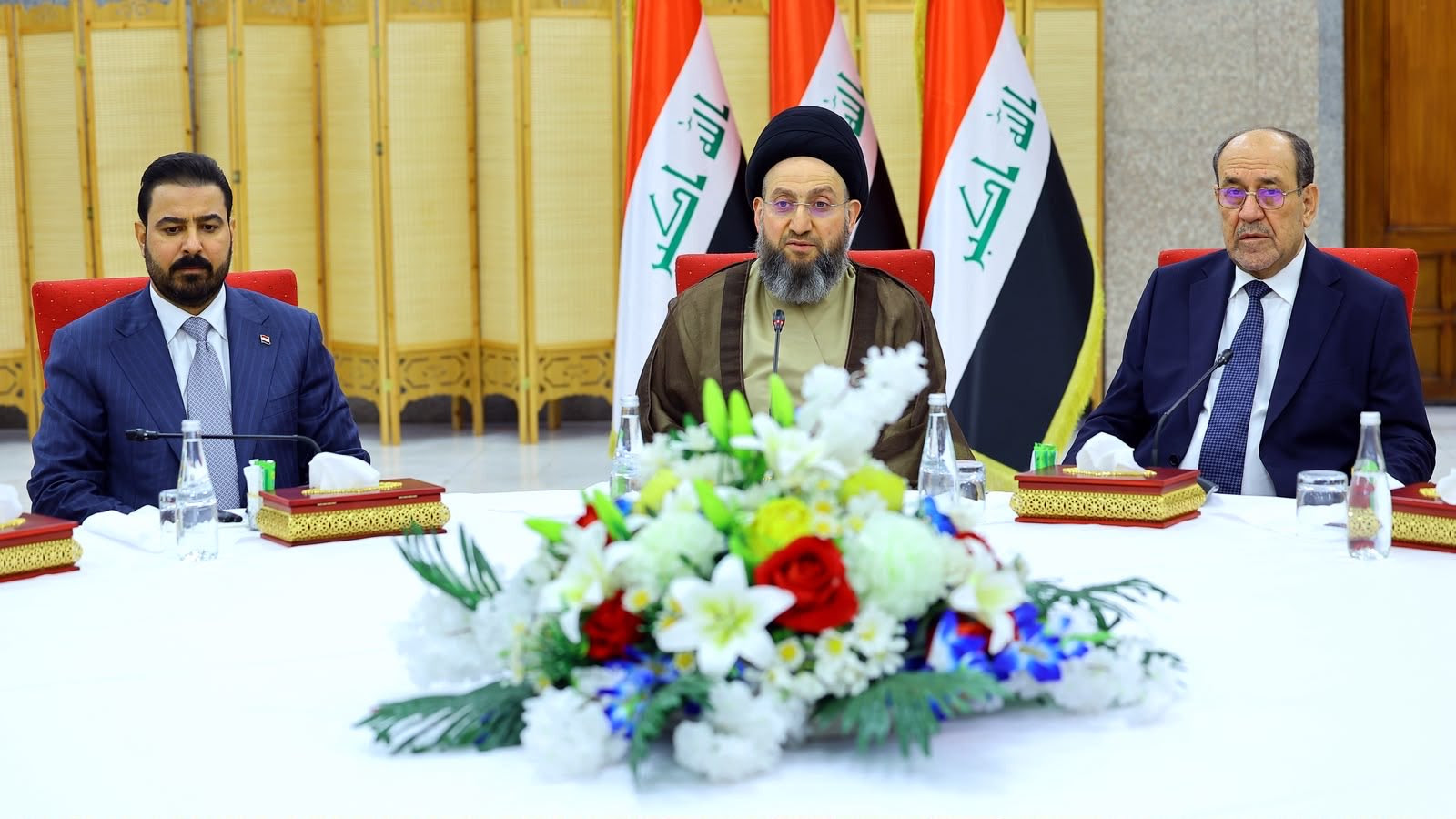
The Coordination Framework held its periodic meeting at the office of the head of the National Wisdom Movement, Mr. Ammar al-Hakim, in the presence of the Prime Minister, Mr. Ali Falih al-Zaidi, to discuss all the political, economic and service files included on the agenda.

A statement issued by the media office of the Coordination Framework, received by the Iraq Observer Agency, stated that the attendees discussed government affairs extensively, with the Prime Minister presenting a comprehensive vision for addressing the emergency economic crisis, reviewing a number of solutions that received the support and endorsement of the Coordination Framework forces, particularly the urgent proposals for addressing the electricity crisis and activating labor and social security laws in support of the private sector and the working class.

The statement added that the assembled forces
agreed to prepare a unified paper called the Coordination Framework, which includes the most important national issues to be presented and discussed within the State Administration Coalition to reach an agreement on them, while emphasizing that all political forces stand behind the government in parliament, politically and in the media to ensure the success of its reform program, as well as agreeing on the need to expedite the completion of the cabinet as soon as possible.
The head of the Federation of Chambers of Commerce calls for international partnerships to boost investment in Iraq.

The head of the Federation of Iraqi Chambers of Commerce, Amer Al-Fahdawi, called for building international partnerships to boost investment in Iraq.
The Federation stated in a press release that Al-Fahdawi participated in the opening of the Arab-Swiss Business Forum. The statement explained that the forum was organized by the Arab-Swiss Chamber of Commerce and Industry in cooperation with the Union of Arab Chambers and the League of Arab States Mission in Geneva.
It further explained that the forum's activities focused on analyzing the impact of geopolitical crises on the business environment and vocational education, in addition to exploring the role of the private sector and the creative economy in shaping future jobs in light of the rapid developments in artificial intelligence.
According to the statement, Al-Fahdawi emphasized during his participation in the session that speaking from an Iraqi perspective is particularly significant, as Iraq is not merely an observer of events but is at the heart of geopolitical and economic interactions. He pointed out that Iraq's geographical location, its resources, its deep Arab roots, and its trade connections with the world make it highly susceptible to any regional instability, but at the same time enable it to be part of the solution and contribute to economic stability.
He explained, "The economic reality necessitates organized work on several fronts, including strengthening the resilience of the private sector, protecting workers, developing skills, building international partnerships, and working to transform Iraq into a platform for economic engagement with the world."
He pointed out, "The current phase requires a mechanism for dialogue and joint action between Arab and international chambers of commerce to monitor the impact of crises on companies and the labor market, enhance cooperation, and build new economic bridges with international economic institutions. This aims to bolster the Iraqi economy and increase the flow of investments into the Iraqi market, given Iraq's diverse economic potential, which requires highlighting through international institutions."
Tensions escalate between Pezeshkian's government and the official media in Iran
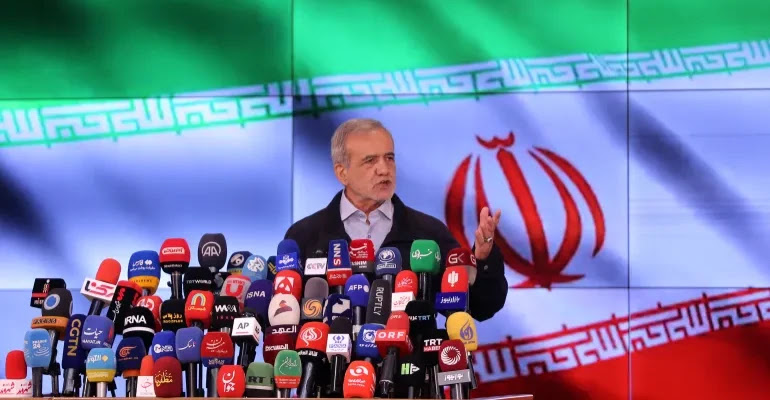
Zahra Behrouz Azar, the Iranian president’s assistant for women and family affairs, criticized the official Iranian broadcasting organization “Islamic State,” accusing it of obstruction and lack of fairness, following escalating controversy between President Masoud Pezeshkian’s government and the official media apparatus.
Behrouz Azar said in a post on the “X” platform that the Iranian president, whose “belief, words and actions are based on working for the satisfaction of God and the people,” and who always recommends enduring disagreements, if he appears upset in this way, it means that “obstruction and lack of fairness have gone too far.”
She added that it was unfortunate that "Sadawsima" possessed only a small part of the president's concern for Iran and the lives of all Iranian citizens.
Behrouz Azar’s stance comes after growing criticism within Pezeshkian’s inner circle of what the government considers unfair coverage by the official media, at a time when the Iranian administration is facing mounting economic and living pressures, along with internal political disputes over the management of public affairs.
The Iranian Broadcasting and Television Organization enjoys a special position within the structure of the political system in Iran, as it is not directly subject to the government, which in the past has made it an arena of tension between successive governments and conservative and reformist political currents.
The Ansar Allah movement (Houthis) announced on Monday that it had carried out a missile attack targeting sensitive Israeli targets in Jaffa, confirming that the missiles accurately hit their targets.
The movement said in a statement that the operation "came as a response to Israeli and American aggression and in support of the axis of resistance in Palestine, Lebanon, Iran, Iraq and Yemen."
The movement also announced a complete ban on Israeli navigation in the Red Sea, stressing that it would consider all Israeli movements as military targets from the moment the statement was issued.
Qaani praises the Yemeni move and hints at the intervention of other parties and a new "security belt".
Qaani said in a post followed by Shafaq News Agency, “The timely and strong action by heroic Yemen demonstrates the intelligence of the resistance front, and if necessary, others will come as well.”
He added that "a new belt of resistance will be from the Strait of Hormuz to Bab al-Mandab and from the Persian Gulf to the Red Sea."
Qaani explained that "the evil acts by Israel and America in this region will lead to a reaction from the unified resistance front."
The commander of the Quds Force addressed America and Israel, saying: "The fighters without borders are aware of your crossing points. Continue your aggression, and they will seize you by the neck."
This comes at a time when US President Donald Trump has issued a warning to Israeli Prime Minister Benjamin Netanyahu, stressing that Netanyahu will be left alone in the event of "escalation" with Iran.
The Israeli Broadcasting Authority quoted an Israeli official as saying that "the army will stop firing in Iran but not in southern Lebanon," indicating that "attacks on southern Lebanon will continue."
Meanwhile, the official Israeli radio quoted a senior official as saying, "If Hezbollah continues to bomb Israeli towns, we will continue to bomb targets throughout Lebanon."
Earlier today, the Iranian Khatam al-Anbiya headquarters announced a halt to military operations against Israel, stressing that if attacks continue, especially in southern Lebanon, Tehran's response will be "more forceful".
I found the video:
France Returns to Gold: A New Coin to Attract Investors and Compete with the Giants
“Our ambition is big. We aim to create a transformation in the French gold market. We are talking about changing this market,” said officials. “Our goal is to position the Paris Mint as a leading public player in the field of investment gold.”
This launch comes at a time when gold is seeing increasing global demand as a safe haven amid ongoing economic volatility and rising interest in value-preserving assets. This strengthens investors’ orientation toward instruments directly linked to gold prices in global markets.
In reality, the issuance of this new French coin is considered a landmark move — especially at a very sensitive time for the French economy. While it may not fully restore France’s historical role, it is a highly symbolic issuance. Featuring the image of Marianne on the coin responds to investor demand. It is both an investment product for financial markets and a sovereign product for the French market.
France is betting on this step to enter a highly competitive and sensitive market dominated by major gold investment coins. Through this product, which combines material value and ease of trading, France is attempting to rebuild its presence on the global gold map.What is happening is not just about launching a coin, but rather transforming gold into an economic tool to attract investors again — at a time when the rules of trust are changing in global markets.

No comments:
Post a Comment