The Central Bank clarifies regarding printing money: it leads to inflation and erodes the currency's value and is prohibited under the Bank's law.

The Central Bank of Iraq issued a statement on Sunday regarding "currency printing" and the financing of public expenditures.
A statement from the bank indicated that, "In light of the discussions surrounding the issue of printing currency and financing public expenditures, the Central Bank of Iraq wishes to clarify the following:
The video for this My FX Buddies Blog post is below here:
First, there is a fundamental and important difference between 'discounting treasury bills' and 'printing currency' on both technical and economic levels. Discounting bills provides temporary liquidity against an existing government debt instrument, which is repaid upon maturity. This is an internationally recognized financial mechanism practiced by major central banks with strict adherence to maturity dates. 'Printing currency,' on the other hand, is the issuance of new money without backing, which is injected directly into the economy. This leads to direct inflation and erosion of the currency's value. Furthermore, it is not repaid and represents a permanent monetary burden. This is strictly prohibited under the Central Bank of Iraq Law No. (56) of 2004. Therefore, the simplistic description of the current operations as 'printing currency' does not reflect their true technical and financial nature.
Second, the Central Bank of Iraq affirms that its primary role is to manage monetary policy, maintain monetary and price stability, and ensure the integrity of the financial system, not to act as a conduit for..." The Central Bank of Iraq affirms that it will continue to use certain financial and monetary tools in exceptional circumstances, in a controlled manner and in accordance with the requirements of the national economy, while taking utmost care to prevent financial pressures from escalating into permanent monetary expansion or inflationary pressures that would negatively impact citizens' purchasing power.
Third, the Central Bank emphasizes that monetary management is conducted according to precise and rigorous controls within the framework of the law, and that any operations it undertakes are continuously evaluated to ensure they do not negatively affect the objectives of the established monetary policy.
Fourth, the current circumstances highlight the importance of adopting long-term fiscal policies aimed at building sufficient financial buffers and safeguards to confront economic shocks and volatile oil cycles. This will be achieved through diversifying the economy and revenue sources, and managing public debt with high efficiency to mitigate the impact of future crises and maintain overall economic stability.
The statement added, "In response to media reports on economic matters, the Central Bank affirms its commitment to its strategy of supporting the Iraqi dinar and maintaining monetary and economic stability. Therefore, portraying parts of the Bank's routine procedures in this area as dangerous measures is inaccurate."
He called for "accuracy when dealing with these topics, especially those related to the local currency, its management and issuance mechanisms, and maintaining its value. In this context, we emphasize that the Central Bank has daily procedures regarding the issue of currency management, and these procedures are largely consistent with the bank's ultimate goal of maintaining financial and economic stability."
"The bank didn't announce it": Hussein reveals the printing of 25 trillion Iraqi dinars and warns of a catastrophe.
Iraqi Foreign Minister Fuad Hussein revealed on Saturday that the government has resorted to printing 25 trillion dinars to address the financial crisis, warning that the continuation of the current situation could lead to a "financial catastrophe" in the country, given the decline in revenues related to oil exports.
Hussein said in an interview on the Iraqi channel “Al-Sharqiya” that the continued closure of the Strait of Hormuz threatens to create a severe economic crisis in Iraq, stressing that this matter may affect the government’s ability to secure salaries during the coming period, which he described as “true” if the crisis continues.
He added that the government resorted to printing 25 trillion dinars to confront financial pressures, explaining that this step raised Iraq’s nominal financial capacity to 125 trillion dinars after it had been between 100 and 104 trillion dinars, noting that the Central Bank has not announced this yet.
Hussein stressed that printing money is not a solution to the crisis, but may lead to higher inflation rates and repercussions on market prices and purchasing power, noting that the country was in a relatively better position with regard to inflation before these developments.
He added that salaries are currently being financed by relying on reserves, loans, and internal debt, in the absence of sufficient revenues, noting that the continuation of the war until the end of 2026 may greatly exacerbate the financial crisis.
The minister explained that there are attempts to increase oil exports to between 500,000 and 700,000 barrels, considering that current oil prices are relatively helpful, along with measures related to transporting and exporting oil via tankers, but these solutions, as he put it, are "partial and do not solve the problem."
He pointed to the need to open up to Gulf and Western countries and to request assistance to cope with the current financial circumstances.
The Iraqi economy is almost entirely dependent on oil, which accounts for about 90 to 95% of budget revenues, making any disruption to exports a direct challenge to the government’s ability to finance operating expenses, especially salaries, pensions and social welfare, with a monthly need estimated at about 9 trillion dinars ($6.8 billion).
Experts suggest that the continued halt or decline in exports may push Iraq to rely on part of its foreign reserves, which could affect monetary stability if the crisis lasts for a long time, given the limited reliance on export alternatives or non-oil revenues.
The war between the United States and Israel on one side and Iran on the other has caused an almost complete paralysis of navigation in the Strait of Hormuz, which has led to a decrease in Iraqi exports to less than 800,000 barrels per day and losses estimated at about $128 million per day, according to the “Eco Iraq” Observatory, amid rising shipping and insurance costs and increasing fears of global economic repercussions due to the importance of the strait through which about 20 million barrels of oil pass per day.
Government estimates of the critical financial situation
After Baghdad printed many dinars... Fuad Hussein: We need financial assistance from the Gulf

Foreign Minister Fuad Hussein warned on Saturday (June 6, 2026) of a major financial crisis that will hit the country if the Strait of Hormuz remains closed. He indicated that Baghdad was forced to print 25 trillion dinars to confront the crisis, and also warned that the government will face a major problem in paying employee salaries next month if the situation continues as it is. He stressed that Iraq needs to open up to the Gulf and Western countries “to obtain aid,” as he put it in an interview with journalist Hisham Ali, which was followed by 964 Network .
Hussein said, “If the Strait of Hormuz remains closed, we will face great difficulty in paying employee salaries next month.”
He explained that “the financial capacity was 100 trillion dinars, and now it has become 125 trillion dinars, as we resorted to printing 25 trillion dinars to confront the financial crisis in the country.”
He added that “we cannot solve our problems by printing money, because this increases inflation, which has already risen.”
He explained that “if the war continues until the end of the year, this will be a disaster for us, because there will be no revenue.”
Hussein stressed that Iraq needs to open up to the Gulf and Western countries, so that we can find a way to obtain “aid.”
After printing 25 trillion dinars
Parliamentary Finance Committee: The government will cover the deficit through domestic and foreign borrowing.
The parliamentary finance committee explained that approving the 2026 budget is unlikely given the ongoing work to complete the government program and the cabinet, stressing that the government has very large capabilities to address the deficit through internal or external borrowing or by using the central bank.
Hours before the Finance Committee’s statement, Foreign Minister Fuad Hussein revealed that 25 trillion dinars had been printed due to a shortage of cash liquidity, and warned of a major financial crisis that would hit the country if the Strait of Hormuz remained closed, explaining that Iraq needed to open up to the Gulf States and Western countries “to obtain aid.”
Finance Committee member, Ribwar Karim, told the official newspaper, as reported by 964 Network on Sunday (June 7, 2026), that “this year’s budget will most likely not exist and work will begin on studying the 2027 budget, stressing that securing salaries will not be affected, and that the government has very large capabilities to address the deficit through internal or external borrowing or by using the Central Bank.”
Karim added that “everyone agrees on supporting the government’s efforts in securing salaries and reaching the next budget, indicating that things will be clearer in the next budget with regard to the effects of the Strait of Hormuz and oil prices and expanding revenues, especially after the application of the Customs Tariff Law and the ASYCUDA system, which will provide greater diversity in sources of income.”
Karim explained that the absence of a budget until the middle of the fiscal year is directly related to the government program, especially since the government is still in the process of completing its formation, and the House of Representatives has granted the Prime Minister the necessary confidence and powers. He stressed that the Finance Committee is ready to support the government in facing the economic challenges, whether the 2026 budget is presented or not, indicating that any move to legislate an alternative law similar to the Food Security Law has not been proposed yet, and the matter is left to the request of the government and the Prime Minister’s vision for the next stage.
CBI denies printing money to combat financial crisis
The Central Bank of Iraq said Sunday that "describing treasury bill discount operations as printing money is inaccurate," stressing that such measures are temporary liquidity tools backed by government debt and differ fundamentally from issuing new currency.
DUBAI, United Arab Emirates - The Central Bank of Iraq (CBI) on Sunday denied claims that it had printed money to combat the current financial crisis, clarifying that it instead used treasury bill discounts as a liquidity tool, a day after Foreign Minister Fuad Hussein said Iraq boosted its financial capacity by around 25 trillion dinars.
In a statement, the bank said treasury bill discounts provide temporary liquidity against existing government debt instruments and are repaid upon maturity, adding that “describing treasury bill discount operations as printing money is inaccurate.”
Hussein said Saturday that Baghdad had increased its “financial capacity” from 100 trillion to 125 trillion dinars with cash that “we printed,” to cope with a sharp decline in revenues caused by the Iran war and its impact on oil exports.
The CBI described the treasury bill discount mechanism as an “internationally recognized financial tool used by major central banks.” In contrast, the bank explained that printing money involves issuing new currency without a corresponding asset and injecting it directly into the economy, which can lead to inflation and a decline in the value of the currency.
Treasury bills refer to a practice whereby the central bank allows lenders to buy bills from the government at a discount. At maturity, the loan is paid out at full face value, allowing the lenders to turn a profit due to the difference between the face value and the discount.
The bank added that practices such as printing money with no asset backing are prohibited under Iraq's Central Bank Law No. 56 of 2004.
Hussein said in an interview with Al Sharqiya that the measure was intended to address immediate financial pressures, noting that the CBI had not announced it yet. He warned that “we cannot solve our problems through printing because it would lead to inflation.”
The foreign minister cautioned that Iraq could face a financial “catastrophe” if the US-Iran conflict continues until the end of the year.
Iraq relies on oil revenues for around 90 percent of its annual budget. The majority of the country’s oil exports have been halted however, as a result of the US-Iran war and the closure of the Strait of Hormuz.
The bank said its primary role is to “manage monetary policy, maintain price and monetary stability, and safeguard the financial system, not serve as a permanent source of financing for public spending.”
The Central Bank reaffirmed its commitment to “supporting the Iraqi dinar and maintaining monetary and economic stability,” calling for accurate reporting on issues related to the national currency and its management.
It said routine currency management procedures are fully aligned with its goal of preserving financial and economic stability.
Al-Mashhadani: No new currency will be printed, and liquidity is linked to dollar imports.
Al-Mashhadani explained in a statement to Al-Furat News Agency that: “There is a three-way cycle that manages the movement of liquidity in the country, based on the government selling oil in dollars and transferring it to the Central Bank to finance the salaries of employees in Iraqi dinars, while the Central Bank works to sell dollars to traders to cover imports, which leads to the withdrawal of dinars from the market through commercial transactions, while citizens buy goods in dinars within the local market.”
He pointed out that "this cycle is disrupted when dollar flows resulting from oil exports decline or are interrupted, which prompts the central bank to compensate for the liquidity in dinars in exchange for treasury bonds, remittances, and government bonds," stressing that "this does not mean printing a new currency, but rather injecting liquidity within approved financial instruments."
Al-Mashhadani concluded by saying that "liquidity is still available at the Central Bank, and the monetary process is continuing," while warning of "a dangerous indicator represented by the decline in dollar imports, which may affect market stability if it continues."
Foreign Minister Fuad Hussein stated that the government was forced to print 25 trillion dinars to address the current financial crisis and cover employee salaries, warning of a financial catastrophe if the crisis continues.
The Central Bank of Iraq responded today, Sunday, in a statement clarifying the issue of currency printing, stressing that printing currency is prohibited by law and does not reflect the nature of ongoing operations.
The Central Bank confirmed in a statement that there is no new currency printing process, explaining that what is happening is related to discounting treasury bills as a government debt instrument that provides temporary liquidity that is recovered upon maturity, and it is an internationally recognized financial mechanism that central banks apply within their approved frameworks.
To view the Central Bank's statement, click here
Experts lay out a roadmap for leaving the rentier economy.
Adopting a long-term economic vision is an imperative for Iraq to transition from a rentier economy entirely dependent on oil to a diversified and sustainable productive economy. This transformation requires binding sectoral strategies and major development projects that successive governments continue to implement, with development that is appropriate to emerging developments and challenges during the implementation phases.
Changing the way of thinking
Amer Issa Al-Jawahri, a consultant in development and investment, believes that “real economic reform does not begin with changing faces, but with changing the way of thinking,” indicating the government’s seriousness in carrying out radical reforms that will lift the country’s economy from total dependence on oil to diversifying resources.
In an interview with Al-Sabah, Al-Jawahiri recommended increasing the role and responsibility of the four ministerial councils, expanding their membership to include supporting private sector institutions, and utilizing the participation of private sector stakeholders and specialists in developing plans, policies, and decisions, as well as in monitoring and following up on implementation. He called for the sectoral development councils to have a daily working and monitoring capacity to address all work requirements immediately.
The path of development
Al-Jawahiri urged the adoption of the development road project and the formation of a supreme coordinating body to manage it with broad powers, considering it a major state project with significant international competitiveness and challenges. He stressed the importance of making the productivity of workers and productive and service institutions the basic standard in the work of all institutions, adopting feasibility as the basis for service, restructuring public companies, and ensuring their development and operation in a viable and profitable manner by transforming the productive ones into joint-stock companies.
He also recommended adopting a public-private partnership approach in qualifying, developing, managing, operating and improving the productivity of existing government factories and in establishing major industrial projects in the country, taking into account strict conditions, noting the importance of implementing an industrial city in each governorate.
enacting laws
He pointed to the importance of working on legislation for the “Public-Private Partnership” and the “Micro, Small and Medium Enterprises Law,” and forming the “Micro, Small and Medium Enterprises Authority,” stressing the need to develop the relationship between the university, vocational institutes and research centers in all fields with the labor market and entrepreneurs with ideas and patents to adopt the transformation of their ideas and projects into the production stage.
The consultant in development and investment also recommended changing the components and working mechanism of the boards of directors of public companies to assume their responsibilities in improving performance and achieving profitability for their companies, and including a sector representative from the private activity as a member, according to the activity, while moving to change the principle of separation between management and ownership, so that the boards of directors are freed from the authority of the general manager and addressing this by legislation, stressing the importance of ensuring the authority of the law to implement development and reform procedures smoothly and without hindrance, while organizing a comprehensive education and awareness campaign with the help of the media, and in education on work ethics, increasing production and productivity and improving quality.
Three-circle model
On a related note, economist Dr. Nabil Al-Abadi suggested implementing the integrated “three circles” model, which means a stimulating fiscal policy + a rational monetary policy + a structural development policy, indicating that the practical requirements for its applicability in Iraq revolve around activating the Financial Stability Board in an executive rather than an advisory capacity.
Al-Abadi told Al-Sabah: “The powers of the Financial Stability Council should include the right to veto any draft budget or monetary plan that conflicts with stability indicators (such as inflation or trade deficit),” calling for the council to hold mandatory monthly meetings for the heads of finance, the central bank and planning, with a permanent technical office that issues transparent quarterly reports, with practical application starting with two urgent files – managing domestic public debt, and controlling the exchange rate policy with a managed float instead of a rigid peg.
Instead of talking abstractly about diversifying the economy, he urged the selection of 3 promising sectors with a competitive advantage: smart agriculture (efficiently utilizing rivers and groundwater), renewable energy (Iraq is sunny all year round), and religious and medical tourism, suggesting that the government provide basic infrastructure (land, energy, water) and tax exemptions for 5 years to investors, in exchange for local employment and technology transfer.
He stressed the need to solve the problem of government banks burdened with irregular loans by transforming them into specialized banks (a microfinance bank, a housing bank, an industrial bank) under professional management and separating them from the Ministry of Finance. He emphasized the importance of launching a unified digital banking platform to transfer all state transactions (salaries, contracts, tenders) to a cashless banking system, linking it to an electronic platform to combat corruption, issuing treasury bonds with medium maturities (two and five years) to build a yield curve, and opening up the field of open operations with private banks as a mechanism for injecting or withdrawing liquidity instead of directly adjusting the interest rate.
Anti-liquidity fund
Regarding the mechanism to reduce dependence on oil, he called for the establishment of a Counter-Cyclical Liquidity Fund by allocating 5% of oil revenues above a certain price (e.g., $70 per barrel) to a fund that is invested externally in liquid assets (US Treasury bonds, gold), adding that it is withdrawn from this fund in years of falling prices to finance the budget deficit without inflation.
Al-Abadi also proposed creating what he called a “smart social safety net” instead of comprehensive support, explaining that it would involve implementing conditional cash transfers via smart cards supported by biometric data, so that they would be disbursed only to families whose income is below the poverty line (the list is updated every 6 months using an integrated national database).
Oil wealth governance
Regarding oil, the economic expert called for “governance of oil wealth” through an “oil management board” consisting of independent experts (not ministers) appointed by Parliament, indicating that the proposed board’s tasks include supervising licensing and marketing contracts, monthly announcements of oil revenues and the entities receiving them, and submitting an annual report on the actual cost of producing a barrel of oil in each field (to combat cost inflation).
Kujer warns of a financial catastrophe that could hinder salary payments due to dependence on oil.

MP Jamal Kojar warned on Sunday of a potential financial catastrophe facing Iraq due to financial mismanagement and excessive reliance on oil revenues. He explained that recent regional tensions have had significant economic repercussions for the country.
Kojar told the Information Agency, "Iraq is experiencing a severe financial crisis due to poor financial management and the lack of effective economic plans to address the challenges facing the national economy."
He added, "The recent tensions in the region have significantly impacted energy supplies and global markets, which has directly affected countries whose economies depend on oil revenues."
He pointed out that "the near-total dependence on oil has exacerbated the financial crisis in Iraq and made the economy more vulnerable to external fluctuations and crises," warning that "the continuation of this situation could lead the country to a real financial catastrophe that might prevent the government from fulfilling its financial obligations, primarily paying salaries."
He emphasized that "the current economic repercussions are significant and require swift action to reform financial management, diversify national income sources, and reduce dependence on oil as the sole source of revenue."
Iraq and South Korea are to activate the development route as it represents a promising investment opportunity.

Transport Minister Wahab Al-Hassani called on South Korea on Sunday to join the development road project and participate in implementing its phases through its specialized companies, stressing that the project represents a promising investment opportunity and is witnessing significant progress in completion rates.
The ministry said in a statement that “Minister of Transport Wahab Al-Hassani received the South Korean Ambassador to Baghdad, Lee Joon-il, accompanied by his deputy, Choi Dae-wan, and they discussed prospects for joint cooperation between the two countries in the transport sector and strategic projects.”
Al-Hassani stressed the importance of implementing projects and exchanging experiences, noting that Iraq looks forward to strengthening cooperation with various countries around the world, calling on the Korean government to join the Development Road project alongside Turkey, Qatar and the UAE, and to select companies willing to participate in implementing the strategic project when its investment opportunities are presented.
He explained that the development road project extends 1,200 kilometers from Basra to the Turkish border, and that the designs for its land and rail road have been completed at an advanced stage, while the submerged tunnel is about to be opened, with only 4% of its completion remaining. He indicated that the project will contribute to shortening the time to reach the five berths in the Grand Faw Port.
He noted that the government has allocated funds to address the obstacles facing the project, and extended an official invitation to the Korean ambassador to attend the opening ceremony of the submerged tunnel.
South Korean won nears global financial crisis levels
hmmmm coincidence?
Al-Zaidi: Iraq's doors are open to Japanese companies to invest in various sectors.

Maliki's coalition rules out changing the value of the dinar and warns against inflaming public opinion.

Imran Karkoush, a member of the State of Law Coalition, ruled out the government's intention to change the value of the dinar and devalue it against the dollar, while simultaneously warning against taking decisions that would inflame Iraqi public opinion.
Karkoush told Al-Maalouma, "The government does not want to risk any decisions that might inflame Iraqi public opinion and thus directly affect the street, especially with the arrival of summer and the major problems that often accompany this season, namely energy, fuel, and other services."
He added, "Since assuming his duties as Prime Minister, it is unlikely that al-Zaidi will take any decisions to raise the dollar exchange rate in local markets during his first 100 days in office, as such a decision would create a major problem, especially on the country's economic level."
He clarified that "the issue of the dollar exchange rate has not been studied by al-Zaidi's government, nor has it been discussed by the current government, and the Prime Minister has not raised any such matter concerning the value of the dinar against the dollar."
Former PM Al-Maliki backs Iraq's arms consolidation plan
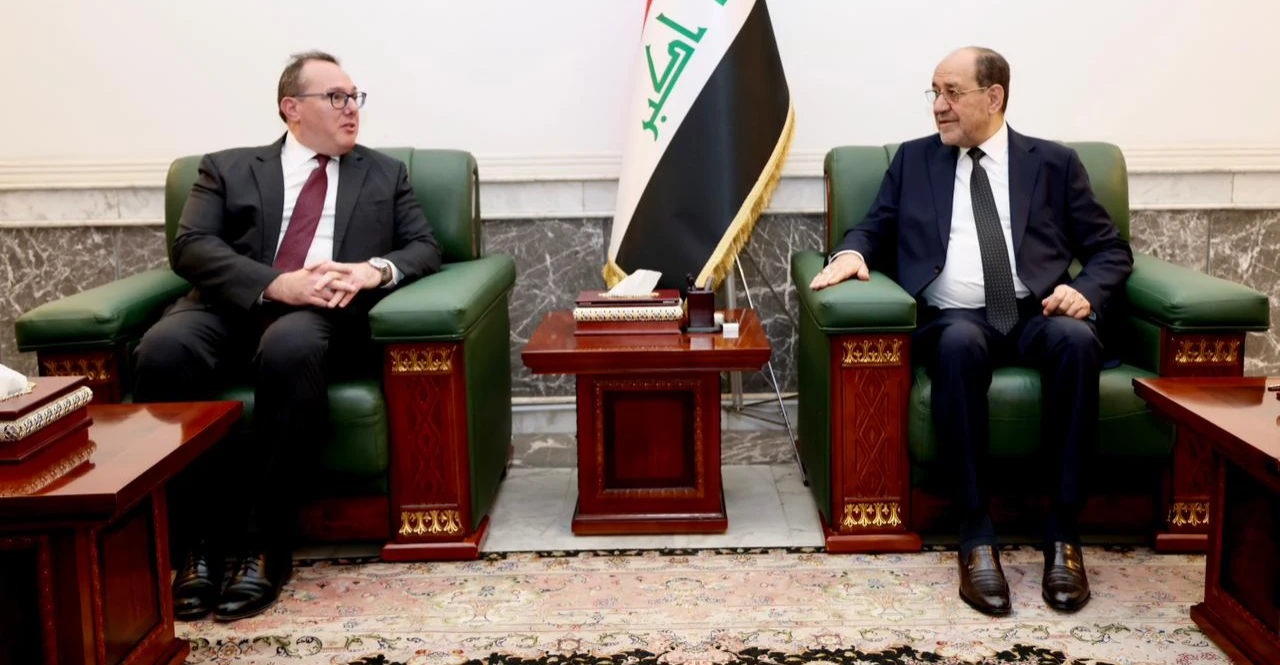
Former Iraqi Prime Minister and head of the State of Law Coalition (SLC) Nouri al-Maliki hailed efforts to place weapons under state control during a meeting on Sunday with US Chargé d’Affaires to Iraq Joshua Harris.
Al-Maliki stressed the importance of keeping arms exclusively in the hands of state institutions, noting that strengthening state authority and enforcing the rule of law are essential to preserving security, stability, and Iraq's broader national interests.
The meeting also covered regional developments, bilateral relations, and ongoing political efforts to secure parliamentary approval for the remaining cabinet positions.
Earlier this week, Iraqi security officials outlined the first practical steps toward integrating armed factions into state institutions, beginning with the transfer of facilities and weapons belonging to Saraya al-Salam of Iraq’s Patriotic Shiite Movement (PSM).
The ruling Shiite Coordination Framework (CF), to which the SLC belongs, recently endorsed Prime Minister Ali al-Zaidi's plans to restructure relations between armed groups and the state.
Several factions have already taken steps in that direction. Both Asaib Ahl al-Haq and Kataib Imam Ali have introduced measures aimed at reorganizing their forces and aligning them with the government's weapons-control initiative. Harakat al-Nujaba (HAN), Kataib Hezbollah, and Ashab al-Kahf, however, have rejected calls for disengagement.
YESTERDAY
Al-Zaidi travels to Washington with businessmen and promises to inject $10 billion into the private sector.
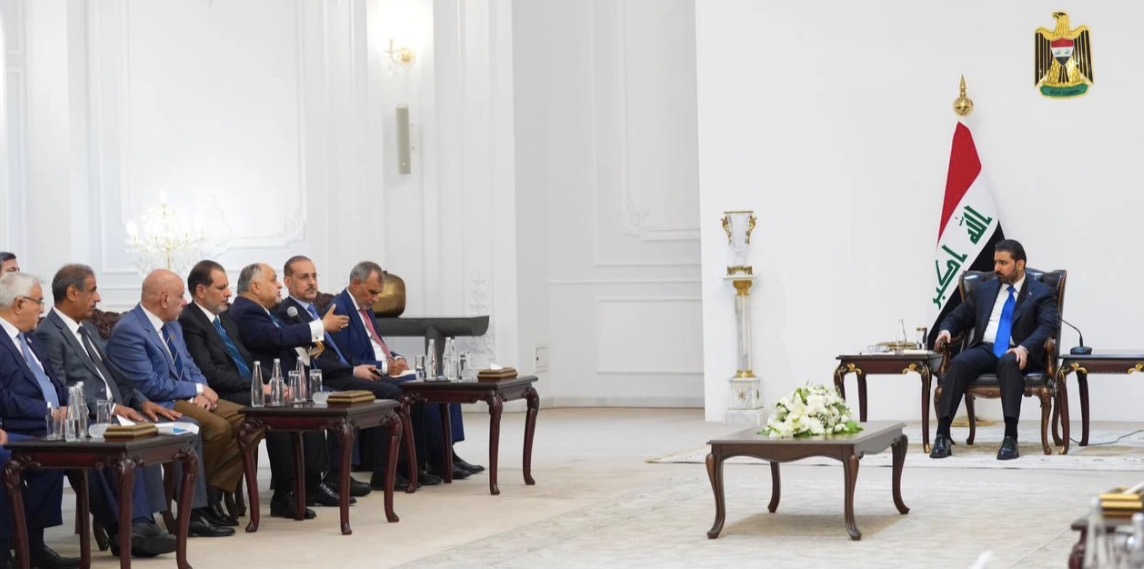
Iraqi Prime Minister Ali Faleh al-Zaidi announced on Saturday an upcoming official visit to the United States, accompanied by businessmen, to expand mutual and joint investment opportunities, noting at the same time that the development fund is for the private sector and will absorb a contribution from the Central Bank worth $10 billion.
This came during Al-Zaydi’s reception of a number of businessmen, members of the board of directors and development of the private sector, members of the Iraqi Economic Council and a number of heads of boards of directors of private banks, in the presence of the Minister of Finance, the head of the Board of Advisors, the director of the office of the Prime Minister, and the head of the Higher Authority for Coordination between Governorates.
According to a statement from the Prime Minister’s Media Office, Al-Zaydi affirmed that the government relies on cooperation with the private sector to ensure the success of its reform efforts in the economy and development, and that it will adopt an open-door policy regarding the proposals, requests, and problems submitted by businessmen that require intervention and resolution.
Al-Zaydi stressed the fight against corruption and extortion, and called on all businessmen or companies not to be drawn into offering any sums of money to facilitate their work and obtain their rights, and that his door is open to any case of obstruction practiced by any element within the body of the state.
Al-Zaydi said that the private sector is a partner of the government, and we support its pivotal role in developing the economy. Our criteria for preferring the private sector are: “tax accountability,” “the size of the workforce and their inclusion in social security,” and “the size of the social benefits contributed to.”
He added: We have a project for one million residential plots, and we call on the private sector to contribute to its infrastructure. There must be a share for everyone who does not own a property, plot of land, or housing unit. We will cooperate with the private sector in preparing residential lands according to economic models that preserve the rights of the state and the citizen.
The Iraqi Prime Minister revealed an upcoming visit to Washington, saying: “We have an official visit coming up to the United States, and we will bring with us a number of businessmen to expand mutual and joint investment opportunities.”
Al-Zaydi pointed out that the development fund is for the private sector, and will absorb a contribution from the Central Bank worth $10 billion, and we will open subscription to contributions for all citizens, at the official value of the Iraqi dinar.
He explained that the profits of the Development Fund will be exempt from taxes, and will finance the establishment of new factories with new products needed by the Iraqi market. We have prepared monthly payments of approximately (1 trillion dinars) for the purpose of paying the dues of businessmen, companies, and contractors, and the payments will increase with the resolution of the crude oil export crises.
He noted that he had issued directives to resolve obstacles related to tax accounting and to remove any conflict in instructions, and everything that hinders progress towards the goal of preserving public funds. He also directed that all laws and decisions that do not facilitate economic development and impede the expansion of partnership with the private sector be studied.
For their part, the businessmen offered to expand consultations with the government regarding service and development projects and priorities, diagnose market needs, and find solutions to economic challenges in order to help the government achieve its goals.
Experts: The Supreme Investment Council lays the foundation for comprehensive economic reform.
Economic experts praised the steps taken by the ministerial program of Prime Minister Ali al-Zidi’s government regarding the establishment of the “Supreme Investment Council,” stressing that the step is capable of restructuring the Iraqi economy and encouraging investments within comprehensive reform steps, as well as directing major economic strategies and creating an attractive environment for foreign and local investments.
strategic step
In this regard, the Prime Minister’s financial advisor, Mazhar Muhammad Salih, described it as a “qualitative strategic step” in the path of economic reform, and a serious attempt to rebuild the investment system on modern institutional foundations that go beyond the traditional concept based on granting licenses and administrative facilities, noting that it aims to adopt a comprehensive economic vision that makes investment a fundamental pillar for sustainable development and economic diversification, and is consistent with Iraq’s 2035 vision.
Saleh explained to Al-Sabah that the importance of the council stems from it being a high-level national framework that undertakes the formulation of investment policies and the unification of relevant references and decisions, which contributes to addressing the state of institutional fragmentation and overlapping powers that have constituted for decades one of the most prominent obstacles to the flow of local and foreign investments. He added that the council provides a coordination platform that brings together government agencies and the private sector, with the aim of formulating a more stable, clear and transparent business environment.
He expressed his hope that the council would play a pivotal role in rebuilding trust between the state and investors by establishing the principles of good governance, simplifying procedures, accelerating decision-making, and addressing the problems facing investment projects in general and strategic projects in particular, thereby reducing bureaucracy and enhancing the efficiency of government performance. He emphasized that trust represents the real intangible capital that precedes the flow of funds, and no investment strategy can achieve its goals without providing a legal and administrative environment. Stable and predictable.
economic role
Regarding the economic importance of the council, the government advisor explained that the council’s role is not limited to attracting foreign capital, but extends to stimulating national investment and enabling the Iraqi private sector to be a key partner in the development process. He pointed out that the success of any economy is not measured by the size of incoming investments only, but by its ability to create a balanced partnership between local and foreign capital in a way that achieves the transfer of expertise and technology, and raises levels of productivity and competitiveness.
He added that the council is expected to contribute to developing a national investment map based on the comparative advantages that Iraq possesses in the energy, industry, agriculture, transportation, logistics and digital economy sectors, in order to ensure that investments are directed towards productive sectors with high added value and productive employment of human resources, instead of concentrating them in rent-seeking or short-term activities.
unified window
On the international level, Saleh stressed that the council can form a unified economic window to promote Iraq as a promising investment destination, taking advantage of its strategic geographical location and its large natural and human resources, noting that this is done through building economic partnerships with global companies and international financial institutions, and providing legal and sovereign guarantees that enhance investor confidence and reduce perceived risks.
The success of the Supreme Investment Council depends on its ability to address the structural challenges that continue to affect the investment climate, most notably administrative bureaucracy, corruption, complex procedures, weak infrastructure, and the need to update economic legislation in line with global changes and the requirements of the modern economy.
The relationship between the state and the market
He called for the establishment of the Supreme Investment Council not to be seen merely as a new institutional addition, but as a project to reformulate the relationship between the state and the market, between capital and development, and between economic and social goals, stressing that if this initiative is properly utilized, it could represent a real turning point in the course of the Iraqi economy, and establish a new phase in which investment becomes a tool for building national wealth, creating job opportunities, achieving sustainable development, enhancing Iraq’s position in the regional and international economy, and an integrated institutional axis in managing and implementing the stages of the development road project, especially the industrial cities and free zones related to the project.
sensitive stage
On a related note, researcher and academic Dr. Abdul Karim Al-Issawi said: “The move towards establishing the Supreme Investment Council represents a step in the right direction at a sensitive stage facing the Iraqi economy, which is suffering from a large financial deficit in light of the geopolitical changes that the Middle East region is going through as a result of the closure of the Strait of Hormuz and the accompanying mutual threats between the main parties to the conflict and their followers. He explained that the idea comes to remind us of what was achieved by the establishment of the Development Board during the monarchy under Law No. 23 of 1950 during the Swedish Ministry, which achieved many immortal achievements in infrastructure in Iraq that are still visible in the eyes of Iraqis.”
Al-Issawi added to Al-Sabah that the success of the idea of establishing the Supreme Investment Council requires a set of elements, most notably defining the responsibility for management and supervision in order to ensure that its work is characterized by independence and professionalism and is not linked to the government at all except for the supervision of the Prime Minister. He stressed that the government of Prime Minister Ali Al-Zidi is facing a problem that needs difficult solutions, which is providing financial funding for this council, in light of the reality of the decrease in financial allocations in the federal budget, of which about 90% goes to operational allocations and the remainder is allocated to investment, which mostly has no returns that are reflected in sustainable development in Iraq.
attractive environment
He explained that attracting foreign direct investment requires creating an attractive environment to increase the flow of foreign capital, which currently views the Iraqi market as unattractive and unsafe. He noted that while Iraqi Investment Law No. 13 of 2006 and its amendments, most notably Law No. 20 and Law No. 50 of 2015, are among the best investment laws in the Arab world, the volume of investments in Iraq has been concentrated on investments seeking natural resources, such as crude oil and natural gas, while neglecting other productive economic sectors like agriculture and manufacturing, in which Iraq possesses resources.
Natural and qualified human.
He stressed the need for the Supreme Investment Council to include broad areas to encourage local investments, explaining that there are very large capitals that can be attracted. According to data issued by the Central Bank, the volume of Iraqi currency outside cash circulation reaches 90%, and this requires encouraging financial digitization and expanding financial inclusion to instill confidence in citizens to enter investment fields.
He stipulated that the success of the Supreme Investment Council hinges on addressing the waste, theft, and financial corruption plaguing massive government projects that have never materialized, recovering funds smuggled back into the country, and transferring them to a fund that could be termed "the Iraqi people's fund." He also emphasized the need to invest the capital held by the Iraqi private sector operating in neighboring countries and to involve these owners in the Supreme Investment Council's decisions regarding the nature of investments that generate employment opportunities. To unemployment in Iraq.
Want to Support My FX Buddies?
 Thanks
Support My FX Buddies
BuyMeACoffee CashApp:$tishwash
https://paypal.me/tishwash

.jpeg)
The Minister of Finance discusses with the World Bank technical support for budget preparation and strengthening reforms.

Finance Minister Faleh Sari met on Sunday with a World Bank delegation to discuss technical support for budget preparation and strengthening reforms.
A statement from the Ministry of Finance said that Sari received the World Bank delegation, headed by Regional Director Jean-Christophe Carré and Special Representative for Iraq Emmanuel Salinas, to discuss prospects for technical and institutional cooperation and support for Iraq's financial and economic reform priorities. The statement
added that the meeting addressed mechanisms for cooperation with the World Bank in providing technical and advisory support for preparing the upcoming general budget, enhancing the efficiency of financial planning, considering spending priorities, and supporting fiscal sustainability in light of current economic changes.
The Minister affirmed that the Ministry of Finance is proceeding with financial reforms focused on developing financial management, enhancing non-oil revenues, and modernizing banking, tax, and customs systems, in line with the priorities of the government program.
He also noted the importance of leveraging international expertise and the technical support provided by the World Bank, particularly in the areas of institutional capacity building, financial policy development, and supporting development projects and investment incentives.
For its part, the World Bank delegation reiterated its support for the Iraqi government in implementing financial and economic reform programs and providing the necessary technical advice to contribute to strengthening financial stability and supporting the Sustainable Development Goals.
The Prime Minister's first stop is Washington
Al-Zaydi is personally negotiating with the factions for disarmament... Fuad Hussein calls for revealing the plan and gaining the world's trust.

Foreign Minister Fuad Hussein called for the disclosure of a plan to restrict weapons to the state, in order to gain trust both within Iraq and from relevant regional parties. In an interview with journalist Hisham Ali, which was broadcast on 964 Network , Hussein revealed that Prime Minister Ali al-Zubaidi is personally leading the negotiations with the factions regarding the issue of restricting weapons to the state. He confirmed that the Prime Minister's first foreign trip will be to the United States, adding, "We hope this visit will take place at the beginning of next month."
Hussein explained that the biggest problem facing Iraq at the moment is the financial and economic file, noting that “the continued closure of the Strait of Hormuz will put Iraq in great difficulty in paying the salaries of employees during the next month.”
Hussein said, “The factions now have political parties, wings, and members in parliament. Some have participated in the government, and others want to participate. So the question here is: if you are part of the government or want to participate in the government, how can you carry weapons outside the scope of the state?”
He revealed that “Prime Minister Ali al-Zaidi is personally leading the negotiation process with the factions regarding the issue of restricting weapons to the state.”
The Sayyid al-Shuhada Brigades and the Hezbollah Brigades announced their rejection of calls to restrict weapons. The security official of the Hezbollah Brigades, Abu Mujahid al-Assaf, announced in a statement (May 30, 2026) the readiness of the brigades to receive the weapons of the factions that have abandoned armed action and to pay for them, saying: “We are ready to receive some special weapons for which there are no specialists in the state apparatus, such as drones, suicide aircraft, cruise missiles and anti-tank missiles, and we are also ready to pay for them.”
On Wednesday (June 3, 2026), the Al-Nujaba Movement issued a short statement in which it announced its refusal to disarm, and said that its position is clear as stated in a previous post by “Secretary of the Islamic Resistance, Akram Al-Kaabi.”
Hussein explained that “Mr. Muqtada al-Sadr’s announcement of integrating the Peace Brigades into the security forces helped the government, and this was followed by other factions announcing the surrender of their weapons.”
On Wednesday (May 27, 2026), the leader of the Shiite National Movement, Muqtada al-Sadr, announced the separation of the Peace Brigades from the movement and their integration into the state, in a move he described as aiming to end the partisan affiliations of armed formations and to strengthen the principle of restricting weapons to the state.
The Coordination Framework announced its support for the project to restrict weapons to the state and to sever the Popular Mobilization Forces from all political, partisan and social frameworks, in order to ensure continued cooperation between the Iraqi government and the international community and to complete the implementation of ending the mission of the international coalition in Iraq.
Hussein added that “the biggest challenge we are currently facing is the financial and economic situation, and because of the ongoing war in the region, the matter has become very complicated. This war has had three victims: first, humanity; second, the Iraqi economy; and third, foreign relations.”
Hussein said he hopes that “the government will have a plan for how to hand over the weapons, when, what type of weapons should be handed over, and to whom they should be handed over. This plan must be revealed so that the world can trust us.” He added that “the current US administration sees Iraq as part of the broader Iranian sphere of influence, and this is a mistaken view that must be addressed in discussions with the US side.”
Hussein revealed that “Al-Zaidi’s first trip outside Iraq will be to the United States, which was directed by US President Donald Trump, and we hope that this visit will be at the beginning of next month.”
On another note, Hussein said, “What happened in the parliament session, with the failure of the Kurdistan Democratic Party’s candidate for the Ministry of Construction and Housing to pass by the other political forces, is not good. You cannot deal with the Dawa Party, with its history, present, and leaders, in this way. The same applies to the Democratic Party. I say to them: This game is not going to work, and all its strings are in our hands.”
Hussein pointed out that “the continued closure of the Strait of Hormuz will put Iraq in great difficulty in paying employee salaries next month,” noting that “the financial capacity was 100 trillion dinars, and now it has become 125 trillion dinars, as we resorted to printing 25 trillion dinars to confront the financial crisis in the country.”
He added, “We cannot solve our problems by printing money, because this raises the inflation rate, which has already risen,” explaining that “if the war continues until the end of the year, this will be a disaster for us, because there are no revenues.”
The Central Bank of Iraq denied on Sunday (June 7, 2026) the validity of what is being circulated regarding its resorting to printing currency to finance public expenditures, stressing that the financial procedures currently followed are fundamentally different from issuing new money, and fall within internationally approved financial and monetary tools and do not constitute permanent monetary expansion.
Hussein stressed that Iraq needs to open up to the Gulf and Western countries, so that we can find a way to obtain “aid.”
Al-Azm: No date yet for the session to complete the Al-Zidi government

Haider al-Asadi, a member of the Azm Alliance, confirmed on Sunday that no date has yet been set for a parliamentary session to finalize Prime Minister Ali al-Zaidi's cabinet. He called on political forces to overcome their differences and expedite the resolution of outstanding issues.
Al-Asadi told Al-Maalomah News Agency, "The Parliament has not yet set a date for a special session to complete the formation of Prime Minister Ali al-Zaidi's government and fill the remaining ministerial positions."
He added, "The current stage requires all political forces to prioritize the national interest and overcome political differences in order to complete the cabinet and enable the government to fully perform its duties."
He pointed out that "the country faces economic and service-related challenges that necessitate expediting the completion of the government formation and unifying efforts to address the current crises."
He emphasized that "the continuation of political disputes and the delay in filling the vacant ministerial positions does not serve political stability, nor does it help the government implement its programs and address important economic issues."
YESTERDAY
Reuters: US move to compensate neighboring countries affected by frozen Iranian assets
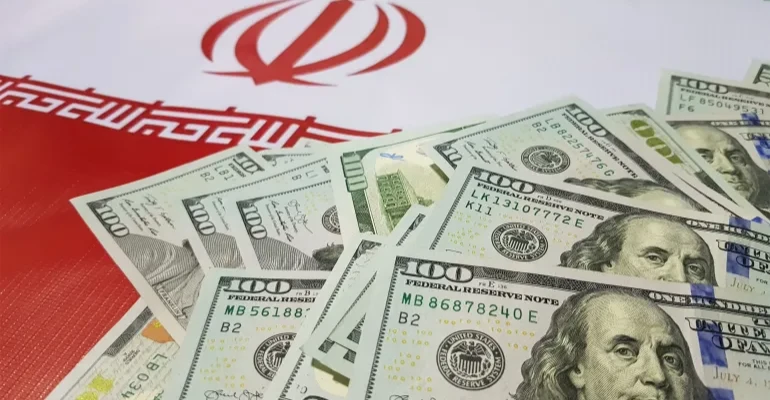
Reuters reported on Saturday evening that the US administration is moving towards making frozen Iranian assets available to its allies in order to support reconstruction and repair projects in countries affected by Iranian policies or activities.
The agency added that US Treasury Secretary Scott Bisent directed the relevant authorities to prepare a comprehensive assessment of the extent of the damage caused by Iran in a number of neighboring countries, in a move that could form the basis for future compensation or support mechanisms.
Indirect negotiations continue between Washington and Tehran to reach a temporary agreement to halt the three-month-long war, amid disagreements over Iranian funds frozen abroad.
American media reports indicate that Iran is demanding immediate financial compensation of $12 billion upon signing any preliminary agreement, while Washington prefers to link the release of funds to Tehran's compliance with the terms of the agreement.
Iran’s frozen assets abroad are estimated at around $100 billion, and the US administration considers them one of the most important bargaining chips used ingthe ongoing negotiations regarding the Iranian nuclear program.
TODAY
Trump to Iran: Return to the negotiating table and make a deal. (Extended)
Trump told Fox News, "Come back to the negotiating table and make a deal."
He added, "We are close to reaching an agreement with Iran."
He indicated, "I was going to announce that the agreement with Iran would be signed on Monday, Tuesday, or Wednesday."
Khamenei's advisor: The enemy burned the negotiating table by bombing Lebanon
Mohammad Mokhbar, an advisor to the Iranian Supreme Leader, asserted that "the enemy has burned the negotiating table by bombing Lebanon," warning that it "will certainly pay a heavy and painful price for this aggression."
On his account on the "X" platform, Mokhbar wrote: "By bombing Lebanon while the mediator was in Iran, the enemy has burned the negotiating table for the third time, blatantly violating the ceasefire on all fronts."
Mokhbar added: "We speak to those who break their promises in the language of 'force'... The axis of resistance is one body, and they will certainly pay a heavy and painful price for this aggression on the ground."
Earlier today, Beirut's southern suburbs witnessed a significant escalation following an airstrike by Israeli warplanes, carried out under direct orders from Prime Minister Benjamin Netanyahu and Defense Minister Israel Katz.
For his part, Ebrahim Rezaei, spokesman for the Iranian parliament's National Security Committee, confirmed that Tehran would retaliate for the attack, vowing a "decisive and painful" response against Israel.
In a post on the "X" platform, he stated that "the response is coming," urging people to anticipate what the "skies of the occupied territories" would witness that night. This threat comes hours after the Israeli raid on the Marjeh area in the southern suburbs.
The Revolutionary Guard: Tonight's operation was a warning, and the next response will include American and Zionist targets in the region.
The Iranian Revolutionary Guard: Tonight's operation was merely a warning. If these attacks are repeated, the response will be broader and will include "all American and Zionist targets in the region." - Fars News Agency
Revolutionary Guard: We responded to the widespread Zionist crime in southern Lebanon and the accompanying killing and displacement in other areas, including the southern suburbs of Beirut.
Iranian Media: Air Defences Activated on Kharg Island
Iranian media reported on Friday that air defence systems were activated on Kharg Island.
A local source reported on Sunday morning that two unidentified drones were shot down in the Bajil district of Aqrah, within the Duhok Governorate in the Kurdistan Region.
The source told Shafaq News Agency that US warplanes intercepted and shot down the two drones simultaneously, noting that their wreckage fell in the vicinity of two villages located within the administrative borders of the district, without the incident resulting in any human casualties, and the losses were limited to limited material damage at the site.
Sudden Iranian Attack on Kuwait and the Gulf on High Alert | Report
If you missed the Last My FX Buddies Update Catch it Below:

No comments:
Post a Comment