Tuesday, May 27, 2025

"Is Iraq’s Economy TOAST? The Oil Crisis Explained!"

Iraq faces looming fiscal crisis amid oil revenue decline

link


Iraq faces looming fiscal crisis amid oil revenue decline

Iraq is heading toward a severe economic crisis, lawmakers and economists warned on Tuesday.

The video for this My FX Buddies Blogpost is below here:

Finance committee member Mohammed al-Shabaki said key economic indicators point to rising deficits and cash shortfalls, blaming the crisis on declining crude prices, budget delays, and Iraq’s lack of financial instruments.

“Iraq lacks tools like forward contracts, foreign investments, and emergency reserves used by other countries to hedge against downturns,” he told Shafaq News, adding that existing safeguards may last no more than two years.

The 2025 budget was initially projected at $152.75 billion, with $99.3 billion allocated for spending, leaving a balance expected to roll over into the following year.

Shabaki urged urgent steps to raise non-oil revenues to at least 30% of total income—up from the current 3–4%—through robust taxation and collection measures insulated from political interference.

Economist Saleh al-Hamashi assigned direct responsibility to the Finance Ministry and Central Bank, citing their failure to circulate liquidity through the banking system. “People are hoarding cash at home due to low trust in banks, despite the rollout of electronic payments.”

He estimated Iraq’s money supply at $97 billion, with 70% held outside the banking system. “This has forced the government to rely on strategic reserves and domestic borrowing.”

Hamashi also criticized the Central Bank’s lack of a coherent monetary strategy, saying it still operates without a unified fiscal vision.

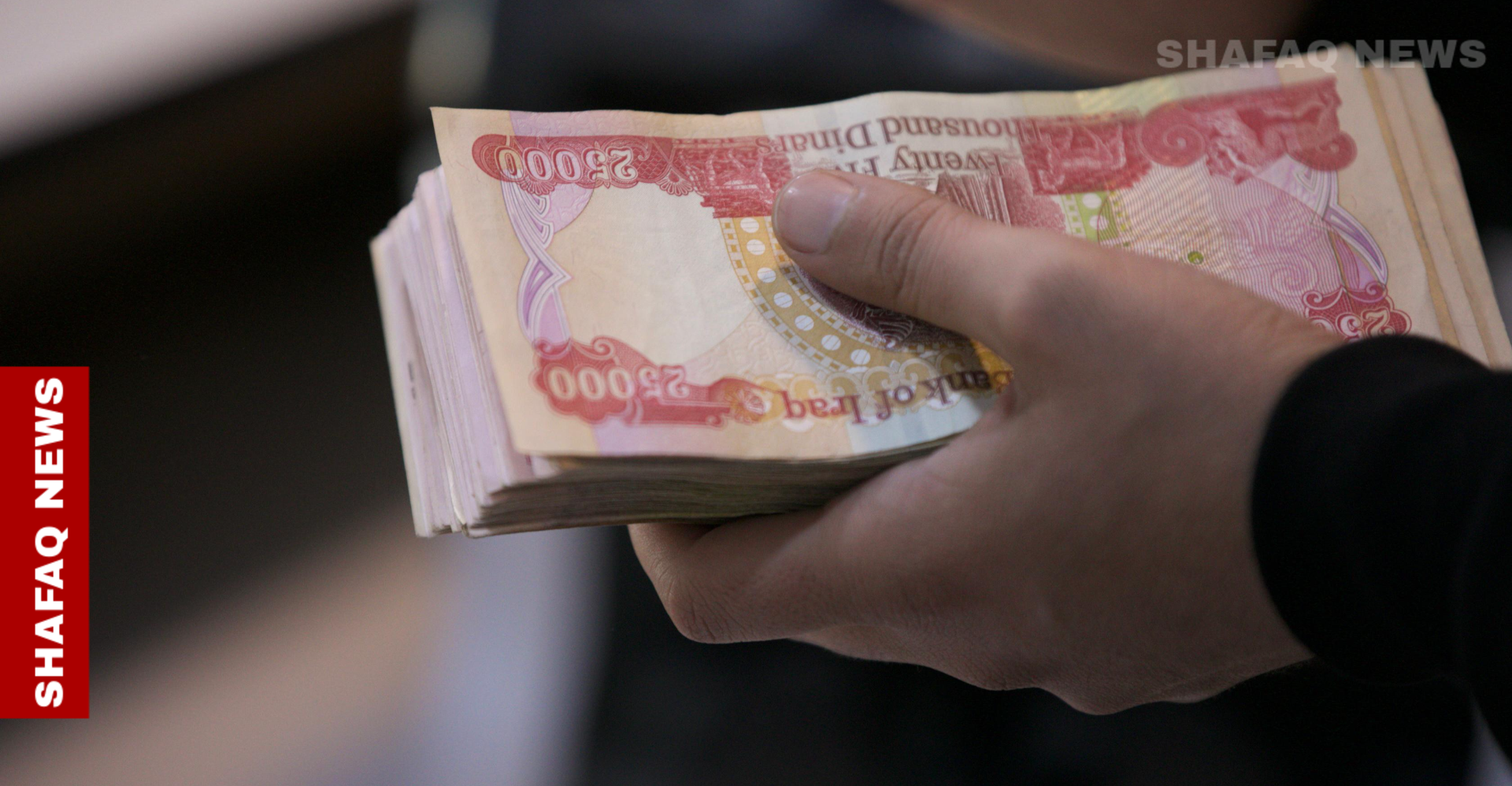
Separately, oil economist Nabil al-Marsoumi warned that Iraq’s April oil revenues barely covered public sector salaries and licensing payments. He reported a 15% drop in monthly oil income—from $7.7 billion in March to $6.7 billion in April—due to falling prices and reduced exports, a decline confirmed by the Oil Ministry.


Iraq: April oil revenues are only enough to cover salaries
link

Iraq: April oil revenues are only enough to cover salaries

Economic expert Nabil Al-Marsoumi confirmed on Tuesday that Iraq's oil revenues for last April were only sufficient to cover salaries and expenses of oil licensing companies.

Al-Marsoumi said in a post on social media that "the decline in Iraqi oil exports and the drop in crude oil prices from $72.5 in March to $66.7 per barrel last April led to a drop in oil revenues from $7.716 billion to $6.738 billion, a decrease of 15%."

The Iraqi Ministry of Oil revealed its statistics on crude oil exports and revenues for the month of April on Monday .

The ministry stated in a statement received by Shafaq News Agency that the total oil exports and revenues achieved for last April, according to the final statistics issued by the State Oil Marketing Organization (SOMO), amounted to 100 million, 953 thousand, and 282 barrels, with revenues amounting to six billion, 738 million, and 309 thousand dollars .

She pointed out that the total quantities of crude oil exported last month from oil fields in central and southern Iraq amounted to 99,752,879 barrels, while exports from the Qayyarah field in Nineveh Governorate amounted to 900,584 barrels, while the quantity of exports to Jordan amounted to 299,819 barrels.


The World Bank affirms its support for financial and environmental reform programs in Iraq.


 Minister of Finance, Taif Sami Mohammed, received a delegation from the World Bank's Environment Sector Mission, headed by Regional Director Maskrin Bahrini. During the meeting, they discussed enhancing cooperation in the areas of financial reform and sustainable environmental development.

According to a statement by the ministry, the meeting touched on World Bank projects related to environmental protection and improving resource management, especially initiatives aimed at integrating environmental considerations into financial policies and developing spending mechanisms that support adaptation to climate change.

The Minister of Finance stressed the importance of integration between financial reform and environmental policies, affirming the ministry's keenness to direct resources towards projects that enhance sustainability and support the transition to a green economy, pointing to the need for technical and financial support in this framework.

For her part, Bahrini affirmed the World Bank's commitment to supporting Iraq in building a financial system that takes into account environmental challenges, with readiness to provide technical expertise and additional financing for projects that address the impacts of climate change and support environmental development.

The meeting concluded with an agreement to intensify coordination in implementing joint environmental projects and expand partnerships to ensure better use of resources in addressing environmental and economic challenges


Kurdistan Showcases Investment Opportunities at Paris Forum

link


The Kurdistan Region is showcasing its investment potential at the French-Iraqi Economic Business Forum currently underway in Paris, with top officials encouraging French investors to explore opportunities in key sectors.

Mohammed Shukri, Head of the Kurdistan Region’s Investment Board, addressed a panel during the event, highlighting the Region’s supportive investment environment. 

He emphasized the availability of promising opportunities in the industrial, agricultural, tourism, and energy sectors.

“Now is the time for foreign investors, particularly our French partners, to engage with the Kurdistan Region’s growing economy,” Shukri said, according to a statement released by the Investment Board.

The statement noted that several foreign investors, particularly French businesspeople, expressed readiness to visit the Kurdistan Region to explore investment opportunities firsthand and potentially boost France’s economic footprint in the area.

More than 300 foreign investors and businesspeople—mostly French—are attending the forum, underscoring France’s continued interest in Iraq’s and the Kurdistan Region’s economic landscape.

This event builds on momentum from last year’s first French-Kurdistan Economic Forum, also held in Paris. 

The gathering was organized in coordination with the Kurdistan Regional Government’s Investment Board and MEDEF, France’s largest business federation, to strengthen bilateral economic ties and attract more French investment to the Region.


Iraq is approaching financial collapse, with accusations directed at the Finance Ministry and the Central Bank.

link

Iraq is approaching financial collapse, with accusations directed at the Finance Ministry and the Central Bank.

The Parliamentary Finance Committee warned that a real financial crisis is looming in Iraq in the future, amid declining oil prices and the absence of preventative and precautionary measures capable of averting an economic crisis. The committee stressed that financial and economic indicators point to a worsening deficit and declining liquidity, which portends serious challenges in the coming period. Meanwhile, economic experts hold the Ministry of Finance and the Central Bank responsible for the cash liquidity crisis.

Causes of the expected crisis

Finance Committee member MP Mohammed al-Shabaki told Shafaq News Agency, "All economic indicators confirm that the country is approaching a financial crisis, the main causes of which are the decline in oil prices and the decline in cash liquidity, in addition to the accumulating budget deficit and the government's delay in submitting budget schedules to parliament."

He explained that "Iraq lacks the financial tools used in most countries around the world to hedge against crises, such as futures contracts, foreign investments, and emergency funds," adding that "the available financial hedges are only sufficient for two years."

Al-Shabaki pointed out that "the planned budget for 2025 was approximately 200 trillion dinars, while the volume of spending is estimated at approximately 130 trillion dinars," stressing that "what remains of it is supposed to be carried over to the next year."

He also called for the need to develop urgent plans to increase non-oil revenues to 30% of the state's total revenues, compared to the current figure of 3-4%.

Al-Shabaki added, "We need to activate technical and technological tools that support the Iraqi economy, and a government that makes bold decisions in the area of tax collection and fees, independent of political and electoral influences."

Who is responsible?

For his part, economic expert Saleh Al-Hamashi blamed the Ministry of Finance and the Central Bank of Iraq for the cash liquidity crisis, pointing out that the two institutions failed to find effective mechanisms to recycle currency within the banking system, which has led citizens to hoard their money at home and lose confidence in banks despite the introduction of electronic payments.

Al-Hamashi told Shafaq News Agency, "The absence of a healthy monetary cycle in the country has forced the government to resort to domestic debt and strategic reserves." He noted that "the current circulating money supply amounts to approximately 127 trillion Iraqi dinars, 70% of which is outside the banking system and circulating among citizens, while only 30% is held by the Central Bank."

He also pointed out that "successive governments have not developed a clear strategy for managing the monetary mass," adding that "the Central Bank still lacks a comprehensive financial vision in this regard."

Al-Hamashi continued, saying, "The government has begun to sense the gravity of the situation and has begun to rely on strategic reserves or issue new banknotes when the available money supply declines."

He also pointed out that the decline in oil prices and the production cuts under OPEC agreements have directly impacted state revenues, prompting the government to attempt to achieve financial balance by drawing from its financial reserves.

In a social media post earlier today, Tuesday, economic expert Nabil Al-Marsoumi confirmed that Iraq's oil revenues for April were only sufficient to cover salaries and expenses of oil licensing companies.

Al-Marsoumi said, "The decline in Iraqi oil exports and the drop in crude oil prices from $72.5 in March to $66.7 per barrel last April led to a drop in oil revenues from $7.716 billion to $6.738 billion, a decrease of 15%."

The Iraqi Ministry of Oil revealed its crude oil export and revenue statistics for April on Monday.


The Ministry of Finance is accelerating its efforts towards the 2025 budget. Limited employment and investment are expected in light of ongoing projects.

link


The Iraqi Ministry of Finance is working at a rapid pace to prepare the 2025 budget schedules, amid direct instructions from the Prime Minister to expedite completion before mid-June, according to financial and economic affairs expert Haider Al-Sheikh.

In a special statement to Baghdad Today, Tuesday (May 27, 2025), Al-Sheikh explained that "the upcoming budget schedules will be limited in their operational aspect to covering basic expenses, such as the salaries of employees and retirees, the social safety net, in addition to job differences and bonuses."

He added, "As for its investment aspect, it will focus on financing ongoing projects, paying oil companies' dues, and meeting other essential obligations."

He pointed out that "initial estimates indicate that the total budget size will reach approximately 150 trillion Iraqi dinars, with a very limited deficit, as it will only cover the remainder of the current fiscal year."

Regarding revenues, Al-Sheikh revealed that "the Ministry of Finance will adopt an estimated price of $60 per barrel of oil, in line with the decline in global prices," noting that "oil revenues for last April amounted to approximately $7.7 billion."

These moves come as part of the government's efforts to maintain stable public spending and ensure the continuity of essential projects despite economic challenges and global market fluctuations.


US support for unifying Baghdad and Erbil by expanding local gas production

link

1748378325_img_8087.jpeg


The US State Department expressed support on Monday for Baghdad and Erbil to work together to expand domestic gas production.


The Foreign Ministry said in statements monitored by "Mil", "We encourage Baghdad and Erbil to work together to expand domestic gas production as soon as possible."
She added, "American and Iraqi interests are best served by a strong and resilient Iraqi Kurdistan within a federal Iraq."
She added, "The United States supports American energy companies' contracts with the Kurdistan Region of Iraq."

 Buy Me a Coffee


Washington confirms its support for gas contracts with the Kurdistan Region after the Iraqi lawsuit.

link

Erbil signed contracts with two American oil companies "without Baghdad's approval."


The Ministry of Oil in Baghdad declared these contracts "null and void based on the Iraqi constitution and Federal Court rulings," stressing that oil investment must proceed through the federal government.


The United States affirmed its support on Tuesday for contracts concluded by American energy companies with the autonomous Kurdistan Region of Iraq after the Iraqi government filed a lawsuit against it.

Kurdistan Regional Government Prime Minister Masrour Barzani announced the signing of two deals worth tens of billions of dollars during a visit to Washington, D.C., last Friday, where he met with US Secretary of State Marco Rubio.

During the meeting, Rubio praised the two deals with American companies, State Department spokeswoman Tammy Bruce told reporters.

"We encourage Baghdad and Erbil to work together to expand domestic gas production as quickly as possible. This type of economic partnership benefits both the American and Iraqi people and helps Iraq move toward energy independence," she said.

She added, "We also believe that American and Iraqi interests are best served by a strong and resilient Kurdistan Region within a sovereign and prosperous federal Iraq."

Of course, we look forward to continuing such deals. We expect this type of contract to flourish, and we expect and hope that it will be facilitated," she said.

The Iraqi government has filed a lawsuit against the Kurdistan Regional Government (KRG ) after Erbil signed contracts with two American oil companies without its approval, two officials told Agence France-Presse on Tuesday. This is a further indication of ongoing tensions over the exploitation of the region's oil and gas resources.

The Ministry of Oil in Baghdad declared these contracts "null and void based on the Iraqi constitution and Federal Court rulings," emphasizing that oil investment must proceed through the federal government.

The lawsuit asks the regional government to cancel contracts with HKN Energy and Western Zagros.

The agreement with Western Zagros Company concerns the exploitation of the Topkhana block, which, along with the adjacent Kurdamir block, contains up to 5 trillion standard cubic feet of natural gas and 900 million barrels of crude oil. This represents revenues estimated at approximately $70 billion "over the life of the project."

The partnership with HKN Energy concerns the Miran gas field, which is estimated to contain 8 trillion standard cubic feet of natural gas, valued at $40 billion over the long term.

Washington announces its support for US oil contracts with Erbil: They benefit all Iraqis.

link

Washington announces its support for US oil contracts with Erbil: They benefit all Iraqis.


 US State Department Spokesperson Tammy Bruce confirmed on Tuesday that the United States supports contracts concluded by American energy companies with the Kurdistan Region.

"The United States supports economic deals that benefit all Iraqis, including the two deals announced last week," Bruce said at a conference attended by a Shafaq News correspondent in Washington.

She emphasized, "We encourage Baghdad and Erbil to work together to expand domestic gas production as soon as possible," noting that "this type of economic partnership will benefit both the American and Iraqi people and will help Iraq advance toward energy independence."

She noted that "American oil companies have invested billions of dollars in the Kurdistan Region's oil sector, and we hope to see further investments from American oil companies throughout Iraq."

The State Department spokesperson also touched on Secretary of State Marco Rubio's meeting with Kurdistan Regional Government Prime Minister Masrour Barzani in Washington last week, stating that "Rubio commended Masrour Barzani for finalizing an agreement with American companies to expand natural gas production in the region, which will help Iraq achieve energy independence."

Three informed sources and a document reported that the Iraqi Ministry of Oil has filed a lawsuit against the Kurdistan Regional Government (KRG) regarding oil and gas contracts it signed with American companies, Reuters reported on Monday.

This new legal action represents the latest obstacle to efforts to resume oil flows through the Iraq-Turkey pipeline, which has been inoperable since March 2023, despite pressure from the administration of US President Donald Trump.

Baghdad stated that direct dealings between the two companies and the Kurdistan Regional Government (KRG) without the participation of the federal government were unconstitutional and declared the two agreements "null and void."

The Kurdistan Regional Government defended the two agreements, saying they were based on existing contracts.

During his visit to Washington last week, Kurdistan Regional Government Prime Minister Masrour Barzani oversaw the signing of two energy agreements worth a total of $110 billion over their lifetime with US companies HKN Energy and Western Zagros.

A statement issued by the Kurdistan Regional Government stated that he met with US Secretary of State Marco Rubio on Friday, and they discussed "the importance of resuming Kurdistan Region oil exports through the Iraq-Turkey pipeline."


Washington praises Iraq's regional role and affirms its support for its stability.

link

IMG_5448-scaled.png

The United States on Tuesday commended Iraq's regional role and its efforts to end tensions and crises.

The Presidency of the Republic stated, in a statement received by Al-Mada, that "President of the Republic, Abdul Latif Jamal Rashid, received today at the Baghdad Palace, the Chargé d'Affairs of the US Embassy to Iraq, Elizabeth Trudeau."

The President of the Republic affirmed "Iraq's keenness to strengthen bilateral relations in various fields, in a manner that serves the mutual interests of the two countries and peoples," pointing to "the ongoing positive developments Iraq is witnessing at various levels, and the efforts being made to consolidate security and stability and strengthen the economy and investment."

He stressed the importance of concerted efforts to ease tensions in the region, stop conflicts and wars, and affirm the principle of regional and international cooperation.

For her part, Elizabeth Trudeau expressed "the United States' aspiration to enhance bilateral cooperation on issues of common interest and support efforts to establish security and stability," praising "Iraq's regional role and its efforts to end tensions and crises."


Implementing the Joint Security Agreement on the Table for Iraq and Iran

link

Implementing the Joint Security Agreement on the Table for Iraq and Iran

National Security Advisor Qasim al-Araji and Secretary-General of the Iranian Supreme National Security Council Ali Akbar Ahmadian discussed the security agreement between the two countries and the stages of its implementation on Tuesday.

A statement from his office, a copy of which was received by {Euphrates News}, stated that: “Al-Araji met in Moscow with the Secretary-General of the Iranian National Security Council, Ali Akbar Ahmadian, on the sidelines of the 13th International Meeting of Senior Officials Responsible for Security Issues, held in the Russian capital, Moscow.”

The statement added that “a meeting was held between the Iraqi delegation, headed by Al-Araji, and the Iranian delegation, headed by Ahmadian, during which strategic issues and files of common interest were discussed, especially the security agreement between the two countries and the stages of its implementation, as well as the security assessment file in the region and the decision of the Kurdistan Workers’ Party to dissolve itself and its effects on the two countries, in addition to following up on the joint security agreement between the two countries.”

It pointed out that “the meeting addressed the security assessment in neighboring Syria, where the Iranian side emphasized the importance of the security, stability, independence and unity of the Syrian people as a whole. The Iraqi position was also presented, which is consistent with the Iranian position in supporting the stability of Syria and its unity of its land and people.”


The Parliamentary Finance Committee explains the reasons for the decline in the dollar price: It is not due to government measures.

link

The Parliamentary Finance Committee explains the reasons for the decline in the dollar price: It is not due to government measures.

Member of the Parliamentary Finance Committee, Jamal Kocher, considered on Tuesday that talk about measures taken by the government that contributed to the decline in the dollar exchange rate against the Iraqi dinar is "incorrect."

"There are many reasons for this decline," Kocher told Shafaq News Agency, noting that "the most prominent of these reasons is the stagnation of trade and the decline in demand for the dollar in the parallel market."

He added, "The halting of projects and the government's failure to pay contractors, in addition to the growing tensions among the Iraqi public, have led to a significant decline in demand for dollars in the market."

The dollar exchange rate in Iraq has been gradually declining over the past few weeks, falling to less than 140,000 dinars to $100 today, according to a Shafaq News Agency correspondent.

With the escalation of economic crises in a number of countries around the world, increased customs restrictions, and a decline in global trade, these turmoils have had a profound impact on Iraqi markets, according to economic observers. Weak global demand has led to a decline in the need for the dollar for imports, directly contributing to a decline in its local price.


Miss the Last episode of My FX Buddies ? Catch it below:

Monday, May 26, 2025

The dollar fell below 140,000 dinars in Baghdad

The dollar fell below 140,000 dinars in Baghdad.

link


The dollar exchange rate continued to decline against the dinar, on Monday (May 26, 2025), with the closure of local stock exchanges in Baghdad.

A Baghdad Today correspondent said the dollar exchange rate reached 140,700 Iraqi dinars for every 100 US dollars as the main stock exchange in Baghdad closed.

He added that the selling price at exchange offices reached 141,750 dinars, while the buying price reached 139,750 dinars for every 100 US dollars.

The video for this My FX Buddies episode is below here:

Board of Central Bank of Iraq to be Restructured?

link

x20250527000057.jpg.pagespeed.ic.Y0x7PJnFbD.webp

Iraqi Prime Minister Mohammed S. Al-Sudani chaired a meeting on Monday of the High Committee tasked with reassessing and restructuring the boards of directors of state-owned banks and the Central Bank of Iraq (CBI).

The committee approved several recommendations focused on evaluating board performance as part of a broader programme of banking and financial reform. The Prime Minister emphasised the critical role of these boards in leading strategic direction, ensuring transparency and accountability, and assessing institutional financial risks.

He also called for stronger coordination between the boards, government entities, and the private sector to advance financial and developmental policies that support Iraq's economic growth.


Al-Sudani discusses with the British ambassador in Baghdad strengthening the economic partnership between the two sides.


link

Al-Sudani discusses with the British ambassador in Baghdad strengthening the economic partnership between the two sides.


Prime Minister Mohammed Shia al-Sudani discussed with the British Ambassador to Iraq, Irfan Siddiq, ways to strengthen the economic partnership between Iraq and Britain and expand the activity of British companies in investment activities in Iraq.


On Monday, May 26, 2025, Al-Sudani received Siddiq, where they reviewed means of joint cooperation and efforts to strengthen the economic partnership, in light of the bilateral agreements and understandings between the two countries.


According to a statement issued by the Prime Minister's media office, "During the meeting, Al-Sudani highlighted Iraq's openness in the areas of development and infrastructure construction, the expansion of the state's capacity to provide services, and the potential for cooperation between the private and public sectors with British companies in various investment activities."


The British ambassador affirmed his country's government's desire to strengthen cooperation and partnership with Iraq, and to work together to promote stability in the region.


Al-Sudani directs boards of directors to develop strategies for government banks.

link

499926885_1175549481285676_3845103887462561111_n.jpg

Prime Minister Mohammed Shia al-Sudani chaired a meeting on Monday of the Supreme Committee tasked with reevaluating and restructuring the boards of directors of government banks and the Central Bank of Iraq.

The meeting approved a set of recommendations and discussed topics on the committee's agenda, which focused on evaluating the performance of the boards of directors of government banks and the Central Bank as part of reform efforts in the banking and financial sector. The meeting also emphasized the effectiveness of boards of directors, as they constitute a fundamental pillar of the financial and banking reform process.

Al-Sudani stressed, according to a statement from his media office, the importance of boards of directors taking the lead in developing strategies and visions that guide the work of government banks, and promoting the principle of transparency and accountability within them. He also stressed the need for these boards to assess the financial challenges and risks facing banks, in addition to the importance of strengthening relations with various government agencies and the private sector, which contributes to the implementation of financial and development policies that support the local economy.


Parliament Presidency calls for extraordinary sessions


link

The Iraqi Parliament's Presidency discussed, on Monday, the upcoming elections, draft laws, and resolutions ready for submission, which have been studied by the relevant parliamentary committees.

In a statement, the House of Representatives Presidency said, "The Presidency of the House of Representatives held its regular meeting today, during which it discussed a number of issues on its agenda, most notably the draft laws and resolutions ready for submission, which the relevant parliamentary committees have completed their study."

She added, "The meeting addressed the upcoming elections and ways to create the appropriate legislative and political environment to ensure fair and transparent elections, thereby enhancing confidence in the democratic process and meeting citizens' aspirations."

According to the statement, the House of Representatives' presidency called on "members of the House of Representatives to prepare to hold extraordinary sessions during the second month of the current legislative recess, with the aim of completing these important legislative tasks and meeting the requirements of the current phase."


After the Eid holiday, Parliament prepares for extraordinary sessions, and the final legislation will begin on July 9.

link


MP Raed al-Maliki confirmed on Monday (May 26, 2025) that the House of Representatives is preparing to hold a number of extraordinary sessions after the Eid al-Adha holiday to pass some important laws.

In a statement received by Baghdad Today, al-Maliki said, "In our last meeting with the Speaker of Parliament, he explained that there is no point in extending the legislative session during the month of May due to disagreements within the Coordination Framework forces regarding some issues, including amending the elections law." 

He added, "Therefore, the Council Presidency's intention was to utilize the time following the Eid holiday by holding extraordinary sessions, leading up to July 9, the date for the start of the Council's final legislative term." 

He pointed out that they "pushed parliament to hold extraordinary sessions to complete the second reading of some laws and vote on them, along with other laws," noting that they "will resort to using popular pressure on parliament to complete important laws." 

According to Al-Maliki, the laws up for vote include:

_ Amendment to the Ministry of Education Law

_ Budget tables

_ Code of Sharia Rulings on Personal Status Matters

_ Service law for members of the Popular Mobilization Forces

_ Amendment to the Radiation Control Law

_ Lawyers' Law

_ Programmers Syndicate Law

_ Reading the amendment to the Law of the Union of Jurists

_ Amending the Internal Security Forces Law

_ Amendment to the Prisoners' Law

_ Paramedic Protection Bill and other laws


The Presidency of the House of Representatives calls for its convening

link

The House of Representatives Presidency held its regular meeting on Monday to discuss a number of issues on its agenda, while deciding to invite representatives to hold extraordinary sessions during the legislative recess.

The Presidency stated in a press release that "the meeting focused on the upcoming elections, as the Presidency discussed ways to create the appropriate legislative and political environment to ensure fair and transparent elections that enhance citizens' confidence in the democratic process and meet their aspirations at this critical stage."

The statement added that "the Presidency called on members of the House of Representatives to prepare to hold extraordinary sessions during the second month of the current legislative recess, with the aim of completing important legislation and fulfilling the constitutional and legislative requirements that keep pace with the current stage."


The Sudanese Ministry of Finance directs the Ministry of Finance to prepare the budget tables for approval, amounting to 140 trillion dinars.

link

The Sudanese Ministry of Finance directs the Ministry of Finance to prepare the budget tables for approval, amounting to 140 trillion dinars.

/ The Finance Committee of the Iraqi Parliament revealed on Monday that Prime Minister Mohammed Shia al-Sudani directed the Ministry of Finance to prepare budget tables in preparation for its approval.

Committee member Moeen Al-Kadhimi told Shafaq News Agency, "Last week, Al-Sudani directed the Ministry of Finance to prepare the 2025 budget schedules in preparation for its approval by the Council and sending it to Parliament." 

Al-Kadhimi added, "The Ministry of Finance prepared the investment side of the budget months ago, amounting to 25 trillion dinars. The Ministry of Finance is currently expected to complete the operational side of the budget, estimated at approximately 115 trillion dinars."

He explained that "the budget tables amount to 140 trillion dinars, which will be sufficient to run the state during the remaining months of the year, including salaries for employees and retirees, social welfare, other aspects, oil extraction costs, and ongoing investment projects."

The Finance Committee member continued: "It has become imperative for the Ministry of Finance to prepare the budget tables, approve them in the Council of Ministers, and submit them to the House of Representatives next June."


To discuss salaries and the budget, Al-Sudani receives the head of the Parliamentary Finance Committee.

link

1446-11-28-16_42_58_9891d71d-768x512.jpg

Prime Minister Mohammed Shia Al-Sudani received today, Monday, the head of the Parliamentary Finance Committee, Atwan Al-Atwani.

During the meeting, the latest preparations for the 2025 budget schedules were reviewed, as well as the mechanisms and plans for ensuring the financing of salaries and expenditures, according to sectors and activities, during the current year.

According to a statement from his media office, Al-Sudani stressed the government's commitment to ensuring the budget includes its priorities for implementing its schedules, in order to complete the government's program, particularly those related to providing services and completing projects, to fulfill the aspirations of citizens in all Iraqi governorates.


 A word of truth for a man who has a right.. Al-Sudani leads a regional and international movement to strengthen international relations.

link

91929.jpg?watermark=4


Since assuming office, Iraqi Prime Minister Mohammed Shia al-Sudani has led an active diplomatic effort at the regional and international levels. This effort aims to restore Iraq's relations with its Arab and international surroundings and build a new, positive image for the country, within the framework of a foreign policy based on balance, openness, and constructive dialogue.

Since assuming office in late 2022, Al-Sudani has been keen to make diplomacy one of his most prominent tools in supporting the national economy. This is achieved by attracting foreign investment, expanding cooperation with various countries around the world, activating economic and trade partnerships, and raising the level of Iraq's representation in international forums.

Al-Sudani's movements included official visits to several important capitals, including Washington, Tehran, Riyadh, Ankara, Abu Dhabi, Paris, and Berlin, during which he held high-level talks with heads of state and senior officials, resulting in understandings and agreements in the fields of energy, transportation, security, education, and investment.

Indeed, Al-Sudani realizes that Iraq's restoration of its regional and international standing cannot be achieved without changing the stereotypical image that has been entrenched about the country over the past decades. He is therefore working diligently to strengthen Iraq's presence at international conferences, affirm its commitment to international conventions and the principles of good neighborliness, and seek to resolve disputes through peaceful means.

In this context, Iraq participated in important international conferences and initiatives related to climate, food security, combating corruption, and countering terrorism. The Prime Minister had a notable presence at these conferences, delivering several speeches that affirmed Iraq's commitment to its role as a responsible regional actor, striving for stability and shared development.

Among the priorities of the Sudanese-led diplomatic effort are supporting the Iraqi economy by opening up to new markets, attracting capital and investments, and opening the door to bilateral cooperation in the fields of technology, energy, and infrastructure.

The Sudanese president has announced on more than one occasion that Iraq welcomes foreign companies wishing to invest, emphasizing the provision of a safe and stimulating environment, and encouraging the private sector to enter into strategic partnerships with its counterparts in friendly countries. 

In addition to the economic dimension, Al-Sudani did not overlook the importance of Iraq's role in calming regional tensions, as Baghdad has played a mediating role in a number of issues, including the Saudi-Iranian dialogue and security coordination with neighboring countries to confront the challenges of terrorism and limit drug and weapons smuggling.

The man also worked to raise the level of Iraq's representation in international organizations and bodies, by nominating competent figures to fill important positions, and actively participating in sessions of the United Nations, the League of Arab States, the Organization of Islamic Cooperation, and others, with the aim of conveying Iraq's voice and defending its interests.

In this report, we are not seeking to create media propaganda, as much as we want to emphasize the principle of "give each his due," a principle we are keen to apply with everyone, including entities or figures with whom we disagree or differ. It is a word of truth about a man who has rights.


Reuters: Baghdad sues the Kurdistan Regional Government over contracts with US companies

link

The Ministry of Oil announced on Monday that it has filed a lawsuit against the Kurdistan Regional Government (KRG) over oil and gas contracts it signed with American companies .

According to sources who spoke to Reuters, "Baghdad considers the contracts concluded by the Kurdistan Region with HKN Energy and West Zagros to develop the Miran and Topkhana Kardemir gas fields near the city of Sulaymaniyah to be illegal . "

He added, "The federal authorities claim that the deals violate Iraqi law because they were signed without their participation, while Kurdistan insists that it acted within the framework of previous agreements . "

This legal challenge is the latest obstacle to the resumption of oil flows through the Iraq-Turkey pipeline, which has been halted since March 2023, despite pressure from the administration of US President Donald Trump .


From Washington to Sulaymaniyah: Kurdish gas ignites geopolitical shifts in Iraq

link

Govind Sherwani

Oil expert Govind Sherwani said that the recent agreements concluded by the Kurdistan Regional Government with American companies to invest in natural gas are strategic agreements with significant economic and geopolitical dimensions. He explained that these contracts cover three gas fields, all in Sulaymaniyah Governorate, and are estimated to be worth more than $100 billion.

In a statement to the "Jarida Platform," Sherwani added , "These agreements have gained special significance because they relate to massive quantities of natural gas, and were held under the auspices of the Prime Minister of the Kurdistan Regional Government, Masrour Barzani, in the US capital, Washington, which confirms the clear support of the US administration and its State Department for this process."

He stressed that "the drone attacks or targeting that were reported to have originated from the Makhoul area will not derail this important agreement, which the Prime Minister described as serving all of Iraq, not just the region." He added that "the surplus energy and gas will contribute to serving the provinces near the region, and there is previous experience of cooperation in this area."

Sherwani explained that "the agreement would not have been possible without the full coordination between the two main parties in the region, the Kurdistan Democratic Party and the Patriotic Union of Kurdistan. The most prominent evidence is the presence of leaders from the Patriotic Union of Kurdistan in the delegation that accompanied Barzani to Washington, including the deputy chief of staff and the minister of Peshmerga."

He pointed out that "Sulaymaniyah will be the primary beneficiary of these major agreements, which will provide extensive job opportunities and development in the electricity sector's infrastructure. This prosperity will be reflected in the Sulaymaniyah and Halabja governorates in particular, given their proximity to the new gas fields."

Sherwani stated, "The Iraqi Ministry of Oil should welcome these agreements, as they are consistent with the federal government's approach to natural gas investment, particularly as Iraq seeks to increase its associated gas investment rate to 70% this year, reaching 100% by 2029."

He concluded by saying, "Iraq possesses massive natural gas reserves estimated at 127 trillion cubic feet, ranking it 11th globally. The new discoveries in Sulaymaniyah could raise this figure by at least 4 to 5 trillion cubic feet, giving Iraq a unique position that will enable it to transform into a gas-exporting country in the future, rather than a gas importer as is the case today."


Buy Me a Coffee


Central Bank of Iraq launches Financial Inclusion Strategy

link

x20250526232502.jpg.pagespeed.ic.8hPA9OoQZP.webp

The Central Bank of Iraq (CBI) has launched its first National Financial Inclusion Strategy, covering the period 2025-2029.

The initiative provides an integrated framework aimed at enabling all individuals and businesses to access the financial sector and use appropriate, secure financial services with consumer protection guarantees. The strategy is expected to contribute to both economic and social development.

Governor Ali Mohsen Al-Allaq emphasised the Bank's commitment to advancing financial inclusion domestically and through collaboration with regional and international partners. The strategy was developed in partnership with the World Bank GroupArab Monetary FundAlliance for Financial Inclusion (AFI), and Germany's Deutsche Gesellschaft für Internationale Zusammenarbeit (GIZ), along with numerous local public and private stakeholders.

Key goals include:

  • Increasing the percentage of Iraqis with bank accounts
  • Strengthening consumer protection within the financial sector
  • Expanding the use of modern digital payment methods
  • Upgrading infrastructure and regulatory frameworks to support inclusion


Poor services spark protests: Iraqis demand solutions, not promises

link

Popular anger is spreading in Iraq with protests demanding improved public services, most notably the electricity crisis, which has been deteriorating sharply with the onset of summer.

These actions reflect the Iraqi public's growing impatience with what it perceives as chronic inaction in addressing service crises, despite repeated government promises. Therefore, dozens of demonstrators in the Al-Haidariya district of Najaf partially blocked the main road linking the governorates of Karbala and Najaf on Monday (May 26, 2025) in protest of deteriorating services and the decline in electricity supply.

Ibrahim Hassan, a member of the demonstration's coordination committee, told Baghdad Today, "Dozens of Haidariyah residents staged a peaceful demonstration, blocking part of the road linking Karbala and Najaf, raising three main demands: equitable distribution of electricity, improved basic services, and the implementation of road service projects."

Hassan added that "the demonstration comes after mounting public anger over soaring temperatures and reduced electricity supply, amid a sense of neglect toward their areas." He noted that "blocking the road is a direct message to decision-makers to take urgent action and provide justice to their areas, which are suffering from accumulated service crises."

This tense scene reflects a loss of trust between citizens and official institutions, amid growing calls to end years of neglect, corruption, and mismanagement.


Demonstrations resume in Diwaniyah over deteriorating electricity conditions.

link

Demonstrations resume in Diwaniyah over deteriorating electricity conditions.

Demonstrations resumed in Diwaniyah Governorate on Monday, protesting the deteriorating electricity situation. Roads were blocked with burning tires.

A Shafaq News Agency correspondent said, " Evening demonstrations resumed in the Ghammas and Al-Sudur areas of Al-Diwaniyah Governorate, in protest against the deteriorating electricity situation in the governorate."

He added that "the demonstrators used burning tires to block main roads," noting that "electricity supply in Diwaniyah is currently 9 to 14 hours a day, compared to 14 hours of outage."

A Shafaq News Agency correspondent in Babil Governorate reported that electricity supply is severely deteriorating, amid ongoing complaints from residents.

Najaf and Diwaniyah governorates witnessed widespread protests on Sunday evening, demanding improved electricity supply conditions amid soaring temperatures .

Protesters blocked major roads, set tires on fire, and raised anti-government slogans. In some areas, clashes broke out between security forces and protesters.


The US withdrawal file is put in the drawers... and the Sudanese Yuan is caught between Washington and its opponents.

link

The US withdrawal file is put in the drawers... and the Sudanese Yuan is caught between Washington and its opponents.

The Iraqi government continues to review its military plans amid unstable security developments in the region and escalating threats on the western border.

The recent government meeting to discuss the army's arming plan comes amidst a complex set of complex issues, most notably the continued presence of US forces, growing fears of a deteriorating security situation in Syria, and the potential for chaos to spread once again to Iraq.

The government is accelerating the implementation of a plan to re-prioritize armament, mandating implementation within two years, while attempting to balance limited resources with increasing security pressures.

These steps appear to be a belated response to internal concerns that hint at the fragility of the border and Baghdad's need to maintain a US presence despite the declared agreement on a gradual withdrawal until the end of 2026.

The statements of Nouri al-Maliki, leader of the State of Law Coalition, have a dual character. On the one hand, they reflect real fears of ISIS activity emanating from Syrian territory, while on the other hand, they suggest a political justification for extending the presence of US forces in Iraq.

Al-Maliki said, "The timing of the withdrawal of US forces from Iraq has been delayed due to events in Syria."
Al-Maliki added in a televised interview that recent events in Syria have raised concerns about "the al-Hawl camp and some terrorist threats inside Syria toward Iraq."
He continued, "The presence of US forces in Iraq will be given an opportunity to contribute to supporting Iraqi forces in reserve for possible security developments, if terrorists in al-Hawl camp and SDF prisons are released. The region may witness dangerous security movements, and we will need coalition forces."

Al-Maliki said that if the Iraqi government "finds itself in need of American forces, it must agree to their continued presence under specific conditions. This must be based on a decision, study, and assessment by the relevant security agencies."

The "al-Hawl camp" issue appears to have become a strategic pretext for delaying the implementation of the withdrawal plan, amidst the marked tension between some Shiite factions and the government leadership, particularly as the election date approaches.

Washington is taking a cautious stance, based on existing security cooperation lines that are even periodically reaffirmed, as in the Sudanese Prime Minister's call with the US Secretary of Defense. This serves as a reminder of the priority of cooperation to confront any sudden threats, at a time when the region is witnessing serious attempts by ISIS to reposition itself in areas with weak security.

The Iraqi government distances itself from statements suggesting an extension or reduction of the US presence, amid ongoing internal debate. Observers, however, believe that the armed factions' silence is temporary, related to their current preoccupation with preparing for the elections and forming new political alliances, which gives the government time to reorganize its affairs without direct threats.

Analyses indicate that Iraq remains at the heart of a larger American equation, viewed as a strategic vantage point overlooking Iran, Syria, and Turkey. This security connection is difficult to easily sever. This is underscored by the absence of any effective legal or military action by successive Iraqi governments effectively demanding the departure of foreign forces.


Omani proposal for resuming Iranian-American negotiations revealed

link

Ahmad Bakhshayesh Ardestani, a member of the Iranian Parliament's National Security and Foreign Policy Committee, revealed on Monday that an Omani proposal had been submitted to Iran regarding its nuclear program. The proposal calls for a temporary suspension of uranium enrichment operations for six months as a preliminary step to resuming negotiations.

Ardestani explained that the proposal has not yet been accepted by Tehran, noting that the Iranian side fears a repeat of previous experiences, which saw increasing demands from Western powers after each positive step taken by Iran.

Ardestani added that Iran currently possesses approximately 300 kilograms of highly enriched uranium, which he estimates is equivalent to the capacity to produce 10 nuclear bombs, stressing that Iran's red line regarding enrichment will not be crossed.

The Iranian MP pointed out that if an agreement is reached, Iran will continue enriching uranium at a level that exceeds its previous commitments under the 2015 nuclear agreement, indicating Tehran's desire to extract further gains in exchange for any new concessions.

This development comes amid mediation efforts led by the Sultanate of Oman to revive nuclear talks between Iran and the United States, amid diverging positions between the two sides on uranium enrichment.

Iranian Foreign Minister Abbas Araqchi recently stated that the Omani mediator presented proposals to resolve some of the obstacles in the nuclear talks during the last round of negotiations, stressing that these proposals are still under consideration by the Iranian side.

Earlier on Monday, Iranian Foreign Ministry spokesman Esmail Baghaei denied reports of a possible interim agreement with the United States or a three-year freeze on the nuclear enrichment program.

The Sultanate of Oman has managed to hold five rounds of negotiations between Tehran and Washington, without announcing any real breakthrough on the nuclear issue.

This comes as US President Donald Trump said the United States had "good talks" with Iran, while Tehran maintains its refusal to make any concessions on uranium enrichment.


Hamas agrees to new US-backed Gaza ceasefire proposal

link

Hamas agrees to new US-backed Gaza ceasefire proposal

Hamas has reportedly agreed in principle to a new US-backed ceasefire proposal to end the war in Gaza, according to sources familiar with the Doha negotiations, cited by Arab and Western media.

The plan, presented by US envoy Steve Witkoff, outlines a 60-day truce, the phased release of 10 Israeli hostages, and a broad prisoner exchange. Five hostages would be freed on day one, the remaining five on day sixty, along with the return of deceased Israeli captives and an unspecified number of Palestinian detainees.

A source close to Hamas told Al Jazeera the deal includes the entry of up to 1,000 aid trucks daily and requires Israel to withdraw from key areas of Gaza by the fifth day of the truce.

The US has reportedly committed to leading final-status talks during the ceasefire and preventing further escalation if negotiations stall. The same source said US President Donald Trump is backing the effort and has committed to pressuring Israel to uphold the terms, including a full pullout based on the January framework.

The deal also includes a provision to extend the truce, with international and regional monitors overseeing implementation.

This follows earlier comments from Witkoff, who told CNN that a deal is “on the table” and urged Hamas to accept. He also dismissed a separate 70-day truce plan reported by Reuters, stating it did not reflect his proposal.

The ceasefire effort comes amid mounting international pressure to end the war, which has killed more than 53,977 Palestinians, mostly women and children, and injured over 122,000 since October 2023.


post production item

How Qi Card is digitising Iraq’s financial future at Scale


Seamless Fintech Middle East


Highlights

  1. Qi’s nationwide reach – serving 12 million Iraqis, 600 merchants, 70,000 POS terminals
  2. Qi’s regional relevance, global impact
  3. Deeply committed to ensuring both my efforts & projects make a meaningful impact on people’s lives – says Chairman Bahaa Abdul Hadi
  4. Qi partnered with Ant International and launched SuperQi app - combining digital banking and lifestyle services

Dubai—On the conclusion day of the Seamless Fintech Middle East Forum, Qi Card, Iraq’s largest fintech company, took centre stage, presenting its pivotal role in transitioning the nation from a cash-dependent society to a digitally connected economy.

Chief Investment Officer Ahmed Khadum delivered a keynote titled “From Cash to Digital: How Iraq Built a Scalable Payment Ecosystem,” sharing insights on how Qi Card helped design and lead one of the Middle East’s most ambitious national fintech transformations.

Established in 2007 through a strategic public-private partnership between International Smart Card (ISC) and the Iraqi financial institutions, Qi Card has grown from a basic payment card into a wide-ranging financial services consortium.

“Our vision extends beyond Iraq — it is about serving broader communities and contributing to humanity at large. I am personally committed to ensuring that both my efforts and our projects make a meaningful impact on people’s lives.”, said Bahaa Abdul Hadi, the chairman and co-founder of the Qi Card, also known as the International Smart Card.

“Our next phase of expansion is focused on the UAE, where we are actively engaging with both public and private sector stakeholders. We are preparing to launch a range of initiatives spanning fintech, insurtech, logistics, and payments, along with several programs aimed at giving back to society,” Bahaa added.

Today, Qi Card serves more than 12 million Iraqis, including government employees, pensioners, private sector workers, and social service communities. Its key services span salary disbursements, personal loans, digital banking tools and biometric security.

“Our story is not just about technology — it’s about national resilience,” said Ahmed Khadum, Chief Investment Officer at Qi Card.

“We built this system during some of Iraq’s most difficult years, yet managed to extend it to every province. That’s the model we’re sharing in Dubai to the global community of financial technology — how to enable modern financial services under pressure, with purpose, and at scale,” Ahmed said.

Nationwide Reach

Qi Card operates a nationwide infrastructure of over 70,000 point-of-sale (POS) terminals and serves over 6,000 merchants. Since 2018, it has disbursed over $4 billion in loans to more than 800,000 citizens, supporting small businesses, healthcare needs, and household improvements. Emergency lending programmes, such as Salifni, ensure workers can access short-term funds even during public sector salary delays.


In 2024, Qi Card partnered with Ant International to launch the SuperQi app, combining digital banking and lifestyle services into a single platform. With features like scan-to-pay, peer transfers, bill payments, mobile recharge, and personal lending, SuperQi aims to serve 15 million users by 2026.

Regional Relevance, Global Impact

Qi Card’s journey speaks directly to other economies working to reduce cash dependency. Strategic alliances — with Mastercard, Visa, Western Union, and Ant Group — have helped broaden its functionality, enable secure cross-border transactions, and deepen financial access in unbanked communities.

As Iraq rebuilds and modernises its economic infrastructure, Qi Card remains at the forefront, championing financial accessibility, digital innovation, and long-term resilience. With a growing user base and a scalable, exportable model, Qi Card is positioned to lead not just Iraq’s digital future, but also to inspire similar progress in frontier markets across the region and beyond.

Did you miss the last episode of My FX Buddies? Catch it below:


Thanks for stopping by!