Safwan Qusay imagines the economy of war
"The Baghdad dinar is disappearing... Close the borders!" The final solution is to abolish Iraq's paper currency!
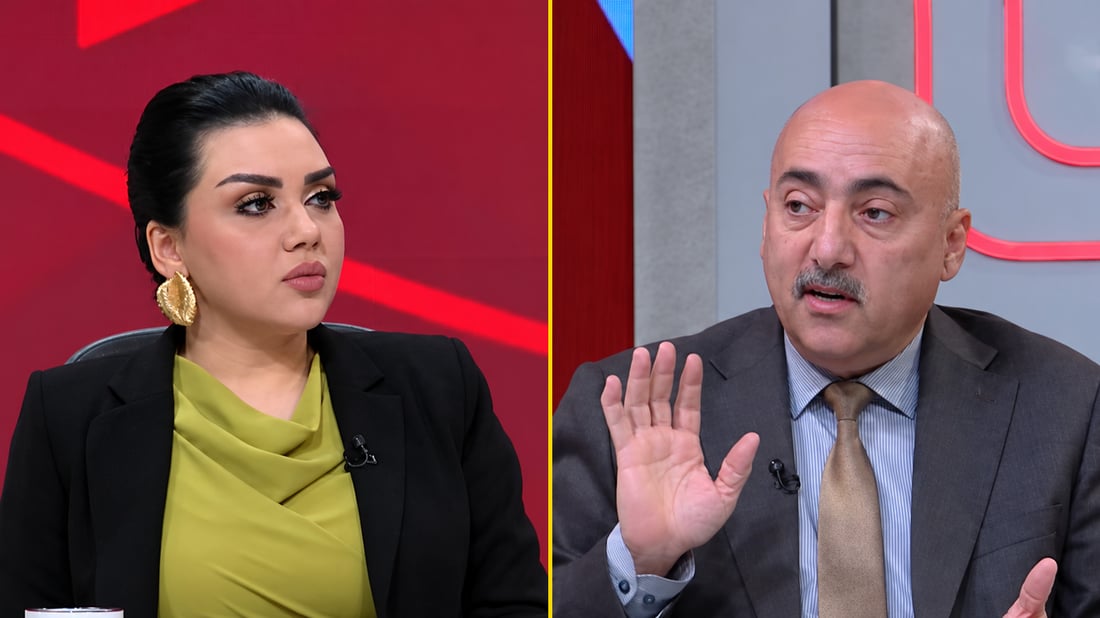
Perhaps no country in the world has abolished paper currency, but amidst the anxiety surrounding discussions in the local market and among banks—both those sanctioned and those not—within an economy mired in a ceaseless war, an Iraqi expert and academic believes that the chaos plaguing the financial market necessitates the "complete abolition of paper currency" and its conversion into a bank card for every citizen. This is preferable to other proposals for addressing the escalating liquidity crisis. "Neither removing zeros nor replacing denominations with larger ones (such as a 100,000 dinar note) will work," he argues. He suggests that abolishing paper currency would bring all "buried, stolen, and smuggled funds back" in a documented and verifiable manner. However, this expert also calls for a measure to be implemented: "closing the borders" so that Baghdad can effectively nullify the value of "stolen, buried, and smuggled dinars" within the country or in neighboring states like Turkey and Iran. He does not, however, specify a timeframe for closing the borders! While this proposal appears desperate, it reflects the intensity of the debate among Iraqi financial experts regarding how to address the "disappearance of the dinar and liquidity" from the market and the resulting scarcity that hinders salary payments and stifles daily economic activity. According to expert Safwan Qusay, in a conversation with journalist Mona Sami, which was followed by 964 Network .
The video for this My FX Buddies Blog post is below here:
Economic expert Safwan Qusay stated, “Our problem is that the Central Bank issued currency worth 106 trillion dinars, 40 trillion of which are within the banking system, while more than 60 trillion dinars remain in the form of cash in the pockets of Iraqis. This amount does not enter the banking system, so we need to call these funds to find out where they are. Here, opinions vary.”
Some advocate removing zeros as long as a new currency is to be printed.
Some argue that there is no need to remove zeros and print more currency, but rather to move towards using only electronic payment cards. They suggest giving Iraqis a grace period, say until the end of the year, during which they would deposit all their savings into the card. This would lead to a halt in cash purchases, causing paper currency to lose its legitimacy. People would then be forced to deposit cash into the card, which would have a special code that, if entered into the banks, would be monitored. Any money that is missing would be discarded.
He added: “This should include each category separately; all categories should not be included at once. Such a measure requires closing the borders, because there is a portion of the dinar that some suspect is outside Iraqi borders, since the Iranian currency has been subjected to many shocks, so it is not unlikely that they have saved Iraqi money. The same applies to the Turks. Therefore, the process begins with closing the borders, recovering the money, and then injecting it back into circulation in a legitimate way through the electronic card. At that point, the legitimacy of money not belonging to the government, especially buried money, will be lost, and this measure will restore the prestige of the Iraqi dinar.”
The Central Bank of Iraq: The financial cornerstone of national economic stability

The Central Bank of Iraq is the cornerstone of the country’s financial system and one of the most important sovereign institutions that oversees monetary policy, currency management, and the banking sector. The bank was established in 1947 and has since played a pivotal role in stabilizing the Iraqi economy, although it has gone through periods of profound challenges as a result of political and economic crises and wars .
After 2003, the bank gained legal independence under the constitution and Central Bank Law No. 56 of 2004, to be directly responsible for the stability of the Iraqi dinar, controlling inflation rates, and protecting the banking system from risks .
Legal and regulatory framework
The Central Bank of Iraq derives its authority from the 2005 Iraqi Constitution, which stipulated its financial and administrative independence, and from the amended Central Bank Law No. 56 of 2004. The law affirms that the bank does not receive instructions from the government or any other entity, which aims to protect it from political pressure .
The bank’s organizational structure consists of a board of directors headed by the governor and including his deputies and a number of financial and legal experts. The bank also operates within a legislative framework related to Iraqi laws on banking, combating money laundering and terrorist financing, in addition to its commitment to international standards .
Duties and Powers
The most prominent powers of the Central Bank are to set and implement monetary policy aimed at achieving price stability and inflation rates. It is the only entity authorized to issue the national currency (the Iraqi dinar), in addition to managing the country’s reserves of foreign currency and gold .
The bank also plays a supervisory role over commercial and Islamic banks, grants licenses to electronic payment institutions and finance companies, and acts as a financial advisor to the government. One of its most prominent tasks is also managing foreign currency auctions, which are used to stabilize the exchange rate and are among the most controversial tools in monetary policy .
Statistics, financial and regulatory reports
The Central Bank of Iraq issues periodic statistical bulletins reflecting key economic indicators, such as the size of the money supply, foreign currency reserves, inflation levels, and bank credit activity. It also publishes annual reports on financial stability and monetary policy, and issues monthly data on foreign currency sales at auction, and interest rates on loans and deposits .
This data is a pivotal tool for researchers and policymakers to monitor the performance of the national economy. According to the bank's latest reports, Iraq's foreign exchange reserves exceeded $100 billion in 2023, providing strong cover for the Iraqi dinar against external challenges .
The bank's role in economic policies and financial reform
The Central Bank occupies a strategic position in the economic reforms that Iraq aspires to achieve, especially in light of the heavy reliance on oil revenues. The bank has worked to enhance monetary stability by controlling inflation and stabilizing the exchange rate. It has also played a role in supporting financial inclusion programs and encouraging banks to provide small and medium-sized loans .
The bank also contributed to the restructuring of some troubled government banks, such as Al-Rafidain and Al-Rasheed banks, as part of a long-term plan to reform the financial system .
Challenges and constraints facing the central bank
Despite its importance, the Central Bank of Iraq faces a number of challenges that hinder its work, most notably political interference that may weaken its independence, in addition to the fluctuation in the government’s financial policies that directly affect its tasks. Also, the Iraqi economy’s almost complete dependence on oil exposes monetary policy to great pressure when crude oil prices fluctuate .
In addition, there are challenges related to combating money laundering and terrorist financing, weak banking infrastructure, and the spread of cash transactions outside the banking system. These challenges have made the bank operate in a risky environment, requiring a careful balance between monetary stability and responding to economic pressures .
Modern reforms and initiatives
In recent years, the Central Bank has launched several reform and development initiatives, such as the electronic payment project to promote digital transformation and reduce reliance on paper money, and initiatives to support small and medium enterprises with affordable financing .
The bank also adopted programs to modernize banking systems in accordance with international Basel standards, and worked to enhance transparency in currency auctions. Internationally, the bank cooperated with the IMF and the World Bank to strengthen its institutional capabilities, and launched plans to promote financial inclusion, aimed at integrating broad segments of citizens into the formal banking system .
Al-Zaidi's advisor denies rumors that Washington has halted dollar supplies to Iraq

The financial advisor to the Iraqi Prime Minister, Mazhar Muhammad Salih, denied the news circulating about the United States’ intention to stop supplying Iraq with dollars, stressing that what is being rumored about imposing financial sanctions in this regard is completely untrue and merely baseless rumors.
Saleh explained in a special statement to Kurdistan 24 that the claims that speak of an American deadline ending on the 30th of this month to disarm the armed factions under penalty of a ban on sending dollars are “baseless and of unknown origin,” noting that the American side has not officially raised this issue with the Iraqi government.
The financial advisor explained that financial relations and transactions between Baghdad and Washington are subject to the terms of the "Strategic Framework Agreement" signed between the two parties in 2008, which defines the frameworks for coordination and joint work between the two countries.
Sources had previously told Kurdistan 24 that the United States had set the end of this month as the deadline for armed factions to hand over their weapons, threatening to halt dollar flows into the country if they did not comply.
In a related context, Jamal Kojar, a member of the Finance Committee in the Iraqi Parliament, warned a few days ago of the possibility that Washington might resort to imposing sanctions on the banking sector and Iraq’s foreign currency reserves if the destabilizing activities continue and there is a failure to comply with arms control.
It is worth noting that the issue of US financial sanctions and measures to regulate the flow of dollars has remained strongly present in the Iraqi scene in recent years, as the Federal Reserve and the US Treasury impose strict control over the movement of cash liquidity and the Iraqi banking sector, to prevent hard currency from reaching neighboring countries subject to international sanctions.
Washington brandishes the "dollar card"... a warning to Baghdad: disarm the factions or financial shipments will be halted

Informed government officials revealed to Kurdistan 24 today (Tuesday, September 15) that Washington has informed the Iraqi government of its intention to "stop dollar shipments" to Iraq if the factions do not adhere to the disarmament deadline.
The network, as reported by Baghdad Today, said that two Iraqi officials, who declined to reveal their identities, stated that Washington had informed Baghdad that it would "stop the monthly dollar shipments to Iraq if the factions do not comply with the disarmament deadline set for the 30th of this month."
She continued, "Officials confirmed that the first warning was delivered to al-Zaidi during his visit to Washington, where the US administration confirmed to him that failure to contain the threat of armed factions to US interests and the interests of countries in the region would have dire consequences for relations between the two countries, including Iraq's access to dollar liquidity."
It is noted that one of the sources confirmed to the network that Washington “had previously demonstrated its ability to influence and exert significant pressure on the Iraqi economy when it delayed dollar shipments to Iraq earlier,” as he described it.
Calls to prevent resource depletion and strengthen protection for foreign capital
Parliament moves to redraft investment law
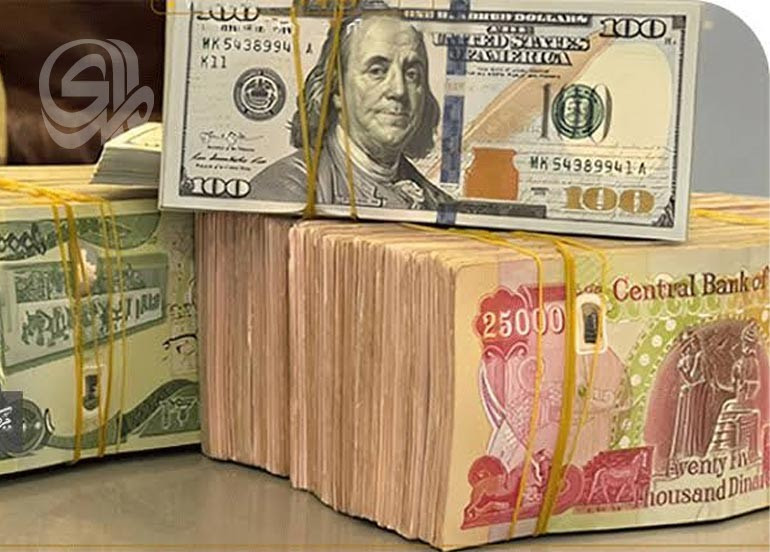
Parliamentary and economic circles are moving towards reopening the "Investment Law" file to make urgent legislative amendments aimed at protecting the country's wealth and preventing the depletion of resources. This is happening in parallel with finalizing the "International Arbitration Law" to provide a legal framework protecting incoming capital, amidst escalating warnings against continuing to operate under the current mechanisms that grant free privileges to investors without tangible developmental returns.
The Parliamentary Investment Committee intends to finalize the legal amendments related to the International Arbitration Law, in a step aimed at creating a secure legislative environment capable of attracting foreign investment and removing the concerns that hinder the entry of capital into the country.
Member of the Parliamentary Investment Committee, MP Iyad al-Jubouri, confirmed in an exclusive interview with Al-Mada that the committee is currently reviewing and amending a package of laws related to the investment environment, noting that the primary focus at present is on the International Arbitration Law, which has completed its first reading and is preparing for its second reading in preparation for its passage in Parliament. Al-Jubouri explained that passing this law is an urgent necessity to provide explicit legal guarantees to foreign investors, noting that capital requires legislative frameworks and decisive protection that enhance the confidence of international companies and encourage them to invest in projects within Iraq.
In this context, the Reconstruction and Development parliamentary bloc confirmed in a previous press conference attended by a correspondent from Al-Mada that its parliamentary priorities focus on adopting and enacting key laws referred by the government, foremost among them the investment law. The bloc stressed its absolute rejection of maintaining investment in its current form, particularly in housing complexes, where the benefits accrue to contractors, merchants, and investors at the expense of impoverished citizens. The bloc clarified that it is working to adopt various investment models, depending on location and construction, to ensure the state's participation in acquiring housing units and distributing them directly to poor and needy families.
Economic warnings continue to mount regarding the continued application of current legislation governing the investment environment in Iraq. These warnings are accompanied by persistent calls for structural reforms and the dismantling of the monopolies held by investment authorities, aiming to curb the squandering of sovereign wealth and attract genuine capital.
For his part, economic expert Duraid al-Anzi told Al-Mada in an exclusive interview that the current investment law contains provisions detrimental to the national economy, effectively becoming a "law of plunder." He explained that experience has shown the allocation of vast tracts of land and raw materials at nominal prices to projects that recoup their costs within a few years of production, with the remaining profits from long-term contracts accruing to investors without any real added value for the state. Al-Anzi further
clarified that Iraq suffers from the absence of an independent law for mineral investment, emphasizing the necessity of separating the mineral sector from the existing investment authority and establishing a dedicated body for it. He stressed the importance of maintaining a national partnership ratio of no less than 25% to 30%, instead of selling raw materials at a quarter of the global cost. He added that the state’s share should be allocated in the form of locally established processing plants to produce chemical derivatives of sulfur, phosphate and silica, in order to create an attractive work environment that employs the staff of professional associations and provides sustainable job opportunities for graduates away from the concept of government employment.
The economist pointed out that legislative amendments should include enacting specific laws for each sector individually, such as tourism and mining, in addition to establishing a government insurance company to provide the necessary guarantees for domestic and foreign capital. Al-
Anzi stressed that the problem is not limited to legal texts alone, but extends to the management of economic files. He called on the government to obligate oil companies to treat associated gas and extinguish flares at their own expense, deducting the cost from their production share, in order to stop the ongoing financial and environmental waste.
Newspaper: Baghdad faces the specter of US sanctions after attacks on Saudi oil facilities

About the news
- Al-Mada newspaper revealed growing concerns within political and security circles about the possibility of Washington imposing new sanctions on Baghdad.
- The potential sanctions come in the wake of attacks that the newspaper said originated from Iraqi territory and targeted Saudi oil facilities and pipelines.
- Baghdad has not yet announced final results of the investigations into the attacks, while security measures have been taken on the border with Iran, including the temporary closure of some crossings before they were reopened.
According to a report in the newspaper, Prime Minister Ali al-Zaidi's government is facing a sensitive test regarding its ability to control armed groups and prevent the use of Iraqi territory to carry out operations outside the borders, at a time when American pressure is increasing on Baghdad to resolve the issue of weapons outside the framework of the state.
The United States is concerned
- Washington is increasingly concerned about what it sees as Iraq's inability to prevent a recurrence of attacks targeting Saudi energy facilities.
- Declaring a state of emergency may be one of the options that the al-Zaydi government could resort to in order to demonstrate its ability to contain the escalation and impose security control.
- This, according to the newspaper's estimates, may contribute to postponing or freezing potential US sanctions.
Confusion surrounding the Iraqi issue within Washington
- Tom Barrack's team, along with the State Department's Iraq office, are facing a state of confusion due to the accelerating security and political developments related to Iraq.
- The recent period has witnessed the cancellation or postponement of a number of important appointments related to the Iraqi file, while a part of the American activity has become more dependent on Barak's team.
- Washington has become increasingly concerned about the activities of armed groups that may use Iraqi territory to carry out operations against neighboring countries, which could open the door to US financial and political measures against Iraqi entities.
- Any new sanctions could come at a very sensitive economic time for Iraq, given the challenges related to liquidity, funding salaries, and providing for the state’s basic needs.
Warnings against turning Iraq into a battleground
- The al-Zaydi government faces a double challenge: fulfilling its internal obligations while simultaneously convincing Washington that it is capable of imposing security and controlling weapons.
- Armed groups operating from Iraqi territory may include Iraqi elements and others linked to regional groups.
- She warned that the Iraqi border could become a new battleground between Iran and the United States.
- The current escalation may weaken the Iraqi government’s position internationally and increase pressure on the Prime Minister regarding the issue of restricting weapons to the state.
According to the report, the coming period may be crucial for al-Zaidi’s government, especially if the American threats turn into actual actions, which may push Baghdad to take stricter security and political steps to prove its ability to control the internal situation and prevent Iraq from becoming a new arena for regional conflict.
Maliki gives factions until 2028 and accepts a controversial formula regarding weapons.

Press reports have revealed new details regarding the political negotiations related to the issue of restricting weapons to the state, indicating that the leader of the State of Law Coalition, Nouri al-Maliki, agreed to extend the deadline for armed factions until the beginning of 2028.
According to the report, several meetings took place between Maliki, former Prime Minister Mohammed Shia al-Sudani, and Badr Organization official Hadi al-Amiri, with the aim of reaching a settlement based on the principle of not using weapons, while keeping them for the time being.
The report indicated that the negotiations included a formula that would allow for the cancellation of the agreement not to use weapons in "specific circumstances," without clearly defining the nature of these circumstances, which raised questions about the feasibility of implementing the agreement and ensuring the parties' commitment to it.
He added that the timeline extending to the beginning of 2028, according to the report, is consistent with Iranian trends that called on the factions to gain more time in dealing with American pressure regarding the weapons file.
The report concluded that the balance of power within the political process has changed recently, with increasing pressure on the government regarding the issue of arms control, amid fears that negotiations will turn into compromises that postpone resolving the issue instead of ending it.
 Thanks
Support My FX Buddies
BuyMeACoffee CashApp:$tishwash
https://paypal.me/tishwash

.jpeg)

Al-Zaydi: Iraq today is shaping the features of a new economy and a promising economic identity

Prime Minister Ali Faleh al-Zaidi affirmed that "Iraq is currently shaping a new economy and a promising economic identity, and it needs productive partnerships to support its development path."
During his participation in the German-Iraqi Business Dialogue Forum held in Berlin, under the theme "Economic Bridges for a Shared Future," al-Zaidi stated, "There are many commonalities that unite Iraq and Germany, an important industrial country with which the government looks forward to cooperating in various fields and sectors." He pointed out that Iraq is currently shaping a new economy and a promising economic identity, and it needs productive partnerships to support its development path.
According to a statement from his media office, the Prime Minister reviewed the investment map in Iraq, including the energy sector, oil and petrochemical industries, phosphates, clean energy, pharmaceutical industries, and support for the government's automation programs. He also presented the government's comprehensive plans, which are based on implementing a set of financial, tax, and banking reforms aimed at strengthening the investment environment and supporting economic growth.
He called on German companies to invest in Iraq, emphasizing the readiness to provide the necessary investment environment and remove any obstacles that might hinder their operations.
He explained that the investment law includes extensive facilities and guarantees, pointing to Iraq's political and economic stability and its democratic system that supports the work of institutions.
Al-Zaidi from Berlin: Iraq is outlining a new economy and inviting German companies to invest.

Prime Minister Ali al-Zaidi participated on Tuesday (September 15, 2026) in the German-Iraqi Business Dialogue Forum, which was held in the German capital, Berlin, under the title “Economic Bridges for a Shared Future”, in the presence of a group of businessmen and representatives of major German companies.
The Prime Minister’s Media Office said in a statement, a copy of which was received by 964 Network , that “Prime Minister Ali Faleh Al-Zaidi affirmed during the forum the existence of many commonalities that unite Iraq and Germany, an important industrial country with which the government looks forward to cooperating in various fields and sectors, noting that Iraq today is drawing the features of a new economy and a promising economic identity, and it needs productive partnerships to support the development path.”
The statement added that Al-Zaidi “reviewed the investment map in Iraq, including the energy sectors, oil and petrochemical industries, phosphates, clean energy, pharmaceutical industries, and support for government programs in the field of automation.”
The statement explained that the Prime Minister “presented the government’s comprehensive plans, which are based on implementing a set of financial, tax and banking reforms, with the aim of enhancing the investment environment and supporting economic growth.”
The statement continued that Al-Zaidi “called on German companies to invest in Iraq, stressing the readiness to provide the necessary investment environment and to remove all obstacles that may hinder their work. He explained that the investment law includes extensive facilities and guarantees, pointing to the political and economic stability that Iraq enjoys, and a democratic system that supports the work of institutions.”
Al-Zaidi concludes his European tour, returning to Baghdad
 Center
Prime Minister Ali Faleh al-Zaidi concluded his official visit to the German capital, Berlin, on Tuesday, returning to Baghdad.
The Prime Minister’s Media Office stated in a statement that “Prime Minister Ali Faleh al-Zaidi concluded his official visit to the German capital, Berlin, and is returning to Baghdad.”
Prime Minister Ali Faleh al-Zaidi began his European tour on Sunday, September 13, 2026, with an official visit to the French capital, Paris, at the invitation of French President Emmanuel Macron, before heading on Tuesday, September 15, to the German capital, Berlin, to complete his tour.
The visit to Paris included a meeting between Al-Zaidi and the French President, as well as the signing of six memoranda of understanding and declarations of intent covering the fields of defense, artificial intelligence, energy, gas, youth opportunities, research and innovation, and civil aviation.
During his visit to Germany, Al-Zaidi will focus on strengthening Iraqi-German relations and expanding economic and investment partnerships before concluding his European tour and returning to Baghdad.
The international coalition shoots down a drone in the Soran administration of the Kurdistan Region.
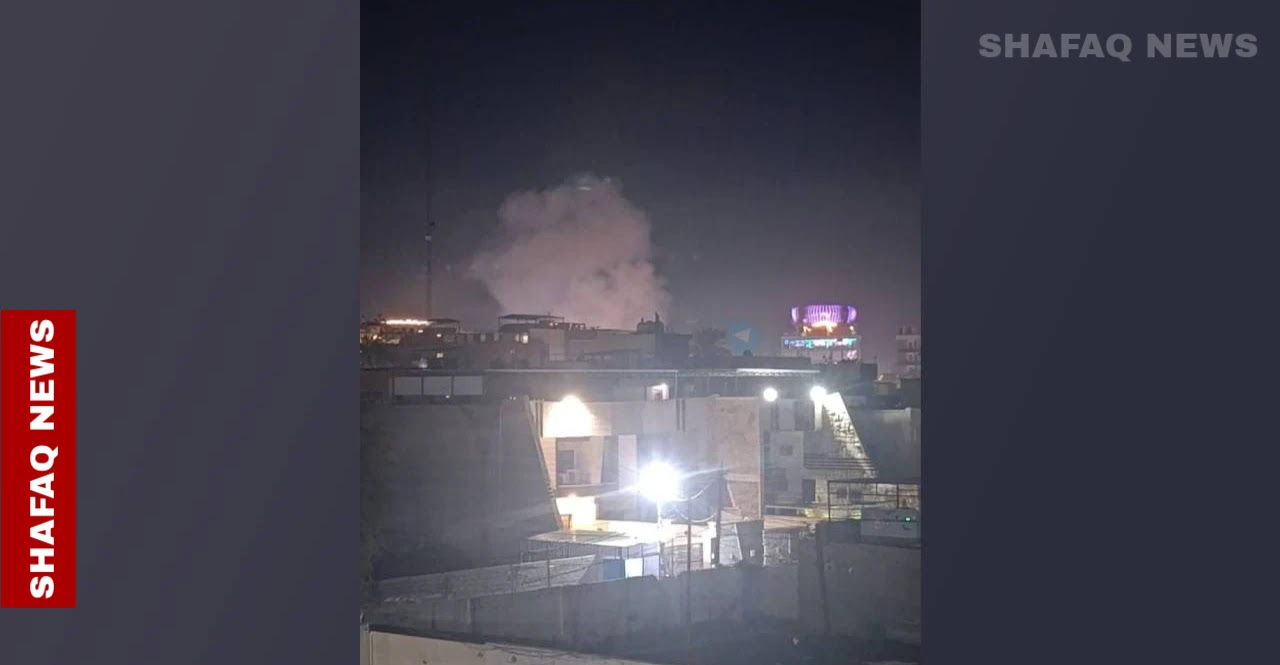
A local source in the independent administration of Soran in the Kurdistan Region reported on Tuesday night/Wednesday morning that a drone flying in the city's sky had been shot down.
The source told Shafaq News Agency that the international coalition's warplanes managed to shoot down a drone in the skies of the Soran administration within Erbil Governorate.
He pointed out that shooting down the plane would result in human casualties or material losses.
As the last US troops pack up in Iraq, militias signal their weapons will stay
Two deadlines are looming for Iraq at the end of the month: the end of a decades-long U.S. military presence and the disarmament of non-state armed groups.
The U.S. withdrawal is underway, and officials say the hundreds of troops remaining in northern Iraq will be out by the Sept. 30 deadline.
The Iraqi government has linked the U.S. withdrawal to an ultimatum for militias to lay down their weapons. But most have indicated they have no plans to do so.
That leaves major questions about what the day after will look like in Iraq.
Iranian-backed Iraqi militias have struck U.S.-linked targets both inside and outside of Iraq since the U.S. and Israel attacked Iran on Feb. 28. They also have coordinated with Yemen’s Houthi rebels to attack Saudi Arabia.
With the war between the U.S. and Iran raging, Tehran is unlikely to give up the leverage it has in neighboring Iraq. U.S. officials are concerned about the militias' ability to continue carrying out attacks — but not enough to delay their withdrawal.
The end of the US mission
U.S. troops invaded Iraq in 2003 to topple Saddam Hussein. They departed in 2011, but three years later, Iraqi authorities invited a smaller U.S.-led mission to fight the Islamic State group, which had rampaged across Iraq, seizing large swaths of territory.
With the extremist group now reduced to scattered sleeper cells — a result of the intervention of Iran-backed militias as well as the U.S.-led coalition -- Washington and Baghdad agreed in 2024 to wind the mission down.
U.S. troops pulled out of bases in most areas of Iraq last year but maintained a presence in the semiautonomous northern Kurdish region. Bases there have regularly come under attack since the U.S. and Israel launched their war against Iran.
A U.S. military official said the withdrawal would be completed by Sept. 30, and the hundreds of troops still present in northern Iraq would mostly be redeployed to Jordan and other countries in the region. Military equipment, including air defense systems, will also be removed. He spoke on condition of anonymity because he was not authorized to comment publicly.
A “normal bilateral security cooperation” agreement could then be negotiated with the central government in Baghdad, he said, but it remains unclear what form that would take.
The official said that the counterterrorism base in Irbil had lost its importance for U.S. troops with the Islamic State threat receding.
During the war with Iran, northern Iraq for the most part did not serve as an “offensive platform,” but U.S. forces there were frequently targeted by Iran and Iran-backed Iraqi militias, so pulling troops out “will reduce our risk,” he said.
But the U.S. military remains concerned about the ability of the Iraqi militias to launch attacks on targets elsewhere in the region, including in Saudi Arabia, Jordan and Israel, and about the presence of Houthi rebel forces in Iraq, he said.
In the past, the U.S. has sometimes struck militia sites in Iraq in retaliation for attacks. Washington has slapped sanctions on some of the groups and could impose more.
Militias take a hard line on disarmament
Iraqi government officials have waffled over whether Sept. 30 is a hard deadline for disarmament of militias or merely the starting point for negotiations.
“There will be no disarming of any groups by the 30th of September,” said Iraqi analyst Sajad Jiyad, speaking at a panel convened by the Atlantic Center think tank last week. “I think that’s probably clear to anybody who watches Iraqi politics.”
While a handful of less-influential militias have agreed to turn over their weapons, the most powerful groups — and closest to Iran — Kataib Hezbollah, Harakat al-Nujaba and Kataib Sayyid al-Shuhada have rejected the prospect or set conditions for disarming that they know the government is unlikely to meet in the near future.
Those include bringing the Kurdish peshmerga security forces in northern Iraq under control of the central government’s military and expelling Iranian Kurdish dissident groups and the Kurdistan Workers’ Party, or PKK, that have bases in the region.
“After establishing these parameters, discussions will focus on regulating weapons, not surrendering them,” an official with one of the Iran-backed Iraqi militias said. “There is absolutely no decision among the factions to surrender weapons, and we have not surrendered any weapons.”
A government official said the government’s strategy currently focuses on bringing armed factions under the control of the Iraqi military. Already many of the militias are part of the Popular Mobilization Forces, a coalition of armed groups that is officially part of the Iraqi armed forces, although the individual militias often act on their own.
The official said the government wants the armed factions to hand over “dynamic weapons” including missiles and long-range aircraft, to the central leadership of the PMF and for the individual factions to be dissolved and placed under the command of the PMF and the Iraqi army.
The officials spoke on condition of anonymity because they were not authorized to speak publicly.
Iraqi government spokesperson Sabah al-Numan said last week that “discussions and dialogues are ongoing, and the file will be resolved after the withdrawal of the international coalition forces."
Kurds are anxious about the day after Sept. 30
While the withdrawal of U.S. troops removes one target from the Kurdish region, it may not halt the attacks.
Mohammed A. Salih, a non-resident senior fellow at the U.S.-based Foreign Policy Research Institute, and an expert on Kurdish and Iraqi affairs, noted that Iran and affiliated groups “have targeted other locations in the Kurdistan region that have not been related to the U.S. troops’ presence.”
Those include the bases of exiled Iranian Kurdish dissident groups, energy facilities, and even the office of the Kurdish region’s Prime Minister Masrour Barzani.
“The withdrawal will expose the Kurdistan region even further and make it an even easier target,” Salih said.
Regional government officials declined to comment, but Barzani has publicly expressed anxiety that the removal of U.S. air defenses would leave the area more vulnerable.
Numan said last week that the Iraqi government was close to procuring new air defense systems from South Korea, Turkey and the U.S.
He told The Associated Press that the new systems “will be deployed according to carefully devised military plans to ensure the complete protection of Iraqi airspace, including the Kurdistan region.”

No comments:
Post a Comment