Printing a new currency in Iraq: The government reassures, but experts warn.
The government is facing a severe liquidity crisis in dinars, impacting the financing of its commitments, which has led it to resort to quantitative easing and printing money as a cautious and temporary measure to support financial stability. While the Prime Minister's financial advisor maintains that this step is governed by precise technical mechanisms and backed by secure foreign reserves, economic experts warn that monetary expansion without real growth could threaten to fuel inflation.
The video for this My FX Buddies Blog is below here:
Currency printing
The Prime Minister’s financial advisor, Mazhar Muhammad Saleh, told Al-Alam Al-Jadeed on Tuesday (May 26, 2026) that “this role is achieved through the efficiency of foreign reserves and their ability to intervene sterilizingly within the money market, which contributes to protecting the national economy from the current balance of payments shock resulting from the geopolitical restrictions related to the Strait of Hormuz, which represents the main passage for Iraqi oil exports, exceeding 85 percent, and which constitutes the main source of revenue for the general budget in normal circumstances.”
He affirms that “the policy of borrowing through quantitative easing tools (printing money) is a cautious one today and represents one of the most important tools for supporting financial and monetary stability in Iraq,” noting that “the mechanisms for discounting and liquidating government bonds as a tool for domestic debt, through open market operations between banks and the central bank, constitute a fundamental safety valve in protecting financial and price stability.”
Saleh continues, “The issuance of currency is done according to precise technical mechanisms and within limits that ensure that monetary stability levels are not exceeded,” stressing that “the Central Bank’s foreign reserves are still above the red line and have not reached alarming levels, which gives monetary policy room to maneuver without depleting the dollar reserves.”
He emphasizes that “the process of preparing and printing the Iraqi currency is subject to high security and technical standards, within regulatory contexts aimed at maintaining financial and monetary stability, at a time when Iraq continues to face challenges related to financing public spending and ensuring the sustainability of financial liquidity.”
Bond loan
Saleh adds that “combining the requirements of quantitative easing, to enhance the liquidity of the economy and finance the needs of the general budget, especially to meet operational obligations, with maintaining the stability of the exchange rate through intervention in the exchange market, necessitates, in light of the continued effects of the current geopolitical shock, resorting to a foreign currency support and balance loan.”
He explains that “the importance of this external loan stems from its role in supporting what is known as the nominal anchor in monetary policy, which is the economic variable on which the monetary authority depends to stabilize market and citizen expectations regarding inflation and monetary stability.”
He explains that “the need for external borrowing to support the general budget will have a positive impact on strengthening foreign reserves, especially when they approach the red line, that is, when the ratio of foreign reserves to money supply falls below the safe stability limits estimated at about 75 percent.”
financial maneuver
The Prime Minister’s financial advisor points out that “reaching this stage requires providing additional cash resources in foreign currency, to ensure the continued effectiveness of the nominal anchor in stabilizing inflation expectations and maintaining monetary stability.”
He adds, “The nominal anchor also represents a reassuring factor for citizens and investors, because it enhances confidence that the central bank will not leave prices or the exchange rate vulnerable to sharp fluctuations or monetary instability, which requires maintaining a sufficient level of foreign reserves capable of intervening in the money market and imposing financial and monetary stability.”
He points out that “monitoring the foreign currency balance when it approaches the red line remains essential, while compensating for any potential shortage through external borrowing when needed, to avoid the option of devaluing the dinar, as it is an undesirable alternative due to the resulting shake-up of monetary confidence and negative effects on economic and investment activity.”
Saleh reiterates that “external borrowing when necessary represents a temporary financial and monetary maneuver aimed at preserving the ability of monetary policy to intervene within the market and impose balance, until the current geopolitical conditions subside and Iraqi oil exports return to their normal paths, with the regularity of public financial flows and the decline of the effects of the Strait of Hormuz shock and the end of the repercussions of the war in the Arabian Gulf.”
The Iraqi government faces challenges in managing cash liquidity in dinars, as it suffers from a chronic shortage of this currency, which affects its ability to meet its financial obligations to pay employee salaries, repay debts, and finance projects.
monetary expansion
For his part, economic researcher Ahmed Eid told Al-Alam Al-Jadeed on Tuesday that “the success of these tools depends on the extent of their use, the nature of the economy, and the state’s ability to control markets and public spending,” explaining that “the Iraqi economy still relies heavily on oil, at a time when the productive sector is clearly weak.”
He affirms that “resorting to tools such as printing money or what is known as quantitative easing may give the government and the central bank temporary space to address the liquidity crisis and finance some financial obligations, but it does not represent a sustainable economic solution unless it is linked to a real increase in production and economic activity.”
He warns that “uncalculated monetary expansion may gradually lead to higher inflation rates and a decline in the purchasing power of citizens, especially if large amounts of money are injected without corresponding real economic growth.”
High inflation
Eid explains that “increasing liquidity in the market without a corresponding increase in goods and services makes prices likely to rise,” noting that “printing currency cannot become a permanent solution to address deficits or financial crises.”
He points out that “rentier economies by their very nature remain linked to fluctuations in oil prices and external revenues,” warning that “the state’s continued reliance on monetary expansion to cover the deficit may lead in the future to deeper imbalances, including weak confidence in the local currency, higher inflation rates, and perhaps increased and continuous pressure on the exchange rate.”
He points out that “the Central Bank’s statement regarding the existence of monetary space and comfortable reserves is relatively true, as long as foreign reserves remain within levels capable of protecting monetary stability, financing imports, and maintaining exchange rate stability.”
The economic researcher affirms that “the safe limits of these policies are linked to several factors, most notably the size of the financial deficit, the level of inflation, the rate of real economic growth, and the state’s ability to diversify its revenues away from oil,” considering that “these represent some of the most prominent problems that the Iraqi economy suffers from in general.”
Iraq currently has a range of banknote denominations that meet various daily transactions, starting from small denominations such as 250, 500 and 1,000 dinars, up to larger denominations such as 5,000, 10,000, 25,000 and even 50,000 dinars which are used in major transactions.
US military: We bombed Iranian boats and missile launch sites
The US military launched attacks on Monday in southern Iran targeting boats that were attempting to plant mines and missile launchers, with US Central Command describing the operation as "defensive".
Tim Hawkins, a spokesman for the U.S. Central Command, said in a statement, "U.S. forces conducted defensive strikes in southern Iran today to protect our forces from threats posed by Iranian forces," without disclosing further details.
New understandings between Baghdad and Erbil... Al-Zaidi "implements long-awaited Kurdish demands"

Wafa Muhammad Karim, a member of the Kurdistan Democratic Party, said on Monday (May 25, 2026) that the visit of the Prime Minister of the Kurdistan Region, Masrour Barzani, to Baghdad was very important, especially in light of the positive understandings with the government of Prime Minister Ali al-Zubaidi.
Karim told Baghdad Today that “there are many outstanding contentious issues between the governments of Baghdad and Erbil that have persisted for more than a decade and a half, but the current phase has witnessed practical steps to implement a number of demands, especially those related to the oil file and moving towards enacting the oil and gas law.”
He added that “the current moves also include fixing the region’s share of the budget and keeping the issue of salaries away from political wrangling, which the Prime Minister emphasized during his recent statements.”
He explained that there is “full support for the government of Ali al-Zaidi as long as it continues to implement the constitutional demands that he had previously emphasized during his visit to Erbil,” indicating that the agreements related to the oil file, the “Sycoda” customs system, and the state’s revenue shares, in addition to the return of oil companies to work in the Kurdistan Region, all need broad political and parliamentary support.
Karim pointed out that implementing Article 140 and guaranteeing the region's share of the budget are an essential part of the ongoing understandings between the two sides.
He explained that Masrour Barzani held meetings with a number of political leaders from the Sunni and Shiite components, with the aim of rallying political and parliamentary support for the agreement concluded between the governments of Baghdad and Erbil.
He added that the regional government also submitted a proposal to Baghdad regarding the lighting project and support for electricity in Baghdad and other governorates, in addition to the governorates of the Kurdistan Region, noting that the Minister of Electricity was present during these moves.
He stressed that “the current indicators are very good,” noting that Masrour Barzani expressed his optimism about the new government, and considered that “the positive points in the relationship between Baghdad and Erbil have become more than the points of contention.”
Relations between the federal government in Baghdad and the Kurdistan Region have been marked for years by multiple contentious issues related to oil, gas, the budget, the salaries of the region’s employees, as well as the management of border crossings and the implementation of Article 140 concerning the disputed territories.
During the last phase, political calls intensified for finding lasting understandings between the two sides, given the need to strengthen political and economic stability, especially with the continued financial, energy and services challenges in Iraq.
Parliamentary committee: The 2026 budget will bebased on a "hedging" oil price of around $60.
The Oil, Gas and Natural Resources Committee of the House of Representatives identified 4 features of this year’s budget.
According to the official newspaper, committee member Hawraa Aziz Al-Moussawi said, "This year's budget will probably be based on adopting a lower (hedging) oil price in the 2026 budget, reaching about $60 per barrel, rationalizing spending, increasing non-oil revenues, and reducing complete dependence on oil."
She explained, "There are discussions related to trying to reduce the financial deficit with the decline in global oil price expectations, because any increase in the price of oil supplied to local refineries may gradually affect the citizen."
Disagreements over wording are delaying the completion of the agreement between Tehran and Washington.
US officials reported on Monday that the finalization of the agreement between Tehran and Washington to end the Iran-Iraq War has been delayed due to disagreements over the wording. CNN quoted US officials as saying that "disagreements over the wording and the lifting of sanctions have delayed the completion of the agreement aimed at ending the Iran-Iraq War."
The report also indicated "optimism about a near resolution of the disagreements," noting that "the Iranian delegation's trip to Qatar is a positive sign." For its part, the Wall Street Journal quoted mediators as saying that "efforts to reach an agreement to end the Iran-Iraq War slowed today," confirming that "Washington and Tehran are holding firm to their positions on the nuclear issue and frozen assets."
Three Explosions Heard in Bandar Abbas, Southern Iran

The Iranian Tasnim News Agency reported today, Monday, that the sound of three explosions was heard in Bandar Abbas, in the southern part of the country.
Citing sources, the agency stated: "The sound of three explosions was heard in Bandar Abbas, southern Iran, and the relevant authorities are currently investigating the causes."
"Be careful... Trump hasn't called you."
Al-Kadhimi's messages to Al-Zaydi: Do not seek revenge... We made a mistake with the owner of "Key Card"
In an interview with 964 Network, Mustafa Al-Kadhimi warned that "we might miss the train" and recalled key moments in a quick "accounting" session.
old image from an older article

Former Prime Minister Mustafa Al-Kadhimi addressed a series of messages to President Ali Al-Zidi, advising him to pay special attention to regional and international relations and to be aware that Trump did not contact Iraq when he announced the details of his promising agreement with Iran to Middle Eastern leaders two days prior, and the implications of that. Al-Kadhimi believes that it is essential at this stage to focus on accumulating experience among successive governments to build on what has been achieved and avoid repeating mistakes, as "we all make mistakes." He spoke frankly about his thorough review of all the controversial issues that arose during his tenure, especially the committee investigating major crimes headed by Lieutenant General Ahmed Abu Ragheef, stressing that the arrangements were sound, but "junior employees sometimes made mistakes, particularly with businessman Bahaa Abdul Hussein, owner of the well-known Key Card company." This came during a meeting between the political editor of Network 964 and former Prime Minister Mustafa Al-Kadhimi yesterday, Sunday.
ederal governments must adopt a sound evaluation of past experiences as a guiding principle in their executive work. There are no perfect experiences; rather, there are experiences characterized by multiple advantages or multiple disadvantages. A true evaluation is based on the idea of assigning points, by identifying the paths and mechanisms for overcoming the crises that the government faced, firstly, how the government assumed national responsibility and how it relinquished it, secondly, what the key issues were that it faced and how it worked to resolve them, thirdly, and the most important question: Did the government work to protect itself or to protect the country, fourthly?
The answer should not be emotional, but rather based on a real study that relies on tangible facts and practical realities, through which performance can be evaluated, and this government can be described as having succeeded and that one as having failed, taking into account the complex internal and external circumstances that Iraq is always going through.
What is required of any government is cumulative work to fulfill the aspirations of the people. There are important projects launched by previous governments, and I urge President Ali al-Zaidi to develop, implement, or revive them. There are also projects that have harmed the country, necessitating corrective measures to protect it, without resorting to revenge or retaliation. We all make mistakes, and what is needed is correction and support for sincere initiatives and good intentions, for the sake of Iraq, not for narrow interests.
Today, we face major challenges, foremost among them foreign relations and restoring the role of Iraqi diplomacy, so that we do not miss the train, and so that what happened two days ago is not repeated when President Donald Trump contacted the leaders of the countries of the region and did not contact the state of Iraq, which raises questions about Iraq’s absence from any prior information or coordination, unlike its regional surroundings.
We do not hold the new government responsible for this exclusion, as it is at the beginning of its journey. However, the alarming decline in Iraq's regional and international presence prompts us to ask: Who is responsible for weakening our diplomatic role and relinquishing Iraq's status as an active player and pivot, so that it has unfortunately become merely affected by events or a bargaining chip? It is worth noting that the Iraqi arena is the most affected by the repercussions of this crisis, if not the most exposed to its consequences, especially since Iraq is not a marginal country. It is regrettable to see some of its own people contributing to the decline of its significant regional presence, after it was, a few years ago, a bridge for consensus and a starting point for de-escalation.
The second challenge is the economic one, which is the talk of the town today. I don't want to talk about my experience in an overly positive way, but our experience in this area proceeded along two parallel tracks: the first was economic reform, and the second was combating corruption. The goal was to restore confidence in the Iraqi economy for domestic investors, while foreign investors usually link investment to political and security stability.
- For the sake of reform, we worked with Dr. Ali Abdul Amir Allawi, the Minister of Finance, on issuing the “White Paper,” which is a genuine reform paper, the goal of which is to diversify financial resources, streamline the public sector, and work on developing the private sector to absorb young talents, so that we do not see today what we are witnessing in terms of demonstrations by thousands of young people looking for a job or appointment, and we do not deal with them as electoral votes, so that we issue decisions to appoint them, and then ask after years: How do we secure their salaries?
We made difficult decisions, including changing the exchange rate, which was a genuine reform measure with significant benefits. The market adapted to the new rate after a short period, and the difference between the official and parallel rates was negligible. Unfortunately, some systematically worked to demonize this decision, and the general public believed this campaign. But today I ask: What is the difference between the official and parallel rates? Have prices stabilized? And what is the cost of this to the economy and the citizens? You will not find a satisfactory answer because officials do not dare to admit their mistakes, even though admitting fault is a virtue and a mark of honor.
Regarding the fight against corruption, we worked diligently on this issue, specifically through the committee established by Royal Decree (29). The committee sometimes succeeded and sometimes erred. Who bears the responsibility? I bear the responsibility, even though the reports I received from official and oversight bodies praised its work. Unfortunately, some junior employees believe they are achieving certain results, while those results are not being achieved in the required manner. In this context, I heard many rumors without any conclusive or tangible evidence, which compelled me to personally follow up on these cases, away from the public eye and established channels. It became clear to me that there were irregularities in some cases and with some individuals, most notably the businessman Mr. Bahaa Abdul Hussein.
– Reviewing the situation is essential for evaluating the course of political and executive action in a complex country with volatile internal and external circumstances. I believe it is the duty of a politician to be transparent with and reassure their people, not to operate with a mindset of singular opinion, but rather with a mindset of openness, cooperation, integration, and learning from experience.
Topped by the salary scale: Parliamentary pressure to pass 4 vital laws
MP Ali al-Daraji revealed on Monday that there is intense parliamentary activity and pressure being exerted within the House of Representatives to pass and amend a package of stalled strategic laws, most notably the law amending the salary scale and the military service law.
Al-Daraji told the Information Agency that "a group of members of parliament are leading a broad movement to pressure for the amendment and passage of four key laws that affect various segments of society."
He added that "the laws targeted by this movement include amending the employee salary scale, the military service law, the retirement law, and the law on the rights of martyrs," noting that "parliament is determined to continue the pressure to ensure these amendments are made in a way that guarantees social justice and fairness for the groups covered by them."
It is worth mentioning that MP Abbas Hayal announced earlier that a vote on a package of important laws and legislation that has been languishing in parliament for a long time is imminent, stressing that the coming period will witness the enactment of laws that affect the lives of citizens and the security establishment.
The oil and gas law tops the parliament's priorities; moves are underway to legislate it in the coming period.
MP Qusay Abbas confirmed that the Oil, Gas and Natural Resources Law is a priority within Parliament in order to ensure its enactment in the next phase of the current legislative session of the Council.
Abbas told Al-Maalomah, “There is a priority for laws that have been pending for a long time without legislation, such as the oil and gas law, which is considered one of the laws that most need legislation in the current parliamentary session.”
He added that "this law has not been passed despite the succession of parliamentary sessions, and therefore it has priority in being passed during the next stage of the House of Representatives, in addition to the existence of other laws that need legislation."
He explained that "other laws related to human rights, currently within the relevant committee, also require legislation in the next phase, in addition to many other laws too numerous to count precisely," noting "a parliamentary will to enact laws that have been pending for a long time and have been carried over from previous sessions."
MP: A package of stalled laws will soon see the light, including those related to the Popular Mobilization Forces and red cards.

Member of Parliament Abbas Hayal announced on Monday that a vote on a package of important and long-awaited laws and legislation is imminent, emphasizing that the coming period will witness the enactment of laws that directly impact the lives of citizens and the security establishment.
Hayal told the Information Agency that "Parliament intends to intensify its legislative role on strategic laws that have been stalled for years, most notably the law concerning holders of red cards and the communications and information technology law."
He added that "the new amendments to the traffic law and the Popular Mobilization Forces law will be among the top priorities that will soon be enacted," noting that "the relevant parliamentary committees have made significant progress in finalizing and drafting these laws in a way that aligns with the public interest."
Hayal continued, "The current stage requires political consensus to pass these laws, setting aside political disputes, as they represent a fundamental pillar for regulating the work of state institutions and ensuring justice for broad segments of the Iraqi people."
Double salaries are straining the budget; an economist warns against printing money and calls for urgent austerity measures.

Economic expert Hashim al-Haboubi warned the government on Sunday of the dangers of continuing to print local currency, stressing that it will deplete the country's strategic reserves of gold and hard currency. He called for the implementation of an urgent package of financial reforms, spearheaded by strict government austerity measures.
Al-Haboubi told the Information Agency that "printing local currency will have dire consequences, primarily a decline in the purchasing power of the Iraqi dinar against foreign currencies, especially the dollar."
He added that "this step will deplete sovereign reserves, which currently stand at approximately 147 tons of gold and $114 billion, in addition to funds deposited with the US Federal Reserve." He urged the government to "implement a strict austerity policy, beginning with eliminating unnecessary expenditures."
He explained that "the state treasury spends 142 billion dinars monthly on the Presidency, in addition to the presence of more than 300 advisors in the Prime Minister's office – figures that strain the country's budget."
He emphasized that "the first steps toward genuine reform lie in unifying the salary system and preventing dual employment."
Al-Haboubi pointed out that "there are more than 20,000 people receiving multiple salaries per month, and some even receive up to nine salaries simultaneously."
Parliamentary Finance Committee: We await a decisive report on the financial situation following the decline in oil exports.

Member of the Parliamentary Finance Committee, Omar al-Karawi, confirmed on Sunday that his committee is awaiting a crucial report from the Ministry of Finance outlining the country's financial situation, given Baghdad's reduced capacity to export more than 90% of its crude oil.
Al-Karawi told Al-Maalouma that "the Parliamentary Finance Committee expects a highly important report from the Ministry of Finance, after the Eid al-Adha holiday, clarifying the overall financial situation, the extent of the existing challenges, and the currently proposed solutions to ensure the continued payment of salaries and other essential expenditures."
He explained that "treasury revenues have decreased by more than 90% with the cessation of the majority of crude oil exports, due to the current situation in the Arabian Gulf," indicating that "the Ministry of Finance's report will provide a comprehensive picture of the nature of the challenges and problems, and the possible solutions for addressing them."
He added that "the assessments will then be more realistic and objective in diagnosing the magnitude of the financial crisis in Iraq," noting that "the next phase requires the adoption of a clear strategy by Ali al-Zaidi's government to increase revenues, particularly non-oil revenues."
Al-Karawi stressed that “the recent crisis has underscored the necessity of creating a diversified economy capable of withstanding disruptions and crises, by boosting non-oil revenues and reducing reliance on oil as the sole source of funding.”
Denying the printing of currency, a financial advisor reassures the public about Iraq's cash reserves.
The financial advisor to the Council of Ministers, Mazhar Muhammad Salih, denied on Monday the circulating reports regarding the Central Bank of Iraq printing local currency outside of regulations, stressing that this process is subject to legal mechanisms and strict financial backing.
Salih told the Information Agency, "The talk circulating among the Iraqi public about the Central Bank printing local currency is completely unfounded," explaining that "the currency printing process is governed by two legal mechanisms: the first depends on the actual market need, and the second is to address any shortage of cash liquidity."
He clarified that "these two operations cannot be carried out without full backing in hard foreign currencies and gold," noting that "the function of the Central Bank's reserves is to maintain the stability of the exchange rate, and the current reserves are in very good condition and have never been withdrawn."
In another context, Saleh revealed the fate of the budget, emphasizing that "preparing a budget for the remainder of this year is contingent upon halting the war of aggression against the Islamic Republic of Iran." He noted that "if the war were to cease immediately, the government would be able to prepare an exceptional or indicative budget for the remaining months."
Iraq is moving towards a post-oil economy as part of its "2035 Plan".
The directives issued by the Prime Minister, Ali Faleh Al-Zaidi, during his recent visit to the Ministry of Finance, have garnered widespread attention in economic and specialized circles, after they included clear indications of the need to reformulate Iraq’s financial policy, reduce dependence on oil, and expand the role of the private sector, in conjunction with the preparation of “Iraq Plan 2035,” which aims to establish a new economic contract that does not patch up the old one but builds a completely different model.
Experts believe that the Prime Minister’s speech revealed a new governmental direction based on moving from the traditional management of the economy to a model that relies on development, production and investment, with a focus on reforming the financial and customs system and stimulating non-oil sectors as a fundamental pillar of economic stability in the next stage .
New economy
Financial expert Dr. Nabil Al-Abadi said: The proposal presented by the Prime Minister reflects a fundamental shift in the state’s financial philosophy from a rentier, distributive mentality to a productive and sustainable economic mentality, explaining that the talk about Iraq’s 2035 plan confirms that we are facing an attempt to establish a new economic contract that does not patch up the old one but builds a completely different model.
economic model
Al-Abadi added to Al-Sabah: “The diagnosis of the budget’s 90 percent dependence on oil is not merely a description of an economic reality, but a clear declaration of the fragility of the existing economic model. The danger lies in the governing and operational expenses that consume the budget without producing a high GDP. The paradox pointed out by the Prime Minister is that the state has a huge budget but does not create a robust economy. The shift towards making the economy manage the state instead of the state managing the economy represents a redefinition of the government’s role to be an organizer and stimulator of the business and investment environment .”
Energies towards production
He pointed out that relying on the private sector is no longer an intellectual option but an economic necessity to stop the inflation of government employment and to redirect energies towards production, noting that the move towards automation and reforming the customs system reflects a deep understanding of the importance of closing the loopholes of financial waste and maximizing non-oil revenues, while he described linking the dues of farmers and contractors to the continuation of the economic cycle as an “advanced awareness” of the importance of liquidity in stimulating the productive sectors .
Formulating fiscal policy
For his part, Jassim Al-Aradi, a member of the Baghdad Economic Forum, believes that the contents of the Prime Minister’s speech reflect a serious governmental direction to reformulate fiscal policy in line with current economic challenges and the requirements of sustainable development in Iraq .
Al-Aradi said that the diagnosis of the budget’s almost total dependence on oil revenues represents a realistic reading of the nature of the Iraqi economy, noting that the next stage requires accelerating the procedures for diversifying national income sources by revitalizing the industrial, agricultural, commercial and service sectors and not being satisfied with traditional solutions related to oil prices .
Modern economies
The spokesperson added that transforming the role of the state from manager of the economy to regulator and supporter of economic activity is one of the most prominent positive indicators, because it gives the private sector a greater opportunity to participate in creating job opportunities and driving investment, stressing that modern economies are based on partnership between the state and the private sector to achieve growth and stability .
Al-Aradi explained that the Prime Minister’s directives regarding automation and control of customs ports represent an important step to address financial waste and reduce cases of revenue manipulation, as well as enhance financial transparency and raise the efficiency of government collection .
Financial challenges
For his part, economist Dr. Murtadha Al-Khafaji described the Prime Minister’s speech as representing an economic roadmap that reflects a clear understanding of the magnitude of the financial challenges facing Iraq in light of regional and international changes and their direct impact on oil prices and public revenues .
Al-Khafaji explained that the Prime Minister’s emphasis on diversifying the economy and reducing dependence on oil represents an important strategic direction, especially since the Iraqi economy still depends heavily on oil revenues, which makes public finances vulnerable to global fluctuations .
Stimulating the productive sectors
He added that the call to make the budget a roadmap for the future reflects a new understanding of the role of fiscal policy in stimulating development and driving productive sectors, noting that supporting the private sector and changing traditional economic concepts are a necessary step to build a more resilient and sustainable economy .
Al-Khafaji stated that investing in Iraq’s geographical location and developing the transport and trade sectors could provide important financial resources outside the oil framework, stressing the importance of automation in customs ports to eliminate manipulation and increase non-oil revenues .
4 pillars for the 2026 budget
The country's fiscal policy faces a critical test in maintaining economic stability, as the parliamentary committee on oil, gas, and natural resources has outlined four key pillars aimed at protecting the 2026 budget from external shocks. This legislative initiative comes amidst a complex regional and international environment, buffeted by oil market volatility and escalating geopolitical tensions in vital waterways, placing Iraq's financial security under exceptional challenges.
Member of the Oil Committee, MP Hawraa Aziz Al-Moussawi, said that the (2026) budget will be based on four main pillars, foremost among them setting a hedge oil price of about (60) dollars per barrel, in addition to rationalizing public spending, increasing non-oil revenues, and reducing dependence on oil as a main source of budget financing.
In her interview with Al-Sabah, she indicated that there are discussions within the committee regarding ways to reduce the financial deficit in light of declining global expectations for oil prices, warning that any change in the prices of oil derivatives may gradually affect the living conditions of citizens.
In the same vein, Dr. Ali Al-Azirjawi, a member of the State of Law Coalition, called for the adoption of an emergency plan similar to the Food Security Law should the 2026 budget not be approved within the constitutional timeframe. He explained that the current circumstances necessitate exceptional measures to ensure the continued and organized functioning of state institutions. He added that Iraq faces economic challenges related to the size of its internal and external debt, in addition to regional tensions that further complicate the overall financial situation.
For his part, economic researcher Bassam Raad considered setting a hedging oil price of (60) dollars per barrel a proactive step aimed at controlling public spending and avoiding the exacerbation of internal debt, but he pointed out that these data may not be sufficient to bridge the gap between revenues and actual expenditures, in light of the continued pressures on the general budget.
For his part, economist Nabil Al-Marsoumi suggested the possibility of postponing the (2026) budget to the year (2027), attributing this to the lack of time, the turmoil in the oil markets, and the fluctuation in export quantities, especially in light of the repercussions of the Strait of Hormuz crisis.
 Thanks
Support My FX Buddies
BuyMeACoffee CashApp:$tishwash
https://paypal.me/tishwash

.jpeg)
THese are FOR SUNDAY MAY 24 2026
Hopes for a US-Iranian deal are putting pressure on the dollar and supporting the toman.
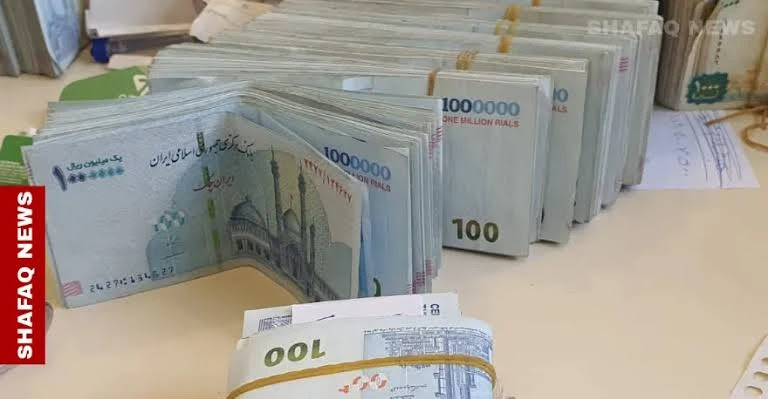
The US dollar fell against the Iranian toman on Sunday, amid rising expectations that an agreement or temporary understanding between Iran and the United States could be reached in the coming hours.
The price of 100 dollars reached about 16.8 million tomans in wholesale transactions, while it recorded 16.7 million tomans in individual transactions, indicating that one dollar was trading between 167,000 and 168,000 tomans.
This decline comes in conjunction with international reports and statements exchanged between Washington and Tehran that spoke of progress in talks.
Reports indicated the existence of a preliminary memorandum of understanding that could open the door to a broader agreement on de-escalation and the nuclear issue, which boosted market expectations of a possible economic breakthrough.
Traders believe that the increased likelihood of an agreement has led to a decline in demand for the dollar for speculative and hedging purposes, in parallel with growing hopes for the possibility of easing economic pressures and increasing foreign currency inflows, which has given the Iranian toman a temporary boost in the market.
Earlier today, Axios revealed that Washington will agree to negotiate the lifting of sanctions and the unfreezing of Iranian funds within a period of 60 days, while the American forces that were deployed during the past months will remain in the region and will not withdraw unless a final agreement is reached.
US President Donald Trump announced late Saturday that a preliminary agreement had been reached with Iran, which includes opening the Strait of Hormuz.
Iraq’s “Swiss dinar” still lives in Kurdistan livestock markets
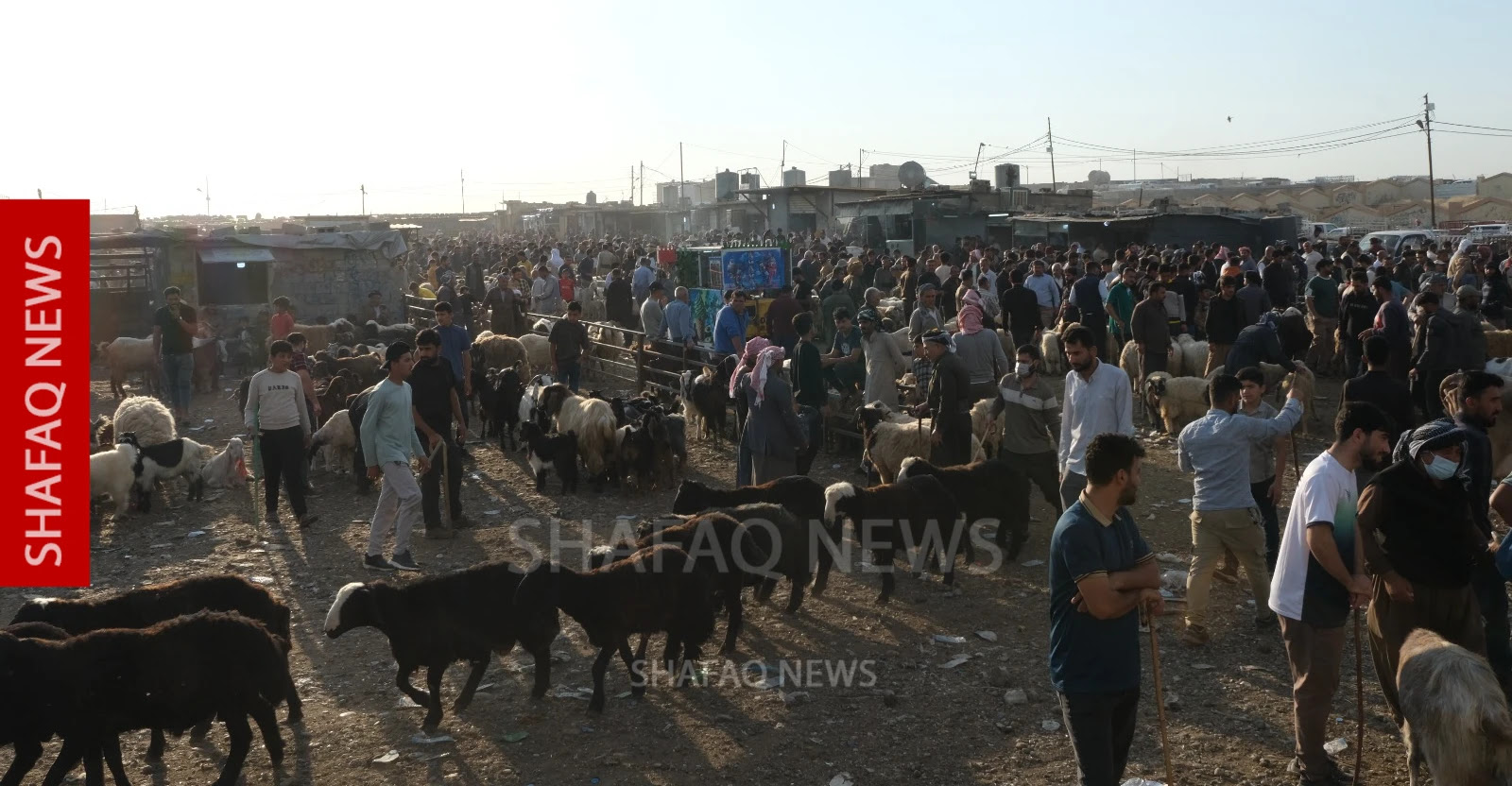
More than 35 years after Iraq’s old “Swiss dinar” disappeared from circulation, livestock traders across the Kurdistan Region still use the former currency as the main pricing reference in cattle and meat markets.
The “Swiss dinar” was Iraq’s internationally recognized currency until the early 1990s, before the former Iraqi regime replaced it with locally printed banknotes, which later lost value outside Iraq. After the Kurdistan Region broke away from Baghdad’s control in 1991, it continued using the Swiss dinar until the fall of the regime in 2003. Traders commonly calculate one Swiss dinar as equivalent to around 150 current Iraqi dinars, even though all actual payments are made using today’s Iraqi currency.
“For livestock trading, we still rely on the old currency when setting prices,” livestock seller Ghazi Qabban told Shafaq News. “For example, one kilogram of meat may be priced at 60 dinars according to the old system, but that actually equals around 9,000 dinars (about $5.85) in today’s currency.”
Many traders, particularly older sellers, Qabban explained, still prefer the former currency because it avoids dealing with the large figures attached to the current Iraqi dinar, stressing that the Swiss dinar today functions only as “a unit of calculation.”
The practice is no longer limited to Kurdish livestock traders, according to market worker Faisal Abdullah, who noted that many Arab customers visiting the markets also prefer using the old pricing method.
“We usually multiply the old price by 150 to directly obtain the value in the current currency,” Abdullah said, describing the formula as the market’s shared financial language.
Government advisor: New financial strategy to raise non-oil revenues to 45%
Saleh told Al-Furat News that “Prime Minister Ali Al-Zaidi, during the historic meeting with the Iraqi financial authority held on May 23, 2026, outlined a firm vision for building the future of public finance in the country,” explaining that “the new beginning came from a fundamental pillar represented by announcing the alternative path for public finance and Iraqi financial policy.”
He added that “diversifying public revenues and breaking dependence on the single resource of crude oil, and ending the Iraqi economy’s connection to the geopolitical risks of the energy market, has become a necessity that must be achieved,” noting that “the Strait of Hormuz shock has reaffirmed the importance of redrawing future maps by adopting economic and financial diversification.”
Saleh explained that “redesigning Iraq’s vision for the period 2020-2025 should be based on the principle of economic diversification based on a genuine partnership between the state and the productive private sector, while launching a suitable environment for a productive social market economy,” noting that “the plan aims to raise the contribution of non-oil revenues from less than 10% currently to about 45% as a first stage.”
He added that "achieving this percentage requires a fundamental shift in the philosophy of public finance, from merely distributing resources to operating and producing them, through establishing a strong relationship with the market economy based on institutions, efficiency and production."
Saleh pointed out that "the future Iraq must be based on the efficient diversification of budget resources and sources of GDP, in line with the national strategy for developing market forces and the private sector."
Saleh stressed that “transforming the general budget into a development action plan represents an important reform step in managing the national economy, because it moves it from a tool for distributing expenditures to a tool for directing development and achieving the state’s strategic goals.”
He added that "previous budgets were linked to operational spending, especially salaries and subsidies, which made the margin for developmental investment limited, while the new approach means moving to a model based on advance planning, setting priorities and measuring results."
Saleh continued, "This transformation requires a change in the philosophy of the state's management of public resources, so that the budget is based on programs and objectives and not just on traditional items, and that every dinar spent must have a tangible economic and social impact."
He pointed out that “involving the private sector in implementing development projects is a key element for the success of this approach, because it reduces the burden on the state, enhances implementation efficiency, and increases the dynamism of the economy,” stressing that “enhancing transparency and activating oversight and accountability are essential conditions to ensure the success of the plan.”
Saleh concluded by saying that “the success of this approach remains dependent on the ability of institutions to implement it effectively and not just to plan or announce it, because international experiences have proven that the real difference between successful plans and those that remain just ink on paper lies in the efficiency of management, the stability of decision-making, and the commitment to continuous reform.” He explained that “linking the budget to a clear strategic vision and managing it with a results-based methodology can transform it into an effective development tool for building a more sustainable and diversified economy.”
Experts: Financial and economic reform begins with combating corruption and diversifying sources of income.
Economic experts and researchers have stressed that the success of any financial and economic reform program in Iraq requires a shift from “crisis management” to “development management,” through the development of a clear roadmap based on time phases and achievable goals, emphasizing that true reform is not only linked to setting plans, but also to the state’s ability to implement and sustain them .
Professor of International Economics Nawar Al-Saadi said: “The success of any financial and economic reform program in Iraq requires first moving from crisis management to development management, by setting a realistic roadmap based on clear time phases and measurable goals . ”
He added that the government is required to begin reforming the structure of public spending, especially reducing the inflation of operational expenses and linking government employment to actual needs, in parallel with directing spending towards investment, production and infrastructure, indicating that reforming the tax and customs system, expanding non-oil revenues, developing the banking sector and digital transformation are essential steps to enhance financial stability .
Al-Saadi pointed out that Iraq still relies on oil for more than 90 percent of its public revenues, making it vulnerable to price fluctuations and regional crises, stressing that building a diversified economy requires a long-term vision based on developing the agriculture, industry, logistics and energy sectors .
He explained that the real challenge lies not only in preparing plans, but also in ensuring political continuity, fighting corruption, and unifying economic decision-making, because any economic reform without legislative and administrative stability will remain limited in its impact .
For his part, economist Mustafa Al-Faraj stressed that the first step to reforming the Iraqi economy is to eliminate financial and administrative corruption, as it is the biggest obstacle to any real development process .
He pointed out the need to move towards diversifying sources of income and not relying on oil as the sole resource, through developing the industrial sector and supporting agriculture to achieve food security, noting that Iraq has great potential in the tourism sector, especially religious tourism, which can contribute to attracting hard currency and enhancing public revenues .
Al-Faraj stressed the importance of organizing and maximizing the state’s non-oil resources by improving tax collection and activating the role of customs, in order to ensure increased revenues and reduced financial waste .
For his part, economic researcher Ahmed Eid said: “The problem in Iraq is not only related to governments or the people who hold power, but to the nature of the administrative and economic system that has been in place for years, which has resulted in weak planning, conflicting interests, and widespread corruption .”
He added that challenges still exist due to the absence of a long-term economic vision, the state’s almost complete dependence on oil, as well as the weakness of regulatory and executive institutions, indicating that one of the most prominent problems is the failure to assign economic and administrative files to specialists who possess experience and competence .
Eid stressed that real reform begins with building strong institutions based on the principles of efficiency, accountability, and scientific planning, away from political quotas and rivalries. He pointed out that the current government has some indicators and steps that can be included within the framework of financial and economic reform, but the main problem lies in the absence of integrated implementation and institutional sustainability .
He explained that fiscal reform requires controlling public spending, reducing waste and corruption, and restructuring subsidies, in addition to developing the tax and customs systems in a way that enhances non-oil revenues, while economic reform requires supporting the private sector, encouraging local and foreign investment, and developing the agriculture, industry, tourism, and logistics sectors .
He pointed out that setting a realistic roadmap for reform should begin with reforming financial management, then moving on to stimulating local production, while providing a stable legal and banking environment that encourages investors, as well as having a genuine political will to confront corruption networks and the rentier economy.
Source: Expectations of a further drop in the dollar's price on the parallel market after the Eid holiday.
An informed source revealed to Al-Mustaqilla on Thursday that expectations indicate a possible new decrease in the dollar exchange rate within the parallel market in Iraq during the coming days, amid talk of changes in market activity after the Eid al-Adha holiday.
According to the source, who preferred not to be named, the currency exchange markets in Baghdad and a number of governorates are experiencing a state of anticipation, with expectations of an increase in the supply of dollars and a decline in speculative activity in the informal market, which may be reflected in prices gradually in the near future.
The source indicated that the parallel market may also be affected by previous regulatory measures and government controls related to buying and selling operations in exchange companies, which contributed to reducing the activity of the informal market during the past months.
In the same context, forecasts suggested that the continued relative stability in demand for the dollar, along with regulatory measures, could lead to a further decline in prices, with the possibility of them reaching levels lower than the current ones if the same factors continue during the coming weeks.
Despite these expectations, experts confirm that the exchange market remains sensitive and is quickly affected by any changes in supply and demand or economic decisions, which makes any expectations dependent on actual developments on the ground during the coming period.
Iraq and China discuss ways to enhance joint cooperation in the political, economic and cultural fields.

The Undersecretary of the Ministry of Foreign Affairs for Multilateral and Legal Affairs, Ambassador Shorsh Khalid Saeed, met today, Sunday, at the Ministry building, with the Ambassador of the People's Republic of China to Iraq, Cui Wei, on the occasion of the end of his diplomatic mission. They discussed ways to enhance joint cooperation in the political, economic, and cultural fields.
A statement from the Ministry of Foreign Affairs indicated that during the meeting, the course of bilateral relations between the Republic of Iraq and the People's Republic of China was reviewed, along with ways to strengthen joint cooperation in the political, economic, and cultural fields, as well as exchanging support and coordination in international organizations in a manner that serves the interests of the two friendly countries.
The two sides also discussed the security situation in the region, emphasizing the importance of supporting stabilization efforts and strengthening international cooperation to contribute to consolidating security and development.
The Undersecretary praised the role played by the Chinese Ambassador during his tenure in Iraq and his efforts in strengthening bilateral cooperation in various fields, particularly political, economic, and energy sectors, wishing him success in his future diplomatic endeavors.
For his part, the Chinese ambassador expressed his gratitude for the support he received during his tenure in Iraq, affirming that the new Chinese ambassador will continue working to promote China's vision of supporting stability and development in Iraq, as well as supporting the presence of Chinese companies and expanding investment opportunities in the Iraqi market.
Ports: An integrated strategy to facilitate trade and protect the national economy
he head of the Border Ports Authority, Omar Al-Waeli, confirmed on Sunday that there has been a noticeable decline in smuggling operations through the ports as a result of tightening control procedures and strengthening field control, noting that these measures have contributed to achieving a clear increase in revenues, while pointing to the implementation of an integrated strategy to facilitate trade and protect the national economy.
Al-Waeli said, “The border crossings are subject to smuggling attempts in various forms, but the volume of these operations has witnessed a noticeable decline in recent years as a result of tightening control procedures and strengthening field control.”
He added that "the Ports Authority has adopted a number of mechanisms to reduce smuggling, most notably automating procedures, activating monitoring systems and cameras, intensifying auditing and detection work, as well as continuous coordination with security and regulatory bodies and activating the principle of the single window, which contributes to reducing cases of manipulation and corruption."
He pointed out that "the Authority adopts an integrated strategy aimed at achieving a balance between facilitating trade, enhancing oversight, and protecting the national economy, through digital transformation, standardization of procedures, raising the efficiency of employees, combating administrative and financial corruption, as well as developing infrastructure and using modern technologies in inspection and detection," explaining that "these measures have resulted in a clear increase in revenues, a reduction in waste and smuggling rates, and faster completion of transactions within the ports."
He pointed out that "there is ongoing coordination between the federal government and the Kurdistan Regional Government regarding the management of border crossings, information exchange, control procedures, and the activation of the ASYCUDA system, given that the border crossings represent a part of the state's economic sovereignty."
He noted that "the last phase witnessed progress in the levels of joint cooperation through the coordination committees, while efforts continue to reach a complete unification of customs and control procedures in all Iraqi ports."
Al-Waeli continued, “Smugglers are subject to penalties based on applicable laws, including financial fines, confiscation of goods and means of transport in some cases, as well as referral to the judiciary and taking the necessary penal measures against violators.” He pointed out that “tightening penalties and activating judicial follow-up has contributed to strengthening deterrence, reducing many smuggling attempts, and raising the level of compliance with laws within border crossings.”
He explained that “the smuggling of drugs, weapons and prohibited materials, as well as organized commercial smuggling that harms the national economy, are among the most dangerous types of smuggling that the state faces,” noting that “the Authority deals with these files as they directly affect national and economic security by strengthening intelligence work, using modern inspection devices, intensifying detection and auditing procedures, and carrying out joint operations with the competent security agencies to reduce these phenomena and prosecute those involved in them.”
Mohsen Al-Humaid discusses fruitful financial and field cooperation with the European Bank for Reconstruction and Development

The President of the International Chamber of Commerce - Iraq (ICC), Engineer Mohsen Al-Humaid, discussed, during his meeting with the Director of the European Bank for Reconstruction and Development (EBRD) office in Iraq, Ms. Katharina Hansen, mechanisms to enhance economic cooperation and open new avenues that contribute to supporting the Iraqi economy and encouraging European companies to enter the Iraqi market.
During the meeting, Al-Humaid stressed the importance of expanding partnerships with international financial institutions in a way that positively impacts the economic and investment situation in Iraq, noting that the current stage requires strengthening financial and technical cooperation in a way that supports development projects and stimulates the business environment.
He suggested that the European Bank for Reconstruction and Development should move towards supporting Iraqi banks through lending and financing programs, with these facilities being reflected on large, medium and small companies, in a way that contributes to revitalizing the private sector and driving the national economy.
Al-Humaid stressed the importance of specialized European companies entering the Iraqi market, emphasizing that Iraq has promising opportunities and a fertile investment environment in various economic, productive and service sectors.
He pointed to the need to work on making Iraq a major destination for specialized European companies, through providing genuine partnerships that contribute to the transfer of expertise and modern technology and support sustainable economic development paths.
The Central Bank imposes a "harsh sorting" of banks... and the National Bank of Iraq raises its capital to 650 billion!
link
The National Bank of Iraq announced in an official statement the approval of increasing its capital to 650 billion Iraqi dinars, in a move that reflects accelerating trends within the Iraqi banking sector towards strengthening financial solvency and raising levels of compliance with regulatory standards.
According to the statement, this increase comes as part of a plan aimed at supporting the bank's ability to expand its operations, enhance customer confidence, and keep pace with changes in the financial environment within Iraq.
In the same context, banking sources revealed to Al-Mustaqilla that the Central Bank of Iraq continues to impose increasing regulatory pressure on banks operating in the country, by setting high capital ceilings as a basic condition for the continuation of activity within the market.
The sources explained that the next phase may witness a real “reshuffling” of the banking sector, where only banks that raise their capital and adhere to strict compliance standards will be allowed to remain in the market, as part of a policy aimed at reducing risks and enhancing financial stability.
Observers believe that these moves reflect a new phase in the Iraqi banking system, the most prominent feature of which is restructuring and raising the requirements for continuity, which may push a number of banks to merge or reduce their activity if they are unable to keep up with these condition
Here's that article I couldn't find that I'll talk about tomorrow
After smoking videos and image bans
Al-Zaidi in a new video: Who is burning our financial documents? I want the Big Four and Checklist immediately.
It's not a youtube video so I can't post it here
This week, the office of Prime Minister Ali al-Zaidi released a video clip of his remarks at a cabinet meeting on Monday, May 25, 2026. In the clip, he criticized the Federal Board of Supreme Audit for burning documents related to companies and projects before auditing them. He called for dealing with the Big Four companies and amending the checklist criteria. This followed a previous video released by his office in which he expressed his objections to customs duties, asking rhetorically, "Do Iraqis smoke?" He also prohibited cabinet members from displaying his or their own photos in government offices. The first video released of the cabinet meeting, on May 16, showed al-Zaidi expressing his anger at ministers and forbidding them from appointing their office directors except from within their respective ministries.
In today's session, Al-Zaydi criticized the work mechanisms followed within the Financial Control Bureau, describing the delay in auditing accounts and data as an "unacceptable disruption" that extends for years and harms the mixed sector. During the Cabinet session, Al-Zaydi ordered the need to change the traditional auditing method and move towards the standards of international companies, announcing the government's readiness to provide any shortage in technical staff and employees to ensure speed and diligence in performance. He criticized the Bureau's practice of burning documents once every five years, demanding that they be preserved until it is confirmed that they are no longer needed for auditing and control.
The Prime Minister revealed a government plan to form a central committee in the Ministry of Finance to study the feasibility and economic impact of all major strategic projects with the help of specialized experts, with the aim of curbing price exaggerations and obliging the Audit Bureau to impose a system of post- and post-audit together to prevent violations before they occur and go unpunished over time.
Transcripts of the Video I can 't find hahaha

No comments:
Post a Comment