The file of Iraqi funds in the US Federal Reserve: From occupation to temporary immunity
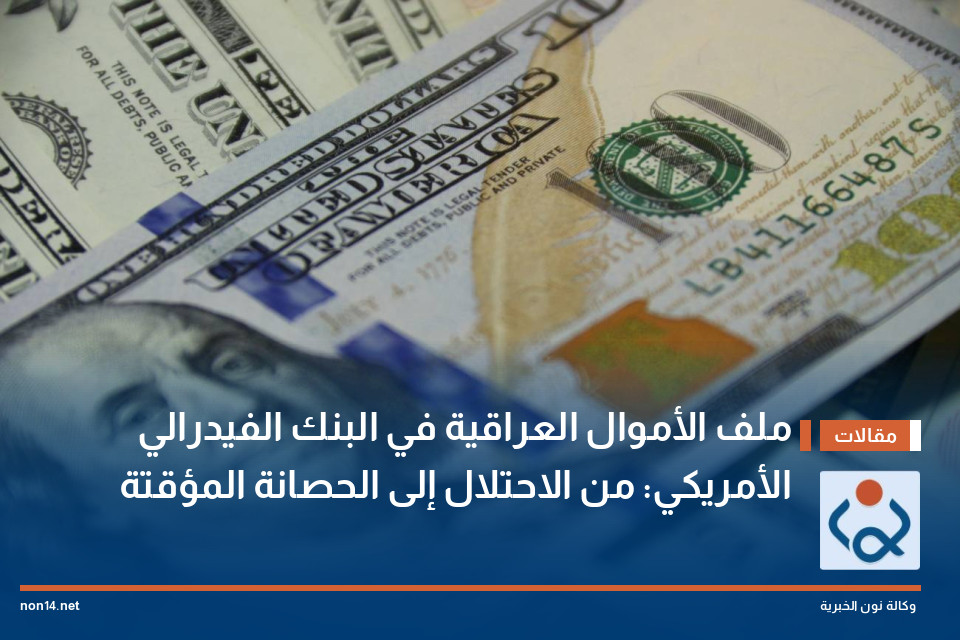
The issue of Iraqi funds deposited in accounts at the US Federal Reserve is one of the most complex financial files in Iraq's modern financial history. These funds are linked to a series of UN resolutions and international sanctions that have shaped the Iraqi economy since the former regime's invasion of Kuwait on August 2, 1990, to the present day.
The video for this My FX Buddies Blog is below here:
Resolution (1483) Legal and Economic Framework
UN Security Council Resolution 1483, adopted unanimously on May 22, 2003, established the legal and economic framework for managing Iraqi oil revenues following the US-led invasion of Iraq on April 9, 2003. The resolution was adopted under Chapter VII of the UN Charter, giving it international legal force. Its key features include:
- Recognition of the occupying power: The resolution explicitly recognized the United States and its allies as occupying powers under a unified command called the “Coalition Provisional Authority,” and obliged them to act in accordance with the United Nations Charter and international law, particularly the 1949 Geneva Conventions, to guarantee the rights of the Iraqi people.
Lifting the sanctions: The resolution ended the international isolation imposed on Iraq since 1990 under Resolution 661 and subsequent resolutions, as the Security Council lifted all financial and trade sanctions except for the ban on the sale of weapons and military equipment.
New financial resource management mechanisms
For managing financial resources, the decision stipulated the following:
1. Establishment of the Development Fund for Iraq (DFI): The fund was established and placed under the custody of the Central Bank of Iraq. It was allocated to collect oil export revenues, frozen assets of the former regime that the resolution mandated member states to transfer to it, and the surplus from the Oil-for-Food Program. The stated objective was to use these funds to meet humanitarian needs and for reconstruction. The disbursement mechanism was directed by the Coalition Provisional Authority in consultation with the Iraqi Interim Administration. To ensure transparency, the International Advisory and Monitoring Board (IAMB) was established, comprising representatives of the UN Secretary-General, the International Monetary Fund, the World Bank, and the Arab Fund for Economic and Social Development. This board approved independent auditors to ensure that oil sales and disbursements were conducted in accordance with international best practices.
2. Management of oil revenues: The resolution mandated that all oil sales revenues be deposited into this fund, with 5% of them being deducted for the benefit of the compensation fund established under Resolution 687 to compensate those affected by the invasion of Kuwait.
3. Spending of funds: The resolution specified the need to use the Fund’s money transparently to meet humanitarian needs, rebuild the economy, repair infrastructure, cover the costs of civil administration, and disarmament.
4. Termination of the “Oil-for-Food” program: The decision stipulated the gradual termination of the program within six months, and the immediate transfer of $1 billion of unrelated funds to the Development Fund for Iraq.
Resolution 1483 provided the legal cover under which the Coalition Provisional Authority exercised its influence and charted a course for channeling financial assets and oil revenues into reconstruction efforts. While it lifted sanctions, it placed Iraqi financial resources under international oversight and granted the Coalition Provisional Authority broad powers.
Executive Order 13303 and American protection
In conjunction with Resolution 1483, US President George Bush issued Executive Order 13303 on May 22, 2003, to provide broad legal protection for the Fund’s money and oil revenues from any international prosecution or seizure, to ensure the continuation of reconstruction.
Practical implementation: Regulation No. 2 of 2003
The practical implementation of the requirements of Resolution 1483 was carried out by the regulations issued by the Coalition Provisional Authority, in particular Regulation No. 2 of 2003. Part Three of it stipulated that the funds of the Development Fund for Iraq be kept in an account opened with the Federal Reserve Bank of the United States in New York in the name of “Central Bank of Iraq / Development Fund for Iraq Account”.
Although the regulations granted the Coalition Provisional Authority (CPA) administrator, Paul Bremer, the authority to direct the opening of accounts at other financial institutions, the primary and sole account was opened at the U.S. Federal Reserve Bank. The bank, acting on CPA directives, transferred 95% of oil revenues to the fund's account and 5% to a compensation account.
End of the Development Fund for Iraq (DFI)
Pursuant to Security Council Resolution 1956 of December 15, 2010, adopted at the request of the Iraqi government, the arrangement for depositing oil export revenues into the Development Fund for Iraq was terminated effective June 30, 2011. This ended the mandate of the International Advisory and Monitoring Board (IAMB). Consequently, the management of the funds was transferred entirely to the Iraqi government, but without comprehensive international protection. Iraq became dependent on an annual executive order issued by the US president (such as Executive Order 13303) to provide legal immunity for its funds held abroad against creditor claims.
Current money management: IRAQ2 account
With the original Development Fund for Iraq (IRAQ1) coming to an end in 2010, the management of oil funds moved to a new mechanism:
1. Existing Bank Accounts (IRAQ2): The Iraqi government has opened an alternative account at the Federal Reserve Bank of New York known as (IRAQ2). All revenues from Iraqi oil sales are deposited into this account and then transferred within 24 hours to the Central Bank of Iraq's account (IRAQ1) to avoid international claims or seizures, as the funds deposited therein are classified as sovereign funds belonging to a central bank.
2. Mandatory Deposit: Since Iraq prices its oil in dollars, it is obligated to deposit its revenues in the Federal Reserve Bank of New York. Furthermore, the outstanding external debt (approximately $40 billion) prevents Iraq from easily closing these accounts or transferring the funds, as they would be subject to immediate seizure by creditors once removed from the US protection umbrella.
3. Memorandum of Understanding: To ensure the continued flow and protection of oil funds, a memorandum of understanding was signed on June 2, 2014, between the Federal Reserve Bank and the Iraqi Ministry of Finance to regulate the operation of the IRAQ2 account, an agreement that still represents the legal basis for depositing Iraqi funds in the United States.
Temporary sovereign immunity
With the expiration of the international protection provided by the United Nations under Chapter VII, Iraq now relies on sovereign immunity, renewed annually by the US president, for funds deposited in the Federal Reserve, provided these are sovereign funds and not derived from commercial activities. This annual immunity aims to protect Iraq's funds from previous creditors, as there are still outstanding debts estimated at around $40 billion owed to countries both within and outside the Paris Club. There are also concerns that unknown creditors may file lawsuits once the sovereign immunity expires.
The position of the Central Bank of Iraq
The Central Bank of Iraq, represented by its Investment and Foreign Transfers Department, issued an official document addressed to the General Secretariat of the Council of Representatives, explaining the legal and logistical mechanisms adopted for managing Iraqi funds abroad. This document was a response to parliamentary inquiries submitted by MP Adnan al-Jabri.
The bank explained in its letter No. (5/3/1464) dated March 14, 2024, that the legal basis for depositing crude oil revenues into account (IRAQ2) dates back to after the expiration of the extension of the executive order issued by the US President in 2003, as well as after the end of the protection that the United Nations provided to Iraqi funds in 2010.
The central bank also warned that closing accounts at the Federal Reserve would have serious consequences, including:
A- Exposing Iraq to the risks of international and judicial claims.
b) Loss of the ability to conduct financial settlements in US dollars due to the lack of sufficient alternative channels.
The path towards permanent sovereign immunity
To secure Iraqi funds, a transition from temporary protection to permanent sovereign immunity is required. This can be achieved by completing the settlement of the remaining Paris Club debt and strengthening relations with major powers (the United States, China, the European Union, Japan, and Russia) to secure their support in protecting Iraqi funds.
Parliamentary Planning Committee: Activating the private sector is essential to confront the risks of the oil economy.
Member of the Planning and Regions Committee of the Parliament, MP Ali Al-Zirjawi, called on the new government on Saturday to make activating the private sector a top priority to address the economic crises facing the country, warning against continuing to rely on oil revenues to finance public expenditures.
Al-Zirjawi told Al-Maalouma that "activating the private sector should be at the forefront of the government's priorities in order to find real solutions to the economic crises that have contributed to the decline in the country's economic situation."
He added that “Iraq’s almost complete reliance on oil exports to secure revenues and cover employee salaries has led to the accumulation of internal and external debt,” indicating that “the continuation of this approach may pose a real threat to the Iraqi economy in the coming years.”
He pointed out that "diversifying national income sources, supporting investment, and enabling the private sector to play its developmental role are urgent necessities to ensure economic stability," calling on the government to "address this problem and take practical steps to mitigate its future effects."
Al-Fayez sets a date for completing the cabinet.
link I'm pretty sure EID ending today so we are now on to the or option in this article
The head of the “Design” coalition, Amer Al-Fayez, confirmed on Saturday that the completion of the ministerial cabinet of Prime Minister Ali Al-Zidi’s government will take place after the Eid Al-Adha holiday, noting that the decision will be made through an emergency session or immediately after the end of the parliamentary legislative holiday.
Al-Fayez told Al-Maalomah News Agency that "political forces and blocs are currently holding intensive internal meetings to discuss the names nominated to fill the remaining ministerial portfolios and to ensure the entitlement of the components and blocs."
He added that "the vote on the candidates may be held in an emergency session called by the House of Representatives during its current legislative recess," noting that "official meetings of the Coordination Framework forces are currently suspended, but will resume immediately after the Eid al-Adha holiday to finalize the matter."
Source: Voting on completing Al-Zidi's cabinet will take place within the next 10 to 15 days.

The cabinet of the new Iraqi Prime Minister is expected to be completed within the next 10 to 15 days.
On Sunday, May 31, 2026, a source in the “Coordination Framework” alliance told Kurdistan 24 that the framework will hold a meeting this week to discuss the issue of completing the ministerial formation of Iraqi Prime Minister Ali al-Zidi.
The same source added: "The cabinet formation is scheduled to be completed within the next ten to fifteen days, during which a vote will be held and confidence will be granted to the ministerial portfolios that were postponed or that did not gain the confidence of Parliament in the previous session, in order for the cabinet to be completed finally."
The source confirmed that "the forces of the coordination framework are serious and determined to resolve and complete the government formation as soon as possible."
Meanwhile, Ashwaq Jaf, a member of the Kurdistan Democratic Party bloc in the Iraqi parliament, told the official website of "Kurdistan 24" that no official date has yet been set for the vote to complete Ali al-Zaidi's cabinet.
MP Jaf explained that the Supreme Federal Court in Iraq has not yet responded to the legal appeals and complaints submitted by a number of candidates who did not gain the confidence of Parliament in the previous voting session.
On Thursday, May 14, 2026, the Iraqi parliament granted confidence to 14 ministers in the cabinet of the new Prime Minister Ali al-Zaidi, while several ministerial portfolios remained vacant after failing to gain confidence, including the Ministry of Construction, Housing and Municipalities, which falls within the Kurdish share, specifically the Kurdistan Democratic Party.
The framework is in disarray... and the specter of disbanding the Popular Mobilization Forces looms over the negotiations.
Signals from Petraeus: No further deadline for the factions, and the dollar is Washington's card.

: According to information obtained by Al-Mada, the first American signals regarding the message conveyed through retired US General David Petraeus have reached Baghdad, but they did not carry what the Shiite forces, seeking to buy time, were hoping for.
Political sources describe these responses as "unreassuring," while reinforcing the impression within the "Coordination Framework" that Washington has finalized its position on the issue of armed factions, and that the room for maneuver that Baghdad tried to open up in recent weeks appears narrower than previously thought.
At the very moment when some factions within the "Framework" were searching for political solutions to resolve the weapons issue in exchange for maintaining their influence within the new government, Muqtada al-Sadr, leader of the Shiite National Movement (Sadr Movement), surprised his rivals with a preemptive move, announcing the disassociation of the "Peace Brigades" from the movement. This has placed the remaining factions before a reality they can no longer easily postpone.
While al-Sadr is making progress on the weapons issue, other Shia forces appear to be taking one step forward and then another back, amidst clear confusion about how to deal with escalating American pressure and fears that the disarmament process could shift from a mere reorganization of factions to a broader course that might ultimately redefine the Popular Mobilization Forces' position within the state.
During the recent Eid holiday, Shia circles were preoccupied with reviewing their options amidst leaks suggesting disagreements regarding the mechanisms for dismantling armed headquarters, the form of integration within security institutions, and which entities would refuse to comply with any new settlement. Political sources close to the "Coordination Framework"
told Al-Mada that "categorical and non-negotiable" American messages were delivered to Iraqi political leaders following Petraeus's visit to Baghdad. These messages included an explicit rejection of any figure affiliated with armed factions assuming ministerial portfolios in the new government.
According to the sources, Washington linked this stance to sensitive economic and financial matters, including dollar shipments and Iraqi assets, as well as considerations related to American, regional, and Gulf interests.
Sources add that some political leaders preferred to keep the content of those messages secret for fear of triggering a new crisis within the "coordination framework." Meanwhile, alternative options are being discussed, involving the appointment of figures described as "independent technocrats" to head the contentious ministries, in an attempt to avoid a political clash that could negatively impact the economic situation.
In the first American comment on the controversial visit, a US State Department official told Al-Mada that David Petraeus is "a private citizen and does not play any official role with the US diplomatic mission in Iraq."
The American position came after a report published by Al-Mada last week about Petraeus's appearance in Baghdad for the first time in nearly two decades, amid reports of an Iraqi initiative aimed at securing a lull of several months before making final decisions regarding the armed factions.
Although sources denied that Petraeus was an official envoy of US President Donald Trump, they confirmed that Prime Minister Ali al-Zaidi used his old relationship with the American general, dating back to the “Awakening” years between 2006 and 2007, to try to find an indirect channel of communication with Washington and reduce the chances of confrontation with the factions.
According to this account, Petraeus carried an Iraqi message requesting that Baghdad be given a three-month grace period to place the factions under strict control. The government would commit to immediately canceling any agreements if attacks against Erbil, embassies, or vital installations resumed. This information could not be independently verified. In a move that disrupted the calculations of his rivals within the Shia political establishment, Muqtadaal-
Sadr, leader of the Shia National Movement, announced the disassociation of the Peace Brigades from his movement. He also announced the transformation of its civilian formations into official institutions, stripped of weapons, headquarters, and organizational titles, emphasizing that the decision stemmed from "the public interest."
Sadr did not stop at relinquishing the movement's military wing; he called on the remaining Popular Mobilization Forces factions to distance themselves from partisan and sectarian frameworks, fully integrate under state authority, and surrender their weapons. This vision is based on consolidating weapons under government control and regulating the activities of armed groups according to specific legal and time-bound frameworks.
Observers viewed this move as an attempt to preempt internal and external pressures related to the weapons issue and to present the remaining factions with a similar obligation that they may find difficult to ignore in the future.
Researcher and academic Mohammed Naanaa believes that the current situation goes beyond the mere issue of weapons. He told Al-Mada that restricting weapons to the state “is not the sole objective in the state-building process, but merely the primary one, followed by holding the killers and corrupt officials accountable.” He added that what al-Sadr initiated of his own volition “will not be available to others, who will be forced into what they do not want.”
The initiative quickly moved from the level of political pronouncements to the executive branch. Last Friday, the committee appointed by al-Sadr announced that it had held its first meeting to oversee the formal disaffiliation of the Peace Brigades.
Al-Sadr’s office stated that the committee commenced its work in accordance with the directives of the movement’s leader, which stipulated the completion of the procedures for separating the Peace Brigades’ military wing from the Shiite national movement within a maximum period of one week, and the follow-up on the organizational and administrative aspects related to the decision.
Information obtained by Al-Mada indicates that Prime Minister Ali al-Zaidi intends, during the first 100 days of his government, to establish specific mechanisms for dealing with the six factions listed on the US blacklist, in parallel with reopening several major corruption cases, including that of Noor Zuhair.
According to this information, al-Zaidi held a series of discreet consultations with armed factions during his tenure, within a tripartite committee that also included former Prime Minister Mohammed Shia al-Sudani and Badr Organization leader Hadi al-Amiri. The data suggests that these discussions resulted in unannounced understandings that excluded armed groups from ministerial positions in the new government.
Leaks from within the "coordination framework" indicate that al-Zaidi received a "green light" to proceed with measures related to the weapons file during a call he had with Muqtada al-Sadr approximately two weeks prior.
From the early days of al-Zaydi’s appointment, al-Sadr had put forward a clear vision for dealing with the issue, when he called on the prime minister-designate to transform the armed factions into a formation called “Soldiers of Religious Rites” under the supervision of the Hajj and Umrah Authority, or into humanitarian institutions specializing in relief and aid, while considering any party that refuses this as “outlaws.”
Al-Sadr stated at the time, "If they do so, I am prepared to dissolve the Promised Day Brigade and hand over the Peace Brigades to the Commander-in-Chief of the Armed Forces. Everyone should do this as quickly as possible."
These steps are part of a series of internal reviews that al-Sadr initiated about a month prior, which included removing several leaders, confiscating vehicles and weapons from a number of his followers, and expelling dozens from the movement. Those close to him described this as a process to restructure the organization and reorganize its affairs in preparation for a different political phase.
Regarding Muqtada al-Sadr's move, data within the "Coordination Framework" indicates a clear division in positions on the issue of weapons. According to Health Minister Abdul Hussein al-Moussawi, a leader in the Virtue Party, five out of seven factions have agreed to proceed with the disarmament process in exchange for guarantees.
Political circles suggest that these factions include Asa'ib Ahl al-Haq, led by Qais al-Khazali; the Badr Organization, led by Hadi al-Amiri; as well as Kata'ib Sayyid al-Shuhada, Thaar Allah, and Kata'ib al-Imam Ali.
Multiple sources indicate that al-Amiri is managing the most important part of the negotiations concerning the armed factions, through the committee formed after al-Zaidi's appointment. This committee is believed to be working in parallel with a proposal by the leader of the Badr
Organization to establish a "Federal Security Ministry," which would encompass the Popular Mobilization Forces (PMF), the Rapid Response Forces, the Federal Police, the Border Security Forces, and possibly the Peshmerga as well.
Mahmoud al-Hayani, a member of the Badr Organization, believes this proposal represents the "best solution" for protecting the rights of PMF members and ensuring the armed groups' subordination to the government's authority. In an interview with Al-Mada, he pointed to leaks
suggesting preliminary approval of the idea from retired US General David Petraeus, despite the absence of any official US position.
However, despite these proposals, the mechanism for dealing with the armed factions remains unclear. According to political sources, the proposed integration or restructuring plans may not be sufficient to convince Washington, nor do they necessarily guarantee the factions positions within the executive branch.
According to political sources, the US veto contributed to the obstruction of the confirmation of nine ministerial candidates, due to Washington's refusal to grant any positions to figures affiliated with or associated with armed factions.
Meanwhile, some Shia circles view these developments as a prelude to targeting the Popular Mobilization Forces themselves. An official from one of the armed groups told Al-Mada that “disarmament is nothing but a way to circumvent and dismantle the Popular Mobilization Forces under the guise of handing over weapons to the government or enforcing the law in response to American pressure.”
This stance reflects the extent of the skepticism held by some factions regarding the current course of action, especially given the continued refusal of influential groups, such as Harakat al-Nujaba and Kataib Hezbollah, to discuss any disarmament.
In this context, the so-called “Islamic Resistance in Iraq” announced that it will not lay down its weapons or hand them over to the government “as long as the occupation continues,” according to news outlets.
Abu Mahdi al-Jaafari, spokesman for Saraya Awliya al-Dam, who presented himself as a representative of the “Islamic Resistance in Iraq” in widely circulated statements, confirmed that the issue of disarmament “is not up for discussion at the present time,” adding: “There will beno talk of laying down or handing over weapons until the injustice and occupation end in Iraq.”
Al-Jaafari criticized those calling for the disarmament of the factions, saying that these parties "used to describe the resistance as heroes during the war, but they forget the names of those who defended Iraq when peace returns."
Between factions that have expressed a willingness to participate in state arrangements and others that still refuse even to discuss the issue, it seems that the battle over weapons in Iraq has not yet moved to the implementation phase. Rather, it remains confined to the realm of understandings and mutual guarantees, amidst increasing American pressure and internal fears that the current trajectory will lead to a reshaping of the Popular Mobilization Forces and their role in the next phase.
There can be no fight against corruption without stopping it.
A member of parliament demands that al-Zaydi close two loopholes that are plundering the Iraqi budget.

MP Faleh Al-Khazali called on Prime Minister Ali Al-Zaidi on Sunday (May 31, 2026) to take practical and tangible measures to combat corruption in the files of implementing government contracts and the general budget, stressing the need to put an end to what he described as “the chaos of circumventing the law” through pretexts of adding components or changing spare parts in government contracts, warning of its serious repercussions on the general budget.
The MP also called for the instructions for implementing government contracts to be turned into legally binding legislation, considering that this would contribute to curbing the phenomenon of overpricing projects.
The following is the text of what Al-Khazali published in a post on the “X” platform, which was followed by the 964 Network , addressed to “Mr. Ali Al-Zaidi, the respected: Combating corruption requires practical steps, the most important of which are:
1- Stop the chaos of circumventing the law under the guise of adding a component or changing a spare part. This file contains destruction to the budget.
2- Converting the instructions for implementing government contracts into law, and this will stop the chaos of exorbitant project price hikes.”
Earlier, on Saturday (May 30, 2026), Prime Minister Ali Faleh al-Zaidi directed the establishment of the Supreme Sovereign Council for Integrity, Oversight and Recovery of Public Funds , during a special meeting on procedures for auditing government contracts, in the presence of the head of the Federal Financial Oversight Bureau, the head of the Federal Integrity Commission, the head of the Public Prosecution, and the judge of the Karkh Investigation Court specializing in integrity cases.
On Thursday (May 28, 2026), Al-Zaydi directed that an investigation be opened into a number of government contracts concluded during the government of Mohammed Shia Al-Sudani, within the framework of “combating corruption and protecting public funds.” He then met with Al-Sudani and discussed with him the completion of the formation of the government and support for development plans, without addressing the recent directives regarding the review of contracts.
A historic record in the Iranian stock market

The Tehran Stock Exchange (Tadawul) witnessed an unprecedented surge, driven by recent political and economic developments in the region and the world.
All traded stocks and symbols, without exception, entered positive territory, reaching the maximum daily limit (+3% or +5% depending on the stock's classification). Sell orders vanished entirely, replaced by queues of millions of shares being bought.
This record increase was driven by a decrease in the intensity of regional military escalation and positive news about the progress of indirect Iranian-American negotiations in Washington.
The decision by the Iranian Securities and Exchange Organization (SEO) to fix the daily fluctuation range for stock prices and to inject emergency liquidity through the market stabilization fund has helped to reassure investors and stop the bleeding of previous losses.
According to observers, this event indicates that the huge liquidity that was looking for a safe haven (such as gold and foreign currencies) suddenly turned towards leading stocks (petrochemicals, metals, and banks) as soon as signs of security and political stability appeared. The absence of any negative stocks also reflects a complete agreement among investors that prices have reached an attractive historical low for buying, which prompted everyone to hold onto their stocks and freeze sales operations.
 Thanks
Support My FX Buddies
BuyMeACoffee CashApp:$tishwash
https://paypal.me/tishwash

.jpeg)
Al-Marsoumi: The Trump administration is moving to contain the "oil panic" in global markets.
Economic expert Nabil Al-Marsoumi confirmed today, Sunday (May 31, 2026), that "the urgent task of the Trump administration is to limit the impact of the panic on oil prices," by making the release of reserves, sanctions directives, shipping protection, financing of goods, refinery feedstock, and oversight of the futures market predictable.
Al-Marsoumi said in a post on his Facebook page, which was followed by Baghdad Today, that “Trump’s statements regarding the imminent agreement with Iran and the lifting of the naval blockade on it led to a decrease in the price of Brent crude to $91 per barrel and US crude to $87,” noting that “the decrease in oil prices was also linked to the rise in US crude oil exports to record levels of 6.4 million barrels per day with the release of the strategic oil stockpile.”
He added that "the United States committed to releasing 172 million barrels from its strategic reserves, with the peak release reaching 10 million barrels in one week, which were exported directly instead of being refined locally."
He explained that "there is a clear limit to the selling campaign. Although this strategy has temporarily helped to suppress sharp price spikes, analysts warn that these spare capacities are limited, and that global oil markets could face increasing pressure on prices once these emergency stockpiles run out."
Al-Marsoumi noted that "the continued rise in exports means that US commercial and emergency reserves are shrinking at an accelerating pace," pointing out that "total stockpiles have fallen to about 445 million barrels."
Al-Marsoumi explained that “the Trump administration cannot simply try to lower oil prices, as this is an oversimplification and could be counterproductive,” adding that “futures markets do not respond well to political intimidation, and if Washington appears to be manipulating prices rather than clarifying the supply, this could lead to a drain of liquidity from the markets that airlines, refineries, utilities, producers, and traders need to hedge against the risks of actual oil exposure.”
He stressed that "the best goal is to reduce the panic premium, and that means restoring credibility to the physical barrel of oil," explaining that "a credible barrel is not just a barrel that is underground or appears in a futures contract, but a barrel that can be extracted, documented, insured, financed, hedged, shipped, delivered, refined, and paid for without every party in the supply chain demanding a wartime premium."
He continued, "Markets take this mechanism for granted in normal times, but it becomes the market itself in times of war," noting that "global oil stocks have not simply run out, but oil has become detained, delayed, diverted, more vulnerable to legal risks, more expensive to insure, and more difficult to finance."
He concluded by saying that "oil that cannot be transported is not a complete supply, oil that cannot be insured is not a complete supply, oil that cannot be financed is not a complete supply, and oil that does not reach the appropriate refinery is not a complete supply."
After a third round of revisions, Washington sends the text of the memorandum of understanding to Tehran.
US President Donald Trump made changes to the memorandum of understanding with Iran before returning the revised version to Tehran for review and approval.
Media outlets quoted a source familiar with the matter as saying that this is the third round of amendments Trump has made to the US proposal, which is being exchanged between Washington and Tehran through intermediary channels.
The source added that Pakistan is leading the process of conveying messages and proposals between the two sides, according to CBS News.
Al-Zaidi receives the Chargé d'Affaires of the US Embassy in Iraq

Prime Minister Ali Faleh al-Zaidi received Joshua Harris, the Chargé d'Affaires of the United States Embassy in Iraq, on Sunday, May 31, 2026.
A statement from the Prime Minister's office, received by "Baghdad Today," stated that "the prospects for cooperation between the two countries were discussed, as well as ways to develop and expand relations in all fields, especially economic, investment and cultural, based on mutual respect and common interests, and in a way that serves the interests of the two friendly peoples."
During the meeting, according to the statement, Al-Zaydi pointed to "the need for constructive communication between the two countries, and the continuation of joint work within the framework of the Strategic Framework Agreement and bilateral memoranda of understanding, in addition to emphasizing the commitment of both sides to strengthen partnership and coordination regarding various bilateral and regional issues, and to work towards prioritizing the language of dialogue and diplomacy in resolving conflicts and imposing security and stability in the region."
For his part, the US Chargé d'Affaires expressed his country's appreciation for Iraq's efforts to strengthen bilateral partnerships in various fields, praising its pivotal role and its efforts to support regional security and stability.
Trump appoints Tom Barrack as special presidential envoy to Iraq and Syria

US President Donald Trump announced the appointment of US Ambassador to Türkiye, Tom Barrack, as Special Presidential Envoy to Iraq and Syria, in a move aimed at strengthening strategic cooperation with the governments of the two countries.
Trump said that Barack would continue his duties as ambassador to Türkiye alongside his new responsibilities, noting that his performance would be fully supported by the U.S. State Department.
He added that the decision comes within the framework of developing bilateral relations and strengthening the partnership with Iraq and Syria, stressing the continued growth of relations with the two countries in various fields.
The US President expressed his appreciation for the efforts made by Tom Barrack, praising his constant readiness to serve the United States, and affirming his confidence in his ability to accomplish the tasks assigned to him in the next stage.

Katrina Hansen at the Sari
The European Bank announces support for Iraq's energy and water projects.

Finance Minister Faleh Sari discussed with the President of the European Bank for Reconstruction and Development in Iraq, Katarina Bjorlin Hansen, support for energy, water, banking and private sector financing programs. Hansen confirmed on Sunday (May 31, 2026) the bank’s continued support for efforts to improve the economic situation, while Sari stressed the ministry’s commitment to enhancing the efficiency of public finance management and directing it towards productive, agricultural and infrastructure projects in the provinces, despite regional economic challenges and pressures on revenues.
The Ministry of Finance stated in a statement, a copy of which was received by 964 Network, that “Minister of Finance Mr. Faleh Sari received today, Sunday, the President of the European Bank for Reconstruction and Development in Iraq, Ms. Katarina Björlin Hansen, to discuss prospects for financial and technical cooperation, and support for development priorities in Iraq.”
The statement emphasized that “the Ministry of Finance is proceeding according to a governmental vision based on enhancing the efficiency of public finance management and directing it towards supporting productive and developmental sectors, in line with the priorities of the governmental program and enhancing the developmental impact in the governorates, despite the economic challenges imposed by regional changes and pressures on public revenues.”
He explained that “the ministry prioritizes supporting development projects in the governorates, especially agricultural and infrastructure projects, by providing the necessary facilities and enhancing the investment and production environment, which contributes to supporting economic development and improving the service situation.”
He added that “for her part, the President of the European Bank affirmed the bank’s continued support for Iraq’s efforts to improve the economic and financial situation,” noting “the bank’s specialized programs in the fields of energy and water, support for banks, and financing for the private sector.”
US Treasury Secretary: "Economic Rage" campaign against Iran a success
US Treasury Secretary Scott Bisent said that Iran had made a grave mistake in the midst of negotiations with the United States, praising on Sunday, May 31, the success of the "economic wrath" campaign against Iran.
Bisent told Fox News that the US economy remains resilient despite the war with Iran.
Bisent, a senior member of President Donald Trump’s administration, said the Iranian economy is suffering a complete collapse after being subjected to economic sanctions and US attacks.
The US Treasury Secretary provided details of the US economic pressure campaign against Iran, known as "Operation Economic Rage".
Bisent said the Iranian economy is on the verge of collapse, while simultaneously announcing that the United States had seized nearly $1 billion in Iranian cryptocurrency assets.
He told Fox Business: "We have seized nearly $1 billion of their cryptocurrency; we have simply seized their digital wallets."
He added, "I believe it is an economic blockade of funds and a de facto blockade that prevents ships from entering or leaving Iranian ports."
He continued, "Kharg Island is closed. It's their main oil loading facility, and that means they'll have to start shutting down the wells."
During his participation with Kudlow at the Reagan National Economic Forum, Bisent explained in detail the American economic pressure campaign on Iran, known as "Operation Economic Rage," which he said had plunged the Iranian regime into a "crisis."
He added: "I think that between five and a half and six weeks of a very successful military campaign, followed by Operation Economic Wrath, where we cut off their supplies completely... has now brought them to the brink of financial collapse."
I believe that between 40 and 50 percent of the Iranian forces are not being paid. The police are not showing up to their stations. Inflation has probably exceeded 200 percent. They are forced to distribute food vouchers. And they have cut off the internet.
These efforts, which began in March 2025, have crippled Tehran’s financial arteries by seizing Iranian assets, freezing bank accounts, and pressuring foreign governments to sever ties with Iran.
Bisent explained: "We are working with our allies across Europe to seize villas, houses, and real estate. This is money stolen from the Iranian people."
Bisent said the Iranian regime was embezzling between $400 and $500 million a month and distributing the profits to dozens of leaders, before the US Treasury Department intervened.

No comments:
Post a Comment