The government: An additional shipment of US dollars will be sent to Iraq in the near future.

Government spokesman Haider al-Aboudi announced on Saturday that Prime Minister Ali Faleh al-Zaidi had reached understandings with the United States to continue sending shipments of cash dollars, while confirming that a new shipment of cash dollars would arrive in Iraq in the coming days.
The video for this My FX Buddies Blogpost is below here:
Al-Aboudi said, according to the official agency, that "one of the results of Prime Minister Ali Faleh Al-Zaidi's visit to the United States was reaching an understanding regarding the continuation of sending cash dollar shipments to Iraq, which contributes to meeting the legitimate needs for foreign currency, and a new shipment will arrive in the coming days."
He added that "this understanding comes in light of the progress made by Iraq in strengthening the system of control over the distribution of dollars and regulating its uses, reducing cases of misuse of foreign currency, in addition to expanding electronic payment methods and moving towards the gradual transition towards the digital economy."
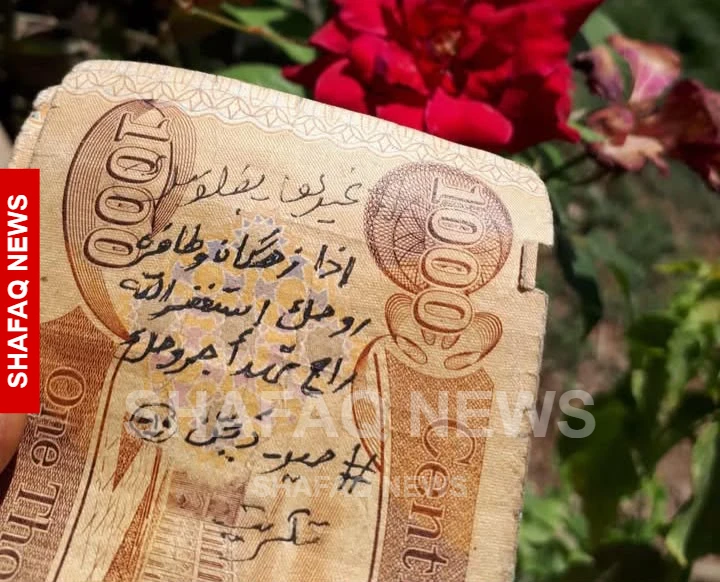
The Iraqi currency is a wall of memories for some and a "shameful" space for others (photos)
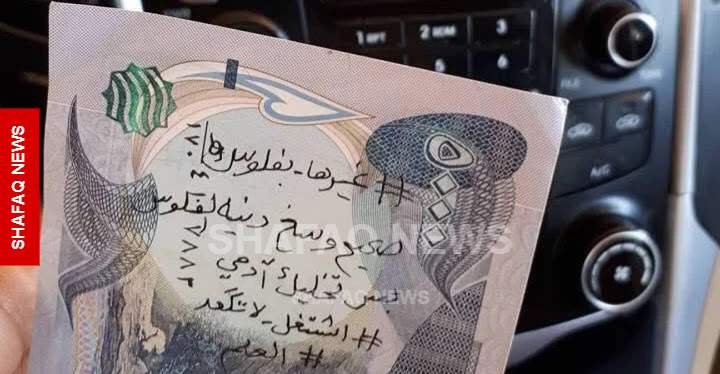
Zahraa Khaled bought some necessities from a grocery store, and when she finished, she took out a 25,000 dinar banknote to pay for the purchases, but she noticed that there were "indecent" phrases written on the banknote.
The girl refused to hand the paper to the grocer, and she also did not want to go to the exchange office to exchange it. She thought about going to a bank, but she realized that it might take time to wait, in addition to the transportation costs to the bank. Finally, she gave up and chose to destroy the paper and get rid of it.
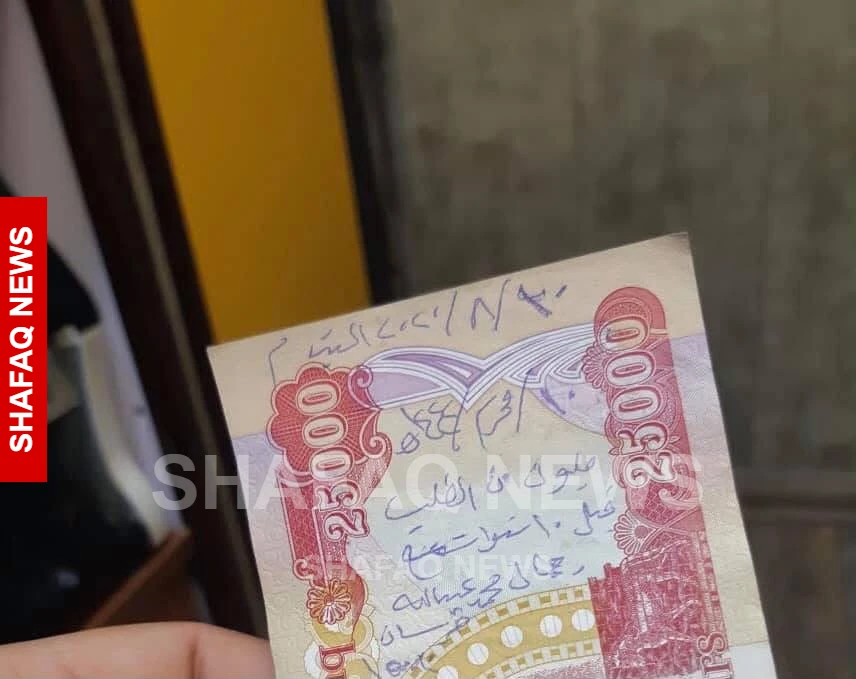
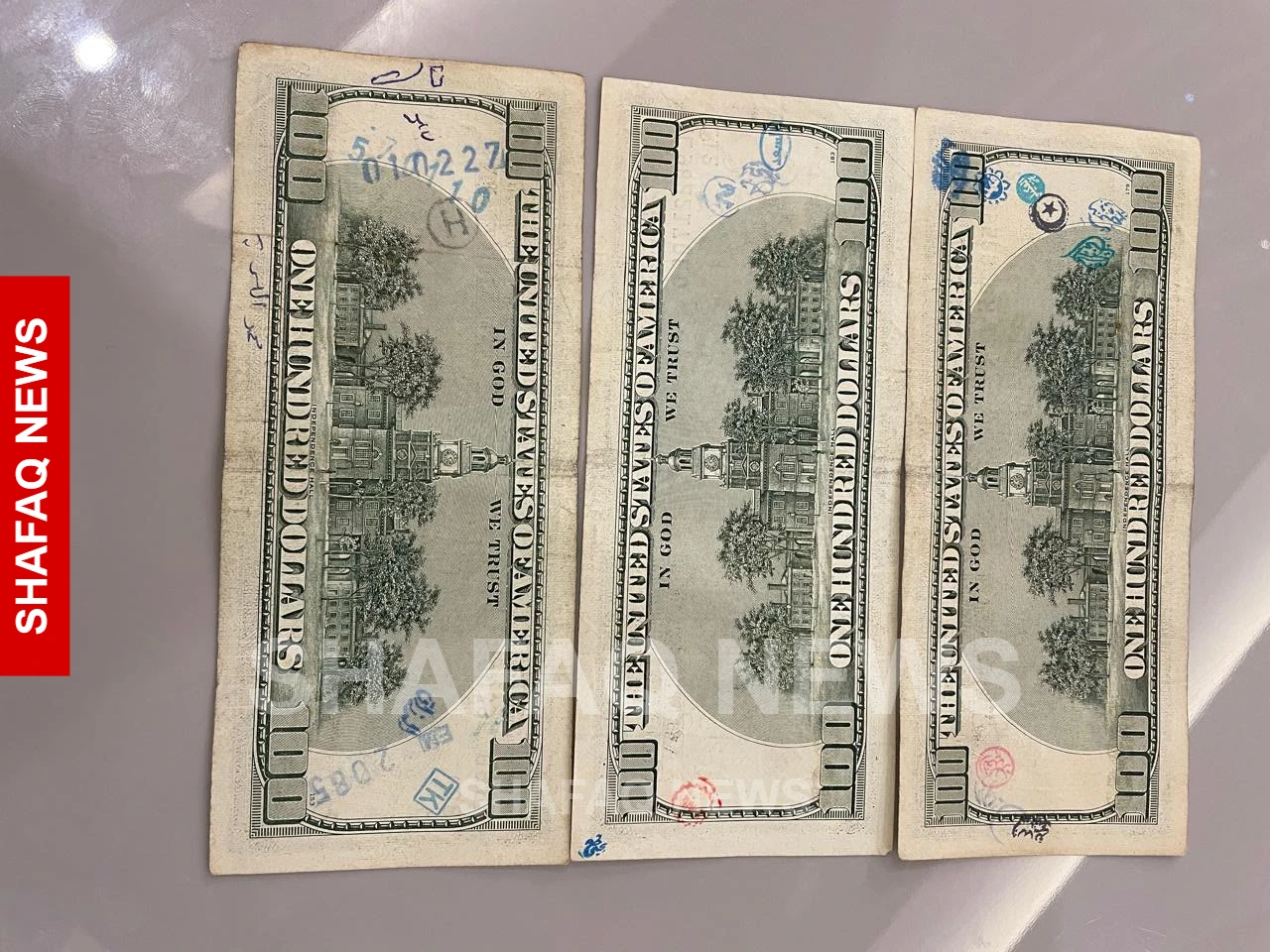
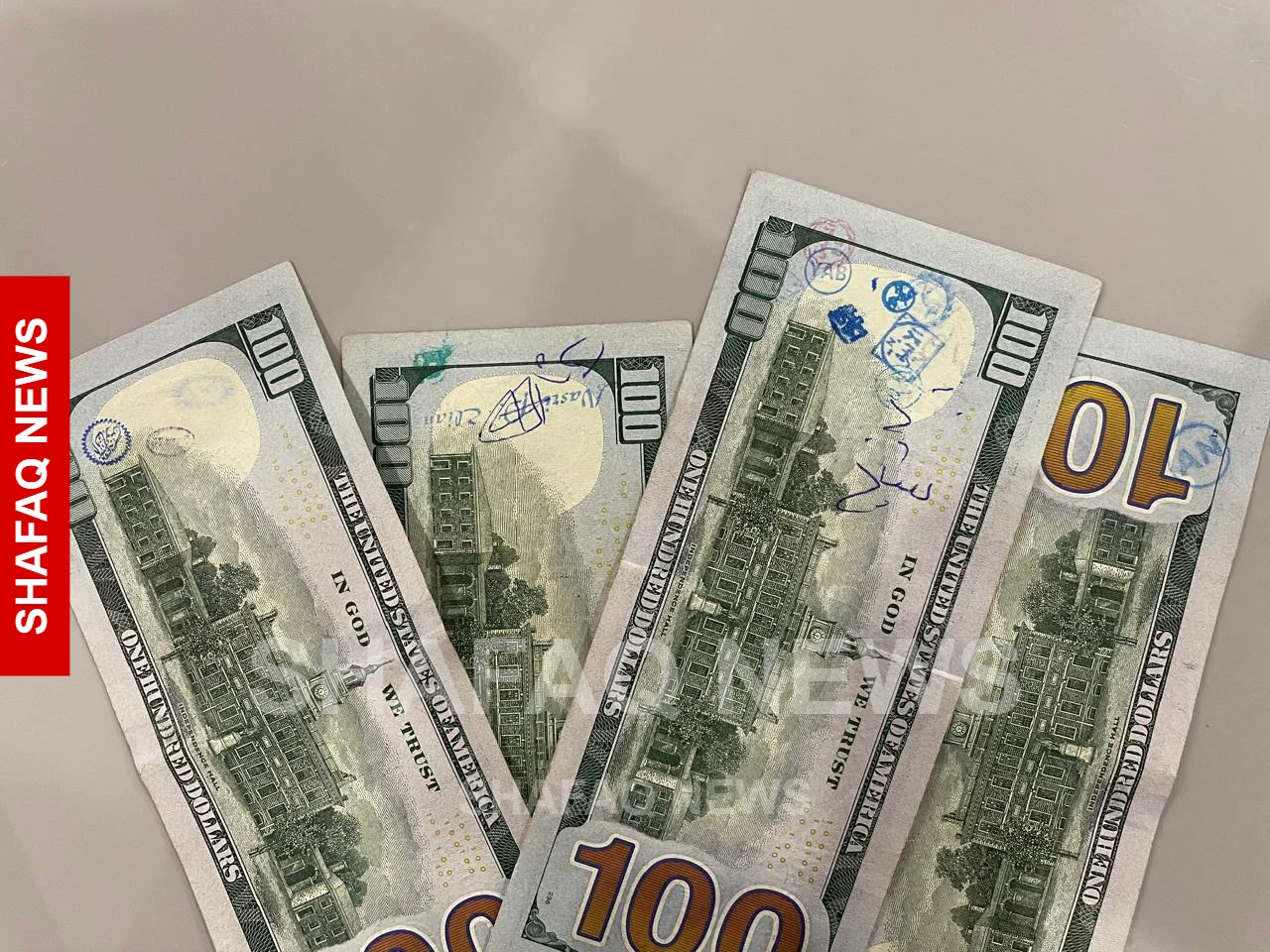
For some time now, banknotes have become like a personal memory wall for some Iraqis, on which they write important dates in their lives or to express their emotions and sorrows, while others have made them a space for “indecent” phrases or a canvas for expressive drawings. This is with regard to the local currency. As for the dollar, it is “precious” and only a few dare to deface it with writings, but it has not escaped the stamps of exchange offices.
Birth of life
Citizen Haifa Ali told Shafaq News Agency: "I kept a 25,000 dinar banknote for two years because I wrote the birth date of my first child on it."
She adds: “I didn’t carry this paper with my money out of pride, but I had to spend it one day because of need,” explaining that what prompted her to record her child’s birth date on a banknote was because “money is precious, and that’s why I wanted to keep this banknote, but need overcame my desire.”
It has become commonplace to see cryptic phrases, girls' names, or mementos written on local currency. There are also phrases or drawings deemed "offensive," and even phone numbers.
monetary value
Many questions revolve around the extent to which banknotes are affected by writing, and whether writing changes their identity, causes them to lose value, or prevents their circulation.
In this regard, Osama Al-Mushrifawi, owner of an exchange outlet and company, explains that the exchange rate varies depending on the banknote that has writing on it. Writing on the US dollar causes confusion for exchange companies, as many of these companies do not deal with dollar bills that have writing on them.
He points out that exchange offices and companies usually use their own seals to stamp the dollar, "and the high value of the dollar prevents it from being defaced with writings and drawings."
He adds: “Generally, there is very little writing on the dollar compared to the local currency,” adding, “Also, company and exchange stamps are used in dealing with the fifty thousand Iraqi dinar note due to the prevalence of counterfeiting in this denomination.”
uncivilized phenomenon
Citizen Mu'ayyad Abdul Hamid believes that writing on banknotes is an uncivilized phenomenon.
He adds in an interview with Shafaq News Agency that "writing on banknotes harms others because it sometimes makes the currency unusable. As for me, I have banknotes from the 1960s with phrases and phone numbers written on them, and this indicates that this phenomenon is old in Iraqi society."
For his part, economist Mustafa Hantoush told Shafaq News Agency that the phenomenon of writing on currency causes it to be consumed quickly, and this is not in line with monetary policy.
He adds that "the consumption of currency costs considerable sums, as some banknotes become unfit for circulation," stressing that some banknotes bearing writings give the impression that this currency is counterfeit and needs to be examined. "The process of defacing currency is unacceptable and does not help in preserving the value of money, and the media must play an active role in stimulating awareness in preserving currency instead of defacing it."
Legal consequences
With the spread of this phenomenon, questions are being raised about the legal position on these practices, and whether they affect the validity of the banknote for circulation, which is explained by legal expert Ali Al-Tamimi in an interview with Shafaq News Agency.
He says that Iraqi law differentiates between counterfeiting currency and defacing or writing on it, explaining that counterfeiting or imitating banknotes is a felony according to the Penal Code No. 111 of 1969, while the Central Bank of Iraq Law No. 56 of 2004 dealt with the penalties related to deliberately minting or possessing counterfeit currency.
Al-Tamimi explains that “writing, drawing, or placing seals on banknotes does not fall under the crime of counterfeiting, but it is considered a case of defacing or damaging the currency,” noting that the Central Bank has set controls to determine which banknotes are valid and which are not valid for circulation, including banknotes that contain writings or seals or have been damaged.
He adds that a banknote that contains writing or a stamp and does not significantly affect its external appearance may be classified as unfit for circulation, and its holder will be compensated according to regulations, provided that it is withdrawn from circulation and referred to the Central Bank for the purpose of destroying it.
Al-Tamimi points out that "responsibility varies according to the nature of the act. Just because a paper with writing on it reaches a person in daily transactions does not mean that he has committed a violation, while responsibility may arise when the currency is deliberately defaced or damaged to a large extent."
Look what the IDB bank launched today maybe yesterday I know it's a little blurry I'll talk more about it later but these words go with the image Head to the branches: International Development Bank launches a service to exchange damaged banknotes in accordance with Central Bank of Iraq regulations.

under:
جانب من مشاركة مصرف التنمية الدولي في اليوم الأول من معرض IRAQ OGEP 2026، حيث نلتقي بنخبة من ممثلي قطاع النفط والغاز والطاقة، ونواصل بناء شراكات تدعم التنمية وتسهم في تعزيز الاقتصاد العراقي.
— مصرف التنمية الدولي International Development Bank (@IDB_Iraq) September 25, 2026
نرحب بكم في جناح مصرف التنمية الدولي، ونتطلع للقائكم خلال أيام المعرض.… pic.twitter.com/tIp5Fzf2H6

International Development is strengthening its role as a strategic partner for the energy and investment sector in Iraq.
The Independent/ - The International Development Bank is participating in the Iraq International Oil, Gas, Energy and Petrochemical Exhibition (OGEP 2026), which is being held in Basra Governorate / Maqal Port, as part of its strategy aimed at supporting vital sectors in the Iraqi economy and enhancing its role as a strategic financial partner for companies and investors operating in the energy sector.
During its participation in the exhibition, which will be held from September 24 to 27, 2026, the bank will showcase a comprehensive range of banking solutions and services designed to meet the needs of energy companies, investors, contractors, and suppliers. These include financing and banking facilities, letters of credit, letters of guarantee, cash and liquidity management, international trade and treasury services, as well as payroll localization solutions, which support companies in managing their operations efficiently and provide them with the necessary financial flexibility to implement their projects and expand their businesses.
The International Development Bank’s participation in the exhibition stems from the strategic importance of the energy sector, and the need for banking services that can keep pace with the nature of its operations and the needs of local and international companies operating in it, and facilitate their financial and commercial transactions inside and outside Iraq, as required by the growth of projects and investments in it.
“The energy sector is a cornerstone of the Iraqi economy and one of the most attractive sectors for investment,” said Saed Zureikat, Managing Director of the International Development Bank. “The banking sector plays a pivotal role in providing financial solutions that enable companies to implement their projects and manage their operations efficiently. Through our participation in OGEP 2026, we seek to strengthen our partnerships with companies and investors, and provide integrated banking solutions that meet the needs of this sector and support its growth and investment opportunities.”
The International Development Bank bases its support for the business sector on a strong capital base and a wide network of banking relationships locally, regionally and internationally, in addition to its experience in providing financial and commercial solutions to companies, enabling it to keep pace with the requirements of operations and projects that require specialized banking services, and enhancing the ability of companies to access regional and international markets.
The bank’s participation in OGEP 2026 represents an opportunity to connect directly with companies, investors and decision-makers in the energy sector, and to explore opportunities for cooperation and partnerships that contribute to supporting the growth of the private sector, promoting investments in the energy sector and driving economic development in Iraq.
Iraqi Dinar Strengthens Against US Dollar Following Prime Minister's US Visit

At a Glance
- The Iraqi dinar has strengthened against the US dollar, with 100 US dollars trading at 157,000 dinars.
- Iraqi Prime Minister Ali Faleh Al-Zaidi met with US financial institutions, banks, and President Donald Trump in New York and Washington.
- Oil exports have rebounded near normal levels to 4.5 million barrels daily, bolstered by stabilizing financial conditions.
- Channel8 sources note that expanding electronic platform access for traders and steady US dollar inflows are critical factors supporting the currency.
The Iraqi dinar registered notable gains against the US dollar following a high-level diplomatic and economic tour by Prime Minister Ali Faleh Al-Zaidi to the United States.
Key Financial Developments and Economic Drivers
- Official Engagements: Prime Minister Al-Zaidi, accompanied by the ministers of finance and electricity, held pivotal discussions with US financial institutions to build active economic partnerships and reinforce national monetary stability.
- Oil Export Recovery: With production reaching 4.5 million barrels per day and exports exceeding 70 million barrels last month, oil revenues have largely stabilized following disruptions tied to the regional conflict with Iran.
- Market Perspectives: Erbil currency market spokesperson Keify Khoshnaw told Channel8 that while dinar strength depends heavily on dollar liquidity, market volatility may persist through the end of the month amid ongoing coalition footprint adjustments.
FYI
The Central Bank of Iraq manages monetary policy and regulates foreign currency exchange through electronic platforms designed to streamline trade financing and stabilize market exchange rates.
MP Amer Abdul-Jabbar calls for amending economic policies to stop the "bleeding of wealth" in the dollar market.
link
MP Amer Abdul Jabbar revealed on Saturday (September 26, 2026) statistics with figures relating to the size of the losses resulting from the price gap between the official exchange rate of the dollar and its price in the parallel market.
Abdul-Jabbar said in a statement received by “Baghdad Today” that “the losses of the Iraqi people as a result of the price gap during the period of the previous government amounted to more than 27 billion and 312 million dollars,” indicating that “the average daily losses during that period amounted to about 21 million dollars every 24 hours.”
Abdul-Jabbar added that "the losses continued to record more than $2 billion and 155 million during the current government's term until the end of last July," noting that "the price difference rose in the current month of September to 290 dinars per dollar, which is the highest since 2003."
Abdul Jabbar called on the Prime Minister to "urgently review economic, monetary, financial and trade policies to stop the bleeding of national wealth and transform it into sources that enhance the economic capabilities of the state and the people instead of depleting it."
The Minister of Finance directs that procedures related to budget items be completed according to the specified timelines.

Finance Minister Faleh Sari directed on Saturday that work continue at an accelerated pace and that reviews and procedures related to budget items be completed according to the established timelines.
The ministry stated in a press release received by the Iraqi News Agency (INA) that "upon his return from New York, Finance Minister Faleh Sari convened a meeting of the Budget Preparation Committee to review the draft federal budget for 2027 and finalize its requirements, in preparation for its submission to the Council of Ministers soon."
The minister directed "the continuation of work at an accelerated pace and the completion of reviews and procedures related to budget items according to the established timelines."
Abdul Amir Al-Shammari and his office manager received him
Watch: The moment al-Zaidi arrived at Baghdad airport from New York

Prime Minister Ali Faleh al-Zaidi arrived in Baghdad on Saturday, September 26, 2026, from New York after participating in the 81st session of the United Nations General Assembly.
Al-Zaidi’s media office stated in a statement received by Network 964 that the Prime Minister delivered Iraq’s official speech before the United Nations, and held an intensive agenda of meetings that included a number of world leaders and heads of state, including US President Donald Trump, Jordanian King Abdullah II, Turkish President Recep Tayyip Erdogan, Iranian President Masoud Pezeshkian, and Syrian President Ahmed al-Sharaa, in addition to the heads of state and government of Kenya, Finland, Egypt, Kuwait, Lebanon, Britain, and Ireland.
The statement added that Al-Zaidi held high-level talks with leaders and experts from international organizations, including the UN Refugee Agency, the United Nations Development Programme, and the International Monetary Fund, as well as participating in a multilateral meeting at the invitation of the White House.
On the economic and investment front, the Prime Minister sponsored roundtable meetings that brought together representatives of Iraqi and American banks, and met with representatives of the American Chamber of Commerce and leaders of major global companies in the fields of energy, technology and transportation, most notably ExxonMobil and HKN Oil, to discuss partnership and investment opportunities in Iraq.
returnhere:
 Thanks
Support My FX Buddies
BuyMeACoffee CashApp:$tishwash
https://paypal.me/tishwash

.jpeg)

40 American companies are waiting... Intensive Iraqi negotiations to resolve the issue of factions' weapons.
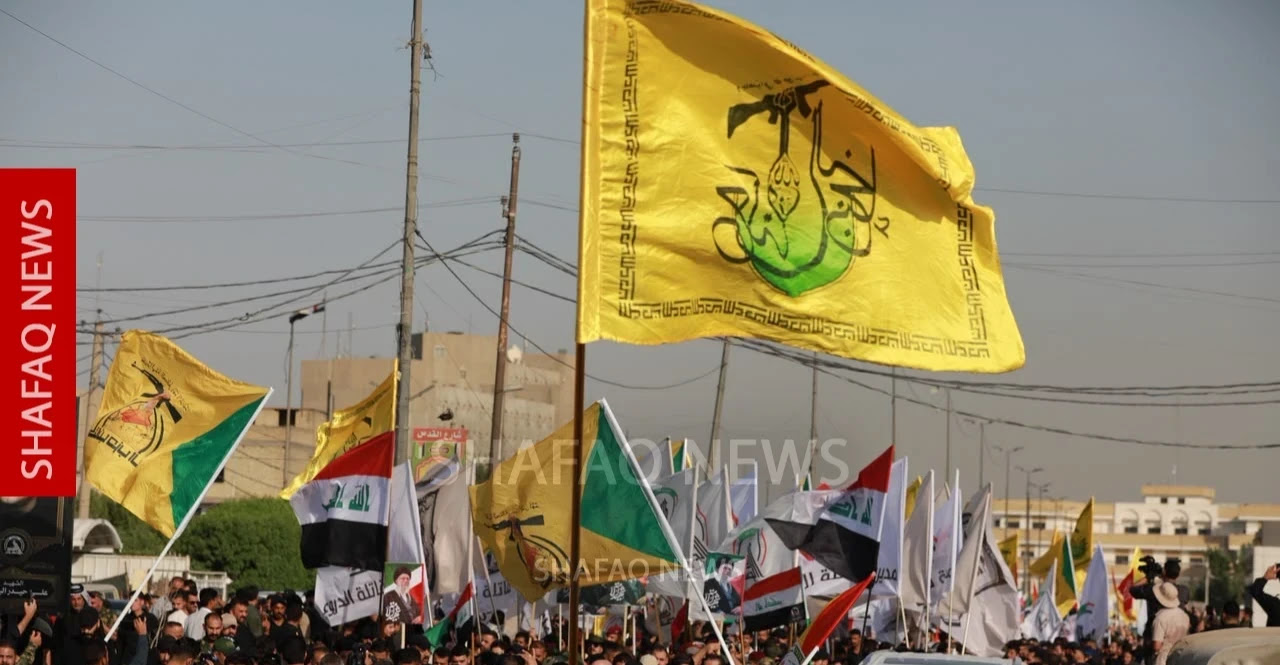
An informed source revealed on Saturday that private meetings are continuing between the Quartet Committee and the leaders of the armed resistance factions, with the aim of reaching final agreements on the management, storage and organization of weapons, stressing that resolving this issue paves the way for more than 40 American companies to enter Iraq to start their projects.
The source told Shafaq News Agency that “Iraqi Prime Minister Ali al-Zubaidi asked the political leaders within the coordination framework, specifically the four-party committee concerned with negotiating with the factions, to intensify dialogues and meetings to reach understandings that end the controversy over the management and organization of weapons, in a manner consistent with the interest of Iraq and the region.”
He added that "Washington demanded from al-Zaidi guarantees that American companies, which number more than 40 investment companies in various fields, would not be targeted by resistance factions."
According to the source, an important meeting will be held under the auspices of the Prime Minister after his return from Washington, between the Quartet Committee emanating from the Coordination Framework and the leaders of the factions that are hesitant to hand over weapons, in the presence of the Iranian ambassador or his representative, to discuss limiting and regulating the management of weapons officially, and to ensure that American companies that will arrive in Iraq after the official withdrawal of American forces from the country are not targeted.
He pointed out that "the meeting will also discuss the issue of integrating elements of those factions into the Popular Mobilization Forces within three months," noting that "the faction leaders reject this, but their position may change after the meeting, and everyone is counting on that."
For his part, Abdul Rahman al-Jazaeri, a leader in the National Oath Movement, which is part of the State of Law Coalition, confirmed to Shafaq News Agency that “the leaders of the four factions with whom negotiations are being conducted by the Quadripartite Committee have demanded the enactment of a special law to restrict, manage and regulate weapons by the House of Representatives, so that it acquires legal and official status, and preserves the rights of those factions under one name in the Popular Mobilization Forces.”
Al-Jazairi explained that "the issue of restricting weapons has become directly linked to the Iraqi-American relationship, as it is no longer an internal matter."
He continued, saying that "the Prime Minister will work upon his return to expedite the procedures for completing the cabinet, especially the Ministries of Interior and Defense, given that the withdrawal process, according to the approved protocol, requires that the handover and American withdrawal be carried out through the signing of an official protocol with the ministers concerned with the security file, and therefore it is necessary to choose the Ministers of Interior and Defense."
In a speech to the United Nations General Assembly on Friday, Iraqi Prime Minister Ali al-Zubaidi stressed that one of his government's priorities is for the state to be the decision-maker in peace and war, emphasizing that weapons and instruments of power must remain in the hands of the constitutional state institutions, and that the law should be the arbiter and the national interest the compass.
The issue of armed factions is one of the most sensitive issues facing the Iraqi government, with the approach of September 30, which the main political forces have set as the deadline for restricting weapons to official institutions.
The State Administration Coalition, which includes the most prominent Shiite, Sunni and Kurdish political forces, stressed during its meeting on August 5 the need to restrict weapons to the state, and considered the parties that carry out activities that threaten the security of the country outside the framework of official institutions as “outlaws and must be fought.”
The coalition warned that any armed activity outside the framework of the state after September 30 would be dealt with according to the anti-terrorism law.
Last month, Baghdad witnessed security tensions coinciding with threats by armed factions to retaliate against Saudi Arabia, following strikes targeting Popular Mobilization Forces sites. The tensions ended with contacts and a dawn meeting between Prime Minister Ali Faleh al-Zubaidi and Badr Organization leader Hadi al-Amiri, which led to a mutual calming of tensions and opened the way for diplomatic action to address the crisis.
Al-Amiri later called on the "Islamic Resistance" factions to postpone any military response against Saudi Arabia and to prioritize "Iraq's higher interest," but he returned and stressed during a meeting with a number of Popular Mobilization Forces leaders the importance of maintaining a high level of readiness.
The plan to restrict weapons does not have a unified position among the armed factions, as some forces have expressed a willingness to reorganize their military and security relationship with the state. Other factions, including Kataib Hezbollah, Harakat al-Nujaba and Kataib Sayyid al-Shuhada, have announced their refusal to give up their military capabilities, and have linked any discussion about their weapons to the end of the presence of foreign forces and ensuring the protection of Iraq from external attacks.
The September 30th date also coincides with the deadlines related to ending the military presence of the international coalition in Iraq, which some factions use as a basis for linking the future of their weapons to the withdrawal of foreign forces.
Trump on al-Zaidi: A great man and a friend of mine... I supported him

US President Donald Trump said his meeting with Iraqi Prime Minister Ali Faleh al-Zaidi "went very well."
When a reporter asked Trump about the nature of the meeting with al-Zaidi, the US president replied, "It went very well. He's a great guy and a friend of mine, and I've supported him."
Three days earlier, Prime Minister Ali Faleh al-Zaidi met with US President Donald Trump in New York.
During the meeting, the two sides discussed bilateral relations and ways to strengthen cooperation and partnership between the two countries in the political, economic, and investment fields. They also reviewed the latest developments in the region and the joint efforts undertaken by Iraq and the United States to promote regional and international security and stability.
Iraq's FM: New weapons control plan coming, economy is the Iran war's first victim
Fuad Hussein tells reporters Friday that Iraq is entering a new phase after the coalition withdrawal, is discussing Bessent's Iranian airline sanctions with Washington, and that negotiations on weapons handover with armed factions are ongoing

Iraqi Foreign Minister Fuad Hussein announced on Friday, September 25, 2026, that the government is preparing a new plan to address the issue of unlicensed weapons and bring arms under state control, warned that Iraq's economy is the first casualty of the Iran war currently engulfing the region, and confirmed that Iraq is in discussions with the United States about the sanctions imposed on aviation services for Iranian aircraft landing at Iraqi airports.
"After the completion of the international coalition's withdrawal process from Iraq, a new phase begins," Hussein told reporters on Friday, framing the September 30 coalition departure as a turning point rather than a security vacuum.
On the weapons control file, Hussein said: "The issue is an internal Iraqi matter, and in this regard we are presenting a new plan for this file. Negotiations and discussions regarding the handover of weapons with the relevant parties are ongoing." The statement confirms that the phased disarmament plan announced by Prime Minister al-Zaidi at the UN General Assembly this week, setting June 30, 2027, as the new deadline with a 90-day mutual ceasefire as its first phase, remains an active negotiation rather than a concluded agreement, with Baghdad still in dialogue with the armed factions about the terms of compliance.
Iraq's Economy: The War's First Victim
Hussein's most striking statement came in his warning about the economic consequences of the regional conflict for Iraq. "Iraq's economy is the first victim of the war currently taking place in the region related to Iran," he said, in the most direct Iraqi official acknowledgment yet of the concrete economic damage that the US-Iran war has inflicted on Baghdad. The war has disrupted Iraq's oil export revenues, generated instability in energy markets, created volatility in the Iraqi dinar, and placed Baghdad in the politically difficult position of being caught between its American partners and its Iranian neighbors simultaneously.
Iranian Airline Sanctions
On the aviation sanctions announced by Treasury Secretary Scott Bessent on September 22, 2026, grounding all Iranian airlines worldwide from September 23, Hussein confirmed that Iraq is discussing the matter with the United States. He clarified that Iran has been formally notified by Iraq of the decision to ban Iranian aircraft from Iraqi airports, a diplomatic step that places Baghdad in compliance with the American sanctions framework while managing the notification through official channels rather than unilateral action.
The Iranian airline shutdown, which Bessent announced by threatening dollar system exclusion for any entity worldwide that fuels, services, or sells tickets to Iranian aircraft, directly affects Iraqi airports that had been servicing Iranian carriers throughout the conflict. Hussein's confirmation that Iraq is coordinating with Washington on implementation and has formally notified the Iranian side reflects Baghdad's attempt to manage the compliance requirement without further inflaming its relationship with Tehran at a moment when the diplomatic environment is showing its first positive movements in months.
The foreign minister's statements on Friday come as Iraq navigates its most diplomatically complex week since al-Zaidi took office, with the coalition withdrawal five days away, the militia disarmament file still unresolved, the Saudi pipeline drone attack from Iraqi territory generating regional pressure, and the indirect US-Iran talks through Qatar and at the UNGA margins producing the first concrete Iranian proposal for a Hormuz deal in months.
The Foreign Minister will visit Washington at the end of this month to continue discussions on developing cooperation.

About the news
- Foreign Minister Fuad Hussein meets with US Assistant Secretary of State for Near Eastern Affairs Donald Blome.
- Discussing developments in the security situation in the Middle East region and its repercussions on the countries of the region.
- The meeting took place on the sidelines of the 81st session of the United Nations General Assembly in New York.
The Foreign Minister said during the meeting, which took place on the sidelines of the 81st session of the United Nations General Assembly in New York, according to a statement from the Ministry of Foreign Affairs, that “Iraq was among the countries most affected by the tensions and conflicts between the United States and Iran and the accompanying security and economic repercussions,” stressing “the importance of sparing Iraq and the region further repercussions resulting from the escalation of tensions.”
- The Foreign Minister notes Iraq’s continued support for international efforts aimed at reaching an understanding between the United States and Iran that would contribute to ensuring the security and freedom of navigation in the Strait of Hormuz.
- Fuad Hussain praises the diplomatic efforts being made by Pakistan, Qatar and the United States in this regard.
- The Foreign Minister indicated his upcoming visit to Washington at the end of this month to complete discussions on developing cooperation between the two countries in the political, security and economic fields.
- He stressed the importance of continued cooperation between the Central Bank of Iraq and the US Treasury Department in combating money laundering and promoting compliance with international banking standards.
The meeting addressed the new sanctions that the US administration intends to impose on Iran and their potential repercussions on Iraq, as well as the course of security and military cooperation between the two countries and the transition to a future phase that focuses on advice, training and intelligence cooperation, in conjunction with completing the procedures for ending the mission of the international coalition in Iraq.
Both sides emphasized "the importance of continuing the partnership in the field of combating terrorism and enhancing Iraqi capabilities in this area."
Foreign Minister: There is a new plan to restrict weapons

About the news
- The Foreign Minister reveals the features of the next phase in Iraq after the completion of the withdrawal of the international coalition forces.
- Baghdad will present a new plan regarding the restriction of weapons.
- This comes in conjunction with anticipated talks with Washington regarding US sanctions and their impact on the provision of services to Iranian airlines.
In a televised interview, Fuad Hussein said that "Iraq will begin a new phase once the withdrawal of coalition forces is complete," noting that negotiations with faction leaders regarding the handover of weapons are ongoing.
- The process of inventorying weapons will end by June 2027, and the issue of handing over weapons is an internal Iraqi matter.
- Baghdad will discuss the issue of sanctions with the United States in order to provide services to Iranian aviation.
- The government informed the Iranian side about the flight ban, in light of the new US sanctions targeting the Iranian aviation sector and companies and entities that provide services to the sanctioned carriers.
- The Iraqi economy is the first victim of the ongoing war with Iran.
The Foreign Minister concluded by saying that "Iraq continues to export oil through the Strait of Hormuz in cooperation with the American side, at a time when disruptions to navigation in the strait constitute a major concern for Baghdad, given its reliance on oil exports as a major source of revenue."
Iraq says US agreed to continue shipments of cash dollars
Iraq has reached an understanding with the United States to continue dollar cash shipments to Iraq, with a new shipment expected in the coming days, a government spokesperson tells the Iraqi News Agency.
The US resumed some dollar cash shipments to Iraq in July after a months-long suspension, according to Iraqi officials, after Washington halted a shipment of about $500 million in April.
Official statement: America has sent a new shipment of cash dollars to Iraq, which will arrive in the coming days.
Government spokesman Haider al-Aboudi announced on Saturday that Prime Minister Ali Faleh al-Zaidi, during his visit to the United States, reached an understanding regarding the continued sending of cash dollar shipments to Iraq, confirming that a new shipment will arrive in the coming days.
Al-Aboudi said, in a statement followed by “Iraq Observer”, that the understanding came in light of the progress made by Iraq in strengthening the system of control over the distribution of the dollar and regulating its uses.
He added that a new shipment of cash dollars will arrive in Iraq in the coming days, as part of the mechanism to continue sending shipments to the country.
He noted that the understanding comes within the framework of measures taken to strengthen control over the distribution of dollars and regulate their uses.
The government: An additional shipment of US dollars will be sent to Iraq in the near future.
Government spokesman Haider al-Aboudi announced on Saturday that Prime Minister Ali Faleh al-Zaidi had reached understandings with the United States to continue sending shipments of cash dollars, while confirming that a new shipment of cash dollars would arrive in Iraq in the coming days.
Al-Aboudi said, according to the official agency, that "one of the results of Prime Minister Ali Faleh Al-Zaidi's visit to the United States was reaching an understanding regarding the continuation of sending cash dollar shipments to Iraq, which contributes to meeting the legitimate needs for foreign currency, and a new shipment will arrive in the coming days."
He added that "this understanding comes in light of the progress made by Iraq in strengthening the system of control over the distribution of dollars and regulating its uses, reducing cases of misuse of foreign currency, in addition to expanding electronic payment methods and moving towards the gradual transition towards the digital economy."

No comments:
Post a Comment