IMF Engages With Iraq on Preparing New Bailout Program
The IMF said Thursday it is engaging with Iraqi authorities to prepare a new bailout program as the war on Iran batters Iraq’s energy-dependent economy.
Transcripción en español al pie de la página

The International Monetary Fund (IMF) said on Thursday that it is engaging with Iraqi authorities as it prepares a new bailout program for Iraq, whose economy has been battered by the war on Iran.
The video for this My FX Buddies Blog post is below here:
“Our plan now is to engage with the authorities to understand better their priorities, how they want to address their vulnerabilities, and then to move ahead on how we can best support them with a program,” IMF spokesperson Julie Kozack said at a press briefing in Washington.
Kozack pointed to the severe financing constraints Iraq faced before the war began. She said the country’s very narrow non-oil revenue base is also putting pressure on its fiscal balance.
The US-Israel war on Iran, launched in late February, plunged the region into conflict. Tehran’s retaliatory action virtually blocked the Strait of Hormuz, a key energy supply route.
Iraq’s economy depends heavily on energy exports, which almost entirely rely on transport through the strait.
Iraq was already under acute fiscal constraints before the war, and the IMF forecast this month that its economy would contract by 16% this year.
The last of Iraq’s three most recent programs with the IMF ended in 2019. According to IMF data, Iraq has a total of around $428 million in interest payments due to the Fund by 2030.
IMF Chief Kristalina Georgieva first disclosed that Iraq had approached the Fund for a new program at the Fund’s annual meetings in Bangkok in October.
At those meetings, she praised the resilience of global economic growth in the face of the wars in Iran and Ukraine, but warned that outcomes were highly uneven, with more vulnerable economies hit hard by the conflicts.
On Oct. 8, 2026, during a session at the Iraqi Parliament, Iraqi Prime Minister Ali Falih al-Zaidi delivered a speech defending the decision to adjust the dollar exchange rate and saying that he will never to resort to external and domestic borrowing.
Describing the financial situation he inherited, Zaidi said: “I took on the task when public debt exceeded 208 trillion dinars.The government is required to provide 10 trillion dinars every month to secure salaries, and despite the stifling crisis we managed to provide it. I took on the task while the country’s economy was under an undeclared siege, as a result of the halt in oil exports and the closure of the Strait of Hormuz because of the regional situation and the war.”
Zaidi said the government faced three options for securing salaries and overcoming the crisis: “The first was to go for compulsory savings and delay entitlements, leaving the employee to live on promises. The second was to distribute salaries and pay them every 45 days, that is, every month and a half. The third was to resort to external and domestic borrowing, drowning the country in more debt when it is already burdened by it. Because we did not want to borrow, so as not to exhaust the economy further and shackle future generations, we were compelled to go for the option of adjusting the exchange rate.”
He also said the gap between the official and parallel dollar rates did not previously benefit citizens. “The difference in the dollar exchange rate previously [between the official and parallel rates] did not go to the citizen, but was taken by the corrupt and currency speculators,” he said.
“Today we are in a fierce battle with corruption, and the Iraqi economy must be managed and treated with a sound economic mindset, not a policy of patchwork.”
10/28/
US Gives Iraq Until June 2027 to Disarm Armed Groups or Face Sanctions: Farhad Atrushi
Atrushi warned that Iraq could face severe sanctions if the government and the armed groups fail to comply with the new deadline.
The United States has extended its deadline for Iraqi armed groups to surrender their weapons until June 30, 2027, giving the Iraqi government additional time to bring weapons under state control, Farhad Atrushi, Deputy Speaker of the Iraqi Parliament, said.
Atrushi said the US Chargé d'Affaires to Iraq informed him of Washington’s decision to extend the deadline, which was originally set for September 30. He described the extension as a sign of US flexibility and an opportunity for Iraqi Prime Minister Ali al-Zaidi to address the issue.
However, Atrushi warned that Iraq could face severe sanctions if the government and the armed groups fail to comply with the new deadline. He also cautioned that the country could be designated a state sponsor of terrorism if it fails to meet Washington’s demands.
Although the information was not initially intended for public discussion, Atrushi said recent remarks by US Secretary of State Marco Rubio reflected Washington’s position on the issue.
Rubio has warned that Iraq could face a fate similar to that of Balkan countries if armed militias refuse to disarm and weapons remain outside the control of the state.
“If we want strong relations with the United States, they also have conditions,” Atrushi said, explaining that Washington expects Iraq to meet its demands as part of efforts to maintain bilateral relations.
He added that the US position was reciprocal: if Iraq rejected Washington’s conditions, the United States would also be unwilling to accept Iraq’s demands.
The dispute over armed groups comes amid broader efforts to consolidate state authority over weapons and strengthen Iraq’s security institutions, as Washington continues to press Baghdad to prevent armed factions from operating independently of the government.
The future of US-Iraq relations also remains tied to security cooperation, counterterrorism efforts, and economic and energy ties, with Washington urging Baghdad to ensure that armed groups do not threaten US interests or undermine Iraqi state institutions.
Customs Authority discusses with UN experts the completion of the final phase of ASYCUDA and the implementation of the Single Window system.
The Director General of the General Authority of Customs, Thamer Qasim Dawood, discussed on Wednesday with experts from the United Nations Conference on Trade and Development (UNCTAD) the requirements for completing the third and final phase of the ASYCUDA system, within the digital transformation plan for the Iraqi customs system extending until the end of 2028.
The authority stated that the meeting reviewed the completion of the first and second phases at 100%, and the application of the system in 25 customs centers across land, sea and air ports, in addition to developing electronic payment, smart monitoring, risk management and electronic linking with relevant authorities.
She added that the final phase focuses on establishing a single window system for foreign trade, and unifying electronic procedures between government institutions, supporting bodies and the banking sector, which will contribute to reducing the multiplicity of procedures and manual interventions and accelerating the completion of commercial transactions.
The meeting also addressed enhancing electronic integration with the Central Bank, banks and sectoral bodies, developing data exchange related to customs permits and financial transfers, as well as updating audit and control systems for early detection of violations and protection of public revenues.
Daoud stressed the importance of intensifying technical coordination with UNCTAD experts, addressing technical obstacles, raising infrastructure readiness, and developing the capabilities of national staff to ensure the project is completed according to the approved timetables.
The Central Bank reveals the date for granting final approvals for the establishment of digital banks.
The Central Bank of Iraq confirmed that final approvals for the establishment of digital banks will be issued by the end of 2027 and the beginning of 2028, noting that granting licenses is contingent upon the completion of the banking reform phases.
Mahmoud Dagher, advisor to the Central Bank Governor and his spokesperson, said that the entities that submitted applications to establish electronic banks and obtained initial approvals are aware of the date for issuing the final approvals.
He added that the licensing process is subject to banking reform led by the global management consulting firm Oliver Wyman, and that this phase will be completed by the end of 2027 and the beginning of 2028.
Al-Fariji: The revenue generated from the change in the exchange rate does not represent a profit.

Crisis expert Ali Al-Fariji confirmed that the revenue generated from the increase in the dollar exchange rate against the dinar does not represent a net gain added to the state treasury.
Al-Fariji told Al-Maalouma that "raising the exchange rate of the dollar against the Iraqi dinar in the local markets may provide quick liquidity, but it does not represent a financial reform in itself."
He added that "real reform lies in building a multi-source revenue system, recovering funds and assets, reducing waste, and transforming the economy from dependence on oil and dollar pricing to financial management that measures results and creates real and sustainable revenues for the state."
He explained that "the 19.2 trillion dinars expected to be generated from the dollar's revaluation should be viewed as an approximate total book revenue, not a net gain added to the state treasury, because part of its impact may rebound on the state itself in the form of increased spending and import costs.
Parliamentary Finance Committee: The devaluation of the dinar reflects the government's inability to increase revenues.
Former member of the parliamentary finance committee, Muhammad Ibrahim, confirmed that there was inflation in the amounts of the 2027 budget, noting that the 2025 data amounted to approximately 142 trillion dinars and it was possible to build on it in preparing the budget for next year.
Ibrahim told Al-Maalomah that "the government resorted to the option of reducing the value of the dinar against the dollar in order to bridge the funding gap between expenditures and revenues, as reducing the value of the currency will give it additional amounts from the exchange rate difference."
He added that "reducing the value of the local currency will prove the existence of the financial deficit, which confirms the government's failure to raise the revenue ratio by finding other solutions to make expenditures equal to revenues to a certain extent."
He explained that "there are leaks indicating that next year's budget will reach 217 trillion, a figure that is extremely exaggerated. The government should have relied on the 2025 data, which amounted to 142 trillion, as this would be a more realistic budget at the very least.
Al-Maliki stresses the need to achieve balanced development among the provinces.

The head of the State of Law Coalition, Nouri al-Maliki, discussed with the Minister of Planning, Qutaiba Ghazi Majid, the mechanisms for formulating the state’s public policies and preparing development plans and programs aimed at achieving sustainable development and accelerating the pace of reconstruction in Iraq.
Al-Maliki stressed the pivotal role of the Ministry of Planning in preparing strategic plans, setting development priorities, and monitoring the implementation of government projects, emphasizing the need to direct available resources towards priority projects and to achieve balance in development among the governorates.
For his part, the Minister of Planning reviewed the ministry’s tasks and work priorities for the next phase, stressing the importance of strengthening coordination between government institutions and developing development plans in line with the needs of citizens and the requirements of economic and social development in the country.
An economist warns against government statements regarding cash dollar shipments.

Economist Ziad al-Hashemi expressed his surprise at the government's excessive interest in receiving cash dollar shipments from the US Federal Reserve, warning that undisciplined statements regarding these shipments could prompt Washington to halt dollar supplies again.
Al-Hashemi said that the cash dollars are allocated to the Central Bank of Iraq and for travel purposes only, and the government has no right to dispose of them. He added that they are not intended to be injected into the markets to calm exchange rates, noting that Prime Minister Ali al-Zaidi’s personal follow-up on the arrival of the shipments and the statements regarding their impact on the markets raise questions about the nature of the government’s handling of this issue.
He added that exaggerating the talk about dollar shipments might attract the attention of the US Treasury and the Federal Reserve, which have previously frozen cash shipments to prevent dollars from leaking into the markets and being smuggled to entities subject to US sanctions.
Al-Hashemi warned that continuing this approach could lead to a renewed cutoff of cash dollar supplies, depriving deserving segments of Iraqi society of it and increasing pressure on the Central Bank of Iraq’s foreign currency reserves.
He pointed out that the government is focusing on the psychological impact of media messages related to the arrival of the dollar, instead of addressing the actual demand for it and controlling the channels through which it is exploited in smuggling and illicit trade.
Al-Hashemi concluded by saying that the positive impact of the arrival of dollar shipments on exchange rates may be temporary, stressing that media messages alone will not guarantee market stability in light of the continued high demand for the US currency.
Taxi services
American company Uber wants to enter Iraq under its original brand; the Minister of Transport met with its representative.

On Thursday (October 29), Minister of Transport Wahab Al-Hassani discussed with the CEO of the American company Uber in the Middle East its desire to enter the Iraqi market with its original brand. The meeting witnessed discussions about prospects for cooperation and benefiting from the company’s experience in transportation services via smart applications.
The Ministry of Transport stated in a statement, which was followed by the 964 Network , that “Minister of Transport Wahab Al-Hassani met with the CEO of the American company Uber in the Middle East, and discussed with him the company’s desire to enter the Iraqi market with its original brand, and opportunities to exchange experiences and expertise in the transport sector.”
According to the statement, “The company representative confirmed that the security stability that Iraq is witnessing is a key incentive to move towards the Iraqi market and provide its services there.”
The meeting witnessed “fruitful discussions regarding prospects for cooperation and benefiting from the company’s experience in transportation services via smart applications.”
Shia sources on the Green Marches
Factions may swallow up al-Zaydi and his government... They expand within the state and retain their weapons – Report

Two days after the government announced the downing of an unidentified drone in the vicinity of the Green Zone, Al-Mada newspaper, quoting political and security sources, revealed that arrest warrants are about to be issued against those behind the launching of the drones. This raises questions about the ability of Prime Minister Ali al-Zaidi’s government to withstand pressure, should the investigations lead to the involvement of influential armed factions in the operation.
While al-Zaydi is working to form his government team and rearrange “sensitive” positions, leaks suggest that figures affiliated with Kataib Hezbollah may be appointed to security, administrative, and economic posts, including intelligence agencies, national security, and border crossings. According to informed sources, the irony lies in the fact that the government, which is supposed to disarm these factions, may find itself surrounded by them, instead of imposing its control over them. This could even lead to these forces becoming the reason for the end of al-Zaydi’s short political career, in a path described by a Shiite politician close to the coordination framework as “playing with fire.”
The politician himself does not rule out that small groups linked to the Iranian Revolutionary Guard are behind the execution of such attacks, according to a semi-official account, but he warns that some factions may use this interpretation as a cover for their movements, while expanding their influence within state institutions and combining weapons and positions.
STATEMENT
Sources reported that arrest warrants are imminent for those who launched the marches towards the Green Zone, or one march according to the official narrative.
But the more difficult question is: Will the government withstand the pressure if the investigations lead to powerful factions?
According to sources close to him, the prime minister is beginning to catch his breath after weeks of confusion and is attempting to form his own team, as Al-Mada revealed in a series of reports this week. Ironically, the team Al-Zaidi is trying to assemble appears to largely consist of forces and factions that his government is supposed to disarm. Instead of controlling them, he may find himself besieged by them, or even threatened with being swallowed up by them in the end, according to informed sources. A Shiite politician close to the coordinating framework described this approach as “playing with fire.” He believes that the factions that rose to power alongside Al-Zaidi may be the very ones that ultimately push him to end his short political career. The politician, who requested anonymity, told Al-Mada, citing security sources, that those who launched the drones toward the Green Zone on Tuesday evening will be arrested.
Daytime arrest warrants issued... and factional influence within the government
Yesterday, the military office of al-Zaydi announced the dismissal of four senior officers in the Ministry of Interior from their positions, on the grounds that they allowed members of the Popular Mobilization Forces to insult the American flag.
Earlier this month, Baghdad arrested between 8 and 10 people, including members of the Popular Mobilization Forces, for insulting the flag during a ceremony held in the capital to mark the withdrawal of US forces.
These measures seek to demonstrate the government's resolve, but they raise a question about the double standards in dealing with the factions: How can al-Zaydi ally himself with armed forces, while pursuing those launching drones suspected of being linked to them?
The politician, who is close to the political establishment, says that small groups linked to the Iranian Revolutionary Guard—as was the case in the September attacks on Saudi Arabia—are responsible for carrying out such operations, according to a semi-official narrative. However, he is not entirely convinced by this explanation, believing that some factions promote it to provide cover for their actions, while simultaneously consolidating power, weapons, and positions in their hands. In his view, the danger lies not merely in launching one or two drones, but in the government becoming a political front for an armed force that operates outside its control, using weapons when necessary without bearing direct responsibility.
The politician warns that al-Zaidi may find himself in an embarrassing confrontation with Washington, and with the pledges he made to US envoy Tom Barrack.
The problem, as he sees it, is that the factions can keep their weapons in the shadows, while leaving the prime minister to bear the cost of the political and diplomatic confrontation.
Simultaneously with Baghdad’s announcement of the downing of a drone in a brief statement, al-Zaidi was proceeding, according to Shiite circles, to vacate sensitive positions, including intelligence and the General Secretariat of the Council of Ministers, in preparation for handing them over to figures from the factions.
Leaks indicate that the list of positions expected to go to “Kataib Hezbollah” extends to positions in border crossings and the border guard, as well as the investment authority in 5 governorates: Basra, Baghdad, Karbala, Muthanna and Najaf.
According to the leaks, the list includes 5 positions for undersecretaries and 32 positions for directors-general, in addition to security positions in the Ministries of Defense and Interior, and the intelligence and national security agencies.
Mansour Al-Baiji, a member of parliament from the Reconstruction and Development Coalition, said that the government changes being made by Al-Zaidi include 50 positions, the latest of which was changing his office director, Ihsan Al-Awadi, and terminating the assignment of the head of the intelligence service, Hamid Al-Shatri.
Al-Baiji added, in a television interview, that the changes may extend to directors in the Popular Mobilization Forces, revealing an anticipated government participation for the “Kataib Hezbollah”.
In contrast, the Al-Zaidi government denies granting the intelligence service to any party so far.
Those close to him believe that the Prime Minister has made progress in his negotiations with the factions, which he reportedly conducted immediately after the removal of the four-member committee that included Nouri al-Maliki, Mohammed Shia al-Sudani, Hadi al-Amiri and Humam Hamoudi.
Drones without explosive warheads... but with powerful messages
Political and legal researcher Saif al-Saadi believes that sending two drones toward the vicinity of the US embassy carries two messages, one internal and the other external. Al-Saadi told Al-Mada that the Security Media Cell stated the drones were unarmed and did not carry explosive warheads. According to his interpretation, the factions intended to present the operation as a reconnaissance mission, not an attack, and a test of the state's ability to assert its sovereignty over its airspace.
He adds that the incident represents a “warning bell” or a gauge of the parallel state’s temperature, especially after the declaration of “Sovereignty Day,” which is supposed to launch a new phase of restricting weapons to the state.
As for the internal message, al-Saadi interprets it as a protest against al-Zaydi's closure of the al-Shaib border crossing, along with objections from some factions to Iraq's involvement in the regional equation linking Damascus, Beirut, and Riyadh, which he claims was engineered by Tom Barrack. According to al-Saadi, some factions oppose Iraq's integration into this equation, while the external message attempts to inform the United States that these forces remain present and capable of influencing the political and military landscape, even after the withdrawal of American troops.
He says the message also includes a reference to these groups' ability to monitor and track movements, whether it concerns the US embassy, Tom Barrack, or al-Zaidi's own movements.
Al-Saadi concludes that drones pose a challenge to the capabilities of the state, which, after the withdrawal of foreign forces, declared its intention to monopolize the use of force. According to his analysis, some factions want to emphasize that they remain part of the regional power dynamics or of a "proactive defense" strategy.
So far, there is no detailed official account that definitively determines whether the drones targeted the government palace or the US embassy, nor has it been definitively clear who launched them.
Who launched the drones? The government has not provided a definitive account.
Ghalib al-Da’mi, an academic and political researcher, says that the target is still undecided, and that there are two trends in interpreting the incident: the first sees it as a message to the Americans, and the second considers it a message directed to the Iraqi government.
Al-Daami tells Al-Mada that, according to available information, the drones were reconnaissance aircraft and did not carry offensive weapons. However, he emphasizes that the government has yet to provide a detailed official explanation for what happened. This lack of official confirmation, however, does not dispel fears that the incident is part of a broader conflict over the use of force. Al-Daami says that the factions have not fully surrendered their weapons, and some still declare their adherence to their previous approach. He adds that there are also recurring reports of armed groups breaking away from those who agreed with the government to hand over their weapons.
He adds that this indicates that the movement of weapons in Iraq is not always subject to a local decision, but is influenced by external factors that can push armed groups to move when interests require it or the need arises to put pressure on the government.
Al-Daami expects that the security forces will be able to identify the drone launch sites, considering that this may constitute the beginning of pursuing the outlaw elements.
This drone incident marks a first since the withdrawal of US forces from Iraq. However, this does not mean that armed groups have ceased launching drones or monitoring the skies, as they have previously announced in statements that they are tracking aerial movements.
Days earlier, a group calling itself the “Resistance Coordination” claimed to have recorded 170 American airspace violations since the withdrawal.
Warning of renewed escalation and loss of investments
For his part, Ghazi Faisal, head of the Iraqi Center for Strategic Studies, warns that the return of the drone phenomenon, especially over the Green Zone, and the associated possibility of targeting the US embassy, represents a dangerous development that could bring armed factions back to the military approach in dealing with the United States, and undermine the diplomatic efforts that the Iraqi government is trying to adopt.
Faisal points out that the United States no longer has armed forces or military bases in Iraq, after the last of its forces left on September 30, according to the agreements concluded between Baghdad and Washington.
He believes that returning to the use of drones against American interests and the embassy could reignite armed tensions and cause Iraq losses that go beyond the security aspect, affecting investments and companies that the country needs to achieve development.
Here's How to Support My FX Buddies
 Thanks
Support My FX Buddies
BuyMeACoffee CashApp:$tishwash
https://paypal.me/tishwash


The Central Bank clarifies the truth about printing the new currency... and the difference between the two prices decreases to 9%

The Governor of the Central Bank of Iraq, Nizar Nasser Hussein, confirmed on Thursday that reports circulating about the printing of new currency were inaccurate. He also revealed that the gap between the official exchange rate and the parallel market rate had decreased from 24% to 9%.
The Media Office of the Council of Representatives stated in a press release, which was reviewed by the Video News Agency, that the Parliamentary Investment and Development Committee, chaired by the oldest member, MP Nahida al-Daini, visited the Central Bank of Iraq to discuss the repercussions of the dollar exchange rate change and its impact on the economic and investment landscape, as well as the challenges facing local investors and companies.
The statement added that the committee was briefed on the measures taken by the Central Bank to support the economy, including supporting government and private banks to provide low-interest loans to citizens ranging from 5 million to 15 million dinars.
The statement quoted the Governor of the Central Bank as confirming that there was no printing of new currency, clarifying that the talk circulating on this matter was inaccurate. He also noted the decrease in the gap between the official exchange rate and the parallel market rate to 9%, after it had reached 24%.
For its part, the parliamentary committee stressed the need to mitigate the impact of the exchange rate on the costs of implementing investment projects, the prices of raw materials, and contractual obligations, as well as its repercussions on market stability and citizens' purchasing power.
It emphasized the importance of strengthening coordination between the Central Bank, government agencies, and the banking sector, and of streamlining banking financing procedures and removing obstacles for investors, thereby contributing to the continuation of investment projects and supporting the national economy.
There is an attempt to increase the Kurdistan Region's share of the budget

Summary of the news
Work on the draft budget law continues at the Federal Ministry of Finance.
Financial allocations for new ministries will be determined.
The Kurdistan Region is requesting 14.14% of the budget and Baghdad has allocated less.
Ahmadi Haji Rashid, a member of the Finance Committee of the Iraqi Parliament, told Channel 8 that the Ministry of Finance is working on the provisions on which the draft bill has been sent back. "There is an attempt to increase the share of the Kurdistan Region, and the increase depends on the success of the attempt," he said.
Article 10 of the Budget Bill:
The Kurdistan Region's share is 12.70%.
The effort is to the rate is set to 14.14%.
Ahmadi Haji Rashid:
This increase creates a problem for budget schedules and must be adjusted.
After completing these requests, the Ministry of Finance will send the draft budget back to the Council of Ministers.
All ministries will submit their comments on the draft.
After discussion of the draft by ministers, if they agree with the draft, they must sign it.
Regarding the impact of the Kurdish ministers' failure to sign the draft if the Kurdistan Region's share is not changed, Ahmad Haji Rashid said that the failure to sign the draft by four ministers is a pressure in itself and should be taken into account.
The 2027 budget is nearing Parliament... This is its expected arrival date
Member of Parliament Rabie al-Moussawi revealed on Thursday the expected date for submitting the draft federal budget law for 2027 to Parliament, predicting its arrival by the middle of next month to begin discussions.
Al-Moussawi stated, in a statement reported by the Video News Agency, that the government is finalizing the draft budget in preparation for its official submission to Parliament. He noted that the Finance Committee and parliamentary blocs are awaiting its arrival to study its details and financial provisions.
He added that Parliament will focus on auditing financial revenues and ensuring the rights of the provinces and eligible groups, emphasizing that Parliament will work to make the necessary amendments and reallocations to achieve a fair distribution of wealth and prevent any financial injustice.
Al-Moussawi stressed the importance of finalizing and voting on the budget according to the constitutional timelines, ensuring that the financial entitlements of the provinces and the covered segments of society are taken into account.
Affected by the rise in the dollar and delayed payments, Kurdistan contractors are demanding financial compensation from the regional government.

On Thursday, contractors in the Kurdistan Region demanded that the regional government compensate them for financial losses resulting from the rise in the dollar exchange rate and the increase in building material prices, as well as the delay in disbursing their financial dues, warning of the repercussions of the continued crisis on investment and housing projects.
Contractors' representative, Ajin Mohammed, said during a press conference attended by Shafaq News Agency that "the rise in the dollar exchange rate by about 20,000 dinars during the past month caused greater increases in the prices of building materials and raw materials, which caused financial damage to contractors and negatively affected the implementation of projects and residential complexes."
He added that "most of the projects were launched two years ago or more, according to different financial calculations and prices, but the sudden rise in the price of the dollar has placed additional burdens on contractors, coinciding with the regional government's refusal to pay their dues under the pretext of a lack of cash liquidity."
Mohammed explained that "contractors are facing two simultaneous crises, the first being the high exchange rate of the dollar and implementation costs, and the second being the financial crisis and the delay in disbursing dues," noting that "Iraqi legislation, according to her, allows for compensating contractors for damages resulting from exceptional circumstances, including wars, border closures and financial crises."
The contractors' representative called on the Kurdistan Regional Government to "adopt a mechanism to compensate affected contractors, similar to the measures taken during the Corona pandemic in 2020, which it said included compensation amounting to 19% of the value of projects," stressing "the need to address the crisis to ensure the continued implementation of projects and the fulfillment of the financial obligations arising from them."
The Iraqi Cabinet decided at the beginning of this month to amend the exchange rate of the dollar based on an emergency recommendation submitted by the Minister of Finance and the Governor of the Central Bank, so that the purchase price from the Ministry of Finance would be (1500) dinars, the selling price to banks would be (1510) dinars, and the selling price to the end beneficiary would be (1520) dinars per dollar.
Under the new amendment, the Central Bank raised the exchange rate for the public by 20,000 dinars per 100 dollars, compared to the previous rate of 1,320 dinars per dollar (132,000 dinars per 100 dollars), at a time when the parallel market witnessed jumps prior to the decision, reaching at that time about 165,000 dinars per 100 dollars, influenced by leaks and expectations.
Affected by the rise in the dollar and delayed payments, Kurdistan contractors are demanding financial compensation from the regional government.
On Thursday, contractors in the Kurdistan Region demanded that the regional government compensate them for financial losses resulting from the rise in the dollar exchange rate and the increase in building material prices, as well as the delay in disbursing their financial dues, warning of the repercussions of the continued crisis on investment and housing projects.
Contractors' representative, Ajin Mohammed, said during a press conference attended by Shafaq News Agency that "the rise in the dollar exchange rate by about 20,000 dinars during the past month caused greater increases in the prices of building materials and raw materials, which caused financial damage to contractors and negatively affected the implementation of projects and residential complexes."
He added that "most of the projects were launched two years ago or more, according to different financial calculations and prices, but the sudden rise in the price of the dollar has placed additional burdens on contractors, coinciding with the regional government's refusal to pay their dues under the pretext of a lack of cash liquidity."
Mohammed explained that "contractors are facing two simultaneous crises, the first being the high exchange rate of the dollar and implementation costs, and the second being the financial crisis and the delay in disbursing dues," noting that "Iraqi legislation, according to her, allows for compensating contractors for damages resulting from exceptional circumstances, including wars, border closures and financial crises."
The contractors' representative called on the Kurdistan Regional Government to "adopt a mechanism to compensate affected contractors, similar to the measures taken during the Corona pandemic in 2020, which it said included compensation amounting to 19% of the value of projects," stressing "the need to address the crisis to ensure the continued implementation of projects and the fulfillment of the financial obligations arising from them."
The Iraqi Cabinet decided at the beginning of this month to amend the exchange rate of the dollar based on an emergency recommendation submitted by the Minister of Finance and the Governor of the Central Bank, so that the purchase price from the Ministry of Finance would be (1500) dinars, the selling price to banks would be (1510) dinars, and the selling price to the end beneficiary would be (1520) dinars per dollar.
Under the new amendment, the Central Bank raised the exchange rate for the public by 20,000 dinars per 100 dollars, compared to the previous rate of 1,320 dinars per dollar (132,000 dinars per 100 dollars), at a time when the parallel market witnessed jumps prior to the decision, reaching at that time about 165,000 dinars per 100 dollars, influenced by leaks and expectations.
International Monetary Fund: We are preparing to lend to Iraq
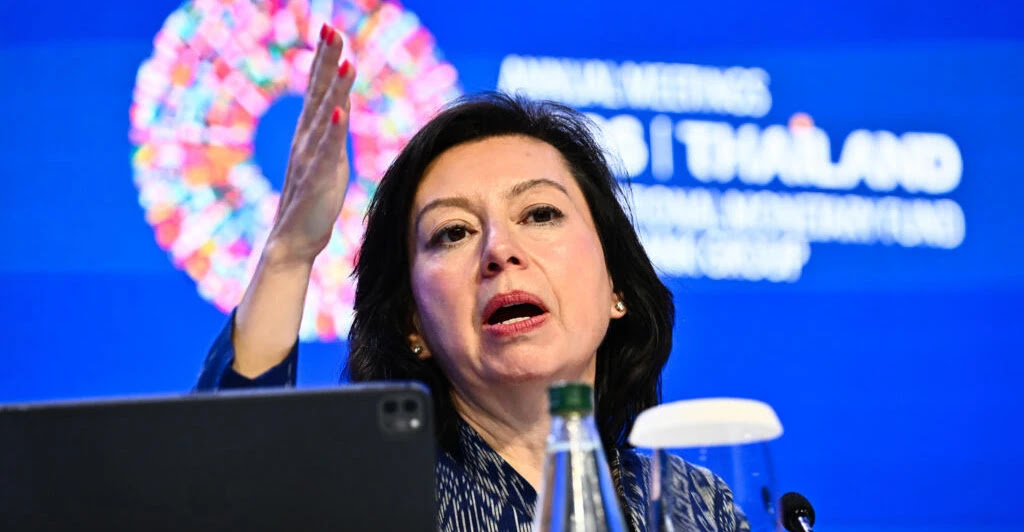
The International Monetary Fund announced on Thursday that it is preparing a new lending program for Iraq, whose economy has been severely damaged by the repercussions of the war with Iran, after beginning talks with authorities in Baghdad.
“Our plan now is to engage with the authorities to better understand their priorities, how to address their vulnerabilities, and then move forward to determine the best ways we can support them through a financing program,” said IMF spokeswoman Julie Kozak during a press conference in Washington.
Kozak noted that Iraq was already suffering from severe financial constraints before the outbreak of the war, adding that the limited non-oil revenue base is putting pressure on the state's finances.
The Managing Director of the International Monetary Fund, Kristalina Georgieva, revealed during the Fund’s annual meetings in Bangkok earlier this month that Iraq had requested a new support program.
During those meetings, Georgieva praised the resilience of global economic growth despite the wars in Iran and Ukraine, but warned that the effects of conflicts vary greatly, with the most fragile economies suffering severe damage.
Since the outbreak of war in the Middle East on February 28, 2016, with US and Israeli strikes on Iran, Tehran has almost completely restricted maritime traffic through the Strait of Hormuz, insisting that ships must pass through it via a designated route and sometimes targeting those attempting to pass without its coordination. In response, Washington has imposed a blockade on Iranian ports.
The Iraqi economy is heavily dependent on energy exports, most of which pass through this strait.
Iraq was facing severe financial pressures even before the outbreak of war, and the International Monetary Fund predicted this month that its economy would shrink by 16% this year.
Iraq’s last program with the International Monetary Fund ended in 2019, and it entails interest payments to the international institution amounting to about $428 million until 2030.
World Bank: We are discussing with the Iraqi government granting it a loan program for "financial rescue".
The World Bank announced today (Thursday, October 29, 2026) that it held a series of meetings with the Iraqi government to explore "opportunities to provide financial loans to Baghdad in order to develop a financial rescue program for the Iraqi economy."
The bank, according to its spokeswoman Julia Kozak and translated by "Baghdad Today," said that the Iraqi economy is expected to shrink by 16% this year as a result of the economic difficulties resulting from the closure of the Strait of Hormuz.
She continued, "Iraq was already suffering from financial hardship before the outbreak of the conflict in the Middle East and the closure of the strait, which caused significant economic repercussions, especially since Iraq now relies on a very narrow space to export its oil," as she described it.
Kozak stressed that the World Bank is now looking into "the priorities of the Iraqi government and how it wishes to address economic difficulties and areas of weakness, and then move around how we can support it through a financial rescue lending program."
It is noted that the Iraqi budget for the coming year 2027 suffers from a financial deficit estimated at about 40 to 50 trillion Iraqi dinars.
The US Treasury gives international companies one month to end their dealings with the Development Bank.
The US Treasury Department announced today (Thursday, October 29, 2026) that it is giving international companies that still have dealings with the Development Bank of Iraq one month to end their dealings completely or face sanctions.
The Treasury said, according to a statement translated by "Baghdad Today," that it has decided to give international companies and international financial institutions until December 1st to end their outstanding dealings with the bank, which it said it had imposed economic sanctions on as part of the economic war on Iran.
The US warning also included informing companies of the need to end cooperation "with any financial or banking entity or company in which the bank owns a stake exceeding 50%, whether directly or indirectly," stressing the need to end all transactions before the specified date.
It is noted that the US Treasury imposed sanctions on the Development Bank of Iraq at the beginning of this month, announcing that the bank is accused of providing financial facilities to Iran that include trading in US dollars.
The US Treasury: We will continue the pressure until the Iranian regime surrenders.

The US Treasury Department clarified on Thursday evening that the United States' war is not against the Iranian people but against the regime, stressing that pressure will continue "until the Iranian regime surrenders."
Under Secretary of State for International Affairs Erin Brown said in a press statement that "the embargo is effective and Iran is economically isolated," explaining that "our goal is to isolate Iran from the global financial system, and we have succeeded in preventing Tehran from circumventing the sanctions."
Brown added that "sanctions on Iran have proven effective," noting that "Iran is trying to move assets outside the framework of the sanctions," and stressing that "Iran has no option but to stop its terrorist operations."
US Treasury Secretary Scott Bisent said on Wednesday that the economic isolation of Iran is proving successful, noting that "Iran is unable to obtain dollars and funding for its proxies is dwindling."
The Treasury Secretary confirmed: "There are no Iranian oil shipments at sea, perhaps for the first time since Iran began producing oil."
He pointed out that the “economic pariah operation” launched by the United States on August 24th is working to cut off the Iranian regime’s oil lifeline, depriving it of the resources it uses to finance terrorism, nuclear weapons programs, and the lavish lifestyle of the Iranian Revolutionary Guard elite.
With a signal from the US, Al-Halbousi postpones including the Popular Mobilization Forces law on the parliament's agenda.
A responsible source in Anbar province revealed on Thursday that Speaker of Parliament Haibat al-Halbousi refused to include the Popular Mobilization Forces (PMF) law on the parliamentary session agenda,
reportedly on orders from the US Embassy. The source told Al-Maalomah News Agency, "Speaker of Parliament Haibat al-Halbousi refused to include the PMF law on the parliamentary session agenda, citing a lack of political consensus on passing the law, despite the fact that most members of parliament, with the exception of representatives from some Sunni and Kurdish political alliances, oppose its passage. These opponents constitute only a small number that would not affect the law's passage through parliamentary consensus."
The source added, "Several political alliances informed al-Halbousi of the necessity of including the PMF law, regardless of those objecting to it, and proceeding to a majority vote to pass the law in its final form." The source further stated, "The US Embassy in Baghdad informed al-Halbousi and several leaders of political alliances of the need to obstruct the passage of the PMF law and requested the Prime Minister's office to withdraw the law and return it to the government to prevent a vote on its articles.
Tom Barrack: Iraq possesses a massive oil base, and "Greater Israel" is an illusion.

The US Special Envoy to Iraq and Syria, Tom Barrack, asserted on Thursday that stability in the Middle East requires diplomacy and regional cooperation instead of continued wars, describing the idea of a "Greater Israel" as a "delusion" promoted by political opponents.
Barak said in an interview with CNN, which was monitored by Shafaq News Agency, that the repercussions of the events of October 7th required Israel to readjust its borders, stressing that settling conflicts in the region must be based on the diplomatic track, regardless of the identity of the Israeli Prime Minister.
He pointed out that the countries of the region have come to realize that joint cooperation is a necessity imposed by the facts, before addressing the Syrian and Iraqi files, explaining that Iraq has a huge oil revenue base that allows it to attract investments, unlike Syria, which faces major economic and investment challenges.
He explained that Syria currently lacks sufficient financial revenues and a stable banking system, in addition to continued restrictions on exports and the absence of security guarantees, which makes attracting international investments, especially from major American and Western energy companies, a difficult task that requires long-term efforts.
Barak appreciated the support provided by the Gulf states, including Saudi Arabia, Qatar and the UAE, to contribute to the stability of Syria, praising the current Syrian leadership for avoiding escalatory military responses to repeated Israeli incursions across the border.
He denied that the Trump administration’s goals were based on self-interest, stressing that Washington seeks to open avenues for easing trade and banking restrictions in a way that supports economic and political stability in the region.
Tom Barak: Greater Israel is just a fantasy propagated by feuding politicians.
US Special Envoy to Syria and Iraq Tom Barrack denied today (Thursday, October 29, 2026) the existence of what is known as "Greater Israel," stressing that talk about it comes from "politicians who are fighting amongst themselves, nothing more."
Barak said during an interview with CNN, translated by "Baghdad Today," that talk of "Greater Israel" is merely an illusion spread by politicians in their conflict against each other and has no basis in the political reality of the region.
He continued, "The October 7 attack escalated the hardline rhetoric in Israel and prompted it to reconsider its external borders, and this is not right. The countries of the region must resolve regional conflicts through diplomacy, regardless of who serves as Prime Minister of Israel," as he put it.
It should be noted that the interview with Barak also included a discussion about the future of Iraq and Syria, during which he stressed that Iraq has large economic resources that make it a focus of interest for investors, unlike Syria, which faces major economic challenges.
Muy bien, bienvenidos, bienvenidos a mis Epics Buddies, el podcast. Y digo podcast porque hay múltiples medios en 0:13 segundos
los que pueden disfrutar de este contenido. Y tenemos como un revoltijo de contenido. No creo que haya grabado ayer. 0:21 segundos
No hubo muchas noticias. Sí quería hacerlo, pero ya saben, las cosas no siempre salen como uno quiere. Así que voy a meter todo esto en 30 minutos, ¿verdad? Okay. 0:34 segundos
Muy bien. Muy bien. Entonces, hoy fue jueves 29 de octubre, el día 29 de nuestro Open Doors October. 0:47 segundos
Y veamos. Si son nuevos aquí, normalmente no salto de un lado a otro. 0:58 segundos
Esto es el blog. Si están viendo el video, este es mi blog de FX Buddy. Todos los artículos que voy a cubrir y más 1:07 minutos
están en este blog. También, para Español, denme unos 20 1:15 minutos
minutos, pero una vez que publique el blog, hay una transcripción en español al 1:25 minutos
final de la página. ¿Y cómo llegan al blog? Si están viendo en YouTube, en la sección de comentarios hay un 1:33 minutos
comentario fijado y ahí está el enlace. Es un blog gratuito. No recojo correos. No les vendo 1:41 minutos
nada. Solo hacen clic en el enlace y ya están aquí. Y luego pueden bajar para ver todo lo que quieran 1:48 minutos
ver. Además, el video está ahí. Okay. Muy bien. Pero antes de entrar en eso, 1:57 minutos
quiero mostrarles y para aquellos que solo quieran escuchar esto y decir “uh-oh”. 2:04 minutos
Oh, aquí vamos. Esto fue ayer. 2:09 minutos
¿Qué están viendo? ¿Verdad? Esto es lo que yo llamo mi pequeña gráfica. Yo no 2:17 minutos
armé esta gráfica. Alguien la hizo hace años, posiblemente 7, 8, 9, no sé, 2:25 minutos
pero la miro todo el día, todos los días. Esto es Forex 2:31 minutos
porque el dinar iraquí está en Forex y ven que es el programa, ¿verdad? 2:41 minutos
Que ahora en realidad es 1510, pero no sé por qué va de 1510 a 1474. 2:51 minutos
Bueno, lo hace porque hay gente operando. ¿Lo vieron? Sí, está en vivo. Como dije, está en vivo, pero está restringido quién puede operar. Okay. 3:04 minutos
Así es como normalmente se ve. 3:07 minutos
Hay cuatro dígitos y un decimal. Cuatro dígitos a la izquierda del decimal y luego cuatro a la derecha. Así 3:17 minutos
es siempre, excepto cuando hay fallos y 3:24 minutos
muy a menudo tienen fallos. Aquí pueden ver que solo hay dos dígitos a 3:31 minutos
la izquierda del decimal y cuatro a la derecha. Claramente fue un fallo, error humano 3:37 minutos
o lo que sea. Pero a mí me gusta ver que esto pase porque creo que 3:45 minutos
significa que hay un humano poniendo estos números y se equivocaron porque la IA 3:53 minutos
es tan perfecta, ¿verdad? Y nunca podría cometer un error. Así que 4:00 minutos
me gusta ver esto y se queda así 2, 4, 6 horas y luego alguien dice: “Oye, 4:07 minutos
tonto, cometiste un error. Ve a arreglarlo”. Estoy seguro de que no lo guardan y luego lo arreglan y vuelve a la normalidad. 4:17 minutos
Pero ni siquiera han tenido este programa. Cambiaron la tasa el 7 de octubre, así que ni siquiera han pasado 30 días y ya 4:24 minutos
tienen un fallo. Así que… pensé que era interesante. Y 4:31 minutos
sí, reviso cuando hicieron esto, pusieron todo lo que 4:37 minutos
la gente de dinarland estaba mirando en ese momento. 4:44 minutos
De todas formas. Muy bien. Eso es eso. Si eso es todo lo que querían ver, gracias. Pero denle like al salir. Muy bien. Okay. 4:56 minutos
Podemos cerrar eso e ir aquí. Muy bien. Entonces el título de 5:03 minutos
bueno, este es mi título: El FMI prepara un nuevo paquete de rescate para Irak mientras se profundiza la crisis financiera. 5:14 minutos
Sí. Sí. Entonces aquí está el artículo. Ahora hay más de uno. Este es de noticias kurdas. El FMI se involucra 5:24 minutos
con Irak en la preparación de un nuevo programa de rescate. ¿Ven? Pensaron que les había puesto clickbait, ¿eh? No, no. Así que 5:33 minutos
pueden leer esto. Básicamente sabemos lo que dice. 5:37 minutos
Están en problemas. Vinieron a nosotros y pidieron ayuda y el FMI está dirigido por Kristalina Georgieva. 5:49 minutos
Sí, esa es mi… ¿Alguna vez la han escuchado hablar? 5:53 minutos
Esa es mi imitación de ella, solo por la forma en que dice su nombre. Así que… sí, eso es 6:00 minutos
eso. Pero tienen un poco más de detalle. No sabemos si lo van a conseguir. Probablemente sí lo van a conseguir. Todavía no sabemos los términos. 6:08 minutos
Podría ser en cualquier lugar, creo, de 5 a 9 mil millones, lo cual no es mucho para un 6:15 minutos
país, ¿verdad? Pero veremos. Entonces la última frase de este artículo es: “Hoy estamos en una batalla feroz contra 6:23 minutos
la corrupción y la economía iraquí debe ser gestionada y tratada con una mentalidad económica sólida, no con una política de parches”. 6:34 minutos
Muy bien. Estos son solo unos pocos artículos de ayer. Los revisaré rápidamente. Y aquí la gente 6:42 minutos
dice: “¿Por qué dices que no va a pasar hasta junio de 2027?” Esto de aquí: EE.UU. le da a Irak hasta 6:52 minutos
junio de 2027 para quitarles las armas a los grupos que las tienen o enfrentar 7:01 minutos
sanciones. Y este Farhadrrui, él es el segundo vicepresidente de la Cámara. 7:09 minutos
Así que… alguien, no sé por qué lo eligieron para entrevistarlo, pero todos lo están diciendo. Todos lo están diciendo. 7:18 minutos
Hay como… gente que le está diciendo a Ali Z. 7:26 minutos
Oh. Oh por Dios. 7:31 minutos
Están mostrando la pelea en el Parlamento 4 días después. No, no, no. Ese 7:38 minutos
no es el parlamento de Irak. Ese es el parlamento de otro país. Pero se están golpeando. 7:46 minutos
De todas formas, perdón. Pensé que era el parlamento de Irak, pero por las banderas no creo que lo sea. Muy 7:53 minutos
bien. De todas formas, ¿se imaginan a nuestro Congreso haciendo eso? 8:00 minutos
De todas formas. Muy bien. Sí. Entonces hay gente bastante importante diciéndole a Ali Z: 8:08 minutos
“Oye, si no manejas estas sanciones, digo estas facciones, América nos va a poner sanciones”. 8:15 minutos
¿Lo saben, verdad? Así que saben que es serio y es una 8:23 minutos
tarea difícil. Muy bien. 8:28 minutos
Okay. Entonces aquí la autoridad de aduanas se reunió con algunas personas de este… aquíad. 8:38 minutos
No sé cómo se dice, pero están hablando de completar la fase final del sistema ICE, lo cual no sé por qué la gente se 8:47 minutos
emociona con eso. No creo que tenga nada que ver en absoluto con el RV. Muy bien. El banco central revela la fecha 8:54 minutos
para otorgar las aprobaciones finales para el establecimiento de bancos digitales. Así que les han dado hasta finales de 2027 9:01 minutos
o principios de 2028. Así que nada de qué emocionarse porque… no vamos a estar aquí para entonces. Mejor no. 9:10 minutos
Pero la otra cosa que me gusta de esto es que admiten que están siguiendo a la firma global de consultoría de gestión Oliver Wyman. 9:20 minutos
Muy bien. Aquí un ex… experto en crisis diciendo: no finjan que este dinero que están generando, los ingresos que están generando del cambio de tipo de cambio 9:36 minutos
es ganancia. No lo es. Dijo que es una forma rápida 9:43 minutos
de salir de un lío en el que se metieron. Una liquidez rápida 9:50 minutos
como una curita en una herida abierta, ¿verdad? Así que eso es bastante audaz de su parte. 9:56 minutos
Ni siquiera está en el gobierno. Es un experto en crisis, pero sí. Entonces veamos. 10:05 minutos
Y luego aquí hay otro. Creo que este es un ex miembro del comité de finanzas parlamentario diciendo 10:13 minutos
que la devaluación del dinar refleja la incapacidad del gobierno para aumentar los ingresos. Así que, ya saben, los están criticando por todos lados y a nosotros. 10:24 minutos
Okay. Entonces ahora volvemos a los artículos de hoy. Y aquí está nuestro amigo Maliki, 10:32 minutos
el hombre que a todos les encanta odiar excepto a sus seguidores. 10:37 minutos
Maliki enfatiza la necesidad de lograr un desarrollo equilibrado entre las provincias. Este caballero aquí es… sí, 10:46 minutos
ese es su nombre, el Sr. Majid. Es el ministro de planificación y se reunió con Maliki para poder hablar de cosas de planificación 10:55 minutos
y el ministerio de planificación, aunque no se oye mucho de él, su gente no sale muy a menudo en fotos, pero tienen las manos en todo, ¿verdad? 11:12 minutos
Similar a aquí si alguna vez miran lo que hace un departamento de planificación de la ciudad. Sí. 11:18 minutos
Okay. Entonces aquí otro economista advierte contra las declaraciones sobre los envíos de dólares en efectivo. Él dice: ya saben, quizás 11:27 minutos
no deberían estar anunciando que el dinero en efectivo viene en aviones, 11:34 minutos
especialmente cuando no sabemos si los grupos que no nos quieren tienen la capacidad de derribar los aviones del 11:43 minutos
aire, ¿verdad? Así que ojalá escuchen y dejen de decir. 11:50 minutos
Sí, estos aviones vienen. Van a estar aquí en 2 días, ¿verdad? No necesitamos saber eso. Solo digan que están en camino. Okay, creo que esto 11:59 minutos
es muy interesante. Uber, la compañía americana Uber quiere entrar a Irak bajo 12:05 minutos
su marca original. El Ministro de Transporte se reunió con su representante. 12:12 minutos
Así que leí esto varias veces y todavía no puedo decir si el ejecutivo de Uber vino 12:20 minutos
en persona o si fue por video o lo que sea. Pero… ¿una compañía como 12:28 minutos
Uber estaría pensando en ir a Irak si no pensaran que van a ganar dinero? No, no lo harían. Así que 12:35 minutos
creo que esto es muy revelador. Y piensen en todas las cosas que necesitan para operar. Necesitan satélite, necesitan 12:44 minutos
electricidad, necesitan internet, ¿verdad? Luego toda la tecnología que necesitan para montar el sistema. 12:54 minutos
Así que no es como: “Oh, solo nos vamos a mudar allá y listo”. Toma planificación y hay necesidades que 13:02 minutos
tienen. Los conductores no creo que sea el problema porque van a ser ciudadanos iraquíes, ¿verdad? Pero todas las otras 13:10 minutos
cosas para establecerlo y ponerlo en marcha y todo, todo eso va a requerir dinero, 13:17 minutos
inversión, ¿verdad? Entonces la reunión fue testigo de discusiones fructíferas sobre las perspectivas de cooperación y beneficiarse 13:26 minutos
de la experiencia de la compañía en servicios de transporte a través de aplicaciones inteligentes. Luego también hay, igual que aquí cuando Uber empezó a despegar, los taxis, 13:43 minutos
los taxis amarillos originales, tuvieron sus disputas y había ciertas cosas que querían garantizadas. Irak tiene taxis. Irak ya 13:48 minutos
tiene al menos dos sistemas similares a Uber que yo sepa, pero sí. Así que 13:58 minutos
veremos. Veremos. Bueno, ojalá no estemos aquí para verlo, pero como dije, ninguna gran corporación como esa va 14:07 minutos
a considerar ir a algún lugar sin pensar que van a ganar dinero. Ganar dinero. 14:15 minutos
Muy bien, aquí hay otra persona. 14:20 minutos
No estoy seguro de quién escribió esto, pero este es otro de esos 14:28 minutos
artículos que si quieren leer, habla de si no… si Ali Z no maneja las facciones. 14:37 minutos
Sí. Entonces hay una palabra aquí que no digo. Es uno de los tres grupos religiosos de allá. 14:49 minutos
Empieza con S. 14:51 minutos
Pero de todas formas, dice que las facciones pueden tragarse a Ali Z y a su gobierno. 14:58 minutos
Se expanden dentro del Estado y retienen sus armas. Así que básicamente está diciendo que nadie lo respeta. 15:08 minutos
Están haciendo lo que quieren y de cierta forma se ve así, ¿verdad? Pero nosotros sabemos 15:16 minutos
diferente. Y también esto de aquí, yo me sentiría un poco amenazado 15:23 minutos
por esto. Escuchen esto. Esto incluso podría llevar a que estas fuerzas se conviertan en la razón del final de la corta carrera política de Ali Z. 15:33 minutos
Ahora, él ya dijo que solo va a ser primer ministro por un período, así que ya está diciendo que va a 15:42 minutos
tener una corta carrera política. Ahora aquí están diciendo: “Sí, sabes, probablemente vas a tener una corta carrera política 15:50 minutos
en un camino descrito por un 15:59 minutos
político cercano al marco de coordinación como jugar con fuego”. Eso nunca es algo agradable, ¿verdad? 16:16 minutos
Nunca es un término cariñoso de buenos deseos, 16:26 minutos
pero… él lo sabe, estoy seguro de que ya ha tenido amenazas a su vida y todo, pero todavía está asumiendo. 16:37 minutos
Está arrestando. Ya tiene órdenes diurnas, lo que sea que eso signifique, para personas relacionadas con el vehículo no tripulado 16:46 minutos
que fue derribado en la zona verde antes de que hiciera daño. Sí. Y entonces la IRGC 16:57 minutos
y las fuerzas del PMF están como: “Oye, ¿qué estás haciendo? Nadie resultó herido, entonces ¿por qué 17:04 minutos
estás persiguiendo esto?” Sí, lean ese artículo y verán que eso es lo que dice. Es largo. Es 17:12 minutos
realmente largo. Pero sé que a algunas personas les gusta ese tipo de cosas. Así que ahí lo tienen. Ups. Ups. ¿Todo 17:21 minutos
sigue funcionando? Sí. Okay. Entonces aquí está mi comercial. Si quieren apoyar a mis FX Buddies, hay formas gratuitas de hacerlo. 17:32 minutos
Like, clic, clic. Sí. Denle al pulgar arriba. Consideren suscribirse, que es… ¿qué? 17:40 minutos
Hacer clic. Ding. Sí, tienen que hacer clic en la campanita si quieren que les notifique. Y consideren hacer clic en el botón de compartir. 17:47 minutos
Consideren YouTube Super Thanks. Y muchísimas gracias. Denle hype al video. Mucha gente lo está haciendo. Gracias. 17:54 minutos
Gracias. Y luego esto… cuando esta barra de vista previa desaparezca y sea un blog en vivo, este “buy me a coffee” será un enlace en vivo. 18:04 minutos
Cash App siempre está en vivo y soy dollar sign Tishwash y PayPal lo mismo. Así que grande o pequeño, 18:15 minutos
lo aprecio todo. Gracias de antemano por su generosidad. 18:20 minutos
Y luego si les gusta la música, música country cristiana, 18:27 minutos
pueden ir aquí, pueden escuchar un pedacito de esta canción. Y si quieren comprar la canción, yo no 18:35 minutos
la canto. Así que tuve algo que ver en escribirla, pero no la canto. Pueden conseguirla y eso también me dará un par de 18:44 minutos
cuartos. Muy bien. Entonces esta fue la gran noticia de hoy. El banco central aclara la verdad sobre la impresión de la 18:52 minutos
nueva moneda y la diferencia entre los dos precios disminuye al 9%. A mí no me importa ese 18:59 minutos
9% porque… ¿no disminuyó solo porque subieron el… en vez de ser 1310 la 19:07 minutos
tasa oficial ahora es 1510? Así que sí, por supuesto que el gap se cerró porque subieron la tasa del dólar. Así que a menos que esté 19:16 minutos
malinterpretando eso, lo cual es totalmente posible, no veo eso como algo de qué presumir. Pero bueno, 19:24 minutos
¿qué sé yo? Pero entonces el otro gran tema fue este. El gobernador del banco central de Irak, ahí están sus tres 19:33 minutos
nombres, confirmó el jueves que los reportes que circulan sobre la impresión de nueva moneda eran inexactos. 19:41 minutos
Así que no significa que no estén hablando de eso. No significa que sea algo que va a pasar o que no va a 19:50 minutos
pasar. Solo significa que lo que estamos leyendo en las noticias es inexacto. 19:55 minutos
Y sí, estoy bien con eso. Y luego tenían a una señora, 20:03 minutos
¿dónde está? Aquí está su nombre. Ella pudo visitar el banco central de Irak para discutir las repercusiones del 20:12 minutos
cambio en el tipo de cambio del dólar y su impacto en el panorama económico y de inversión, así como los desafíos que enfrentan los inversionistas y empresas locales. 20:22 minutos
Y ella dio una declaración citando al gobernador del banco central aclarando que 20:30 minutos
las conversaciones que circulan sobre este asunto de no impresión de nueva moneda eran inexactas. 20:36 minutos
No se desanimen por eso. Les hemos escuchado decir todo esto. Sabemos que no necesitan imprimir las nuevas 20:45 minutos
denominaciones más bajas porque ya están impresas. Bueno, algunos de nosotros creemos eso. Yo lo creo. 20:52 minutos
Y no queremos que impriman nuevos billetes de 30 porque queremos que se estén 20:59 minutos
deshaciendo de esos, ¿verdad? Así que sí. Pero vean, es solo más 21:06 minutos
evidencia de que todavía están discutiendo el tipo de cambio, la nueva moneda y todo eso. Así que me gusta verlo. 21:14 minutos
Aunque se pueda tomar de forma negativa, todavía me gusta verlo. Muy bien. Aquí… ya saben, les dije 21:21 minutos
que los kurdos todavía están tratando de pelear por lo que sienten que es su cantidad legítima. 14.14% 21:28 minutos
del presupuesto es lo que quieren. Probablemente obtendrán 12.70 como han obtenido en el pasado, pero 21:36 minutos
veremos, las cosas podrían ser diferentes esta vez. Y luego aquí cambiaron la fecha de llegada al parlamento… a mediados 21:46 minutos
del próximo mes para comenzar la discusión. Así que alrededor del 15 de noviembre, ¿verdad? Porque no los vamos a 21:55 minutos
sujetar a eso. Pero alrededor de mediados del próximo mes llegará y empezarán las discusiones. Así que eso significa que 22:03 minutos
podría alargarse aún más. Pero tal vez no. Tal vez espero que Ali Z haga 22:09 minutos
lo que hizo Sudani. Irá al parlamento y les dirá: “No anden por ahí. 22:16 minutos
Armamos esta cosa. Solo pásenla. No hagan preguntas. No hay enmiendas. Solo pasen el presupuesto”. Sí. Sudani dijo todo eso. 22:29 minutos
No sé exactamente lo que dijo, pero sí tuvo una reunión y fue básicamente para decirle al Parlamento sobre sí mismos y 22:38 minutos
mágicamente el presupuesto se aprobó poco después, pero todavía tienen que pasar por sus tres lecturas y todo eso. 22:46 minutos
Pero sí, y este presupuesto dicen que van a hacer las enmiendas y reasignaciones necesarias 22:53 minutos
para lograr una distribución justa de la riqueza y prevenir cualquier injusticia financiera. 23:00 minutos
Sí. Muy bien. Aquí… los contratistas en Kurdistán quieren que les paguen en 23:08 minutos
dólares, no en dinares. Y quieren que les paguen 23:14 minutos
directamente desde Bagdad porque la próxima semana solo van a 23:21 minutos
recibir su dinero de octubre y… los dólares serían mejores para ellos especialmente porque son 23:30 minutos
dueños de negocios, tienen que comprar cosas, ¿verdad? Y tienen que gastar dólares 23:36 minutos
más probablemente. Así que… pero sí, pueden expresar sus deseos pero probablemente no los van a conseguir. Pero pueden leer 23:44 minutos
sobre que los contratistas están enfrentando dos crisis simultáneamente. 23:49 minutos
La primera siendo el alto tipo de cambio del dólar y los costos de implementación y la segunda siendo la crisis financiera y el retraso en el desembolso de las deudas. 24:00 minutos
Así que ese es un problema real. 24:03 minutos
Muy bien. ¿Qué es esto? Oh, miren. Lo puse dos veces. Necesito volver y borrarlo. 24:10 minutos
Okay. Entonces aquí hay otro artículo y de hecho este artículo salió primero, salió esta mañana. 24:18 minutos
El Fondo Monetario Internacional: estamos preparándonos para prestarle a Irak y a los ciudadanos no les gusta. Así que este es el 24:27 minutos
FMI y el Banco Mundial porque trabajan juntos como pájaros de la misma pluma. 24:34 minutos
Banco Mundial: estamos discutiendo con el gobierno iraquí otorgarle un préstamo para el rescate financiero. Así que eso sería 24:43 minutos
mejor, ¿verdad? Pero… ¿creen que si obtienen el préstamo del Banco Mundial no tomarían el préstamo del FMI? Oh, no, no, no. 24:55 minutos
Porque este dinero aquí, el Banco Mundial designará ahora que este dinero solo se puede gastar en XYZ 25:05 minutos
y el dinero del FMI, designarán a qué puede ir ese dinero. Pero… sí, entonces a los ciudadanos 25:13 minutos
no les gusta. Y para aquellos que son nuevos, hay un… nuevo para mí de todas formas. 25:22 minutos
Hay un pequeño grupo con el que 25:27 minutos
interactúo, digamos, y hace años había 25:34 minutos
un miembro que era iraquí que se había mudado a América pero todavía tenía 25:40 minutos
su acento pesado y grueso y siempre decía: “Yo soy iraquí, conozco a mi gente 25:48 minutos
y si reciben dinero van a retrasar hacer lo que se supone que deben hacer”. 25:54 minutos
Y… sí, creo que así es como se sienten los ciudadanos. 26:01 minutos
Pero están como: “Miren, ustedes acaba de devaluar nuestro dinero y dijeron que por eso lo estaban haciendo porque necesitan 26:09 minutos
liquidez y hay una crisis. Ahora van a pedir prestado dinero y sumar al déficit”. 26:16 minutos
Sí. Muy bien. Vamos bastante bien. Vamos bastante bien con el tiempo. Okay. El Tesoro de EE.UU.: 26:24 minutos
continuaremos la presión hasta que el régimen del vecino se rinda y ellos no se rinden. 26:33 minutos
Nunca se rinden. 26:35 minutos
Pero la buena noticia es… Vance 26:43 minutos
Vance vicepresidente. ¿Ven cómo recuerdo su apellido? Él aparentemente envió una 26:50 minutos
carta. Así que hay un nuevo comandante teniente algo o algo así en Irán. 27:01 minutos
Pero no es nuevo. Es de la generación de pelo canoso y que usa lentes. 27:09 minutos
Muy bien. Él está hablando con… está en la mezcla ahora 27:17 minutos
de alguna forma. Pero la carta fue entregada a ese tipo. Y entonces ellos están 27:25 minutos
posiblemente… ¿qué es? Tratando de manejar esto diplomáticamente. 27:36 minutos
Muy bien. Sí. Entonces otra vez están intentando de nuevo. Y hubo cuatro países que se juntaron. Bueno, 27:44 minutos
tres. Y el vecino. Sé que acabo de decirlos, pero no los voy a decir otra vez. Y hubo un paquete que se les dio 27:53 minutos
que decía: “Oye, saben, tal vez podamos terminar esto si siguen lo que está aquí”. Y ellos dijeron: “Oh, ¿en serio? 28:01 minutos
Porque… tenemos un plan de 7 días y… aquí si ustedes y los americanos están de acuerdo 28:08 minutos
con nuestro plan de 7 días, abriremos la calle”. Así que hay todo este ir y venir y la gente está 28:16 minutos
mirándolo y lo que sea, pero Vance sí envió una carta y ellos 28:25 minutos
admitieron o reconocieron el recibo de la carta. Así que imagino que se tomarán este fin de semana para pensarlo. 28:34 minutos
Sí, lo que sea. Pero eso es… bueno. Y eso es suficiente para bajar un poco el precio del petróleo. Pero luego tienen 28:44 minutos
a la IRGC anunciando que de tres a cuatro a cinco dependiendo de qué 28:53 minutos
sitio de noticias lean… embarcaciones han chocado con las minas, las minas marinas. 29:03 minutos
Pero no sabemos si eso es verdad o no. 29:06 minutos
Pero el solo hecho de que lo publiquen posiblemente podría estar impidiendo que el precio del 29:13 minutos
petróleo baje. Y eso es, si son nuevos conmigo, yo leo oil.com 29:20 minutos
todos los días. Voy ahí. Y sí, soy un nerd. 29:26 minutos
Pero… así que no… y odio leer sobre petróleo porque creo que todo está manipulado. No hay forma de que podamos confirmar lo que dicen. 29:39 minutos
Nos pueden decir cualquier cosa y no tenemos forma de confirmarlo, ¿verdad? Pero igual que gran parte de las noticias, solo 29:48 minutos
tienen que creer que esa es la historia que quieren que crean. Lo que pongan en las noticias en ese momento, eso es lo que 29:56 minutos
quieren que crean, ¿verdad? Así es como yo miro las noticias. Pero sí, entonces ahí… y hay un patrón que está 30:04 minutos
sucediendo. El jueves sale una noticia positiva. El viernes esto: “Oh, los voy a volar del 30:13 minutos
mapa”, ¿verdad? Ya saben quién dice eso. Y entonces… sí, veremos. Sin embargo, 30:20 minutos
hay algunos kabooies reales ocurriendo. La isla de Kesh recibió un impacto. 30:26 minutos
La isla de Sir recibió un impacto. Y luego dentro de Teherán, 30:32 minutos
hubo múltiples sonidos de kabooi. Y hay footage, 30:40 minutos
varios footage de ciudadanos. Creo que dijeron incluso imagen satelital. Pueden ver una 30:48 minutos
fábrica de aluminio que simplemente… se combustió espontáneamente. Sí. 30:55 minutos
Ya saben, estaba ahí y luego estaba en llamas y luego kabooi porque hay todo tipo de químicos y cosas ahí, 31:02 minutos
¿verdad? Entonces… ¿quién está haciendo eso? No sabemos. 31:10 minutos
Pero eso es lo que está pasando en Irán. 31:12 minutos
Ups, lo acabo de decir. Oh, bueno. Y entonces nosotros sí admitimos otra vez haber eliminado dos 31:23 minutos
lanzadores, pero las otras cosas no estamos admitiendo haberlas hecho. Así que sí. Muy bien. Y entonces 31:31 minutos
aquí hay otro artículo sobre la ley del PMF. Y déjenme ver quién lo escribió. 31:41 minutos
Una fuente responsable. 31:43 minutos
M… pero saben que es verdad porque siguen poniendo esto: la ley del PMF… oh va hacia adelante, luego la retiran, 31:53 minutos
luego va hacia adelante, ¿verdad? Y ha sido así desde que Sudani estaba en el cargo. Estas son 32:00 minutos
las fuerzas de movilización popular que son una de las fuerzas que queremos que se vayan 32:07 minutos
totalmente. No solo que entreguen las armas, que se disuelvan, que se vayan a su amado país al que son tan fieles. 32:17 minutos
¿Verdad? 32:18 minutos
Entonces la fuente responsable dijo que con una señal de EE.UU., Halbusi pospone 32:26 minutos
incluir la ley de las fuerzas del PMF en la agenda del parlamento. Así que solo se están quejando porque están infelices con eso. 32:33 minutos
Ahora estos tienen que leerlos. Tom Barrack: Irak posee una base petrolera masiva y 32:41 minutos
la mayor tierra de la que BB es presidente o primer 32:46 minutos
ministro es una ilusión. Así que… y lo encuentro interesante porque estoy 32:54 minutos
bastante seguro de que en mi último video… casi termino. Sé que son 32 minutos. Hablé 33:01 minutos
sobre ese plan que tienen del Medio Oriente dorado. Así que este mayor 33:12 minutos
ese nombre que no voy a decir, él está diciendo: “Oh no, no podemos hacer eso, nunca 33:18 minutos
va a pasar”. Así que eso es como un giro de 180 grados para nosotros porque formábamos parte de eso. ¿Se acuerdan de… Jared? 33:30 minutos
Espero que sepan quién es. Él está… relacionado con el presidente de EE.UU. Jared y Wiki. 33:38 minutos
No me gusta decir su nombre real. 33:41 minutos
Fueron allá y eran como: “Oh sí, podríamos construir esto y podríamos tener este resort aquí y todo eso”. Y las 33:49 minutos
naciones del Golfo dijeron: “No, eso no va a pasar. No estamos de acuerdo con eso”. Así que sí, pero 33:56 minutos
luego también de cierta forma anunciaron que Siria e Irak son los dos que van a 34:03 minutos
trabajar juntos. Se van a construir mutuamente. Así que están sacando al vecino del plan y poniendo 34:12 minutos
a Siria, pero eso es porque… ¿por qué? También los controlamos. Pusimos 34:20 minutos
a… el presidente… no me gusta decir su nombre porque no es su nombre real de todas formas… el presidente sirio, nosotros 34:28 minutos
lo pusimos ahí así que… ya saben, él tiene que 34:36 minutos
hacer lo que digamos. Muy bien. Así que esto va a terminar este video. Este es el jueves como dije. Oh, son las 11:11. 34:45 minutos
¿Pueden ver eso ahí abajo? No sé si cuando edito se corta. Lo que sea. Así que… lugar perfecto para terminar. 34:51 minutos
Acumulen mientras esperamos a que la tasa se aprecie. No se pierdan ninguna comida y paguen todas sus cuentas. 34:58 minutos
¿Qué más? ¿Qué más? ¿Qué más? Disfruten el resto de su mañana, noche, mediodía, cualquiera que sea el horario en el que estén disfrutando de este contenido. Y hasta la próxima vez.

No comments:
Post a Comment