Between rising and falling... when will the dollar stabilize in Iraq?

Economically,
the dollar exchange rate remains inIraqThe dollar is at the forefront of the economic scene, amid a state of continuous fluctuation between rise and fall, which is causing concern among the public and the markets alike, and opens the door to a fundamental question: When will the dollar stabilize in Iraq?
The video for this My FX Buddies Blog post is below:
Continuous fluctuations despite
the measures taken.Central Bank of IraqDuring the past period, the price of the dollar has continued to witness almost daily changes in the parallel market, while official authorities confirm that the official price is stable and that the cash reserves are in a safe position.
Economic experts believe that "this discrepancy between the official price and the market price is due to a combination of internal and external factors, not just one."
Experts say the market is still influenced by psychological factors,
according to one economist.Nabil Al-MarsoumiThe dollar inIraqIt doesn't move solely according to economic indicators, but is also influenced by psychological factors and market speculation, as well as rumors that play a significant role in artificially inflating demand for the currency.
He adds that "any talk of decisions or changes to the dollar selling mechanism is immediately reflected in the market, even if it has no actual basis." Regarding
transfers and banking compliance , the Prime Minister's financial advisor explains...
Mazhar Muhammad Salih"Iraq is undergoing a transitional phase in its financial system, following the adoption of new mechanisms for foreign transfers and compliance with international standards," he stated.
He pointed out that "the tightening of transfer procedures, despite its importance in combating money laundering, has led to a temporary reduction in the supply of dollars in the market, creating pressure on the exchange rate." He added that "this phase is temporary, and as banks and merchants fully adapt to the new system, the volatility will decrease."
Analysts agree that the Central Bank still possesses powerful tools for intervention, most notably selling dollars through the official platform, bolstering foreign currency reserves, and regulating non-compliant banks and exchange companies.
The economist believesAbdul Rahman Al-MashhadaniThe stability of the dollar hinges on the Central Bank's ability to continue injecting foreign currency, while simultaneously controlling artificial demand and speculation.
When will this stability be achieved?
According to economic experts, complete stability of the dollar's exchange rate in Iraq will not be immediate. It requires the final stabilization of the mechanism for foreign transfers, banks' adherence to international standards without disrupting the market, a reduction in the gap between the official and parallel exchange rates, and alleviating the anxieties of citizens and merchants.
Experts indicate that relative stability may be achieved in the coming months if no sudden political or economic developments occur, emphasizing that stability refers to a decrease in the intensity of fluctuations, not an absolute fixing of the price. The
direct impact on citizens
is significant. Specialists warn that continued dollar volatility directly affects food prices, import costs, and citizens' purchasing power, stressing that any stability in the exchange rate will positively impact the market and prices, easing the cost of living.
Between its rise and fall, the dollar in Iraq remains subject to a delicate balance between monetary policy, banking procedures, and market psychology.
Experts believe that the path to stability is clearer than before, but it needs time, banking discipline, and public confidence for the dollar to return to more stable and sustainable levels.
Experts: Liquidity is under control and does not represent a financial gap.
Prime Minister Mohammed Shia al-Sudani directed officials to assess the impact of public finance reforms, emphasizing the importance of rationalizing spending and maximizing revenues to ensure the stability of the national economy. Economic experts believe that the current liquidity fluctuations do not represent a genuine financial gap, and that structural reforms, strategic projects, and the digital transformation of taxation and electronic collection are effective tools for boosting revenues and supporting productive sectors.
The Prime Minister’s Media Office stated in a statement that “Al-Sudani chaired a meeting of the Ministerial Council for the Economy yesterday, Monday, and directed the concerned authorities to measure the size of the financial impact after the implementation of the reform measures to rationalize spending, as well as to measure the size of their effectiveness,” stressing “the implementation of financial and structural reforms to rearrange the priorities of public spending.”
He pointed to "the importance of proceeding with reform steps that would create more job opportunities in the private sector, and open doors to new investments in various sectors to increase revenues and reduce the burden on the general budget."
Commenting on the financial situation, Dr. Mazhar Muhammad Salih, advisor to the Prime Minister, affirmed that the fluctuation in monthly liquidity does not represent a genuine financial gap, but rather reflects the volatility of oil prices and the limited non-oil revenues. He emphasized the importance of structural reforms to ensure the stability of public finances and avoid future crises. In an interview with Al-Sabah newspaper, Salih explained that controlling operational spending and redirecting it towards essential obligations, such as salaries for employees and retirees, social safety nets, and critical sectors, acts as a safeguard to prevent financial pressures from being passed on to citizens.
For his part, financial expert Alaa al-Fahd pointed out that the Iraqi economy suffers from a rentier structure, which necessitates the adoption of urgent short-term reforms to control spending and long-term strategic reforms to diversify revenues and encourage productive sectors. He added to Al-Sabah newspaper, "Major projects such as the Grand Faw Port and the Development Road project, along with revitalizing the agricultural and industrial sectors, provide sustainable resources and create job opportunities." He stressed that managing the next phase requires courageous decisions and well-considered reforms to ensure financial and economic stability.
9 Economic Benefits of State-Controlled Weapons – Expert Al-Hashemi (and these benefits can increase)
"From a crisis economy to a planning economy"
Economic expert Ziad Al-Hashemi said that the Iraqi state will achieve significant economic gains by getting rid of loose weapons, explaining that this step will raise Iraq's status and place it among countries with true sovereignty. He added that countries will give greater value to the Iraqi government after it gets rid of loose weapons and will deal with it with greater confidence. Iraq will have a pivotal role through which it can enter into strategic alliances and new economic partnerships. Al-Hashemi also stressed that the Iraqi economy will transform from a crisis economy to a planned economy through comprehensive development plans, and he listed 9 benefits, saying that they are subject to increase according to developments.
Al-Hashemi's Facebook post:
- Restoring Iraqi sovereignty by eliminating loose weapons will yield significant economic gains, freeing Iraq from the grip of uncontrolled arms dealers and elevating its standing among truly sovereign nations. One nation, one people, one army—this is the motto and objective that stable states strive for, uphold, and maintain. It is a fundamental condition that grants these nations the immunity and opportunity to strengthen their stability, sovereignty, and political, economic, and security standing.
- Countries will give greater value to the Iraqi government after it gets rid of loose weapons, and will deal with it with greater confidence. Iraq will have a greater pivotal role through which it can enter into strategic alliances and new economic partnerships, which were not possible to achieve with weapons in the hands of non-governmental groups!
- An Iraq without loose armed groups will transform the Iraqi economy from a crisis economy to a planned economy, as Iraq will be able to develop and implement comprehensive development plans away from the control and influence of those groups. This is a strategic goal that previous governments failed to achieve, one of the most important reasons being the presence of weapons outside the control of the state!
- Eliminating loose weapons outside the official armed forces will greatly reduce the costs of risks surrounding the Iraqi economy and will enhance the possibility of capital and investments entering Iraq.
- The private sector will find ample space and a promising market for work, expansion and production, and new projects and innovative ideas will enter that will enhance the emerging business sector and the services sector, which the Iraqi economy desperately needs.
- Furthermore, the government's monopoly on weapons will strongly contribute to weakening corruption, which has been reinforced and spread by loose weapons throughout the past decades and up to the present day through the imposition of levies, commissions and sharing of contracts!
- Enforcing the law with only one weapon in the hands of the government will contribute to achieving civil peace and social justice, end the militarization of society, and open the door to ambition for new generations and the development of their skills to keep pace with developments in the labor market!
- Strategic projects such as the development road can see the light after getting rid of loose weapons, and this will contribute to attracting global industries and supply chains to benefit from this project and establish their projects and centers inside Iraq.
- With the elimination of the loose weapons of the groups and their economic offices, the phenomenon of dollar smuggling, money laundering, and support for sanctioned entities and countries will end, and the Central Bank of Iraq and the government will be able to restrict and reduce these operations to the lowest level, thus preserving national wealth from being lost.
- Oil and commercial smuggling operations and the exploitation of border crossings will decrease to the lowest level after getting rid of loose weapons, and trade will turn into a stable normal situation, which will allow it to be strengthened and the returns achieved for the government to be improved.
- These are some of the gains, and there are certainly other gains that we did not have the space to mention, but in any case, Iraq will not see a glimmer of hope or a light without the presence of one official weapon, as the economy does not grow with the presence of loose guns, but rather it deteriorates silently!
- When that is achieved, and the economy and Iraq are freed from the grip of loose weapons, then we can say that Iraq has truly begun to stand on its own two feet and walk on the right path, after many years of paralysis and ailments!
- Therefore, any incoming prime minister must realize that the success of his government depends on getting rid of loose armed groups and not allowing them to roam with their weapons around his government ministries, as this is a recipe for the failure of his government and a grave danger to the future of Iraq and the fate of its people!
Non-oil revenues in Iraq: between corruption and economic challenges

According to a member of the Alternative Alliance, about 50% of Iraq's non-oil revenues are being consumed by corruption, raising questions about the state's ability to diversify the economy and cope with the impact of oil price fluctuations.
Saleh Rashid, a member of the Alternative Alliance, confirmed on Monday that corruption is consuming about 50% of non-oil revenues in Iraq. He also called for the adoption of a strategic roadmap to correct the course of the national economy and confront the fluctuations in global oil prices.
Rashid said, “Iraq still relies on what is known as a rentier economy, as revenues from the sale of crude oil constitute about 90% of the treasury’s revenues, which is extremely dangerous, especially with the continuous fluctuations in oil prices in global markets over the past years.”
He added that “many oil-producing countries have moved towards a radical change in their economic policies, and have adopted the principle of diversifying the economy by activating non-oil revenues in a well-thought-out manner, in order to ensure facing any decline in oil prices.”
He explained that “Iraq has large non- oil revenues , but nearly 50% of them are consumed by the scourge of corruption in multiple ways.”
Rashid stressed “the need to adopt a strategic roadmap to confront the crisis of fluctuating oil prices, especially after the declines witnessed in recent months, which have begun to put strong pressure on the public treasury and affect the state’s ability to pay salaries and other entitlements.”
He concluded by saying that “combating corruption has become a national necessity, as it poses a threat comparable to terrorism in its impact on the country’s future and economic stability.”
Sudan directs the measurement of the financial impact of rationalizing spending and maximizing revenues.

On Monday, outgoing Prime Minister Mohammed Shia al-Sudani directed that the financial impact of reform measures be measured by rationalizing spending and maximizing revenues.
A statement from the Prime Minister’s office, received by Shafaq News Agency, stated that Al-Sudani chaired a meeting of the Ministerial Council for the Economy, and the meeting witnessed a discussion of the procedures of ministries and government agencies related to the outcomes of the previous meeting, which aim to reduce government spending and maximize revenues.
According to the statement, Al-Sudani directed the relevant authorities to measure the size of the financial impact after the implementation of the reform measures to rationalize spending, as well as to measure the size of their effectiveness, stressing the application of financial and structural reforms to rearrange the priorities of public spending.
He pointed to the importance of proceeding with reform steps that would create more job opportunities in the private sector, and open doors to new investments in various sectors to increase revenues and reduce the burden on the general budget.
It is worth noting that the outgoing Prime Minister, Mohammed Shia Al-Sudani, stressed last Thursday the need to conduct a comprehensive evaluation and restructuring of all tax administration systems in Iraq, including their specific policies.
Two delegations from the Kurdistan Democratic Party are in Baghdad for negotiations.
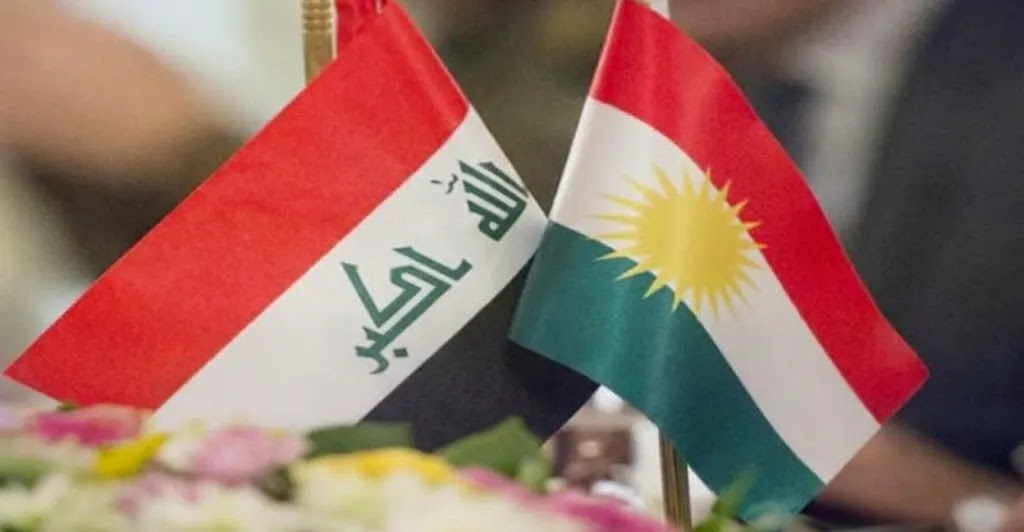
On Monday, Majid Shenkali, a member of the Kurdistan Democratic Party bloc, said that the party had formed two separate delegations, one to negotiate the federal government entitlement in Baghdad, and the other concerned with the entitlement to form the Kurdistan Regional Government.
Shankali told Shafaq News Agency that a delegation from the Democratic Party will visit Baghdad in the next few days, before the first session of the House of Representatives, to discuss the political entitlement related to the formation of the next federal government.
He pointed out that the election of the Speaker of Parliament and his two deputies will determine the features of the next Prime Minister and the general political entitlement, indicating that the political party that obtains a position within the presidency of Parliament does not have the same points when competing to form the next government.
This comes amid efforts by the Coordination Framework forces to decide on the identity of the next prime minister and end the ongoing controversy, through agreement, voting, or resorting to a compromise candidate, amid differing positions regarding the renewal of Mohammed Shia al-Sudani’s mandate, according to what an informed source told Shafaq News Agency.
The Coordination Framework called for a session of the House of Representatives to elect its leadership, after its failure to agree on the formation of the government, while stressing the continuation of dialogues and discussions between all political parties regarding the upcoming national entitlements.
President Abdul Latif Jamal Rashid had set December 29 as the date for the first session of the Iraqi parliament.
Expert: Artificial intelligence provides a safe environment for investors in the stock market
Nouri told Al-Furat News Agency that "investment in the Iraqi Stock Exchange depends on several basic conditions to attract investors, foremost among them providing a safe environment by listing the financial statements of joint-stock companies on time," indicating that "the Securities Commission and the Central Bank of Iraq have obligated private sector banks to issue quarterly financial statements to be traded in the market."
He added that "the investment process requires careful monitoring of licensed brokerage firms, as the buying and selling of shares is carried out through them," stressing "the importance of adhering to honesty with the investor in accordance with the instructions issued by the market administration."
Nouri added that "the Financial Disclosure Department at the Securities Commission is responsible for examining financial data before approving its listing," noting that "the main goal of the market and the commission is to stimulate economic sectors by mobilizing and directing investments, stressing that the more investors are protected from fraud, the greater the demand for investment from Iraqis and foreigners."
He explained that "automating stock trading and monitoring brokerage firms facilitates trading operations quickly and securely, which is currently available in the Iraq Stock Exchange through the use of the latest software used in the Gulf markets."
The economist pointed out that "the bottom line is that the use of artificial intelligence ensures the speed of completing transactions within a few minutes, as well as enhancing protection and transparency in stock trading."
Sudani: Financial reforms must be implemented to restructure public spending
The Iraqi prime minister stressed the need to implement financial and structural reforms in order to restructure public expenditures.

Main story: Iraqi Prime Minister Mohammed Shia Sudani chaired a regular meeting of the Ministerial Council for the Economy in the presence of a number of senior government officials.
Official statement: "The meeting discussed practical measures to reduce government expenditures and find new sources to increase revenue, so as to create a balance between revenue and expenditure," the prime minister's office said.
Additional information: Sudani said that continuing the financial reform process will provide a favorable environment for the growth of the private sector. This will have a direct impact on creating more jobs for citizens and reducing the burden on the public sector.
The purpose of the reform: Through these reforms, the Iraqi government wants to cut unnecessary expenditures and direct financial allocations more towards service projects and investment.
The Sudanese president meets with economic and financial experts to discuss strengthening financial stability and economic development.

Prime Minister Mohammed Shia Al-Sudani received on Monday a group of Iraqi experts and university professors specializing in the economic and financial fields.
The Prime Minister’s Media Office stated in a statement received by “Iraq Observer” that “the meeting reviewed current economic developments, challenges related to public financial management and foreign trade, in addition to discussing ways to enhance financial stability, the government’s efforts in diversifying revenue sources, rationalizing spending, supporting the private sector and involving it in development plans, stimulating productive activity, and creating more job opportunities.”
Al-Sudani stressed that “this meeting comes within the framework of the government’s keenness to expand the circle of consultation and listen to specialized professional visions, to discuss a range of economic, financial and trade issues, in light of the fluctuations and challenges facing the global economy, and their repercussions on the economic situation in Iraq.”
The Prime Minister pointed to “the importance of utilizing national expertise in formulating economic, financial and trade policies, stressing that the current stage requires balanced decisions that combine immediate action to address challenges with continuous work on structural reforms that ensure economic sustainability and protect social stability.”
In this context, Al-Sudani directed that these “consultations continue and that their outcomes be reflected in the government’s visions and economic directions, in order to enhance the effectiveness of the decision and keep pace with current economic changes.”
For their part, the participating economists presented “a number of practical visions and proposals, stressing their support for the government’s efforts to confront economic challenges and strengthen the reform process, in order to achieve the public interest and serve comprehensive development in the country.”
An Iranian official describes Iraq as a "strategic opportunity" for his country's economic future.
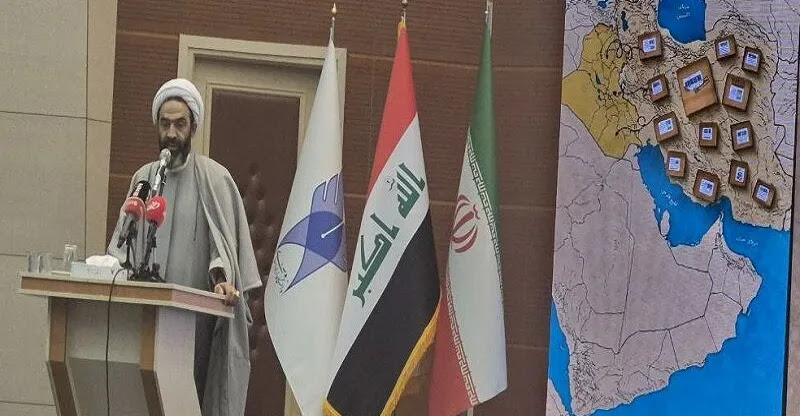
The Iranian-Iraqi parliamentary friendship group described Iraq on Monday as a "strategic opportunity" for the future of the Iranian economy, stipulating the removal of legal obstacles and the strengthening of economic diplomacy.
The head of the group, Mohammad Taqi Naqdali, said in a speech during a conference on export opportunities and capabilities to Iraq held at the Islamic Azad University Research Science Unit that Iraq’s economic, trade and social capabilities can play an important role in developing exports and the future of the Iranian economy.
He added: “Initially, I formed Iranian parliamentary friendship groups with Iraq, Nigeria, and Croatia, and I was honored to serve the members of these groups. However, the formation of the Iranian-Iraqi friendship group coincided with the last years of the Iraqi parliament’s activity, which prevented the full achievement of the desired goals.”
He stressed that despite the numerous visits made by Iraqi parliamentarians to Iran and the meetings held in the form of friendship groups, committees and factions, due to the approaching Iraqi elections and the prevailing political atmosphere, there was not enough opportunity to deepen parliamentary cooperation.
Naqdali explained that the political developments in Iraq "were currents linked to global arrogance seeking to form a parliament in Iraq that would not be aligned with the Islamic Republic, but contrary to their calculations, the results of the Iraqi elections showed the failure of this project."
Want to Support My FX Buddies?
.png)
Support My FX Buddies Big or Small I appreciate it all
BuyMeACoffee CashApp:$tishwash
https://paypal.me/tishwash

.jpeg)
Iraqi markets are dominated by imports. Large imports are stifling local industry and threatening food security!

Despite massive oil revenues, the Iraqi economy faces a cumulative structural imbalance manifested in its heavy reliance on imports. This weakens local productive sectors and threatens food security and economic sovereignty.
The Iraqi market's openness to imported goods reflects the absence of a clear industrial and agricultural policy, and weak coordination between fiscal and trade policies.
This is compounded by a focus on consumer spending, funding salaries and subsidies, without effective investment of oil wealth in building a local productive base.
Economic experts warn that the continuation of this pattern makes Iraq vulnerable to external shocks and global market fluctuations. They emphasize that transitioning to a productive economy requires a clear strategic vision, efficient management, and well-considered protection of local products, along with the development of food and agricultural industries and enhanced oversight of trade outlets and banking systems.
Economic expert Ahmed Abdul Rabbo believes that the Iraqi economy's heavy reliance on imports, despite massive oil revenues, reflects a structural imbalance that has accumulated over decades. Building the Iraqi economy on a rentier model based on oil has led to the neglect of productive sectors, particularly industry and agriculture, and the failure to direct oil surpluses toward building a local production base to meet domestic demand.
Abdel Rabbo tells Al-Mada that the absence of a clear industrial and agricultural policy, coupled with weak long-term economic planning, has deepened the pattern of consumption dependent on imports. Economic policies also play a pivotal role in this problem, often focusing on consumer spending, salary financing, subsidies, and imports, without linking them to genuine development programs or well-considered protection of local products. Added to this is weak economic management, fragmented decision-making among multiple institutions, and a lack of coordination between fiscal and trade policies, which has left the Iraqi market open to uncontrolled imports and weakened the competitiveness of local production.
He emphasizes that reducing reliance on imports from a limited number of countries cannot be achieved through bans or isolation, but rather through diversifying supply sources and expanding trade partnerships, especially with regional and Asian countries. Competition among different origins should be encouraged, import efficiency improved, and direct imports by the private sector supported.
In the medium term, he believes that partial import substitution is possible by supporting the food industries, light manufacturing industries, and building materials sectors in which Iraq has competitive advantages.
Abdel Rabbo points out that the heavy reliance on food imports is one of the most serious aspects of the problem, as it poses a direct threat to food security and economic sovereignty. Iraq is vulnerable to external shocks and the volatility of global markets, despite possessing agricultural and water resources that could be better utilized. Therefore, addressing this issue requires supporting local agricultural production, reforming marketing and storage policies, and investing in food industries, while providing well-considered protection for local products without imposing additional burdens on consumers. Regarding the significant gap between the declared import volume, estimated at around $60 billion, and the actual value of goods entering the country, Abdel Rabbo describes this discrepancy as a worrying indicator of a flaw in the economic oversight system.
He attributes this to inflated import invoices, currency smuggling under the guise of foreign trade, or weak oversight of border crossings and banking systems. He believes these imbalances necessitate a comprehensive reform of the customs, trade, and central bank systems, linking them to an integrated electronic monitoring system that enhances transparency and reduces waste and corruption. Abdel Rabbo concludes that Iraq's import problem is not merely a commercial issue, but rather a reflection of a crisis in the national economic model. The transition from a rentier, consumer-based economy to a productive one requires a clear strategic vision, efficient management, and coherent policies that invest oil wealth in building a sustainable production base, preserving economic sovereignty and achieving long-term stability and development.
For his part, Aqeel al-Hashemi, head of the advisory board of the Federation of Industries, believes that Iraq's large import problem is not due to a lack of local talent or capabilities, but rather to several factors, most notably weak control over border crossings and the influx of substandard goods.
Al-Hashemi adds to Al-Mada that Iraq possesses significant potential to bolster local industry, particularly in the food sector, where there is clear capacity to produce soft drinks, juices, and products such as cakes. Despite this, the influx of imported goods, controlled by certain entities, continues, weakening local production and hindering the growth of national industries. Al-Hashemi emphasizes that many of these imported goods do not adhere to standardization and quality control standards, posing a health risk to consumers. He mentions that he filed a complaint with the relevant security authorities regarding the entry of pastries that did not meet health specifications, adding that these goods constitute a threat to food security. Furthermore, Al-Hashemi points to the experience of the COVID-19 crisis, which revealed the fragility of relying on imports, especially for food and medicine, as many borders were closed and securing national needs became a major challenge.
He notes that Iraq is currently striving to achieve self-sufficiency in the pharmaceutical sector, having reached 35% localization in pharmaceutical factories, and aims to raise this percentage to 70%, particularly for medications for chronic diseases. Al-Hashemi goes on to stress the importance of reducing dependence on oil as the primary source of income and focusing on developing other industrial sectors, pointing out that food and pharmaceutical security are closely linked to the policies of local industries and their ability to compete and sustainably operate. He also mentions that "Iraq exports to more than 32 countries, according to the Ministry of Trade's Department of Exhibitions."
Deep structural imbalances
The economic risk map that the world has drawn up for Iraq during the year 2025

In the assessments of international institutions regarding Iraq's economic outlook for 2025, it is not viewed as an economy heading towards a single, specific crisis, but rather as a system precariously balanced: a state that finances itself from a single resource, consumes most of its revenue on current expenditures, postpones the development of a productive economy, and is then surprised to find that shocks do not come in isolation, but rather as simultaneous waves linked to oil prices, production decisions, water scarcity, youth employment, and investor confidence. This is why reports repeatedly describe the situation as one of deep structural imbalances that cannot be remedied by temporary abundance or masked by circumstantial improvements.
Dangerous dependence on oil
The most consistent observation in the 2025 reports is that oil continues to dictate the pace of a nation's economy before it dictates the pace of the market. When a country's revenues are so tied to a highly volatile market, any change in prices or production levels can shift it from a position of substantial spending to one of strain in a short period. This dependence not only signifies financial vulnerability but also means that policy itself becomes a recurring crisis management exercise, adapting to the ever-changing oil price landscape.
Public finances under constant pressure
Reports link the fragility of oil revenues to the structure of public spending. The issue is not simply whether there is a deficit, but rather the composition of the budget: salaries, pensions, subsidies, and transfers, compared to productive investment that is insufficient to transform the economy. In this context, there is a recurring warning about the inflation of current spending at the expense of development spending, which makes the state less resilient in the event of an oil shock or an emergency.
An undiversified economy and a sluggish private sector
Conversely, reports indicate that the non-oil sector is operating below its potential, and that years of relative stability have not automatically translated into rapid and sustainable growth. They add that the private sector remains constrained by chronic factors: bureaucracy, limited access to finance, weak competition, unstable policies, and state dominance over broad economic sectors. Without a clear regulatory environment and a vibrant financial market, private investment remains too weak to become a major engine of job creation.
Finance and banking: A hurdle that delays investment
One of the most frequent findings in the reports is that the financial system is not playing its full role in driving the economy. When credit to the private sector is limited, and when confidence in the financial system remains insufficient, small and medium-sized enterprises (SMEs) become trapped between operating costs and difficulty accessing finance, which weakens expansion and innovation and reduces opportunities for creating stable jobs.
A dysfunctional labor market and high youth unemployment
From a labor market perspective, reports highlight the expansion of the informal economy as a large but precarious employment sector. Informal jobs mean less protection, lower productivity, a limited tax base, and ultimately, a state that spends more to manage the consequences of unemployment rather than investing in preventing it. While public sector opportunities remain the most attractive, the state's capacity to absorb them diminishes as wages inflate, leaving the youth gap open to increasingly complex social and economic possibilities.
Corruption and governance: A hidden cost that consumes the state
International reports treat corruption and governance as economic indicators, not merely ethical considerations. Corruption increases project costs, weakens competition, deters investment, and diverts public spending toward lower output at a higher cost. Simultaneously, poor governance undermines the ability of institutions to enforce fair and transparent rules, which directly impacts market confidence and capital willingness to invest.
Increased external risks
Reports do not view Iraq as an isolated economy, but rather as a country that is quickly exposed to global shocks due to its dependence on oil. A slowdown in the global economy, geopolitical and trade instability, or changes in demand all translate into an immediate impact on revenues. And when domestic obligations are fixed and substantial, the margin for maneuver in the face of any revenue decline becomes extremely limited.
Water and climate: The danger that became economic
By 2025, the water issue had shifted from the realm of environmental concerns to that of economic ones. Water scarcity, agricultural decline, and internal migration are placing long-term pressure on cities, services, and the labor market, presenting the state with a costly dilemma: either significant investments in adaptation and resource management, or accumulating social and economic costs year after year. With the increasing complexity of the water situation in upstream countries, water has become a source of both external and internal pressure simultaneously.
2025 Summary: Improvement is reversible if reforms remain delayed
The recurring theme in international reports is that improved revenues alone do not build resilience. If a country remains dependent on oil, consumes most of its resources on current expenditures, leaves the private sector without adequate funding and a clear competitive environment, and faces water scarcity as a recurring shock, then any oil, political, or security shock will push the economy back into a state of tension.
According to economist Ziad al-Hashemi , international reports during 2025 do not speak of a temporary crisis, but rather of structural risks in the Iraqi economic model, and that any improvement in revenues will remain fragile and susceptible to reversal with the first oil, political or security shock unless deep economic reforms are implemented.
Trump is turning the Middle East equation upside down: Iraq from a battlefield to the gateway to an American contracting empire.
New map
The image of American policy in the Middle East is no longer confined to scenes of tanks, military bases, and airstrikes. It is increasingly being shaped in the halls of investment conferences, through massive arms deals, and by cross-border economic memoranda of understanding. This shift, which has deepened during the current term of US President Donald Trump, is not only evident in the rhetoric of the White House and the reports of research centers, but is also reflected in the way American politicians speak about their country's role in the region, particularly in Iraq.
In a statement to Baghdad Today, Naaman Abu Issa, a member of the US Democratic Party, put this shift in a direct way, saying that US policy in the Middle East has witnessed "a clear shift during President Trump's term," noting that the focus is now on economic and commercial interests more than direct diplomatic or military intervention.
Abu Issa adds, explaining that "the primary mission of the US president, embassies, and diplomats worldwide, particularly in the Middle East, is to open avenues for economic cooperation and secure contracts for American companies with various countries, including Iraq." He emphasizes that this approach reflects "a strategic shift in Washington's management of the region's affairs." At the heart of this assessment, Iraq stands out prominently. Abu Issa points out that Iraq "occupies a prominent position in this strategy, as a country of strategic importance to the United States and home to the largest US embassy in the world, reflecting Iraq's pivotal role in Washington's economic and trade policies."
He further asserts that "American policy is no longer focused on military influence or direct intervention, but rather on strengthening economic ties and expanding investment opportunities, making Iraq an important partner within this vision." These statements do not merely reflect a personal impression, but rather align with a comprehensive trajectory that can be traced through the current administration's actions, from the Gulf deals to its approach to Iran and Syria, and including the Iraq file itself.
From "America First" to "Contracts First"
Since Trump's inaugural address, where he introduced the "America First" slogan, it became clear that his foreign policy approach would undergo a restructuring based on reducing the direct costs of wars and maximizing the gains from trade and investment deals, while maintaining traditional pressure tactics such as sanctions and a limited military presence when necessary. This logic was evident early on in the focus on reducing direct involvement in protracted wars, alongside intensifying sanctions against adversaries, as seen in the "maximum pressure" policy against Iran, which reverted to using economic and financial tools as a primary means of managing conflict, rather than engaging in large-scale military confrontations.
But the most visible aspect of this shift was Trump's frequent visits to the Gulf, where bilateral and multilateral summits became platforms for announcing unprecedented investment packages and arms deals in terms of scale and complexity. At these meetings, the enormous figures for these contracts were presented as a "job boost for the United States," while simultaneously serving as a means to reshape the region's political and security alliances through financial and investment channels, not just military ones.
In this scenario, weapons are no longer merely a security tool, but rather part of a "comprehensive deal" that intertwines energy, technology, and infrastructure companies with the defense industry. Many reports and studies have described this approach as a shift from "crisis management" diplomacy to "return maximization" diplomacy, where political and military leverage is used to open markets for American companies, while security protection is offered as part of a comprehensive trade package.
Iraq at the heart of transformation: from a battlefield to a platform for contracts
In this new context, Iraq, from Washington's perspective, appears to be more than just a testing ground for security and counterterrorism policies. Beyond its geostrategic location between Iran, the Gulf, Turkey, and Syria, Iraq sits atop a vast reserve of oil and gas resources and requires decades of energy infrastructure development and reconstruction. This makes it, in Abu Issa's words, "an important partner within this vision"—a partner whose role extends beyond simply training forces or exchanging information, encompassing contracts in the energy, electricity, communications, technology, and logistics sectors.
The presence of the world's largest US embassy in Baghdad, in terms of size and security and diplomatic infrastructure, is no longer seen merely as a symbol of the occupation and its aftermath, but as a comprehensive platform for managing this economic and political transformation. The massive diplomatic complex, built on a vast area and considered the largest among US missions abroad, has also become a hub for commercial and investment activities, and a center of gravity for a network of US agencies and bodies dealing with energy, finance, and international companies and institutions connected to Iraq.
Numerous studies in recent years examining the "American strategy in Iraq" indicate that the administration tends to use financial and economic tools to manage its influence rather than expanding its direct military presence. Instead of sending more troops, Washington prefers to rely on tools such as targeted sanctions, monitoring dollar flows, and linking the level of financial and economic cooperation to Baghdad's distancing itself from the Iranian axis, in addition to trying to encourage American companies to participate in infrastructure and energy projects within Iraq.
In this context, Abu Issa’s statement about “opening up prospects for economic cooperation and securing contracts for American companies” is not a side note, but rather an expression of the essence of the role of embassies and envoys in the region, as the current administration sees it: contracts take priority, and then everything else comes after.
The Gulf as a model: Arms deals and investment are shaping a new doctrine
During Trump's Gulf tour, this shift became most evident. Beyond the traditional political issues, from relations with Iran to maritime security, the most prominent headlines revolved around massive investment packages, arms deals, and long-term economic cooperation programs. In those sessions, press conferences no longer spoke solely of "alliances against terrorism," but also of "investment opportunities," "vision projects," "economic zones," and "trade corridors," as if the region were being reshaped as much as a map of security and investment.
This pattern did not come out of nowhere. Since the signing of the “Abraham Accords” in 2020, which opened the door to the normalization of relations between Israel and several Arab countries under American auspices, the approach has appeared to be based on investing in calming tensions to create paths of economic, trade, tourism and technological cooperation, making the new political and military alliances carry on a network of intensive and long-term economic interests.
What is new in the current stage is that this logic is no longer limited to the Arab-Israeli normalization file, but has extended to the form of the relationship with countries such as Saudi Arabia, Qatar, the UAE, Iraq and post-war Syria, where easing sanctions or providing security support is linked to the possibility of opening wide doors for American companies in the fields of energy, reconstruction, technology, transportation and logistics.
The "profit and loss" logic: How does Washington view Iraq?
Looking at Iraq from the perspective of this transformation, it can be said that its position in American calculations is governed by three overlapping levels:
The first level is strategic security, linked to the Iranian issue, the Syrian borders, and the balance of power with Turkey and the Gulf states. Here, Iraq remains a vital arena for any policy of exerting pressure on Tehran, whether through monitoring the activities of armed factions or by tracking the flow of funds, oil, and gas.
The second level is that of economic opportunities, where Iraq appears as a promising market for American companies in the fields of conventional energy and associated gas, electricity grid interconnection, and the construction of ports, roads, and railways, in addition to the banking and digital sectors. At this level, the role of the embassy and American economic missions becomes translating political and security influence into tangible contracts, as Abu Issa hints in his talk of "securing contracts for American companies with countries, including Iraq."
The third level is that of balancing with adversaries and competitors, primarily China, Russia, and Iran, who are also moving to fill the investment and energy gaps. Every major deal in Iraq—whether in oil, gas, or infrastructure—becomes, in this context, part of a broader game between Washington, Beijing, Moscow, and Tehran, making the economy an extension of the power struggle rather than a substitute for it.
Under this roof, one can read about many of the files that have preoccupied Baghdad in recent years, from negotiations with major oil companies, to regional electricity interconnection projects, to repeated attempts to link Iraqi banking and financial reforms to the conditions of the US Treasury and the Federal Reserve.
Embassies as "business centers": When diplomacy becomes a commercial arm
What Nauman Abu Issa says about the mission of "the president, embassies, and diplomats" is not far removed from the practical reality of the work of American missions in the region in recent years. Since the Obama administration, through Trump, and up to the present stage, the network of commercial attaché offices and investment promotion teams within embassies has been strengthened, and a large part of their activity has become directed towards opening doors for American companies and investors, facilitating access to local and regional contracts, and coordinating the participation of these companies in major infrastructure projects and national "vision" plans in the Gulf, and reconstruction projects in post-war countries.
In Baghdad, the importance of this role is amplified by the size of the embassy and the complexity of the Iraqi landscape. The presence of so many agencies, programs, and offices within the diplomatic compound, from defense and foreign affairs to the treasury and the U.S. Agency for International Development, among others, means that every major economic file—in energy, infrastructure, or banking—passes, in one way or another, through channels connected to the embassy, or at least is subject to its political, security, and financial evaluation.
This does not necessarily mean that diplomacy has been completely transformed into a "commercial arm," but it is certainly now measured, in a considerable part, by the number of contracts that are opened up for American companies, and the amount of economic influence that can be established in the long term.
Between economics and weapons: Is the era of military intervention over?
Despite this clear focus on economics and arms deals, it cannot be said that the United States has abandoned its hard power tools in the region. The massive arms deals with the Gulf states confirm that economics and arms go hand in hand, and that security is still used as an "incubator" for these deals, not their antithesis.
The policy of putting pressure on Iran also relies on a combination of economic sanctions, military threats, and leveraging the network of American bases in Iraq, the Gulf, the Red Sea, and the Eastern Mediterranean, within a discourse that balances the language of "we do not want a new war" and "we will not allow the rules of the nuclear and regional game to be changed."
In this context, the shift from "war to economy" appears to be more of a reordering of priorities than a complete break with the past. The current administration does not want long and costly ground wars like those in Iraq and Afghanistan, but it does not hesitate to use sanctions, financial pressure, and the threat of force to ensure a more favorable environment for the flow of American deals, contracts, and businesses.
What does this mean for Iraq?
For Iraq, this shift raises more complex questions than it provides easy answers. The fact that securing contracts for American companies in a country like Iraq has become, as Abu Issa describes it, the "primary mission" of American diplomacy means that Baghdad faces both an opportunity and a risk.
The opportunity lies in the potential to attract investments, transfer technology, and enter into partnerships that can help modernize the deteriorating infrastructure and the strained energy sector, and open up new markets and job opportunities.
But the risk lies in these same contracts becoming new instruments of influence, used to reshape the economic and political balances within the country, and to link Baghdad’s strategic decisions to long-term financial and investment interests, at a time when the state is still struggling to consolidate its sovereignty over its security, military and economic decisions.
Between these two extremes, it seems that the most important question facing the Iraqi decision-maker today is not only: How do we deal with an American administration that is redefining its role in the region? But also: How can this shift from “war to economy” be turned into a national interest, rather than a new form of dependency?
If the embassies, as Naaman Abu Issa says, came "to open up prospects for economic cooperation and secure contracts for American companies," then Iraq is invited to ask the opposite question: What contracts does it want? And on what basis does it want these partnerships to be built, so that the strategic shift in Washington does not turn into just a new chapter in a long story, in which the form of American influence and its tools changed, while the essence of the imbalance in Iraq’s relationship with the world remained the same.

No comments:
Post a Comment