Will half of Iraq's banks disappear?
Is facing a sensitive stage with the start of the implementation of the comprehensive reform plan developed by the Central Bank , which, according to estimates, may lead to the exit of a number of private banks through mergers or withdrawal from the market.
The video for this My FX Buddies Blog post is below here:
These developments come at a time of escalating depositor concerns, particularly following past failures, which threaten confidence in the banking system. As the debate intensifies regarding the future of dozens of small or struggling banks, Wadih al-Hanzal, head of the Association of Iraqi Private Banks, stated that Arab and Gulf banks have expressed a genuine and serious desire to enter the Iraqi market. In remarks to journalists, al-Hanzal added that Iraq is currently undergoing one of its most profound phases of banking reform, based on a roadmap developed by the Central Bank to restructure the sector. This process may lead to significant mergers or divestments to ensure compliance with international standards and strengthen the banking sector.
Al-Hanzal revealed that the Iraqi banking sector may witness a wave of mergers or significant divestments, indicating that the number of banks, currently around 60, "may be halved or less," in response to directives from the Central Bank, which he described as "clear reform messages," even though they have not been officially announced. He affirmed his support for this approach, stating that it will lead to a stronger and more efficient banking sector.
This proposal is consistent with the statement issued by the Central Bank of Iraq, which affirmed its commitment to proceeding with comprehensive reform, and its keenness to enhance financial stability and focus on structural reforms that maximize local revenues and support the government’s directions in diversifying the economy.
A suitable environment for reform
Samir Al-Nassiri, advisor to the Association of Iraqi Private Banks, confirmed that the Central Bank’s procedures and efforts, in partnership and consultation with private banks, have resulted in creating a suitable environment to begin implementing the goals and programs of the banking reform project, which is being carried out in coordination with the government and the global consulting firm Oliver Wyman.
He explained to Al-Araby Al-Jadeed that this project aims to build a strong, modern and flexible banking sector, capable of supporting the rapid growth of the national economy, contributing to raising the gross domestic product and enhancing the market value of the banking sector.
Al-Nassiri stressed that there are efforts to empower and grow the private banking sector during the period 2025–2028, through developing the banking system and its compliance with international standards, building a flexible and modern sector, enhancing citizens’ confidence and international recognition of its transparency.
He emphasized the need to rehabilitate restricted and weak banks to fully resume operations, and to restore banks to their core role of financing and lending to promote financial inclusion, drive the transition to a digital economy, and draw funds out of the banking system. He explained that the reform will also include restructuring the banking sector and merging banks that wish to create large banking entities capable of attracting institutional investors, in accordance with the ownership structure ratios adopted by the Central Bank.
Bank mergers
Financial and banking expert Mahmoud Dagher stressed that the banking reform plan was developed to improve the performance of Iraqi banks and improve their international ranking, explaining that the consulting firm “Oliver Wyman” in cooperation with the Central Bank drew up the details of the reform plan and its stages without including any intention to reduce the number of banks.
Dagher told Al-Araby Al-Jadeed that the plan targeted one of the most important requirements for improving performance: increasing capital, in line with global trends, where international banking institutions possess substantial capital reserves. He added that the plan offered banks the option of mergers as a tool to bolster their capital, while also allowing viable banks to continue operating independently. He emphasized that it is impossible to predict a reduction in the number of banks "by half or a quarter," as this is not the primary objective of the reform. He explained that one of the factors improving bank performance worldwide is mergers, which increase their resilience and ability to withstand risks. He stressed that reforming state-owned banks must precede reforming private banks, given that state-owned banks control 85% of deposits in Iraq and 90% of banking assets, making them the largest and most influential players in the banking system.
Depositors' concerns
For his part, economic researcher Mustafa al-Faraj affirmed that depositors' concerns represent the greatest challenge to the reform process, especially after the experiences of some banks defaulting on deposits, which has generated a growing crisis of confidence among the public. Al-Faraj emphasized that protecting depositors' funds has become a direct responsibility of the Central Bank of Iraq, as the licensing and supervisory body for banks, and it must fully guarantee their rights during any merger or restructuring process.
He explained to Al-Araby Al-Jadeed that the number of private banks, which exceeds 60, does not reflect the strength of the sector, but rather reveals fragmentation and weakness in capital efficiency, because some of these banks do not provide actual banking services and do not contribute to lending or real economic activity, and rely in their work on limited activities or ineffective speculations.
Al-Faraj explained that the merger, despite the reservations of some shareholders, constitutes a reform step that gives the banking sector a higher ability to compete, raises the level of public confidence, and transforms banks into effective tools in supporting the economy instead of remaining mere nominal or inactive entities.
Banks under threat
In this context, economic researcher Ahmed Sabah confirmed that the Central Bank’s plan to restructure the banking sector will push a number of weak banks to merge or exit, especially banks that have faced sanctions or restrictions from the US Treasury Department or have failed to meet compliance and capitalization requirements, making their continued presence within the financial system a matter that requires radical review.
He explained to Al-Araby Al-Jadeed that the danger posed by these banks is not limited to their poor operational performance, but extends to their use, in some cases, as potential channels for money laundering and dollar smuggling. This is due to the absence of internal controls and weak auditing and governance systems, which has led international bodies to take a stricter approach towards them. Sabah stressed that the continued operation of these banks poses a direct threat to market stability and depositors' confidence, emphasizing that their restructuring or exit from the market has become essential to protect the financial system, enhance transparency, and ensure a stronger banking environment capable of supporting the national economy.
Between the US Treasury's inquiries and the Baghdad bank's "constructive" statement: The absence of a denial raises suspicions about oil smuggling deposits.

The controversy surrounding the highly sensitive issue that erupted after the leak of official information indicating that the Central Bank of Iraq received an email from the US Treasury Department, specifically from the Office of Foreign Assets Control (OFAC), requesting detailed clarifications regarding financial deposits related to Iraqi oil smuggling operations within the Baghdad bank, has not subsided for hours.
While the financial and political community was waiting for a clear and decisive stance from the bank in question, the official statement came closer to a general, rhetorical text that did not deny the accusations made against it.
An informed source who spoke to Iraq Observer revealed that the United States is directly inquiring about the names of individuals accused of oil smuggling operations who are believed to have deposited large sums of money into accounts at the Bank of Baghdad. This information was also confirmed by the Eco Iraq Observatory, which considered the American message a dangerous indicator of the level of banking facilities provided to these individuals, especially given its alignment – according to the Observatory – with internal complaints from within the bank itself, speaking of “unusual facilitation” in deposit and transfer operations.
As questions mounted, the Bank of Baghdad issued a statement that, according to observers, seemed more like a general message of reassurance than a coherent official response to one of the most serious financial issues related to international compliance.
The statement merely emphasized the bank's "commitment to compliance and governance standards," and called on the public to obtain information only from its official platforms, without mentioning a single word about the issue that has preoccupied public opinion.
It is noteworthy that the statement did not include “an explicit denial of receiving inquiries from the US Treasury, or a direct denial of the existence of suspicious deposits or transactions related to oil smugglers, or even an announcement of opening an investigation or cooperating with regulatory authorities, nor did it include any figures or technical clarifications about the nature of the transfers referred to in the American leak.”
The lack of answers made the statement appear as an attempt to bypass the issue without confronting it, which opened the door wide to interpretations, especially given the sensitivity of the parties that sent the inquiry.
Central Bank: Regional businesses must be registered in ASICOD by the end of the year

The Iraqi central bank has significantly reduced the supply of dollars and in a new decision imposed strict conditions for the payment of dollars to businessmen in the Kurdistan Region, which is described as a "political" move.
The central bank has reportedly reduced the supply of dollars by 50 percent in the past two weeks. The reduction is due to the decision to suspend the operations of four commercial banks, which had a huge impact and previously accounted for 40 percent of total dollar sales in the market.
Meanwhile, according to a new decision of the Central Bank, from December 1, 2026, any businessman in the Kurdistan Region if he is not registered in the system "Asicode", will be deprived of receiving dollars at official prices and can not import goods.
Shukri Jamil, president of the Duhok Chamber of Commerce, said that businessmen were previously asked to bring support from Baghdad, but despite the completion of measures, it is noticed that the decision is political and aims to shape the economy of the Kurdistan Region.
Shukri Jamil said that the goods of the Kurdistan Regional Government (KRG) companies have been detained in the port of Umm Qasr since November 3, so they call on the Kurdistan Regional Government and the Iraqi government to reach an agreement on this issue.
An expert criticizes the "ostrich-like behavior and denial of the crisis": Oil is nearing $55... Form a government.

Economic expert Nabil Al-Marsoumi predicted on Wednesday, December 10, 2025, that oil prices would fall to $55, while warning of a "crisis in Iraq," criticizing what he described as "ostrich behavior and denial of the crisis."
Al-Marsoumi said in a post followed by “Al-Jabal” that “the price of Basra medium crude is $60, while Basra heavy crude is $58, and the forecast for 2026 is that Brent crude may fall to $55 or more if the war between Russia and Ukraine ends.”
He added, "The breakeven price for the budget in Iraq is $92, and the ostrich-like behavior and denial of the crisis exacerbates it and does not solve it," saying: "Form a government and dissolve it, so that it can confront the crisis and alleviate its severity and repercussions."
Parliamentary Finance Committee: The fate of the 2026 budget is linked to the speed of government formation.
Member of the Parliamentary Finance Committee, MP Jamal Kojar, warned on Wednesday that the fate of the 2026 budget is directly linked to the swift formation of the next government.
Kojar told Al-Maalouma, “If the formation of the government is delayed, spending will be limited to paying salaries according to the 1/12 mechanism and disbursing advances to the governorates to cover essential expenses, in accordance with the Financial Management Law.”
He explained in a statement to Al-Maalouma that the approval of the 2026 budget has become contingent on the swift formation of the government within the constitutional deadlines, stressing that any delay will disrupt the budget and keep spending at its basic levels only.
He added that preparing a new three-year budget is currently unlikely due to a number of factors, most notably the continuous fluctuations in oil prices, on which the state relies for more than 90% of its revenues.
It is worth noting that the three-year budget approved by the Al-Sudani government faced significant challenges during its implementation, reflecting the difficulty of repeating a similar experience in the future.
Hantoush: International financing difficulties and exchange rate challenges threaten the stability of the Iraqi economy.

Economic and banking expert Mustafa Hantoush confirmed on Thursday that Iraqi companies and the private sector are facing significant difficulties in obtaining international loans to finance major projects due to Iraq's low credit rating and the high costs of guarantees and interest rates on foreign loans.
Hantoush added, in a statement to Al-Maalouma, that “the Iraqi banking system is going through a difficult period, with the possibility of several banks exiting the market, which limits the ability of domestic financing to cover major projects.” He pointed out that "international financing depends heavily on sovereign guarantees provided by the state, which remain limited in Iraq."
He noted that "the cost of external financing has risen significantly, with interest rates increasing from 5% to approximately 8-9% due to the risks associated with Iraq's credit rating, placing additional burdens on Iraqi investors."
Regarding the dollar exchange rate, which has reached 2,000 dinars, Hantoush affirmed that “Iraq is experiencing relative monetary stability, and the Central Bank has no intention of changing the exchange rate at present, despite speculation about the incoming government’s intentions in this regard.”
He warned that any "exchange rate adjustment without addressing the root causes of the country's financial problems would be a half-measure, potentially leading to widespread negative consequences, including increased poverty rates and a decline in the value of salaries, thus exacerbating the suffering of large segments of the population."
He explained that "Iraq possesses substantial resources in the form of government assets estimated at hundreds of billions of dollars, in addition to vast tracts of land and real estate, but the weakness in combating corruption and activating tax collection hinders the effective utilization of these resources."
He pointed out that "seriously confronting corruption and activating domestic revenues could reduce the need to adjust the exchange rate or resort to temporary solutions that could harm the economy and society."
He also noted the existence of "huge amounts of cash held in homes, estimated at 70 to 80 trillion dinars, which have contributed to speculation in the real estate market and an unjustified rise in prices, necessitating a sound monetary policy to control the markets." He
concluded by emphasizing that "the continuation of the current situation without genuine reforms will lead to a deterioration of economic and social conditions, with increased poverty rates and greater pressure on salaries and market liquidity."
Sudani discusses satellite internet licenses with US company SpaceX
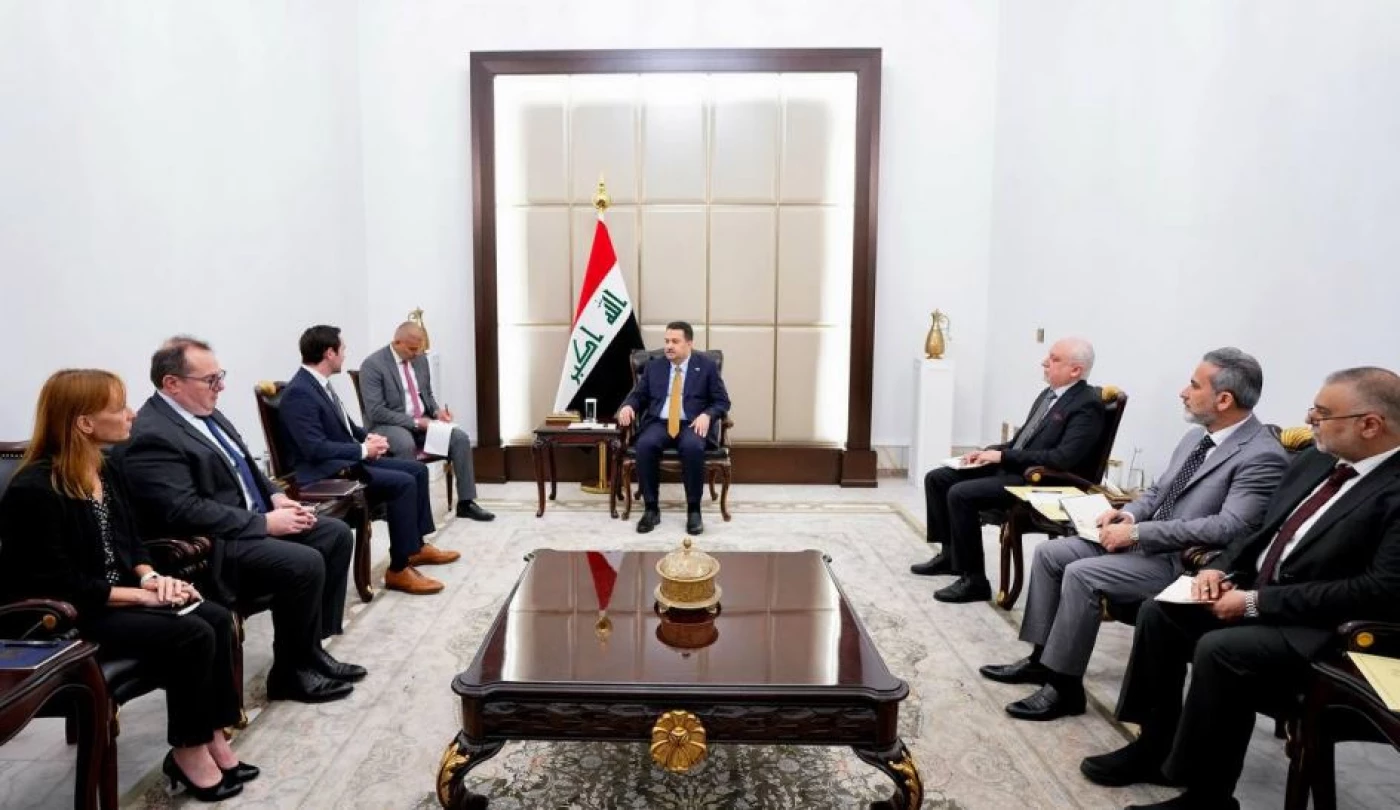
On Thursday, December 11, 2025, caretaker Prime Minister Mohammed Shia al-Sudani discussed with a delegation from SpaceX (Starlink) the final stages of granting satellite internet licenses.
A statement from the office of Prime Minister Mohammed Shia al-Sudani, a copy of which was received by Al-Jabal, said: “Prime Minister Mohammed Shia al-Sudani received today, Thursday, a delegation from the American company SpaceX (Starlink), which specializes in network, information and communications technology, in the presence of the American Chargé d'Affaires to Iraq, Joshua Harris.”
According to the statement, the meeting included "discussions on the final stages of granting satellite internet licenses, including to SpaceX, and strengthening cooperation in the field of communications and services provided by the company and its coverage areas."
According to the statement, Al-Sudani pointed out that “Iraq has achieved an important shift in attracting various international companies and securing all their requirements and needs, including satellite internet systems, to sustain their work and activities,” stressing “the government’s interest and keenness to keep pace with the development of the world of communications and information technology and digital transformation through cooperation with SpaceX and its entry into the Iraqi market, which today includes many promising investment opportunities.”
Al-Sudani stressed that “work in the communications sector within Iraq has governmental priorities, foremost among them being the preservation of Iraq’s information and technological sovereignty, investing in the capabilities of young people specializing in this field, training them, and handing over the responsibility of work to them at a later time.”
The statement concluded, "For their part, the SpaceX (Starlink) delegation expressed their keenness and interest in working, providing services and cooperating in the information technology sector," stressing that "their company is ready to operate and work to provide satellite internet service within a short period, after officially obtaining a license to operate in Iraq."
Al-Asadi calls for swift action to keep pace with digital development and build a modern, knowledge-based Iraq.

Al-Asadi said in his speech during the Iraqi Digital Space Forum that Iraq is capable of restoring its scientific and knowledge position by investing in the state of security and political stability it is witnessing, and engaging effectively in the wave of global digital development, noting that it possesses the competencies and expertise capable of bridging the knowledge gap that has accumulated over decades of wars, siege and exceptional circumstances.
The minister explained that the ministry has been able, during the past two years, to achieve a qualitative shift in developing the infrastructure for modern technologies, and it is continuing to expand digitization and automation projects, indicating that since the first days of his taking over his duties, it has begun implementing a clear plan to move towards electronic services, as it has completed the fiber optic cable project that connects all its departments, and completed the network connection with the government network about two years ago.
He pointed to the completion of advanced stages in digitizing services and procedures, as the departments of retirement, social security, labor and vocational training witnessed a comprehensive transition to electronic services, in addition to the readiness of the National Center for Occupational Health and Safety to join during the coming weeks.
He also pointed out that the Social Protection Authority, which is the largest department of the ministry with its services covering about 7 million and 600 thousand citizens, has completed the automation project and launched quality initiatives, most notably the “My Umbrella” initiative.
In another context, on the anniversary of Victory Day, Al-Asadi saluted the fighters who gave their lives in defense of Iraq, extending his congratulations to the families of the martyrs, stressing that without their sacrifices it would not have been possible to celebrate today, hold conferences, or build state institutions, noting that the victory of the Iraqis was not only in defense of their homeland, but also of the region, the world, and all of humanity.
Savaya
A senior US embassy official: Forming the new government is an Iraqi decision.
The chargé d'affaires confirmed inUS EmbassyI haveBaghdad,Joshua HarrisOn Thursday, thatAmericaShe remains concerned about irregular financial transactions.legitimacyinsideI
He continued, stating that leading American companies are actively working with Iraqi partners, which will lead to mutually beneficial partnerships. He emphasized that America is not seeking a new conflict, and its vision for the future is peace in Iraq and throughout the world.
He added that Iraqi leaders understand that including factions in the new government is incompatible with the partnership between Baghdad and Washington.
Regarding the possibility of taking escalatory measures against the factions, the Chargé d'Affaires stressed, "We encourageIraqi stateRegarding the dismantling of factions, he stated that America will defend itself and its interests in Iraq,” indicating that the decision regarding the form of the new government is purely American.
Concerning the lifting of US sanctions on Iraqi banks, he explained that America remains concerned about illicit financial transactions.legitimacyWithin Iraq, there are no new decisions regarding this matter.
Regarding the issue of arming and equipping air defense systems...Kurdistan RegionHe stated that America is deeply committed to Iraqi sovereignty and to condemning all threats to the country's security. He added that they are working with their partners in Baghdad and Kurdistan to find ways to protect infrastructure, but he would not go into military details at this time. He further stated that they are demanding that the governments of Baghdad and the Kurdistan Region quickly hold those responsible for the attack on the Kor Mor gas field accountable.Sulaymaniyah.
Trump's envoy: The decision of Iraqi leaders will determine whether the country moves towards sovereignty or slides into disintegration.

Savaya concluded his post by saying, “Under President Trump’s leadership, the United States stands ready to support Iraq during this critical time. My team of highly experienced experts and I are committed to working closely with Iraqi leaders in the coming weeks and months to help build a strong state, a stable future, and a sovereign Iraq capable of shaping its own destiny in the new Middle East.”
US President’s envoy to Iraq, Mark Savaya, warned on Thursday of Iraq’s slide towards disintegration and decline, noting that no nation can succeed in the presence of armed groups competing with the state, and stressing the United States’ readiness to support Iraq during this critical stage.
In a post on the “X” platform, which was followed by “Al-Rasheed”, Savaya said, “Twenty-three years after the fall of the dictatorship, Iraq stands once again at a critical juncture. The country has been given a historic opportunity to rebuild its institutions and secure a prosperous future. However, no nation can succeed while armed groups compete with the state and undermine its authority. This division has weakened Iraq’s international standing, stifled its economy, and limited its ability to protect its national interests.”
He added: “Over the past three years, Iraq has proven that true stability is possible when the government adopts a realistic and balanced approach that spares the country regional conflicts and refocuses on national priorities. This emerging path must be maintained and not obstructed. Stability requires responsible leadership, unity of purpose, and a firm commitment to strengthening the state and its institutions.”
Savaya added, “Today, as Iraq celebrates the eighth anniversary of its victory over ISIS and successfully concludes its parliamentary elections, the full responsibility lies with the country’s political and religious leaders. Their decision in the coming period will determine whether Iraq will move towards sovereignty and strength or slide back into disintegration and decline.”
He continued: “A unified and rational choice will send a clear and unequivocal signal to the United States and the international community that Iraq is ready to assume its rightful place as a stable and respected nation in the new Middle East. The alternative is equally clear: economic decline, political turmoil, and international isolation.”
Savaya removed the phrase “Iranian agents” and is coming with “his team” to bring Iraq into the new Middle East.
The US President’s envoy to Iraq, Mark Savaya, posted a message on the “X” platform in both Arabic and English. In the Arabic version, he called for unifying weapons under the state’s control and rejecting armed groups outside the authority, stressing that a strong, sovereign Iraq, free from “foreign interference, especially from Iran and its proxies,” is a fundamental condition for the country’s stability and prosperity. He then deleted the Arabic version and kept only the English version, confirming that he would arrive in Iraq with his team to support its integration into the “new Middle East” and strengthen the partnership between the two countries at a stage he described as “crucial.”
Mark Savaya, the US President's envoy to Iraq, posted a message in Arabic on the "X" platform, which was reviewed by Network 964 before it was deleted. The message is now only available in English.
fficial statement
Over the past three years, Iraq's leadership has taken significant steps to steer the country in the right direction, both politically and economically. Iraq has begun to regain its sovereignty, working to reduce external influence, consolidate weapons under the control of the legitimate government, and open its markets to international companies to help rebuild the country and develop its fragile infrastructure. However, the work is not yet complete, and Iraq still needs ongoing support to remain on this path.
The United States government has made it clear that there is no place for armed groups operating outside the authority of the state. Iraq's stability and prosperity depend on unifying its security forces under a single government and a single commander-in-chief of the armed forces, and under a single flag representing all Iraqis. Without this unity, Iraq's sovereignty and progress remain at risk.
The interests of the Iraqi people and the wider region depend on a fully sovereign Iraq, free from malicious foreign interference, including from Iran and its proxies, and dedicated to serving its citizens and living in peace with its neighbors. In this context, unity and cooperation between federal and regional authorities are essential to ensure lasting security, economic growth, and national cohesion.
Iraq is a pivotal country in the region, and it must play its natural role in supporting regional peace, security, and stability. We cannot regress to the past or adopt methods that hinder progress and unity.
My mission, on behalf of President Trump, is to engage with Iraq and support its ongoing pursuit of stability, sovereignty, and prosperity.
Iraq remains of great importance to the region and to the United States. It will remain one of America's strongest and most valued partners, and I am committed to further strengthening this relationship as I assume this honorable role as envoy.
Let's make Iraq great again
rump's envoy warns of Iraq's slide towards disintegration and international isolation: The solution is in your hands.
US President Donald Trump’s envoy to Iraq, Mark Savaya, warned on Thursday of disintegration, turmoil and international isolation if political forces make the wrong decisions regarding the next phase.
In a post on the X platform, Savaya said that twenty-three years after the fall of the dictatorship, the country is facing one of the most sensitive moments in its modern history, warning that the continued presence of armed groups outside the control of the state threatens Iraq’s standing and undermines its potential for recovery.
He added that Iraq had a historic opportunity to rebuild its institutions and forge a prosperous future, but no country can progress in the presence of "armed groups that compete with the state and limit its authority," noting that this reality has weakened Iraq's international position, stifled its economy, and reduced its ability to protect its national interests.
He believed that the past three years have proven the possibility of achieving real stability when the government adopts a realistic and balanced approach that spares the country the region’s conflicts and focuses on national priorities, indicating that this emerging path needs protection, as stability requires responsible leadership, unity of purpose, and a commitment to consolidating the strength of the state and its institutions.
Savaya continued, saying that Iraq, as it commemorates the eighth anniversary of the victory over ISIS and moves beyond the parliamentary elections, is now facing fateful choices. He explained that the decisions that political and religious leaders will make in the next stage will determine whether Iraq will move towards sovereignty and strength, or return to the path of disintegration and turmoil.
He stressed that a unified and rational choice would send a clear message to the United States and the international community that Iraq is ready to take its rightful place as a stable and respected country in the new Middle East, warning that the alternative would be economic deterioration, political turmoil and international isolation.
Savaya concluded by saying that the Trump administration stands ready to support Iraq during this pivotal stage, adding: "My team of experienced professionals and I will work with Iraqi leaders in the coming weeks and months to establish a strong state, a stable future, and a sovereign Iraq capable of shaping its own destiny in the new Middle East."
Washington reminds Iraq that the continued presence of armed factions harms relations and confirms: Treasury sanctions will continue.

With the rise of forces representing some factions that describe themselves as resistance within parliament, and the sensitivity this has stirred in the internal scene, a clear American unease has emerged, reaching the point of almost outright rejection of the factions’ participation in any future government formation.
While discussions intensify regarding the distribution of positions and the directions of the next phase, statements by the US chargé d'affaires add a new dimension reflecting the growing concern in Washington about the course of events inside Iraq and the nature of the emerging political balances.
The US Chargé d'Affaires in Baghdad, Joshua Harris, said in a press statement followed by “Al-Alam Al-Jadeed” that “the Iraqi partners confirm that they will not interfere and drag the country into the ongoing conflict in the region, and that security will continue within its borders,” noting that “America is working to increase the work of American companies inside Iraq according to the principle of exchange with Baghdad.”
Harris noted that “leading American companies are actively working with Iraqi partners, and good partnerships will occur for both sides,” stressing that “America is not looking for a new conflict, and the future vision is peace in Iraq and all countries of the world.”
He added that “Iraqi leaders realize that including factions in the new government is incompatible with the partnership between Baghdad and Washington.”
Regarding the possibility of taking escalatory measures against the factions, the acting ambassador stressed: “We encourage the Iraqi state to disarm the factions, and America will defend itself and its interests in Iraq.”
Regarding the lifting of US sanctions on Iraqi banks, he explained that “America is still concerned about illegal financial transactions within Iraq, and there are no new decisions regarding this issue.”
Regarding the issue of arming and equipping air defense systems in the Kurdistan Region, he stated that “America is very keen on Iraqi sovereignty and is committed to condemning everything that threatens security in the country. We are working with our partners in Baghdad and Kurdistan to find systems to protect the infrastructure, but I will not go into the military details now.” He added, “We demand that the governments of Baghdad and the region quickly hold accountable those involved in the attack on the Kor Mor gas field in Sulaymaniyah.”
US President's Special Envoy to Iraq, Mark Savaya, emphasized in a post on his X platform (November 29, 2025) that Iraq has a real opportunity to strengthen its regional presence and build a state capable of playing a larger and more influential role, provided that the issue of weapons outside state control is resolved and the authority of official institutions is consolidated. Meanwhile, last October, the US Treasury Department imposed sanctions on individuals and companies it accuses of supporting Iran, circumventing sanctions, smuggling weapons, and engaging in corruption in Iraq. These include Aqeel Muftan, the Al-Muhandis Company, and businessman Ali Ghulam. In parallel, the US Embassy in Baghdad stressed the continued pressure on what it called "Iranian proxies," such as Kataib Hezbollah and Asa'ib Ahl al-Haq, accusing them of undermining Iraqi sovereignty and targeting US interests in the region.
The Shiite political forces (the Coordination Framework) obtained more than 170 parliamentary seats out of 329 seats in the last elections. The Reconstruction and Development Coalition of Al-Sudani won 45 parliamentary seats, followed by the State of Law Coalition led by Nouri Al-Maliki with 30 seats, and the “Sadiqun” bloc led by Qais Al-Khazali with 26 seats, while “Badr” led by Hadi Al-Amiri won 19 seats, and “State Forces” led by Ammar Al-Hakim won 18 seats. This places on these forces the responsibility of forming the government and choosing the prime minister according to the electoral weight and the political agreement.
Savaya: The United States stands fully prepared to support Iraq
Want to Support My FX Buddies?
.png)
Support My FX Buddies Big or Small I appreciate it all
BuyMeACoffee CashApp:$tishwash
https://paypal.me/tishwash

.jpeg)
America's new equation
The ambiguity is over... Joe Wilson shocks Baghdad: Liberate Iraq or say goodbye to aid and dollars.
American pressure on Iraq is escalating daily, shifting from veiled political messages to direct and explicit rhetoric linking continued support to the form of government in Baghdad and the limits of influence wielded by Iranian-backed armed factions. The latest indication of this shift came in a tweet by Republican Congressman Joe Wilson , who spoke publicly about the need to "liberate Iraq from Iran's grip" and tied future US military aid to a set of conditions that touch upon the very core of the relationship between the Iraqi state and these factions.
In parallel, US President Donald Trump’s special envoy to Iraq, Mark Savaya, is acting as the executive face of this vision, amidst a clear discourse based on the principle: no weapons outside the state, no public funds being funneled to factions, and no open checks without political and security conditions.
These developments come at a sensitive moment for Iraq; intensive negotiations to form a new government, widespread controversy over the future of the Popular Mobilization Forces and factions, and economic and financial pressures that make any crisis with Washington more costly than ever.
From Wilson's tweet to the attempt to restrict aid via the Defense Act
In his latest tweet, Joe Wilson not only expressed concern about Iranian influence in Iraq, but also presented what resembled a political and security "statement of conditions." He praised President Trump's leadership and envoy Mark Savaya, noting that Congress was prepared to support the president with new provisions in the National Defense Authorization Act that would – for the first time – link assistance to Iraqi security forces to Baghdad taking "real" steps to stop supporting Iranian-backed factions.
The lines of this route indicate:
- Restricting some security and military aid to Iraq to the government's conduct toward the factions.
- Making the factions a direct target of US legislation, through additional sanctions packages or designations.
- Incorporating the oil and financial sectors into the conditions, by calling for international audits of oil revenues and transfers, and ensuring that institutions such as the Central Bank and the Ministries of Oil, Transportation, and Industry are not used as indirect funding channels.
In this way, the issue is no longer just a passing political speech, but a legislative approach that seeks to make pressure on the factions a structural part of the Baghdad-Washington relationship.
Complex pressure tactics, not a new "invasion plan"
Inside, these signals are interpreted differently. Political and strategic affairs expert Jassim al-Gharabi told Baghdad Today that American statements like "liberating Iraq from Iran's grip" are essentially pressure tactics rather than concrete plans ready for implementation.
Al-Gharabi explains that the repetition of this discourse at close intervals carries several dimensions, including:
- Emphasizing that the Iraqi file remains a prominent feature of the US strategy in the Middle East, especially given the interconnectedness of energy, security, and factional issues.
- Attempting to reset the rules of political engagement with Iran through Baghdad; the threat of linking aid and financial support to the role played by factions represents a bargaining chip in any broader settlement with Tehran.
- Testing the internal Iraqi mood; Washington is monitoring the reactions of political forces, the public, and elites to any external discourse that speaks of "changing behavior" or "reform from the outside."
Al-Gharabi warns that turning these statements into a point of sharp internal polarization could open the door to divisions between those who see American pressure as an opportunity to strengthen the state, and those who see it as a gateway to a new guardianship, stressing that the reasonable equation is for decisions on reform and sovereignty to remain purely Iraqi, not part of a conflict of messages between Washington and Tehran.
The new government is at the heart of the storm.
On a practical level, this language translates directly into the process of forming the new government. The issue is no longer simply about distributing portfolios among the blocs, but also about how influential capitals – foremost among them Washington – interpret the nature of the names that will assume the sovereign, security, and economic ministries.
Strategic affairs expert Hussein Al-Asaad warned in his interview with "Baghdad Today" of the repercussions of assigning official positions to figures linked to armed factions, stressing that "pushing forward names close to the armed wings within the anticipated ministerial formation will directly affect the stability of the internal situation, and will also weaken Iraq's position in its relations with the international community, especially the United States."
Al-Asaad points out that the recent American messages are decisive in refusing to grant any official cover to the factions within state institutions, and that ignoring this may be understood in Washington as a direct challenge, and opens the door to economic, financial and security reactions that the Iraqi economy cannot easily bear, given the sensitivity of the dollar files, oil contracts, and security and intelligence cooperation.
He reminds us that the world is watching the symbolism of appointments; a minister with a background close to an armed faction is not only interpreted locally, but is also recorded externally as a consecration of the influence of weapons in the joints of the state, which is reflected in risk classifications, investment flows, and patterns of international cooperation with Baghdad.
Pressure tactics and limits of Iraqi response
What gives these statements added weight is that they do not come in a vacuum; in recent years the United States has activated a wide range of pressure tools on both Iraqi and Iranian parties, from individual sanctions to tightening restrictions on the banking system, to introducing political conditions into defense assistance programs.
In contrast, Iraqi government circles assert that the issue of weapons and factions cannot be resolved by an external decision alone, but is linked to the nature of internal balances and the future of the foreign military presence itself, indicating that any approach to disarmament or reorganization requires an internal national dialogue concurrent with any understandings with Washington or others.
Between Washington, Tehran, and the Iraqi street... who will write the final equation?
Between Wilson's tweet, the pressure from Trump's envoy Mark Savaya, and the warnings from experts in Baghdad, a political and security minefield is forming for Iraq:
Full acceptance of the American conditions could create internal conflict with the factions and their parliamentary and popular support, opening the door to a new internal confrontation.
Ignoring these conditions could lead to a suffocating tightening of restrictions on dollar transactions, oil contracts, and security cooperation, and perhaps even a wave of sanctions targeting institutions and individuals within the state itself.
Between these two extremes, the realistic equation seems closer to searching for an Iraqi “middle ground”: a state that gradually regains its decision-making power from the grip of uncontrolled weapons, an external relationship that does not allow Iraq to be turned into an arena for settling scores between Washington and Tehran, and a political system that tries to reform itself from within before reforms are imposed on it from the outside.
What is clear so far is that the phase of ambiguity in American discourse has ended; the language today is more explicit, and closer to a new “conditional contract” with Baghdad: conditional American support, factions under scrutiny, and a future government that will be tested – from its first day – in its ability to manage this delicate balance, without the country slipping again into chaos that no one can afford to pay for.
The Iraqi Embassy in Washington welcomes the US House of Representatives' vote to repeal the authorizations for the use of force against Iraq.

The Iraqi Embassy in Washington welcomed the US House of Representatives' vote to repeal the two authorizations for the use of military force against Iraq.
A statement from the Iraqi Embassy read: "The Embassy of the Republic of Iraq in Washington welcomes the US House of Representatives' vote to repeal the 1991 and 2002 authorizations for the use of military force against Iraq and to repeal the War Powers Resolution, a step that strengthens the partnership between Iraq and the United States and supports the bilateral relationship based on dialogue and cooperation."
The US House of Representatives voted yesterday on the National Defense Authorization Act (which includes repealing the two authorizations for the use of military force against Iraq), with a vote of 312 in favor and 212 against.
"The US Defense Act 2026": Strict conditions on Iraq and a firmer presence in Syria
link

The text of the National Defense Authorization Act for fiscal year 2026 reveals a package of strategic decisions that reshape the American military presence in the Middle East, and establish new parameters for the relationship with the Baghdad government, while extending operations against ISIS.
The US House of Representatives passed the bill by an overwhelming majority (312 votes to 112), and it now heads to the Senate for final ratification.
Officially ending the "state of war" with Iraq
In a long-awaited historic move, Congress formally repealed two key authorizations used to launch military operations in Iraq: the 1991 resolution concerning the First Gulf War (the liberation of Kuwait), and the 2002 resolution that paved the way for the invasion of Iraq and the overthrow of Saddam Hussein's regime.
This repeal ends the legal basis that US presidents have relied on for decades to launch military operations in Iraq without consulting Congress, thus closing the chapter on "open-ended wars".
Freezing funds for "security cooperation" and conditions for "disarming militias"
Despite the repeal of the war authorization, Congress tightened its grip on security assistance to Iraq, with legislation freezing 50% of the Office of Security Cooperation in Iraq (OSC-I) budget for 2026.
Her release was contingent upon the Minister of Defense providing a "certification" that the Iraqi government had taken credible steps to "reduce the influence of pro-Iranian militias" through a public and verifiable Disarmament, Demobilization and Reintegration (DDR) process, and to enforce state sovereignty by strengthening the authority of the Prime Minister as Commander-in-Chief of the Armed Forces.
The US Secretary of Defense was given the authority to suspend this freeze for 180 days if national security interests so required.
Congress stressed the need to investigate and hold accountable security elements or "militias" operating outside the official chain of command and involved in attacks against U.S. or Iraqi forces.
Syria: Preventing withdrawal and securing detention camps
On the Syrian issue, Congress adopted a hardline stance against any sudden military withdrawal and prohibited the reduction of bases. The law also prohibited the use of any funds to reduce the number or merge US military bases in Syria unless the Secretary of Defense and CENTCOM provided certification confirming that the new situation would not affect the ability to combat terrorism, along with a plan to close any security gaps.
Securing the Al-Hol and Roj camps
The law (Section 1216) obliges the US Department of Defense to take urgent measures to support the protection of detention camps for ISIS members and their families (Al-Hol and Roj), and to support local partners (SDF) to prevent the escape of detainees or the return of extremism, while submitting a detailed annual report on plans to return detainees to their countries.
Extending counter-ISIS operations and supporting partners
The law affirmed the continuation of the war on terror by extending the following legal authorities until December 31, 2026: providing assistance to vetted Syrian groups and individuals, providing support for operations against ISIS, and compensating coalition countries that support U.S. military operations.
Iraq welcomes the US Congress vote to repeal the authorizations for the use of military force.

The embassy confirmed in a statement, a copy of which was received by Al-Furat News, that "this step strengthens the partnership between Iraq and the United States and supports the bilateral relationship on the basis of dialogue and cooperation."
The embassy also looked forward to the US Senate vote in the coming days.
On September 11, 2025, the U.S. House of Representatives voted overwhelmingly to repeal the authorizations for the use of military force related to Iraq, as part of the National Defense Authorization Act, which outlines Washington's military policies.
The House passed the bill by a vote of 231 to 196, with unusual support from some Republicans: only four Republicans voted against it, while 17 Democrats joined the Republican majority in voting for the bill as a whole.
The most significant amendment in this bill was the repeal of the two older war authorizations: the 2002 authorization used to invade Iraq and the 1991 authorization related to the Gulf War. This amendment received broad support, with 261 representatives voting in favor and 167 against, including all Democrats and 49 Republicans—nearly one-fifth of the Republican Party.
It is worth noting that the US House of Representatives had previously approved the repeal of the 2002 authorization in 2021, while the Senate passed a bill in 2023 repealing both authorizations (1991 and 2002). Their repeal now represents a significant legislative step toward restoring the balance of power between the executive and legislative branches in war-making.
According to the ECHO observatory, Iraq receives a message from the US: Oil smuggling funds are infiltrating Baghdad's central bank.
On Thursday, the “Eco Iraq” observatory revealed that the Central Bank of Iraq received an official email from the US Treasury Department, specifically from the Office of Foreign Assets Control (OFAC), inquiring about financial deposits related to Iraqi oil smuggling operations that were deposited in the “Bank of Baghdad”.
The observatory explained, in a statement received by Shafaq News Agency, that the OFAC letter indicated that individuals wanted on charges of oil smuggling had deposited sums of money in the bank, noting that the information contained in the letter confirms the involvement of parties within (Baghdad Bank) in facilitating deposit operations and money laundering.
According to the observatory, such cases usually require summoning the authorized manager of the bank in question, in the presence of the American company contracted to audit the movement of funds, in order to verify the paths of suspicious transfers and deposits.
“Eco Iraq” confirmed that the receipt of signals from the US Treasury Department regarding the involvement of employees or departments within the Bank of Baghdad in facilitating the deposit of funds related to oil smuggling represents a serious indication of the weakness of compliance and internal control systems.
He concluded that banking institutions operating within Iraq, particularly those dealing in dollars, are supposed to adhere to the highest standards of combating money laundering and the financing of illegal activities, including oil smuggling, noting the "sensitivity of such issues to the United States."
National Intelligence Service dismantles international cyber fraud and money laundering network

The National Intelligence Service announced on Thursday the dismantling of an international network involved in electronic fraud and money laundering operating in several Iraqi provinces.
In a statement received by Al-Youm News, the Service said, "Under the supervision of the Supreme Judicial Council, we were able to dismantle an international network involved in electronic fraud and money laundering operating in several Iraqi provinces. This network defrauded citizens by luring them with misleading messages, calls, and links impersonating electronic payment companies, deceiving victims into believing there were legitimate financial transactions or updates to their electronic cards."
The statement added, "After obtaining personal information and card details, the criminal network would withdraw funds and smuggle them abroad, then return them to Iraq through money laundering operations."
It noted that "the operation was based on precise intelligence information, field surveillance, and the collection of detailed information and evidence about the network's movements. Their hideouts were raided based on judicial arrest warrants, resulting in the arrest of several of its members."
He added, "While the National Intelligence Service pledges to the honorable Iraqi people to continue pursuing those involved in these crimes, it calls on citizens to be cautious about dealing with communications and messages from unknown sources, disclosing their personal information or electronic card data, and to report any criminal activities of this kind."
A senior US embassy official: Forming the new government is an Iraqi decision.
The chargé d'affaires confirmed inUS EmbassyI haveBaghdad,Joshua HarrisOn Thursday, thatAmericaShe remains concerned about irregular financial transactions.legitimacyinsideI
He continued, stating that leading American companies are actively working with Iraqi partners, which will lead to mutually beneficial partnerships. He emphasized that America is not seeking a new conflict, and its vision for the future is peace in Iraq and throughout the world.
He added that Iraqi leaders understand that including factions in the new government is incompatible with the partnership between Baghdad and Washington.
Regarding the possibility of taking escalatory measures against the factions, the Chargé d'Affaires stressed, "We encourageIraqi stateRegarding the dismantling of factions, he stated that America will defend itself and its interests in Iraq,” indicating that the decision regarding the form of the new government is purely American.
Concerning the lifting of US sanctions on Iraqi banks, he explained that America remains concerned about illicit financial transactions.legitimacyWithin Iraq, there are no new decisions regarding this matter.
Regarding the issue of arming and equipping air defense systems...Kurdistan RegionHe stated that America is deeply committed to Iraqi sovereignty and to condemning all threats to the country's security. He added that they are working with their partners in Baghdad and Kurdistan to find ways to protect infrastructure, but he would not go into military details at this time. He further stated that they are demanding that the governments of Baghdad and the Kurdistan Region quickly hold those responsible for the attack on the Kor Mor gas field accountable.Sulaymaniyah.
Al-Maliki emphasizes the importance of cooperation between Baghdad and Washington and supporting the activities of American companies in Iraq.

The head of the State of Law Coalition, Nouri al-Maliki, affirmed on Wednesday (December 10, 2025) the importance of economic and trade cooperation between Baghdad and Washington, stressing support for the activities of American companies operating in Iraq, in a way that serves the common interests of the two countries.
Al-Maliki received in his office today the Chargé d'Affaires of the United States Embassy in Iraq, Joshua Harris.
During the meeting, developments in the political and security situation in the country and the region were discussed, in addition to addressing the progress of the parliamentary election process and the path to forming the new government.
The head of the State of Law Coalition explained that the forces of the Coordination Framework and the rest of the national forces are keen to form a strong government that addresses all outstanding issues internally and externally, and strengthens Iraq’s relations with the countries of the world and the United States.
Al-Maliki stressed the importance of economic and trade cooperation between Baghdad and Washington based on the Strategic Framework Agreement, affirming his support for the activities of American companies operating in Iraq in a way that serves the common interests of the two countries.
For his part, Harris expressed his country’s government’s keenness to strengthen bilateral relations and maintain balanced relations with the various political parties and leaders in Iraq without siding with one party at the expense of another, calling for work to enhance joint cooperation in a way that contributes to supporting security and stability in the region.
The hidden toll of Iraq’s online trading craze

On a cold evening in Diyala, Saad sat at the edge of his bed, eyes fixed on his phone screen as a Telegram notification lit up. The message—from a stranger who had never shown his face but spoke flawless classical Arabic—gave him the exact second he should enter the next trade. Saad felt a rush of certainty; this was the moment that might change everything. He had already skipped work twice that week, convinced that one good trade could lift him out of the financial pressure tightening around his life.
He didn’t yet know that this “signal” would become the beginning of a spiral—one that would drain his savings, strain his marriage, and leave him wondering how a glowing world of digital promises had drawn him so deeply in.
Saad is one of many young Iraqis swept into the booming world of online trading and digital betting. Pressured by a stagnant job market and lured by apps that glamorize quick success, thousands enter platforms that appear harmless at first—fast, modern, and full of opportunity. Yet the stories emerging from Diyala, Baghdad, Basra, and beyond reveal a pattern of an early excitement that quickly turns into debt, addiction, and emotional collapse.
A Shortcut in a Tough Economy
Across Iraq, economic uncertainty has opened the door wide to digital trading and betting apps that advertise wealth with the swipe of a finger. Influencers and international platforms have perfected the language of seduction: screenshots of profits, testimonials of overnight success, and promises of mentorship by “experts” who speak directly to users.
For young Iraqis whose incomes barely cover essentials, the appeal is immediate.
“This is the future,” Saad remembers his friends telling him. “Everyone is making money.”
He started small—depositing $1,000 into a trading app. His first week yielded $500 in profit, an amount that felt life-changing. It was also, he now realizes, the hook.
“Early wins convince you that you're on the right path,” he said. “You keep chasing the next trade.”
Like many others, Saad soon found that earning more required “unlocking” additional signals by referring new users. Each referral promised more opportunities—but also drew more young people into the same vulnerable cycle.
Saad’s initial success faded quickly. As the pressure to earn grew, he deposited $2,000, hoping to double it. Instead, he lost everything in a single trade.
“I became obsessed…I left my job just to be ready for the next trade. When I lost the money, I broke down.”
Young men across Diyala echo similar stories—sleepless nights, anxiety, and a growing sense that their lives revolve around numbers on a screen. Some face family tension, others turn to borrowing, and many hide their losses out of shame.
The trend has spread far beyond trading charts. In cafés, construction sites, and delivery hubs, young Iraqis scroll through betting apps between shifts. Football matches—once purely entertainment—have become high-stakes opportunities for quick cash.
A young man from Diyala described it bluntly: “People used to watch football to enjoy it. Now they watch to gamble.”
Some take out small loans. Others sell their smartphones for cheaper ones, using the price difference to place bets. A doctor reportedly lost nearly $7,000 in a single session. Delivery workers bet their weekly earnings. Unemployed youth who hope for a breakthrough end up in deepening cycles of debt.
The spiral is predictable: small wins → increased confidence → bigger bets → sudden collapse.
Legal experts warn that Iraq offers little to no protection for users. Most trading and betting platforms active in the country operate without licenses, without local representation, and without any obligation to return funds when accounts are frozen or manipulated.
Human rights activist and legal advisor Haytham Raed explained that users who lose money have no formal authority to turn to.
“These platforms operate outside any Iraqi oversight,” he said. “If funds disappear or accounts close, there is no legal channel to recover anything.”
Informal intermediaries—some based in currency-exchange shops, others operating entirely through social media—facilitate transfers that leave no paper trail. When disputes arise, victims have no way to verify transactions or hold anyone accountable.
Raed points to another structural problem: limited financial literacy. “Young Iraqis often enter trading out of need, not knowledge,” he said. “They follow untrained influencers, fake mentors, or promotional schemes disguised as financial education.”
Many “trainers” sell unregulated courses or push high-risk strategies tied to referral commissions. The line between education and marketing has blurred so deeply that users often cannot distinguish between real advice and bait.
For some, the confusion deepens when they discover—too late—that certain transactions involve prohibited derivatives, interest, or other forms of financial activity that violate religious guidance.
Without accessible, official fatwas addressing modern trading platforms, many youth enter these apps unaware of the ethical implications. Some leave the platforms not just financially harmed, but morally uncertain.
Cybersecurity specialists warn that the risks go far beyond financial loss. According to Ali Hazbar, a professor of cybersecurity, the information young users provide can be exploited for identity theft or fraud. Many platforms lure users with small initial profits, then suddenly freeze accounts, block withdrawals, or simply disappear.
“In the current digital chaos,” Hazbar said, “there is no law capable of protecting young people from these platforms. Iraq needs updated cyber legislation and consistent monitoring.”
He argued that awareness campaigns—workshops, school programs, digital-literacy sessions—are no longer optional. They are a national necessity.
What drives young Iraqis to these platforms is not greed but hope—hope for stability in a stagnant economy, hope for opportunity where few exist, hope for independence in a world that feels increasingly out of reach.
But the illusion of easy wealth often collapses just as quickly as it appears. For Saad, the lesson came at a cost he still feels today. “I thought I found a way out. Instead, I lost everything.”
Across Diyala and beyond, the glow of digital profit continues to pull more young people toward the same uncertain path. As long as economic pressure grows and oversight remains weak, experts warn that the cycle will expand—bringing with it deeper financial losses, psychological strain, and a generation caught between digital dreams and harsh reality.
Is Iran going through a crypto revolution?
Iran’s politics has many layers, but you know things are serious when someone invokes the authority of the country’s supreme leader, Ayatollah Ali Khamenei. This week, as the cryptocurrency conference RamzAti was convened in Tehran, a top official did just that.
Mohammadreza Poorebrahimi, a University of Tehran professor who heads the economic committee of a supervisory body, said Mr Khamenei’s command was needed for cryptocurrencies to “enter the country’s economy”.
It was a curious formulation as such currencies are already a part of Iran’s economy. Close to five million Iranians now trade in them using more than 100 locally based exchanges. In addition to cryptocurrency, they also trade in gold. The Iranian rial has long been unstable, falling further in value against the US dollar as sanctions continue to ravage the national economy and instability threatens the country. At the time of writing, $1 was trading for the record amount of 1.25 million rials.
Given this, it’s not surprising that Iranians resort to gold or cryptocurrencies. While the latter can be even more unstable, they provide potential for growth. There are also stablecoins such as Tether, which is pegged to the dollar and can become an alternative mode of exchange for those loath to use the rial.
The prominence of RamzAti itself shows how central the cryptocurrency conversation has become in Iran. The meeting was attended by many high officials, such as Mohammad-Reza Farzin, the Central Bank governor who had previously expressed scepticism about cryptocurrencies, the head of the Tehran stock market and a number of top MPs.
Iranian officials have realised that they can no longer simply ignore cryptocurrencies and that they must act swiftly to govern them. Mr Poorebrahimi, a former MP, recalled an incident in 2017 when the then-central bank governor told a parliamentary session that the bank “didn’t agree” with cryptocurrencies and called on people to not use them. That approach clearly hasn’t worked, Mr Poorebrahimi added.
video here but you have to go on the site to see it it is in English
Key organs of the state have since taken a very different attitude.
Mehdi Toghyani, vice-chair of the Parliament’s economic committee, spoke at the conference. He warned that if the cryptocurrencies’ trade went underground, this would threaten the rial and thus adequate laws and policies had to be put in place. He also said exchanges selling gold online could help stimulate the economy but only if this is within a regulatory framework.
The Parliament has been trying to set the scene. This past week, it passed the Development and Overcoming Obstacles Facing the Digital Economy Act. Among other provisions, it cuts red tape for digital outlets such as cryptocurrency and gold exchanges. It gives them certain legal protections. The law also attempts to promote competition and ensure that the major players in the market do not dominate it.
In September, the Central Bank passed new regulations governing cryptocurrencies. A Strategic Council for New Financial Technologies has been set up and has already met five times. Since last year, the bank’s New Technologies department has been headed by Nooshafarin Momen Vaghefi, the first woman to serve as the institution’s deputy governor.
Holding a PhD in business studies from the University of Lyon, the 52-year-old Ms Momen Vaghefi is seen by many as friendly to the cryptocurrency space. “It is hoped that she would have a positive approach in policymaking, as opposed to the pessimist approach of the regulators,” an Iranian financial website wrote.
Speaking at RamzAti, Ms Momen Vaghefi made clear that she isn’t hostile to cryptocurrencies. The Central Bank has no problem with “tokenisation”, she added, referring to the process of converting assets to tradable digital unites – or tokens. She also provided the UAE, Japan, Singapore and Malaysia as examples of countries with strong crypto governance mechanisms.
But Ms Momen Vaghefi warned that the absence of a proper governance system to regulate this burgeoning space can lead to “negative consequences”. She specifically cautioned against using gold or cryptocurrencies as the main currency, saying this was a “red line” that would hurt the rial.
The use of stablecoins such as Tether is particularly concerning for many, too, particularly with its widespread adoption expected to make the rial less relevant for many Iranians. Newspaper reports have also warned that speculatory practices on the part of some online exchanges have cost many Iranians their savings. The hope, therefore, is that more regulations and a strong governance mechanism can help avoid such problems in the future.
Mahmoud Goudarzi, the head of Tehran’s stock exchange, also spoke at the event and said his organisation has been trying to break into the cryptocurrencies market for more than a year. He hopes to bring crypto-based funds and other digital assets into the stock market. “The taste of investors has changed,” Mr Goudarzi said, “and the stock exchange must be able to reflect that.”
Such backing from important institutions is likely to please those who have banked on the future of cryptocurrencies in Iran. But there is also a worry among many that the authorities could go in the opposite direction and over-regulate the sector. Some experts at RamzAti even said so. Sometimes even a lack of proper regulations is better than a faulty enforcement of a patchwork of regulations, they pointed out.
It’s important to note, however, that cryptocurrencies are not a panacea for Iran’s economic problems, particularly with the international sanctions regime still in place. As Mr Poorebrahimi pointed out, since the 12-day war with Israel and the US broke out this summer, cryptocurrency transactions involving Iran have been blocked, bringing down the total trade volume. As is generally the case, in the crypto space too, Iran’s immense potential remains unfulfilled as long as these sanctions exist.
Videos
Iraqi Forces Parade Through Capital In Tribute To Fallen Soldiers | GRAVITAS
Ava of the people; Residents of Mullah Omar community in Erbil demand ATM
Salaried employees of Mala Omar community in Erbil province are demanding an ATM for my account.
Information obtained: Shamal Salih, a resident of the community, told Ava that the population of Mala Omar community and surrounding villages is about 15,000 people, of which 4,000 are salaried employees, but there is not a single ATM. People have to go to Erbil to withdraw their salaries.
Any neighborhood with more than 1,000 salaried employees is entitled to an ATM.
Official statement: A source in the Kurdistan Ministry of Finance told Ava that they will try to install ATMs as soon as possible.

No comments:
Post a Comment