"Rosy promises mislead citizens": An expert reveals 5 facts threatening Iraq's economic system

revelationPresident of the Foundation"Iraq of the Future" - Economic ExpertManar Al-ObaidiToday, Friday, 5 facts that threaten the economic system inIraq.
He added, "There are undeniable facts:
First, the state's current expenditures cannot be covered unless the issue of salaries is addressed fundamentally and genuinely, not through patchwork solutions.
Second, all non-oil revenues, however substantial, will not replace oil and will not cover more than 10-15% of the state's operational needs.
Third, there is currently no resource capable of compensating for oil. All the talk about sulfur, phosphates, silica, and other resources, even if sold as raw materials, will not exceed $300-500 million in revenue annually.
Fourth, talk of strategic industries, from refineries to manufacturing, is valid in principle, but it is not feasible at this time. These projects require at least five years to become productive, in addition to substantial funding and liquidity that are currently unavailable.
Fifth, the establishment offundMy investment is similar to fundsGulforNorwayIt's not just a slogan to be chanted. It's a parliamentary decision that requires a clear allocation from oil revenues and management completely independent of the government. Without that, its fate will be the same as...Overseas Development Fundor development fundIraq
He stated that "the real problem is that Iraq is not only facing a revenue crisis and a spending crisis, but also a deficit in creating a genuine economy outside of oil," noting that "non-oil GDP does not exceed 88 trillion dinars (approximately $66 billion), while the private sector accounts for no more than $30 billion at best."
He emphasized that "there is no solution without reducing expenditures, boldly addressing the issue of salaries, providing genuine, not merely symbolic, support to the private sector, and restoring trade balance with other countries, moving away from oil revenues," explaining that "otherwise, it remains mere wishful thinking."dreamsHe laughed at the citizen who is meant to believe that the crisis can be solved with simple measures, while the truth is much harsher and more complicated.”
Economist: Iraq is on the brink of an economic crisis, and government decisions have exacerbated the risks.
Economic expert Ali Al-Atabi warned today that Iraq is approaching a severe economic crisis, stressing that the policies followed during the past years lacked a sound economic vision and contributed to deepening financial imbalances.
Al-Atabi told Al-Maalouma News Agency that “the country is on the brink of a real economic crisis, as a result of the government’s work over the past three years with a policy that cannot be described as economic, as it was dominated by a political character and attempts to achieve superficial success at the expense of the citizens’ livelihood.”
He added that “the increasing domestic borrowing has put Iraqi banks under great pressure and reduced their ability to finance the private sector, which has negatively affected market activity and investment,” noting that “lowering the dollar exchange rate is a grave mistake at this time, because it is a drain on the monetary reserve without achieving real economic stability.”
Al-Atabi explained that “the government has not properly invested in borders and customs outlets to address the financial crisis, despite them being an important resource that can reduce dependence on oil,” indicating that “four years is not enough to find a real policy for diversifying resources in the absence of planning and institutional reform.”
He concluded by saying that “continuing with the current approach will only complicate the economic landscape, unless bold decisions are made to restore balance to monetary and fiscal policy and put the Iraqi economy on a reform path that protects both the state and its citizens.”
Nationalist current: The Iraqi economy is ailing and the government is heading towards early bankruptcy.
The Secretary-General of the National Tide Movement, Zulfiqar Hussein, warned today of a serious deterioration in the Iraqi economy, stressing that current financial indicators foreshadow upcoming crises that may affect employee salaries and market stability.
Hussein told Al-Maalomah News Agency that “the Iraqi economy is suffering from a malignant disease, and painkillers are no longer effective. Rather, it needs a real surgical operation to address the structural defect in the management of public funds,” explaining that the almost total dependence on oil has made the country hostage to the fluctuations of global prices.
He added that “the government will face a real crisis in securing employee salaries if oil prices witness a new decline, especially with the inflation of operating expenses and the absence of plans to diversify revenues,” considering that “the austerity decisions taken by Al-Sudani represent an early declaration of bankruptcy more than well-thought-out economic reforms.”
Hussein pointed out that “most of the projects that the government is currently referring were passed outside the approved legal and technical controls, in addition to referring some contracts to struggling or bankrupt companies, which threatens to cause projects to fail and waste public money.”
He explained that “the current government is operating as a caretaker government and is not legally entitled to sign long-term contracts or agreements that impose future obligations on the state,” calling on regulatory bodies and parliament to intervene urgently to stop these violations.
He concluded by saying that “continuing the current approach will lead the country into a severe financial crisis unless radical measures are taken to restore fiscal discipline, activate oversight, and put the economy on a genuine reform path that will spare Iraq’s harsh shocks in the coming period.”
Savaya, accompanied by the Minister of War: If you target Americans, you will spend your lives being hunted and we will kill you without mercy.

Mark Savaya, President Donald Trump’s envoy to Iraq, retweeted a post by Defense Secretary Pete Hegseth, asserting that anyone who targets Americans “will be killed without mercy .”
Defense Secretary Pete Hegseth said in his blog post: "Today, U.S. forces commenced Operation Hawkeye in Syria to eliminate ISIS fighters, their infrastructure and weapons sites, in direct response to the attack on U.S. forces on December 13 in Palmyra, Syria ."
He added: "This is not the beginning of a war, it is a declaration of revenge. The United States of America, under the leadership of President Trump, will never hesitate, and will never back down, from defending its people. As we said immediately after the brutal attack, if you target Americans—anywhere in the world—you will spend the rest of your short lives in constant anxiety, knowing that the United States will hunt you down, find you, and kill you without mercy. Today, we hunted down and killed our enemies. Many of them. And we will continue to do so .
For his part, Savaya reposted the blog post with a quote: "If you target Americans - anywhere in the world - you will spend the rest of your short, anxious lives knowing that the United States will hunt you down, find you, and kill you without mercy .
Zidane: The parliamentary session on December 29th will decide on the presidency of the council and cannot be extended.

A statement from the judiciary, a copy of which was received by Al-Furat News, stated that: “This came during the reception of the President of the Supreme Judicial Council, Faiq Zaidan, on Saturday, by the President of the Patriotic Union of Kurdistan Party, Bafel Talabani.”
He added, "During the meeting, emphasis was placed on the importance of respecting the constitutional timelines for electing the three presidencies, in order to ensure the completion of the formation of the legislative and executive authorities."
Zaidan explained that "the first session of the new House of Representatives on 29/12/2025 must end with the appointment of the Speaker of the House of Representatives and his two deputies, and it is not constitutionally or legally possible to postpone or extend it."
Ziad also stressed "the importance of deciding on the nomination of the candidate for the presidency of the republic within the constitutional period of thirty days after the election of the Speaker of Parliament on the 29th of this month."
After the prime minister's name was decided, the coordination framework moved to negotiating the government program.
Non-controversial
The atmosphere of the movement within the Coordination Framework, the broader umbrella for Shiite political forces in Parliament, is moving towards a crucial stage, the title of which is agreeing on a name and program for the next Prime Minister, in an attempt to produce a candidate who can manage the next stage and open the door to understanding with the rest of the political forces within the framework of constitutional entitlements and political calming, which seems to have decided on the name of the Prime Minister internally, to move practically to negotiating the government program and its priorities before the official announcement of the candidate.
Salam Al-Zubaidi, a member of the Coordination Framework, confirmed to Baghdad Today that “the intensive meetings and gatherings held by the Framework’s forces are witnessing remarkable progress in viewpoints, and there is a broad understanding on the need to choose a figure capable of managing the next stage efficiently and achieving political and service stability, while taking into account the country’s supreme interest.”
Al-Zubaidi explained that "the discussions are not limited to names only, but also include the government program and executive work priorities, foremost among them improving the economic situation, supporting security and stability, and enhancing public confidence in official institutions, and agreement on these files is proceeding in parallel with the naming file."
According to political data obtained by "Baghdad Today," most of the figures close to the coordinating framework, who appear on political programs on television, confirm in their talks that "the decision has already been made," and that the candidate is a figure from the Middle Euphrates region, a graduate of Baghdad University, and does not provoke a sharp dispute among the main Shiite forces.
These data indicate that the current discussion is focused on the details of the government program, which was likely formulated primarily in agreement with the candidate himself, and that the ongoing dialogues aim to incorporate the observations of the various forces before announcing the final version.
Al-Zubaidi added that "the positive atmosphere prevailing in the dialogues reflects the keenness of all parties to avoid disputes and move towards a genuine consensus that leads to the formation of a strong government capable of facing internal and external challenges, and the next few days may witness an official announcement of the name of the candidate for the premiership."
The member of the coordinating framework concluded by saying that "the current stage requires calming down and clearly prioritizing the logic of dialogue and understanding, and the framework is proceeding with completing the constitutional entitlements in accordance with the legal contexts and in a way that fulfills the aspirations of the citizens."
Three key factional figures broke the scene in the past few hours with similar statements, in which they expressed their readiness to hand over weapons and confine them to the hands of the state, in a move that is read - according to political sources - as one of the signs of paving the way for the new political stage, and an early message of support for the next government and its supposed security program.
The political arena is witnessing intense activity to resolve the issue of forming the new government, amid popular anticipation of the process of choosing the next Prime Minister, and whether he will be able to manage the economic and service crises and reduce the severity of political tension, after previous government experiences marred by disputes and the failure to implement reform programs.
Iraq's gold reserves reached their highest historical value... and warnings were issued against using them to cover the financial deficit.

n economic observatory announced that Iraq’s gold reserves have reached historic levels, amounting to approximately $23 billion and 64 million, warning against using them to solve the country’s financial deficit crisis.
The Eco Iraq Observatory said in a press statement on Saturday, December 20, 2025, that Iraq bought about 8.2 tons of gold during 2025, which raised its total reserves to 170.9 tons, indicating that “this increase was distributed as follows: one ton in March, 1.6 tons in June, 3.1 tons in July, and 2.5 tons in August.”
The observatory explained that "Iraq's total reserves of 170.9 tons are currently equivalent to $23 billion and 64 million, which is the highest level that the value of gold reserves has reached in the history of Iraq."
The Economic Observatory attributed the large increase in the value of the reserve to "the rise in global gold prices, and not to the size of the quantities purchased during 2025, which constituted 64% since the beginning of this year."
“Eco Iraq” warned against any “manipulation” of the gold reserves to cover the financial deficit that Iraq is suffering from, “whether by selling part of it or subjecting it to high-risk investments,” stressing that it is “a sovereign asset allocated for financial stability and not for achieving immediate revenues.”
Idle wealth, not imminent bankruptcy: A financial expert refutes 2030 scenarios and reveals to Iraq Observer the strengths of the Iraqi economy.
Parliamentary warnings that Iraq could face total bankruptcy by 2030 if current spending mechanisms continue have sparked a wave of controversy in economic circles, amid questions about the true state of the country’s finances and its actual ability to overcome upcoming challenges.
In response to these statements, Mustafa Hantoush, who is concerned with financial and banking affairs, confirmed that Iraq is considered one of the very rich countries, stressing that talk of bankruptcy is not based on realistic data as much as it is related to financial mismanagement.
Hantoush explained to Iraq Observer that “the Iraqi government, as a central government, owns more than two-thirds of the country’s land, in addition to factories, plants, and extensive real estate assets owned by the state, as well as long-term contracts with millions of citizens, which constitutes a large economic base that has not yet been optimally invested.”
He added that “Iraq does not rely solely on its visible resources, but also possesses enormous underground wealth, including oil, gas, and rare minerals,” stressing that “these capabilities make the country a nation capable of rapid recovery if it has an efficient financial administration that invests revenues correctly and seriously combats corruption.”
Hantoush pointed out that “economic studies confirm that Iraq, which has an area of about 430,000 square kilometers, has a high percentage of land suitable for development, as about 80% of its area is usable, while only about 8% of it has been invested in the fields of housing, agriculture and industry, which opens the door to broad development opportunities.”
According to experts, these data reflect that the real challenge facing Iraq does not lie in the scarcity of resources or the risk of bankruptcy, but rather in how to manage and invest wealth, in a way that transforms great potential into development projects that guarantee a decent life and economic stability for future generations.
Iraq at a crossroads of influence: Experts reveal to Iraq Observer a project for change that challenges hegemony and redefines sovereignty between Washington and Tehran.
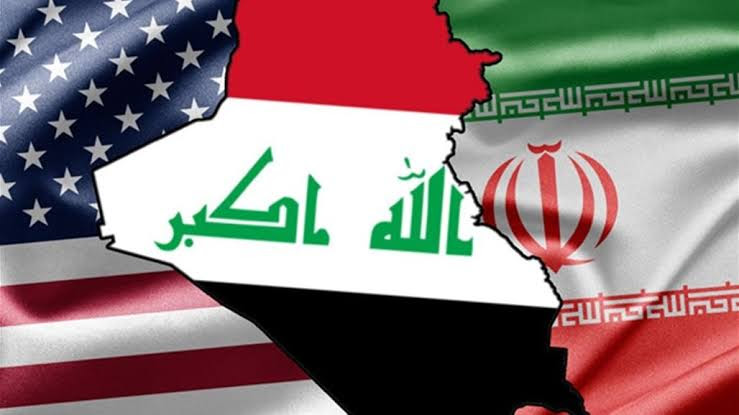
The Iraqi scene today is no longer governed by political slogans or traditional ideological alignments, but rather has become an open arena for a struggle for influence in which regional and international interests intersect at the expense of the crisis-ridden interior. There is increasing talk about a “change project” that seeks to break the cycle of dependency and redirect the state’s compass towards a comprehensive economic and social reform path that places sovereignty and national interest at the forefront of priorities.
In this context, political analyst and former diplomat Faisal Ghazi believes that the real change maker in Iraq is not in changing faces or reproducing power, but rather in a profound project aimed at moving the country from a state of dependence on Iranian influence, with all the accompanying economic, developmental and social crises, to a state capable of managing its resources, building an effective economy and restoring its natural role in its regional and international environment.
Ghazi told Iraq Observer that this reform project “does not seek a break with Iran, religiously, sectarily, or geographically,” but focuses on resetting the relationship with it and eliminating the influence that has directly harmed the Iraqi economy.
He explained that “the Iraqi scene today is governed by a clear power struggle between the United States and Iran, with interventions by neighboring countries, but the greatest weight remains for this bilateral conflict, as Tehran has relied on political and security tools and armed factions to consolidate its influence, in contrast to Washington’s tendency to use economic and diplomatic tools, far from the option of direct military confrontation.”
He pointed out that Iraq, along with Syria, represents a fundamental pillar in the calculations of American national security in the Middle East, which makes it unlikely that the United States would abandon it. He noted that sending an American presidential envoy to Baghdad carries a clear message of continued American interest in Iraq, while emphasizing at the same time that Washington is not looking for new wars, but rather to manage its influence through interests, the economy, and diplomacy.
He explained that the economic option is the most important tool in American policy towards Iraq, as Washington possesses sensitive leverage points, most notably its relationship with the Central Bank of Iraq, the passage of oil revenues through the US Federal Reserve, and control over financial transfers, in addition to the military support file, as the Iraqi armed forces depend on more than 85% of American sources for armament, maintenance and training.
Ghazi concludes by saying that the anticipated American pressure will be primarily economic and diplomatic, aimed at restoring balance to the relationship between Baghdad and Washington, and ensuring adherence to the Strategic Framework Agreement, without sliding into an open military confrontation. He emphasizes that Iraq’s future will be determined by its ability to leverage this conflict to build a sovereign state and an economy capable of lifting society out of its chronic crises, not by its ability to side with one party or the other.
In light of this complex scenario, Iraq appears to be standing on the precipice of a crucial transformation, where international pressures intersect with the urgent internal need for reform.
SOMO to Rudaw: Erbil-Baghdad oil agreement will be renewed

Financial reform in Iraq: A plan on paper or the beginning of economic change?

Amid the end of the current government's term, the latest decisions came under the title of financial reform in Iraq to reduce expenditures and maximize resources, but they face implementation challenges due to the government's limited powers, which raises questions about its ability to address deep financial imbalances and secure real economic stability before the next government takes over.
After the Iraqi government reached the end of its constitutional term, it launched a package of financial decisions under the title of “reducing spending and maximizing revenues,” without having political or time cover to ensure that they would be turned into effective policies. These decisions, issued by a government with limited powers, are not binding on the next government, nor are they part of its program, making them closer to reforms on paper, put forward at the last minute to manage financial pressure rather than to address the roots of the crisis, amid widespread doubts about their ability to be implemented or to continue after the formation of the new government.
Decisions of the Ministerial Council for the Economy
The Ministerial Council for the Economy, during a meeting dedicated to discussing the issue of reducing spending and maximizing revenues, approved a package of decisions aimed at controlling public expenditures and strengthening the state’s financial resources.
The decisions included reviewing the allowances and salaries of the three presidencies and working to equalize them with the salaries of the Prime Minister's office staff, in addition to updating the salary scale for all state employees, based on the recommendations of the Ministry of Planning. The Council also decided to reduce the allowances for official travel for state employees by 90%, limiting such travel to cases of extreme necessity and requiring the approval of the relevant minister, as well as reducing the supervision and monitoring percentages for new projects.
Maximizing non-oil revenues
For his part, the Prime Minister’s advisor, Dr. Mazhar Muhammad Saleh, confirmed that the recent drop in oil prices to below $60 a barrel constitutes a manageable financial pressure and does not amount to a financial crisis, noting that Iraq still possesses important safety margins, foremost among them comfortable foreign reserves and public debt levels within safe limits, in addition to the continued ability to meet basic obligations, primarily salaries and service spending.
Saleh said that the continuation of global oil prices at these levels may be reflected in the 2026 budget with a manageable deficit, the size of which depends on price developments, production levels, and the extent of control over public spending.
He pointed out that fiscal policy is working to manage this deficit by rearranging priorities, maximizing non-oil revenues, and making limited use of domestic financing tools when necessary, without compromising economic stability.
Saleh added that the government adopted clear standards for reducing unnecessary spending, including reviewing the salaries and allowances of the three presidencies, and reducing foreign delegations by up to 90%, while maintaining only delegations of a sovereign and necessary nature, in accordance with the principle of justice and accountability starting from the highest level of the state.
He stressed that these measures will not affect vital investment projects or basic services for citizens, as spending related to the water, electricity, health and education sectors has been neutralized, with priority given to projects with advanced completion rates, in addition to protecting the salaries of the middle and lower segments.
He concluded by saying that the current fiscal policy is based on smart management of public spending, which maintains economic and social stability, and deals with fluctuations in oil prices as periodic challenges that require adaptation and reform, without imposing additional burdens on the citizen.
In extra time
Economic expert Ziad al-Hashemi believes that the Iraqi government is now playing for time, after the damage has been done, as he put it, and is trying to score last points in its favor by proposing a financial reform plan aimed at reducing spending and increasing revenues.
Al-Hashemi points out that “governments in various countries around the world usually present their financial programs at the beginning of their formation, to address previous imbalances, improve the quality of spending, maximize returns, and draw up a systematic and disciplined financial policy. However, what happened in Iraq was the complete opposite of that.”
Over the past four years, Al-Hashemi explains that “the government program was based primarily on expanding spending, through highly politicized financial budgets, which contributed to inflating salaries and subsidies, and piling up government employees in numbers that exceed the needs and capacity of state institutions, in addition to maximizing the financial deficit and accumulating debts, and allowing corruption to operate freely.”
He adds that all of this “happened at a time when Iraq’s financial revenues, especially oil revenues and others, were witnessing a significant decline, yet the government ignored internal warnings and international reports that repeatedly sounded the alarm, warning of the risks of inflated spending in light of deteriorating revenues, without receiving any response.”
Lost opportunities for reform
After the opportunities for reform were lost and the financial crisis worsened dangerously during the past years, Al-Hashemi points out that “the government is now emerging, at the end of its lifespan, with a financial reform plan, after the financial pressure has reached its peak, and the possible solutions are now only harsh and painful, and their impact will most likely be felt by the citizen before anyone else.”
Al-Hashemi raises questions about the mechanisms for implementing this plan, asking about “how it can be implemented by a caretaker government with limited powers, which does not have enough time to implement broad reform measures, in addition to the ambiguity of the implementing bodies, the commitment mechanisms, and the timetables, in light of the imminent formation of a new government.”
It is likely that “this move is an attempt by the government to polish its image in its final days, by announcing a financial reform plan, perhaps with the aim of encouraging political parties to reappoint the current Prime Minister and give him a chance to implement this plan.”
He concluded by saying: “In any case, the next government, whether the current Prime Minister is reappointed or another figure is chosen, will face an extremely difficult financial test, which will force it to take more harsh and painful measures, and financial austerity may be the most prominent theme for the next four years.”
Crisis management, not economic reform
For his part, academic and economic researcher Nawar Al-Saadi believes that “the real goal of these measures is not to launch a comprehensive economic reform in the strict sense, as the caretaker government lacks the political cover and sufficient time to proceed with reforms of this kind.”
Al-Saadi says that “the goal is limited to reducing the financial bleeding and containing the risks until the responsibility is transferred to the next government,” adding that these steps “carry a dual message; the first is directed to the markets and regulatory bodies, indicating that the financial situation is still under control for the time being. The second is to the next government, indicating that the margin for maneuver has become narrower than it was previously.”
Al-Saadi explains that “the problem lies in the structure of the economic decision itself. Iraq does not suffer from a lack of plans or diagnosis, but rather from a weakness of executive will and the prioritization of short-term political calculations at the expense of painful reforms.”
Al-Saadi notes that “what is happening today is more of a crisis management effort than a genuine economic reform. The recent decisions may help alleviate the immediate pressure on the treasury, but they do not address the root causes of the problem, which are the bloated public sector, the fragility of non-oil revenues, and the weakness of financial governance.”
He concluded by warning that “unless the next government moves from the logic of ‘temporary austerity’ to comprehensive structural reform, Iraq will remain stuck in the same cycle, between high spending in years of plenty and belated austerity decisions with the first tremor in oil prices.”
Want to Support My FX Buddies?
.png)
Support My FX Buddies Big or Small I appreciate it all
BuyMeACoffee CashApp:$tishwash
https://paypal.me/tishwash

.jpeg)
The torn currency: between the failure of paper circulation and the delay of digital transformation

The torn currency reveals a deeper flaw than the tearing of the paper, as it shows a cash management crisis, a delay in automation, and a weakness in replacement mechanisms, which makes the citizen the weakest link between banks that refuse, a market that punishes, and digital solutions that are not yet complete.
“No one will take it from me,” Zainab al-Khafaji, a government employee, whispered to herself, her voice thick with despair, as she strolled through the shops of Baghdad’s upscale Mansour district. She clutched a five-thousand-dinar note that looked as if it had been through a war; it was tattered, its edges torn, and held together with a makeshift piece of tape.
Zainab says bitterly, “I don’t know who gave it to me while I was shopping in the crowded market, and when I tried to buy with it again, everyone refused it. Legally it is a national currency, but in the market’s view it is just a damaged piece of paper.”
Crisis of confidence in "small groups"
Zainab’s story is not an isolated case, but rather a reflection of the daily suffering experienced by millions of Iraqis, as worn-out paper currency, especially the small denominations (250, 500, 1000, 5000 dinars), has become a financial and psychological burden.
While worn-out currency is easy to trade in the Kurdistan Region or neighboring countries, citizens in central and southern Iraq face a popular and commercial “veto” on these papers.
Paper currency is subject to rapid deterioration, especially the smaller denominations, due to its frequent circulation and use by children in direct transactions between different shops and markets. This is compounded by the lack of education from the Central Bank regarding the replacement of damaged currency at the bank, which has created an opening for unscrupulous individuals to take a percentage of the money in exchange for replacing damaged currency with new currency, sometimes reaching 50% of its value.
Black market for replacing damaged parts... commissions reaching 50%
This social “unacceptability” of the official currency opened the door for the emergence of a class of “weak-willed” people who exploited people’s needs and administrative complexities.
Due to poor education about central bank procedures, an illegal trade has emerged to exchange damaged currency for exorbitant commissions, sometimes reaching half the value of the amount.
Ali Al-Bahadli, a market owner, says: “Sometimes I have to leave my young son to manage the shop, and some people take advantage of his innocence and pass him quantities of small damaged denominations. At the end of the day, I find myself facing a financial loss for which I am not responsible. The only way out is for someone to come by from time to time and collect this (cash debris) in exchange for deducting a large percentage of its value, sometimes reaching 50%, so that he can later exchange it through his own means at the banks.”
As for Sobhi Hussein, a bus driver, he confirms that the banks themselves are contributing to the worsening of the crisis: “I have accumulated large amounts of 500 and 1000 denominations that are written on or torn. When I tried to deposit or exchange them in the banks, they were rejected outright, which forced me to sell them to exchange offices for a much lower value.”
Economic vision: The solution lies in "automation" and plastic currencies
Economic expert Dr. Hussein Al-Khaqani believes the crisis begins in the banks and ends in the streets. He says, “The central bank is the sole authority for issuing currency, but the refusal of some banks to accept damaged banknotes from merchants generates a defensive reaction from the public, causing them to stop using the currency for fear of losing its value.”
Al-Khaqani proposes a radical solution, which is to impose the use of electronic cards (Visa & MasterCard) on shops and gas stations, stressing that “the real application of automating transactions will reduce the amount of cash circulating manually, and protect the citizen from financial losses in small units.”
Other experts believe that solving this problem does not require additional resources, but rather a clear decision, strict implementation, and genuine coordination between the central bank, banks, and markets.
According to international reports, 15% of the money in circulation globally up to 2024 was printed using polymer material, which clearly contributed to reducing the percentage of torn money in the world.
Central Bank Guide: When to Accept Currency and When to Confiscate It?
Despite the public controversy, the Central Bank of Iraq has clear instructions aimed at protecting the value of the currency, which are as follows: If the banknote is worn out or damaged even though it is not torn and no parts of it are missing, or if the banknote is made up of two parts (different numbers) and its area is close to the area of the original banknote and it is attached with adhesive tape, or if the banknote is attached with one or more transparent adhesive tapes along its length or width, or if the banknote has a cut in more than one corner.
Or if the banknote is defective in printing (in terms of design, size, color, or other security features that a genuine banknote has), or contains stamps or writings that do not affect its external appearance, or if the banknote has lost less than 50% of its area.
However, the Central Bank confirmed the confiscation of damaged banknotes that are not fit for circulation if changes have been made to the external appearance of the banknote as a result of writing, drawing, printing, stamps, or if it contains an adhesive substance, or if the banknote has lost 50% or more of its area, or if it is made up of two parts on one side.
If there is evidence that convinces the central bank that the missing parts of the papers have been completely destroyed, they will be partially or fully compensated.
Will Iraq's economy be "negatively" affected by peace between Russia and Ukraine?

Progress in the Russian-Ukrainian negotiations is a significant factor in global energy markets, as the expected injection of about five million additional barrels is likely to increase oil supply, pushing crude prices down and possibly below $50 a barrel.
This decline, if it occurs, will have direct repercussions on the Iraqi economy, which depends almost entirely on oil revenues to finance the general budget. With declining revenues, the government may face financial pressures that affect the regularity of salary payments to employees and retirees, and increase the likelihood of resorting to austerity measures or delays in fulfilling financial obligations.
Oil prices have fallen from $81 in September of last year to less than $60 in December of this year, 2025.
The International Monetary Fund announced in April 2025 that Iraq needs an oil price exceeding $92 per barrel to balance its budget for 2025.
The biggest challenge
Economic and financial expert Hilal Al-Taan told Shafaq News Agency that "the Russian-Ukrainian agreement does not greatly affect the global price of oil, but there are many factors that affect the price of oil, including economic growth, geopolitics and other matters."
Al-Taan added that "oil is the main source of revenue for the budget in Iraq," noting that "the country is currently going through a financial crisis, and that the Russian-Ukrainian agreement will affect the strength of the financial crisis and its repercussions in Iraq."
He added that "this may push the government to resort to internal and external debt, which is a dangerous stage for the Iraqi economy, which is exhausted by financial and economic crises."
The Iraqi Ministry of Finance has begun preparing the federal general budget for the fiscal year 2026, setting the price of a barrel of oil at $60 as a hypothetical price to rationalize public spending in the country and direct it towards basic priorities.
According to official government statistics, the number of employees in government departments is 4 million and 550 thousand employees, while the number of retirees is 2.6 million retirees and 2.15 million are covered by social welfare, receiving more than 8.5 trillion dinars in monthly salaries.
"A blow to the economy"
For his part, oil expert Hamza al-Jawahiri told Shafaq News Agency that "Russia is now selling part of its oil and with the lifting of sanctions it will pump large quantities into global markets, which will increase the existing surplus."
He continues, "It is not only Russia that will increase its oil production, but even America will increase its shale oil production, which may push prices down to around $50 and perhaps even less."
Al-Jawahiri points out that "this will have a major impact on Iraq, as it is the only rentier state par excellence, while Saudi Arabia, the UAE and Kuwait have industries and production that constitute 40 percent of the state’s revenues, which supports their budgets, while Iraq depends on oil by 90 percent, making it the most affected among oil-producing countries."
resorting to borrowing
In addition, economist Mohammed Al-Hassani told Shafaq News Agency that "the ceasefire between Russia and Ukraine will negatively affect oil prices," predicting a drop in "prices to the level of $50 and will negatively affect investment spending."
He added: “Iraq went through a period of low global oil prices during the Corona pandemic, when the price of a barrel of oil reached $14,” noting that “the government resorted to borrowing to cover operational expenses and did not reduce or cut employee salaries.”
Controlling expenses
The Prime Minister’s financial advisor, Mazhar Muhammad Saleh, disagrees with public opinion, asserting that peace between Russia and Ukraine could boost the economic growth of countries around the world.
Saleh continues, in his interview with Shafaq News Agency, that “if peace is achieved in Russia, which is one of the energy belts in the world, then the average scenario falls within the political economy of peace, as the opportunities for peace must raise growth in the global economy, which increases the demand for energy and leads to an improvement in global oil prices.”
He believes that "a 1% increase in global growth leads to a 0.7% increase in oil demand, which means that the chances of peace in the medium term increase global crude oil prices, not the other way around."
He points out that “the second scene, which is short-term, relates to preparing for the general budget for the coming year 2026. There are preparations for greater fiscal discipline in reducing unnecessary expenditures and maximizing revenues, in accordance with the results of the joint meeting of the Ministerial Council for the Economy, chaired by the Prime Minister, on December 15, 2025, where the Council took a series of cautious financial measures to control public spending and maximize revenues.”
He explains that “the way to avoid a salary crisis when oil prices fall is not only through immediate measures, but through long-term structural reform that ensures diversification of revenues and improved spending efficiency. In other words, what is required is to move from crisis management to building a sustainable fiscal policy that protects society from the fluctuations of the global energy market. This is what the country’s economic policy is working on with its financial, monetary and trade pillars, and its objectives were defined in the government program that was approved by the House of Representatives in October 2022.”
On December 15, the Ministerial Council for the Economy issued a set of decisions related to reducing spending and maximizing revenues, including reducing spending for the three presidencies, unifying the salaries of their employees, and reducing the allowances for state employees’ travel to 90%.
The Trump administration is changing the rules of war in Iraq: a soft power strategy to write a new chapter.
The US Congress's vote to revoke the 1991 and 2002 authorizations for the use of military force against Iraq represents a significant shift in the relationship between Baghdad and Washington, after more than three decades in which Iraq's name was legally associated with a state of open war.
The decision, which was included in the National Defense Authorization Act of 2026, raised fundamental questions about its political and security implications, and the extent of its actual impact on Iraq’s sovereignty, internal stability, and foreign relations.
While the Iraqi government sees the move as the culmination of a long process of restoring sovereignty and ending the legacy of wars, experts and analysts argue that the cancellation does not mean a complete withdrawal of American influence, but rather reflects a shift from the logic of direct military intervention to other tools, security and economic, that may be more influential in the next stage.
sovereign transformation
Iraqi government spokesman Bassem al-Awadi, speaking to Shafaq News Agency, merely referred to the Iraqi Foreign Ministry’s statement as Baghdad’s clear official position regarding the American decision.
The State Department described the US Congress's vote to revoke the two authorizations as "historic" on Wednesday, December 17, 2025, considering it a fundamental turning point in changing the legal nature of the relationship between the two countries.
The ministry confirmed in a statement received by Shafaq News Agency that the cancellation establishes a new form of relations based on respect for Iraq’s sovereignty, ending the legacy of war, and strengthening the framework of strategic partnership, which sends a positive message to the international community that Iraq has become a safe and attractive environment for investment.
The Iraqi Foreign Ministry stressed that this decision does not undermine counter-terrorism efforts, explaining that the 2001 mandate to combat al-Qaeda and associated terrorist groups remains in effect, while affirming Baghdad’s commitment to developing bilateral relations in a way that serves the interests of both countries and the stability of the region.
From conflict to partnership
In this regard, the Prime Minister’s Advisor for Foreign Relations, Farhad Ala’a Al-Din, believes that the decision to cancel the authorization to use force against Iraq represents an important political and legal step, reflecting the fact that Iraq today is a fully sovereign state, and that the stage of war is now a thing of the past.
Alaa al-Din explained to Shafaq News Agency that the decision confirms the shift in the relationship with Washington from a logic of conflict to a logic of partnership and mutual respect, noting that its security implications are represented in strengthening the principle of sovereignty, supporting political stability, and establishing a normal relationship between the two countries.
A message of reassurance
For his part, security expert Sarmad Al-Bayati considered the decision to have a dual importance, as it carries a clear message to the international community and to the Iraqi interior that the country is no longer threatened by an imminent military danger.
Al-Bayati told Shafaq News Agency that the importance of the decision lies in confirming that Iraq is now safe and does not need foreign military intervention as was the case in previous years, noting that the cancellation gives the Iraqi government momentum and strength in managing state affairs without pressures related to the possibility of using military force.
He explained that the decision contributes to strengthening internal and external stability, and undermines any perceptions or possible scenarios of military interventions by other countries under the pretext of the security situation in Iraq.
military independence
In the same security context, a high-level security source confirmed to Shafaq News Agency that Iraq is increasingly relying on its own capabilities, especially in the air domain, where military operations are managed and airstrikes are carried out under full Iraqi management, with a remarkable development in arming the army.
This comes in light of the announcement by the US-led Combined Joint Task Force on November 5, 2025, that the Iraqi armed forces had obtained full certification to carry out independent airstrikes, after achieving 100% targeting accuracy using F-16 and AC-208 aircraft.
The US Central Command (CENTCOM) said in a statement received by Shafaq News Agency that this achievement is a historic step towards Iraq becoming self-reliant in confronting ISIS, stressing the decline of the organization’s traditional threat and the dispersal of its fighters.
Change tools
For his part, political analyst Ramadan Al-Badran explained that the decision to cancel the mandate is inseparable from the broader American strategy based on avoiding direct military intervention with invasion forces in different parts of the world.
Al-Badran told Shafaq News Agency that the lack of need for such authorization in the Iraqi case is one of the reasons for the cancellation, in addition to granting the US president different powers to manage limited tactical operations targeting any threats to the security or interests of the United States or its allies.
He pointed out that one of the most prominent features of this shift is the increasing reliance on small drones, especially in the Middle East, which means withdrawing authorization to use conventional armies without reducing Washington's ability to act to protect its interests.
This comes in conjunction with the announcement by the US Central Command, at the beginning of December 2025, of the formation of a new task force for attack drones in the region.
alternative economy
From an academic perspective, Haitham Al-Hiti, a professor of political science at the University of Exeter in Britain, found that the cancellation of the authorization to use force against Iraq represents the beginning of a new phase in which the American state of war with Iraq officially and completely ends.
However, Al-Hiti warned, in his interview with Shafaq News Agency, that this shift does not necessarily mean a reduction in American pressure, but rather a shift to the economic and financial sphere.
He pointed out that any future problem between Baghdad and Washington could be managed through sanctions or financial accountability tools, given the United States' control over important aspects of the global financial system.
He said the decision coincided with the US Department of Defense being granted the authority to reduce security assistance by up to 50%, reflecting a clear trend to focus on economic rather than military dealings.
Al-Hiti concluded that the biggest challenge facing Iraq in the next stage will be economic and financial, in light of population growth, the accumulation of debts, and the problems of corruption and random employment, which Washington is well aware of and seeks to deal with through non-military means.
Ships and businessmen: US sanctions target Iran's "hidden" oil fleet
The US Treasury Department announced on Thursday that it had imposed sanctions on a fleet of Iranian oil exporters operating "covertly," and revealed the names of businessmen involved in the case.
The ministry said in a statement received by Shafaq News Agency, "The United States is taking action today to stop the flow of Iranian regime revenues that are used to support terrorism and other illicit activities."
The US Treasury Department added, "The US Treasury Department is imposing sanctions on 29 vessels belonging to the clandestine fleet, involved in secretly transporting Iranian oil and its derivatives worth hundreds of millions of dollars. Among the entities subject to sanctions is a network of companies and ships run by Hatem El-Sayed Farid Ibrahim Saqr, an Egyptian businessman, in addition to several companies active in countries including the United Arab Emirates, India, the Marshall Islands, and Panama. This action restricts Iran's ability to export oil and its derivatives through convoluted and deceptive mechanisms."
" The United States will continue to take the necessary measures to implement the second National Security Presidential Memorandum, which directs us to exert maximum pressure on the Iranian regime to deprive it of the revenues that fund its destabilizing activities. We will not hesitate to use all the tools at our disposal to confront those who facilitate Iran's illicit oil trade."
She emphasized that "this action is in implementation of Executive Order 13902, which targets the oil and petrochemical sectors in Iran, and is a continuation of the strict sanctions campaign aimed at restricting Iranian oil sales, in support of the second National Security Strategic Plan issued by the President on February 4, 2025. For more information about this action, please see the press release issued by the U.S. Treasury Department."
Research Center: Iraq is at a pivotal moment to address its economy and revive the private sector.

The “ Center for Research and Strategic Studies ” stated that Iraq needs a “realistic diagnosis of its economic imbalances” in order to implement appropriate reform prescriptions, a step that will not succeed without a strong private sector, instead of relying on the state, which acts as if it is the sole engine of the economy, meaning that the country is facing a “pivotal moment.”
The Jordan-based “Links Center” said in a report translated by Shafaq News Agency that the Iraqi economy has suffered for many years from a clear paradox: it possesses large financial resources, but its ability to transform these resources into real and sustainable development is weak.
The center explained in its report that the relative financial stability that Iraq is witnessing today does not necessarily mean the soundness of the economic structure, but rather hides behind it accumulated structural imbalances resulting from excessive dependence on oil, the inflation of the role of the state, and the weakness of economic and administrative institutions,” adding that “any serious talk about reforming the Iraqi economy must start from a realistic diagnosis of these imbalances before moving on to reform prescriptions.”
According to the report, successive governments have succeeded in managing short-term stability by expanding public spending, taking advantage of oil revenues and high cash reserves. However, this approach has created a fragile economy that depends more on oil shocks than on production.
He continued, saying that public budgets have ballooned significantly since 2004, not as a result of growth in the productive base, but due to the expansion of operating expenses, especially salaries and subsidies, which has made the state the largest employer and source of income in the country. This has imposed a constant burden on public finances and limited the government’s ability to direct resources towards long-term investment and development.
The report argued that the economy cannot become a productive economy as long as government employment remains a substitute for real job opportunities in the private sector, adding that reforming the salary scale and linking wages to productivity, along with redefining the role of the state from a direct employer to a regulator and supporter, represents a fundamental step in the path of reform.
The report considered the social support system to be another example of structural dysfunction, explaining that the comprehensiveness of the support, despite its social importance, led to a great waste of resources and reduced the effectiveness of social protection.
He added that reform does not mean reducing support as much as it means redirecting it towards the most needy groups, and linking it to real economic empowerment policies that open the way for work and production instead of permanent dependence on subsidies.
The report stated that the energy sector represents one of the most prominent structural challenges that drain public finances and hinder growth, noting that the huge spending on electricity has not succeeded in providing a stable service, due to imbalances in management, governance and collection.
He pointed out that the continued flaring of associated gas is a glaring example of mismanagement of resources, as Iraq loses billions of dollars annually that could have been turned into a source of energy, income and job opportunities. Therefore, the report concluded that real reform in this sector requires a comprehensive restructuring, not partial or temporary solutions.
The report continued, stating that Iraq possesses important strengths, most notably monetary stability, high foreign reserves, and low inflation. However, these indicators will remain of limited impact unless they are translated into real growth in the real economy, which requires a radical reform of the banking sector to enable it to finance investment and production, and not just be an intermediary for trading liquidity.
The report concluded by saying that no economic reform in Iraq can succeed without a strong and effective private sector, explaining that the state is no longer able to continue as the sole engine of the economy.
He added that "what is required is a stable business environment that protects the investor, reduces bureaucracy, and provides clear and fair rules for competition, as the efficient private sector is not a substitute for the state, but rather a key partner in achieving development."
The “Links Center” report concluded that the Iraqi economy stands today at a pivotal moment. Either the current financial stability will be invested in launching real structural reforms that rebuild the economy on the foundations of production and diversification, or dependence on oil and public spending will continue, with all the future risks that entails. It concluded by saying that “reform is not just a political option, but an economic necessity to ensure stability and development for future generations.”
A parliamentarian reveals the difficulty of meeting the demands of the protesting engineers due to the budget.

MP Haider Al-Salami stated on Thursday that the demands of the protesting engineers have not been met for more than four months, despite his addressing the Prime Minister to include their rights to appointment within the budget amendments .
Al-Salami explained in a statement received by Al-Sa’a Network that “the Ministry of Finance was unable to implement the request due to the budget law before the amendment,” noting that “this reflects the difficult financial situation the country is going through as a result of previous wrong financial policies.”
Among the most prominent solutions are reducing expenses and salaries... An economic expert presents solutions to the financial crisis in Iraq

On Friday, the head of the "Iraq Future" Foundation, economist Manar Al-Obaidi, ruled out the possibility of non-oil financial revenues replacing oil revenues in covering the expenses of the Iraqi state and the monthly salaries of employees and workers in the public sector in the country.
This came in a post by the economic expert on the social networking site "Facebook" in which he spoke about what is being circulated about the possibility of the country being exposed to a severe financial crisis, according to what media reports indicate recently.
Al-Ubaidi criticized what he called "the proliferation of rosy voices that sell people illusions closer to dreams than to reality," which claim that money is available, revenues are sufficient for the salaries of all employees, and that the crisis will be resolved as soon as the salaries of special grades are reduced, saying that "this is an emotional speech that is not based on numbers, its goal is to tickle the feelings of the ordinary citizen and numb him, not to be honest with him."
He added that “the state’s expenditures in the current situation cannot be covered unless the issue of salaries is addressed in a radical and genuine way, and not through patchwork solutions,” noting that “all non-oil revenues, no matter how much they increase, will not be a substitute for oil, and will not cover more than 10–15% of the state’s operational needs.”
Al-Ubaidi pointed out that "there is no resource today capable of compensating for oil," adding that "everything that is being traded about sulfur, phosphate, silica and others, even if sold as raw materials, will not exceed $300 to $500 million in revenue annually."
The economist also considered that “talking about strategic industries, from refineries to manufacturing industries, is correct in principle, but not timely,” noting that “these projects need at least five years to become productive, in addition to the availability of huge financing and liquidity that is not currently available.”
He pointed out that "the real problem is that Iraq is not only facing a crisis of revenues and expenditures, but also a deficit in creating a real economy outside of oil.
Al-Ubaidi concluded that "there is no solution without reducing expenditures, boldly addressing the issue of salaries, providing real, not merely slogan-based, support for the private sector, and restoring trade balance with countries away from oil rents."
He continued, saying, "Anything else is just wishful thinking and a joke on the citizen who is meant to believe that the crisis can be solved with simple measures, while the truth is much harsher and more complicated."
In March 2021, Mazhar Muhammad Salih, the Prime Minister’s advisor for financial affairs, confirmed in an interview with Shafaq News Agency that the reasons for the economy remaining rentier are due to the wars and the imposition of the economic embargo on Iraq during the past era, and what we are witnessing today in terms of political conflicts has led to the dispersal of economic resources.
The Iraqi state’s continued reliance on oil as the sole source of the general budget puts Iraq at risk from global crises that occur from time to time due to the impact on oil, which makes the country resort each time to covering the deficit by borrowing from abroad or internally, and thus indicates the inability to manage state funds effectively, and the inability to find alternative financing solutions.
An Iraqi bank switches to the global standard "SWIFT MX"
we already know this I'm not sure why they are telling us again but they are

The National Bank of Iraq announced that it has successfully completed the transition to the new global standard " SWIFT MX " for financial messages, in a step that constituted a significant milestone in the bank's technological infrastructure modernization and enhanced readiness for digital transformation.
The bank said in a statement, “The implementation of this transformation comes as part of the bank’s transition from the old MT standard to the MX ISO 20022 model , which is the most advanced, structured and data-rich framework in the global financial messaging sector. The transformation process was carried out across all operational channels with high efficiency and minimal downtime, reflecting the bank’s strong technical readiness, accurate planning, and commitment to providing its services without any significant interruption.”
He pointed out that "this transformation is an advanced step within the strategic roadmap of the National Bank of Iraq to modernize its systems, enhance its compatibility with global best practices, and provide an advanced digital banking experience for its individual and corporate clients."
For his part, the bank’s Chief Operating Officer and Deputy CEO, Aqeel Ezzedine, explained that “the smooth transition to the MX standard came as a result of a robust system of governance, teamwork and careful planning, and represents an important step in modernizing the payments infrastructure and enhancing the reliability and security of banking operations.”
Hani Khalil, head of the bank's transformation department, said that "achieving this transformation embodies the bank's commitment to keeping pace with the latest international standards in payment systems, and building a more transparent, integrated and high-quality financial data structure, which enhances the customer experience and strengthens the bank's position within the regional financial system."
The MX standard enables a more accurate and richer exchange of information in financial messages, with substantial improvements in transaction tracking and identification of parties, supporting global trends towards greater efficiency and transparency in payments.
At Christmas Party, Trump Publicly Acknowledges U.S. Envoy to Iraq
Trump praised U.S. Envoy to Iraq Mark Savaya at a White House Christmas event, as the U.S. President praised sweeping first-year achievements.
link this is from KURDISH news
A brief but pointed acknowledgment by U.S. President Donald Trump of America’s envoy to Iraq, Mark Savaya, during the White House’s 2025 Christmas party has drawn attention in diplomatic and political circles, symbolizing both personal rapport and the broader confidence projected by the administration as it declares sweeping domestic and international achievements.
In a post on X dated Dec. 19, 2025, Savaya publicly thanked President Trump for recognizing him during the White House Christmas gathering, writing: “President Trump, thank you for your kind acknowledgment at the 2025 White House Christmas party. You are truly the greatest president this country has ever had. Merry Christmas and may God bless you and the United States of America.”
The post was accompanied by a video capturing the moment in which President Trump acknowledged Savaya among a select group of invited guests, offering praise in front of the assembled audience.
The exchange occurred during what President Trump described as a particularly exclusive and tightly attended event.
Addressing the crowd, the president reflected on the significance of the gathering, noting that the Christmas party was “the toughest invitation,” emphasizing that attendance was limited and that those present held “special significance.”
Within that context, Trump called out Savaya by name, remarking, “Mark Savaya. Hey Mark! You’re looking good,” before continuing to recognize others in attendance and expressing pride in those gathered.
The moment, though brief, was emblematic of the administration’s broader messaging during the holiday season—an effort to project unity, loyalty, and confidence as the White House closed out its first year in office.
Savaya’s public response, effusive in its praise of the president, underscored the personal dimension of that acknowledgment and highlighted the envoy’s visibility within the administration at a time of heightened focus on U.S. foreign policy in the Middle East.


The acknowledgment came against the backdrop of a sweeping year-end address delivered by Trump the previous evening, in which he outlined what the White House described as “transformative progress” achieved in just 11 months.
According to an official White House article published on Thursday, the President used the primetime address to frame his administration’s record as an unprecedented turnaround for the United States, both economically and strategically.
In that address, Trump declared that “over the past 11 months, we have brought more positive change to Washington than any Administration in American history,” a claim that set the tone for an expansive list of accomplishments cited by the White House.
He contrasted his presidency with the previous four years, asserting that the country had been governed by politicians serving insiders and foreign interests, while portraying his own leadership as focused on “the law-abiding, hardworking people” of the United States.
Central to Trump’s address was the issue of border security, an area the administration has consistently emphasized.
According to the White House article, Trump said the United States had inherited “the worst border anywhere in the world” but had transformed it into “the strongest border in the history of our country” within months.
He also claimed dramatic reductions in drug trafficking, stating that drugs brought in “by ocean and by sea” were down by 94 percent, language that echoed the administration’s broader narrative of aggressive enforcement and restored control.
The president also highlighted what he described as major foreign policy successes, telling the nation that he had “restored American Strength,” “settled eight wars in ten months,” “destroyed the Iran nuclear threat,” and “ended the war in Gaza”.
These claims, presented without elaboration in the White House article, were framed as evidence that the United States had regained global respect under his leadership.
Economic themes dominated much of the address.
Trump asserted that his administration had reversed rising costs inherited from the previous government, citing declines in car prices, gasoline, hotel rates, and airfares after sharp increases in prior years.
He further claimed that gasoline prices had fallen below $2.50 a gallon in much of the country following his declaration of a national energy emergency on his first day in office .
In a message aimed squarely at the military and their families, Trump announced a “special Warrior Dividend,” stating that more than 1.45 million service members would receive $1,776 before Christmas, a figure chosen to honor the year of America’s founding.
He also pointed ahead to what he described as the largest tax cuts in American history, predicting annual family savings of between $11,000 and $20,000 and the “largest tax refund season of all time” in the coming spring.
Additional claims included a reversal of migration trends, reductions in mortgage costs, record-breaking investment totaling $18 trillion, and efforts to confront health insurance companies and reduce prescription drug prices.
The White House article concluded with Trump’s assertion that, after 11 months, “our border is secure, inflation is stopped, wages are up, prices are down, our nation is strong, America is respected, and our country is back,” predicting an economic boom unlike any seen before.
Seen in this broader context, Trump’s acknowledgment of Savaya at the Christmas party was more than a casual aside.
It occurred within a carefully choreographed moment in which the president was reinforcing loyalty, celebrating his team, and projecting confidence as he summarized his administration’s record.
As the administration enters a new year promising further economic growth and sustained American strength, such moments of recognition serve to underline the internal cohesion the President seeks to display.

No comments:
Post a Comment