After a move with the central.. Revealing the date of the return of Iraqi banks punished by America
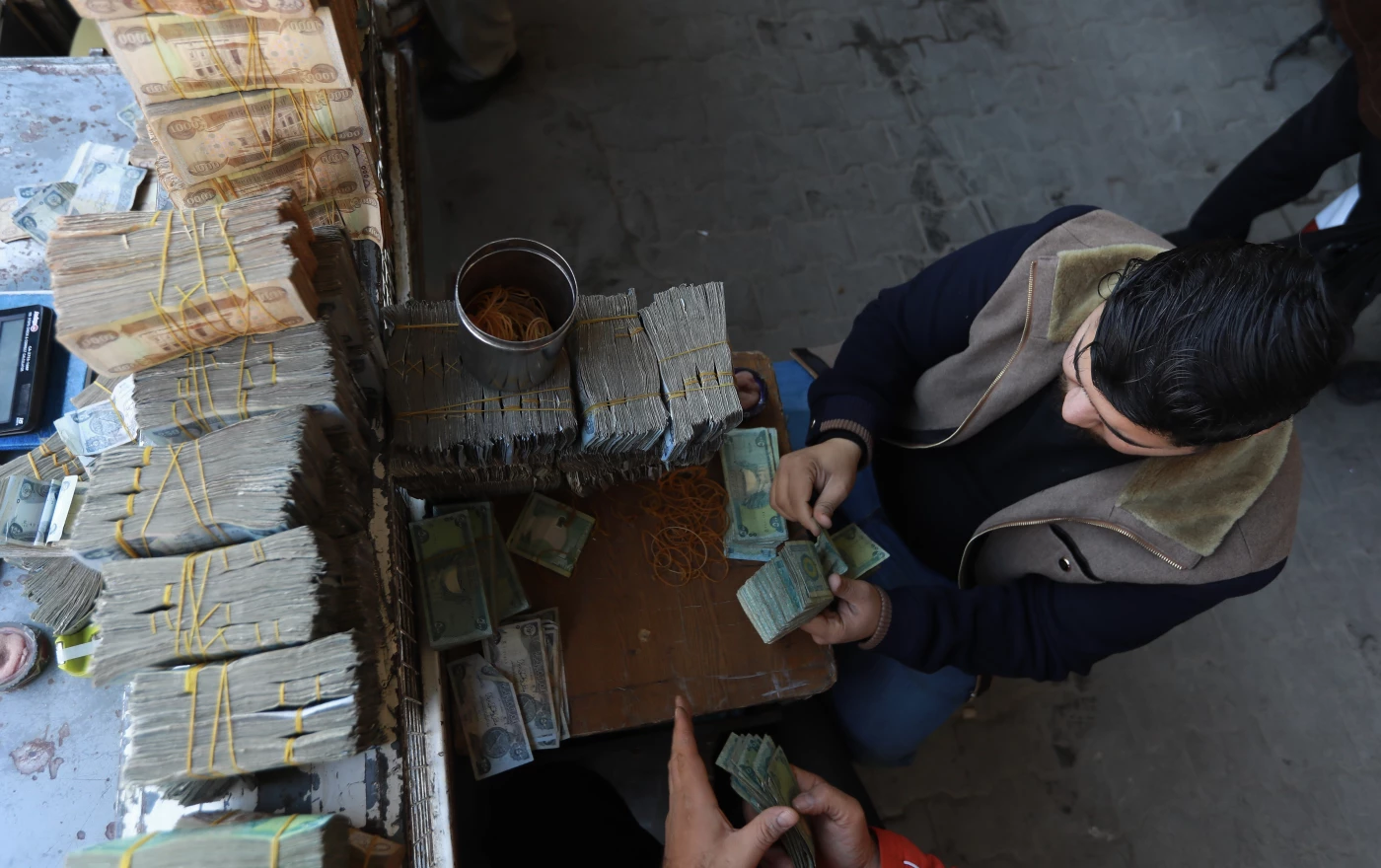
this is n their tv and social media too
Informed sources revealed on Monday the date of the return of some Iraqi banks, which were previously punished with the US dollar.
The video for this My FX Buddies Blog post is below here:
The sources told Al-Jabal that "the last stage witnessed the movement of a number of Iraqi banks that were imposed sanctions by the US Treasury in coordination with the Central Bank of Iraq, in order to lift those sanctions, and there is a clear progress in this file, and there is a preliminary American approval to the return of the work of those banks after the conditions required of them are met."
According to the sources, "there are initially about (7) Iraqi banks imposed on sanctions by the US Treasury that are currently underway an evaluation phase to follow up their commitment to international standards in financial transactions, as well as the bank reform plan and this follow-up by the Treasury through a specialized company as well as the Central Bank of Iraq."
The sources explained that "the evaluation stage may take a full year, that is, the year 2026 will be to follow up the application of those banks to international standards, and it is possible during 2027 to return to work normally in foreign currency trading, especially the dollar, after the lifting of sanctions by the Treasury, and this is possible and possible at the beginning of 2027 and work is currently underway."
Last October, the US Treasury Department included Iraqi banks, companies and personalities on the sanctions list, stressing that they are involved in arms smuggling and widespread corruption, as well as managing spy networks linked to the Iranian Revolutionary Guards.
The ministry said in a statement that the Office of Foreign Assets Control (OFAC) has taken measures against individuals and companies that help the Iranian regime evade US sanctions, smuggle weapons and engage in widespread corruption within the Iraqi economy, noting that “the Iranian regime depends on its agents of Iraqi militias to penetrate the institutions of the Iraqi state and its security services.”
Last July, the US Treasury Department announced sanctions on an Iraqi business network that it said was smuggling Iranian oil under the cover of an Iraqi law. The measure against the network run by Iraqi businessman Salim Ahmed Saeed came as part of a set of measures announced by Washington as part of a package of sanctions that targeted dealers in the sale and shipment of Iranian oil through local and foreign partners, in an attempt to curb the "shadow fleet" on which Tehran relies.
According to the sources, "there are initially about (7) Iraqi banks imposed on sanctions by the US Treasury that are currently underway an evaluation phase to follow up their commitment to international standards in financial transactions, as well as the bank reform plan and this follow-up by the Treasury through a specialized company as well as the Central Bank of Iraq."
The sources explained that "the evaluation stage may take a full year, that is, the year 2026 will be to follow up the application of those banks to international standards, and it is possible during 2027 to return to work normally in foreign currency trading, especially the dollar, after the lifting of sanctions by the Treasury, and this is possible and possible at the beginning of 2027 and work is currently underway."
Central Bank Downgrades Two Major Branches — Why Erbil Was Kept
The Central Bank is restructuring its branches in Basra and Mosul, converting them into directorates, while keeping the Erbil branch.

Informed sources reported that the Central Bank of Iraq restructured its branches in Basra and Mosul, converting them into a directorate headed by an employee with the rank of assistant director instead of a general manager, while the bank kept its branch in Erbil.
The sources told Al-Mirbad that the Basra branch is one of the oldest branches, having been established in 1957, and oversees the southern region in addition to Al-Muthanna Governorate, and that this measure may weaken its role in supervising and monitoring bank branches, which number more than 100 branches and more than 100 exchange companies.
The sources did not disclose the reasons for this measure, indicating that the decision was made today without any prior indication or notice.
Al-Mirbad publishes the Central Bank's decision document regarding the restructuring of its branches in Basra and Mosul.
text of the document
Directorate of Human Resources Affairs, Human Resources Management Department
Date: December 25, 2008
Administrative Order No. 5910
Based on the decision of the Board of Directors of this bank, numbered (267) for the year 2025, adopted at its meeting number (1679) held on December 4, 2025, the following has been decided:
1. The branches of the Central Bank of Iraq in Mosul and Basra shall be restructured, with each branch becoming a directorate.
2. Each of the aforementioned directorates shall be headed by an employee at the level of Assistant Director General.
Signed,
Prof. Dr. Ammar Hamad Khalaf
----

Following discussions with the Central Bank, the date for the resumption of operations of Iraqi banks sanctioned by the United States has been revealed.
Informed sources revealed on Monday the date when some previously sanctioned Iraqi banks will resume operations in US dollars.
The sources told Al-Jabal that “the past period witnessed movement by a number of Iraqi banks that were subjected to sanctions by the US Treasury in coordination with the Central Bank of Iraq, in order to lift those sanctions. There is clear progress in this file, and there is initial US approval for the return of the work of those banks after the required conditions are met.”
According to the sources, “There are approximately (7) Iraqi banks that have been sanctioned by the US Treasury and are currently undergoing an evaluation phase to monitor their compliance with international standards in financial transactions, as well as the banking reform plan. This monitoring is being carried out by the Treasury through a specialized company, as well as the Central Bank of Iraq.”
The sources explained that "the evaluation phase may take a full year, meaning that 2026 will be for monitoring the implementation of international standards by those banks, and it is possible that during 2027 those banks will return to normal operations in trading foreign currencies, especially the dollar, after the lifting of sanctions by the Treasury. This is possible and likely with the beginning of 2027, and work is currently underway on this."
Last October, the US Treasury Department added Iraqi banks, companies and individuals to its sanctions list, asserting that they were involved in arms smuggling and widespread corruption, as well as running spy networks linked to the Iranian Revolutionary Guard.
The ministry said in a statement that the Office of Foreign Assets Control (OFAC) had taken action against individuals and companies that help the Iranian regime evade U.S. sanctions, smuggle weapons, and engage in widespread corruption within the Iraqi economy, noting that "the Iranian regime relies on its Iraqi militia proxies to infiltrate Iraqi state institutions and security services."
Last July, the US Treasury Department announced sanctions against an Iraqi business network it said was involved in smuggling Iranian oil under the guise of Iraqi law. The action against the network, run by Iraqi businessman Salim Ahmed Saeed, was part of a series of measures announced by Washington as part of a broader sanctions package targeting those involved in the sale and shipment of Iranian oil through local and foreign partners, in an attempt to curb Tehran's "shadow fleet."
Branches of Rafidain Bank outside Iraq face the risk of closure due to "financial problems and violations".
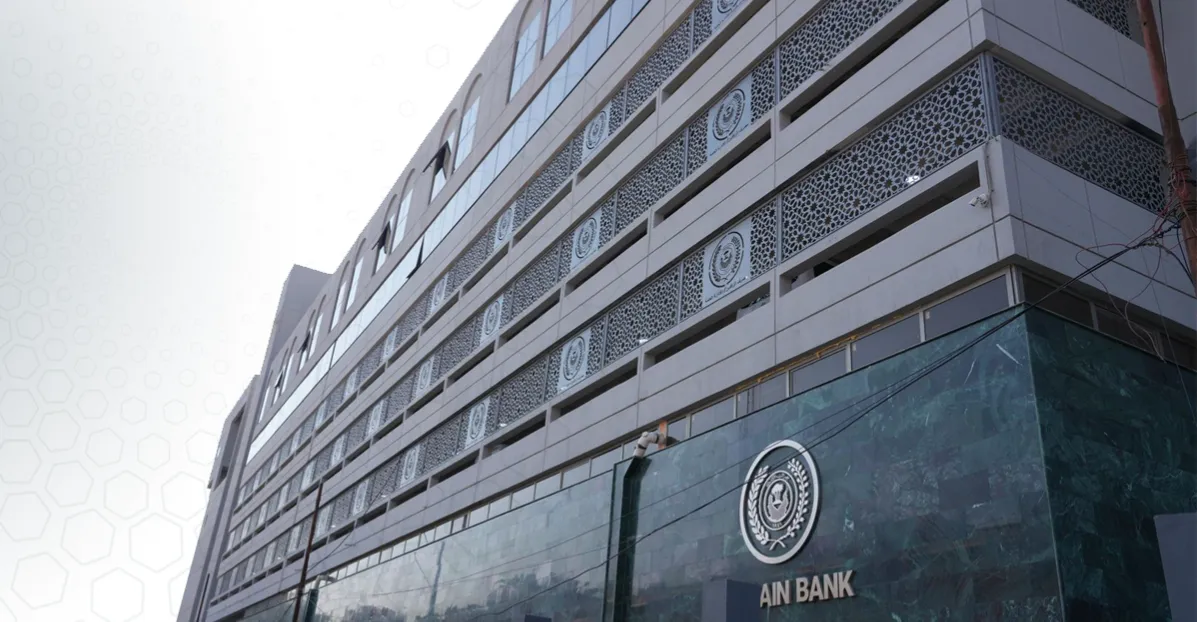
Informed sources revealed on Monday that the branch of the Iraqi state-owned Rafidain Bank in the UAE capital, Abu Dhabi, is facing the risk of closure due to administrative and financial problems and violations that were detected during the past period.
The sources told Shafaq News Agency that "there are concerns about the repercussions of these continued violations on the bank's operations and its external reputation."
She added that the problems are not limited to the Abu Dhabi branch alone, but extend to a number of the bank's branches abroad, which also suffer from varying administrative and financial violations.
The sources also indicated that regulatory authorities are required to open extensive investigations to determine the extent of the violations and hold those responsible accountable in order to protect the bank's funds and prevent the exacerbation of financial and administrative crises in its foreign branches.
The Yemeni Minister of Information, Culture and Tourism, Muammar Al-Iryani, announced at the beginning of October 2025 the closure of the Iraqi state-owned Rafidain Bank branches in Sana'a.
Al-Iryani said in a post on the “X” website that “the decision by the Iraqi Rafidain Bank to close its branch in Sana’a and end its financial and banking activity is a step in the right direction, and a direct result of international efforts aimed at drying up the sources of funding for the Houthi group.”
He pointed out that this measure "reflects a positive response to governmental warnings and American and international pressure, and sends a clear message to the rest of the regional and international financial institutions, about the need to review their activities, and to ensure that they do not fall into the circle of exploitation or employment to serve the agendas of the Iranian regime and its terrorist arms in the region."
Al-Iryani stressed that "the Houthis have turned the financial and banking institutions operating in the areas under their control into tools for plundering the money of Yemenis and financing their cross-border terrorist activities."
Last August, US Congressman Joe Wilson accused the state-owned Rafidain Bank of conducting financial transactions with the Houthi group in Yemen, threatening to cut off US funding to Iraq as a result.
Wilson wrote in a post on the “X-formerly Twitter” platform that “the Iraqi state-owned Rafidain Bank is conducting financial transactions on behalf of the Houthis, a terrorist organization,” adding, “We have a name for these countries: state sponsors of terrorism.”
He added, "I will work to cut off funding to Iraq during the next appropriations legislation" in the United States budget.
Wilson also urged the US Treasury Department to "punish" Rafidain Bank.
Iraq's financial crisis "explodes" days before the December 15th demonstration: We have reached a dangerous stage
The depth of the financial crisis
For weeks, government ministries have been facing significant financial pressures as the fiscal year draws to a close, amid rising operational spending requirements and numerous government obligations. This has impacted the funding of several projects, most notably payments owed to companies and contractors. Official data indicates that the available allocations are insufficient to cover all the required amounts at once, resulting in a considerable delay in disbursing funds.
This crisis is no longer limited to the accounts of ministries or financial schedules, but has begun to affect the service and project sectors, while contractors are awaiting urgent solutions after accumulating debts to banks, suppliers and workers, and the delay has become a direct cause of the failure of hundreds of projects in the governorates.
Contractors Union: We have reached a dangerous stage, and the demonstration will proceed as scheduled.
Ismail al-Rubaie, a member of the Iraqi Contractors Union, told Baghdad Today that “the private sector has reached a critical stage due to the delay in payments, and that the peaceful demonstration scheduled for December 15 will proceed as planned, after the number of participants reached thousands of contractors.”
Al-Rubaie added that “the total cost of the projects implemented by the companies amounts to about 200 trillion dinars, while the contractors’ dues from the government amount to 30 trillion dinars,” explaining that “the Prime Minister directed the disbursement of 5 trillion, but the Ministry of Finance released only 2 trillion, which is an amount that does not address the crisis, and therefore we refused to receive it.”
He pointed out that “a large percentage of contractors are on the verge of bankruptcy, while dozens are being pursued with lawsuits or arrest warrants due to accumulated debts, and others have been forced to mortgage their homes while awaiting a final solution.”
He stressed that “the next step will be to halt projects if the dues are not disbursed, especially water, electricity and services projects, which depend directly on the ongoing contracts.”
The Ministry of Finance refutes the accusations and presents details of the expenditures.
In response, the Ministry of Finance issued a lengthy statement refuting what was said by the head of the Contractors Union during a televised interview, stressing that “the claim regarding sending one of the female MPs to negotiate with Minister Taif Sami about the dues is completely untrue, and that the Ministry did not receive any female MP for this purpose.”
The Ministry of Finance said in a statement received by “Baghdad Today” that “the Ministry officially handed over to the representative of the Union the two Cabinet Resolutions (435 and 721 of 2025), which included the allocation of an amount of (2) trillion dinars, in addition to the allocation schedules amounting to 25% of the entitlements.”
She added that “the financing procedures included the disbursement of (1,371,451,904,190) trillion dinars to the ministries, and (1,000,000,000,000) trillion dinars to the governorates, and that work is underway based on the requests received from the Ministry of Planning,” stressing that “the representative of the Union was present at all the meetings and was aware of their content.”
The ministry stressed that it “reserves its legal right to hold accountable the channels and media professionals who promote misleading information regarding this issue.”
The outstanding payments file is turning into a financial and administrative test.
The interactions of the past few days show that the issue of contractors' dues has become a central part of the pressures facing finance, especially with the multitude of obligations that require immediate funding, in contrast to the clear restrictions on the liquidity currently available.
A reading of the official data issued by the Ministry of Finance indicates that the ministry is operating within the limits of the approved allocations, and cannot disburse the full entitlements before the Ministry of Planning completes its requests, which makes scheduling the only option at the moment.
On the other hand, contractors believe that the delay has led to significant losses for companies, and that continuing at the same pace will lead to the suspension of essential service projects, which increases the pressure on the state ahead of the December 15 demonstration.
Despite the ongoing discussions between the two sides, the size of the gap between what the Contractors Union is demanding and what the Ministry of Finance can currently release makes this issue one of the most prominent challenges facing the government in the coming weeks.
Multiple exchange rates***
In the heart of Baghdad, amidst the constant monitoring of currency exchange rates, the Iraqi economy breathes with every fluctuation in the dollar's value. With each rise or fall, voices of anxiety rise, or the pulse of the markets slows, reflecting the fragility of an economic structure still reliant on a single resource. Today, with expectations of increased global oil supply and falling crude prices, crucial questions arise: How can Iraq safeguard its economy? And can a selective exchange rate policy be part of the solution?
Expert readings indicate that this policy, if implemented as part of a comprehensive reform package, could constitute a smart mechanism for adapting to international storms and protecting the citizen at the same time.
The Iraqi currency market is currently experiencing relative stability, with the dinar's exchange rate against the dollar recently rising in the parallel market. In Baghdad, it reached 1420 dinars for selling and 1415 dinars for buying. Experts attribute this stability to several factors, most notably the trend of traders using the official Central Bank platform to purchase dollars, improved confidence resulting from relative security and the success of the recent elections, and the effectiveness of the Central Bank's oversight measures in curbing smuggling.
However, this calm may be temporary. The international landscape suggests the possibility of an oil crisis with the potential return of oil supplies from countries like Iran, Venezuela, and Russia should geopolitical conditions shift. Such a scenario, while hypothetical in the short term, could lead to an unprecedented global oversupply and a sharp drop in prices, placing the Iraqi economy, which relies on oil for approximately 90% of its budget, on the brink of an existential crisis.
In the face of these challenges, the idea of adopting a selective or multi-level exchange rate system emerges. This idea is based on a simple but profound economic principle of directing the state’s limited resources to protect the citizen and stimulate local production, instead of paying the bill for importing luxuries.
How does this policy work?
A subsidized exchange rate is granted for the import of basic and vital goods that are part of the citizen’s daily life, such as wheat, medicines, raw materials for local production, and agricultural machinery.
• An intermediary exchange rate may be applied to intermediate sectors or to specific strategic sectors that need reconstruction.
A free or high exchange rate is applied to the import of luxury goods, such as luxury cars, modern electronics, perfumes and luxury products.
• Potential benefits:
Protecting the poor and middle class by securing basic goods at reasonable prices, thus limiting imported inflation in essential goods.
Encouraging local production makes importing raw materials for production cheaper, while imported luxury goods become expensive, thus stimulating demand for local products.
Rationalizing government spending and hard currency: Directing precious oil dollar reserves towards what is truly necessary for the economy and the citizen.
• Increased government revenues: through the price difference achieved from selling dollars to import luxury goods at a higher price.
However, many economists warn against viewing any exchange rate adjustment, including multiple exchange rates, as a magic bullet or a one-off solution. Economist Mahmoud Dagher emphasizes that “changing the exchange rate cannot be the sole cure for the crisis, as long as it is not accompanied by a set of complementary measures.”
The idea of multiple exchange rates in Iraq is not mere economic fantasy; it is a difficult strategic choice that requires political courage and administrative acumen. It is not a magic wand to rescue an economy suffering from chronic structural problems, but it could be a smart defense mechanism that protects vulnerable segments of society and preserves the country's resources in the lean years that may lie ahead. The decision now is one of will: Will Iraq begin, now, to build a productive and resilient economy, or will it remain captive to rent-seeking and the dominance of a single revenue stream? The answer will be determined by the decisive measures the next government takes on the path to genuine and comprehensive reform.
Want to Support My FX Buddies?
.png)


CoinChapter dot com new write up with emojis
https://coinchapter.com/
Pre-Launch Ending December 15th, 2025
After that date the Launch price will be $0.001
my link to get 5000 bonus coins or use the QR code below

Support My FX Buddies Big or Small I appreciate it all
BuyMeACoffee CashApp:$tishwash
https://paypal.me/tishwash

.jpeg)
An economist reveals two "bittersweet" options for economic reform in Iraq

An economic expert revealed that Iraq has two options, "both bitter," as he put it, in order to achieve economic reform in the country.
Economic expert Nabil Al-Marsoumi mentioned these two options in a blog post on his social media account on Monday, December 8, 2025, explaining that one of them affects the poor and those with fixed incomes, and the other affects political parties and their supporters.
Al-Marsoumi said, “There are two economic reform programs currently available for implementation in Iraq: the IMF program, which is embodied in the ‘White Paper,’ and the poor and those with fixed incomes pay the price for it. It focuses on reducing the exchange rate of the dinar, reducing salaries, eliminating government subsidies on fuel, and rationing the food ration card. The second program harms political parties and their supporters, and it requires governmental will, political consensus, and popular pressure because it affects their privileges and economic gains.”
The Sudanese directs the completion of the requirements for the development road
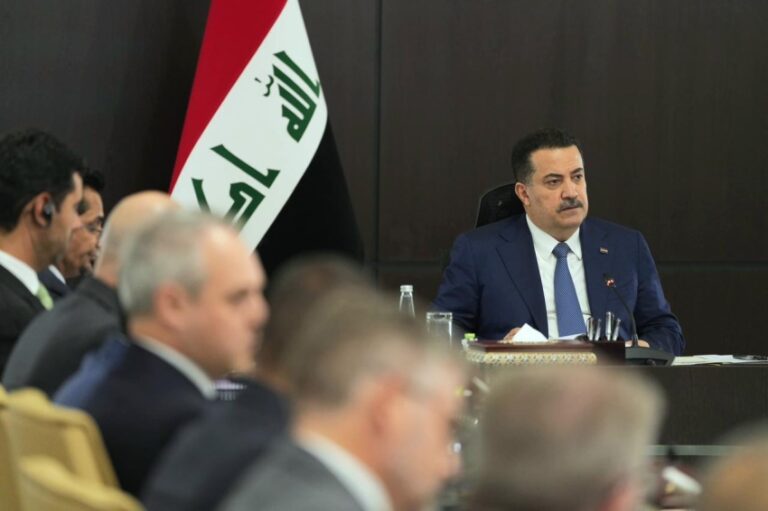
Prime Minister Mohammed Shia Al-Sudani chaired a meeting of the Higher Committee for the Development Road on Monday, in the presence of the Ministers of Transport and Industry, the Executive Director of the Iraq Development Fund, a number of advisors to the Prime Minister, general managers, and representatives of the consulting companies KBR and Oliver Wyman.
During the meeting, the topic of the auditing company and the timelines proposed by it regarding the completion of the audit of the railway and road designs were discussed, as well as the design costs for the railway line and the road, in addition to discussing the operating plans submitted by Oliver Wyman and BTP.
According to a statement from his media office, Al-Sudani directed that the best plan be chosen and a comprehensive summary be presented at the next meeting, stressing the need to decide on the options presented for discussion, pointing to the importance of the project for the future of Iraq, and the need to proceed with and intensify the work with specialists to complete its requirements.
The meeting reviewed the progress rates of all the component projects of the Strategic Development Road project, and the legal mechanisms by Iraqi specialists and KBR Consulting Company, for the contract to operate the Grand Faw Port under a joint management system with Abu Dhabi Ports Company, in addition to Oliver Wyman Company providing a detailed explanation of the principles of launching the third phase to support the activation of the contractual requirements of the development road, after the company completed the previous two phases.
Maliki and Talabani discussed the selection of the president: that he should be a figure acceptable to all.
On Monday, Nouri al-Maliki, head of the State of Law Coalition, discussed with a delegation from the Patriotic Union of Kurdistan, headed by Qubad Talabani, the latest political developments and the dialogues between the parties to form the government. Both sides stressed the importance of choosing a suitable figure who enjoys national acceptance for the position of President of the Republic.
The head of the State of Law Coalition, Mr. Nouri al-Maliki, received in his office today a delegation from the Patriotic Union of Kurdistan headed by Mr. Qubad Talabani.
At the beginning of the meeting, the delegation congratulated Mr. Nouri al-Maliki on the success of the democratic process represented by holding parliamentary elections, and congratulated the State of Law Coalition on the advanced results it achieved in the elections.
The two sides reviewed the latest political developments and the ongoing dialogues between political forces to form a government. They discussed the issue of the three presidential positions (Presidency of the Republic, Prime Ministership, and Speakership of the House of Representatives), and reviewed the mutual views on the mechanisms for managing this issue in a manner consistent with the constitutional context and that achieves political stability.
Regarding the position of President of the Republic, the possible mechanisms for reaching a consensus among the Kurdish forces on choosing a suitable figure who enjoys national acceptance were discussed in detail, in a way that contributes to strengthening joint action and is consistent with the requirements of the Iraqi people.
Broad smiles between the Sudanese and Talabani as they discuss the formation of the next government.
link
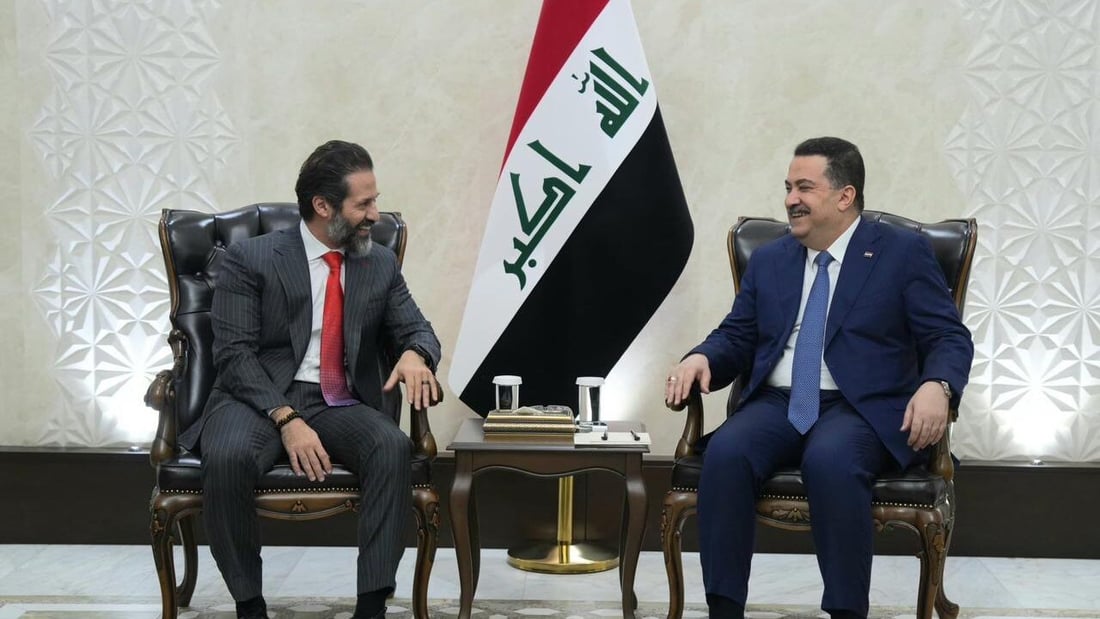
A photo distributed by the media office of Prime Minister Mohammed Shia al-Sudani on Monday showed a meeting between him and the Deputy Prime Minister of the Kurdistan Regional Government, Qubad Talabani, with both sides smiling broadly before discussing the importance of expediting the completion of the requirements for forming the next government and working to continue what the current government has accomplished.
Prime Minister Mohammed Shia Al-Sudani received Qubad Talabani, Deputy Prime Minister of the Kurdistan Region of Iraq, on Monday.
During the meeting, the general situation in the country was discussed in various political, economic and developmental fields, and ways to enhance stability in order to proceed with the completion of projects and the provision of services to our people throughout the country.
The meeting stressed the importance of expediting the completion of the requirements for forming the next government, and working to continue what the current government has accomplished, in addition to resorting to the constitution and the governing laws in addressing all national issues.
Sudanese: I was calling Trump to stop the bombing of Iran... he promised me, so I nominated him for the Nobel Prize.
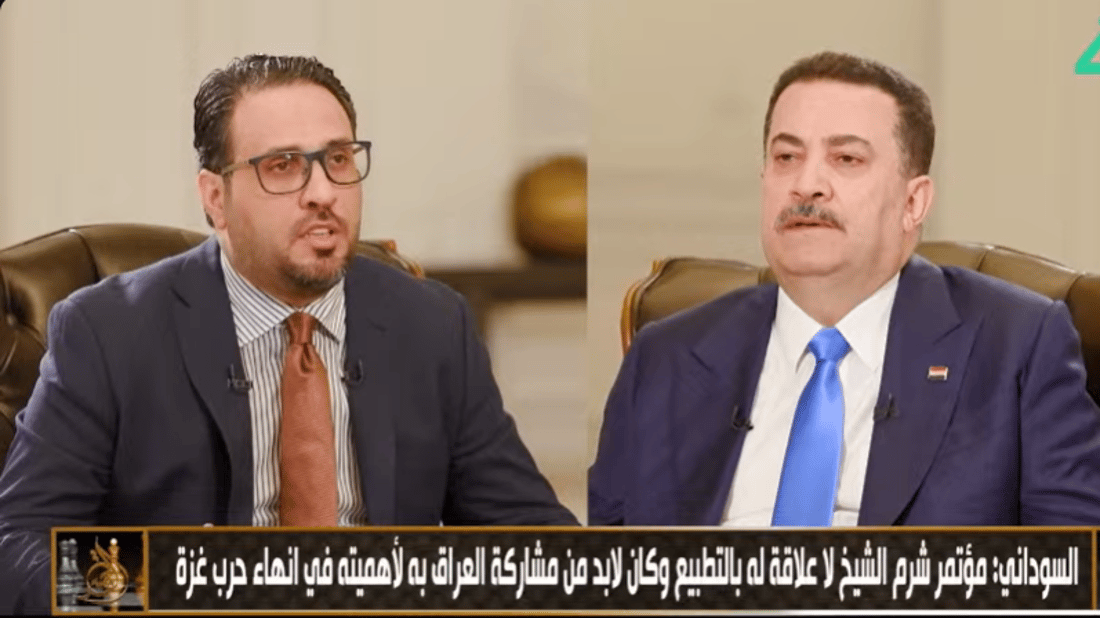
In response to an unprecedented wave of criticism he has been facing these days, Prime Minister Mohammed Al-Sudani opened “all the files” during a dialogue with journalist Ghazwan Jassim tonight, and spoke frankly about how he was on the phone with US President Trump during the hours of ending the war on Iran, and that he agreed to his nomination for the Nobel Peace Prize when Trump promised to guarantee the cessation of attacks against Iran as well as the end of the Gaza war.
Mohammed Shia Al-Sudani, in an interview with journalist Ghazwan Jassim:
The Coordination Framework won most of the Shiite seats with 170 seats, except for some small entities that are outside the framework. This is a responsibility on the framework to draw the features of the next stage, and it is what represents the Shiite component now.
It is unacceptable to bring an employee to this sensitive position of “Prime Minister”. Bringing in a manager will result in a weak government that will not last. The will of the people must be elected. It is unreasonable to ignore the election results and the lists that won the most votes and seats, and go and choose a party that did not dare to enter the elections and did not gain popular approval. Here you must bear the responsibility.
We must give space to the framework in the selection, and the selection should be based on not ignoring electoral weights, and we are supposed to have lessons and experience from past experiences.
There was no rebellion on my part against the framework. I am the only prime minister committed to regular meetings and gatherings with the framework and the State Administration Coalition, because I believe in partnership. The question is, what decision did the Sudanese make unilaterally? All foreign relations, in detail, are known to the leaders of the framework and the State Administration Coalition. All economic decisions were voted on by Parliament, in which the framework holds a majority. Regarding the relationship with the international coalition, all details of the negotiation and reaching an agreement with the US-led coalition were known to the framework and the State Administration Coalition. So where is the unilateral decision-making? The remaining details fall under the prime minister's authority, and sharing them with any political party is unacceptable.
The change that occurred in Syria, is it required of Iraq to involve itself and enter into a war and interfere in another country in a regional environment that supported the change process? Is it in our interest to do so? All countries of the world welcomed the change. The country that is most concerned about the security and stability of Syria is Iraq. Now we have a joint security committee with Syria, and it follows up on the smallest details, even some practices that target the Shiite sect, the Alawite sect, and the other components: Christians, Druze, Arabs, and Kurds. This diversity exists in Iraq, and with the growing threat of ISIS, it is in our interest to have channels of communication and relations. There is an interest that the government appreciates.
Regarding the relationship with America, and those who were angered by Trump's nomination for the Nobel Peace Prize, of course, it came about through a phone call between me and Trump, specifically after the end of the 12-day war, the aggression against Iran. In the call, I emphasized our thanks and appreciation for the efforts made to stop this war, and that this truce should continue. I requested the same role and effort in Gaza, and Trump confirmed his pursuit and direction towards ending the wars in the region and peace. He confirmed that he was about to be nominated for the Nobel Peace Prize, and that he hoped Iraq would support his nomination request, and we agreed to this request. Our conversation was in this context.
If this matter is provocative to some, then let us think about the relationship with the United States and common interests, armament, bilateral relations, and we have an economic partnership and companies in several fields. If there is a desire to sever ties, then this is an approach that contradicts the approach of my government, which stipulates establishing friendships and not enmity in a way that serves the security and stability of Iraq. This is the sound approach that preserved the country in the previous period.
Instructions to Facilitate the Implementation of the Federal Financial Management Law No. (6) of 2019Article 1
The general federal budget of the State consists of:
First: The central budget and self-financed budgets of the federal government, the region, the governorates not organized in a region, and independent bodies affiliated with the government.
Second: Expenditures of self-financing projects for self-financed administrations such as companies and self-financing directorates such as the Baghdad Secretariat.
Third: The budget of the region and the governorates not organized in a region according to their current and investment revenues.Article 2
The Ministries of Planning and Finance, in coordination with the relevant entities, shall prepare strategic plans, financial policies, priorities of federal policies, government programs, central budgets, and recommendations after discussing them with the entities specified in clause (First) of this article, taking into account their expected current and future manifestations, circumstances, developments, and priorities, which determine the objectives of the budget for the Economic and Financial Council, the deficit, and the total current and investment expenditures for all sectors for three years or more. This shall be done through each of the Ministries of Planning and Finance preparing the following:
First: Ministry of Planning:
a. Developing sectoral development plans, overall priorities, and the national framework in accordance with the state's orientations and requirements for achieving growth.
b. Studying governorates and districts, including those in the region.
c. Determining spatial planning standards based on statistical data in accordance with spatial, local, urban, rural, sustainable, and economic policies.
d. Adopting general policies and outputs embraced by the plans and strategies in evaluating the reality of the spatial development pattern, developing regions and sectors, and designating proposed areas, taking into account non-ministerial entities, the region, and governorates not organized in a region, and committing to that.
Second: Ministry of Finance:
a. Determining the financial resources available for the budget.
b. Determining spatial planning standards based on statistical data in accordance with spatial, local, urban, rural, sustainable, and economic policies.
c. Adopting general policies and outputs embraced by the plans and strategies in evaluating the reality of the spatial development pattern, developing regions and sectors, and designating proposed areas, taking into account non-ministerial entities, the region, and governorates not organized in a region, and committing to that.
d. Achieving balance between revenues and expenditures to realize the general federal budget of the state and alleviate the burden of public debt.
e. Distributing current and investment expenditures to governorates in accordance with the constitution through the Budget Department and providing the Ministry of Planning with the required investment projects for each formation.
f. Giving priority to reconstruction and providing and preparing public services.
Third: The Ministries of Planning and Finance shall determine the targeted objectives for the subsequent year's budget in light of priorities and milestones of their estimates, through improving capabilities in the fields of security and defense, oil sector projects, electric power, basic infrastructure services, implementing investment projects and sectoral constructions according to development programs, reducing unemployment, improving the work environment, providing capital, ensuring human rights, and social protection.
Fourth: The Ministers of Planning and Finance shall prepare a detailed guiding manual to facilitate the implementation of the provisions of the texts contained in this article.
Article 3
First: The Ministries of Planning and Finance shall prepare proposed estimates for current expenditures, probable revenues, and assets affiliated with them through forms for preparing estimates of current expenditures, probable revenues, and affiliated assets from the Budget Department, including spending units from the Budget and Statistics Department, revenue entities, current expenditures from the Budget Department.
a. [Note: This appears to be a labeling error in the original; content aligns with b below.]
b. Forms for asset movement including the transfer of services between ministries, non-ministerial entities, the region, and governorates not organized in a region, allocated for total salaries and formations affiliated with each, and creating job grades for the political year for each formation.
c. Forms for investment projects prepared by the Ministry of Planning.
Second: Spending units shall adopt the guiding principles prepared by the Ministries of Planning and Finance in preparing reasonable estimates for the budget and available amounts, and cooperate with entities not organized in a region, governorates not organized in a region, and non-ministerial entities, the region, and governorates not organized in a region.
(Note: As in the Arabic, the original contains extensive repetition emphasizing coordination with "non-ministerial entities" and regional/governorate bodies. This is condensed here to avoid redundancy while retaining the core directive for collaboration.)
U.S. Congress Links Iraq Security Cooperation Funds to Restrictions on Iran-Aligned Militias
U.S. National Defense Authorization Act for Fiscal Year 2026 (NDAA 2026) limits Iraq security funds pending action on militia control, prime ministerial authority, and accountability.
— In a significant legislative maneuver poised to reshape the United States’ security relationship with Baghdad, the U.S. Congress has introduced rigorous new conditions on military assistance to Iraq, directly linking funding to the suppression of Iran-aligned militias. The National Defense Authorization Act (NDAA) for Fiscal Year 2026, designated S. 2296, contains provisions that would freeze half of the funds allocated for the Office of Security Cooperation in Iraq (OSC-I) until the Iraqi government demonstrates "credible steps" toward disarming rogue factions and asserting the exclusive authority of the state.
The legislation, currently before the 119th Congress, reflects a marked shift in Washington’s approach to the region, moving away from unconditional support toward a strategy of strict accountability.
Under Section 1218 of the act, titled "Limitation on Availability of Funds for the Office of Security Cooperation in Iraq," lawmakers have engineered a financial mechanism designed to force the integration or disarmament of paramilitary groups that have long operated outside the formal chain of command.
The text mandates that not more than 50 percent of the authorized funds for fiscal year 2026 may be obligated or expended until the Secretary of Defense submits a certification to the congressional defense committees verifying specific progress by the Government of Iraq.
This certification requirement effectively places the burden of proof on Baghdad to demonstrate control over its internal security landscape. The legislation outlines three specific criteria that must be met to unlock the remaining funds.
First, the Iraqi government must prove it is reducing the operational capacity of Iran-aligned militia groups that are not integrated into the Iraqi Security Forces.
The bill specifies that this must be achieved through a "publicly verifiable disarmament, demobilization, and reintegration process," signaling that nominal integration or paper transitions will not satisfy Congressional intent.
The second condition demands the strengthening of the authority and operational control of the Prime Minister of Iraq in his capacity as Commander-in-Chief over the Iraqi Security Forces.
This provision addresses long-standing U.S. concerns regarding the fragmentation of command structures within Iraq, where militia leaders have often acted independently of, or in direct opposition to, the head of government. By tying financial assistance to the Prime Minister’s consolidated control, the legislation seeks to bolster the sovereignty of the central government against parallel military institutions.
The third and perhaps most contentious requirement mandates that the Government of Iraq investigate and hold accountable members of militias or security forces operating outside the formal chain of command who engage in attacks on United States or Iraqi personnel.
The text further broadens this mandate to include accountability for those who "otherwise act in an illegal or destabilizing manner." This provision directly targets the impunity often enjoyed by factions responsible for rocket and drone attacks against coalition facilities and diplomatic missions, conditioning future security cooperation on the judicial prosecution of these actors.
While the legislation imposes strict limitations, it includes a waiver provision allowing the Secretary of Defense to bypass the funding freeze for a period of not more than 180 days. However, to exercise this waiver, the Secretary must determine that it is in the national security interest of the United States and submit a written justification to the congressional defense committees no later than 15 days after issuance.
Crucially, this waiver submission must include a description of the steps being taken to achieve the specific objectives of disarmament and accountability outlined in the limitation, ensuring that even if funds are released, the pressure for reform remains operative.
The NDAA’s focus on the influence of Tehran is reinforced elsewhere in the document. Title V, Section 535, establishes a "Duty to Warn United States Persons Threatened by Iranian Lethal Plotting."
Within this section, the legislation explicitly defines the term "Iranian proxy" to include "Shia militia groups in Iraq and Syria," placing them in the same legal category as Hezbollah, Ansar Allah, and Hamas.
This definition underscores the legislative view that these entities are extensions of the Government of the Islamic Republic of Iran or the Iranian Revolutionary Guard Corps, rather than independent national actors.
The section mandates that the intelligence community notify the Federal Bureau of Investigation upon collecting credible information indicating an impending threat of intentional killing, serious bodily injury, or kidnapping directed at a U.S. person by these entities.
Beyond the immediate funding restrictions for Iraq, the bill addresses the broader legal framework of the U.S. military presence in the country.
Section 1219 calls for the repeal of the Authorization for Use of Military Force Against Iraq Resolution of 1991 and the Authorization for Use of Military Force Against Iraq Resolution of 2002.
The repeal of these war authorizations, combined with the extension of the authority to support operations of the Office of Security Cooperation in Iraq through fiscal year 2026 under Section 1212, suggests a transition toward a normalized, albeit conditional, bilateral security partnership rather than a posture defined by legacy wartime statutes.
The legislation also directs significant attention to the security dynamics in neighboring Syria, which remain inextricably linked to stability in Iraq. Section 1217 imposes a limitation on the use of funds for the reduction or consolidation of United States Armed Forces bases in Syria.
The Act stipulates that no amounts authorized may be obligated to reduce the number of U.S. bases until the Secretary of Defense, in consultation with the Commander of the United States Central Command, certifies that such a reduction would not compromise mission objectives.
This certification must include a detailed description of the current and planned posture of U.S. forces, projected levels of engagement with Syrian groups, and an assessment of any gaps in assistance or training that would result from consolidation. This provision reflects Congressional intent to maintain a robust footprint in Syria to prevent a security vacuum that could be exploited by ISIS or Iranian affiliates.
Further emphasizing the threat of a resurgent Islamic State, Section 1216 mandates the Secretary of Defense to take "appropriate measures" to support the defenses of the Al-Hol and Roj camps in northeast Syria.
These camps, which house thousands of detainees and families associated with the Islamic State of Iraq and Syria, are identified as critical flashpoints. The legislation requires support for vetted foreign partner security forces to prevent escape and radicalization efforts.
A comprehensive annual report is required from 2026 through 2028, assessing the status of U.S. operations, the conditions and security of detainees, and efforts to repatriate detainees to their home countries or third countries. The report must also include recommendations for further actions to prevent the resurgence of ISIS, acknowledging the camps as potential incubators for future conflict.
In a major policy shift regarding the post-Assad Syria, Section 6211 repeals the Caesar Syria Civilian Protection Act of 2019. However, this repeal is structured as a conditional mechanism rather than a complete lifting of pressure.
The section requires the President to submit a certification to Congress regarding the behavior of the Government of Syria. The certification must verify that the Syrian government has committed to eliminating the ISIS threat, is making progress in providing security for religious and ethnic minorities, is not taking unilateral military action against neighbors including Israel, and is not financing or harboring foreign terrorist organizations.
Additionally, the government must remove foreign fighters from senior roles and prosecute those responsible for human rights abuses.
If the President cannot make an affirmative certification for two consecutive reporting periods, it is the "sense of Congress" that the sanctions under the Caesar Act should be reimposed. This structure attempts to incentivize behavioral change in Damascus while retaining the threat of economic isolation.
Additionally, Section 6212 authorizes the Secretary of State to establish a program to counter Captagon production and distribution.
This program would provide funding to rehabilitate border crossings in Syria and support counter-narcotics and counter-terrorism efforts, specifically targeting trafficking networks linked to the government of Syria.
This provision highlights the growing concern over the narcotics trade as a destabilizing force and a source of illicit revenue for regimes and militias in the region.
The bill also extends various other authorities relevant to the region. Section 1213 extends the authority to provide assistance to vetted Syrian groups and individuals through December 31, 2026.
Similarly, Section 1214 extends the authority to provide assistance to counter the Islamic State of Iraq and Syria through the same date.
Section 1211 extends the authority for reimbursement of coalition nations for support provided to U.S. military operations, ensuring continued logistical and financial cooperation with international partners operating in the theater.
The NDAA for Fiscal Year 2026 represents a comprehensive legislative effort to codify a "conditions-based" approach to U.S. engagement in the Middle East. By legislating specific benchmarks for the release of funds to Iraq, defining Shia militias as Iranian proxies, and restricting the drawdown of forces in Syria, Congress is asserting a granular level of oversight over the executive branch’s conduct of foreign policy.
The requirement for a "publicly verifiable" disarmament process for militias in Iraq sets a high bar for compliance, suggesting that future U.S. assistance will be contingent upon tangible changes in the security architecture of Baghdad.
As the bill moves through the legislative process, its provisions signal that the era of unconditional aid is ending, replaced by a framework that demands accountability, operational integrity, and the definitive curtailing of Iranian influence within the Iraqi state apparatus.

No comments:
Post a Comment