Salaries and the dollar are on the brink of collapse... Warnings of decisions that could shake economic and living stability.
Economic and financial affairs expert Ahmed Al-Tamimi warned on Saturday (December 13, 2025) of serious social and economic repercussions that may result from any government move to reduce employee salaries or raise the exchange rate of the dollar against the Iraqi dinar in the coming period.
THe video for this My FX Buddies blog is below here:
Al-Tamimi told Baghdad Today that “any measures of this kind, even if they come under the pretext of confronting a potential financial crisis, will not constitute a real solution, but will lead to widespread negative results that affect the economic and social stability of the country.”
He explained that “resorting to citizens’ income as a first option to address the financial deficit reflects a failure in managing public resources, and contributes to deepening the economic recession, increasing poverty and unemployment rates, in addition to eroding the purchasing power of a large segment of society.”
Al-Tamimi explained that “reducing salaries or raising the dollar exchange rate will directly affect the prices of goods and services, especially basic ones, which will increase the cost of living for citizens and negatively affect the overall stability.”
He pointed out that "the Iraqi economy has real alternatives to address any financial crisis, including combating waste and corruption, activating fair tax collection, reviewing unnecessary expenditures, as well as diversifying revenue sources and reducing the almost total dependence on oil."
He stressed that “any financial treatment must be based on well-thought-out structural reforms, not on hasty decisions that affect the citizen’s income,” calling on the government to adopt transparency in presenting the financial challenges, and to involve experts and relevant authorities in formulating solutions, in order to ensure the protection of the middle and poor classes.
Al-Tamimi concluded by saying that "monetary and job stability is a red line, warning that any harm to it will cost much more than any potential financial crisis, in the short and long term."
Recently, concerns have grown that the government may resort to exceptional financial measures to address economic pressures and liquidity shortages, amid fluctuating oil prices and rising public spending.
These warnings come amid past experiences that have proven that any change in salaries or the dollar exchange rate directly affects the livelihood of citizens and the prices of goods, making the issue of monetary and job stability one of the most sensitive and influential issues on social and economic stability in the country.
"A quantum leap"... Al-Ahli Bank of Iraq signs its largest digital expansion deal to launch more innovative banking services

investment decisions."
Kurdistan Region Finance Ministry to Rudaw: We will send 120 billion dinars to Baghdad within 24 hours

Coordination between the Central Bank, Al-Rasheed Bank, and Key Card to protect citizens' accounts
Electronic monitoring to reduce fraud and hacking

The Central Bank of Iraq announced on Sunday several mechanisms for receiving and following up on citizens' complaints with banks, payment companies, and other relevant authorities, amid a rise in electronic fraud cases. The bank emphasized its commitment to strengthening electronic and on-site oversight of the financial sector, alongside ongoing awareness campaigns to promote financial literacy. In this context, Al-Rasheed Bank stressed that protecting customer accounts is a top priority, utilizing advanced monitoring systems, and warned against sharing confidential data or interacting with suspicious links. For its part, Key Card explained that most fraud cases stem from users disclosing verification codes, emphasizing that sharing these codes effectively hands over funds to fraudsters. The company added that it continues to coordinate with the Central Bank on awareness campaigns and efforts to protect bank accounts.
Haider Ghazi – Director of Media at the Central Bank of Iraq, speaking to the official newspaper, as reported:
The bank receives citizens’ complaints through its official electronic platform, in addition to the government’s (Aur) platform, where they are sorted and transferred to the competent authorities from banks, electronic payment companies or money exchange entities, to take the necessary actions and inform the bank of them in preparation for informing the complainants.
Central Bank oversight is carried out at several levels, including electronic oversight via the national switchboard that connects all banking and non-banking financial institutions and electronic payment companies, as well as surprise field visits and periodic audits of files and transactions.
The bank's work is based on official laws, instructions, and regulations published on its website in the form of circulars and instructions that are in effect.
The bank continues to launch banking education and awareness campaigns through newspapers and various media outlets, with the aim of promoting financial literacy and increasing financial inclusion rates, which contributes to reducing opportunities for fraud and exploitation of citizens.
Amal Al-Shuwaili – Media Director of Al-Rasheed Bank:
Protecting customer accounts from electronic fraud is a top priority for the bank.
Adopting advanced monitoring systems that prevent unauthorized access to user data.
The bank does not request any personal or confidential information via phone calls or text messages.
We urge citizens to keep their passwords confidential, not to interact with unknown links or untrusted entities, and to report any suspicious activity immediately.
We would like to point out that the bank continues to broadcast awareness guidelines through its official pages to reduce the spread of electronic fraud methods.
Mohammed Ali – Assistant Director of the Financial Affairs and Banking Awareness Department at “Key Card” Company:
The majority of online financial fraud cases that citizens experience are related to sharing their confidential data or verification codes with untrusted parties.
All transactions made via credit card are subject to a strict verification system, and no financial transaction is executed until a secret code containing full details about the type of transaction is received.
Sharing this code by the citizen practically means handing the money over to the fraudster.
The company’s electronic system is the only entity authorized to send login messages to the application or verification codes for transfers, as well as notifications related to withdrawal and deposit operations.
Any messages received from outside this system are considered unofficial. Ali noted that most scams occur through fake links or pages impersonating organizations offering donations, gifts, loans, or advances.
Continued coordination with the Central Bank in implementing extensive awareness campaigns, including warnings about online fraud pages and direct field awareness, with the aim of protecting funds and bank accounts.
Saleh's statement: The US interest rate cut weakens the dollar and boosts the appeal of gold.
Saleh explained in his interview with Al-Furat News Agency that “this decline usually leads to a weakening of the US dollar against major currencies, and at the same time stimulates capital flows towards emerging markets, as well as enhancing the attractiveness of gold as a safe haven within the investment portfolio stabilization strategies of global financial market forces, as well as for central banks in managing and diversifying their reserves between foreign currencies and gold.”
He explained that "the strength of this effect is not absolute, as it depends to a large extent on accompanying factors, foremost among them inflation levels, real interest rates, and the policy directions of major central banks issuing reserve currencies worldwide."
He noted that "lowering the federal interest rate makes returns on dollar assets less attractive, which leads to a decline in demand for the dollar and a relative weakening of it against other currencies. This weakness is often seen as a signal that encourages investors to redirect their capital towards markets with higher returns, particularly in strong emerging economies."
Saleh added that “our country, by virtue of being within the sphere of the dollar’s dominance, benefits from a relative advantage represented by the low cost of borrowing and financing in dollars, especially since the American currency still dominates about 60% of global lending and borrowing operations, which practically means a decline in the cost of global financing due to the central pivotal role of the dollar in the international financial system.”
He stressed that “geopolitical risks, crises and wars remain crucial factors that may boost demand for gold regardless of the direction of US interest rates, unless the chances of global peace and stability increase, indicating that in such uncertain environments gold remains the most prominent safe haven to hedge against losses in financial markets, especially those related to dollar-denominated assets.”
An economist reveals the secret behind the withdrawal of deposits from Iraqi banks.

Nouri told Al-Furat News Agency that: “The US Federal Reserve’s resort to lowering interest rates during periods of economic recession leads to a decrease in returns on bank deposits, which prompts individuals and companies to withdraw their money and look for investment alternatives that achieve better returns.”
He added, "The decrease in interest rates is not in the interest of the groups that have bank deposits, as a large part of the liquidity is directed towards buying gold as a safe haven, which leads to an increase in its prices as a result of increased demand, in addition to the trend towards investing in securities markets such as stocks and bonds."
The expert explained that "Iraq is affected by these changes due to its connection to the global economy," noting that "the Central Bank of Iraq adopts a monetary policy based on diversifying investments, which includes holding US debt bonds, buying gold, and investing in the Euro, with the aim of reducing risks and enhancing financial stability."
He stressed that "the decline in deposits does not necessarily reflect weakness in the banking sector, but rather expresses a change in the orientations of investors and depositors as a result of global economic conditions and monetary policies."
Returning to Al-Kadhimi's "White Paper"... Former MP: No government will approve it and there is no budget

Jamal Kojar, a member of the Finance Committee in the outgoing parliamentary session, ruled out on Saturday the implementation of the "White Paper" project for economic reform, explaining that the current government has no powers, in addition to the absence of a budget.
Kujer told Shafaq News Agency, "Talking about implementing the White Paper and carrying out economic reforms is incorrect, and it is not legally possible, considering that the current government is finished and cannot implement any economic measures."
Kujer explained that "implementing the White Paper requires studying and including the economic reform paper in the budget law, and this law does not currently exist."
It is worth noting that the White Paper is a project adopted by the government of former Prime Minister Mustafa Al-Kadhimi, to serve as an economic reform program, and it was written by the Emergency Cell for Financial Reform.
Al-Kadhimi had announced on August 2, 2022, the launch of the economic reform plan within the White Paper that he had previously announced as a program for his government’s work.
The outgoing government, headed by Mohammed Shia al-Sudani, launched several economic papers, most notably those related to the banking sector and its restructuring, and work began on them.
Want to Support My FX Buddies?
.png)
Support My FX Buddies Big or Small I appreciate it all
BuyMeACoffee CashApp:$tishwash
https://paypal.me/tishwash

.jpeg)
Following US warnings about the fate of Iraq... what will happen?
A message from the "Al-Fatah" alliance
The Fatah Alliance, headed by Hadi al-Amiri, responded to statements by the US envoy to Iraq, Mark Savaya, in which he warned that "Iraq is facing a critical moment, either stability or deterioration and disintegration."
“Iraq is a strong and patriotic country, and it is capable of overcoming all political, economic and security challenges without external interference that imposes preconceived positions, and such statements do not reflect the reality of the Iraqi situation, which has demonstrated great resilience in facing crises during the past years,” said Mahmoud Al-Hayani, a leader in the coalition, in an interview with Al-Jabal on Saturday, December 13, 2025.
Al-Hayani explained that “national dialogue between Iraqi political forces is the real guarantee for the country’s stability, not external threats or pressures, and the Iraqi people are capable of preserving their unity and sovereignty, and the state continues to perform its duties towards citizens despite the difficult circumstances.”
He added, "Iraq is moving forward on the path of construction and reform, and will not allow any party to reduce its future to two contradictory options, as reality is more complex and richer than just the dichotomy of stability or disintegration."
"Subliminal messages"
For his part, Abbas al-Jubouri, director of the “Al-Rafid Center” for Media and Strategic Studies, told Al-Jabal that “Safaya’s statement carries clear and implicit messages regarding American orientations towards Baghdad, and these statements are not just a general warning, but reflect Washington’s vision of what it considers to be the strategic priorities for Iraq, starting with political stability and reaching economic and security reforms.”
Al-Jubouri explained that "the American envoy focuses in his statements on three main axes, the first of which is political and institutional stability. He indicated that Washington stresses the need to achieve broad consensus among Iraqi political forces and to enhance the effectiveness of state institutions to ensure a strong government capable of making decisive decisions, which reduces internal divisions."
The second axis, according to al-Jubouri, includes managing regional and international alliances. He stressed that "Safaya's statement reflects the United States' desire to maintain Iraq's role as a strategic ally, while monitoring relations with Iran and other regional countries, and strengthening security and intelligence cooperation with Washington."
The third axis focuses on “economic and security reforms,” noting that “the phrase (deterioration and disintegration) carries an implicit warning about the continued weakness of the Iraqi economy and the decline of public services, which may open the door to foreign interventions or increase the influence of armed groups, making economic and security reforms a direct American concern.”
The director of the Strategic Center added that "the US envoy's method of expressing these messages through a tweet on social media reflects what he described as 'soft pressure' on Baghdad," noting that "Washington seeks to deliver clear messages without resorting to direct threats, while maintaining a wide diplomatic margin."
Al-Jubouri stressed that "the timing is sensitive, and Iraq is going through major challenges on both the internal and regional levels, which makes following up on American messages and their potential demands a necessity for all political forces and civil society."
Sudani: The end of UNAMI's mission does not mean the end of the partnership between Iraq and the United Nations.

Outgoing Prime Minister Mohammed Shia al-Sudani said on Saturday that the end of the UNAMI mission’s work in Iraq does not mean the end of the partnership between the country and the United Nations, while welcoming the selection of former President Barham Salih to be the new High Commissioner for Refugees.
This came in a joint press statement held by Al-Sudani with the Secretary-General of the United Nations, Antonio Guterres, on the sidelines of the official announcement ceremony for the end of the mandate of the United Nations Assistance Mission for Iraq (UNAMI).
Al-Sudani said in the statement, "We highly value the work of the UNAMI mission in Iraq since its establishment in 2003 in a country that has suffered greatly from dictatorship, wars and terrorism, but Iraq emerged victorious thanks to the sacrifices and courage of its people."
He added that the end of the UNAMI mission does not mean the end of the partnership between Iraq and the United Nations, but rather represents the beginning of a new chapter of cooperation, especially in the areas of development, comprehensive economic growth, and providing advice. He further stated that “our relationship with the United Nations through the UNAMI mission was pivotal and effective in meeting Iraq’s needs and helping it until it reached the stage of being fully self-reliant.”
Al-Sudani went on to say that "the relationship file today has moved from crisis management efforts to long-term development planning efforts, and reliance on self-efforts (...) to achieve security, stability and prosperity through the efforts of Iraqis despite the various challenges."
He added, "We have succeeded in consolidating the foundations of democracy through holding the sixth parliamentary elections, and before that there were the provincial council elections and the Kurdistan Region Parliament," considering that "this confirms our commitment to the constitution and the law."
Al-Sudani also pointed out that "the recent elections were described as the most organized and credible and took place in a free atmosphere, and they recorded a remarkable increase in the participation rate, which exceeded 56 percent."
The caretaker prime minister of Iraq added, "We look forward to establishing relations with the United Nations based on a balanced partnership, mutual respect, and through joint programs towards a supportive partnership focused on sustainable development."
He continued, saying, "During this critical and sensitive period in the region and the world, we adopted a balanced foreign policy based on securing interests and preserving sovereignty, and we were able to strengthen and develop our regional and international relations, and spare the country the repercussions of conflict and crises in the region."
Al-Sudani expressed his welcome for the selection of former Iraqi President Barham Salih to fill the position of United Nations High Commissioner for Refugees, saying that this step "means a lot in supporting this important humanitarian issue, and that Iraq, with its political and influential figures, contributes to finding solutions and providing international support and assistance to refugees, not only in the region, but throughout the world."
The outgoing Prime Minister announced that "in recognition of the role and sacrifices of the United Nations, especially the late Sergio Vieira de Mello and his colleagues, we announce the naming of one of the streets of the capital, Baghdad, extending from the Dar al-Diyafa intersection to the Ibn Sina Hospital intersection, as United Nations Street."
Al-Sudani concluded his statement by saying that "a memorial will be placed next to the Unknown Soldier monument in honor of the United Nations' role in Iraq in previous years."
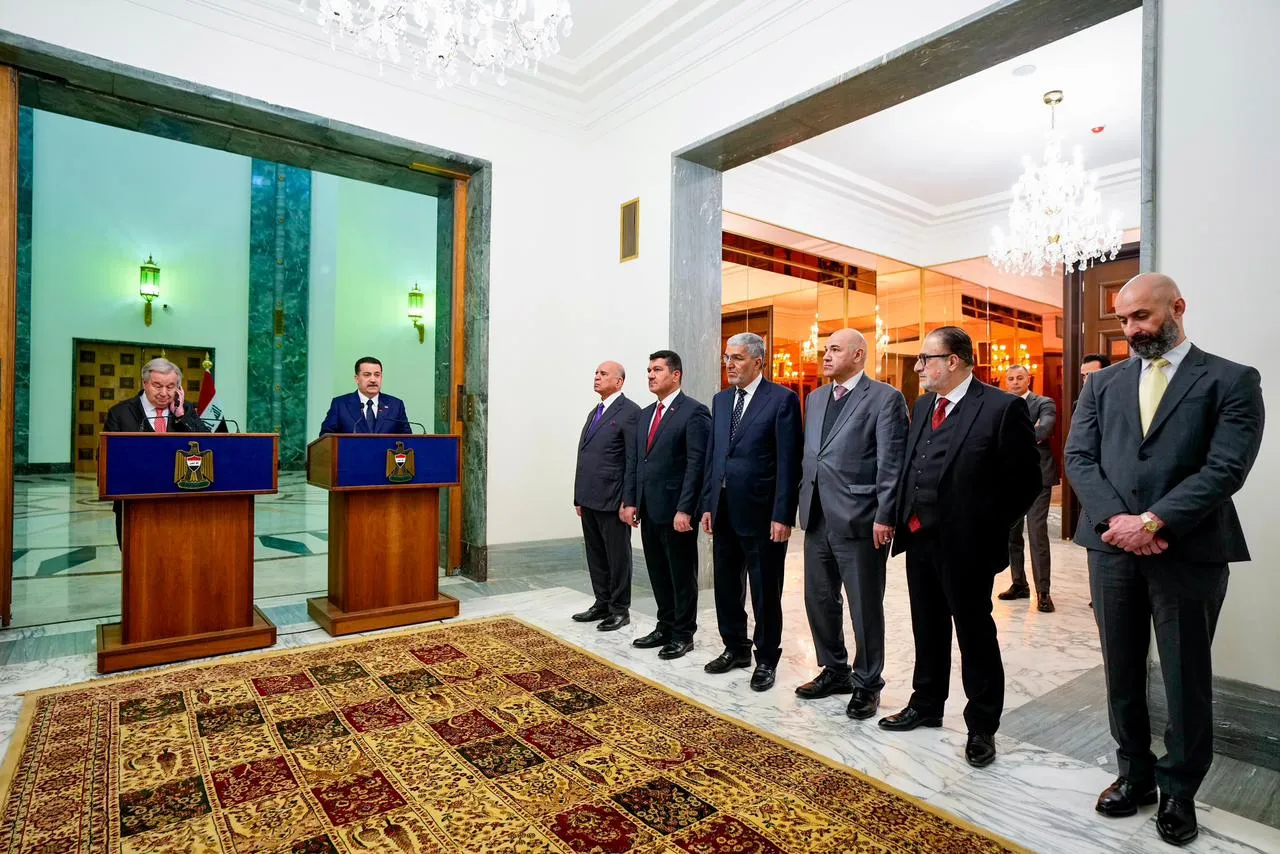
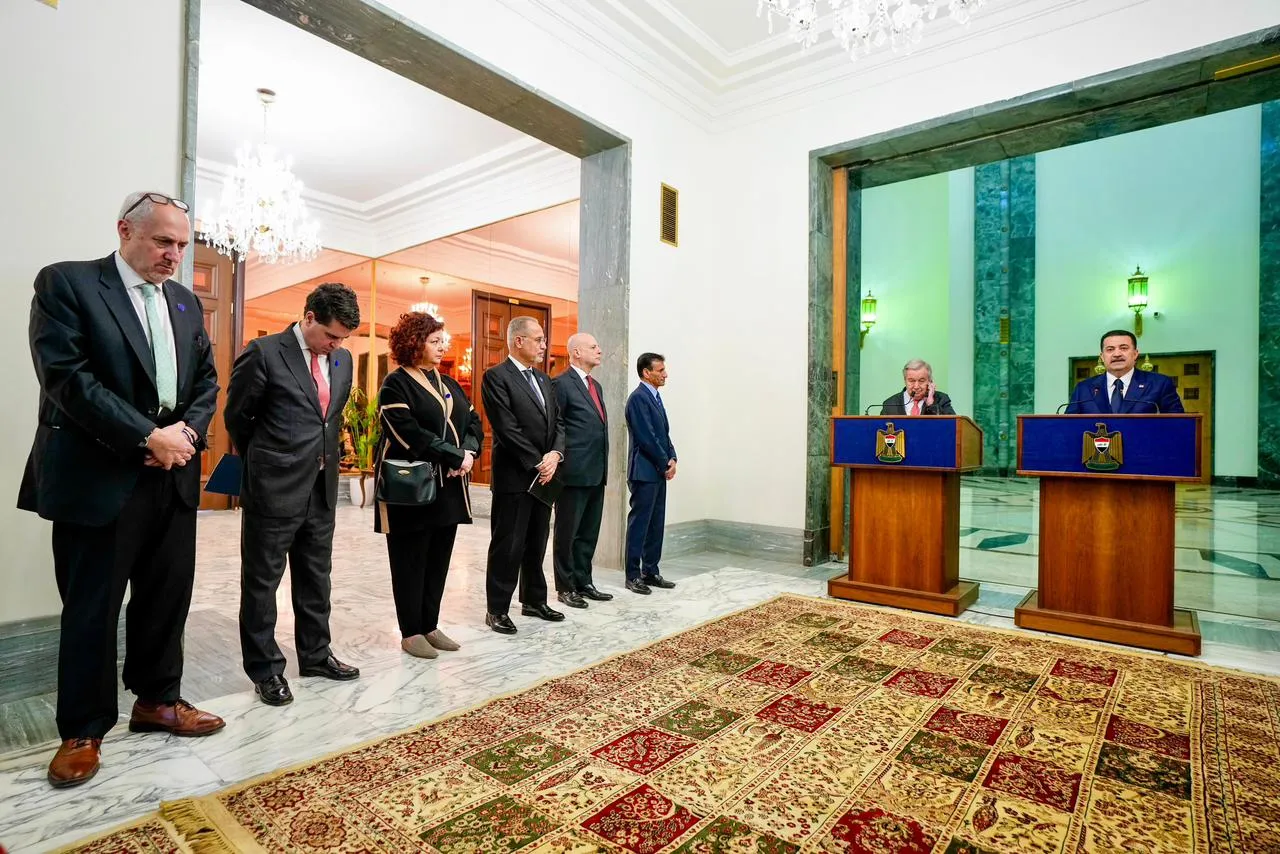
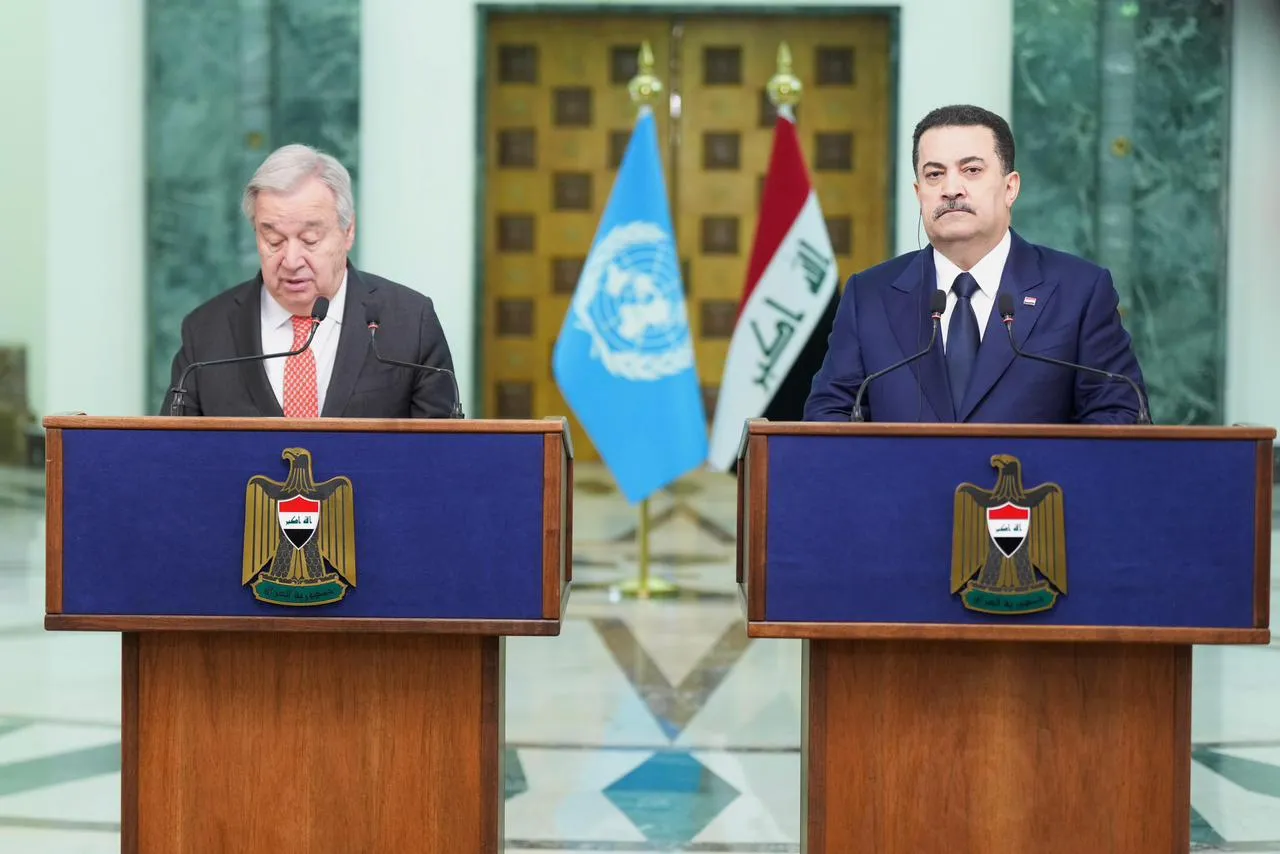
Iraqi Foreign Minister: Ending the UNAMI mission in Iraq reflects the progress and stability achieved.

During the reception, the Minister affirmed the Iraqi government's appreciation for the role played by the United Nations and UNAMI in supporting Iraq during previous phases, noting that "the termination of the mission's work reflects the progress and stability achieved, and embodies Iraq's ability to manage its national affairs and strengthen its sovereignty and constitutional institutions."

No comments:
Post a Comment